
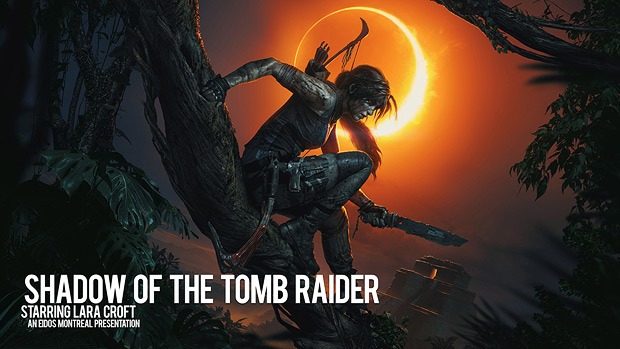
Use this updated 2026 Shadow of the Tomb Raider PC guide to compare official Steam, Epic Games Store, GOG, and Microsoft/Xbox purchase, download, and installation options, understand the Definitive Edition and its seven DLC challenge tombs, review system requirements, Steam Deck Playable support, graphics settings, multiplayer tomb modes, mods, performance guidance, and gameplay help before completing Lara Croft’s Survivor trilogy.
 By Editor Zero — independently researched, edited, and maintained.
Last updated: 28 September 2026
Last reviewed: 28 September 2026
Table of Contents
- Quick Summary
- Quick Facts
- Official PC Stores, Download & Installation
- Shadow of the Tomb Raider Review
- Pros & Cons
- PC System Requirements
- Frequently Asked Questions
- Similar Games
Shadow of the Tomb Raider Quick Summary
✔ Third-person action-adventure and puzzle-exploration game following Lara Croft through Mexico and Peru as she attempts to stop Trinity and reverse a Maya apocalypse she accidentally triggers
✔ Strong focus on jungle traversal, underwater exploration, ancient ruins, crypts, challenge tombs, environmental puzzles, stealth takedowns, crafting, weapon upgrades, and hidden collectibles
✔ Similar to Rise of the Tomb Raider through cinematic exploration, survival mechanics, climbing, optional tombs, crafting, stealth, ranged combat, and Lara’s continuing conflict with Trinity
✔ Separate difficulty settings for combat, exploration, and puzzles let players create an accessible cinematic experience or reduce hints, navigation markers, and combat assistance
✔ Definitive Edition includes the complete campaign, seven DLC challenge tombs, additional missions, weapons, outfits, skills, and the Croft Fitness outfit
✔ The PC release supports DirectX 12, ray-traced shadows on compatible hardware, DLSS, XeSS, HDR, ultrawide displays, detailed graphics settings, and Steam Deck Playable compatibility
Shadow of the Tomb Raider Quick Facts
Official PC Stores, Download & Installation
👇 Compare the official Steam, Epic Games Store, GOG, and Microsoft/Xbox PC options below before purchasing, downloading, or installing Shadow of the Tomb Raider: Definitive Edition.
- PC availability: The Windows PC version is officially sold through Steam, Epic Games Store, GOG, and Microsoft/Xbox Store.
- Definitive Edition: The Definitive Edition combines the base campaign with all seven downloadable challenge tombs and the downloadable weapons, outfits, and skills released for the game.
- DLC adventures: The included packs are The Forge, The Pillar, The Nightmare, The Price of Survival, The Serpent’s Heart, The Grand Caiman, and The Path Home. They add challenge tombs, related missions, equipment, and skills rather than a separate full-length expansion.
- Duplicate-purchase check: Players who already own the base game, Season Pass, Croft Edition, or individual DLC should inspect their library before buying another complete package.
- Steam: Steam provides the Windows, macOS, and Linux builds and supports Steam Cloud, achievements, trading cards, Family Sharing, Remote Play, controller support, and file verification.
- Epic Games Store: The Epic version requires an Epic account and Epic Games Launcher for purchase, installation, and updates; that does not mean Steam owners need an Epic Games Store account to play the Steam campaign.
- GOG: GOG sells a DRM-free Windows Definitive Edition with optional GOG Galaxy, offline installers, cloud saves through Galaxy, Windows 10/11 compatibility checks, and Preservation Program maintenance. GOG explicitly lists co-op as unavailable in its version.
- Microsoft/Xbox: Microsoft’s listing supports PC, Xbox One, Xbox Series X|S, and Xbox Cloud Gaming. The PC build can be obtained through the Microsoft/Xbox ecosystem without purchasing a Steam, Epic, or GOG copy.
- Game Pass and cloud play: Xbox states that cloud play through eligible Game Pass tiers requires ownership of the game. Do not assume a Game Pass subscription alone grants the game itself.
- Offline play: GOG requires no online activation, while Steam compatibility data lists no internet requirement for setup or single-player. Store accounts and connectivity are still needed for acquisition, cloud synchronization, updates, and online challenge features where applicable.
- Multiplayer tomb modes: The campaign is single-player. Selected DLC challenge tombs support online co-op, and challenge tomb content can also use Score Attack and Time Attack modes; availability differs by storefront, with GOG omitting co-op.
- Steam Deck: Valve rates the game Playable rather than Verified. Its launcher/setup interface may need touchscreen or non-controller navigation and the game can display compatibility warnings, but Valve’s test data says default controls, text, and performance are functional.
- Installation: Keep the base game and DLC under the same storefront account to reduce entitlement or add-on detection problems, and use that store’s verify/repair tools before reinstalling.
 Buy Shadow of the Tomb Raider: Definitive Edition on Steam
 Buy Shadow of the Tomb Raider: Definitive Edition on Epic Games Store
Buy Shadow of the Tomb Raider: Definitive Edition on GOG
 Buy Shadow of the Tomb Raider: Definitive Edition on Microsoft / Xbox Store
 Visit the Official Tomb Raider Website

Shadow of the Tomb Raider Review
Exceptional tombs and flexible exploration deliver Lara’s strongest archaeological adventure, even as the story loses sight of its bold opening
Shadow of the Tomb Raider understands that the most interesting part of modern Lara Croft is not another corridor full of armored soldiers. It is the moment she enters a sealed chamber, studies a mechanism larger than the room, and works out how ropes, water, wind, light, and crumbling architecture fit together. The final Survivor-trilogy game reduces the frequency of firefights and gives exploration, environmental puzzles, underwater routes, and optional tombs much more space. That shift makes it the entry that most convincingly reconnects the rebooted series with Tomb Raider’s older identity (Tomb Raider (2013)).
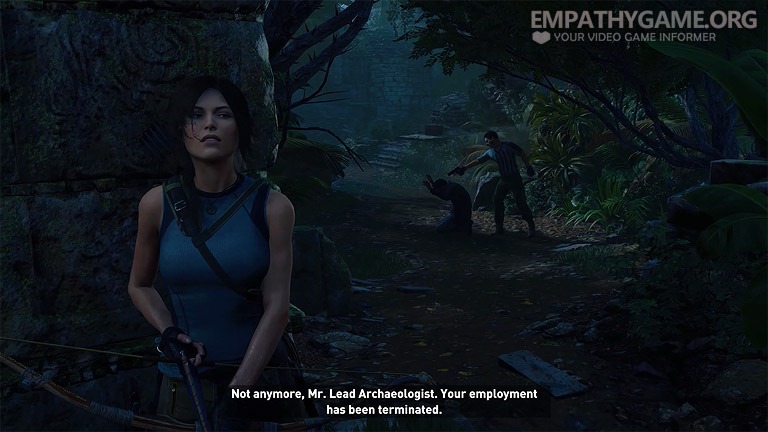
The change is not a complete reinvention. Climbing still relies on readable surfaces and scripted animations, combat still resembles Rise of the Tomb Raider, and familiar crafting menus remain. The story also opens with a focused examination of Lara’s obsession, then divides its attention among revolution, mythology, Trinity, and personal guilt. Yet when the campaign leaves Lara alone with an ancient ruin and a dangerous route, Shadow becomes the trilogy’s most distinctive chapter. It best suits players who wanted fewer forced battles, more substantial tombs, and enough control over hints to make discovery feel earned.
The Opening Promises a Sharper Character Study
The Cozumel prologue is one of the campaign’s strongest sequences because spectacle and characterization reinforce one another. A Day of the Dead celebration gives way to a Trinity excavation, Lara removes the Key of Chak Chel before understanding the consequences, and the resulting tsunami turns her certainty into catastrophe. The sequence establishes the central conflict with unusual clarity: Lara is knowledgeable, capable, and courageous, yet her conviction that she must reach every artifact first can make her dangerously shortsighted.
Jonah works well as the person willing to challenge that tunnel vision. His frustration gives the disaster a human cost, while Pedro Dominguez is introduced through competing claims of responsibility rather than simple villainy. For a time, the story appears ready to examine whether Lara’s methods differ enough from Trinity’s when both sides treat history as something to seize and control.
The later campaign only partially fulfills that promise. Paititi’s political struggle, the mythology surrounding the Silver Box, Trinity’s ambitions, Jonah’s relationship with Lara, and Lara’s guilt all compete for attention. Individual scenes remain understandable, but the arcs blur as objectives shift between redemption, factional conflict, supernatural urgency, and pursuit. The consistently solemn delivery makes this diffusion more noticeable because the script creates little tonal contrast between crises. Lara changes, but the opening suggests a bolder confrontation with her obsession than the finale ultimately provides.
Tombs Finally Become the Main Attraction
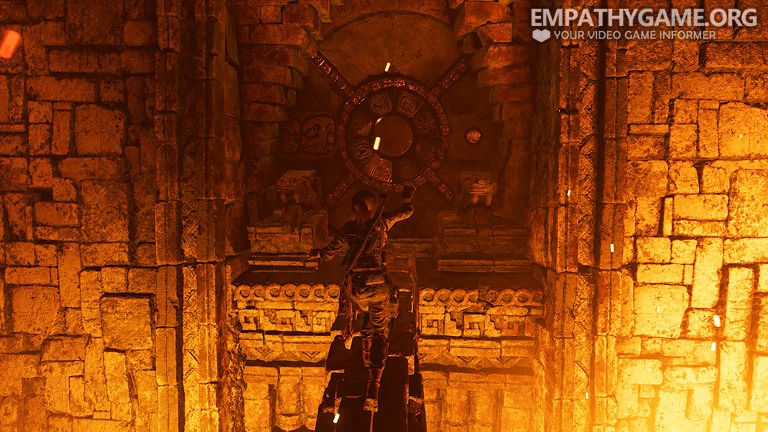
The strongest improvement is not simply that Shadow contains more ruins, but that many function as complete spaces rather than short interruptions. Challenge tombs often require Lara to understand an entire chamber before the route becomes obvious. The Howling Caves in Kuwaq Yaku use shutters, violent gusts, hanging pendulums, and narrow crossings; opening a passage can also make the route unsafe, so the solution depends on controlling when the wind should be active. Temple of the Sun turns mirrors and reflected light into moving paths across a large central mechanism, asking the player to think several steps ahead instead of solving isolated switches.
Ancient Aqueduct demonstrates a different strength. Raising water levels, moving a raft, tethering it to machinery, and using the altered chamber to reach a new height creates a satisfying chain of physical consequences. These tombs rarely reach the opacity of the oldest games, and some are closer to elaborate obstacle courses than demanding logic problems, but even simpler examples benefit from scale, atmosphere, and the sense that Lara is trespassing inside machinery dormant for centuries.
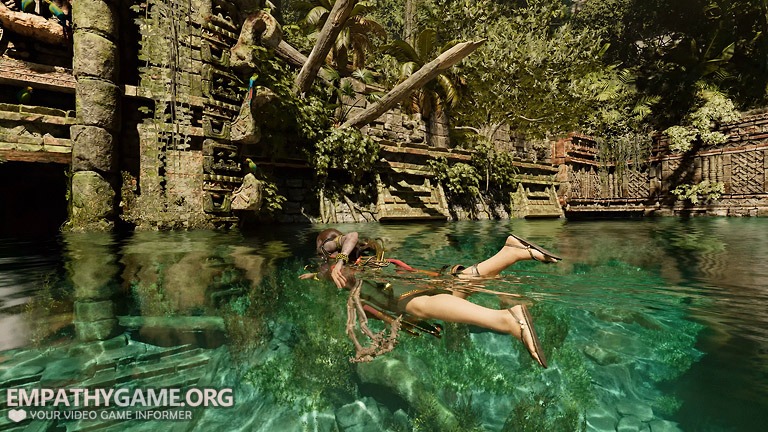
The surrounding exploration supports that focus. Jungle paths conceal crypts, murals, monolith clues, and entrances that are easy to pass when following the objective marker. Longer underwater routes make flooded ruins feel less decorative, especially when air pockets, constricted passages, and hostile wildlife turn a direct swim into a calculated risk. The Cenote is particularly effective at making water, darkness, sound, and limited visibility threatening without relying on constant combat.
Survival Instinct can reveal routes so efficiently that repeated use reduces a ruin to highlighted components. The separate puzzle and exploration difficulty settings are therefore more valuable than a conventional easy-to-hard slider. Removing white paint, objective beacons, and frequent hints lets architecture communicate the path while combat remains forgiving. That combination produces a more convincing expedition than simply increasing enemy health.
Traversal Is Broader, Though Still Heavily Authored
Rappelling, rope swings from climbable walls, overhang climbing, wall-running while suspended, and expanded swimming make Lara’s route through the jungle more varied than before. The best sequences combine several tools without pausing to explain every input: a descent becomes a rappel swing, then a lateral wall-run and a jump toward a distant craggy surface. When the animation system connects cleanly, Lara moves through ruins with impressive momentum.
The environments often look freer than they are. Climbable surfaces remain strongly authored, and a jump that appears possible may fail because the intended ledge sits nearby. This is frustrating when the puzzle has already revealed the destination but traversal demands a specific angle or animation trigger. Underwater routes can create similar ambiguity in tight spaces, where the camera and Lara’s turning radius compete with the search for an air pocket.
Reducing exploration assistance helps. With fewer markings, players must read scratches, rope coils, ledge shapes, light, and environmental composition. The route remains designed, but finding it feels more like observation than obedience.
Stealth Improves More Than Open Combat

Combat is less frequent, giving individual encounters more room to function as stealth spaces. Mud camouflage lets Lara disappear against prepared walls, vegetation breaks sightlines, branches create elevated takedown opportunities, and enemies can be pulled into cover or attacked from water. The ability to re-enter concealment after detection is especially valuable. One mistake no longer has to become an automatic shooting gallery; the jungle lets Lara relocate and rebuild uncertainty.
Fear Arrows are the most theatrical expression of this system. Turning one armed guard against his companions can dismantle a patrol while Lara remains hidden, but ammunition costs keep the tool from replacing observation. A typical encounter works best when Lara identifies an isolated target, removes him from mud or foliage, then changes elevation before the others investigate. Those repositioning decisions are more engaging than waiting for fixed patrols to expose themselves in sequence.
Enemy awareness does not always support the fantasy. Guards may overlook a suspiciously empty post, react weakly to noise, or return to routine too quickly after finding evidence of Lara’s presence. Survival Instinct also shows whether a target is safe to eliminate, and relying on that color-coded information can make stealth feel like solving a UI state rather than reading the scene. Higher difficulty increases danger but does not make every patrol more perceptive.
Once concealment collapses, the bow, pistols, rifles, shotguns, explosives, and environmental hazards provide competent third-person shooting. Aiming is responsive and the bow remains satisfying, but close-range combat exposes weaker melee and awkward dodging. Crowded arenas are less interesting than the careful approach that precedes them. Shadow is at its best when combat asks where Lara should strike from, not how long she can survive in open cover.
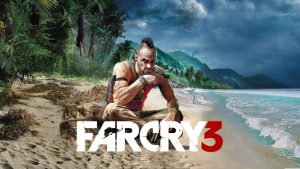
Players who enjoy using jungle vegetation, elevation, observation, and improvised routes to dismantle armed groups may also appreciate Far Cry 3. Its open-world outposts, first-person gunplay, wildlife, and more frequent combat create a broader action sandbox than Lara’s carefully authored encounters, but both games are strongest when the player studies a hostile area before making the first move. A quiet approach can remove several enemies cleanly, while one missed shot or exposed position can turn the same plan into a chaotic fight through dense tropical terrain.
The Arsenal Creates More Variety Than Choice
Progression is divided among Seeker, Scavenger, and Warrior skills, covering exploration, resource gathering, stealth, survival, and direct combat. Tomb rewards give some abilities a stronger sense of place than ordinary skill-point purchases, while outfit pieces provide bonuses to harvesting, stealth, healing, and other systems. The structure rewards exploration without forcing a rigid build.
Weapon progression is less convincing. Each category contains several options with different statistics, but those differences do not consistently create distinct roles. Once a bow, rifle, pistol, or shotgun combines superior damage, accuracy, handling, and rate of fire, spending rare materials on weaker alternatives becomes difficult to justify. The Definitive Edition’s additional weapons can make this imbalance more visible by increasing the number of choices without increasing the situations that require them. Upgrading a favored weapon remains satisfying; the surrounding arsenal often behaves more like a collection than a toolbox.
This matters because Lara gathers enough hardwood, cloth, salvage, animal materials, plants, and ore to suggest experimentation. In practice, improving carrying capacity, ammunition efficiency, and the strongest available weapon is usually the safer investment. Outfit perks offer more situational trade-offs, although Paititi’s clothing restrictions sometimes prevent players from using preferred outfit bonuses or appearance during a large part of the story.
Paititi Expands the World but Interrupts Its Urgency
The Hidden City is visually remarkable and much larger than the trilogy’s earlier hubs. Markets, terraces, waterways, temples, caves, and multiple social groups make it feel inhabited rather than built around combat arenas. Side missions introduce local disputes and encourage exploration of districts the main route barely touches. The city also gives Lara’s archaeological knowledge a social context: she is moving through a living culture, not only interpreting a vanished one.
Its scale creates a pacing problem. The story insists that another disaster may be imminent, yet progress repeatedly pauses for errands, conversations, merchants, collectibles, and routes through crowded streets. Costume requirements strengthen the city’s internal rules but add another interruption when Lara must change clothing to enter particular areas. Paititi is valuable as a place and less successful as the center of an urgent chase.
Outside the city, the rhythm is stronger. Compact hubs such as Kuwaq Yaku allow exploration without overwhelming the main route, while temples and jungle passages alternate quiet investigation with short bursts of danger. Collectibles remain numerous enough to become routine, but murals and documents work when they clarify a location’s history rather than merely add another map icon.
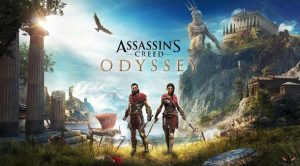
Players who enjoy moving through historical landscapes filled with settlements, ruins, local conflicts, and optional discoveries may also appreciate Assassin’s Creed Odyssey. Its version of ancient Greece is vastly larger and more combat-driven than Shadow’s focused journey through Peru, yet both games can make archaeological exploration compete with a supposedly urgent main story. The difference is scale: Lara’s strongest discoveries are concentrated inside carefully designed tombs, while Odyssey spreads its forts, caves, quests, and ancient sites across an enormous open world that rewards wandering but can also dilute the central narrative.
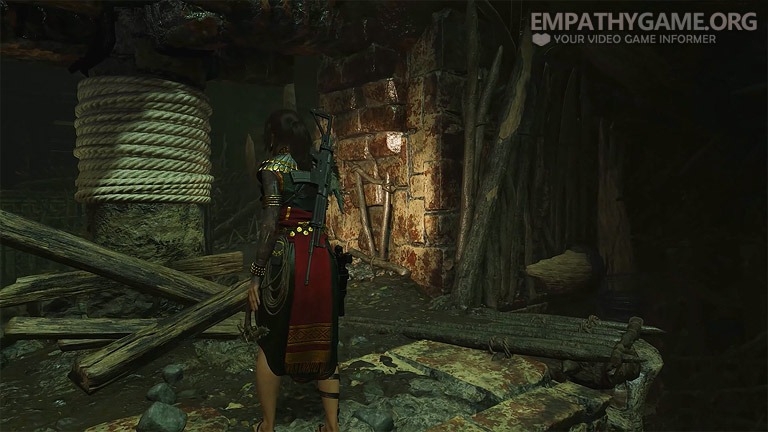
A Strong PC Presentation Without Replacing the Adventure
The PC version remains an impressive showcase for dense foliage, material detail, volumetric light, water, and shadow. A built-in benchmark and extensive graphics options make it easier to balance image quality and performance, while ray-traced shadows and upscaling extend the visual range on compatible hardware. The art direction remains effective without maximum settings because weather, lighting, and environmental composition carry more weight than any single effect.
Keyboard and mouse controls can be remapped and suit precise aiming, while full gamepad support complements the animation-heavy traversal. Neither option fixes camera pressure in narrow underwater passages or the imprecision of some scripted jumps, but both are practical choices. The mature PC release is best viewed as a flexible version of the same adventure, not a technical showcase that needs to overshadow it.
Replayability Depends on the Tombs, Not the Story
A thorough first playthrough already contains most meaningful material: the campaign, optional tombs, crypts, side missions, collectibles, and Definitive Edition adventures. New Game Plus carries progression into another run and adds paths oriented around stealth, combat, or exploration. Separate difficulty categories also help; replaying with minimal navigation assistance changes how familiar environments are read even when the route remains fixed.
The incentives are weaker for players seeking different narrative outcomes or radically new builds. The story follows one arc, and dominant weapons reduce the appeal of rebuilding the arsenal around another style. Challenge modes and downloadable tombs extend the puzzle content, but lasting value depends on whether solving routes more efficiently, pursuing full completion, or attempting harsher difficulty sounds rewarding. Its replay value lies in revisiting spaces, not chasing an endgame.
Final Verdict
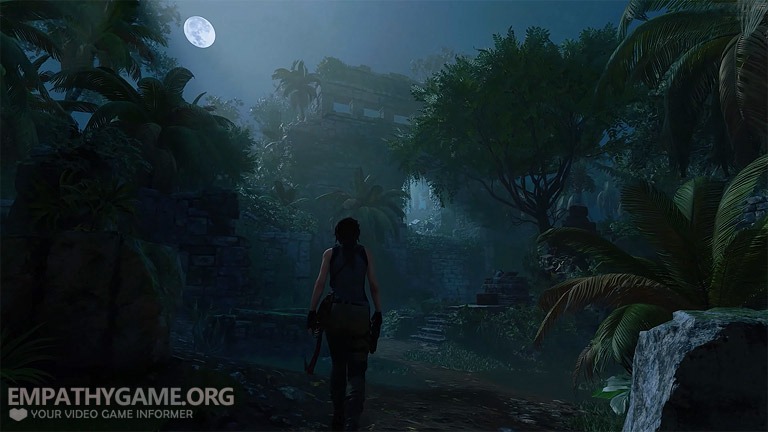
Shadow of the Tomb Raider is the Survivor trilogy’s most committed tomb-raiding game. Its challenge tombs are larger, more mechanical, and more memorable; underwater exploration finally feels substantial; and separate combat, puzzle, and exploration settings let players remove intrusive guidance without making every encounter equally punishing. Stealth also benefits from environments designed around concealment, repositioning, and controlled disruption rather than a march toward another firefight.
The finale is less successful when connecting all of its narrative ambitions. Cozumel establishes Lara’s obsession and its consequences with precision, but the later campaign divides that conflict among Paititi’s politics, Trinity, mythology, and several personal arcs until the original theme loses force. Progression has a similar imbalance: skill and outfit systems reward exploration, while weapon categories contain more statistical options than meaningful tactical alternatives. Paititi is one of the trilogy’s most impressive locations, yet its errands and restrictions slow a story built around urgency.
Players who preferred Rise of the Tomb Raider as a shooter may find the reduced combat and longer quiet stretches restrained. Those who wanted Lara to spend more time decoding ruins, surviving hostile spaces, and solving mechanisms in isolation will find the modern trilogy at its most confident. It does not completely resolve Lara’s origin story, but it gives her the strongest tombs of that journey and finally allows exploration to lead the adventure.
Shadow of the Tomb Raider Pros & Cons
Shadow of the Tomb Raider PC System Requirements
OFFICIAL WINDOWS PC REQUIREMENTS (STEAM LISTING):
MINIMUM:
OS: Windows 7, 64-bit
CPU: Intel Core i3-3220 / equivalent AMD processor
RAM: 8 GB
GPU: NVIDIA GeForce GTX 660 / GTX 1050 or AMD Radeon HD 7770
DirectX: Version 11
Storage: 40 GB available space
Additional Notes: A 64-bit processor and operating system are required
RECOMMENDED:
OS: Windows 10, 64-bit
CPU: Intel Core i7-4770K 3.4 GHz / AMD Ryzen 5 1600 3.2 GHz
RAM: 16 GB
GPU: NVIDIA GeForce GTX 1060 6 GB / AMD Radeon RX 480 8 GB
DirectX: Version 12
Storage: 40 GB available space
Additional Notes: A 64-bit processor and operating system are required
Additional PC Performance and Setup Notes
- Steam still displays Windows 7 in the game’s legacy minimum specification, but the Steam client itself now requires Windows 10 or later. GOG lists Windows 10 64-bit as its minimum OS and has checked its preserved build for Windows 10 and Windows 11.
- DirectX 12 can improve CPU utilization on supported systems, while DirectX 11 remains useful when troubleshooting crashes, older hardware, or conflicting overlays.
- Ray-traced shadows can significantly reduce performance, especially at higher resolutions and quality settings. NVIDIA DLSS and Intel XeSS are also available on supported hardware.
- The built-in benchmark is useful for comparing presets and identifying CPU- or GPU-limited settings before changing the campaign configuration.
- Texture quality, shadow quality, screen-space reflections, ambient occlusion, volumetric effects, anti-aliasing, and resolution scaling are among the most useful settings to adjust.
- Install current graphics drivers, verify storefront files, disable conflicting overlays or outdated mods, and compare DirectX 11 with DirectX 12 if crashes or unusual stuttering persist.
Official Trailer
Note: This trailer presents Lara’s journey through the jungle, Paititi, tombs, climbing routes, stealth encounters, and Maya-apocalypse storyline, while the written guide adds current Definitive Edition ownership, store, DLC, Steam Deck, requirements, modding, and setup details.
Frequently Asked Questions
Is Shadow of the Tomb Raider worth playing in 2026?
Yes, especially if you enjoy exploration, environmental puzzles, challenge tombs, stealth, cinematic action, and jungle traversal. It contains less frequent combat than Rise of the Tomb Raider, but its tombs, underwater routes, and separate puzzle/exploration difficulty settings give it a distinct place in the Survivor trilogy.
When was Shadow of the Tomb Raider released, and which platforms support it?
Shadow of the Tomb Raider released on September 14, 2018. Native versions are available for Windows PC, macOS, Linux, PlayStation 4, and Xbox One; newer PlayStation and Xbox consoles can also run the console versions through backward compatibility.
Where can I buy Shadow of the Tomb Raider on PC?
Official Windows PC purchase and download options include Steam, Epic Games Store, GOG, and Microsoft/Xbox Store. Steam also provides the macOS and Linux builds, while GOG sells a DRM-free Windows version.
Is Shadow of the Tomb Raider on Xbox Game Pass or PC Game Pass?
Xbox’s product page states that cloud play through eligible Game Pass tiers requires ownership of the game. A Game Pass subscription should therefore not be treated as a guaranteed catalogue entitlement; check the Xbox listing before subscribing specifically for access to this game.
Is the GOG version of Shadow of the Tomb Raider DRM-free, and does it include co-op?
The GOG Definitive Edition is DRM-free, works without online activation, and can use optional GOG Galaxy or official offline installers. GOG lists cloud saves through Galaxy and Windows 10/11 compatibility checks, but it explicitly states that co-op mode is not available in its version.
Do I need an Epic Games account to play the Steam version?
No. Buying the game on Steam does not require purchasing it through Epic Games Store or signing into an Epic Games Store account for the single-player campaign. The PC version may use Epic Online Services components for some online infrastructure, but that is separate from owning an Epic storefront account.
Which edition of Shadow of the Tomb Raider should I buy?
The Definitive Edition is the straightforward choice for a new player because it combines the base campaign with all seven DLC challenge tombs plus the downloadable weapons, outfits, and skills. Existing owners of the base game, Season Pass, Croft Edition, or individual DLC should check their library before buying another complete package.
Does Shadow of the Tomb Raider Definitive Edition include the other Tomb Raider games?
No. It contains Shadow of the Tomb Raider and its DLC only. The Survivor trilogy itself consists of Tomb Raider (2013), Rise of the Tomb Raider, and Shadow of the Tomb Raider.
Which DLC adventures are included, and how do I access them?
The seven DLC adventures are The Forge, The Pillar, The Nightmare, The Price of Survival, The Serpent’s Heart, The Grand Caiman, and The Path Home. Their related missions become available as Lara reaches the required campaign regions or story progress, so continue the main story and confirm the Definitive Edition content is installed if a mission has not appeared yet.
Does Shadow of the Tomb Raider have multiplayer or co-op?
The main campaign is single-player. Selected challenge tomb content supports online co-op on compatible versions, while Score Attack and Time Attack provide additional challenge modes. The GOG release specifically omits co-op.
What order should I play the Survivor trilogy in?
Play Tomb Raider (2013), then Rise of the Tomb Raider, and finish with Shadow of the Tomb Raider. Shadow’s immediate story can still be followed on its own, but the earlier games provide stronger context for Lara, Jonah, Trinity, and the long-running Croft family storyline.
Is Shadow of the Tomb Raider an open-world game?
It is not one continuous open world. Instead, it uses interconnected regions and large hubs such as Paititi, Kuwaq Yaku, and Mission of San Juan that can be revisited for side missions, tombs, crypts, collectibles, merchants, and unexplored routes.
Can I keep playing after the story, and does it have New Game Plus?
Yes. You can continue exploring most regions after the campaign to finish optional content, and New Game Plus carries much of Lara’s equipment, weapons, outfits, skills, and upgrades into another run. New Game Plus also offers Serpent, Jaguar, and Eagle paths with additional rewards oriented toward different playstyles.
Can combat, exploration, and puzzle difficulty be changed separately?
Yes. These three categories can be adjusted independently, so you can keep combat forgiving while reducing navigation paint, Survival Instinct guidance, or puzzle hints. Deadly Obsession places all three on their hardest settings and restricts saving to base camps.
What are good beginner tips for Shadow of the Tomb Raider?
Explore side paths, activate base camps, complete challenge tombs for skills, improve resource capacity, gather plants before difficult encounters, and use stealth before committing to open combat. Save rare crafting materials for equipment and weapons you actually use rather than upgrading every item immediately.
How does stealth work?
Lara can hide in vegetation, cover herself in mud, blend into prepared mud walls, distract enemies, use fear arrows, perform silent takedowns, attack from water or branches, and break line of sight after detection. The strongest encounters reward changing elevation and position instead of clearing every enemy from one hiding spot.
How do skills and crafting work?
Skills are divided among Seeker, Scavenger, and Warrior categories covering exploration, survival, stealth, resource gathering, ranged attacks, and direct combat. Lara also gathers plants, salvage, animal materials, ore, and other resources for ammunition, weapon upgrades, outfits, and equipment capacity.
Are the challenge tombs worth completing?
Yes. They contain many of the game’s strongest environmental puzzles and reward Lara with useful skills. The Definitive Edition tombs are especially worthwhile because they add substantial puzzle spaces, related missions, equipment rewards, and challenge-mode content.
What accessibility options does Shadow of the Tomb Raider include?
The game includes separate difficulty categories, captions and subtitle options, reduced camera shake, hold-or-toggle choices, alternatives to repeated button presses, and settings that control traversal markings, puzzle guidance, and Survival Instinct highlighting.
What are the minimum and recommended PC requirements?
Steam lists a 64-bit Intel Core i3-3220 or AMD equivalent, 8 GB RAM, GTX 660/GTX 1050 or Radeon HD 7770, DirectX 11, and 40 GB storage as the minimum. Its recommended specification uses an Intel Core i7-4770K or Ryzen 5 1600, 16 GB RAM, GTX 1060 6 GB or Radeon RX 480 8 GB, DirectX 12, and 40 GB storage.
Does Shadow of the Tomb Raider work on Windows 10 and Windows 11?
Yes. The current Steam client requires Windows 10 or later even though the game’s legacy Steam minimum still displays Windows 7, while GOG lists Windows 10 as its minimum OS and has checked its preserved release for Windows 10 and Windows 11.
Should I use DirectX 11 or DirectX 12, and does the game support ray tracing or upscaling?
DirectX 12 is the normal choice for the game’s newer graphics path and features, while DirectX 11 can be useful when troubleshooting older hardware or crashes. The Windows version supports ray-traced shadows, NVIDIA DLSS, and Intel XeSS on compatible hardware.
What PC settings should I adjust first?
Use the built-in benchmark, begin from a preset appropriate for your GPU, and reduce ray-traced shadows, shadow quality, screen-space reflections, ambient occlusion, or other heavy effects if performance is unstable. Texture quality can often remain higher when the GPU has sufficient VRAM.
Why does Shadow of the Tomb Raider crash or stutter on PC?
Common causes include outdated graphics drivers, damaged store files, overlays, unstable overclocks, insufficient VRAM, DirectX 12 conflicts, aggressive ray-tracing settings, or outdated mods. Verify the official installation, update drivers, disable conflicting overlays, and compare DirectX 11 with DirectX 12 before attempting more invasive fixes.
Does Shadow of the Tomb Raider support controllers on PC?
Yes. The PC version supports controllers alongside keyboard and mouse. A gamepad suits the animation-heavy traversal well, while mouse aiming can be more precise during combat.
Is Shadow of the Tomb Raider Steam Deck Verified?
No. Valve rates it Playable rather than Verified. Steam compatibility data says the game can display warnings and its launcher/setup may need touchscreen or non-controller navigation, but default controls, controller icons, interface text, and default performance are considered functional.
Does Shadow of the Tomb Raider support mods?
Unofficial PC mods are available through communities such as Nexus Mods, including outfit replacements, visual adjustments, camera tools, model changes, and other tweaks. There are no official modding tools or Steam Workshop support, so back up saves and remove incompatible files if a mod causes problems.
Is the Definitive Edition complete, or is more story DLC required?
The Definitive Edition already packages the complete base campaign and all seven released DLC challenge-tomb adventures. You do not need another story expansion to complete the available Shadow of the Tomb Raider campaign content.
What are the biggest player frustrations with Shadow of the Tomb Raider?
Common criticisms include long periods with little combat, slower pacing in Paititi, outfit restrictions during parts of the story, repeated collectible activities, occasional traversal deaths, and PC issues related to graphics APIs or online components. Players who prioritize tombs, puzzles, stealth, and exploration often value the same slower, less combat-heavy direction.
Still have questions? Check the Tomb Raider community on Reddit, the Steam Discussions, or the official Crystal Dynamics support section.
Sources & References
- Steam — Shadow of the Tomb Raider: Definitive Edition — release information, store features, system requirements, and Steam user reception.
- GOG — Shadow of the Tomb Raider: Definitive Edition — DRM-free ownership, Preservation Program, Windows compatibility, offline installation, and co-op difference.
- Microsoft / Xbox — Shadow of the Tomb Raider Definitive Edition — PC availability, bundle contents, cloud-play ownership requirement, and co-op capability.
- Eidos-Montréal — Shadow of the Tomb Raider — official game overview and released platform list.
- SteamDB — Shadow of the Tomb Raider — Steam Deck compatibility metadata and Steam app information.
- PCGamingWiki — Shadow of the Tomb Raider — engine and PC-specific technical verification.
Similar Games Like Shadow of the Tomb Raider
- Rise of the Tomb Raider
- Tomb Raider (2013)
- Assassin’s Creed Odyssey
- Assassin’s Creed IV: Black Flag
- Far Cry 3
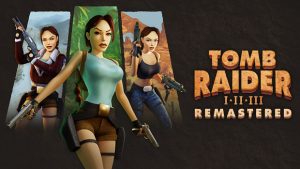
- Tomb Raider I-III Remastered

Found something worth playing through DecideGame?
DecideGame.com is an independent gaming project run by Editor Zero. If this guide helped you discover a game, solve a problem, or find useful information, you can support DecideGame.com and help keep new and updated game guides coming.
DecideGame — PC Game Guides, Reviews & Setup Help