
📅 Game released: 2018
Use this updated 2026 The Forest PC guide to compare official Steam purchase, download and installation options, check system requirements, and understand 8-player co-op, VR support, Steam Deck compatibility, mods, and survival-horror gameplay.
 By Editor Zero — independently researched, edited, and maintained.
Last updated: 26 October 2026
Last reviewed: 26 October 2026
Table of Contents
- Quick Summary
- Quick Facts
- Official PC Stores, Download & Installation
- The Forest Review
- Pros & Cons
- PC System Requirements
- Frequently Asked Questions
- Similar Games
The Forest Quick Summary
✔ First-person open-world survival horror from Endnight Games, following a father who survives a passenger plane crash and searches for his missing son on a remote peninsula inhabited by cannibals and disturbing mutants
✔ Survival gameplay combines scavenging, hunting, food and water management, tree cutting, weapon crafting, shelters, defensive traps, base construction, stealth, and exploration of extensive underground caves
✔ Similar to Subnautica through its isolated crash-survivor premise, first-person exploration, resource gathering, crafting, base building, dangerous environments, and mysterious story gradually uncovered through discovery
✔ Solo survival and online or LAN co-op for up to eight players on PC; the separate PS4 version supports up to four online players, with no official PC-to-PlayStation cross-play
✔ The original Windows PC game is available through Steam, with Steam Cloud, achievements, controller support, a Steam Deck Playable rating, and an included PC VR mode supporting SteamVR and Oculus PC
✔ The complete main survival campaign and its story are included in the standard game purchase; community mods offer additional options, while Sons of the Forest is a separate sequel rather than DLC or an upgrade
The Forest Quick Facts
Official PC Stores, Download & Installation
👇 Use the official Steam option below to purchase, download, and install The Forest on Windows PC, and review its co-op, VR, controller, ownership, and Steam Deck features before playing.
- Official PC availability: The Forest is sold as a native Windows PC game on Steam. Steam is the verified official PC purchase and installation route for this guide; no separate Epic Games Store, GOG, or Microsoft Store Windows edition was verified.
- Standard game purchase: The Steam version contains the complete original survival-horror game, including the main story, sandbox building, single-player, multiplayer, and supported PC VR functionality. There is no separate paid story expansion or Deluxe Edition required to experience the complete original campaign.
- Sequel distinction: Sons of the Forest is a separate follow-up game, not a remaster, DLC pack, or automatic upgrade for owners of The Forest. Buying either title individually does not grant ownership of the other.
- Steam download and installation: Purchase The Forest through its official Steam store page, sign in through the Steam client, open your Library, select The Forest, and choose Install. Steam manages installation, available updates, and game-file verification.
- Steam account and offline play: Steam ownership and the Steam client are required for this edition. Initial downloading and account verification require internet access, while the single-player game can be played offline after installation when Steam’s offline requirements have been satisfied. Online multiplayer, cloud synchronization, and Steam online services require connectivity.
- PC multiplayer: Steam lists both online co-op and LAN co-op. Up to eight players can share a PC survival session, making Steam the appropriate version for larger cooperative groups. Each player normally needs access to the game through their own Steam account and installation.
- PlayStation compatibility: The PS4 edition supports up to four online players and requires an appropriate PlayStation Plus subscription for online multiplayer. PlayStation ownership does not grant a Windows Steam copy, and official PC-to-PS4 cross-play is not supported.
- PC VR mode: The standard Steam edition includes VR support through compatible SteamVR or Oculus PC hardware. A separate VR game purchase is not needed. PC VR multiplayer also supports sessions with conventional non-VR PC players, although VR controls and comfort can differ substantially from the desktop experience.
- Steam features and controllers: The Steam release includes achievements, Steam Cloud, Family Sharing support, and partial controller support. Mouse and keyboard remain a practical option for inventory management, construction, and precise aiming, while gamepads may require individual preference adjustments.
- Steam Deck: Valve classifies The Forest as Playable rather than Verified. The game launches and is usable with the default controller configuration, but some launcher or setup interactions may require the touchscreen or virtual keyboard. Test the default profile before applying community control layouts or unofficial modifications.
- Community mod compatibility: Nexus Mods and ModAPI provide unofficial modifications, including interface, building, visual, and gameplay changes. Check compatibility with the installed Steam version, back up important saves, and avoid assuming that every mod works in multiplayer or VR. There is no official Steam Workshop integration.

 Visit the Official The Forest Website

The Forest Review
A survival horror sandbox where the greatest threat is never knowing when the woods will turn hostile.
A few minutes of chopping wood can become the most uncomfortable part of The Forest. Then something screams beyond the clearing. A figure appears between the trunks, watches without approaching, and disappears before it becomes clear whether there was ever going to be a fight. The work can continue, but the forest no longer feels empty.
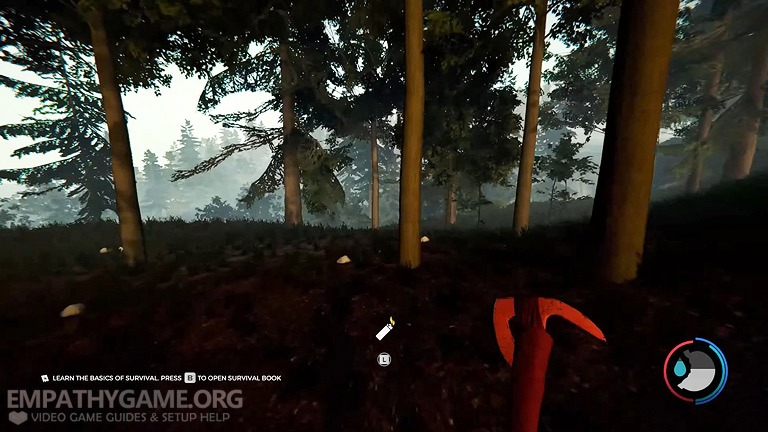
That uncertainty holds Endnight Games’ survival horror together. A passenger plane crashes on a remote peninsula, and the surviving father has to find his abducted son, Timmy. He needs food, water, weapons and shelter. A network of caves gradually reveals why this place is so disturbing, but the game rarely tells you when to investigate it.
The interesting part is how those priorities interfere with each other. Building a camp makes exploration less risky; exploring brings back equipment that makes the camp more secure; new discoveries give you reasons to venture beyond its walls again. It is a compelling cycle, despite imprecise melee combat, awkward inventory controls and repetitive construction. The Forest suits people who enjoy finding their own direction more than those who want a carefully guided horror campaign.
Survival Works Because Ordinary Tasks Carry Risk
At the beginning, small decisions matter more than ambitious plans. The plane axe cuts trees and offers basic protection, but it cannot solve hunger, thirst or cold. Suitcases around the crash site offer a useful starting supply of materials. After that, hunting, gathering and searching abandoned camps become everyday concerns. It is tempting to start designing a large home immediately, but shelter and reliable water are a better foundation.
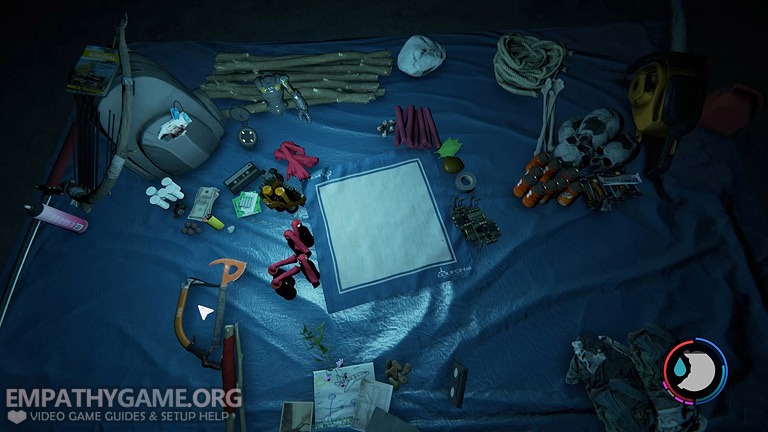
Crafting is simple to understand once its unusual presentation clicks. Ingredients are arranged on an inventory mat rather than selected through a conventional crafting menu. Larger structures come from blueprints in the Survival Guide. There is something satisfying about watching the outline of a wall turn into a physical barrier as each log is delivered. It makes the labour feel connected to the result, although the sparse guidance can leave a newcomer unsure which projects are actually useful.
What makes these routines interesting is that safety never becomes a permanent state. Collecting water or hunting for food is straightforward in daylight, yet an unexpected delay can leave the return journey in darkness. Carrying logs is particularly uncomfortable because attention shifts toward the task and away from the treeline. The horror works without constantly interrupting the player. Sometimes it is enough to make a perfectly ordinary job feel like a bad time to be outside.
Choosing a Campsite Matters More Than Building the Biggest Fortress
Base building looks like a question of materials and design, but location often determines whether a settlement is pleasant to maintain. A spacious clearing may seem ideal until cannibal patrols make every supply run a problem. Somewhere less impressive, with nearby food, fresh water and timber, can be a much better home. Because enemies frequent recognisable parts of the peninsula, learning the surrounding routes matters as much as deciding where the walls should go.
There is also a trade-off between improving a camp and changing the environment around it. Trees provide most of the material for large structures, but chopping them removes cover and creates long trips hauling logs. A log sled reduces the burden without making a huge compound effortless. Falling trees can damage buildings, and even a treehouse has a serious weakness when a sufficiently powerful enemy can destroy the tree beneath it. More construction does not automatically mean more security.
Defensive walls, traps, drying racks and rain collectors gradually make an improvised shelter feel like a functioning home. Returning from a cave with limited supplies is very different when food and water are waiting behind a perimeter that has survived an attack. Yet there is no single ideal way to build. Several small shelters can support regular exploration, while an offshore camp reduces some dangers at the cost of awkward journeys to transport materials. The most useful base is often the one that solves your particular problems rather than the one with the tallest walls.
Cannibals Are Most Disturbing When They Refuse to Fight
What separates the cannibals from ordinary survival enemies is their hesitation. One might remain at the edge of a clearing, another back away when approached, while several others try to surround the player. At other times, an encounter becomes violent almost immediately. There is enough variation to make their presence unsettling, but not enough predictability to treat a peaceful meeting as a guarantee that the next will end the same way.
That creates decisions more interesting than simply choosing a weapon. Should the work continue, or is it better to retreat before more enemies arrive? Standing your ground might discourage a confrontation, but fighting can consume armour, medicine and time that would be better spent elsewhere. Stealth and avoidance therefore have a genuine purpose. Burning effigies and wearing red paint can also influence certain reactions, although relying on either as dependable protection is a mistake.
The behaviour is not as sophisticated as it first appears. Cannibals can get caught on obstacles, repeat crude attack patterns or act inconsistently at close range. Trying to decode every response as if it were part of a deep social simulation reveals those weaknesses quickly. Still, the uncertainty often achieves something more valuable than perfect combat behaviour would. A creature that watches and then disappears stays in your thoughts longer than one that charges predictably every time.
Preparation Is More Satisfying Than the Fighting Itself
Weapons give encounters different possibilities without making direct combat particularly elegant. An axe or club works at close range, though stronger swings leave the player committed to slower movements. Spears create some distance, while bows reward preparation and a steady aim. When several enemies appear, retreating toward a trap or using fire can be more sensible than trying to win through repeated melee attacks. Victory feels most convincing when the situation was understood in advance.
Armour reinforces that approach. Lizard skin provides basic protection, stealth armour helps with remaining unnoticed, and bone armour can be made from bones and cloth. The last option reflects the game’s particularly unpleasant survival logic: burning the remains of defeated cannibals produces materials that may help survive their next attack. Even after winning a fight, there is the question of whether enough protection and supplies remain for another one.
The difficulty is that the fighting itself does not always respect careful decisions. Melee reach can be hard to judge, hit reactions vary, and fast enemies expose the awkwardness of the camera and attack animations. Searching the inventory mat for a needed item is especially frustrating in danger, at least until useful equipment is assigned to quick-select slots. Combat has value because of the decisions surrounding it, not because every blow feels precise. Sometimes leaving an enemy alive is the more satisfying outcome.
The Caves Turn Exploration Into a Commitment
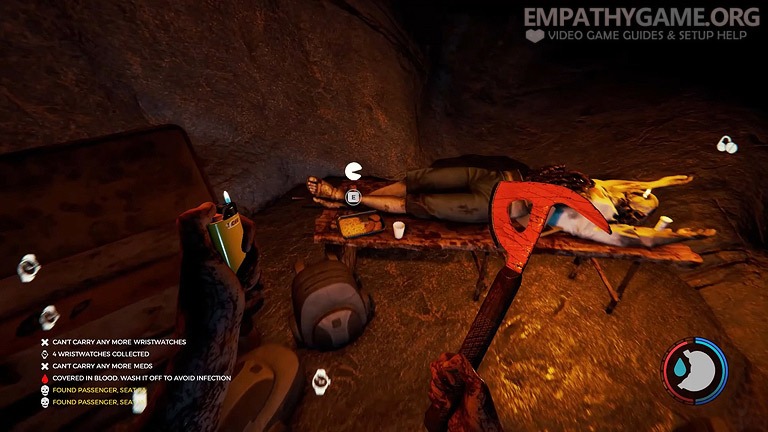
On the surface, the peninsula gives you room to retreat, change direction or reach a shelter. Going underground takes much of that freedom away. Ropes descend into tight tunnels, hanging bodies, water-filled passages and chambers whose edges a lighter barely reaches. The deeper a route leads, the more important the supplies become. Darkness makes distance difficult to judge, and a faint noise can be enough to make the passage behind you suddenly seem very inviting.
One particularly effective idea is that an early defeat in single-player need not mean an immediate game over. A survivor captured by cannibals may regain consciousness hanging inside the Hanging Cave and have to cut himself free. The map and compass can be found in that area, so what initially feels like failure can introduce a significant part of the world. It is a clever expression of the game’s attitude toward exploration: useful discoveries do not always begin with confident decisions.
There are also practical reasons to push deeper. The Modern Axe improves chopping and close-range fighting, the Rebreather and Climbing Axe open routes that would otherwise be inaccessible, and the Modern Bow offers a valuable option for later encounters. Finding one of these items changes what the player can reasonably attempt next. Progression comes from discovering tools and understanding where they matter, rather than collecting experience points.
Caves become less intimidating after their enemies have been cleared because most underground threats do not routinely respawn, though exceptions and inconsistencies exist. A passage that once demanded careful preparation may eventually become a familiar route. That gives exploration a lasting reward, but also reveals a weakness: some cave layouts are confusing enough that searching for the next lead means repeated backtracking through darkness. Being lost is frightening at first. After a while, it can simply become tiring.
The Story Is Stronger for Being Discovered, Not Delivered
Finding Timmy gives the journey its emotional purpose, yet The Forest does not continually remind the player of that objective through dialogue or conventional missions. Its story is pieced together through photographs, discarded belongings, passenger remains, videotapes and increasingly unsettling places. Discovering these fragments feels more natural than being given another objective marker, particularly because many clues raise questions before they answer them.
The surface villages and disturbing effigies suggest a history to the peninsula without immediately explaining its inhabitants. Discoveries underground gradually change how earlier scenes are understood. That connection between the landscape and the mystery is one of the game’s greatest strengths. The environment is not simply a backdrop for survival; it gives the player a reason to abandon a comfortable camp and investigate something that might be dangerous.
There is a contradiction at the centre of this freedom. A father desperately looking for his son can spend days furnishing a cabin, arranging supplies and expanding its defences without advancing the rescue. For some, that freedom is precisely why the sandbox works. For others, the urgency of the story becomes harder to believe the longer it waits. There is substantial narrative direction and more than one ending, but the game expects players to accept that the mystery will unfold at their own pace.
Progression Depends on What You Learn About the Peninsula
There is no conventional level system that makes every fight a step toward another skill point. Improvement comes from better equipment, familiar landmarks, useful crafting knowledge and routes that make future journeys less uncertain. The first trip into a cave can drain food, medicine and light sources. Returning with stronger armour, dependable lighting and an understanding of its layout changes the experience despite the unchanged cave.
The handcrafted map is both a strength and a limit on replayability. Major caves and discoveries stay where they are, so the first encounter with an unfamiliar place cannot be recreated completely. Different campsites, more demanding difficulty settings, lighter expeditions or an ambitious construction project can give another playthrough its own identity. The replay value comes less from unexpected new content than from trying a different approach to a world you have learned to understand.
Co-op Makes Survival Easier, but Horror Harder to Sustain
Co-op changes the balance of labour immediately. While one person collects logs, someone else can prepare food, maintain the defences or explore ahead. Big building projects become less exhausting, and dangerous expeditions benefit from players sharing supplies and watching different approaches. Helping an injured companion or buying time for someone to escape can also create memorable moments of teamwork that do not depend on scripted missions.
But practical advantages come with an atmospheric cost. Alone, a noise in a cave demands attention because nobody else can investigate it for you. In a group, the same cave can feel more like a shared obstacle course, with conversation, coordination and mistakes turning dread into something closer to adventure. Neither version is inherently better. Solo play makes vulnerability central; co-op gives more room for collective problem-solving while sacrificing some of the isolation that makes the horror distinctive.
Final Verdict
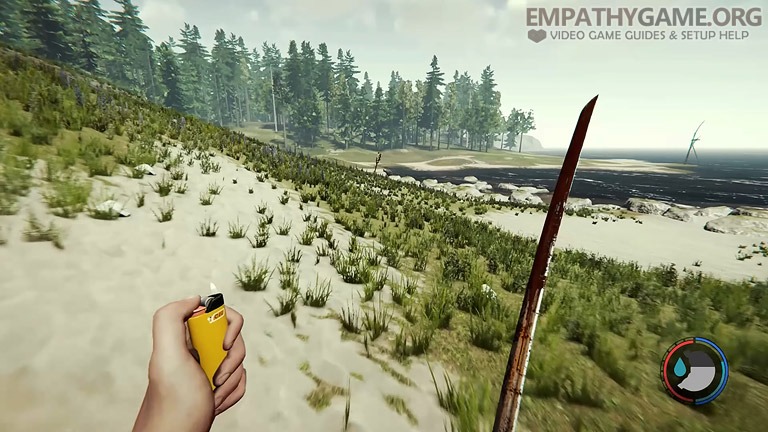
The Forest works best when its systems complicate decisions that once seemed straightforward. A useful clearing becomes an exposed building site. A defensive wall provides enough confidence to investigate a cave. An apparent fight ends with an enemy withdrawing into the trees, leaving the player wondering what will happen next. These situations make surviving feel less like following a checklist and more like learning how to live in an unpredictable place.
There are real compromises. Melee combat is untidy, inventory management interrupts urgent moments, and larger building projects can demand more repetition than their results justify. Story progression can also become frustrating when the next significant clue is buried somewhere in a confusing underground route. Anyone looking for precise action or steady guidance may find the lack of structure more irritating than liberating.
For players who like making plans, learning a landscape and exploring a mystery without being led through every step, the rough edges are easier to accept. The peninsula is carefully designed enough to reward growing knowledge, while its enemies keep even familiar ground from feeling completely secure. Few survival games make a modest wooden shelter feel so rewarding, then remind you so effectively how little protection it may actually provide.
The Forest Pros & Cons
The Forest PC System Requirements
OFFICIAL WINDOWS PC REQUIREMENTS:
MINIMUM:
OS: Windows 7 (historical developer-listed requirement)
CPU: Intel Dual-Core 2.4 GHz
RAM: 4 GB
GPU: NVIDIA GeForce 8800GT
DirectX: Version 9.0
Storage: 5 GB available space
Sound Card: DirectX-compatible
Additional Notes: For 32-bit Windows systems, the official listing advises ensuring that at least 4 GB of RAM is usable by the system.
RECOMMENDED:
OS: Windows 7 (historical developer-listed requirement)
CPU: Quad Core Processor
RAM: 4 GB
GPU: NVIDIA GeForce GTX 560
DirectX: Version 9.0
Storage: 5 GB available space
Sound Card: DirectX-compatible
Additional PC Performance and Setup Notes
- Modern Windows: The specifications above reproduce Endnight’s official historical requirements. However, the modern Steam client requires Windows 10 or later, so Windows 10 or Windows 11 is the practical choice for a newly installed Steam copy. The old Windows 7 requirement should not be mistaken for the current Steam client’s minimum OS.
- Hardware expectations: The official minimum and recommended specifications are old desktop-PC baselines, not guarantees for high frame rates, very large constructed bases, or VR. Modern integrated graphics and older laptops can vary significantly in actual performance.
- Graphics adjustments: On modest hardware, begin with the game’s default settings and lower resolution, shadow quality, vegetation-related detail, and other demanding visual options if frame rates become unstable. Large bases and numerous active enemies can place extra demands on the system.
- VR requirements: Steam identifies SteamVR or Oculus PC as supported VR platforms, but the ordinary minimum and recommended specifications are not separate guaranteed VR performance targets. Use the requirements of your PC VR headset and runtime as an additional baseline, and prioritize stable frame rates for comfort.
- Steam Deck setup: The official Playable classification indicates usable controller input, legible game text, and acceptable default graphics behavior under Valve’s testing. Its launcher is the main reported interaction caveat, so start with the standard Steam Deck configuration before changing controls.
- Installation and save precautions: Keep additional storage available beyond the listed 5 GB for Steam maintenance and saved progress. If files appear corrupted or the game fails to launch, use Steam’s installed-files verification before reinstalling. Back up important saves before experimenting with unofficial mods or major configuration changes.
Official Trailer
Note: Endnight Games’ official full-release trailer shows the plane-crash survival premise, forest exploration, resource gathering, shelter construction, encounters with cannibals and mutants, and the unsettling atmosphere of the underground areas. The written guide adds verified PC purchase, download, installation, system requirements, multiplayer, VR, and Steam Deck information.
Frequently Asked Questions
Is The Forest worth playing in 2026?
Yes. The Forest remains a compelling choice for players who enjoy survival crafting, unsettling exploration, unpredictable enemy encounters, and cooperative base building. Its limited guidance, occasionally clumsy combat, and repetitive resource gathering require patience, but its atmosphere and freedom make it especially rewarding for players who prefer discovering things without constant instructions.
Is there a time limit to find Timmy in The Forest?
No. Although the story centers on finding your missing son, you can spend as much time as you want building shelters, gathering resources, and exploring before advancing the narrative. Enemy encounters may become more dangerous as survival continues, but there is no countdown forcing you to finish the story.
How do you progress through The Forest’s story?
Progression depends on exploring the peninsula, investigating caves, recovering important equipment, and discovering clues about Timmy’s disappearance. The game does not provide a conventional quest-marker route through the campaign, so cave exploration and attention to environmental clues are essential.
Where do you find the map and compass in The Forest?
Both are found in Cave 2, also known as the Hanging Cave, near the main cannibal village. The map initially reveals little and fills in as you explore, while the compass helps with navigation. Players captured by cannibals during their first single-player knockdown may also awaken in this cave.
What should beginners do first after the plane crash?
Collect supplies from the aircraft and nearby suitcases, gather sticks and stones, and establish a reliable source of food and drinking water. Build a small shelter so you can save your progress, and avoid unnecessary fights before acquiring better weapons and armor. A safe location with access to resources is more valuable initially than a large fortified base.
How do you discover crafting recipes in The Forest?
Open the inventory and place an ingredient on the crafting mat in the center. Hover over the gear icon to reveal compatible recipes and their required materials, then combine the correct ingredients to create the item. The Survival Guide separately provides blueprints for shelters, traps, furniture, and other structures.
What is the best way to get clean drinking water?
Rainwater collectors made from turtle shells and sticks provide a renewable source of safe drinking water, while an old pot can be used to boil collected freshwater over a fire. Carrying water in a waterskin is useful for longer cave expeditions. Drinking untreated water from ponds can damage your health.
Do you need to build a large base to finish The Forest?
No. The story can be completed with relatively little construction, provided you have enough supplies, suitable equipment, and places to save. Large bases mainly provide storage, protection, and creative building opportunities rather than serving as mandatory campaign objectives.
Where is the safest place to build a base in The Forest?
Locations away from heavily used cannibal patrol routes, with nearby food, trees, and freshwater, are generally good choices. Small offshore islands can offer additional protection because most land enemies cannot swim, although moving building materials across water becomes more complicated. No location is equally convenient or completely free from environmental dangers.
Do cannibals become more aggressive the longer you survive?
Enemy encounters can become more dangerous over time, with stronger mutants appearing and patrols creating greater pressure. However, enemy behavior also depends on where you travel, where you build, and how encounters develop. There is no single fixed survival day when every enemy suddenly becomes hostile.
Can cannibals and mutants swim in The Forest?
Most cannibals and land-based mutants cannot swim, making water an effective defensive barrier. Rafts and offshore shelters can therefore provide useful protection during ordinary encounters, although sharks and other environmental hazards mean water is not completely safe.
Can you stop cannibals from destroying your buildings?
Yes. The Gameplay settings include an Allow Building Destruction option that can be disabled to protect structures from normal damage and destruction. This does not stop enemies from approaching or attacking you, but it makes long-term construction less frustrating.
Do trees grow back after being cut down?
Yes, when the Regrowing Trees setting is enabled. A portion of eligible trees can regrow after sleeping, provided their stumps remain intact. Destroying a stump prevents that tree from returning through normal regrowth, which is useful when clearing space for buildings.
What does sanity actually do in The Forest?
Sanity is a character statistic affected by actions such as spending time in caves, killing enemies, eating human remains, resting, and listening to music. Its main confirmed gameplay purpose is unlocking the ability to construct effigies when sanity falls below 90%. It does not function as a conventional hallucination system or cause death when it reaches zero.
Are there guns in The Forest?
Yes, although firearms are limited rather than the focus of combat. The Flintlock Pistol can be assembled by collecting eight hidden gun parts from explosive caches around the peninsula, while the Flare Gun provides another ranged option. Bows, spears, axes, clubs, and improvised weapons remain more practical for many encounters.
Does The Forest autosave, and how do you save your game?
The Forest does not use a conventional automatic checkpoint system for normal survival progress. Save manually at suitable shelters, beds, tents, and other supported save points before quitting or undertaking dangerous expeditions. Saving frequently is especially important because an unexpected death can otherwise erase substantial progress.
What happens when you die in The Forest?
In single-player, the first knockdown can result in cannibals capturing you and taking you to a cave, giving you an opportunity to escape. Further deaths can trigger Game Over and require loading a previous save. In multiplayer, teammates can revive downed players; otherwise, they may respawn at the plane and need to recover their dropped belongings.
Which difficulty should beginners choose, and can you play without cannibals?
Normal is the recommended starting point for experiencing The Forest’s intended balance of survival, exploration, and combat. Peaceful removes ordinary cannibal and mutant encounters while retaining survival mechanics and the story, although hostile wildlife and the final story boss can still pose dangers. Hard and Hard Survival increase the challenge, and difficulty normally cannot be changed on an existing save.
How do you unlock Creative Mode in The Forest?
Creative Mode becomes available after completing the main story through the ending that unlocks it. It removes ordinary survival demands and building-material costs, allowing players to construct freely without the usual enemy pressure. It is particularly useful for experimenting with elaborate bases.
Does The Forest have multiple endings, and can you continue playing afterward?
Yes. The story offers two main endings based on a major decision near the conclusion. One ends the campaign, while the alternative allows continued survival and exploration on the peninsula. Save beforehand if you want to preserve the option to experience both outcomes without restarting.
How long does it take to finish The Forest?
A story-focused playthrough commonly takes around 15–25 hours, depending on exploration, difficulty, and familiarity with the caves. Players who spend time building large bases, collecting equipment, discovering secrets, or surviving cooperatively can easily spend many more hours without reaching the ending.
Is The Forest’s island randomly generated?
No. The peninsula has a fixed geography, including its caves, major landmarks, and important item locations. The plane’s crash location can vary, while enemy encounters and player decisions make individual survival sessions feel different. Learning the landscape becomes a meaningful part of progression.
Can you complete The Forest’s entire story in multiplayer?
Yes. PC players can explore caves, collect essential items, fight enemies, construct bases, and complete the main story cooperatively. Story progress belongs to the hosted world, so coordinating important discoveries and keeping the same group together can make progression easier to manage.
How does saving work in The Forest multiplayer?
In a normal player-hosted session, the host saves the shared world, including structures and world progress, while joining players must separately save their own character inventory and position. Everyone should save at a supported location before leaving. When returning, clients should choose Continue for the existing world rather than starting a new character.
Does The Forest support split-screen or couch co-op?
No. The Forest does not include native split-screen or same-screen local co-op on PC or PlayStation. Players need separate devices and game access to play together through the supported network multiplayer modes.
Can you play The Forest over LAN or use dedicated servers?
Yes. The Windows PC edition supports LAN co-op and online multiplayer, and a separate The Forest Dedicated Server tool is available through Steam. Dedicated servers can keep a shared world accessible without relying on the original player’s game session being open, although proper server configuration and saving remain necessary.
Does The Forest support crossplay between PC, PS4, and PS5?
No. Steam players cannot join PlayStation multiplayer sessions. However, PS5 users running the backward-compatible PS4 edition can play within the PlayStation ecosystem alongside PS4 users. The Forest has no native Xbox release or official cross-platform progression system.
Can VR players play The Forest with friends who are not using VR?
Yes. The Windows PC edition allows VR players and ordinary desktop players to participate in the same multiplayer session. VR uses different movement and interaction controls, so combat, construction, and some interface functions can feel different, but a separate VR-only multiplayer world is not required.
How scary and graphic is The Forest?
The Forest contains intense horror, violent cannibal encounters, disturbing mutants, blood, gore, dismemberment, and occasional nudity. Its darkness, underground environments, and unpredictable enemy behavior can make solo exploration particularly unsettling. Players sensitive to these themes may prefer Peaceful mode, although the underlying atmosphere and story remain disturbing.
Still have questions? Check the The Forest Reddit community or The Forest Steam Discussions for help with survival mechanics, multiplayer saves, base building, cave exploration, and PC troubleshooting.
Sources & References
Key factual and technical information in this guide was checked against relevant official and community sources, including:
- Endnight Games — The Forest — official game description, survival systems, building, exploration, multiplayer, and developer information
- Steam — The Forest — official PC purchase availability, release date, features, VR support, system requirements, Steam Deck rating, and user reception
- PlayStation — The Forest — official PS4 platform availability, online-player limit, and PlayStation Plus requirements
- PCGamingWiki — The Forest — PC engine identification, technical information, Windows release history, and platform-specific compatibility references
- Metacritic — The Forest — original PC critic reception and aggregate review score
- IGN — The Forest Review — independent critical assessment of enemy behavior, survival gameplay, atmosphere, and the original PC release
Similar Games Like The Forest

Found something worth playing through DecideGame?
DecideGame.com is an independent gaming project run by Editor Zero. If this guide helped you discover a game, solve a problem, or find useful information, you can support DecideGame.com and help keep new and updated game guides coming.
DecideGame — PC Game Guides, Reviews & Setup Help