
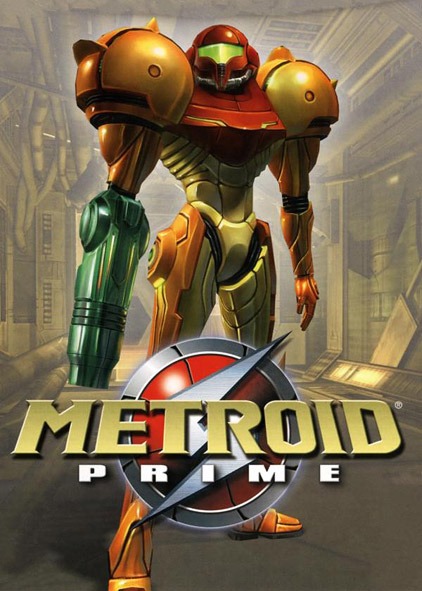
📅 Game released: 2002
Metroid Prime is a first-person sci-fi adventure in which bounty hunter Samus Aran explores Tallon IV, scans alien ruins, fights Space Pirates and unlocks new routes with her Power Suit upgrades. This PC guide covers the original GameCube game, the Wii Trilogy edition and Metroid Prime Remastered, including official download status, PrimeHack and Dolphin setup, Switch emulation alternatives and emulator system requirements.
 By Editor Zero — independently researched, edited, and maintained.
Last updated: 24 November 2026
Last reviewed: 24 November 2026
Table of Contents
- Quick Facts
- Official PC Store Status, Download & Installation
- Metroid Prime Review
- Pros & Cons
- PC System Requirements
- Frequently Asked Questions
- Similar Games
Metroid Prime Quick Facts
- Game: Metroid Prime (2002) / Metroid Prime: Trilogy (first game, 2009) / Metroid Prime Remastered (2023)
- Developer: Retro Studios; Remastered — Retro Studios with development support including Iron Galaxy Studios
- Publisher: Nintendo
- Genre: Action-Adventure, Sci-Fi, First Person Shooter (FPS), Metroidvania (first-person adventure)
- Release: November 17, 2002 (GameCube, North America); Trilogy — August 24, 2009 (Wii, North America); Remastered — February 8, 2023 (Switch, digital); no official Windows PC release
- Platforms: Original — GameCube, Wii (Japanese standalone rerelease); Trilogy — Wii, Wii U; Remastered — Nintendo Switch
- Modes: Single-player campaign; no co-op or multiplayer in the first game or its remaster
- Recommended PC emulation route: PrimeHack with the Wii Trilogy edition for modern controls; Dolphin for the original GameCube disc
- Remastered PC alternative: Eden for the Nintendo Switch edition; community-reported compatibility varies
- Steam Deck: No official Steam release or Valve rating; PrimeHack has a Linux build for unofficial emulation
- Engine: Retro Studios proprietary technology, commonly identified as RUDE (Retro Universal Design Engine) in technical databases
- Community: PrimeHack Wiki, PrimeHack Issues
- PC modding: No official Windows mod support; unofficial PrimeHack control and camera enhancements, emulator texture replacement and community modifications
- Metacritic score: 97/100 (GameCube original); 94/100 (Switch Remastered)
- IGN score: 9.8/10 (GameCube original); 10/10 (Switch Remastered)
Official PC Store Status, Download & Installation
👇 Neither the original Metroid Prime nor Metroid Prime Remastered has an official Windows download. Compare the console editions and the ownership-based emulator setup options below before choosing how to play on PC.
- Native Windows availability: Nintendo has not released Metroid Prime or Metroid Prime Remastered as an official Windows game. Neither has a native Steam, Epic Games Store, GOG or Microsoft Store release. Emulator applications are separate from the copyrighted game and do not include it.
- Which version to choose: For the closest original experience, use the GameCube edition in Dolphin. For mouse aiming or dual-stick controls, the Wii version in Metroid Prime: Trilogy is the preferred PrimeHack route. The Switch remaster offers rebuilt visuals, revised audio and several control schemes, but has more demanding and less predictable PC emulation.
- Official console ownership: Look for legitimate second-hand GameCube or Wii discs. The Trilogy also had a Wii U digital release, but new Wii U eShop purchases ended in March 2023 (see Nintendo support). Previously purchased titles may still be redownloaded while Nintendo provides that service. Metroid Prime Remastered on Nintendo is the separate Switch product, sold digitally and physically; it is also compatible with Switch 2. None of these purchases supplies a Windows license or a PC-ready game file.
- Personal game backup: Use your own legally obtained game and a backup made in accordance with applicable copyright and anti-circumvention laws. For GameCube/Wii discs, consult Dolphin’s disc-dumping documentation and PrimeHack’s FAQ. Standard Dolphin game emulation does not require a separately downloaded proprietary BIOS. A typical PC optical drive cannot read these Nintendo discs. Do not download game images from unofficial archives.
- PrimeHack installation: Get the Windows build from the official PrimeHack releases page, extract it into its own writable folder, and install the Microsoft Visual C++ x64 runtime if needed. Open PrimeHack, double-click the empty game library to add the folder containing your lawfully prepared game backup, and open Metroid Prime: Trilogy. Follow the project installation guide for setup and keep a separate configuration from ordinary Dolphin if using both.
- PrimeHack controls: For Trilogy, open Controllers and configure Wii Remote 1 using the Metroid/PrimeHack profile. Start with the project’s default bindings, then adjust mouse sensitivity, beam and visor selection, jump, lock-on and Morph Ball. For a gamepad, select the controller option in the PrimeHack configuration and bind camera movement to the right stick. Check the supported-version list before using a GameCube disc: not all GameCube revisions work with PrimeHack.
- Original GameCube setup: Download Dolphin from its official website, add your backed-up game folder to the library and configure GameCube Port 1 as a Standard Controller using your PC gamepad. The original game relies on lock-on and a separate aiming input rather than modern twin-stick movement; standard Dolphin preserves that design. It is the fallback if your GameCube revision is not supported by PrimeHack.
- Remastered differences: Metroid Prime Remastered is the first campaign only, not a remaster of the whole Trilogy. Nintendo adds improved models, lighting, sound, unlockable artwork and modern dual-stick controls alongside classic and pointer-inspired alternatives. The core world layout and progression are retained.
- Remastered setup with Eden: Get a stable Windows build from the Eden project release page. The Eden setup documentation requires game data, console firmware and keys sourced from your own hardware through lawful means. If you cannot obtain these without violating applicable law, use the original console route instead. With lawful files already available, follow the project’s setup guide, add the game folder and configure a controller under Emulation > Configure > Input. Select the remaster’s Dual Stick scheme in-game. Dolphin and PrimeHack cannot load the Switch game.
- Remastered compatibility: Independent community compatibility reports include Windows sessions near 60 FPS, alongside less successful results on other configurations. These are user submissions, not an official guarantee or DecideGame benchmark. Begin with default emulation settings and native resolution, and avoid assuming that a successful opening sequence guarantees a complete playthrough.
- Saves and handhelds: Keep normal in-game saves and back up emulator user data before changing builds, installing mods or moving files. GameCube, Wii and Switch saves are not interchangeable by default. PrimeHack is available on Linux, including a Flatpak build suitable for trying on Steam Deck; Eden also has a Deck route, but the remaster’s performance is configuration-dependent. These are unofficial alternatives, not Steam Deck verification.
 Download PrimeHack from the Official Project
Download Dolphin from the Official Website
Download Eden from the Official Project

Metroid Prime Review
An atmospheric alien adventure that makes understanding the world as rewarding as conquering it.
One of the most interesting qualities of Metroid Prime is how easily an insignificant detail can become something worth remembering. A suspicious crack in a wall, a platform just beyond jumping distance or a machine that refuses to respond might not mean much when you first encounter it. Several hours later, after acquiring a particular upgrade, that same detail suddenly becomes interesting again. Retro Studios understood that translating Metroid into three dimensions meant preserving this curiosity rather than simply giving Samus a first-person perspective and turning the series into a shooter.
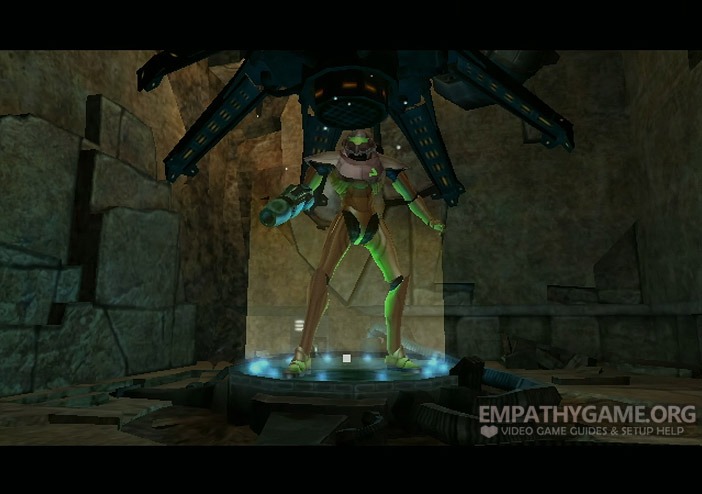
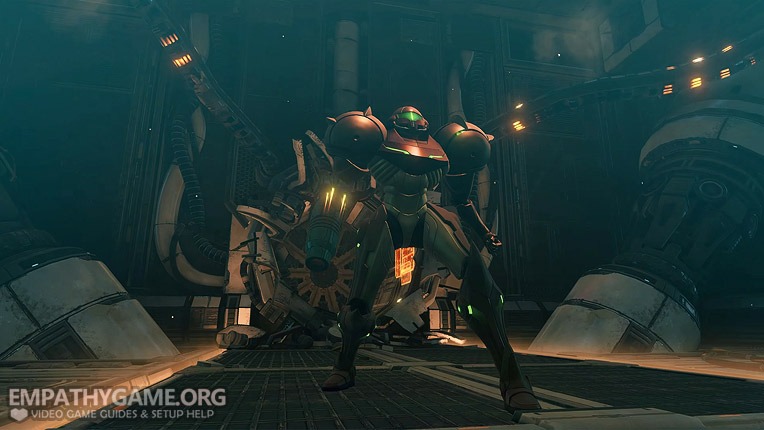
The adventure takes bounty hunter Samus Aran to Tallon IV, where ancient ruins, hostile wildlife and abandoned research facilities conceal the consequences of an environmental catastrophe. There is plenty of combat, but what makes the experience particularly absorbing is the gradual transition from feeling like a stranger on an alien planet to understanding how its environments connect and function. That transition is rewarding, although the amount of travelling involved can occasionally make the journey more exhausting than it needs to be.
Exploration Rewards Attention Rather Than Constant Action
Metroid Prime builds much of its exploration around the difference between what Samus can see and what she can actually reach. The opening hours introduce obstacles long before the equipment needed to overcome them becomes available. An unusually shaped tunnel might require the Morph Ball, while a magnetic track running up a wall becomes useful only after acquiring the Spider Ball. Even when there is nothing immediately collectible in a room, paying attention to its architecture can prove valuable later.
The Scan Visor is perhaps the most important reason why investigating these environments feels worthwhile. Switching away from the Combat Visor reveals information about machinery, materials, creatures and alien structures. Examining a barrier can identify the material from which it is constructed, while scanning an unfamiliar enemy may reveal a weakness that would otherwise require experimentation. What works particularly well here is that the same mechanic satisfies two different kinds of curiosity: the desire to understand the history of Tallon IV and the more practical desire to understand how something works.
The three-dimensional map shows how rooms connect across different elevations, although interpreting more complicated regions takes some practice. The optional Hint System can identify important destinations without explaining the entire route. Knowing where to go and understanding how to get there remain two different challenges. It provides direction without completely removing the satisfaction of finding your own way through the world.
Combat Is Built Around Equipment and Enemy Behavior
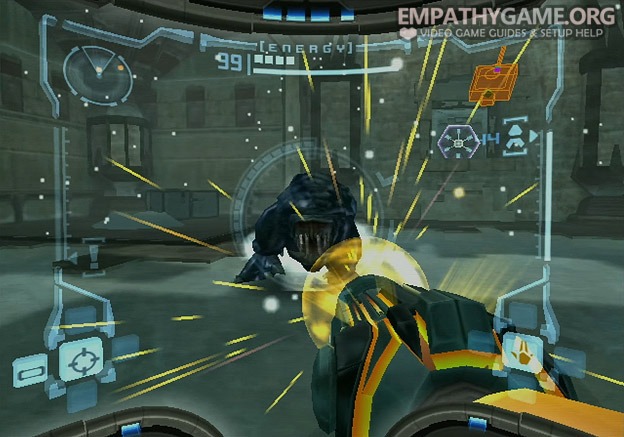
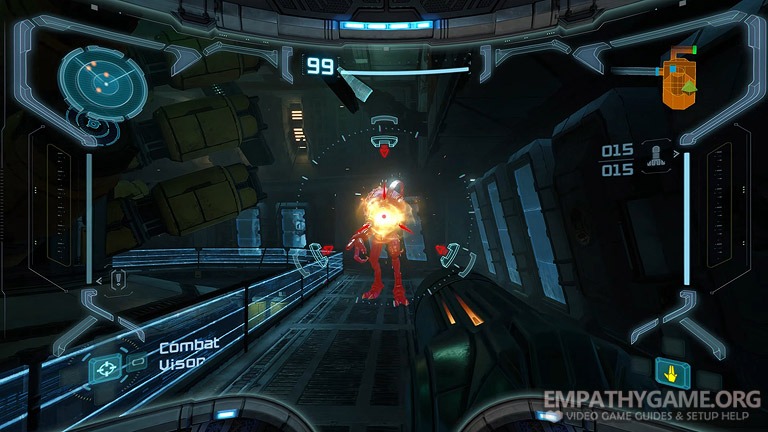
Despite the first-person perspective and Samus’s powerful arsenal, combat rarely revolves around the precision aiming associated with traditional shooters. Target lock-on allows her to maintain focus on a creature while circling it or dodging sideways. Distance, timing and weapon selection often matter more than aiming accuracy. This is especially apparent when encountering creatures against which repeatedly firing the standard Power Beam accomplishes relatively little.
The different beam weapons also retain their usefulness rather than becoming obsolete whenever something more powerful is discovered. The Wave Beam can disrupt susceptible targets with electrical attacks, while the Ice Beam can freeze certain creatures and prepare them for missile follow-ups. Later encounters with beam-specific Space Pirates make equipment selection compulsory. This introduces a welcome tactical element, although fighting several enemies with different vulnerabilities can become awkward when frequent weapon switching interrupts the natural rhythm of combat.
The bosses are particularly interesting when they make use of the environment itself. Flaahgra, the enormous plant creature in Chozo Ruins, draws strength from sunlight directed through a series of mirrors. Stunning the creature creates an opportunity to redirect those mirrors and attack its exposed roots using the Morph Ball. Simply having powerful weapons is not enough without understanding the relationship between Flaahgra and its surroundings. It feels like an environmental puzzle that happens to be fighting back.
Upgrades Give Optional Exploration a Practical Purpose
Progression in Metroid Prime is based on the capabilities of Samus’s Power Suit rather than experience levels or skill trees. The Varia Suit allows her to survive extreme heat, the Gravity Suit makes underwater movement more manageable, and the Morph Ball gradually develops into a separate traversal system involving bombs, half-pipes and magnetic tracks. The transition into third person when using the Morph Ball also provides a pleasant change of perspective, particularly in rooms where movement itself becomes the puzzle.
Finding optional upgrades can have a more noticeable effect on the adventure than their modest appearance initially suggests. Missile Expansions, for example, are particularly valuable when missiles are regularly being used against difficult enemies or as part of charged beam combinations. If ammunition frequently runs low, discovering another expansion provides a practical benefit that extends well beyond increasing the completion percentage. How valuable these discoveries feel naturally depends on combat habits and difficulty, but there is a convincing reason to investigate areas that the main progression route does not require.
Power Bombs introduce a less satisfying complication. Acquiring them makes it possible to destroy Bendezium barriers, but every use consumes a limited resource. It is therefore possible to discover several newly accessible passages and still lack the ammunition needed to investigate all of them. Replenishing Power Bombs through enemy or container drops can become frustrating when supplies are exhausted, particularly during a more demanding playthrough. There is a noticeable difference between unlocking a permanent ability and unlocking an ability whose usefulness depends on whether ammunition happens to be available.
Why Backtracking Can Feel Rewarding and Exhausting
Tallon IV is not a collection of independent levels. Elevators and connecting passages give its regions different purposes as the adventure develops. Magmoor Caverns, for instance, initially feels like an inhospitable stretch of volcanic terrain. Once its connections to other regions become familiar, it takes on a much more practical role in navigating the planet. There is something satisfying about reaching the point where the environment no longer requires constant consultation of the map.
The interesting limitation is that Samus’s freedom of movement develops more noticeably than the movement itself. Space Jump Boots provide a second jump, the Boost Ball introduces bursts of speed in ball form, and the Grapple Beam allows her to cross designated gaps. All three expand what is accessible, yet an ordinary corridor can still require much the same effort to cross near the end of the adventure as it did near the beginning. Some of the side-scrolling Metroid games offer a more dramatic transformation in how familiar environments feel to move through.
At the same time, judging backtracking entirely by movement speed overlooks another important aspect of progression. Additional Energy Tanks and stronger equipment make previously dangerous territory considerably less threatening. Even Chozo Ghosts, which disappear from ordinary view and resist several beam types, are not necessarily worth fighting whenever the exit is accessible. A room that originally demanded a cautious encounter may eventually become somewhere Samus can simply pass through. Travelling the same distance does not always mean repeating the same experience.
The mandatory search for twelve Chozo Artifacts exposes the less enjoyable side of this structure. The clues provided at the Artifact Temple encourage exploration, and finding artifacts gradually can make their collection feel relatively natural. Leaving most of them until late in the campaign, however, can turn the approach to the finale into an extended series of return journeys. Without conventional fast travel, those distances accumulate. Manual save stations can amplify the frustration further, since an unsuccessful encounter may also undo the travelling and exploration completed on the way there.
A Lonely World That Tells Its Own Story
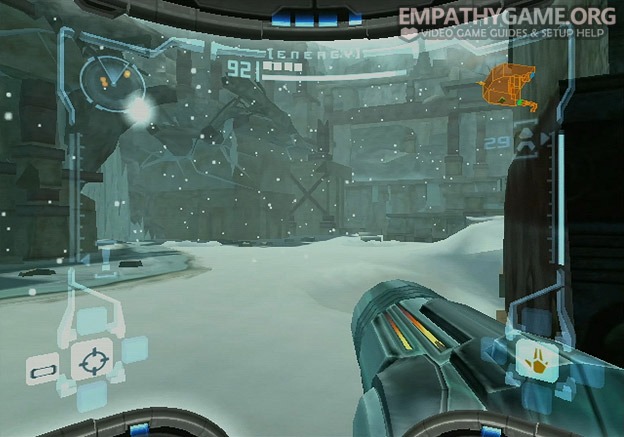
The narrative begins aboard the Space Pirate frigate Orpheon before moving to Tallon IV, where the mysterious substance Phazon has altered the planet’s ecosystem. Samus remains largely silent, and the game rarely interrupts exploration to explain what has happened. Instead, scattered Chozo records and Space Pirate research logs gradually reveal two very different perspectives on the same catastrophe. The history of the planet becomes something players can investigate at their own pace.
One particularly effective example of environmental storytelling comes when exploring the submerged remains of the opening frigate later in the adventure. Architecture previously encountered under emergency conditions takes on a completely different character beneath the water. The slower movement, peaceful music and gradual recognition of familiar surroundings give the location an unexpected emotional quality. Unlike some of the game’s more routine return journeys, revisiting this environment adds something meaningful to the experience that would be difficult to reproduce through a conventional explanatory cutscene.
Much of the atmosphere comes from how differently the individual regions feel. Rain falls across the dense vegetation of Tallon Overworld, Chozo Ruins combines weathered stone with remnants of ancient technology, and the snow-covered surroundings of Phendrana Drifts can feel surprisingly peaceful despite the dangers nearby. The soundtrack plays an enormous role in creating these moods. Its electronic textures and restrained melodies complement the environments so naturally that simply travelling through certain areas can be enjoyable without anything particularly eventful happening. That contrast between peaceful exploration and hostile encounters is one of the game’s greatest strengths.
The Remaster Improves More Than the Graphics
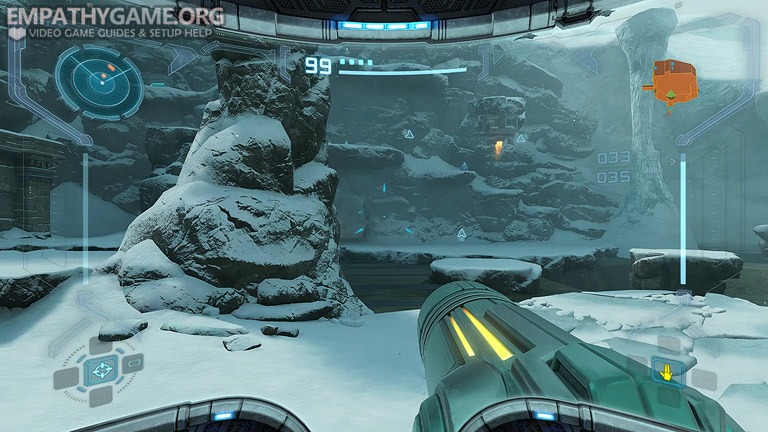
The original GameCube control scheme takes some adjustment, especially for anyone accustomed to independently controlling movement and camera direction with two analog sticks. Lock-on makes combat manageable, but freely looking around while moving is less intuitive. The Wii Trilogy edition’s pointer aiming and the remaster’s dual-stick scheme make investigating environments and reacting to enemies more comfortable. These improvements are particularly welcome in an adventure that encourages players to look closely at their surroundings. They remove much of the control friction without fundamentally changing the design.
Metroid Prime Remastered also rebuilds character models, environmental details and lighting while preserving the recognizable composition of the original rooms. Some of the most effective visual details remain those associated with Samus’s helmet. Rain collects on the visor, environmental moisture can briefly obscure the view, and flashes of light occasionally reveal her reflection. Small touches like these contribute considerably to the feeling of physically occupying the Power Suit rather than simply viewing the world through a first-person camera.
Not every visual change is necessarily an improvement. The remastered Thermal Visor has a softer, blurrier appearance that some players may find uncomfortable during extended use. This is particularly relevant after the lights fail in the Phendrana research facility, where thermal vision becomes central to navigating the darkened rooms. An effect that might be atmospheric in short bursts can become visually tiring when the surrounding circumstances require sustained use. It is a relatively specific weakness in an otherwise thoughtful modernization.
Replayability Comes From Understanding the World
There are no branching story paths or radically different character builds waiting to be discovered on a second playthrough. Instead, replay value comes from understanding the world’s structure, locating previously missed upgrades, completing the Log Book and attempting harder difficulty settings. Item collection also influences ending variations, while the remaster’s galleries provide additional incentives for completion-focused players.
What makes another playthrough potentially interesting is how differently the adventure flows once the geography and progression requirements are understood. Knowing which obstacles are worth revisiting and how efficiently different regions connect can remove much of the uncertainty that shapes the first journey. Collecting everything is less universally appealing, particularly when repeated traversal becomes tiring or certain missed scans can no longer be recovered. The more compelling reason to return is the opportunity to apply knowledge that originally took considerable time and attention to acquire.
Final Verdict
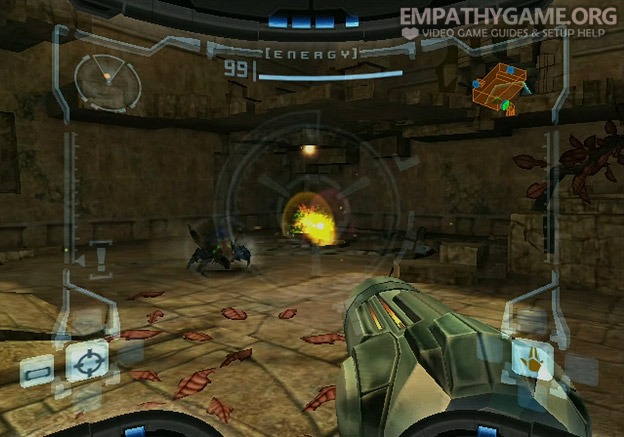
What distinguishes Metroid Prime from many other first-person adventures is how much enjoyment comes from understanding the environment rather than simply overcoming its enemies. The Scan Visor, equipment progression, interconnected regions, music and environmental storytelling all contribute to that experience. Its biggest weaknesses are closely connected to the same design: repeated journeys can become tedious, ordinary combat encounters gradually lose some of their appeal, and the final artifact hunt can interrupt the natural momentum of the adventure.
The remaster makes this world considerably more approachable through modern controls and a carefully rebuilt presentation, while preserving what made the original special. Players looking primarily for fast movement, continuous firefights or cinematic storytelling may find the experience too restrained. For those who appreciate atmospheric sci-fi worlds, thoughtful exploration and the freedom to investigate their surroundings without constant narrative interruptions, Metroid Prime offers something particularly memorable. Tallon IV is not merely a place to complete objectives. Much of the satisfaction comes from getting to know it.
Metroid Prime Pros & Cons
- Pro: Interconnected regions reward observation, route memory and revisiting old obstacles with new abilities.
- Pro: Scan Visor integrates enemy research, environmental clues and optional lore into exploration.
- Pro: Distinctive alien environments, atmospheric music and visor effects create a convincing sense of isolation.
- Pro: Morph Ball puzzles, beam switching and boss encounters give combat and traversal different rhythms.
- Pro: Remastered presentation and optional modern control schemes make the same adventure more approachable.
- Con: Repeated journeys between regions and the late artifact hunt can interrupt the campaign’s momentum.
- Con: Original GameCube aiming and movement take adjustment for players accustomed to modern first-person games.
- Con: Save stations can make a failed encounter cost more progress than expected.
- Con: Some lengthy map trips and first-person platforming sequences can become frustrating.
- Con: There is no official Windows edition; unofficial emulation requires ownership, setup and compatible hardware.
Metroid Prime PC System Requirements
There are no official native Windows system requirements for Metroid Prime, its Wii Trilogy edition or Metroid Prime Remastered. The specifications below describe the emulator and the host PC, not a Nintendo-published Windows version of the game.
Original GameCube / Wii Trilogy — Dolphin and PrimeHack
DOLPHIN PROJECT HARDWARE AND SOFTWARE GUIDANCE:
OS: 64-bit Windows 10 (1903 or newer) or Windows 11
CPU: x86-64 processor with SSE2 support; strong single-thread performance is important
RAM: 2 GB or more recommended by Dolphin (additional memory is needed for Windows and other applications)
GPU: Modern graphics processor with an appropriate supported rendering backend
Graphics backends: Direct3D 11, Direct3D 12, Vulkan or OpenGL, depending on hardware and drivers
Runtime: Microsoft Visual C++ x64 Redistributable when required
Storage: Approximately 1.4 GB for an uncompressed GameCube disc image; allow more space for the dual-layer Wii Trilogy disc, emulator files and caches
See the Dolphin FAQ and Dolphin project requirements. PrimeHack uses Dolphin technology, but its fork-specific settings and build requirements may differ.
PRACTICAL PC STARTING POINT (EDITORIAL ESTIMATE, NOT A TESTED MINIMUM):
OS: 64-bit Windows 10 or 11
CPU: Relatively recent desktop or laptop Intel Core i5 / AMD Ryzen 5-class CPU with strong single-core performance
RAM: 8 GB
GPU: Modern integrated graphics or an entry-level dedicated graphics card with suitable drivers
Graphics target: Start at native internal resolution and normal game speed; increase to 2x or 3x only after confirming stable performance
Metroid Prime Remastered — Eden (Nintendo Switch emulation)
EDEN PROJECT GUIDANCE:
OS: 64-bit Windows with a compatible Eden release
CPU: Modern processor; FMA support is recommended for optimal gameplay
GPU: Vulkan 1.1 or OpenGL 4.6 support, according to the project handbook
Runtime: Microsoft Visual C++ Redistributable
Game prerequisites: Lawfully obtained game backup and necessary files from your own Switch console, where permitted
Storage: Nintendo lists approximately 6.8 GB for the Switch download; reserve additional PC space for your backup, emulator, firmware, saves and shader caches
PRACTICAL PC STARTING POINT (EDITORIAL ESTIMATE, NOT A TESTED MINIMUM):
OS: 64-bit Windows 10 or 11
CPU: Modern six-core Intel Core i5 / AMD Ryzen 5-class CPU or better
RAM: 16 GB
GPU: Modern dedicated Vulkan-capable graphics card; 6 GB VRAM or more is a reasonable starting preference
Graphics target: Default resolution scaling and normal game speed before experimenting with higher resolutions
These are conservative planning suggestions rather than verified game-specific thresholds. The Eden handbook describes the project’s hardware expectations. No PC configuration listed here guarantees a locked 60 FPS or problem-free emulation.
Additional PC Performance and Setup Notes
- Original GameCube widescreen: The original presentation is 4:3. In Dolphin, begin with Graphics > General > Aspect Ratio set to Force 4:3. For an experimental wider view, use Graphics > Hacks > Widescreen Hack and select Force 16:9 in the aspect-ratio menu. This changes the rendered view rather than simply enlarging the original image, but HUD elements, culling and effects can still look incorrect. The Dolphin game-specific documentation also indexes version-specific 16:9 codes; the complete code and revision instructions could not be verified here, so no particular patch is recommended. Do not stack codes with the built-in hack. Disable the hack and restore Force 4:3 if defects appear. For a cleaner widescreen alternative, choose the Wii Trilogy version, which supports widescreen natively.
- PrimeHack graphics: Begin with the supplied default profile and avoid applying generic speed hacks from unrelated Dolphin games. Vulkan or Direct3D are reasonable Windows starting choices; if one produces incorrect effects, try the other. Consult the PrimeHack performance guide for map slowdown and rendering recommendations.
- Frame pacing: Shader compilation may cause temporary stutters. If needed, try Hybrid Ubershaders in Dolphin/PrimeHack on supported hardware, or reduce internal resolution. Persistent slowdown can affect input and audio because emulation speed is tied to the game’s timing.
- Camera and field of view: PrimeHack provides adjustable FOV under Graphics > PrimeHack GFX. Begin close to its defaults and adjust gradually; very wide FOV can alter how the original spaces and visor presentation feel.
- Remastered rendering: Start with Vulkan and default settings in Eden. Keep normal frame-rate behavior and avoid stacking resolution or frame-rate mods before checking scanning, Morph Ball transitions, cutscenes and area changes. A fast introductory area does not establish full-game compatibility.
- Save reliability: Prefer ordinary in-game save stations over relying exclusively on emulator save states. Back up the appropriate emulator’s user and save directories before upgrades or texture changes.
Official Trailer
Note: Nintendo’s official launch trailer shows the 2023 Switch remaster; the written guide also covers the original GameCube and Wii Trilogy editions and explains their separate PC setup routes.
Frequently Asked Questions
Can you play Metroid Prime and Metroid Prime Remastered on PC?
Neither game has an official Windows PC release. Owners of the GameCube or Wii editions can use Dolphin or PrimeHack with a lawfully created personal game backup, while the Nintendo Switch remaster can be played through compatible Switch emulation on suitable hardware. These are unofficial alternatives rather than Nintendo-supported PC versions.
Is Metroid Prime a good starting point for someone new to the Metroid series?
Yes. Although Metroid Prime takes place after the events of the original Metroid, its central adventure on Tallon IV is largely self-contained. Playing Metroid: Zero Mission beforehand provides additional background about Samus Aran and the Space Pirates, but it is not necessary to understand or enjoy Prime.
Is Metroid Prime an open-world game or a linear adventure?
Metroid Prime features an interconnected, semi-open world rather than a conventional open-world map. Regions such as Tallon Overworld, Chozo Ruins, Magmoor Caverns and Phendrana Drifts gradually become accessible as Samus acquires new abilities. Progression combines a structured campaign with opportunities to revisit locations and discover optional upgrades.
What should I do if I get lost or cannot figure out where to go next?
Keep the Hint System enabled in the options menu, examine unexplored doors on the 3D map and use the Scan Visor to investigate unusual objects or blocked passages. After obtaining a new ability, consider which previously inaccessible areas it might open. The Hint System can identify your next major destination, although finding the route remains part of the exploration challenge.
How do you open different colored doors in Metroid Prime?
Blue doors respond to the standard Power Beam, purple doors require the Wave Beam, white doors require the Ice Beam and red doors require the Plasma Beam. Some doors have separate protective shields that require Missiles or other equipment, while certain entrances remain locked until a nearby puzzle, security system or combat encounter has been completed.
Are there permanently missable scans in Metroid Prime?
Yes. Certain creatures, bosses and research objects disappear or become inaccessible as the campaign progresses. If completing the Log Book matters to you, scan unfamiliar enemies and objects when you first encounter them, particularly during the opening Frigate Orpheon sequence and unique boss encounters.
Do you need to collect all 12 Chozo Artifacts to finish Metroid Prime?
Yes. All 12 Chozo Artifacts are required to unlock access to the final area. Visiting the Artifact Temple near Samus’s landing site and scanning its statues provides clues to their locations. Collecting accessible artifacts during your normal exploration can reduce the amount of backtracking required near the end of the campaign.
Does Metroid Prime have fast travel?
No. The original game, Wii Trilogy edition and Nintendo Switch remaster do not offer conventional fast travel between discovered locations. Elevators and interconnected passages link the major regions, so learning shortcuts and planning routes through the 3D map becomes increasingly valuable as the world opens up.
How do the difficulty settings differ between Metroid Prime, Trilogy and Remastered?
The original GameCube release offers Normal and an unlockable Hard mode. The Wii Trilogy edition uses Normal, Veteran and unlockable Hypermode, with Veteran being closer to the original GameCube Normal difficulty. Metroid Prime Remastered offers Casual, Normal and unlockable Hard, making Casual particularly suitable for newcomers who prefer exploration over demanding combat.
How long does it take to beat Metroid Prime?
A first playthrough generally takes around 12–18 hours, depending on how quickly you solve puzzles, navigate Tallon IV and locate the required artifacts. Players aiming to collect every upgrade and complete the Log Book may spend 18–25 hours or longer. Experienced players familiar with the world can finish considerably faster.
Does Metroid Prime have autosave or checkpoints?
No. Progress is recorded manually at designated Save Stations or Samus’s gunship, and dying normally returns you to your last saved position. Saving before exploring an unfamiliar region or attempting a major boss encounter is advisable, especially when you have recently collected several upgrades.
Does Metroid Prime have multiple endings?
Yes. The ending contains additional scenes depending on the percentage of items collected during the campaign, with the most complete ending requiring 100% item collection. Your completion time and Log Book scan percentage do not determine which ending variation you receive.
Does Metroid Prime Remastered have New Game Plus?
Not in the conventional sense of retaining weapons, suits and traversal abilities. Starting another playthrough from a completed save in Metroid Prime Remastered allows previously recorded Log Book entries to carry over, but Samus must obtain her equipment and upgrades again. This is useful for completing missed scans or attempting the unlocked Hard difficulty.
Can you continue exploring Tallon IV after defeating the final boss?
There is no dedicated post-game free-roam mode. If you want to collect remaining Energy Tanks, Missile Expansions, Power Bomb Expansions or other optional items, it is best to complete that exploration before entering the final area. Keep a separate backup of your pre-ending save where possible.
Can you play Metroid Prime with mouse and keyboard like a native PC shooter?
PrimeHack provides unofficial mouse aiming and keyboard movement for compatible editions, making the Wii Trilogy version particularly approachable for PC players. However, Metroid Prime’s combat still relies on mechanics such as target lock-on, lateral dodging, visor switching and enemy-specific beam weaknesses. Modern controls do not turn it into a conventional run-and-gun shooter.
Do you need a Wii Remote or GameCube controller to play Metroid Prime through emulation?
No. Dolphin can map the original GameCube controls to a compatible modern PC gamepad, while PrimeHack can replace the Wii Trilogy edition’s motion-based aiming with mouse input or dual-stick controls. An Xbox-style or PlayStation-style controller is a practical alternative, provided the emulator is configured correctly.
Does Metroid Prime Remastered include the Fusion Suit or the original NES Metroid game?
No. These were unlockable extras associated with the original GameCube release and its connectivity with Metroid Fusion on Game Boy Advance. Metroid Prime Remastered instead features its own unlockable galleries, including artwork, character models and music, without reproducing those original connectivity bonuses.
Does Metroid Prime Remastered include Metroid Prime 2 and Metroid Prime 3?
No. Metroid Prime Remastered contains only the first Metroid Prime adventure. Players interested in all three original numbered Prime games should distinguish it from Metroid Prime: Trilogy for Wii, which includes Metroid Prime, Metroid Prime 2: Echoes and Metroid Prime 3: Corruption.
Still have questions?
Check the Metroid Reddit community, PrimeHack documentation, or Omega Metroid for additional gameplay guidance, emulator setup assistance and community discussion.
Sources & References
Key factual and technical information in this guide was checked against relevant official and community sources, including:
- Nintendo — Metroid Prime Remastered — official platform, release, control options and remaster features.
- Nintendo — Metroid Prime Trilogy — Wii collection contents and Wii U release history.
- PrimeHack project documentation — supported versions, modern controls and emulator configuration.
- Dolphin FAQ — GameCube/Wii emulator requirements, formats and disc backup guidance.
- Eden project Quick Start — Switch emulator prerequisites, setup and controller configuration.
- EmuRank — Metroid Prime Remastered — community-reported Switch emulation compatibility; not an official test or guarantee.
Similar Games Like Metroid Prime




Found something worth playing through DecideGame?
DecideGame.com is an independent gaming project run by Editor Zero. If this guide helped you discover a game, solve a problem, or find useful information, you can support DecideGame.com and help keep new and updated game guides coming.
DecideGame — PC Game Guides, Reviews & Setup Help