
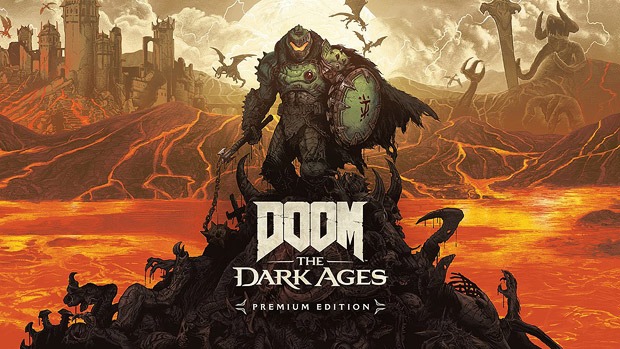
📅 Game released: 2025
DOOM: The Dark Ages is a dark-fantasy first-person shooter that turns the Slayer into a heavily armed frontline fighter, using his Shield Saw to parry demons and push through Hell’s armies. This PC guide covers official Steam, Xbox PC, and Battle.net purchase and download options, the Revelations expansion, Game Pass, system requirements, Steam Deck support, and installation and performance advice.
 By Editor Zero — independently researched, edited, and maintained.
Last updated: 13 November 2026
Last reviewed: 13 November 2026
Table of Contents
- Quick Facts
- Official PC Stores, Download & Installation
- DOOM: The Dark Ages Review
- Pros & Cons
- PC System Requirements
- Frequently Asked Questions
- Similar Games
DOOM: The Dark Ages Quick Facts
- Game: DOOM: The Dark Ages / Standard Edition / Premium Edition / Premium Upgrade / Collector’s Bundle / Revelations
- Developer: id Software
- Publisher: Bethesda Softworks
- Genre: First Person Shooter (FPS), Sci-Fi, Fantasy, Action-Adventure
- Release: May 15, 2025
- Platforms: Windows PC, PS5, Xbox Series X|S
- Major Expansion: DOOM: The Dark Ages | Revelations adds a separate six-level campaign; included with Premium packages and available as a standalone add-on for base-game owners
- Cloud Access: Xbox Cloud Gaming and GeForce NOW, subject to supported regions, plans, and ownership conditions
- Xbox / Battle.net Ownership: Eligible Xbox and Battle.net entitlements carry across linked accounts; Xbox Play Anywhere covers Xbox Series X|S and Windows PC access
- Cross-Save: Campaign saves sync between Xbox Series X|S, Xbox PC, and Xbox Cloud Gaming; Steam and Battle.net saves are separate
- Steam Deck: Verified; first-time setup requires an active internet connection
- Engine: idTech8
- Modes: Single-player campaign and customizable Ripatorium combat arena; no campaign co-op or competitive multiplayer
- Community: Slayers Club, Steam Discussions, Reddit DOOM Community
- PC modding: Nexus Mods for DOOM: The Dark Ages hosts visual, interface, save, performance, skin, and gameplay modifications; official Steam Workshop support is not listed
- Metacritic score: 85/100 on PC
- IGN score: 9/10
- OpenCritic average: 86/100 (multiplatform)
- Steam user reception: Very Positive overall
Official PC Stores, Download & Installation
👇 Compare official Steam, Xbox PC/Microsoft Store, and Battle.net ownership and download options before choosing an edition, Game Pass plan, or Revelations upgrade.
- Official PC stores: The native Windows game is available through Steam, Xbox PC/Microsoft Store, and Battle.net. An official Epic Games Store or GOG Windows release is not listed.
- Standard Edition: Includes the base single-player campaign and the free Ripatorium customizable arena mode. The Revelations story expansion is sold separately.
- Premium Edition: Includes the base game, Revelations, the Digital Artbook and Soundtrack application, and the Divinity Skin Pack for the Slayer, Mecha Dragon, and Atlan.
- Premium Upgrade: Adds the Premium digital extras without buying the base game again. Choose an upgrade for the same storefront/account ecosystem as the base game; subscription users need continuing qualifying access to play.
- Revelations add-on: Base-game owners can buy Revelations separately. Premium Edition, Premium Upgrade, and the Collector’s Bundle already include it, so check your entitlements before purchasing another copy.
- Collector’s Bundle: The physical collector package combines the Premium Edition with a Slayer statue, replica Red Key Card, and SteelBook case. Stock, eligible platforms, and regional availability vary; original preorder and early-access benefits are historical.
- DOOM Anthology: The updated Anthology includes The Dark Ages Premium Edition and other DOOM releases. Older Anthology purchases do not automatically gain The Dark Ages; check the precise bundle you own before buying or repurchasing.
- Game Pass: The base game is included with PC Game Pass and eligible Xbox Game Pass Premium or Ultimate plans. The Xbox store lists cloud access with Premium or Ultimate; Essential members may stream a separately purchased copy where supported. Catalogue and cloud availability vary by plan and region. Revelations remains a separate entitlement unless included in an owned Premium package.
- Xbox and Battle.net ownership: Eligible purchases and PC Game Pass/Ultimate entitlements can be recognized across linked Xbox and Battle.net accounts. Link the accounts as instructed by Battle.net; Steam ownership is separate.
- Xbox Play Anywhere and saves: The Microsoft digital edition supports Xbox Play Anywhere for Xbox Series X|S and Windows PC. Campaign saves sync among Xbox consoles, the Xbox PC app, and Xbox Cloud Gaming, but not to Steam or Battle.net saves.
- Accounts and DRM: The campaign does not require a Bethesda.net account, although it can unlock promotional skins. Battle.net requires its desktop app, Battle.net account, and internet access; Steam lists Denuvo Anti-Tamper, Steam Cloud, and controller support.
- Steam Deck: Valve rates the Steam version Verified, with an internet connection needed for first-time setup. A handheld may need lower resolution, upscaling, and power-setting adjustments to run comfortably.
- Installation space: Bethesda requires a hardware ray-tracing-capable GPU and at least 100 GB free on an NVMe SSD of 512 GB or larger for its published PC tiers. Allow additional headroom for updates and temporary installation files.
 Buy DOOM: The Dark Ages on Steam
 Buy or Play DOOM: The Dark Ages on Microsoft / Xbox Store
Buy DOOM: The Dark Ages on Battle.net
DOOM: The Dark Ages Review
A heavier, meaner reinvention built around standing your ground.
DOOM: The Dark Ages does not simply put DOOM Eternal inside castles. It takes away much of that game’s aerial acrobatics, gives the Slayer a serrated shield, and asks a different question: what if moving toward danger mattered more than constantly escaping it? The answer is a shooter where blocking, parrying, melee, and firearms operate as one system. It is immediately more grounded than Eternal, but not nearly as slow as that description might suggest.
Consider an arena where a heavy demon advances through a crowd of weaker enemies while projectiles cross overhead. Eternal encouraged an airborne circuit around the threat. Here, the stronger move may be to parry the incoming attack, charge into the front line, recover ammunition through melee, and spend it before the enemies can regroup. The Slayer still moves quickly. His speed now feels attached to impact rather than flight.
That distinction gives the combat its personality. Shield Charges slam into demons, melee attacks have convincing weight, and firearms seem built to dismantle enemies rather than merely empty their health bars. The appeal is not simply being powerful; it is discovering how each aggressive action creates the resources or opening needed for the next.
A Prequel About the Slayer Becoming a Legend
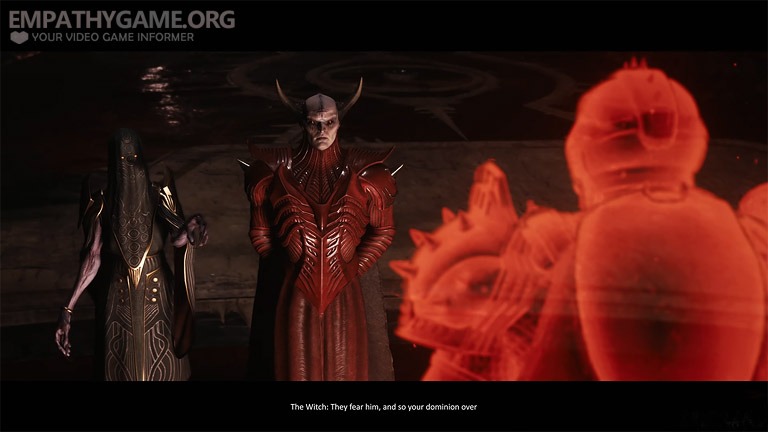
Set before DOOM (2016) and DOOM Eternal, the campaign follows the Slayer fighting alongside Argent D’Nur’s forces as Hell invades kingdoms and distant worlds. The story treats him as a weapon ordinary armies cannot replace, which suits a game about overwhelming force.
Commanders, rulers, enemies, and cinematic scenes receive more attention than in the previous modern entries. The best moments use that perspective to establish what is at stake: a defensive line falls, a settlement is devastated, and the Slayer arrives to change the outcome. Those glimpses of a larger war make the arenas feel less isolated.
The mythology sometimes piles gods, ancient machinery, political bargains, and cosmic threats on top of a straightforward premise. Supporting characters rarely leave as strong an impression as the environments. Still, the story does not need to explain every legend to make the fighting meaningful. The Slayer is a direct answer to a catastrophe everyone else struggles to contain.
For a different perspective on fighting overwhelming nonhuman armies, Helldivers 2 replaces this solitary power fantasy with vulnerable squads, shared Stratagems, friendly-fire mistakes, and extraction pressure. Both make individual battles feel like part of a much larger conflict, even though they approach it from opposite directions.
The Shield Saw Defines the Combat Loop
The Shield Saw blocks projectiles, parries highlighted attacks, cuts through weaker demons when thrown, interrupts tougher enemies, breaks particular defences, and activates environmental mechanisms. Shield Charge also turns a marked opponent into a way of crossing the arena. Calling it a defensive tool misses half its purpose.
A well-timed parry reflects danger back at its source and creates an opening for gunfire or melee. A thrown shield can occupy one threat while another is dealt with. Charging forward is often more useful than withdrawing because the Slayer needs to keep the resource economy moving. The Power Gauntlet, Flail, and Dreadmace turn rechargeable melee attacks into both heavy damage and ammunition recovery; parries help replenish melee charges.
There is more flexibility here than the basic loop initially reveals. Power Gauntlet combinations can be continued around intervening shots, blocks, and Shield Charges rather than requiring uninterrupted punches. Spacing the strikes through other actions builds toward a stronger hit without asking the Slayer to remain exposed in front of one enemy. Melee becomes a way of arranging a fight, not just refilling a meter.
The system has occasional contradictions. A destructive landing into an arena can wipe out weaker demons before they can be used as convenient resources. It looks appropriately brutal, but the player may have preferred to keep that fodder alive for the next exchange. The Dark Ages is at its most interesting when such details make aggression something to manage rather than a button to press indiscriminately.
Weapons have distinct jobs. The Rail Spike can pin enemies to surfaces, the Skullcrusher sprays bone fragments across a crowd, and shotguns reward close-range commitment. Changing firearms is not always effortless, though. Switching to a plasma weapon to dismantle an energy shield, then back to a heavier gun, can demand a moment of space and timing. Compared with Eternal‘s rapid swapping, selection feels more deliberate, sometimes satisfyingly so and sometimes at odds with the momentum the shield creates.
Grounded Does Not Mean Slow
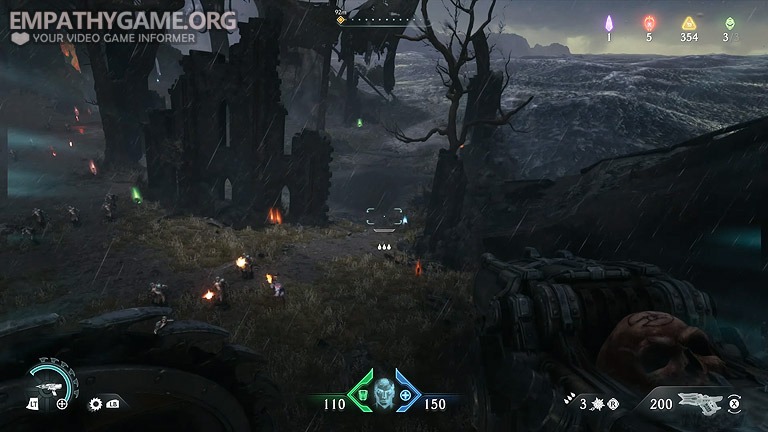
The Slayer spends less time airborne than in Eternal, but threats still arrive from several directions. Fireballs overlap, shielded soldiers block direct shots, and heavy demons close the distance while ranged attackers remain active. Survival depends on reading which danger deserves an immediate answer.
At its best, this resembles a first-person bullet-hell encounter: avoid the slower shot, parry the lethal one, throw the shield through a defensive line, and charge into the gap. But the promise of weaving through attacks is not completely consistent. Large or tracking projectiles can follow a strafe closely enough that blocking becomes the dependable response. For some encounters, frequent parries feel less like a choice between equally viable defences and more like the rhythm the game expects.
That is the central trade-off of grounded combat. The shield makes pressure manageable without restoring Eternal‘s constant aerial escape routes, yet its versatility occasionally crowds out other defensive instincts. The best battles ask the player to choose when to stand firm and when to reposition, not simply to reflect every glowing projectile.
Exploration and Progression Reward Attention
Large levels alternate arena battles with secrets, optional encounters, collectibles, and light environmental puzzles. Gold, Rubies, Wraithstones, Life Sigils, Sentinel Shrines, and challenge rewards connect exploration to useful improvements. Spotting a resource above a ruined passage or finding a Shield Saw interaction can be worth more than rushing toward the next marker.
Upgrades tend to change how equipment works rather than overwhelm the player with loot statistics. Shield improvements alter defence or throwing utility; weapon paths sharpen particular combat roles. That encourages commitment, but it also exposes a balance problem. Once a powerful combination of Super Shotgun damage, Cycler fire, and parry-related upgrades clicks, some players may find little reason to explore the rest of the arsenal. Freedom to ignore less useful tools can become a loss of variety.
The larger maps make the war feel tangible. Ruined villages, forests, siege lines, temples, fortresses, and hellscapes belong to a conflict beyond the current firefight. They are less convincing when the fighting ends and a long journey remains between objectives. Collectible hunting can pull the campaign away from its best momentum, while points of no return reward players willing to examine the map before advancing. Not every wide space earns its size.
Bosses, Difficulty, and Player Control
Bosses concentrate the game’s combat language into readable attacks, shield responses, defensive phases, and openings for concentrated damage. Strong encounters make a successful parry feel like the beginning of a counterattack. Weaker ones repeat familiar phases or stretch a limited pattern across too much health.
Difficulty controls are unusually thoughtful. Parry timing, projectile speed, enemy aggression, damage, resource values, and game speed can be adjusted separately. A generous window makes the shield approachable; stricter timing exposes how carefully its attacks must be read. Players can raise the demands of one system without accepting every restriction of a preset difficulty.
That flexibility has a stranger use in weapon-mastery challenges. When fully upgraded guns kill weaker targets too quickly, some objectives leave little room to perform the required actions. Reducing outgoing damage can actually make practicing a mastery easier by keeping enemies alive. It is an amusing reversal of normal progression, but also a sign that optional challenges and the satisfaction of growing stronger do not always cooperate.
The Dragon and Atlan Mech Provide Scale, Not Depth
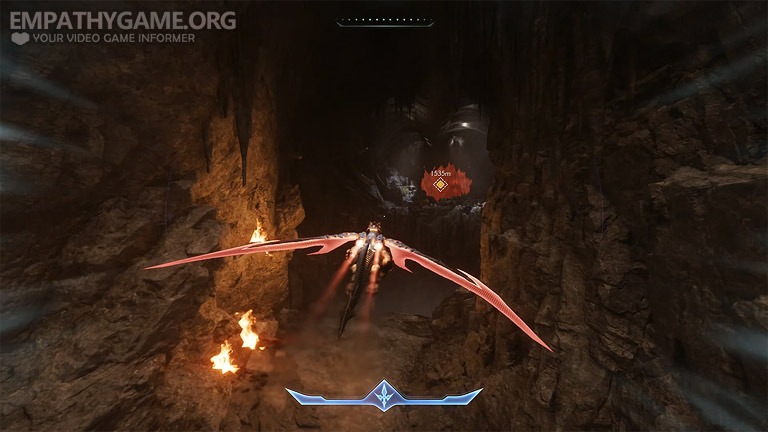
The Mecha Dragon carries the Slayer over vast battlefields; the Atlan mech turns him into a giant combatant trading blows with equally enormous demons. Both communicate a scale ordinary on-foot arenas cannot. Flying between colossal structures or striking a titan gives the war a welcome sense of excess.
Neither sequence matches the decisions available on the ground. Dragon combat largely revolves around targeting, dodging, and returning fire, while Atlan encounters use a narrower range of heavy strikes, counters, and evasion. Their simplicity is fine as a brief change of pace, but stretched encounters underline what is missing: shield interactions, meaningful weapon choices, and the resource loop that make normal combat so absorbing. These spectacles work best as punctuation.
Visuals, Sound, and Atmosphere
The techno-medieval direction makes Gothic fortresses coexist with advanced machinery, ruined armies, and vast demonic structures. The Slayer can look small against the scenery without ever seeming vulnerable in the usual sense. Enemy damage adds a particularly effective layer of feedback: armour breaks, flesh tears away, and larger demons visibly deteriorate as shots land.
Heavy guitars, industrial percussion, and darker atmospheric passages support the setting, although the score has fewer instantly recognisable themes than DOOM (2016) or Eternal. Individual sounds often matter more. A shield impact, a reflected attack, or a shotgun blast can be understood through the noise of a crowded arena, reinforcing the close connection between what the player hears and what they should do next.
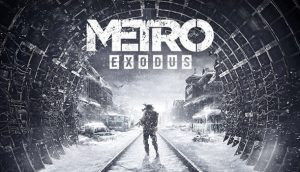
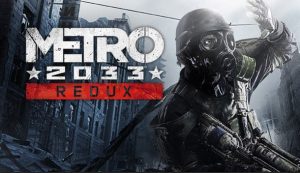
For a different kind of oppressive first-person atmosphere, Metro 2033 Redux and Metro Exodus use scarce resources, gas-mask pressure, and cautious survival rather than overwhelming strength. The power fantasies are nearly opposites, but all three understand how environment and sound can give an approaching threat physical presence.
Replayability, Ripatorium, and Revelations
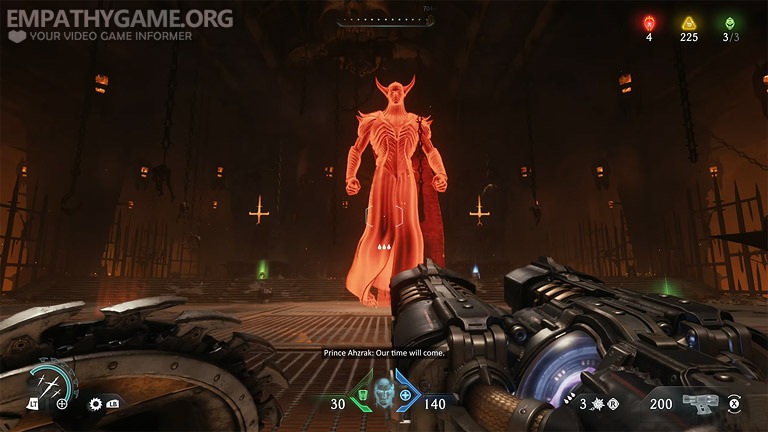
Level selection, higher difficulties, missing secrets, mastery challenges, and upgraded builds give the campaign reasons to revisit. The Ripatorium takes the more appealing part of that idea, combat experimentation, and removes the journey between encounters. Players can arrange demons, waves, rounds, arenas, presets, and difficulty settings, then share encounter passcodes. It is not a replacement for co-op or competitive multiplayer, but it allows the combat system to stand on its own.
Revelations adds a separate six-level campaign, deeper puzzles, new demons, and the Chain Spear, along with extra Ripatorium content earned through its Master Arenas. The spear changes more than traversal: grapple and dash options create new ways to reach dangerous targets and recover position. Its encounters can place greater emphasis on groups of heavy and elite enemies rather than plentiful fodder, making the timing of offensive openings and ammunition expenditure more important.
That added freedom has a cost. The shift from familiar shield inputs to the Chain Spear’s grapple, dash, and attack functions can initially disturb habits built across the main game, particularly on keyboard and mouse. Rearranging controls may help, but the deeper adjustment is mental: a player accustomed to parrying in place now has another way to solve the same pressure through movement. Revelations is strongest when it makes that difference worth learning.
With no traditional deathmatch or campaign co-op, lasting interest depends on enjoying that refinement: learning tougher encounters, altering difficulty, testing different loadouts, and inventing fights in the Ripatorium. It is replayability built around mastering a system rather than chasing an endless stream of new rewards.
Final Verdict
DOOM: The Dark Ages succeeds by refusing to make DOOM Eternal the only possible future for modern DOOM. The Shield Saw connects defence, attack, movement, and even exploration, while melee turns resource recovery into part of the fight itself. This combat is easier to grasp than Eternal‘s most demanding juggling, yet its timing and positioning allow considerable mastery.
Not every experiment has the same depth. Wide maps sometimes interrupt momentum, the story can become burdened by mythology, and dragon and Atlan battles lack the choices of ordinary arenas. Tracking projectiles and dominant weapon combinations can also narrow the freedom the systems promise. Players attached to constant aerial movement may prefer Eternal‘s approach.
But when a dangerous parry becomes a Shield Charge, a melee strike refills ammunition, and the next shotgun blast clears a path forward, The Dark Ages finds a rhythm of its own. It is not merely a slower DOOM. It is a more confrontational one, asking players to understand pressure closely enough to turn it against Hell.
DOOM: The Dark Ages Pros & Cons
- Pro: Heavy, responsive first-person combat built around the Shield Saw, projectile parries, melee resource recovery, powerful firearms, and aggressive crowd control
- Pro: Distinctive dark-fantasy and science-fiction environments with ruined fortresses, battlefields, forests, hellscapes, dragons, and giant war machines
- Pro: Large campaign levels reward exploration with secrets, upgrade materials, optional encounters, collectibles, and challenge objectives
- Pro: Flexible difficulty controls, Ripatorium encounter creation, mastery goals, and Revelations substantially extend replay value
- Pro: Strong PC feature set with hardware ray tracing, optional path tracing, major upscalers, HDR, Benchmark Mode, and Steam Deck Verified support
- Con: The heavier movement and parry-focused rhythm may disappoint players who prefer DOOM Eternal’s constant aerial mobility
- Con: Dragon and Atlan mech sequences provide spectacle but are less mechanically deep than regular Slayer combat
- Con: A hardware ray-tracing GPU and NVMe SSD are mandatory, excluding older PCs that could run previous modern DOOM games
- Con: Higher official performance tiers demand substantial GPU power, VRAM, and system memory
DOOM: The Dark Ages PC System Requirements
OFFICIAL WINDOWS PC REQUIREMENTS:
Important: Every official tier requires a hardware ray-tracing-capable graphics card. Bethesda also requires a 512 GB or larger NVMe SSD with at least 100 GB of free space.
MINIMUM — 1080p / 60 FPS / Low Settings:
OS: Windows 10 64-bit / Windows 11 64-bit
CPU: AMD Zen 2 or Intel 10th Generation at approximately 3.2 GHz with 8 cores / 16 threads or better
CPU Examples: AMD Ryzen 7 3700X / Intel Core i7-10700K
RAM: 16 GB
GPU: NVIDIA or AMD hardware ray-tracing-capable GPU
GPU Examples: NVIDIA GeForce RTX 2060 Super / AMD Radeon RX 6600
VRAM: 8 GB dedicated VRAM or more
Storage: 100 GB available space
Drive: 512 GB or larger NVMe SSD
RECOMMENDED — 1440p / 60 FPS / High Settings:
OS: Windows 10 64-bit / Windows 11 64-bit
CPU: AMD Zen 3 or Intel 12th Generation at approximately 3.2 GHz with 8 cores / 16 threads or better
CPU Examples: AMD Ryzen 7 5700X / Intel Core i7-12700K
RAM: 32 GB
GPU: NVIDIA or AMD hardware ray-tracing-capable GPU
GPU Examples: NVIDIA GeForce RTX 3080 / AMD Radeon RX 6800
VRAM: 10 GB dedicated VRAM or more
Storage: 100 GB available space
Drive: 512 GB or larger NVMe SSD
ULTRA 4K — 2160p / 60 FPS / Ultra Settings:
OS: Windows 10 64-bit / Windows 11 64-bit
CPU: AMD Zen 3 or Intel 12th Generation at approximately 3.2 GHz with 8 cores / 16 threads or better
CPU Examples: AMD Ryzen 7 5700X / Intel Core i7-12700K
RAM: 32 GB
GPU: NVIDIA or AMD hardware ray-tracing-capable GPU
GPU Examples: NVIDIA GeForce RTX 4080 / AMD Radeon RX 7900 XT
VRAM: 16 GB dedicated VRAM or more
Storage: 100 GB available space
Drive: 512 GB or larger NVMe SSD
Additional PC Performance and Setup Notes
- Standard rendering already depends on hardware ray tracing. Optional path tracing is a separate, much more demanding mode for supported NVIDIA RTX hardware and can be paired with DLSS Ray Reconstruction.
- DLSS, AMD FSR, and Intel XeSS can reduce render cost. Frame generation is most useful when the underlying frame rate is already stable enough to maintain responsive input.
- Use the built-in Benchmark Mode after changing resolution, upscaling, ray tracing, path tracing, or frame-generation settings so you can compare changes consistently.
- If performance falls below your target, disable path tracing first, then reduce the most demanding lighting, reflection, shadow, effects, and resolution settings before sacrificing texture quality unnecessarily.
- Install the game on the required NVMe SSD rather than a mechanical hard drive or slow external device, and keep additional free space available for installation overhead and temporary files.
- Steam Deck is Verified. Bethesda’s handheld guidance targets approximately 720p/30 FPS at the highest available power setting; results can vary with device settings, drivers, cooling, and battery mode.
- If the game crashes or fails to launch, update graphics drivers, verify the installation through Steam, Xbox app, or Battle.net, disable overlays, remove unofficial mods, and test with default graphics settings.
- Back up important saves before installing unofficial mods, mod loaders, custom skins, or major configuration changes.
Official Trailer
Note: Bethesda Softworks’ official launch trailer presents the Slayer’s medieval war against Hell, Shield Saw combat, large battlefields, demons, dragons, the Atlan mech, and the game’s dark-fantasy visual direction, while the written guide above adds edition comparisons, Revelations, Game Pass, requirements, Steam Deck support, mods, and setup guidance.
Frequently Asked Questions
Do I need to play DOOM (2016) or DOOM Eternal first?
No. The Dark Ages is a prequel and its core story can be followed independently. Familiarity with the modern trilogy adds context, but it is not required to understand the Slayer’s role.
Does DOOM: The Dark Ages have multiplayer or co-op?
No. There is no campaign co-op, split-screen, PvP deathmatch, or cross-play matchmaking. The Ripatorium is a customizable single-player combat mode, not an online multiplayer arena.
Is DOOM: The Dark Ages open world?
No. It uses a chapter-based story with large, sometimes open-ended levels, optional encounters, secrets, and collectibles. It is not one seamless map with unrestricted travel between every area.
How does parrying with the Shield Saw work?
Block incoming attacks with the shield and time a parry against designated projectiles or strikes. A successful parry can reflect damage, stagger enemies, and restore melee charges; throwing the Shield Saw and using Shield Charge create openings to attack.
Why do I keep running out of ammunition?
The intended combat loop mixes firearms with charged melee attacks, which replenish ammunition. Parrying helps refill melee charges, so relying exclusively on guns can leave you short of resources during longer encounters.
Can I change the parry window or slow down enemy attacks?
Yes. Difficulty customization includes parry timing, projectile speed, enemy aggression, damage, and other combat parameters. You can make the game more accessible without abandoning its shield-centered mechanics.
Can I replay chapters and recover missed collectibles?
Yes. Level selection supports returning for secrets, upgrades, and challenges. Collectibles and optional routes encourage revisits, but it is still worth checking the map before finishing a chapter if you want to clear it in one run.
What is the Ripatorium, and does it require Revelations?
The Ripatorium is included in the base game. It lets you customize demon encounters, rounds, arenas, and presets, with shareable passcodes. Revelations owners can unlock additional maps, demons, and equipment for it by completing the expansion’s Master Arenas.
What does the Revelations expansion add?
Revelations adds a separate six-level story campaign, the Chain Spear as a new centerpiece combat tool, additional demons, puzzles, and endgame challenges. Its completed challenges also expand the Ripatorium options.
Can I buy Revelations without the Premium Edition?
Yes. Base-game owners can purchase Revelations separately. It is already included in the Premium Edition, Premium Upgrade, and Collector’s Bundle, so check your edition before buying it twice.
Does DOOM: The Dark Ages come with PC Game Pass?
The base game is included with PC Game Pass and eligible Game Pass Premium or Ultimate plans. The expansion is not automatically owned through a base-game subscription; cloud and catalogue access depend on plan and region.
Can I use the same purchase on Xbox PC and Battle.net?
Eligible Xbox and Battle.net entitlements can carry across linked accounts, subject to the offer and account-linking requirements. Steam purchases are separate. Ownership sharing does not mean that Steam, Battle.net, and Xbox all share campaign save files.
Can I transfer my saves between Steam, Battle.net, and Xbox?
Xbox Series X|S, Xbox PC app, and Xbox Cloud Gaming share supported campaign saves. Steam and Battle.net saves are separate from that Xbox cross-save system, even when account linking enables eligible Battle.net ownership.
Can I play without a Bethesda.net account or constant internet access?
A Bethesda.net account is not required for the main campaign. Initial installation, storefront activation, cloud synchronization, and online services may need a connection. The Battle.net version uses the Battle.net account and app and may require online authentication.
Is DOOM: The Dark Ages Steam Deck Verified?
Yes. Steam lists the game as Verified and notes that first-time setup requires an active internet connection. Expect to favor modest resolution and performance settings over desktop-quality visuals.
Do I need an RTX graphics card to run the PC version?
You need a GPU capable of hardware ray tracing; it does not have to be NVIDIA. Bethesda’s minimum tier includes examples such as the GeForce RTX 2060 Super and Radeon RX 6600, plus 16 GB RAM and an NVMe SSD.
What is the difference between ray tracing and optional path tracing?
Hardware ray tracing is part of the required core renderer. Path tracing is a more demanding optional visual mode supported on suitable NVIDIA RTX hardware, with DLSS Ray Reconstruction available to improve its image quality.
Does the PC version support ultrawide monitors and controllers?
Yes. It supports keyboard and mouse, compatible controllers, remapping, and ultrawide 21:9 and 32:9 displays with HUD adjustment options.
Can DOOM: The Dark Ages be modded?
Unofficial PC mods and community tools exist, including visual, interface, and gameplay changes. Steam Workshop support is not listed; back up saves and check mod compatibility before installing anything that alters game files.
What should I try if the game crashes or performs poorly?
Confirm your GPU supports hardware ray tracing and the game is on an NVMe SSD. Update graphics drivers, verify game files through the official launcher, disable path tracing or demanding graphics options, and temporarily remove mods or conflicting overlays.
Still have questions? Check the DOOM community on Reddit, Steam Discussions, and official Bethesda Support.
Sources & References
Key edition, access, expansion, and PC hardware facts were checked against these official and platform sources:
- Bethesda Support — PC System Requirements — ray-tracing GPU, RAM, processor tiers, and mandatory NVMe storage.
- Bethesda Slayers Club — Revelations — the released expansion, six levels, Chain Spear, and Ripatorium unlocks.
- Xbox — DOOM: The Dark Ages — Xbox PC access, Game Pass plans, Play Anywhere, and Premium Edition inclusions.
- Battle.net — Editions and Account Linking — linked Xbox/Battle.net entitlements and edition differences.
- Bethesda Support — DOOM Anthology — updated bundle contents and limitations for owners of older Anthology purchases.
- Steam — DOOM: The Dark Ages — Steam Deck verification, PC features, Denuvo, and overall user reception.
Similar Games Like DOOM: The Dark Ages
- Wolfenstein (2009)
- Prey (2006)
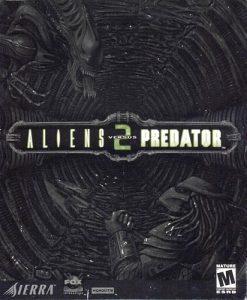
- Aliens versus Predator 2
- Call of Duty: Black Ops III
- Metro Exodus
- Metro 2033 Redux



Found something worth playing through DecideGame?
DecideGame.com is an independent gaming project run by Editor Zero. If this guide helped you discover a game, solve a problem, or find useful information, you can support DecideGame.com and help keep new and updated game guides coming.
DecideGame — PC Game Guides, Reviews & Setup Help