
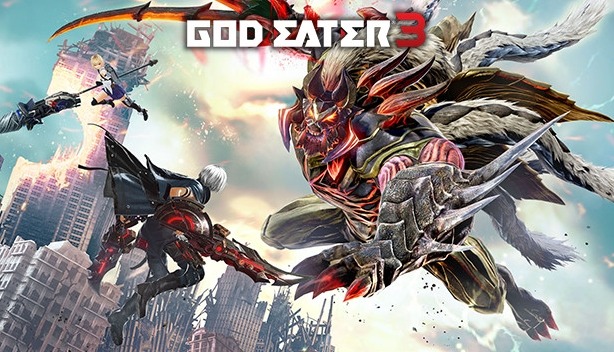
📅 Game released: 2018
God Eater 3 is a fast, mission-based anime hunting RPG in which Adaptive God Eaters wield transforming God Arcs against giant Aragami across the Ashlands. This PC guide covers the official Steam download and installation route, the GOD EATER TRILOGY bundle and released free content, four-player co-op and eight-player Assault Missions, system requirements, Steam Deck compatibility, controls, and practical setup advice.
 By Editor Zero — independently researched, edited, and maintained.
Last updated: 13 November 2026
Last reviewed: 13 November 2026
Table of Contents
- Quick Facts
- Official PC Stores, Download & Installation
- God Eater 3 Review
- Pros & Cons
- PC System Requirements
- Frequently Asked Questions
- Similar Games
God Eater 3 Quick Facts
- Game: God Eater 3
- Developer: Bandai Namco Studios Inc. / Marvelous Inc. (Marvelous First Studio)
- Publisher: Bandai Namco Entertainment
- Genre: Hunting Action, Action RPG, JRPG, Multiplayer, Post-Apocalyptic
- Release: December 13, 2018 (PS4, Japan); Windows PC: February 8, 2019
- Platforms: Windows PC, PS4, Nintendo Switch
- Post-launch content: Free updates added story episodes, missions, Aragami, challenges, costumes, accessories, and gameplay additions; no large paid story expansion
- Multiplayer: Solo with AI companions; online hunts for up to four players and Assault Missions for up to eight
- Steam Deck: Playable; some text is small and certain text fields need the on-screen keyboard opened manually
- Engine: Marvelous in-house engine using YEBIS post-processing and Enlighten lighting middleware
- Community: Official God Eater 3 site, Steam Discussions, Reddit
- PC modding: Nexus Mods hosts unofficial visual, gameplay, interface, and quality-of-life modifications
- Metacritic score: 71/100 (PC)
- IGN score: 7.6/10 (PC review)
- OpenCritic average: 73/100 (cross-platform critic average)
- GameSpot score: 6/10 (PC review)
- Steam user reception: Very Positive overall
Official PC Stores, Download & Installation
👇 Use the official Steam options below to purchase, download, and install God Eater 3 on Windows PC.
- Steam: The official Windows PC release is sold through Steam, and Bandai Namco’s current God Eater 3 product page lists Steam as the PC platform.
- Standard Edition: The standalone Steam purchase contains the full base game, while the released free post-launch additions are delivered with the updated game installation rather than through a large paid expansion.
- GOD EATER TRILOGY: Steam also sells the GOD EATER TRILOGY bundle, which includes God Eater Resurrection, God Eater 2 Rage Burst, and God Eater 3.
- Online co-op: Story and normal hunting missions support online squads of up to four players, while Assault Missions allow up to eight players. Steam also lists Online PvP among the game’s store features.
- Steam features: The store lists single-player, online co-op, online PvP, Steam Achievements, Steam Trading Cards, Steam Cloud, Family Sharing, and a third-party God Eater 3 EULA.
- Steam Deck: Valve rates the game Playable. The default controller configuration and graphics setup are reported to work, but some text is small and certain text fields require manually invoking the on-screen keyboard.
- Installation: Steam lists 25 GB of available storage and DirectX 11 in the requirements. The optional DirectX 12 API requires Windows 10 version 1809 or later and a GPU with at least 4 GB of VRAM.
- Unofficial mods: God Eater 3 has a small Nexus Mods scene but no Steam Workshop listing. Back up saves before file replacements and restore clean files if a modification causes instability or interferes with online play.
 View the GOD EATER TRILOGY bundle on Steam

God Eater 3 Review
Fast, inventive monster hunts with more depth and friction than the spectacle suggests.
God Eater 3 makes its priorities clear as soon as a hunt begins. Rather than spending long stretches tracking a creature, you head straight into ruined streets or ash-covered industrial sites, close the distance with a Dive, and attack with a weapon that can become a blade, gun, or shield. It has the familiar satisfaction of hunting giant monsters for better equipment, but it trades much of the genre’s deliberate preparation and exploration for speed.
That choice gives the game a distinct personality. Battles can feel wonderfully immediate, especially when an Aragami changes targets and forces a hurried defensive decision. The same speed can also hide weaknesses in balance and mission variety. Beneath the effects and anime drama is a game worth understanding on its own terms: a compact hunting RPG where learning when not to attack matters almost as much as attacking aggressively.
Story & World
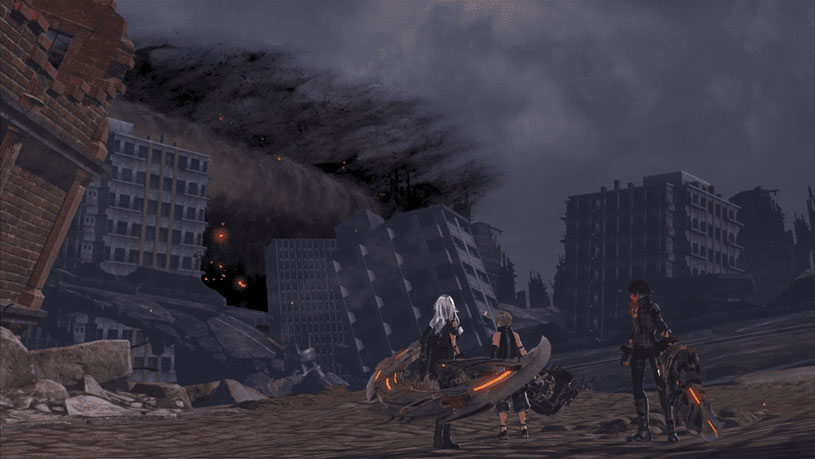
The Ashlands have made ordinary survival precarious. Aragami are creatures that conventional weapons cannot defeat, and the Adaptive God Eaters sent against them are treated as expendable assets rather than people. Your customized AGE begins in that system alongside Hugo, whose determination to protect the group gives the campaign much of its direction. The contrast between the crew’s loyalty and the institutions controlling them is more affecting than the wider political explanations.
The writing embraces anime conventions: earnest speeches, sharp changes of fortune, fierce friendships, and dramatic declarations of purpose. It works best when a quiet exchange between companions makes the next dangerous mission feel personal. Not every scene earns its emotional intensity, and the created protagonist can be oddly passive in conversations. Hugo often makes the consequential decisions while the character you control stands nearby, which weakens the sense that your growing combat prowess translates into leadership.
The hub-and-mission structure reinforces the setting’s confinement. There is no continuous world to wander through; you leave a relatively safe base, fight in isolated zones, then return with materials and new assignments. This keeps the story moving and suits short sessions, although it also means the Ashlands are more convincing as a hostile backdrop than as a place you gradually discover.
Fast-Paced Action RPG Gameplay
The hunt loop is direct: select a mission, prepare a God Arc loadout, deploy with companions, defeat one or more Aragami, and return to upgrade equipment. Its simplicity is part of the appeal. There is little travel between accepting a challenge and making meaningful combat decisions, so even a short session can contain a complete battle and a useful step forward.
A God Arc switches between melee, firearm, and shield forms. That flexibility encourages constant adjustments rather than strict commitment to one range. An Aragami might be vulnerable to a few gunshots at a distance, then force an immediate change to melee when it closes in. Dive lets you cross ground quickly, and aerial attacks can reach parts that are awkward to hit from below. Speed makes the encounters exciting, but it can also encourage careless play until a sudden charge or sweeping attack interrupts a long combo.
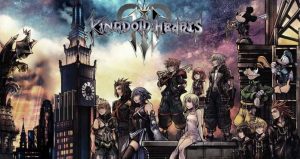
For a comparison based on action feel rather than structure, Kingdom Hearts III also uses mobility and extravagant abilities to make combat expressive. Its battles are built more around cinematic combos and groups of enemies, whereas God Eater 3 asks you to study a large target’s behavior over a sustained hunt. Here, recognizing the moment to disengage is just as important as knowing your most spectacular attack.
Combat, Burst Mode & Aragami Hunts
The defining mechanic is Devour. Your living weapon bites into an Aragami to activate Burst Mode, improving your capabilities and enabling Burst Arts. It gives each encounter a productive tension: you want to maintain Burst, but attempting a Devour at the wrong moment leaves you exposed. The combat becomes more deliberate once Devour is treated as part of a planned attack sequence, not a reward to grab whenever the button is available.
Aragami differ in the way they close distance, cover space, and punish overcommitment. A charging creature asks for a different response than one filling the ground with wide-reaching attacks. When an enemy abruptly switches attention from a companion to you, the choice between guarding, escaping, and finishing a strike becomes immediate. The best hunts are not won by an uninterrupted stream of damage. They are won by recognizing openings and responding before the monster takes them away.
That becomes particularly clear against dangerous Ash Aragami. Dive is excellent for repositioning, but certain Devour attacks can be difficult to escape by movement alone. A precisely timed perfect guard may be the safer response. Even the apparently simple decision between a light buckler and a larger shield has consequences once timing, defensive skills, and survival against heavy hits become more important than blocking strength alone. The game’s speed does not make defense optional; it makes defensive judgment more valuable.
Part breaks add a second layer to reading a target. Breaking a vulnerable section can create an opening for attacks that perform especially well against a downed Aragami, so knowing where to strike changes the rhythm of a fight. Control effects do not always combine as intuitively as expected; experienced players have reported that breaking a part while an enemy is caught in a Hold Trap may not produce the usual knockdown. It is a small interaction, but it illustrates why mastering hunts involves understanding the sequence of effects, not merely stacking them.
There is a meaningful contrast with Stellar Blade. Both reward reading a dangerous opponent beneath the flashy presentation, but Eve’s combat is centered more tightly on personal parries, dodges, and counterattacks. God Eater 3 adds an unpredictable squad, transforming equipment, and the constant decision of how to recover or extend Burst. Its battles are less intimate, but often more frantic.
Cooperative Combat and Team Strategy
Story missions benefit from having allies even when you play alone. Named companions can distract enemies, provide healing, revive fallen teammates, and help keep a hunt from becoming one extended duel. They also make the crew’s relationships tangible: these are characters who contribute during danger rather than existing only in dialogue scenes.
Engage gives that cooperation a mechanical purpose. Fighting near a companion builds toward shared bonuses, encouraging awareness of positioning instead of treating teammates as disposable extra damage. With human partners, the possibilities widen. One fighter can occupy an Aragami while another targets a breakable part, and a timely rescue can preserve a hunt that was slipping away. Communication helps, but the combat’s readable emergencies also make improvised teamwork satisfying.
Assault Missions complicate that favorable picture. Their larger teams and short timers are designed to make concentrated damage and coordination matter. When vacant positions are filled by substitute AI fighters, those replacements can be much less capable than the story companions: they may struggle to maintain Burst, neglect Burst Arts, or wander toward less important targets. In a timed encounter, an ally attacking the wrong Aragami is not just unhelpful; it can determine whether the objective is completed. Assault Missions are therefore a better showcase for coordinated players than for the game’s strongest solo-companion design.
Gameplay Systems & Progression
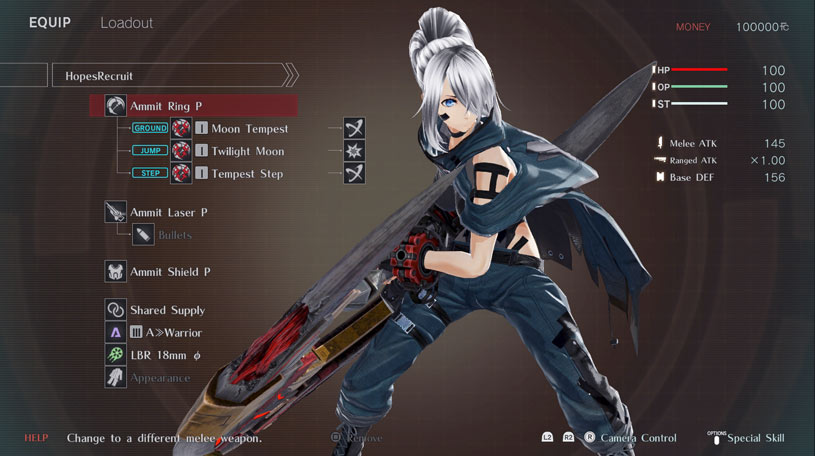
Equipment matters more than character levels. Materials collected from defeated Aragami go toward new melee weapons, guns, and shields, while Burst Arts and other customization choices change how particular attacks work. This progression is satisfying because improvements can alter the decisions you make in combat, not merely increase a number on a menu.
The weapon families have different demands. Heavy Moon and Buster Blade favor their own powerful attack patterns, while Biting Edge’s twin-blade approach invites a faster rhythm. Its Glaive form is a useful example of a weapon with a hidden cost: sustained pressure consumes stamina and prevents ordinary recovery while that form is active. The apparent freedom to keep attacking becomes a question of how long to commit before changing form or creating space. That makes it challenging to learn, not necessarily inferior to heavier alternatives.
Burst Arts create a more complicated trade-off. They can make aerial strikes, step attacks, or grounded moves feel markedly different, allowing a weapon to develop a distinctive style. But a particularly efficient Art can also become so attractive that repeating it is more productive than experimenting with a full combo. A Buster Blade build focused on boosted aerial or step attacks followed by a powerful charged strike may clear hunts efficiently while leaving gun mode underused. The system offers variety, yet its incentives do not always reward using that variety.
Crafting supports experimentation by giving familiar monsters a new purpose. A hunt that once felt dangerous can become an opportunity to target specific parts for an upgrade. The downside is the required repetition: if the desired material refuses to appear, returning to the same compact arena stops feeling like mastery and starts feeling like an obligation. The balance between satisfaction and fatigue depends heavily on whether you enjoy refining a build for its own sake.
Atmosphere and Visual Style
The visual direction makes an immediate impression. Anime-styled characters and outsized God Arcs stand against abandoned streets, industrial wreckage, and ash-stained landscapes. Aragami combine biological menace with shapes that can look almost ceremonial, making them feel like intruders from a world humanity cannot fully understand. There is more personality in their silhouettes and attack animations than in many of the environments surrounding them.
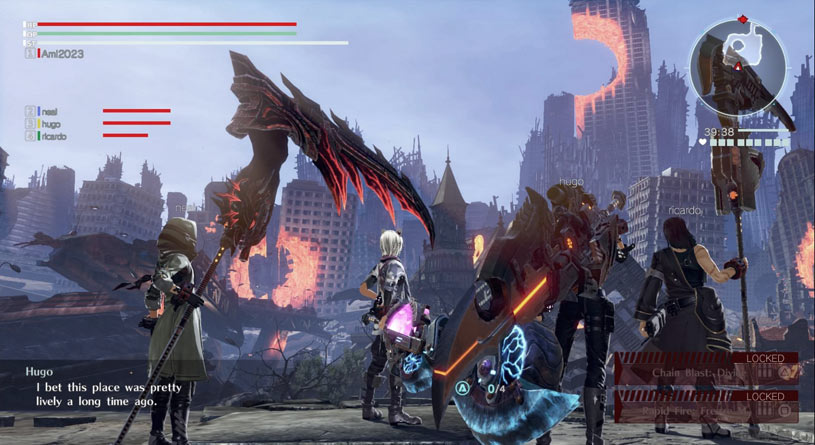
The effects are extravagant, sometimes to the point that the battlefield becomes hard to read. That excess suits the combat’s intensity, but it leaves little room for quiet atmosphere. Music and cutscene voices help give the crew identity; repetitive radio announcements during missions are less successful. Amy’s recurring status messages can begin to feel like background interruption when they repeat information that is already obvious from the fight.
For players who want a slower pace and more time with a game’s emotional atmosphere, Clair Obscur: Expedition 33 provides a useful contrast. Its deliberate turn-based encounters give individual choices room to breathe. God Eater 3 gets much of its identity from the opposite sensation: a ruined world experienced in urgent, noisy bursts of action. Neither approach is inherently better, but they ask for different kinds of attention.
Replayability & Longevity
The strongest reason to keep playing after the main campaign is the possibility of fighting familiar Aragami differently. Changing weapon families, pursuing other Burst Arts, or coordinating a new team can alter the risks you take during an encounter. Certification challenges and tougher hunts give mastery a clearer purpose, while extra character episodes offer more time with companions who may have had limited room in the central story.
Not all that additional content is paced equally well. The Traversing the Past episodes use Sync Rate progression, and the need to repeat missions before seeing more character material can feel artificial. One reported comparison found the same modest Sync Rate gain from a difficult Ash Anubis battle as from a much easier Chi You hunt. Even without treating that as a universal rule, it highlights a real design tension: the most rewarding gameplay challenge and the quickest route through a progression requirement are not necessarily the same thing.
Eventually, repeated mission zones and familiar enemies make the underlying structure obvious. The game rarely offers the pleasure of discovering an entirely new place; its longevity rests on improving execution, understanding equipment, and enjoying fights enough to revisit them. That is a sound foundation for players who like focused hunting systems, but less convincing for anyone who needs exploration or a continually changing mission format to stay invested.
Final Verdict
God Eater 3 succeeds by making monster hunting fast, approachable, and unusually expressive. Transforming God Arcs, Devour, Burst Arts, and squad support create a lively combat system whose depth becomes clearer when enemies demand precise blocking and thoughtful positioning. Its best encounters reward judgment rather than simple button speed.
There are meaningful compromises. Efficient Burst Art combinations can narrow the moves you actually use, some weapon styles demand awkward stamina management, and repetitive missions occasionally turn progression into work. The custom protagonist also takes a back seat to stronger personalities in the story. Still, for players drawn to anime drama, short hunts, co-op teamwork, and the satisfaction of refining a favorite weapon, these are manageable trade-offs. Those seeking a spacious world or constantly varied objectives may find the structure too confined. Its identity is strongest when the combat gives you just enough control to recover from chaos.
God Eater 3 Pros & Cons
- Pro: Fast anime-style hunting action with God Arcs, Burst Mode, Burst Arts, Dive, Engage, and aggressive mobility
- Pro: Mission-based structure works well for short sessions, material farming, four-player co-op hunts, eight-player Assault Missions, and AI companion support
- Pro: Biting Edge, Heavy Moon, and Ray Gun broaden an already flexible mix of melee, ranged, shield, Burst Art, and elemental playstyles
- Pro: The base PC release includes the substantial free post-launch additions without requiring a large paid story expansion
- Con: Mission areas, repeated Aragami, and material farming can become repetitive over long sessions
- Con: Matchmaking can be inconsistent for an older title, making planned sessions with friends or community groups more reliable than depending on random lobbies
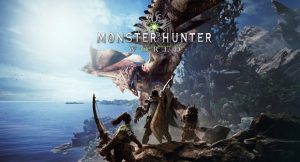
- Con: The environments and monster ecology are less elaborate than Monster Hunter: World, and the mission structure can feel compact by comparison
- Con: The PC modding scene is relatively small, and file replacements can create compatibility problems if several modifications are mixed together
God Eater 3 PC System Requirements
MINIMUM — 1080p / 60 FPS / Low Settings:
OS: Windows 7 64-bit SP1
CPU: Intel Core i5-3470 / AMD FX-8120
RAM: 4 GB
GPU: NVIDIA GeForce GTX 760 / AMD Radeon R9 290X
DirectX: Version 11
Network: Broadband internet connection
Storage: 25 GB available space
RECOMMENDED — 1080p / 60 FPS / High Settings:
OS: Windows 10 64-bit
CPU: Intel Core i7-3770 / AMD Ryzen 5 1600
RAM: 8 GB
GPU: NVIDIA GeForce GTX 970 / AMD Radeon R9 Fury
DirectX: Version 11
Network: Broadband internet connection
Storage: 25 GB available space
Additional PC Performance and Setup Notes
- Steam’s original minimum specification still lists Windows 7 SP1, but the Steam client itself now requires Windows 10 or later. Windows 10 or Windows 11 is therefore the practical environment for a modern Steam installation.
- The DirectX 12 API is optional rather than the baseline requirement; Steam states that it needs Windows 10 version 1809 or later and a graphics card with at least 4 GB of VRAM.
- Valve rates God Eater 3 Playable on Steam Deck. Its default controller setup and graphics configuration work, but some text can be small and manual on-screen keyboard input is required in a few places.
- PCGamingWiki notes unusual frame-rate behavior on high-refresh displays: the game can fall back to a 60 FPS cap above roughly 68 FPS. On affected systems, a limiter at 67 FPS or lower is one community-documented workaround.
- Keyboard and mouse are supported, but PCGamingWiki documents negative mouse acceleration and recommends setting the in-mission and out-of-mission “mouse camera” options to High when the camera feels sluggish or inconsistent.
- Controllers are supported, although some custom mappings are limited. If a controller is not detected correctly, test Steam Input settings and remove duplicate or virtual controller devices before changing game files.
- For crashes or unusual behavior, verify the Steam installation first, update graphics drivers, disable conflicting overlays or unstable overclocks, and retest with unofficial mods temporarily removed.
Official Trailer
Note: Bandai Namco’s official launch trailer highlights the Ashlands, Adaptive God Eaters, transforming God Arcs, Ash Aragami, high-speed combat, and the game’s anime-styled post-apocalyptic story.
Frequently Asked Questions
Do I need to play God Eater Resurrection or God Eater 2 before God Eater 3?
No. God Eater 3 follows a new cast in the Ashlands, so it works as a starting point. Earlier games provide background about the broader series, but they are not essential to follow this campaign.
Is God Eater 3 open world?
No. It is built around a hub-and-mission loop: select a hunt, deploy into a compact combat zone, defeat Aragami, collect materials, and return to upgrade your equipment.
Can God Eater 3 be played completely solo?
Yes. The story can be completed with CPU-controlled companions. They can draw enemy attention, heal, revive, and contribute damage, so playing alone does not mean fighting without a squad.
How does online co-op work, and what are Assault Missions?
Normal online hunts allow squads of up to four players. Assault Missions are shorter, time-pressured encounters for up to eight online players; empty slots may be filled by AI allies, but human coordination is especially useful.
Does the PC version support local split-screen or couch co-op?
No local split-screen option is listed for the Windows PC release. Steam multiplayer is online; the Nintendo Switch version has separate local wireless play between consoles, not split-screen on one PC.
How is God Eater 3 different from Monster Hunter: World?
Both revolve around hunting large creatures, breaking parts, gathering materials, and crafting gear. God Eater 3 favors faster attacks, aerial movement, AI party support, and short missions rather than large exploratory hunting environments. See our Monster Hunter World guide for that alternative.
What are God Arcs, Devour, Burst Mode, and Burst Arts?
God Arcs are transforming melee, gun, and shield weapons with a predator function. Devouring an Aragami activates Burst Mode, which strengthens combat options and enables Burst Arts tailored to ground, aerial, and step attacks.
How do Engage and Acceleration Triggers work?
Engage builds through fighting alongside a companion and can provide shared combat effects. Acceleration Triggers reward meeting specific conditions during a hunt with temporary benefits; they complement your weapon, Burst Art, and elemental choices.
What is a good starting weapon in God Eater 3?
Short Blade and Long Blade are approachable choices because their attacks and recovery are manageable. Try several God Arc types before investing heavily in upgrades, since heavier weapons and Biting Edge ask for different stamina and timing decisions.
Do elements and part breaks matter for crafting?
Yes. An Aragami’s elemental weaknesses and breakable parts can determine how efficiently you finish a hunt and acquire upgrade materials. Check the materials you need before repeating a mission so you can target useful rewards.
How long does the God Eater 3 campaign take?
A story-focused playthrough commonly takes a few dozen hours. Optional hunts, certification challenges, additional character episodes, Assault Missions, and equipment crafting can extend the game substantially.
Is there more story content after the main campaign?
Yes. The released free additions include extra character-focused episodes and challenge content. Some post-game progression, including Traversing the Past, requires replaying missions to advance particular character episodes.
Can God Eater 3 be played offline on PC?
The story is playable solo after the game and Steam are installed and configured. Online co-op, matchmaking, Steam Cloud synchronization, and other network features require an internet connection.
Should I use a controller or keyboard and mouse?
Both input methods are supported, but a controller fits the rapid camera movement, evasions, and weapon transformations naturally. If mouse movement feels inconsistent, test the in-game mouse-camera settings described in the PC setup notes.
Is God Eater 3 supported on Steam Deck?
Valve rates it Playable rather than Verified. The default controller and graphics settings work, but small text and some manually invoked on-screen-keyboard input prevent the higher rating.
Still have questions? Check the God Eater community on Reddit, God Eater 3 Steam Discussions, or official Bandai Namco God Eater 3 page.
Sources & References
Key release, store, technical, and reception details were checked against these sources:
- Bandai Namco — God Eater series release history — confirms the first PS4 release and later Steam and Switch dates.
- Steam — God Eater 3 — confirms the Windows store listing, features, official requirements, and overall user reception.
- Bandai Namco — free content update details — documents permanent additional story, challenge, Aragami, and customization content.
- Silicon Studio — God Eater 3 technology — identifies the in-house engine and YEBIS / Enlighten middleware.
- PCGamingWiki — God Eater 3 — documents high-refresh-rate behavior and mouse-camera options.
- Metacritic — PC critic reviews — verifies the PC Metascore and IGN / GameSpot review scores.
Similar Games Like God Eater 3


Found something worth playing through DecideGame?
DecideGame.com is an independent gaming project run by Editor Zero. If this guide helped you discover a game, solve a problem, or find useful information, you can support DecideGame.com and help keep new and updated game guides coming.
DecideGame — PC Game Guides, Reviews & Setup Help