
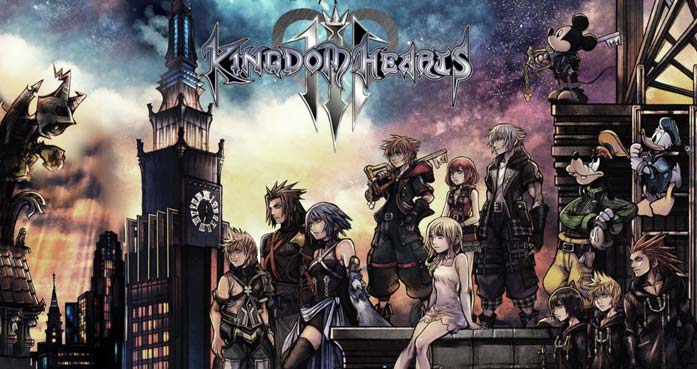
📅 Game released: 2019
Kingdom Hearts III follows Sora, Donald and Goofy through Disney and Pixar worlds in a colorful, story-driven action RPG built around Keyblade transformations, magic and fast aerial combat. This PC guide compares official Steam, Epic and Microsoft/Xbox purchase and download options, explains the included Re Mind DLC and Xbox Play Anywhere features, and covers Steam Deck support, system requirements and practical setup advice.
 By Editor Zero — independently researched, edited, and maintained.
Last updated: 14 November 2026
Last reviewed: 14 November 2026
Table of Contents
- Quick Facts
- Official PC Stores, Download & Installation
- Kingdom Hearts III Review
- Pros & Cons
- PC System Requirements
- Frequently Asked Questions
- Similar Games
Kingdom Hearts III Quick Facts
- Game: Kingdom Hearts III / Kingdom Hearts III + Re Mind (DLC)
- Developer: Square Enix
- Publisher: Square Enix
- Genre: Action RPG, Fantasy, JRPG, Action-Adventure
- Release: January 25, 2019 (Japan; January 29 elsewhere); Windows PC: March 30, 2021 (Epic), June 13, 2024 (Steam), October 8, 2026 (Microsoft/Xbox)
- Platforms: Windows PC, PS4, Xbox One, PS5, Xbox Series X|S, Nintendo Switch 2, Nintendo Switch (Cloud Version)
- PC package: Kingdom Hearts III + Re Mind (DLC) on Steam, Epic Games Store and Microsoft/Xbox
- Mode: Single-player
- Xbox Play Anywhere: Available with the Microsoft digital edition on Windows PC and Xbox Series X|S, with Xbox cloud saves
- Cloud Access: Xbox Cloud Gaming for eligible owners with a supported Game Pass membership; game purchase required
- Steam Deck: Verified for the Steam version; suitable default controller, interface and performance configuration
- Engine: Unreal Engine 4
- Community: Kingdom Hearts Reddit, Steam Discussions
- PC modding: Nexus Mods offers unofficial cosmetic, gameplay and quality-of-life projects
- Metacritic score: 83/100 for Kingdom Hearts III + Re Mind (PC critic listing)
- IGN score: 8.7/10 for the original Kingdom Hearts III review
- OpenCritic average: 84/100 for the original Kingdom Hearts III critic listing
- Steam user reception: Very Positive (overall)
Official PC Stores, Download & Installation
👇 Compare official Steam, Epic Games Store and Microsoft/Xbox options to purchase, download and install Kingdom Hearts III + Re Mind on Windows PC.
- Official Windows stores: Kingdom Hearts III + Re Mind (DLC) is available from Steam, Epic Games Store and Microsoft/Xbox Store. Select the store that matches your preferred library and ownership features.
- What the PC package includes: Each listed Windows PC edition combines the full Kingdom Hearts III campaign with Re Mind (DLC). Re Mind expands the ending with an additional scenario, Limitcut data battles, a secret episode and a demanding secret boss.
- Steam features: The Steam edition includes 51 achievements, Steam Cloud, Family Sharing and controller support. It also has Valve’s Steam Deck Verified rating.
- Steam bonus Keyblade: The Steam purchase includes the platform-exclusive Dead of Night Keyblade.
- Epic bonus Keyblade: The Epic Games Store purchase includes Element Encoder, a different platform-exclusive Keyblade.
- Microsoft/Xbox edition: The newer Microsoft digital release includes the Phantom Green Keyblade and supports Xbox Play Anywhere, letting one eligible Microsoft purchase cover Windows PC and Xbox Series X|S, with Xbox achievements and Xbox cloud saves.
- Important Xbox version distinction: The older Xbox One Kingdom Hearts III product and its separately sold Re Mind add-on are distinct listings from the newer Kingdom Hearts III + Re Mind (DLC) Xbox Play Anywhere edition. Check the exact product and any regional returning-owner discount before purchasing again; an older Xbox purchase should not be assumed to add the new Windows edition to your library.
- Series collections: Steam sells Kingdom Hearts Integrum Masterpiece, containing HD 1.5+2.5 ReMIX, HD 2.8 Final Chapter Prologue and Kingdom Hearts III + Re Mind. Microsoft/Xbox and Epic also offer the Kingdom Hearts Collection [I~III] bundle with those same three major game packages. These are separate store licenses; review owned games to avoid duplicates.
- Xbox cloud play: Xbox lists the newer Kingdom Hearts III + Re Mind edition for Xbox Cloud Gaming with an eligible Game Pass Essential, Premium or Ultimate membership and an owned game license. A Game Pass membership alone is not described as granting the game through the subscription catalogue.
- Save data across stores: Steam Cloud and Xbox cloud saves work within their respective ecosystems. Xbox Play Anywhere does not establish cross-save with Steam or Epic; do not assume saves or purchases transfer between different PC storefronts.
- Steam Deck and offline access: Valve’s Verified data for the Steam edition reports that internet access is not required for setup or single-player play once the installation is available. Other stores’ initial downloads, updates, license checks and cloud synchronization may require connectivity.
- Console and Switch editions: Native Kingdom Hearts III + Re Mind releases also exist for PS5, Xbox Series X|S and Nintendo Switch 2. The older Nintendo Switch Cloud Version is a separate streaming-only product; it is no longer sold, and its service is scheduled to end on June 9, 2027. Existing cloud-version owners may qualify for a discounted Switch 2 digital edition and an official save-transfer route.
 Buy Kingdom Hearts III + Re Mind on Steam
 Buy Kingdom Hearts III + Re Mind on Epic Games Store
 Buy Kingdom Hearts III + Re Mind with Xbox Play Anywhere

Kingdom Hearts III Review
A spectacular Disney adventure whose emotional finale sometimes struggles under its own weight.
Kingdom Hearts III arrived with an unusual responsibility. Kingdom Hearts II had released on PlayStation 2 in 2005, but the story had not stood still. Handheld games, prequels and other entries had spent years expanding Sora’s world and complicating its mythology. This sequel needed to bring those threads together while making its Disney adventures feel larger and its action worthy of a new generation.
It succeeds most naturally when it stops worrying about being a grand conclusion. Running through a toy store as a miniature Sora, exploring the Caribbean by ship or chaining aerial attacks through a crowd captures the peculiar joy of Kingdom Hearts. The harder task is connecting that freedom to a story carrying years of expectations. The adventure is heartfelt and often exciting, but its biggest narrative moments compete for space near the end.
Re Mind and the Complete Adventure
Re Mind makes more sense as a companion to the ending than as a separate campaign. Its additional scenario revisits the Keyblade Graveyard climax through Sora’s search for Kairi, adds character perspectives and gives selected allies more room in battle. The renewed focus on familiar events can feel repetitive, yet it also gives some relationships a little more breathing space after the main story’s hurried finale.
The Limitcut and secret episodes provide the stronger reason to return. Their demanding encounters ask for deliberate guarding, recognition of attack patterns and measured use of healing rather than a steady stream of spectacular commands. They reveal something important about the combat system: beneath its fireworks is a precise action game that the standard campaign does not always require players to learn.
First Impressions – Disney Magic at Action RPG Speed
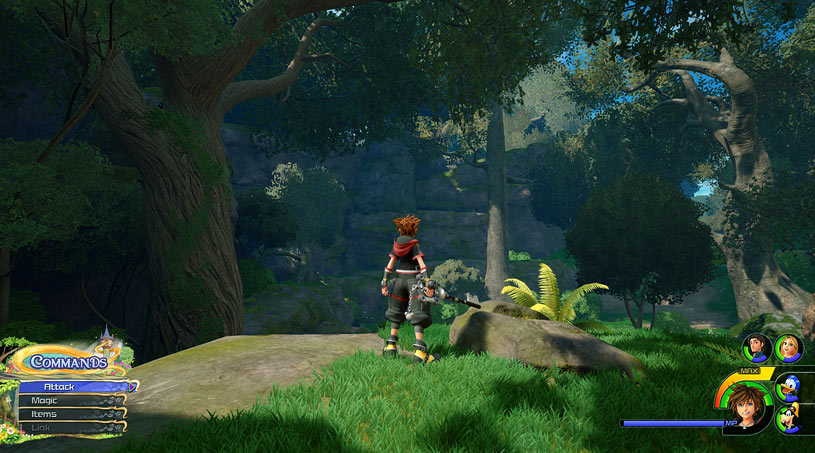
Although classified as an RPG, the moment-to-moment experience is unmistakably action-driven. Sora travels with Donald and Goofy between Disney and Pixar worlds, fights Heartless and Nobodies, collects materials, develops abilities and gradually prepares for the confrontation with Xehanort’s forces. Exploration leads into combat, combat feeds progression, and each new setting gives the familiar loop a different personality.
What first stands out is how much happens at once. Sora launches an enemy skyward, Donald casts a spell, Goofy knocks opponents aside, and a Keyblade transformation or team attack suddenly fills the screen. Attractions, shotlocks, links, Formchanges and magic arrive quickly enough that their spectacle can overwhelm the underlying decisions. As those systems become familiar, though, there is satisfaction in choosing when to release a major attack instead of automatically accepting every glowing prompt.
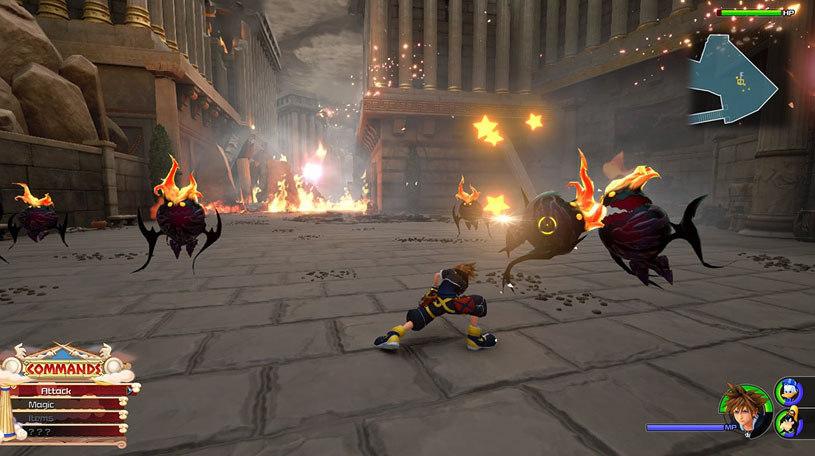
Olympus establishes the new scale immediately. Wall-running, collapsing terrain and enormous enemies give the familiar world physical momentum that earlier entries could rarely achieve. This is not the kind of fantasy immersion offered by The Witcher 3: Wild Hunt, where political conflict and consequential choices dominate. Kingdom Hearts is interested in movement, impossible friendships and the pleasure of making an animated world feel playable.
Familiar Worlds, Very Different Rhythms
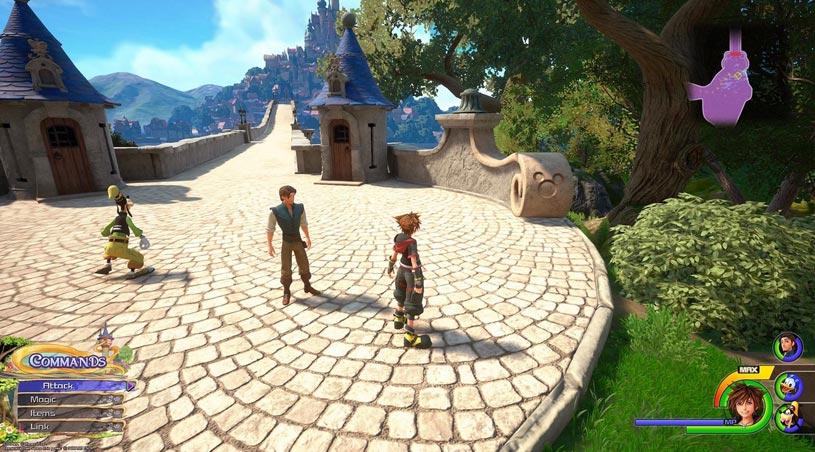
Toy Box works because its scale changes how ordinary spaces feel. Andy’s room becomes an environment to navigate rather than just recognize, and Galaxy Toys adds mech battles that make fighting between shelves and oversized products entertaining on their own terms. Taking control of a bulky toy machine changes the rules briefly, which is more engaging than simply watching a familiar film location recreated in detail. Kingdom of Corona slows the tempo. Forest paths, cliffs and Rapunzel’s reactions to a world she has never explored give quieter scenes an appeal that combat cannot provide.
Monstropolis replaces that openness with factory corridors, rails and chaotic encounters. Its darker slime-like boss, however, illustrates the cost of the game’s visual density. Charges, projectiles and additional enemies can arrive together, sometimes making threats difficult to follow when the camera is occupied elsewhere. A difficult pattern is satisfying to learn; an attack obscured by surrounding chaos is less satisfying to defend against. It is a reminder that more effects do not always produce better action.
Attraction commands inspired by Disney theme parks make that contradiction even clearer. Pirate ships, teacups and carousels turn ordinary enemy groups into exuberant set pieces. They are delightful as occasional surprises, but frequent prompts can interrupt a carefully managed fight or trivialize easier encounters. Those who prefer to study individual enemies and equipment choices may find the more deliberate hunts of Monster Hunter World more appealing.
Combat, Keyblades, and the Value of Control
Keyblades are more than a sequence of stronger replacements. Favorites can be upgraded, and carrying several into battle makes switching weapons part of the tactics. Formchanges transform them into hammers, firearms, shields, claws, yo-yos and other movesets. Their value is not merely visual. A heavy form changes how a crowd is approached, while a faster one suits enemies that refuse to stay grounded.
Sora’s mobility makes these transitions especially interesting. Airstep can pull him toward a distant enemy, allowing an aerial assault to continue across a scattered group instead of ending whenever the next target moves away. It is easy to think of movement abilities as tools for exploration alone, but here distance itself becomes something the player can manage during combat. The most enjoyable fights often emerge when Keyblade choice, positioning and timing work together.
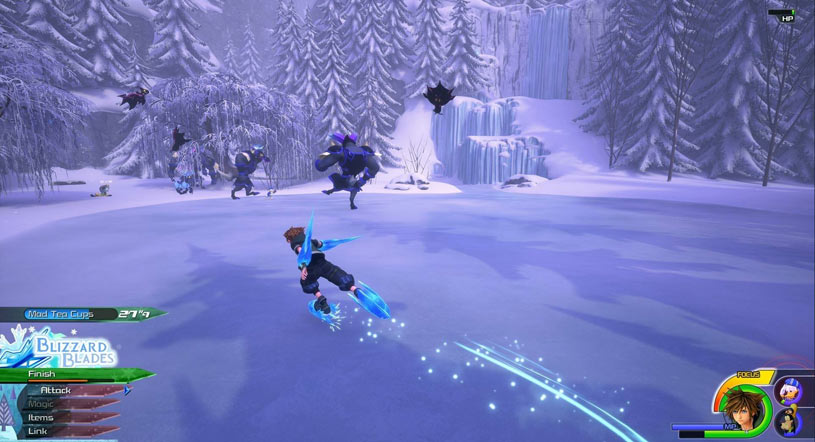
Magic adds another layer beyond raw damage. Fire applies direct pressure, Thunder handles groups, Aero helps control space and Cure provides a lifeline. Blizzard creates movement paths, but elemental choice can also disrupt particular enemy behaviors: Water can expose certain shadow-hidden foes, while Blizzard can interrupt some enraged attacks. Such interactions are easy to overlook when the screen encourages spectacular finishing moves, yet they make ordinary spell selection more thoughtful.
Defense matters more than the early campaign suggests. Mashing attacks often works against common enemies, but demanding bosses reward guarding, countering and repositioning. Shortcuts are essential to that rhythm because opening the command menu to find an item or spell interrupts concentration. The tension between effortless spectacle and intentional action defines Kingdom Hearts III’s combat. More demanding enemies make it clearer why a guarded opening can be worth more than a flashy move that leaves Sora exposed. It can be tremendously fluid, provided the player is given a reason to use its full vocabulary.
Exploration Is Ambitious, but Not Equally Rewarding
The larger worlds allow wall-running, Airstep, rails, climbing, swimming and more elaborate routes than earlier mainline games. The Caribbean is the boldest departure: sailing between islands, diving underwater and fighting ships briefly turn Kingdom Hearts into a seafaring adventure. It can slow the main story, but the detour has an identity of its own rather than feeling like another passage between cutscenes.
Size alone does not guarantee an interesting journey. Arendelle repeatedly sends Sora up its snowy mountain, only to redirect him and require another ascent. The scenery is impressive, yet the structure can make exploration feel less like discovery than retracing a route. San Fransokyo has the opposite problem. Racing over rooftops and scaling buildings is liberating, but the broad streets can seem oddly empty for a supposedly bustling city. Vertical freedom and a convincing sense of place are not quite the same achievement.
Still, Lucky Emblems encourage players to notice environmental details, chests make side paths worthwhile, and gathering ingredients feeds into Remy’s cooking. Those small reasons to look around help the strongest worlds resist becoming corridors between story scenes. Not every area offers equal freedom, but the best ones make movement and curiosity feel connected.
Story – Sincere Emotion, Uneven Delivery
The main narrative asks Sora to recover the Power of Waking and help prepare for the conflict with Xehanort. For longtime followers, the stakes extend far beyond him: Riku, Kairi, Aqua, Ventus, Terra, Roxas, Axel and Xion all carry unresolved histories. The game rarely disguises how much previous knowledge it expects. A newcomer can understand the immediate goal, but many emotional reunions draw their meaning from earlier entries rather than this adventure alone.
The Disney chapters echo ideas of identity, friendship, memory and sacrifice, sometimes elegantly and sometimes only loosely. They also preserve an earnestness that distinguishes the series from darker fantasy RPGs. The problem is not that Sora’s travels are pointless; several worlds are memorable precisely because their smaller stories are enjoyable. It is that the central conflict often waits in the background before many major revelations and confrontations arrive close together.
That compressed final stretch can leave important characters with less space than their long buildup deserves. Even so, its best reunions are moving because Kingdom Hearts never seems embarrassed by the affection between its characters. The finale is not tidy, but treating that emotional sincerity as a weakness would miss much of what the series has always been trying to do.
Abilities, Equipment, and Preparation
Levels, ability points, accessories, Keyblade upgrades and synthesis give combat an RPG foundation without turning it into an elaborate build simulator. Abilities alter aerial attacks, guarding, counters, MP recovery and combo finishers; equipment and cuisine add useful advantages. The practical distinction is often between owning an ability and remembering to equip it. A well-prepared Sora can feel much more capable without simply gaining several extra levels.
Remy’s meals reward ingredient gathering with temporary stat bonuses, while item shortcuts help cover the moments when Donald’s healing is unavailable or arrives too late. His support is useful but not always predictable, and relying on an ally to rescue Sora in the middle of a difficult attack sequence is a gamble that does not always pay off. These adjustments matter most in difficult fights, where an extra defensive option may be worth more than another flashy finisher. For players drawn to a more deliberate mix of strategy and timing, Clair Obscur: Expedition 33 approaches reactive combat through a very different, turn-based structure.
Replayability and the Limits of More Power
Higher difficulties, Battlegates, optional bosses, Lucky Emblems, treasure chests, synthesis, cooking and Gummi Ship activities offer plenty beyond the main campaign. Critical Mode makes guarding and careful ability choices essential rather than optional refinements. It can reveal a more disciplined action game beneath the same colorful presentation, although that appeal depends on enjoying repeated encounters and learning their patterns.
Some side activities change meaning when a particular reward becomes the goal. That distinction matters in a game where the main story does not require players to exhaust every system. Gummi Ship battles can largely be avoided by someone interested only in reaching the next Disney world, but synthesizing Ultima Weapon requires an Orichalcum+ earned from defeating Omega Machina in the Eclipse. Suddenly the space-combat layer demands preparation. It is an inventive connection between progression systems, though players indifferent to ship battles may regard it as an unwelcome requirement.
Other optional content wears thinner with repetition. Hundred Acre Wood’s three closely related minigames offer a gentle change of pace initially, but comparatively little variety on another playthrough. New Game Plus has a different balance issue: faster postgame combo abilities make Sora feel smoother and more responsive, yet carrying them into story encounters can overwhelm fights designed around a less developed moveset. More power is enjoyable, but it is not always the same thing as better-balanced combat.
Final Verdict
Kingdom Hearts III is at its best when its unlikely ingredients cooperate. Disney environments become playful spaces rather than decorative backdrops, Keyblade transformations and movement create exciting combat possibilities, and the music and character reunions give the closing chapters genuine feeling. The Re Mind challenges also show how much precision lies beneath the spectacle.
The soundtrack is part of why those victories stay with the player: familiar themes and dramatic arrangements give even strange combinations of characters a sense of emotional continuity. Its limitations are just as recognizable: crowded fights can obscure important threats, some large worlds repeat themselves or lack atmosphere, and the central story holds too much back until its final act. Newcomers may enjoy the action while struggling to care about every returning character. Longtime fans willing to accept an untidy conclusion will find more emotional reward. Kingdom Hearts has always balanced wonder with complication. This entry sometimes tips too far toward the latter, but it still understands why the former matters.
Kingdom Hearts III Pros & Cons
- Pro: Beautiful Disney and Pixar worlds with strong animation, colorful environments, music, and cinematic spectacle
- Pro: Fast action RPG combat with Keyblade transformations, magic, shortcuts, Formchanges, links, team attacks, and strong boss variety
- Pro: Kingdom Hearts III + Re Mind combines the campaign, additional story chapter, Limitcut bosses, secret boss content, and late-game story context
- Pro: Critical Mode and Re Mind’s Limitcut encounters give experienced players demanding endgame challenges
- Con: The story can be overwhelming for newcomers who skipped earlier Kingdom Hearts games
- Con: Attraction attacks and flashy combat options can overpower many encounters on lower difficulties
- Con: The main plot saves too many important developments for its final stretch
- Con: Several Disney worlds favor spectacle over meaningful interaction or have uneven pacing
Kingdom Hearts III PC System Requirements
MINIMUM — 720p / 30 FPS:
OS: Windows 10 64-bit, version 1909 or later
CPU: Intel Core i5-3330 / AMD Ryzen 3 1200
RAM: 8 GB
GPU: NVIDIA GeForce GTX 760 with 2 GB VRAM / AMD Radeon R7 260X with 2 GB VRAM
DirectX: Version 11
Storage: 75 GB available space
Target: 30 FPS at 1280×720
RECOMMENDED — 1080p / 60 FPS:
OS: Windows 10 64-bit, version 1909 or later
CPU: Intel Core i5-7500 / AMD Ryzen 3 3100
RAM: 16 GB
GPU: NVIDIA GeForce GTX 1070 / AMD Radeon RX Vega 56
DirectX: Version 11
Storage: 75 GB available space
Target: 60 FPS at 1920×1080
These are the official Steam-listed requirements for the Windows PC release, not a separately published performance profile for the newer Microsoft/Xbox edition. Windows 10 64-bit version 1909 or later remains Steam’s stated baseline; Windows 11 is not separately listed in that specification.
Additional PC Performance and Setup Notes
If the game stutters, start by testing a stable frame-rate cap, toggling V-Sync, closing overlays, and lowering resolution scale or shadows before changing several settings at once. For crashes or fatal errors, verify the store files, update the graphics driver, remove recent mods, and retest with default GPU clocks. Controller detection problems are often easier to isolate after disconnecting duplicate input devices and testing the store client’s controller support with a standard profile.
Back up local saves before adding mods, changing stores, or reinstalling Windows. Steam Cloud is supported, but a separate backup gives you a recovery path if a sync conflict or mod problem damages progress.
Official Trailer
Frequently Asked Questions
Which PC version of Kingdom Hearts III should I buy?
Steam offers Steam Cloud, achievements, Steam Deck Verified support and the Dead of Night Keyblade. Epic includes Element Encoder. The Microsoft/Xbox edition includes Phantom Green and Xbox Play Anywhere for Windows and Xbox Series X|S. All three Windows editions include Re Mind; choose according to where you want to own and save the game.
Do I need to play the older Kingdom Hearts games first?
The action and individual Disney adventures are approachable on their own, but the central story builds on several earlier games. For context, prioritize Kingdom Hearts, Kingdom Hearts II, Birth by Sleep and Dream Drop Distance, plus the story of 358/2 Days; the in-game Memory Archive can refresh important events but cannot fully explain every character relationship.
Is Kingdom Hearts III open world or single-player?
It is a single-player, world-based action RPG, not a seamless open-world game. Sora travels between distinct Disney, Pixar and original Kingdom Hearts locations, some of which have large areas to explore.
How long does Kingdom Hearts III take to finish?
A focused main-story run often takes about 25–35 hours, depending on difficulty and exploration. Re Mind, Battlegates, Lucky Emblems, synthesis, Gummi Ship activities and optional bosses can add substantial time.
Which opening choices and difficulty are best for beginners?
Beginner or Standard is the easiest starting point. Balance and Vitality are approachable initial choices, while Wisdom favors players who want to lean more heavily on magic and MP management.
How hard is Critical Mode?
Critical Mode sharply reduces room for mistakes and rewards careful guarding, dodging, shortcuts, ability management and boss-pattern recognition. It suits experienced action-RPG players or a later playthrough more than someone learning the controls for the first time.
What combat habits help most at the start?
Assign Cure, a useful spell and healing items to shortcuts, equip defensive abilities, and learn when to guard instead of following every attraction prompt. Upgrade favorite Keyblades and switch between equipped weapons to manage available Formchanges.
How do I obtain Ultima Weapon, and is it the best Keyblade?
Ultima Weapon is a powerful all-around option made through synthesis after gathering rare materials, including Orichalcum+. Oathkeeper, Oblivion, Classic Tone, Wheel of Fate and other Keyblades can be better suited to particular movesets or builds; Oblivion is tied to a Critical Mode clear proof.
What does Re Mind add, and when should I play it?
Finish the main story first. Re Mind revisits the ending from additional perspectives, includes selected battles with other characters, and unlocks the Limitcut data encounters and a demanding secret episode and boss.
Which Disney and Pixar worlds are featured?
The adventure visits settings inspired by Hercules, Toy Story, Tangled, Monsters, Inc., Frozen, Pirates of the Caribbean, Winnie the Pooh and Big Hero 6, alongside original Kingdom Hearts locations.
Can I play as characters other than Sora?
Sora is the main playable character, but the campaign and Re Mind feature a small number of selected battles with other heroes. It is not a general character-switching system throughout the story.
Does Kingdom Hearts III have New Game Plus?
Yes. Starting another run after clearing the story can carry over Keyblades and selected unlocked content. It is useful for a Critical Mode replay, although powerful inherited equipment can also alter early encounter balance.
Does Kingdom Hearts III still include Gummi Ship gameplay?
Yes. Gummi Ship exploration and battles connect the worlds, with ship customization, treasures and optional encounters including Schwarzgeist. Much of the deeper ship content is optional, but some synthesis goals reward participating in it.
Can I use a controller and play on Steam Deck?
Yes. The Steam edition supports controllers and is Steam Deck Verified, including usable default controls and legible interface text. When using a Windows PC, check for conflicting input devices if your controller is detected incorrectly.
Can Kingdom Hearts III be played offline, and are saves shared between PC stores?
Valve’s compatibility information indicates that the Steam edition does not need internet access for setup or single-player play after the required game files are available. Steam Cloud and Xbox cloud saves use separate store ecosystems; Xbox Play Anywhere synchronizes within the supported Microsoft ecosystem, not automatically with Steam or Epic. Make a manual backup before changing installations or modding saves.
Is the game included with Game Pass, or can I stream it through Xbox Cloud Gaming?
The Microsoft/Xbox product lists cloud play for eligible Game Pass Essential, Premium or Ultimate members who also own the game. The membership is a cloud-access requirement, not confirmation that Kingdom Hearts III is included in the subscription’s game catalogue.
What is the difference between Kingdom Hearts Integrum Masterpiece and Collection [I~III]?
Both names refer to bundles of HD 1.5+2.5 ReMIX, HD 2.8 Final Chapter Prologue and Kingdom Hearts III + Re Mind. Integrum Masterpiece is the Steam bundle name; Collection [I~III] is used on other storefronts and current-generation platforms. Purchasing one store’s bundle does not automatically grant another store’s licenses.
Can Kingdom Hearts III be modded on PC?
Yes. Unofficial PC mods include cosmetic replacements, gameplay alterations and quality-of-life changes. Use files compatible with your specific storefront edition, make a save backup, and remove recent changes when troubleshooting a crash.
What happened to the Nintendo Switch Cloud Version?
The original Nintendo Switch Cloud Version is no longer sold and its cloud service is scheduled to end on June 9, 2027. A separate native Nintendo Switch 2 edition of Kingdom Hearts III + Re Mind is available, and qualifying owners of the older cloud version can use Square Enix’s discounted digital-purchase and save-transfer options.
Should I play Kingdom Hearts III before Kingdom Hearts IV?
Yes, particularly the main ending and Re Mind. They conclude major Dark Seeker Saga storylines and set up events involving Sora, Kairi and Yozora that give later developments more context.
Still have questions? Check the Kingdom Hearts community on Reddit, Kingdom Hearts III Steam Discussions, or the Square Enix Support Center.
Sources & References
Key store, platform, release, compatibility, and reception details in this guide were checked against these sources:
- Square Enix — Kingdom Hearts Collection [I~III] launch — confirms native current-generation releases and the Microsoft Windows storefront.
- Microsoft/Xbox — Kingdom Hearts III + Re Mind — verifies the Windows/Xbox edition, Xbox Play Anywhere, cloud saves, and Phantom Green Keyblade.
- Steam — Kingdom Hearts III + Re Mind — verifies Steam features, the Dead of Night Keyblade, system requirements, and overall player reception.
- Epic Games Store — Kingdom Hearts III + Re Mind — verifies the Epic PC package, Element Encoder Keyblade, and publisher information.
- Square Enix Support — Switch Cloud Version service notice — confirms the original cloud edition’s end-of-service schedule and Switch 2 owner options.
- SteamDB — Steam Deck compatibility record — documents Valve’s Verified result and offline setup/single-player checks.
- Metacritic — Kingdom Hearts III + Re Mind PC reviews — identifies the platform-specific 83/100 critic score.
Similar Games Like Kingdom Hearts III
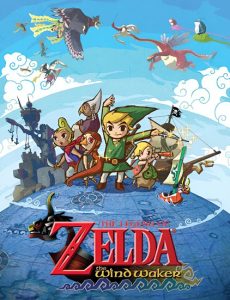
- The Legend of Zelda: The Wind Waker
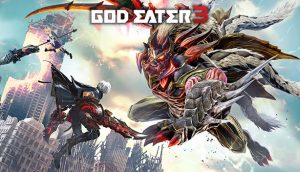
- God Eater 3
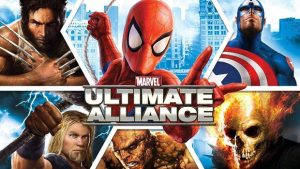
- Marvel: Ultimate Alliance
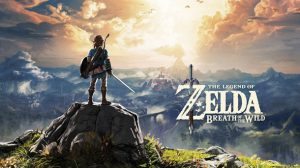
- The Legend of Zelda: Breath of the Wild
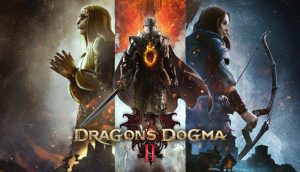
- Dragon’s Dogma 2
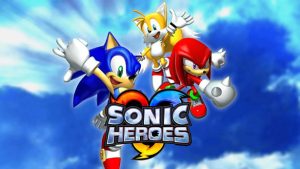
- Sonic Heroes
Found something worth playing through DecideGame?
DecideGame.com is an independent gaming project run by Editor Zero. If this guide helped you discover a game, solve a problem, or find useful information, you can support DecideGame.com and help keep new and updated game guides coming.
DecideGame — PC Game Guides, Reviews & Setup Help