
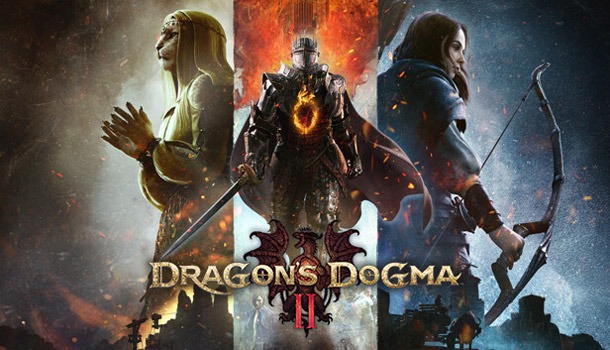
📅 Game released: 2024
Dragon’s Dogma 2 is a single-player open-world action RPG where the Arisen explores a dangerous fantasy realm with AI-controlled Pawns, switches vocations, and climbs giant monsters. This PC guide covers the official Steam download and installation, the Dark Arisen expansion and bundle, system requirements, Steam Deck support, saves, performance, and mods.
 By Editor Zero — independently researched, edited, and maintained.
Last updated: 13 November 2026
Last reviewed: 13 November 2026
Table of Contents
- Quick Facts
- Official PC Stores, Download & Installation
- Dragon’s Dogma 2 Review
- Pros & Cons
- PC System Requirements
- Frequently Asked Questions
- Similar Games
Dragon’s Dogma 2 Quick Facts
- Game: Dragon’s Dogma 2 / Dragon’s Dogma 2: Dark Arisen Expansion
- Developer: Capcom
- Publisher: Capcom
- Genre: Action RPG, Open World, Fantasy, RPG
- Release: March 22, 2024
- Expansion: Dark Arisen — released paid DLC, also included in the Dragon’s Dogma 2: Dark Arisen bundle
- Platforms: Base game: Windows PC, PS5, Xbox Series X|S; Dark Arisen combined release: Nintendo Switch 2
- Modes: Single-player, with online Pawn sharing; no campaign co-op, split-screen, or PvP
- Steam Deck: Unsupported, according to Valve’s Steam compatibility rating
- Engine: Capcom RE ENGINE
- PC DRM: Denuvo Anti-Tamper on Steam, with a five-different-PC-per-day activation limit
- Community: Dragon’s Dogma 2 Reddit, Steam Discussions, Dragon’s Dogma Reddit
- PC modding: Nexus Mods hosts unofficial visual, interface, camera, gameplay, and quality-of-life modifications; use save backups and verify version compatibility
- Metacritic score: 88/100 for the original PC base-game release
- IGN score: 8/10 for Dragon’s Dogma 2 (original multiplatform review)
- Steam user reception: Mixed overall for the base game; Very Positive overall for the separate Dark Arisen Expansion
Official PC Stores, Download & Installation
👇 Compare the official Steam editions below before purchasing, downloading, or installing Dragon’s Dogma 2 and its Dark Arisen expansion on Windows PC.
- Official PC store: Steam sells Dragon’s Dogma 2 for Windows. No separate official native Windows listing was verified on GOG, Epic Games Store, or Microsoft Store.
- Base game: The standard purchase contains the original full single-player campaign; Dark Arisen is not included with a base-game-only purchase.
- Dark Arisen Expansion: This released, separately sold DLC adds Norgan, the Forsaken Dominion story, Lost Rites challenges, new relic-related equipment and abilities, and character-creation options. It requires ownership of the base game.
- Dark Arisen bundle: The combined Steam package includes the base game, the Dark Arisen Expansion, Explorer’s Camping Kit – Camping Gear, and Dragon’s Dogma Music & Sound Collection – Custom Sounds. The same expansion is also sold separately; check existing ownership before buying.
- Discontinued editions: The earlier Digital Deluxe Edition, A Boon for Adventurers – New Journey Pack, and most convenience-item DLC are no longer sold separately. Existing owners keep access to items already purchased.
- Other add-ons: Explorer’s Camping Kit and Dragon’s Dogma Music & Sound Collection – Custom Sounds remain listed separately. The original soundtrack is sold as an additional music product rather than gameplay DLC.
- Preorder items: The Norgan Fashion Set – Northern Attire was a preorder incentive, not a core expansion feature. Do not assume it is included with a normal post-launch purchase unless the store explicitly lists it.
- Steam installation: Purchase or redeem the desired products in Steam, install the base game, update it, and install the expansion through the same Steam library. The DLC is not a standalone executable or separate campaign purchase.
- Steam features: Steam lists achievements, trading cards, Steam Cloud, HDR, Family Sharing, and partial controller support. Steam recommends a controller, but keyboard and mouse are supported.
- Activation: Steam lists Denuvo Anti-Tamper with a limit of five different PCs activated within one day. Avoid rapidly switching hardware or compatibility environments if activation fails.
- Steam Deck: Valve rates the base game Unsupported; the revised PC requirements do not change that official classification.
- Save and mod precautions: Back up local save data before major mods, reinstallations, restores, or progression experiments. Steam Cloud helps with synchronization but is not a substitute for a known-good manual backup.
 Buy Dragon’s Dogma 2: Dark Arisen Expansion on Steam
 Visit the Official Dragon’s Dogma 2 Website
Dragon’s Dogma 2 Review
A dangerous fantasy journey where the detours often matter more than the destination.
Dragon’s Dogma 2 is at its best when a sensible plan stops being sensible. The Arisen sets out with three Pawns, a destination marked on the map and enough supplies for an ordinary journey. Then a griffin drops onto the road, the ox cart overturns, and a fight that should have lasted a minute becomes a desperate attempt to survive until dawn. There are more polished fantasy RPGs, and certainly more considerate ones. Few, though, make the space between quests feel quite so important. Capcom builds its adventure around travel, physical monster combat and companions who act independently, then trusts those systems to produce moments a scripted quest could never guarantee.
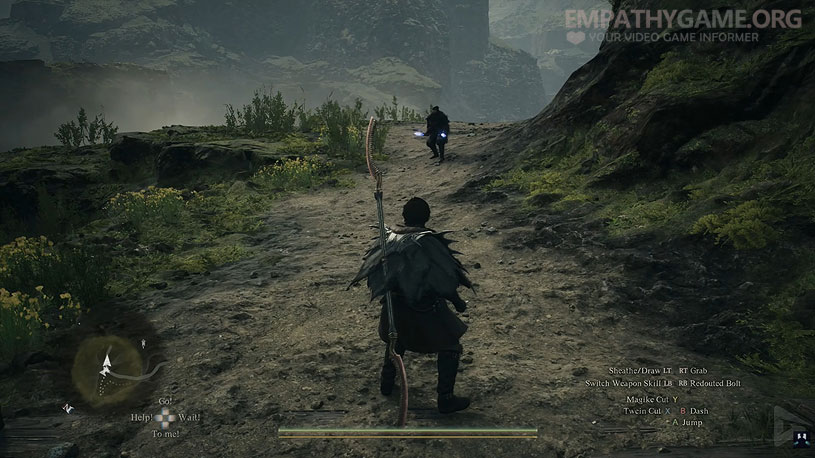
That freedom has a cost. Quests can be vague, travel can become exhausting, and the same creatures sometimes interrupt the road once too often. Still, the game’s unusual confidence in its own world is the reason its rough edges are worth examining rather than simply dismissing.
The World Feels Alive and Dangerous
Exploration works because travel has consequences. Walking, climbing, camping and hiring suitable Pawns matter more than clearing a chain of convenient map markers. Ox carts shorten some journeys, but they can be attacked. Portcrystals and Ferrystones make other routes easier without removing the importance of choosing where to travel. A badly timed departure can leave a party low on curatives, far from shelter and approaching nightfall.
Darkness changes more than the scenery. Lantern light reveals only part of the path, while an encounter with ordinary goblins can become serious when a larger creature joins the fight. Early journeys are especially tense because the party has fewer options to recover from mistakes. Later, better equipment and a familiar route can reduce that fear, though the possibility of an interruption never disappears entirely.
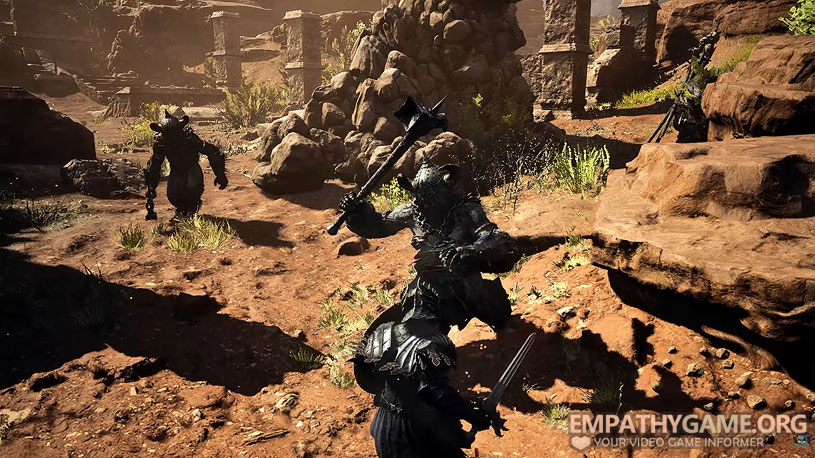
The world also lets curiosity outrun the story. It is possible to find difficult routes into Battahl before the main quest sends the Arisen south, trading the safety of familiar Vernworth roads for harsher terrain and enemies. That separation between geographic access and story progression is important. The game can let you make an ambitious mistake rather than closing a gate until you have reached the appropriate chapter.
There is a less satisfying side to this freedom: the reward for exploring a hard-to-reach cave is not always as interesting as the trip there. Chests often yield materials or items to sell, while a merchant may provide the weapon upgrade that actually changes a build. Exploration remains worthwhile for fights, discoveries and the satisfaction of finding a route, but the treasure economy does not always reward that curiosity as generously as the world invites it.
If the appeal is exploring territory that refuses to adjust itself to your plans, Elden Ring offers a different expression of that idea. Its combat is more deliberate and its atmosphere more oppressive, yet both games understand how a distant landmark or unexpectedly large enemy can make curiosity feel dangerous.
The Pawn System Gives the Adventure Its Personality
The Pawns are the feature that most clearly distinguishes Dragon’s Dogma 2 from other open-world RPGs. Your main Pawn develops alongside the Arisen; two additional companions can be hired through Riftstones or encountered in the world. They are not authored party members with elaborate personal questlines. Instead, their identity comes from vocations, inclinations, specializations, knowledge and the slightly unpredictable way they respond to the same situation.
A Mage can sustain a struggling group, a Warrior can absorb pressure during a large fight, and a Thief can exploit openings while the Arisen climbs a monster. Pawns point out ladders, recall quest locations and warn about enemy weaknesses. They can also repeat the same observation until it becomes irritating, or lead the group toward an objective just as something dangerous crosses the road. Their commentary is imperfect, but silence would make the wilderness feel noticeably emptier.
The interesting part is that Pawn behavior is not entirely static. Experienced players have documented companions adopting particular tactics demonstrated by the Arisen, from using objects to exploiting an off-balance monster. Such behavior is situational rather than a guarantee that every Pawn learns every action. Even with that qualification, it gives the relationship another layer: the companion is not merely a collection of statistics, but can gradually reflect the way its owner approaches encounters.
That is a clever solution to a difficult companion-design problem. Pawns feel like fellow travelers without becoming obedient extensions of the player. Occasionally they make poor decisions, and controlling a party indirectly can be frustrating. Yet their independent reactions are also why an unexpected rescue or well-timed spell feels more personal than another command issued from a menu.
Combat Is Physical, Messy, and Occasionally Brilliant
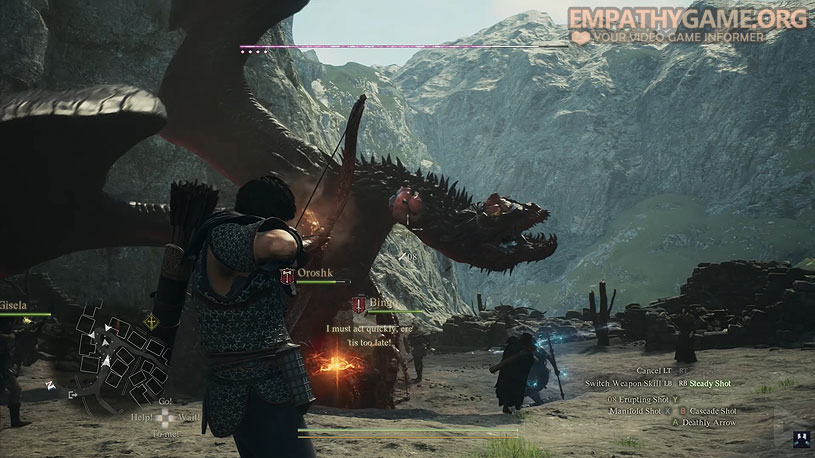
Combat is strongest when the enemy’s body matters as much as its health bar. A cyclops can be climbed to reach its eye; an ogre can knock through a formation; a griffin may take flight with the Arisen still hanging on. Stamina, positioning and the surrounding terrain turn these encounters into physical problems rather than sequences of attacks to repeat until the numbers run out.
Vocations change which part of that problem receives the most attention. Fighters block and create openings, Thieves stay mobile and punish weak points, Archers operate from safer angles, and Mages or Sorcerers must protect their casting opportunities. The most satisfying fights rarely stay orderly. Wolves and goblins can interrupt another battle, a Pawn can fall at the wrong moment, and suddenly the plan is to recover the party rather than finish the monster.
Players familiar with Monster Hunter World will recognize the satisfaction of reading a large creature’s movements and targeting vulnerable parts. The distinction is what surrounds the fight. Here, monsters share the road with quests, Pawns and other wandering threats, so even a familiar opponent can enter an unfamiliar situation.
There is more strategy in equipment than a damage number suggests. For a Sorcerer, knockdown-focused archistaff upgrades can make spells such as Frigor better at interrupting certain enemies, potentially creating the breathing room needed for another cast. The precise result depends on the enemy and build, but the underlying choice is meaningful: sometimes controlling a dangerous opponent is worth more than maximizing a single spell’s damage.
Trickster takes that idea of control much further. Its illusions redirect aggression and can lure enemies into attacking the wrong target or stumbling into hazards. It is an unusually indirect vocation, with little satisfaction for anyone who wants to deliver the killing blow personally. When Pawns exploit the openings it creates, the strategy can be delightful; when they fail to finish the job, combat feels slower and strangely distant. That trade-off says more about the game’s combat variety than simply counting how many classes it has.
Progression Is About Changing How You Fight
Character growth combines levels, vocation ranks, augments, skills, weapons and armor. Experience improves the Arisen, but experimenting with a vocation can change the feel of the entire adventure more dramatically than another level. A melee fighter who thrives on climbing and close contact may find a spellcaster’s long wind-ups restrictive at first, then appreciate the effect of a powerful spell launched behind a protective front line.
Warfarer is particularly revealing. Rather than committing to one vocation’s weapon, it can cycle through several and retain their basic utility. A staff offers levitation or support, for example, while daggers offer a different kind of mobility and offense. Its shared selection of equipped weapon skills, now broader with six assignable slots, still forces deliberate choices. Weapon switching provides versatility, not a separate full skill bar for everything carried. Players who enjoy assembling unconventional combinations may find that limitation more interesting than another straightforward power upgrade.
Gear preparation remains important as routes become tougher. Curatives, defensive equipment, enhancements and Pawn composition all influence how long the party can remain outside town. The game sometimes explains these systems less clearly than it should, but there is pleasure in realizing that a previously intimidating route becomes manageable through better planning rather than simply following a higher quest marker.
Players more interested in tightly focused duels than a traveling party may prefer Black Myth: Wukong. Its boss patterns, dodging and transformations concentrate the challenge around one fighter. Dragon’s Dogma 2 exchanges some of that precision for the pleasure, and occasional annoyance, of sharing a chaotic battlefield.
Quests and Politics Do Not Always Match the World

The game’s quest design can be refreshingly trusting. Instead of always providing a glowing path, it may ask the Arisen to listen to a rumor, locate an NPC, investigate a restricted area or recognize that time matters. Finding a solution through observation creates a better sense of participation than simply following instructions. It also makes failure less comfortable. Important people move, explanations can be obscure, and a missed opportunity may only become obvious later.
The main narrative is less successful at sustaining that curiosity. Vernworth’s political intrigue, Captain Brant’s investigations and the question of the false Sovran suggest a more developed struggle over power and legitimacy than the later story consistently delivers. The campaign moves toward larger mysteries, but some early conflicts lose momentum rather than reaching a satisfying payoff. It is possible to admire the world and still feel that the central story does not give its characters or ideas enough time.
This is why the smaller quests sometimes leave a stronger impression. Sneaking somewhere forbidden, following a suspicious figure or making a decision with incomplete information fits the game’s willingness to let players accept consequences. At its best, uncertainty creates role-playing. At its weakest, it merely forces a player to guess what an underexplained objective requires. The line between those two experiences is thinner than it should be.
Replayability and the Cost of Going Further
Revisiting Dragon’s Dogma 2 makes sense because vocation combinations, Pawn choices and routes can alter familiar encounters. A cave avoided while underprepared may later become an easy diversion; a different party can turn a difficult drake fight into a demonstration of how much preparation matters. That flexibility is more compelling than a promise that every side quest will produce a dramatically different story.
The Unmoored World also changes the rules of exploration, introducing a late-game stretch where limited rests make attrition a more serious concern. Planning when to recover becomes part of the challenge, and a Forager Pawn’s knowledge of useful resources can become more valuable than it seemed during ordinary travel. This is a different pressure from setting out at night. The question is no longer just whether the party can win the next fight, but what that victory will leave it capable of doing afterward.
The Dark Arisen expansion gives that appetite for further challenge another outlet through snowy Norgan, its relic-focused exploration and the Lost Rites dungeons. Those additions broaden the places and encounters to investigate rather than changing the fundamental appeal: leaving safety with a capable party, then discovering that a planned expedition requires improvisation.
There is a related pleasure in Crimson Desert, although its world and progression are different. Both games can turn a routine journey into an unexpected sequence of fights, discoveries and detours. Dragon’s Dogma 2 has a more particular identity, though, because almost every disruption also involves negotiating with a party whose members have ideas of their own.
Final Verdict
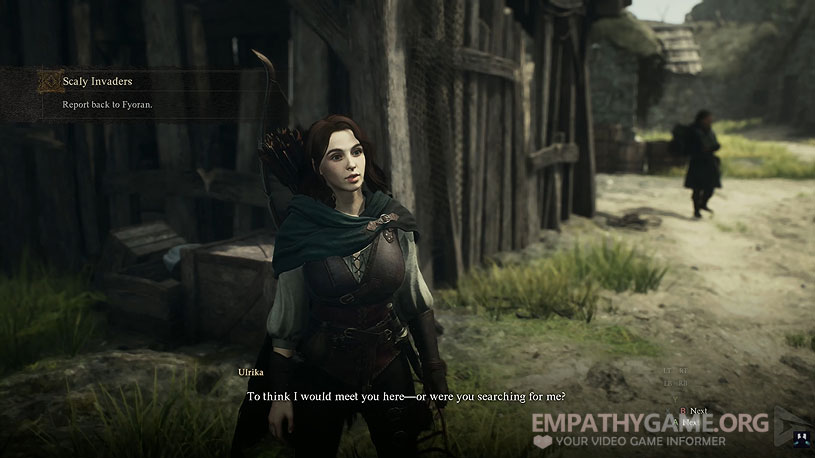
Dragon’s Dogma 2 asks for more patience than many open-world RPGs. Its quests can be unclear, its story struggles to fulfill its political setup, and a dangerous cave does not always reward discovery with something worth carrying home. Those are meaningful weaknesses, not automatically signs of admirable old-school design.
What makes the game special is how its systems support one another. Climbing a monster is exciting because companions are fighting below. Travel matters because reaching the next town safely is not guaranteed. Vocation changes matter because the same encounter can become a different problem. Players seeking predictable rewards and a tightly directed campaign may come away dissatisfied. Those who enjoy preparing for uncertainty, adapting mid-fight and finding stories in the journey itself will discover a fantasy RPG with an unusually strong personality.
Dragon’s Dogma 2 Pros & Cons
- Pro: Unpredictable journeys allow Pawns, roaming monsters, carts, camping, and exploration to collide in surprising ways
- Pro: Physical monster climbing and ten distinct vocations encourage flexible and tactical party combat
- Pro: Pawn companions provide distinctive combat roles, knowledge, personality, and player-shared party building
- Pro: More accessible travel, extra weapon-skill slots, stronger save flexibility, and Pawn adjustments address several original frustrations
- Pro: Dark Arisen adds Norgan exploration, a new story, demanding dungeon challenges, relic equipment, and character customization
- Con: Busy towns and CPU-heavy situations can still challenge less powerful PCs despite optimizations
- Con: Steam Deck retains its Unsupported rating
- Con: Vague quests, irregular story pacing, and repeated enemy types may frustrate players who want conventional guidance
- Con: Some long journeys, cumbersome interactions, and unusual systems remain deliberately inconvenient; unofficial mods can break after updates
Dragon’s Dogma 2 PC System Requirements
Official Windows PC requirements for Dragon’s Dogma 2 and its Dark Arisen Expansion, as published on Steam. These replace the original launch-era specifications.
MINIMUM:
OS: Windows 11 (64-bit)
CPU: Intel Core i5-8500 / AMD Ryzen 5 3500
RAM: 16 GB
GPU: NVIDIA GeForce GTX 1660 / AMD Radeon RX 5500 XT with 8 GB VRAM
DirectX: Version 12
Internet: Broadband internet connection
Drive: SSD recommended
Additional: Approximately 1080p using upscaling at 45–60 FPS with Prioritize Performance selected; frame rates may drop under high processing load. Ray tracing requires at least an NVIDIA GeForce RTX 2080 Ti or AMD Radeon RX 6800.
RECOMMENDED:
OS: Windows 11 (64-bit)
CPU: Intel Core i7-10700 / AMD Ryzen 5 3600X
RAM: 16 GB
GPU: NVIDIA GeForce RTX 2070 Super / AMD Radeon RX 6600 XT
DirectX: Version 12
Internet: Broadband internet connection
Drive: SSD recommended
Additional: Approximately 1080p using upscaling at 60 FPS with Prioritize Performance selected; performance can vary with scene load. Ray tracing requires at least an NVIDIA GeForce RTX 2080 Ti or AMD Radeon RX 6800.
Additional PC Performance and Setup Notes
- Storage: Steam’s published requirements do not provide a fixed official storage-capacity figure. Check the installation size reported by Steam and allow extra free space for updates, caches, and backups rather than relying on an old 100 GB estimate.
- CPU limits: NPC-heavy towns and large encounters can still become processor-bound. Lowering graphics settings alone may not remove CPU bottlenecks, even with the game’s optimization improvements.
- Ray tracing: Disable ray tracing first if the graphics card struggles; then test the game’s performance-oriented graphics preset and upscaling options while watching visual quality.
- Save system: The game provides three separate adventure slots, each with Autosave, Interim Save, and Last Inn Rest Save. Rest at an inn and create an external backup before experimenting with progression or mods.
- Controls: Steam lists partial controller support and Capcom recommends a gamepad; keyboard and mouse are also usable. The expanded keyboard mapping options can help assign weapon skills more directly.
- Steam Deck: The official status remains Unsupported. Launching under SteamOS is not equivalent to a Valve Playable or Verified recommendation.
- Clean troubleshooting: Update graphics drivers, verify files through Steam, and temporarily disable unofficial performance, interface, save, and camera mods when isolating crashes or problems after updates.
Official Trailer
Note: This official Dragon’s Dogma 2: Dark Arisen announcement trailer introduces the snowy Norgan region and the expansion’s story direction. The expansion is available as paid DLC on Steam and is included in the combined Dark Arisen bundle.
Frequently Asked Questions
What is included in Dragon’s Dogma 2: Dark Arisen?
The paid expansion adds Forsaken Dominion, a new story in the snowy Norgan region with Eir and the Fallen Dragon; the Lost Rites series of 12 dungeon challenges; relic-related equipment and abilities; and new hairstyles and tattoos for character creation. It is not a replacement for the original campaign.
Do I need the base game to play the Dark Arisen Expansion?
Yes. The separately sold Steam expansion requires Dragon’s Dogma 2. The combined Dark Arisen bundle includes both the game and DLC, plus two smaller add-ons, so check your existing library before buying.
How do I start the Dark Arisen story, and what level should I be?
Speak with Captain Brant at The Stardrop Inn in Vernworth at night when the relevant story access is available. The Forsaken Dominion story is recommended from about level 40, while Lost Rites challenges begin around level 20. These are starting recommendations rather than guarantees that later battles will be easy. If you are already in the Unmoored World, you may need to begin another cycle before entering the expansion story.
Is Dark Arisen on Nintendo Switch 2 the same purchase as the PC expansion?
No. The Nintendo Switch 2 release combines the base game and expansion into its own console product. A Steam purchase does not give you the Switch 2 version or transfer your PC entitlements to Nintendo.
What happened to the original Deluxe Edition and New Journey Pack?
The older Digital Deluxe Edition, New Journey Pack, and most small convenience-item DLC were discontinued from new sale. Owners retain access to purchased content; new PC buyers should compare the normal Steam base game, standalone expansion, and combined bundle instead.
Does Dragon’s Dogma 2 have multiplayer, co-op, or cross-play?
There is no real-time campaign co-op, split-screen, or PvP. Players instead share AI-controlled Pawns online: another player can hire your Main Pawn, and you can recruit Pawns created in other worlds. This is not cross-platform cooperative play.
How many Pawns can join my party?
The Arisen travels with one customizable Main Pawn and up to two recruited support Pawns. Choosing a complementary mix of frontline fighters, spellcasters, ranged damage, and healing makes long journeys safer.
Which vocation should a beginner choose?
Fighter is a practical choice if you like blocking and close-range defense; Archer suits players who prefer fighting from a distance, while Mage provides spellcasting and support. You can change vocation later, so the starting choice does not permanently lock your character into one class.
How many weapon skills can I equip?
The improved system allows six equipped weapon skills rather than the original four. That provides more tactical options without requiring the player to change vocations just to access a broader set of abilities.
Can I create more than one Arisen or save separate playthroughs?
Yes. The game supports three separate adventure slots. Each can maintain Autosave, Interim Save, and Last Inn Rest Save data. Keeping an inn save and an external backup is still wise when making irreversible decisions or testing mods.
How does the Eternal Ferrystone work?
The Eternal Ferrystone is reusable fast travel, but destinations still depend on accessible Portcrystals. Oxcarts and traveling on foot remain important for reaching locations that have no convenient Portcrystal placement.
What is Dragonsplague, and can it be cured?
Dragonsplague affects Pawns and may create serious consequences if ignored. Watch for unusual behavior and warning signs; the Dragonsbaulk Draught provides a direct way to cure an afflicted Pawn. Taking precautions before important inn rests remains sensible.
Does Dragon’s Dogma 2 have Easy, Casual, or Hard Mode?
The game includes Casual Mode to reduce some penalties and inconveniences, while Hard Mode offers an increased challenge. Normal play remains focused on preparation, vocation selection, party composition, and resource management. Review the in-game warnings before changing modes.
Is Dragon’s Dogma 2 connected to the first Dragon’s Dogma: Dark Arisen?
Yes, through its Arisen-and-dragon mythology, Pawn companions, vocations, monster climbing, and recurring themes. You can understand Dragon’s Dogma 2 without finishing the original, though earlier familiarity adds context to its ideas.
What is the Unmoored World, and does the game have New Game Plus?
The Unmoored World is a distinct endgame state associated with the true-ending route. New Game Plus allows another story cycle with much of your character’s progress and equipment carried forward, making it useful for missed quests, different vocations, and late-game preparation.
How long does Dragon’s Dogma 2 take to finish?
A focused base-game campaign may take roughly 30–40 hours, but exploration, side quests, vocation ranks, the Unmoored World, New Game Plus, and Dark Arisen can extend the total considerably. Actual playtime depends heavily on detours and how thoroughly you explore.
Why can Dragon’s Dogma 2 struggle on PC?
Busy settlements and NPC-heavy encounters can be CPU-limited, while ray tracing adds graphics-card demand. Test the performance graphics preset, reduce GPU-heavy options, verify files, and compare a clean unmodded installation before assuming the problem is caused by your save.
Does Dragon’s Dogma 2 work on Steam Deck?
Steam labels the game Unsupported. It may launch on some configurations, but this is not an official assurance of smooth handheld performance; check Valve’s compatibility status before buying specifically for Steam Deck.
Can I use a controller or keyboard and mouse?
Yes. Steam recommends a controller and lists partial controller support, while keyboard and mouse controls are available. You can adjust bindings and take advantage of direct weapon-skill keyboard inputs.
Are there unofficial PC mods?
Yes. Nexus Mods hosts visual, camera, interface, gameplay, and quality-of-life changes. Back up your saves, read mod version requirements, and disable incompatible modifications when troubleshooting or installing major game changes.
Still have questions? Check the Dragon’s Dogma 2 community on Reddit, Steam Discussions, and Capcom’s official help page.
Sources & References
Key game, purchasing, expansion, requirements, and platform details in this guide were checked against these sources:
- Dragon’s Dogma 2 on Steam — PC editions, system requirements, Steam features, Steam Deck status, and base-game user reception
- Dark Arisen Expansion on Steam — released DLC, required ownership, bundle contents, and new expansion features
- Capcom’s Steam announcements for Dragon’s Dogma 2 — permanent save, Pawn, skills, travel, performance, and DLC-launch changes
- Capcom’s Dark Arisen announcement — expansion identity and supported platforms
- Nintendo’s Dark Arisen product page — Switch 2 edition and new expansion content
- PC Gamer’s Dark Arisen starting guide — practical DLC entry point, recommended progression, and endgame access
Similar Games Like Dragon’s Dogma 2
- Dragon’s Dogma: Dark Arisen
- Monster Hunter World
- Elden Ring
- The Witcher 3: Wild Hunt
- The Elder Scrolls V: Skyrim
- Dark Souls III


Found something worth playing through DecideGame?
DecideGame.com is an independent gaming project run by Editor Zero. If this guide helped you discover a game, solve a problem, or find useful information, you can support DecideGame.com and help keep new and updated game guides coming.
DecideGame — PC Game Guides, Reviews & Setup Help