
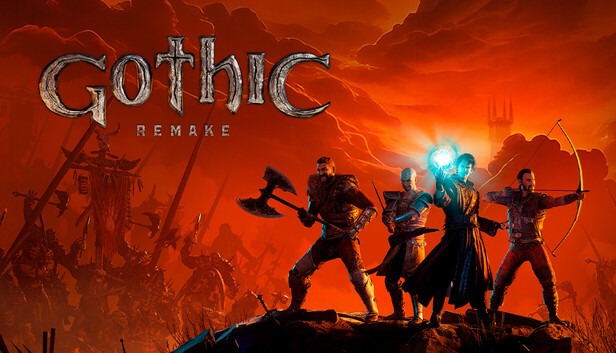
📅 Game released: 2026
Gothic 1 Remake rebuilds the original prison-colony RPG around the Nameless Hero, three rival camps, dangerous exploration, and trainer-led progression. This PC guide compares official Steam and DRM-free GOG purchase and download options, the Nyras Prologue demo, Collector’s Edition, Steam Workshop mods, system requirements, Steam Deck limitations, and practical setup.
 By Editor Zero — independently researched, edited, and maintained.
Last updated: 13 November 2026
Last reviewed: 13 November 2026
Table of Contents
- Quick Facts
- Official PC Stores, Download & Installation
- Gothic 1 Remake Review
- Pros & Cons
- PC System Requirements
- Frequently Asked Questions
- Similar Games
Gothic 1 Remake Quick Facts
- Game: Gothic 1 Remake
- Developer: Alkimia Interactive
- Publisher: Alkimia Interactive, THQ Nordic
- Genre: Action RPG, Open World, RPG, Fantasy
- Release: June 5, 2026
- Platforms: Windows PC, PS5, Xbox Series X|S
- Editions / Extras: Standard Edition; limited physical Collector’s Edition; optional official soundtrack
- Mode: Single-player only; no campaign co-op, PvP, or multiplayer progression
- Steam Deck: Unsupported; Valve says the game runs on SteamOS, but the graphics settings cannot be configured to run well enough on Steam Deck
- Engine: Unreal Engine 5
- Community: Official Gothic Website, Steam Discussions, World of Gothic Reddit Community
- PC modding: Official beta mod kit and Steam Workshop; Nexus Mods also hosts community modifications
- Metacritic score: 74/100 on PC
- IGN score: 7/10 (PC review)
- OpenCritic average: 73/100
- Additional features: Photo Mode, Marvin Mode, and unlockable haircuts/tattoos
- Steam user reception: Very Positive overall
Official PC Stores, Download & Installation
👇 Compare the official Steam and GOG versions of Gothic 1 Remake below before purchasing, downloading, or installing the game on PC.
- Official PC stores: The complete Windows game is sold through Steam and GOG. Purchases belong to their respective storefront libraries; buying on one store does not automatically grant ownership on the other.
- Standard Edition: Includes the complete single-player campaign. The official soundtrack is sold separately as optional audio content, not required gameplay DLC.
- Collector’s Edition: THQ Nordic’s physical package includes the game, a 34 × 24 cm Sleeper wall mask, leather notebook, leather wristband, and soundtrack. The THQ Nordic EU listing currently shows the PC package as unavailable; check other authorized retailers for remaining stock and confirm the platform and redemption method before ordering.
- GOG and offline play: GOG sells a DRM-free copy with offline backup installers. GOG Galaxy is optional for installation, while its cloud saves, achievements, and automatic updates require the relevant online features.
- Steam features: Steam lists achievements, trading cards, Steam Cloud, Family Sharing, and controller support. No separate mandatory publisher launcher is listed for the Steam version.
- Free Nyras Prologue demo: Steam offers a separate prequel starring Nyras. Use the Download Demo option on the main Steam store page; the previous standalone demo store URL redirects there. The demo is not the opening chapter of the paid campaign and does not transfer its story progress.
- Official PC mod support: Gothic 1 Remake now has an official Steam Workshop and an Alkimia beta mod kit focused on game scripts. Workshop subscriptions are a Steam-specific convenience; GOG users should follow a mod author’s compatible installation instructions rather than assume Steam Workshop access.
- Installation and saves: Install through your chosen storefront or GOG offline installer. Keep the game updated, maintain several manual saves, and back up saves before experimenting with mods or major changes.
- Steam Deck: Valve rates the game Unsupported because acceptable performance could not be achieved through the available graphics settings; SteamOS launch capability should not be confused with a Playable rating.
- Storage: Allow at least 60 GB on an SSD, with extra free space for updates and temporary files. Steam recommends an NVMe drive.

 Try the Free Nyras Prologue Demo on Steam
 Visit the Official Gothic 1 Remake Website
Gothic 1 Remake Review
A fiercely faithful RPG where earned progress matters more than comfort, and some friction still goes too far.
Gothic 1 Remake understands that the original was never memorable simply for being difficult. Its identity came from a world that refused to treat the player as important. The Nameless Hero enters the Colony without status, useful skills, dependable equipment, or a clear route forward. Every weapon lesson, safe road, friendly contact, and piece of armor feels earned because the world does not quietly adjust itself to his abilities.
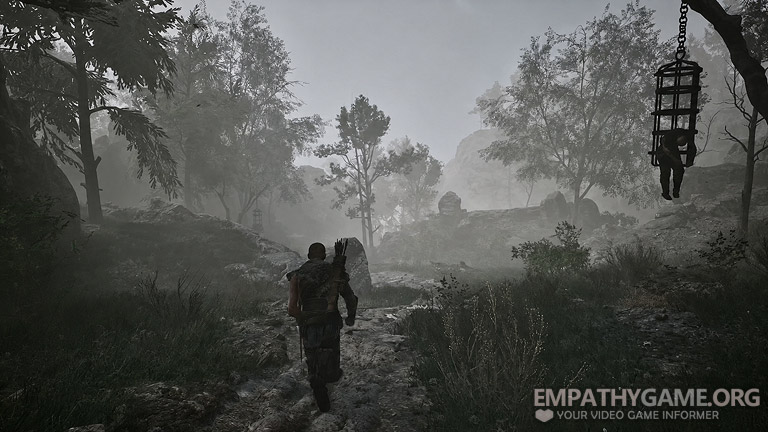
Alkimia Interactive modernizes the 2001 RPG without replacing that philosophy. Movement and combat are more readable, the rebuilt Valley of the Mines has greater visual depth, and the three camps express their competing cultures more clearly. Yet Gothic remains deliberately abrasive. Directions can be vague, trainers difficult to find, and nighttime travel genuinely dark. Some quests also depend on logic that is clearer to the designer than the player.
The line between productive difficulty and wasted effort defines the remake. Learning which creatures to avoid or prisoners to trust is satisfying; hunting an obscure dialogue trigger rarely is. Players who enjoy figuring out a world’s rules can find something absorbing here. Those wanting constant guidance or a quick power fantasy may not consider the inconvenience worthwhile.
The Colony Makes Weakness Feel Meaningful
Thrown through the magical Barrier, the Nameless Hero receives neither a heroic weapon nor a quest chain declaring him special. Wildlife can end an excursion, while prisoners see a newcomer as an errand runner or easy target. Diego points toward the Old Camp, but he is a contact, not a tutorial system. Food, equipment, knowledge, and standing must be earned.
Modest upgrades therefore carry unusual weight. An untrained character handles a rusty blade poorly; a bow can keep a dangerous creature at a safer distance. The first proper armor can make a formerly lethal attack survivable. What changes is not just a statistic but the Hero’s relationship with places he previously avoided.
Even recovering from mistakes takes consideration. Sleeping restores health and mana, but restorative rest is limited rather than an endlessly repeatable way to erase damage. Food and potions therefore remain relevant between fights. A badly judged expedition can cost supplies as well as time, which makes returning to safety a decision rather than an automatic reset.
Wolves on a road may signal that another route, escort, or more training is needed. Knowing where creatures gather matters as much as another level. Initially the Colony feels enormous because every shortcut is uncertain. Later the same geography becomes manageable through familiarity, one of Gothic’s most satisfying forms of progression.
Combat Improves Alongside the Nameless Hero
Directional attacks, blocking, dodging, ranged weapons, and target lock make combat easier to read than the original controls, though the awkward starting point is intentional. Early swings are slow, careless aggression is punished, and weapon training improves the Hero’s animations as well as his effectiveness. More controlled attacks make increased skill visible before a damage number ever appears.
Fighting a wolf or adult scavenger illustrates the rhythm. Charging in with repeated swings invites interruption, while several enemies can close the space surprisingly quickly. Watching an opening attack, dodging it, landing a couple of deliberate strikes, and backing away is often safer. Drawing one creature away from a pack or weakening it with arrows makes more sense than trying to overpower everything at once.
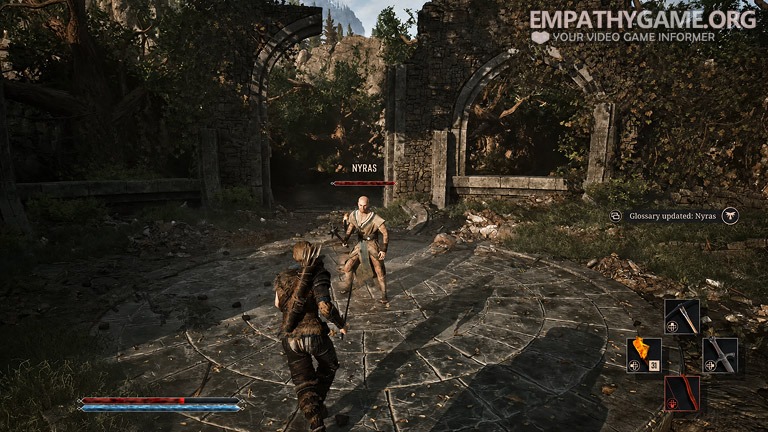
Magic has a less even learning curve. Firebolt can remain useful for a long stretch, but spells such as Fireball, Iceblock, and Lightning demand casting time that is hard to find against charging groups. As resistant enemies appear, a mage relying on quick bolts may need new positioning, spell combinations, or a secondary fighting skill. The problem is not that magic lacks power, but that its progression can feel less dependable than weapon training.
Human fights add a social dimension. Defeat does not always mean death; taking possessions or delivering a final blow can be separate choices. A dispute with another prisoner therefore differs from clearing wildlife. Combat remains rough when lock-on struggles with groups, terrain interferes with spacing, or impacts feel unclear. The system works best when preparation matters more than wrestling with the controls.
Progression, Trainers, and Faction Politics
Levels award Learning Points, but improvement does not happen anywhere through a menu. Skills and attributes require teachers, usually costing both Learning Points and ore. One-handed fighting needs an instructor, harvesting trophies a hunter, and magic the appropriate mentors. Progression creates relationships with people who hold practical knowledge.
Limited resources make early investment important. Strength might unlock a stronger weapon, while weapon training can make the one already equipped much more dependable. Lockpicking offers access to worthwhile containers but also asks the player to commit to a fiddly activity. With no simple unrestricted respec, a character who invests everywhere can feel weaker for longer than one who chooses a direction.
Hunting also complicates the economy. Trophies can be sold, but merchants value different goods differently, and selling many identical items can drive down returns. Seeking a specialist such as Wolf gives trade a local logic, though repeatedly checking prices can turn an enjoyable hunt into bookkeeping. The system works when knowing who to sell to feels rewarding, less so when managing a pile of wolf claws becomes the real challenge.
Armor can also shift the difficulty abruptly. Strong equipment acquired in the middle chapters may make previously dangerous encounters almost harmless, depending on the build. Returning confidently to an old threat is satisfying; losing the need to think during fights is less so. Gothic’s reward of growing powerful occasionally undermines the tension that made gaining that power meaningful.
The Old Camp, New Camp, and Swamp Camp turn the opening chapter into a political trial. The Old Camp controls ore through a brutal hierarchy, the New Camp works toward escape, and the Swamp Camp follows the Sleeper through sincere belief and unsettling discipline. Working for all three before committing gives allegiance more substance than choosing a class at the start.
Joining a camp changes trainers, armor, magical paths, and some quests. Later objectives are often shared, however, rather than forming three equally distinct campaigns. Replaying makes more sense for another build and early allegiance than for a wholly different final act. The factions have greater social depth than their eventual quest branching suggests.
Exploration Rewards Memory Instead of Map Cleaning
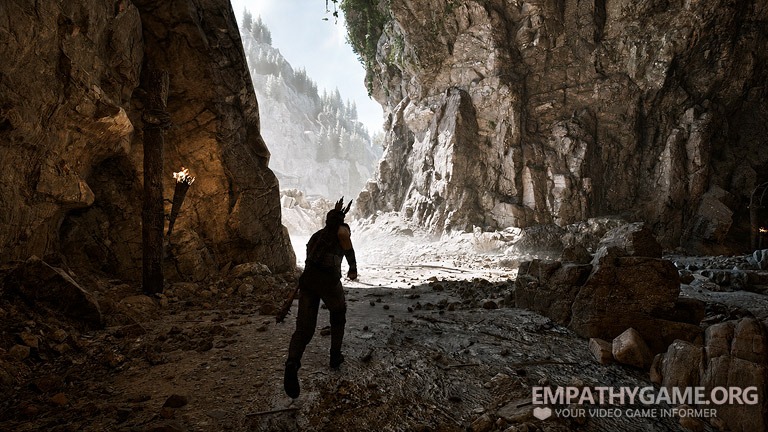
Gothic 1 Remake resists the habit of turning an open world into a checklist of icons. The map has to be acquired, offers limited detail, and rarely substitutes for paying attention to dialogue, journal entries, and landmarks. The player gradually constructs a mental picture of the Colony. Recognizing a bend in the road or remembering which path avoids a dangerous pack feels more useful than following another glowing trail.
NPC schedules strengthen that connection. Prisoners work, eat, sleep, stand guard, and move through their own routines. Finding a trader can mean remembering where he spends the evening rather than waiting for a stationary shop interface. In this respect, the Colony shares some of the systemic appeal of The Elder Scrolls IV: Oblivion Remastered, but its smaller, denser society is much less interested in smoothing over inconvenience.
Travel reveals the cost of this approach. Discovering a dangerous route can be absorbing; walking it repeatedly for errands is different. A rideable Scavenger eventually speeds up familiar journeys, although settlements and encounters still require dismounting. It is welcome relief rather than a cure for backtracking. Gothic sometimes confuses the time spent retracing a path with another meaningful adventure.
Limited directions also work only when the world supplies enough clues. Some objectives demand a particular conversation without providing a persuasive reason to seek that person out. When investigation deteriorates into trying every available dialogue option, the problem is no longer that the game respects the player’s intelligence. It has simply failed to communicate.
Atmosphere, Dialogue, and a World Built Around Power
The magical Barrier makes the Valley of the Mines a closed political ecosystem. King Rhobar II needs magical ore for the war against the orcs, while prisoners controlling its production acquire leverage over the kingdom. The Nameless Hero’s effort to survive becomes entangled with the three camps and the mystery of the Sleeper, but the setting never entirely forgets its foundation in coercion and exploitation.
The remake also gives the orcs more cultural context. Conversations involving Ur-Shak complicate the idea that they are merely enemies to defeat, offering another perspective on the conflict and the Sleeper. The setting becomes more convincing when its opposing side has beliefs and a recognizable society rather than only stronger monsters.
Architecture, mine workings, timber structures, smoke, ruins, and vegetation distinguish the camps without requiring exposition at every turn. Dialogue is less polished than the cinematic writing of The Witcher 3: Wild Hunt, yet Gothic achieves something different. Its inhabitants often seem more interested in their own survival and status than the Hero’s personal journey. Respect must be negotiated or earned, not assumed.
Sound carries much of the atmosphere. In caves, mines, and forests, movement heard before its source is visible creates tension without scripted scares. The Colony can be oppressive and funny in the same scene. Irritating prisoners give settlements personality, although that same abrasive characterization wears thin during errands requiring several return visits.
Faithfulness Preserves Too Much Friction
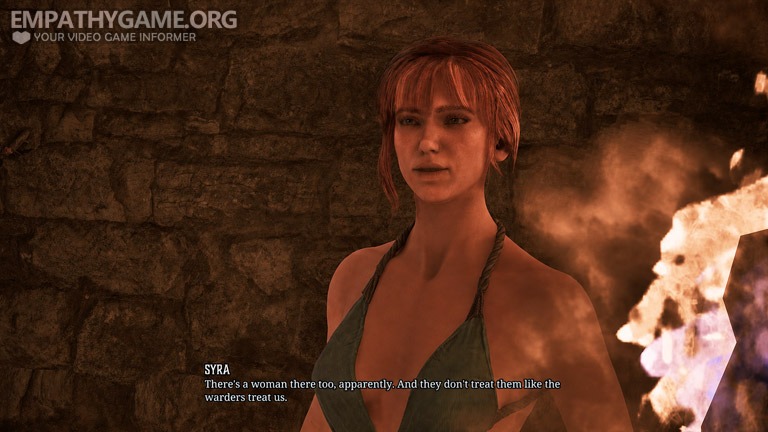
The remake’s defining strength and weakness come from refusing to smooth away Gothic’s personality. Dangerous travel, demanding progression, and sparse guidance establish its identity. Repeated ambient lines, awkward pathfinding, and unclear triggers do not necessarily help. A difficult decision teaches something; an unreliable interaction mostly spends time.
Lockpicking captures the contradiction. Manipulating connected parts until a lock aligns gives theft a physical process, and training makes errors more forgiving. Yet longer locks can interrupt the pleasure of finding a hidden chest. The game asks for attention without always providing an interesting decision in return.
Social consequences can also be selective. Violence against unnamed prisoners may draw surprisingly little reaction from surrounding named characters, even when faction tensions should matter. This need not happen in every situation to expose a weakness: a world attentive to hierarchy and daily routine can seem oddly indifferent when its less important inhabitants are harmed.
NPC routines produce smaller contradictions. Characters block paths, appear unexpectedly, or behave awkwardly when fighting interrupts their schedules. Sometimes this makes settlements feel occupied rather than staged. Elsewhere it prevents simple actions. The worthwhile distinction is not between convenience and inconvenience, but between friction that produces consequences and friction with no purpose.
The Colony Looks Renewed Without Feeling Tame
Unreal Engine 5 gives familiar locations dense vegetation, heavier weather, modern lighting, more detailed faces, and a stronger sense of built-up settlement life. Fog, rain, and darkness can make a known route threatening again. The visual detail is most effective when it reinforces the feeling that leaving camp safety is a genuine decision rather than a transition between map markers.
Presentation cannot conceal every rough edge. NPC animations and interactions sometimes lag behind the richly detailed environments, while crowded fights disrupt the sense of physical presence. The remake looks newer than it plays. Its old-fashioned priorities remain interesting, though, when they produce worthwhile decisions rather than merely advertise their age.
Final Verdict
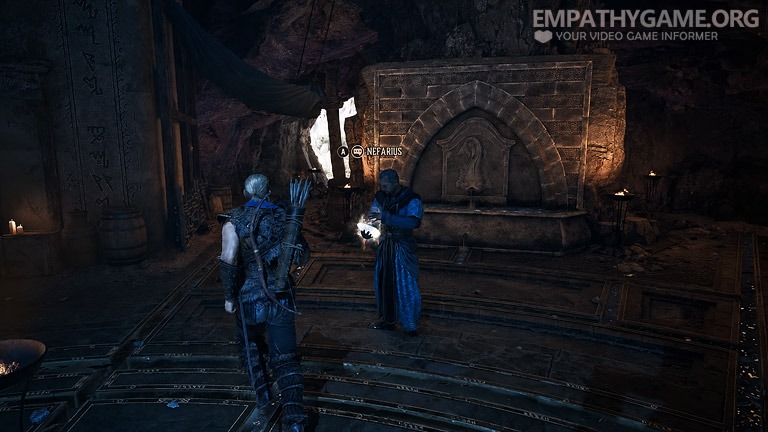
Gothic 1 Remake is at its best when weakness, knowledge, and social position reinforce one another. A road once controlled by dangerous wildlife becomes manageable after training. A confusing settlement becomes familiar through its routines. A prisoner nobody respects acquires teachers, equipment, and influence by understanding how the Colony works. The remake makes that climb feel tangible in ways that more accommodating RPGs often do not.
Faithfulness still needs judgment. Uneven spell progression, overly protective armor, limited later faction divergence, cumbersome trading, and inconsistent NPC reactions join obscure quest logic and fiddly lockpicking. These issues will affect builds and playthroughs differently, but reveal where the simulation falls short of its ambitions.
Removing every inconvenience would erase too much of Gothic’s identity. The Colony remains compelling because it does not revolve around the player, its factions are compromised rather than heroic, and familiar routes accumulate a history of failures and victories. Anyone willing to learn a place, accept imperfect systems, and earn strength will find a distinctive RPG. Players demanding consistently fluid combat, precise quest tracking, or dramatically different faction campaigns have good reason to hesitate.
Gothic 1 Remake Pros & Cons
- Pro: Faithfully rebuilds the Colony’s tense prison-camp atmosphere, faction politics, dangerous wilderness, and responsive NPC routines
- Pro: Three joinable camps, trainers, flexible combat styles, exploration, and limited resources make progression feel earned
- Pro: Improved controls and visual presentation make the original Gothic concept more approachable while preserving its demanding identity
- Pro: Strong environmental storytelling and interconnected exploration reward attention rather than constant objective markers
- Con: Ambiguous quest triggers, awkward lockpicking, and unpredictable NPC behavior can waste time
- Con: Early combat feels clumsy and some animations remain rough despite the presentation overhaul
- Con: Demanding PC requirements and Steam Deck Unsupported status restrict hardware flexibility
- Con: Limited convenience features and strict progression will frustrate players seeking guided exploration or easy respecs
Gothic 1 Remake PC System Requirements
MINIMUM:
OS: Windows 10 64-bit / Windows 11 64-bit
CPU: Intel Core i7-7700K / AMD Ryzen 5 1600X
RAM: 16 GB
GPU: AMD Radeon RX 6700 XT or NVIDIA GeForce RTX 2070
Listed VRAM target: 8 GB (store requirement; not the memory size of every named GPU)
DirectX: Version 12
Storage: 60 GB available space
Drive: SSD required; faster NVMe storage supported
Sound Card: DirectX-compatible sound device
RECOMMENDED:
OS: Windows 10 64-bit / Windows 11 64-bit
CPU: Intel Core i7-7700K / AMD Ryzen 5 3600X
RAM: 32 GB
GPU: NVIDIA GeForce RTX 3070 Ti or AMD Radeon RX 6800 XT
Listed VRAM target: 12 GB (store recommendation; named GPU models have differing memory capacities)
DirectX: Version 12
Storage: 60 GB available space
Drive: NVMe SSD recommended
Sound Card: DirectX-compatible sound device
Additional PC Performance and Setup Notes
- Steam and GOG list slightly different recommended AMD CPUs: Steam specifies Ryzen 5 3600X, while GOG lists Ryzen 5 2600X. The table above follows Steam for consistency.
- The GPU tiers are demanding. Steam lists 8 GB minimum and 12 GB recommended VRAM, but those memory targets do not match every example card exactly: the standard RTX 3070 Ti has 8 GB, RX 6700 XT has 12 GB, and RX 6800 XT has 16 GB. Use the GPU names and VRAM figures as separate published reference points rather than guaranteed performance thresholds.
- Steam metadata detects NVIDIA DLSS, DLSS Frame Generation, NVIDIA Reflex, AMD FidelityFX technologies, and Intel XeSS. Actual options depend on the installed GPU, drivers, and in-game implementation.
- Steam Deck is Unsupported specifically because Valve could not configure the game to run well enough. SteamOS compatibility data says the game itself launches, does not require internet for setup or single-player, and supports gamepad input, but that is not the same as acceptable Deck performance.
- On SteamOS, some text entry can require manually invoking the on-screen keyboard, and an external Bluetooth/USB controller may need to be selected manually through the Quick Access Menu.
- Use an SSD and leave additional free space beyond the advertised 60 GB for updates, shader/cache data, temporary files, and save backups.
- If crashes or visual problems begin after an update, verify the game files, update GPU drivers, disable overlays and overclocks, and test without community mods before trying more invasive fixes.
- Keep several manual save slots. Gothic’s quest states, faction choices, crimes, NPC routines, and community modifications make one repeatedly overwritten save an unnecessary risk.
Official Trailer
Note: THQ Nordic’s official release trailer introduces the Colony, its factions, creatures, combat, environments, and rebuilt Unreal Engine 5 presentation. The guide above covers Steam/GOG ownership, Nyras Prologue, system requirements, Steam Deck support, mods, and troubleshooting.
Frequently Asked Questions
Is Gothic 1 Remake a full remake or a remaster?
It is a full Unreal Engine 5 remake of Piranha Bytes’ original Gothic. The prison Colony, major characters, three camps, and core progression philosophy return, with rebuilt environments, revised combat presentation, and expanded interactions.
Which faction can I join?
The Nameless Hero can join the Old Camp, New Camp, or Swamp Camp. Each offers different allies, training opportunities, equipment, and approaches to magic, although major story threads ultimately reconnect.
Which camp is easiest for a beginner?
The Old Camp offers convenient early contacts and trainers, but there is no universally best faction. Complete introductory errands and talk to people across several camps before making a permanent commitment.
Does Gothic 1 Remake have character classes or respec?
There is no fixed class-selection screen. You build the Hero through Learning Points, attributes, weapon training, magic, and faction opportunities. Do not assume that every investment can be freely refunded.
What should I do first as a beginner?
Speak with Diego and other early NPCs, do safer quests, locate trainers, invest in one useful combat approach, and retreat from enemies that clearly outmatch you. Save before costly training or important faction decisions.
Why does early combat feel so difficult?
The Hero begins untrained and poorly equipped. Timing, spacing, avoiding groups, and choosing manageable targets matter, while weapon training makes attacks more effective and controlled.
Are there quest markers, mounts, or fast travel?
The remake expects players to follow dialogue, journal clues, and landmarks instead of constant waypoint guidance. A rideable Scavenger can be unlocked through Cohsel’s quest, while teleport runes become available during the campaign; these options reduce travel time but do not remove the need to learn the Colony.
Does Gothic 1 Remake have co-op or multiplayer?
No. The campaign is single-player, with no official co-op, PvP, cross-play, or multiplayer progression.
Can I try the Nyras Prologue demo, and will my save transfer?
Yes, Steam offers a free standalone Nyras Prologue demo following a different protagonist. It is separate from the paid Nameless Hero campaign, and demo progress does not transfer.
Should I choose Steam or GOG for Gothic 1 Remake?
Choose Steam if you want convenient Workshop mod subscriptions alongside its community and library features. Choose GOG if DRM-free ownership and downloadable offline installers matter more; both provide the main campaign.
Can I play Gothic 1 Remake offline?
Yes. GOG explicitly provides a DRM-free installer that does not require an online connection to play. Steam players should complete installation and prepare Steam Offline Mode before relying on offline play; downloading, cloud synchronization, and updates still require internet access.
Does Gothic 1 Remake support official mods?
Yes. The game has an official Steam Workshop and an Alkimia beta mod kit focused on scripts. Community mods are also available through Nexus Mods; back up saves and verify mod compatibility, particularly on the GOG release.
How do I access Photo Mode and Marvin Mode?
Photo Mode opens from the pause menu or with the L key on PC. To enable the official Marvin Mode, press Esc, type MARVIN, then press Esc again; it allows functions such as teleporting and spawning items or characters. Use a separate save before experimenting with developer-style commands.
Can I change the Nameless Hero’s haircut or tattoos?
Yes. Additional appearance customization can be unlocked through quests involving Joru and Baal Namib in the Swamp Camp, rather than being available immediately from a character-creation menu.
Is Gothic 1 Remake suitable for Steam Deck?
Valve rates it Unsupported. SteamOS can launch the game, but Valve could not configure the available graphics settings for sufficiently good Steam Deck performance.
Still have questions? Check the official Gothic website, Steam Discussions, or the World of Gothic community on Reddit for support, practical tips, and player experiences.
Sources & References
Key factual and technical information in this guide was checked against the following sources:
- THQ Nordic — Gothic 1 Remake release announcement — official launch date, platforms, developer, and engine.
- Gothic 1 Remake on Steam — game editions, demo, features, Steam Deck status, user reception, and system requirements.
- Gothic 1 Remake on GOG — DRM-free and offline installer options, store features, and recommended PC specifications.
- THQ Nordic — Photo Mode, Marvin Mode, and character customization — verified permanent additions to the game.
- Alkimia Interactive — Gothic 1 Remake announcements — official beta mod kit, Workshop integration, and feature instructions.
- Metacritic — Gothic 1 Remake — PC critic-score reference.
Similar Games Like Gothic 1 Remake
- Kingdom Come: Deliverance II
- The Elder Scrolls III: Morrowind
- Kingdom Come: Deliverance
- The Elder Scrolls IV: Oblivion Remastered
- The Elder Scrolls V: Skyrim
- The Witcher 3: Wild Hunt

Found something worth playing through DecideGame?
DecideGame.com is an independent gaming project run by Editor Zero. If this guide helped you discover a game, solve a problem, or find useful information, you can support DecideGame.com and help keep new and updated game guides coming.
DecideGame — PC Game Guides, Reviews & Setup Help