
📅 Game released: 2011
The Elder Scrolls V: Skyrim is an open-world fantasy RPG where the Dragonborn can follow a dragon prophecy or spend hours exploring Tamriel, joining guilds, and shaping a personal character build. This PC guide compares Special Edition and Anniversary Edition, official purchase and download options, SKSE mod compatibility, Creations, system requirements, and Steam Deck setup.
 By Editor Zero — independently researched, edited, and maintained.
Last updated: 15 November 2026
Last reviewed: 15 November 2026
Table of Contents
- Quick Facts
- Official PC Stores, Download & Installation
- The Elder Scrolls V: Skyrim Review
- Pros & Cons
- PC System Requirements
- Frequently Asked Questions
- Similar Games
The Elder Scrolls V: Skyrim Quick Facts
- Game: The Elder Scrolls V: Skyrim / Special Edition / Anniversary Edition
- Developer: Bethesda Game Studios
- Publisher: Bethesda Softworks
- Genre: Action RPG, RPG, Open World, Fantasy
- Release: Original — November 11, 2011 (including Windows PC); Special Edition — October 28, 2016; Anniversary Edition — November 11, 2021
- Platforms: Original — Windows PC, PS3, Xbox 360; Special/Anniversary-era releases — Windows PC, PS4, PS5, Xbox One, Xbox Series X|S, Nintendo Switch; Anniversary Edition also on Nintendo Switch 2
- PC Editions: Special Edition, Anniversary Edition, and the separate Anniversary Upgrade for Special Edition owners
- Subscription access: Skyrim Special Edition (PC) is included in eligible Game Pass plans; confirm your region and plan in the Xbox app
- Steam Deck: Verified for Skyrim Special Edition on Steam; unofficial mod setups may require extra work
- Ultrawide: Bethesda supports 16:9, 16:10, 21:9, and 32:9 displays
- Engine: Creation Engine
- Modes: Single-player; no official co-op, PvP, or cross-play
- Community: Skyrim Reddit, Skyrim Mods Reddit, Steam Discussions
- PC modding: Nexus Mods, Bethesda Creations, SKSE, community patches, and mod managers
- Metacritic score: 74/100 (Special Edition, PC); 94/100 (original Skyrim, PC)
- IGN score: 7.3/10 (Special Edition, PC); 8/10 (Special Edition, PS4/Xbox One review)
- OpenCritic average: 81/100 (Special Edition, multiplatform)
- Steam user reception: Very Positive overall
Official PC Stores, Download & Installation
👇 Compare official Steam, Epic Games Store, GOG, and Microsoft/Xbox options to purchase, download, and install Skyrim Special Edition or Anniversary Edition before setting up mods.
- Special Edition: The main 64-bit PC release includes the base game and all three expansions: Dawnguard, Hearthfire, and Dragonborn.
- Anniversary Edition: Combines Special Edition with the Anniversary Upgrade, covering the 74 Creation Club creations released with the Anniversary bundle. These add quests, equipment, homes, gameplay features, and more; later paid Verified Creations are not automatically included.
- Anniversary Upgrade: If you already own Special Edition, buy the upgrade for that same storefront rather than purchasing the whole game again. Storefront entitlements are separate.
- Included Creations: Special Edition owners can access Fishing, Survival Mode, Saints & Seducers, and Rare Curios without buying the full Anniversary Upgrade.
- Steam: Usually the most convenient route for extensive modding: SKSE tools, community guides, and curated lists commonly target its PC executable and folder structure. Steam Cloud and achievements are supported.
- GOG: Offers DRM-free installers without requiring GOG Galaxy. GOG supports SKSE mods, optional Galaxy cloud functions, and version rollback/update control; its Special Edition lacks the in-game Creation Club feature, but its Anniversary Edition contains the original 74 bundled Creation Club items.
- SKSE compatibility: Official SKSE builds support compatible Steam and GOG executables, but not the Epic Games Store or Microsoft Store / Game Pass versions. Match SKSE and DLL-based mods to the exact installed game build.
- Epic Games Store: Offers Special Edition, Anniversary Edition, and the Anniversary Upgrade with Epic cloud saves. Non-SKSE mods may work, but check individual mod requirements before choosing this version for an advanced setup.
- Microsoft Store / Game Pass: The native Windows PC version supports Xbox achievements and is included in eligible Game Pass plans. Its executable is not supported by SKSE, limiting some advanced mod lists.
- Store ownership and saves: Buying Skyrim on one PC store does not grant another store’s license. Cloud synchronization is store-specific; manual save migration may be possible, but back up saves and check version/mod compatibility first.
- Steam Deck: Valve rates the Steam version of Special Edition as Verified for a standard installation. SKSE, third-party mod managers, and extensive load orders can still involve manual setup on SteamOS.
 Buy Skyrim Special Edition on Steam
View Skyrim Anniversary Upgrade on Steam
 Buy Skyrim Special Edition on Epic Games Store
 Buy Skyrim Special Edition on GOG
 Buy or install Skyrim Special Edition on Microsoft Store / Xbox app

The Elder Scrolls V: Skyrim Review
A legendary open-world RPG that still knows how to pull you off the road.
Few RPGs sustain the freedom of The Elder Scrolls V: Skyrim. Bethesda Game Studios gives you an urgent problem – dragons have returned, and your character is the Dragonborn – then builds a world so inviting that the crisis can wait. A trip to Whiterun may turn into an afternoon investigating a cave or following a stranger’s request. That temptation to change your plans is not a distraction. It is the experience.
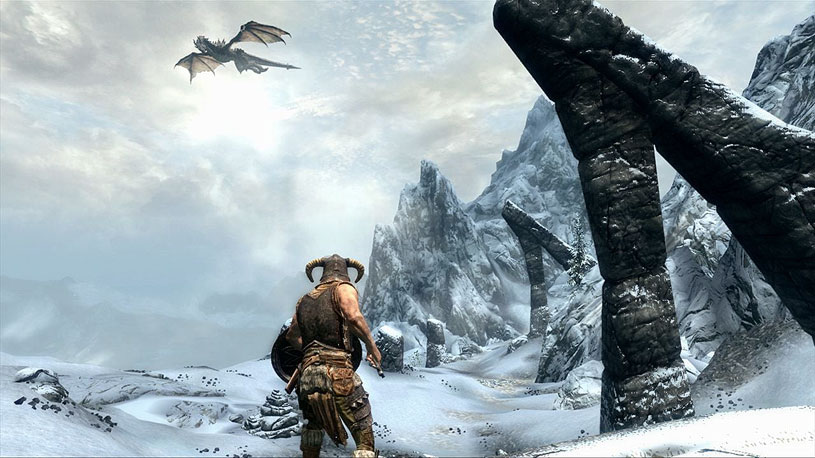
The Dragonborn absorbs dragon souls and unlocks ancient powers called shouts, but heroic duty is only one priority. You might leave town to continue the story, notice a giant camp, hear a dragon overhead, and end up inside a Nordic tomb because its entrance looked interesting. Skyrim never asks you to justify the detour.
Exploring, fighting, looting, selling, crafting, and improving your skills form a simple but unusually flexible loop. A crypt full of Draugr may reward you with an enchanted weapon, a Word Wall, or merely enough valuables to finance better equipment. By the time you return to town, another destination has probably caught your attention. Even the inventory full of items you probably should have left behind becomes part of the rhythm.
Skyrim’s northern province of Tamriel ties those activities together through snowy peaks, dark pine forests, stone cities, frozen rivers, and ancient barrows. It can feel lonely, dangerous, peaceful, and ridiculous within the same hour. One moment you are climbing the Seven Thousand Steps toward High Hrothgar; another, you are watching a mammoth launch an unfortunate bandit into the sky.
Enter a World That Feels Dangerous, Cold, and Easy to Get Lost In
After the opening escape from Helgen, the world gradually loosens its grip. You can follow the road to Riverwood, move toward the main quest, join the Companions, or turn around to investigate an unfamiliar ruin. Unlike a map built mainly around assigned activities, Skyrim often makes its smaller adventures feel as though you found them yourself.
That sense of discovery depends on interruptions. A courier approaches with a letter; a dragon descends near a settlement; a guard mentions a museum in Dawnstar; a roadside encounter leads toward a larger mystery. Not every event is elaborate, but their unpredictable placement makes ordinary travel worthwhile. Walking instead of fast-traveling is often the better choice if you want to appreciate what Skyrim does best.
Its environmental details help. A journal beside a dead adventurer gives a cave a little history. A bandit hideout suggests an argument or betrayal before anyone explains it. Nordic ruins build anticipation through traps, puzzles, and Draugr before revealing a powerful enemy or a Word Wall. Many dungeons also loop back toward their entrances through concealed passages or switches after the final encounter. Those exits save a lot of backtracking, although the route is occasionally easy to overlook.
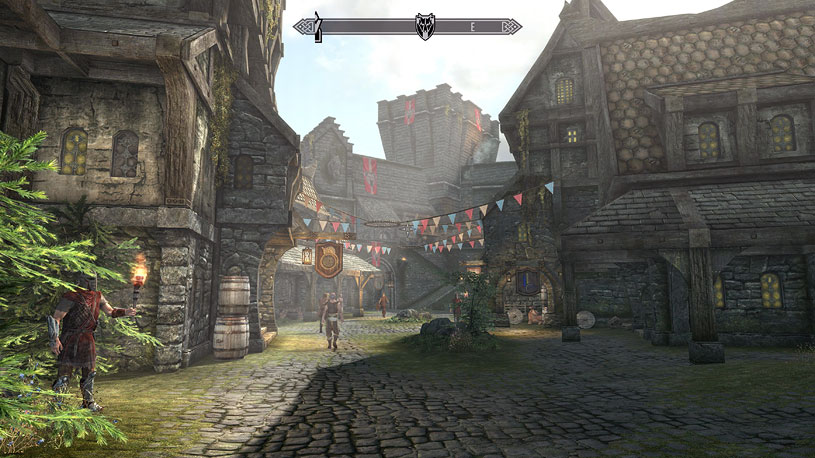
The settlements are just as important as the wilderness. Whiterun feels like a practical first home, surrounded by open plains. Riften has a suspicious, worn-down mood suited to the Thieves Guild. Solitude carries an air of political authority, while Windhelm feels divided by the civil war. Smaller towns such as Morthal, Falkreath, and Dawnstar have their own atmosphere, even when the number of people living in them is modest.
What stays with me most, though, is how calm the game can feel when nothing significant is happening. Its music fits the landscape so naturally that wandering through a forest or looking across a snowy valley becomes enjoyable without a quest reward waiting at the end. The melodies and quieter ambient passages seem to belong to the environment rather than compete with it. I find myself settling into that world, almost forgetting the boundary between controlling a character and simply being there.
That peace does not disappear as soon as danger arrives. Part of it may come from the freedom to see the world through the Dragonborn’s eyes in first-person, switch to third-person, and approach combat at a rhythm that feels comfortable. I cannot say the camera alone explains it, but the overall experience feels less stressful to me than many equally accomplished fantasy RPGs. The Witcher 3: Wild Hunt, for example, has cinematic storytelling and character scenes I particularly admire; Skyrim is the one whose exploration and moment-to-moment play give me a stronger sense of personal peace. Neither approach is inherently better, but the difference matters.
The more compact Gothic 1 Remake also rewards curiosity, although its harsh penal colony makes early weakness a greater obstacle. Skyrim offers more freedom to set your own pace; both make an unfamiliar path feel potentially dangerous.
Play Your Way With Real Build Freedom
Skyrim gives the Dragonborn an identity in the story without demanding a fixed class in combat. Sword-and-shield fighter, two-handed warrior, stealth archer, dagger assassin, Destruction mage, conjurer, armored battlemage – these are choices made through play, not locked in at character creation. It is equally possible to build an awkward hybrid and gradually discover which abilities actually suit you.
Skills improve as you use them. Sneak and Archery grow from quiet dungeon runs, One-Handed from sword fights, and the magic schools from casting their spells. Smithing, Enchanting, and Alchemy develop through making and improving equipment or brewing potions. Perks then give those habits direction: stronger stealth attacks, better armor, improved weapon damage, more effective spellcasting, or useful crafting bonuses. It is easy to understand why a character grows stronger because the game connects that growth to what you have been doing.
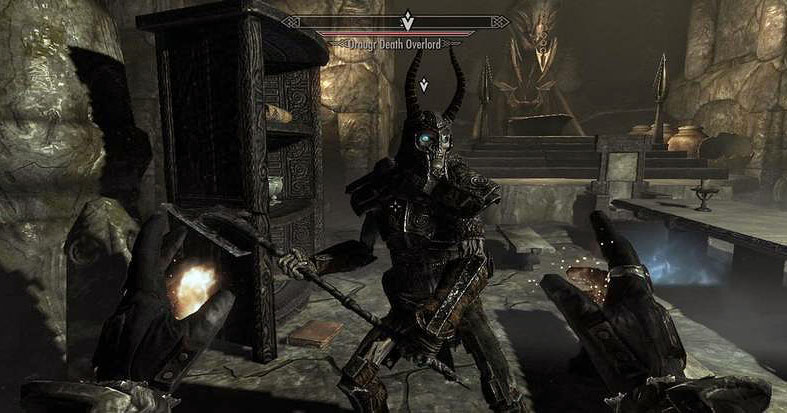
Early encounters can show how much difference that makes. A high-level Draugr can disarm you with a shout or push you across a crypt before you are ready. After improving armor, choosing useful perks, and finding suitable enchanted gear, a similarly dangerous room can become manageable. The satisfaction comes less from a numerical level increase than from recognizing that the character has acquired new ways to solve the problem.
The freedom has a balancing cost. If Smithing and Enchanting are pushed far enough, especially alongside Alchemy bonuses, crafted equipment can outclass much of what dungeons offer. Fights become easier, but something more interesting can be lost: opening a chest stops being exciting when the best possible reward is still weaker than the weapon you made hours earlier. Even increasing difficulty may not restore the pleasure of finding meaningful loot. It is an unusually revealing trade-off for a game so dependent on exploration.
The progression paths are not equal, either. A warrior can keep improving weapons through tempering and enchantments, while Destruction magic relies more heavily on spell tiers, perks, cost reduction, and tactical support than on continually raising a spell’s base damage. A mage remains viable, but the feeling of late-game power can develop differently. Skyrim’s classless design invites experimentation, yet it does not promise that every approach scales in the same satisfying way.
Combat, Stealth, Magic, and Dragon Battles
Skyrim’s combat is relatively simple beside more technical action RPGs. Melee relies on blocking, stamina, power attacks, equipment, and positioning rather than precise evasive timing. The blows can feel stiff, and enemy reactions are not always convincing. Yet shield-bashing a bandit, backing away from a frost troll on a narrow mountain track, or forcing your way through a Draugr-filled crypt can still create real tension because your equipment and surroundings matter.
Stealth changes the rhythm completely. A bow shot from darkness can thin out a room before anyone realizes where the attack came from; a dagger build asks you to reach enemies without being seen. The famous stealth archer is so tempting because it combines strong damage with control over when a fight starts. Illusion spells add possibilities for calming or turning enemies against one another, although stealth detection and enemy responses can sometimes behave less predictably than the interface suggests.
Magic broadens the choices further. Destruction deals elemental damage, Conjuration supplies summons or bound weapons, Alteration adds protection and utility, and Restoration keeps an injured character in the fight. A beginning mage may struggle with magicka costs and limited spell strength, then become considerably more flexible with enchantments and perks. The drawback is that controlling a battle with magic requires space and planning, particularly when several enemies rush at once.
Followers are useful protection, but they also complicate that control. A companion might charge ahead before a stealthy approach is ready, occupy the doorway through which you want to retreat, or wander into the line of a damaging spell. For a character built around careful positioning, the freedom to travel alone can be as valuable as the safety of having help. Companions are an enjoyable part of the adventure, just not dependable tactical partners in every situation.
Legendary difficulty reveals another side of the combat. It increases the damage you suffer while reducing the damage you inflict, without making bandits smarter. Consequently, even an early mine or roadside ambush can demand preparation, retreat, and a rethink of the route. That can make ordinary fights surprisingly absorbing, although players looking for more sophisticated enemy behavior rather than harsher damage ratios may find it exhausting.
Dragons bring the game’s systems together at their most chaotic. A creature may circle a town while guards fire arrows, land near an unrelated fight, or interrupt a journey when supplies are already low. Shouts give these encounters their own identity: Unrelenting Force throws enemies backward or interrupts attacks, Whirlwind Sprint changes movement, and other powers slow time or unleash elemental effects. The spectacle can become familiar over a long campaign, but the best battles still feel wonderfully unscripted.
Players who especially enjoy that combination of dangerous wilderness, uncertain encounters, and discovering threats beyond the next hill may recognize a related appeal in Elden Ring. Its combat demands far more precision and perseverance; Skyrim offers a looser, more forgiving fantasy in which the encounter is one part of a larger personal adventure.
Factions, Side Quests, and Long-Term Goals
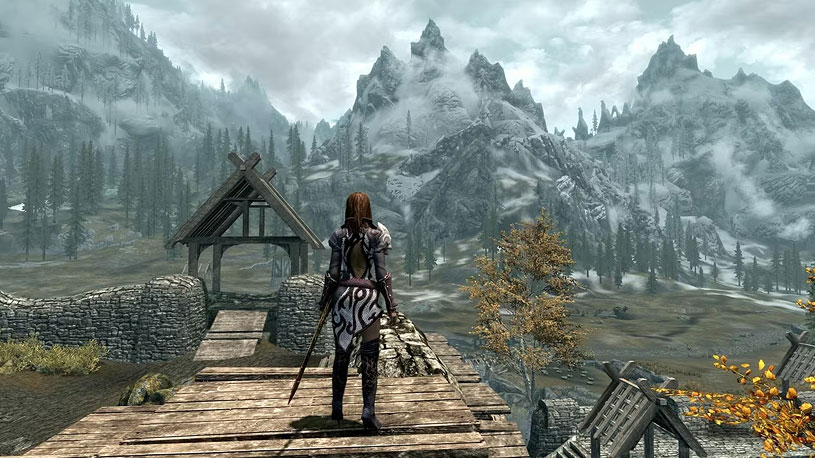
The faction questlines give different character builds places to belong. The Companions offer a warrior’s path with a supernatural complication. The Thieves Guild turns Riften’s suspicious streets into a network of criminal jobs, while the Dark Brotherhood makes assassination and secrecy part of daily life. The College of Winterhold supplies a home for magical study, trainers, and a story involving powers that are dangerous even to experienced mages.
These groups make a second character feel distinct before the main story changes at all. An assassin spends time with contracts and secret hideouts; a thief has reasons to return to Riften; a mage may prioritize spells and the journey north. Skyrim is very good at offering identities, but less consistent at giving those identities lasting consequences. The College illustrates the problem: reaching the title of Arch-Mage sounds like the beginning of real responsibility, yet the game provides little leadership to perform afterward. It rewards status more readily than the ongoing role behind it.
The wider world offers a similar mixture of depth and lightness. Home ownership, marriage, Daedric quests, civil-war assignments, alchemy, bounty hunting, and dungeon exploration can fill whole sessions without moving the central plot forward. Decorating a house or looking for materials to enchant a better weapon may sound mundane beside a dragon prophecy, but those modest personal goals help the province feel like somewhere to live rather than merely a sequence of missions.
Kingdom Come: Deliverance II pursues similar pleasures through grounded routines, equipment, and social consequences rather than magic and dragons. Skyrim treats medieval life more loosely, but both make everyday decisions part of character development.
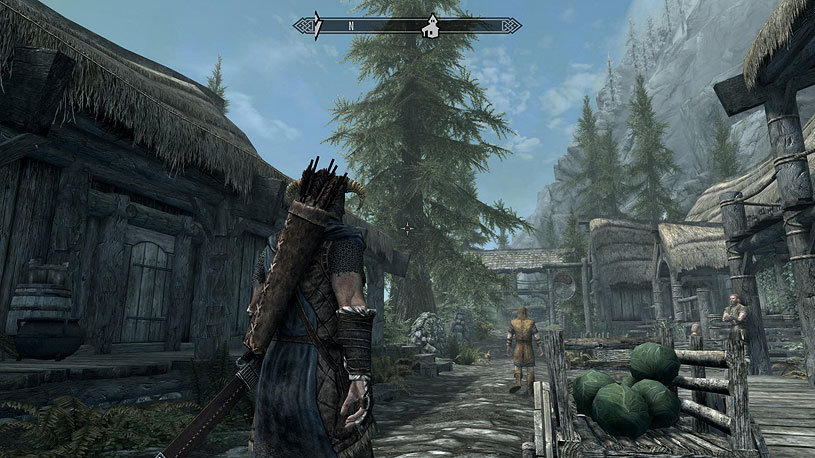
Then there are the sillier habits: collecting cheese wheels, hoarding dragon bones, and promising to organize an ever-growing inventory. They emerge from the same systems that make the serious adventures possible.
Replayability
Starting again can change Skyrim’s whole rhythm. A heavily armored Orc can face enemies directly, a Khajiit thief can treat towns as places to infiltrate, and a Breton mage may rely on summons and defensive spells rather than close combat. Different racial abilities and perk investments matter, but so does the decision about which faction, region, or distraction to pursue first.
The open quest order is a strength with a small hidden catch. Certain distinctive rewards, including Chillrend and the Nightingale Blade, have level-dependent versions. Taking those items at a low level can leave you with a weaker variant that does not automatically become the best version later. Skyrim encourages pursuing whichever storyline interests you, then occasionally makes that early curiosity less rewarding in the long term.
PC mods extend replayability through alternate starts, quests, followers, visual upgrades, and combat changes. They are hardly required, though: official expansions, different builds, and overlooked caves already offer plenty of reasons to return.
The larger limitations become clearer across repeated characters: faction stories can move too quickly, meaningful choices are uneven, enemies sometimes behave awkwardly, and crafting can overpower the intended challenge. Still, Skyrim’s flexible structure makes it unusually easy to choose a different style of play rather than repeat the previous journey exactly.
Final Verdict
The Elder Scrolls V: Skyrim earns its reputation through the relationship between exploration, atmosphere, and freedom. It does not have the most refined melee combat, the deepest faction consequences, or perfectly balanced progression. What it does have is a world that continually makes a new decision feel possible, whether that means entering a strange ruin or spending a quiet evening traveling without a destination.
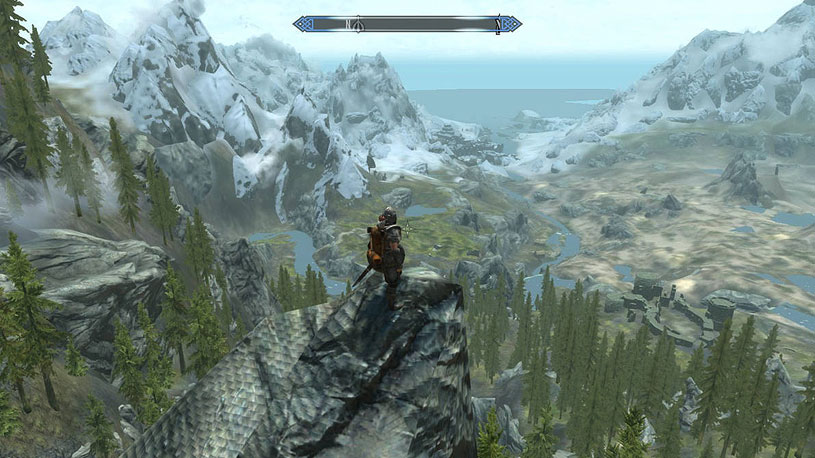
Its strongest moments are not necessarily the biggest story events. Sometimes they happen when music settles over a mountain path, a distant landmark catches your attention, or an ordinary trip home becomes an unexpected fight. That ability to feel peaceful and adventurous at once is why I enjoy simply existing in Skyrim’s world, even when I have no intention of completing another quest.
Players who need precise action combat or tightly directed storytelling may prefer a different RPG. For anyone who values personal exploration, flexible character-building, atmospheric wandering, and the freedom to make their own priorities, Skyrim remains remarkably easy to get lost in.
The Elder Scrolls V: Skyrim Pros & Cons
- Pro: Open world that continually rewards wandering, curiosity, and self-directed role-playing
- Pro: Flexible skill growth supports warriors, mages, thieves, assassins, hybrids, crafters, and unconventional builds
- Pro: Strong faction quests, memorable locations, atmospheric dungeons, dragon encounters, and three substantial official add-ons
- Pro: Special Edition remains easy to understand, while Anniversary Edition adds a large bundle of optional quests, equipment, homes, and survival content
- Pro: Exceptional PC longevity through SKSE, community fixes, interface upgrades, visual overhauls, new quests, and complete conversion projects
- Con: Melee combat, animations, enemy AI, and some quest design feel dated beside newer action RPGs
- Con: Several faction storylines move too quickly or offer less consequence than their premise suggests
- Con: Large or poorly maintained mod lists can cause crashes, missing masters, script problems, broken saves, and version conflicts
- Con: Advanced modding requires careful storefront, executable, and SKSE compatibility checks, especially across game updates and handheld setups
The Elder Scrolls V: Skyrim PC System Requirements
OFFICIAL STEAM AND EPIC GAMES STORE REQUIREMENTS:
MINIMUM:
OS: Windows 7, Windows 8.1, or Windows 10, 64-bit
CPU: Intel Core i5-750 / AMD Phenom II X4-945
RAM: 8 GB
GPU: NVIDIA GeForce GTX 470 1 GB / AMD Radeon HD 7870 2 GB
Storage: 12 GB available space
RECOMMENDED:
OS: Windows 7, Windows 8.1, or Windows 10, 64-bit
CPU: Intel Core i5-2400 / AMD FX-8320
RAM: 8 GB
GPU: NVIDIA GeForce GTX 780 3 GB / AMD Radeon R9 290 4 GB
Storage: 12 GB available space
Additional PC Performance and Setup Notes
- Steam and Epic publish the original Special Edition minimum and recommended PC requirements above. The Steam client requires Windows 10 or newer, while GOG lists Windows 10 (64-bit) and 26 GB of available space for its version.
- Windows 11 generally runs Skyrim Special Edition, although permissions, antivirus protection, Controlled Folder Access, overlays, old configuration files, and outdated mods can still prevent launching or saving.
- Official ultrawide support covers 16:9, 16:10, 21:9, and 32:9 displays. Interface mods, old INI edits, and some menus may still need checking at unusual resolutions.
- Check the official SKSE website for the build matching your Steam or GOG installation; Steam and GOG can require different SKSE downloads. DLL-based plug-ins must also match the installed executable rather than relying only on the “Special Edition” or “Anniversary Edition” label.
- Install large visual overhauls and high-resolution texture packs on an SSD when possible, and allow additional storage for mod archives, profiles, generated files, backups, shader caches, and temporary installation work.
- Keep several manual saves and back up a stable profile before changing a large load order. Removing script-heavy mods during an active playthrough can damage progression even when the game still launches.
- For crashes or startup failures, verify official files, disable recently added mods, check missing masters, update SKSE and DLL plug-ins, review the load order, restore clean INI files, and test without overlays before reinstalling the complete game.
Official Trailer
Note: Bethesda’s Anniversary Edition trailer presents Skyrim’s adventure, dragons, environments, and Creation Club additions.
Frequently Asked Questions
Which Skyrim edition should I buy on PC?
Special Edition is the best default for the complete base adventure and three expansions. Anniversary Edition adds the original 74-item Creation Club bundle. If you already own Special Edition, check the separate Anniversary Upgrade on the same store before buying a full edition.
Does Anniversary Edition include every Bethesda Creation?
No. It includes the Creation Club content bundled for the anniversary release, not every later paid Verified Creation. Check the individual listing before purchasing additional Creations.
Should I buy Skyrim on Steam or GOG for mods?
Steam is the most straightforward choice for following popular SKSE-based guides and curated lists. GOG is useful if you want DRM-free offline installers and update control, and it also has a supported SKSE build. Individual DLL plug-ins or mod lists may still target one store’s executable.
Can Skyrim use SKSE on Epic Games Store or Game Pass?
Not with the official SKSE release. The SKSE team supports appropriate Steam and GOG game builds but does not support Epic Games Store or Microsoft Store / Game Pass executables. Many simple texture, mesh, and non-SKSE modifications do not need the extender.
Why do SKSE mods stop working after a Skyrim update?
Some advanced mods include DLL plug-ins compiled for specific versions of the game executable and SKSE. After an update, wait for compatible plug-in releases, review mod requirements, and back up a working mod profile before changing versions.
Should beginners use Vortex or Mod Organizer 2?
Vortex is approachable for small mod lists and integrates with Nexus Mods. Mod Organizer 2 provides powerful profile isolation and debugging tools for carefully managed lists. Either is usable when you follow the correct game-version instructions.
What is a Skyrim mod load order?
Load order controls the sequence in which plug-ins load and which edits take priority. Missing master files, conflicting records, or misplaced compatibility patches can cause visual errors, crashes, or broken quests. Use a mod manager and read each mod’s instructions rather than sorting randomly.
What do Dawnguard, Hearthfire, and Dragonborn add?
Dawnguard adds a vampire-focused faction story; Hearthfire introduces land purchases, houses, and adoption; and Dragonborn takes the adventure to Solstheim with Miraak, Black Books, and Morrowind-inspired landscapes.
What order should I play Skyrim’s expansions?
Hearthfire works whenever you want to build a home. Dawnguard can be approached during a developed character’s journey, while Dragonborn is generally more comfortable once you have stronger equipment and abilities for Solstheim’s enemies.
What is a good beginner character build?
One-handed weapons, a shield, armor, Restoration, Smithing, and a bow cover most situations. Stealth archery is especially effective, but try different weapon and magic skills before committing your perks.
Can one Skyrim character join every faction?
You can join most major guilds on one character, including the Companions, College of Winterhold, Thieves Guild, and Dark Brotherhood. Some opposing quest paths are mutually exclusive, particularly the Civil War sides and Dawnguard versus Volkihar.
Can I keep playing after the main story, and is there New Game Plus?
Yes, you can continue exploring, finishing factions, and playing expansions after the main quest. There is no built-in New Game Plus that restarts the story while retaining your complete character progression; starting a fresh character or using unofficial mods offers a different replay approach.
How long does Skyrim take to finish?
The main quest can take around 25–35 hours when pursued directly. Side quests, guilds, exploration, expansions, crafting, and modded content can extend a single character well beyond 100 hours; the actual length depends heavily on how much you explore.
Does Skyrim have multiplayer, co-op, split-screen, or cross-play?
No. Skyrim Special Edition is officially single-player. Community multiplayer projects exist, but they are unofficial, require separate installation and compatibility work, and do not provide built-in cross-play.
Does Skyrim support PC controllers and ultrawide screens?
Yes. Skyrim Special Edition supports controllers and official display modes including 21:9 and 32:9. Some interface mods and older custom configuration edits may require extra checks at unusual resolutions.
Can Skyrim be modded on Steam Deck?
Yes, but it is more involved than a standard Windows install. Test the unmodded game first, then follow SteamOS-specific instructions for the mod manager, SKSE, file paths, and Proton configuration. Keep backups before changing a working setup.
Why does Skyrim crash or stutter with mods?
Common triggers include incompatible SKSE plug-ins, missing masters, conflicting overhauls, demanding textures, old configuration edits, and removing script-heavy mods during a playthrough. Test a clean profile and re-enable changes gradually to find the cause.
Still have questions? Check the Skyrim Reddit community, the Skyrim Mods community, or Skyrim Special Edition Steam Discussions.
Sources & References
Key factual and technical information in this guide was checked against relevant official sources, including:
- Skyrim Special Edition on Steam — Special Edition ownership, Steam Deck verification, current user reception, and Windows specifications.
- Skyrim Special Edition on GOG — DRM-free/offline installers, the Creation Club distinction, SKSE support, and GOG-specific storage requirements.
- Skyrim Special Edition on Epic Games Store — official PC availability, cloud saves, editions, and Windows requirements.
- Skyrim Special Edition (PC) on Xbox — Microsoft PC ownership, Anniversary upgrade availability, and PC Game Pass inclusion.
- Bethesda’s Skyrim Creations documentation — the permanent support for ultrawide displays, Steam Deck, and in-game Creations.
- Skyrim Script Extender (SKSE) — the Steam/GOG SKSE builds and unsupported Epic and Microsoft Store executables.
- Bethesda: Anniversary Edition and Creation Club Content — the four included free Creations and the distinction between Special and Anniversary Edition content.
Similar Games Like The Elder Scrolls V: Skyrim
- The Elder Scrolls IV: Oblivion Remastered
- The Elder Scrolls III: Morrowind
- Dragon’s Dogma 2
- The Witcher 3: Wild Hunt
- Gothic 1 Remake
- Kingdom Come: Deliverance II
Found something worth playing through DecideGame?
DecideGame.com is an independent gaming project run by Editor Zero. If this guide helped you discover a game, solve a problem, or find useful information, you can support DecideGame.com and help keep new and updated game guides coming.
DecideGame — PC Game Guides, Reviews & Setup Help