

📅 Game released: 2005
Use this updated 2026 Haunting Ground PC guide to check official download availability, learn how to play your own PlayStation 2 copy through PCSX2, compare regional versions, review emulator system requirements, and configure controllers, graphics, saves, and compatibility settings before escaping the castle with Hewie.
 By Editor Zero — independently researched, edited, and maintained.
Last updated: 12 October 2026
Last reviewed: 12 October 2026
Table of Contents
- Quick Summary
- Quick Facts
- Official PC Stores, Download & Installation
- Haunting Ground Review
- Pros & Cons
- PC System Requirements
- Frequently Asked Questions
- Similar Games
Haunting Ground Quick Summary
✔ Gothic survival horror adventure starring Fiona Belli, a young woman who awakens inside a mysterious castle after a car accident and must escape its dangerous inhabitants while uncovering the truth behind her imprisonment.
✔ Gameplay emphasizes evasion over fighting. Fiona hides from persistent pursuers, navigates interconnected castle environments, solves puzzles, manages panic, and relies on a white shepherd dog named Hewie for protection and assistance.
✔ Similar to Resident Evil through its oppressive mansion-like environment, threatening pursuers, environmental puzzles, vulnerable protagonist, and survival-horror tension, although Haunting Ground places considerably less emphasis on weapons and combat.
✔ Capcom originally released the game for PlayStation 2 under the name Haunting Ground outside Japan and Demento in Japan. There is no official native Windows release or standard PC storefront edition.
✔ For PC owners of the original console game, PCSX2 is the recommended emulation route. Its compatibility documentation lists Haunting Ground as playable, although some graphical effects can behave differently from original PS2 hardware.
✔ The relationship between Fiona and Hewie influences survival and progression, while multiple endings, unlockable costumes, and additional replay options reward returning to the castle after completing the story.
Haunting Ground Quick Facts
Official PC Store Status, Download & Installation
👇 Haunting Ground has no official Windows PC release or native PC download. The guidance below explains its console availability, recommended PCSX2 emulator, and how to prepare an authorized backup of the original PlayStation 2 game.
- Official Windows status: Capcom has not released a native Windows version of Haunting Ground. There is no verified game listing for a Windows edition on Steam, GOG, Epic Games Store, or Microsoft Store. These storefronts should not be confused with sites offering unofficial game files.
- Original console release: Haunting Ground was developed for PlayStation 2. A Japanese PS3 PS2 Classics digital rerelease also existed, but it is not a separate Windows or redesigned PS3 version. Its historical existence does not establish that it can still be purchased or downloaded by new customers.
- Best emulator: PCSX2 is the recommended option because it emulates PlayStation 2 hardware, provides Windows builds, supports modern controllers, offers multiple graphics renderers, and maintains game-specific compatibility documentation. Its Haunting Ground compatibility page classifies the game as Playable rather than guaranteeing flawless emulation.
- Best version to emulate: The North American NTSC-U PS2 release is a practical default for English-language players and standard 60 Hz output. European PAL versions are equally valid for owners who prefer regional languages; their display menu includes 50 Hz, 60 Hz, and progressive options. The Japanese edition is titled Demento. There is no separate native PC edition that offers a better alternative.
- Game ISO and ownership: PCSX2 does not include Haunting Ground or any commercial PS2 game. To prepare an ISO from a physical copy you own, consult PCSX2’s official disc-dumping instructions and comply with applicable local copyright law. The game file itself must be supplied separately from the emulator.
- Game-file responsibility: Readers are responsible for the origin and legal authorization of any ISO or other game image they obtain, including files discovered through their own independent searches. Finding a file online does not establish permission to use or distribute it. This guide provides no third-party commercial-game image links and does not endorse unauthorized sources.
- PlayStation 2 BIOS: PCSX2 requires authentic PS2 BIOS files and does not distribute them with the emulator. Follow its official BIOS-dumping documentation for obtaining the necessary files from a PS2 console you own. Downloading the emulator alone does not satisfy this requirement.
- Initial PCSX2 setup: Install PCSX2 from its official website, configure the BIOS obtained from your console, add the directory containing your authorized PS2 game image, and select Haunting Ground from the game list. Begin with the emulator’s normal configuration before trying additional graphics fixes or patches.
- Controller and graphics setup: A conventional gamepad is recommended because Haunting Ground was designed around PS2 controls, directional movement, and quick reactions during pursuit. PCSX2 supports gamepad and keyboard configuration. Start with the original 4:3 aspect ratio, default speed settings, and Vulkan rendering where supported; adjust internal resolution only after confirming that gameplay and effects display correctly.
- Compatibility and visual effects: PCSX2’s game wiki documents minor shadow glitches with Direct3D 11/12 and some visual artifacts during upscaled cutscenes. Vulkan or OpenGL may resolve specific shadow issues. Community widescreen patches can also expose clipping or leave certain cinematic effects at the original screen boundaries, so 4:3 is the safer first configuration.
- Save data and unofficial patches: PCSX2 provides emulated memory cards as well as save states. Keep ordinary in-game saves and back up the virtual memory-card files before experimenting with community patches, texture replacements, or significant configuration changes. Compatibility and behavior may vary across emulator builds and game regions.
 Download PCSX2 from the Official Emulator Website
 Read the Official PCSX2 Setup Documentation

Haunting Ground Review
A vulnerable heroine and an imperfectly loyal dog turn pursuit into intimate, uneven horror.
Haunting Ground understands that a pursuer becomes frightening when escape depends on more than pressing the sprint button. Fiona Belli has no dependable weapon, the castle’s rooms are full of dead ends, and fear itself can compromise her ability to move. The one creature she can trust is Hewie, a white shepherd who can find concealed objects, sense approaching danger, and fight back on her behalf. He is also an animal with habits, limits, and an obedience system the player cannot reduce to a visible statistic.
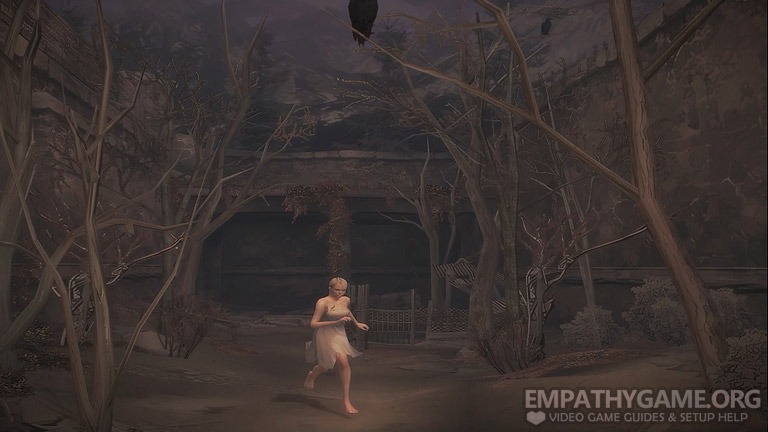
That relationship gives Capcom’s survival horror a personality beyond its sinister architecture and disturbing story. A successful escape can feel like a shared achievement; a failed command can turn a routine puzzle into a crisis. Yet the game sometimes confuses purposeful vulnerability with inconvenient design. Repeated chases interrupt exploration, camera changes interfere with movement, and important clues can be harder to interpret than their solutions justify. Its strongest moments make helplessness meaningful. Its weakest make patience feel like another resource being drained.
The Castle Is a Maze You Have to Learn Under Pressure
Exploration involves much more than searching cupboards for keys. Fiona moves through an interconnected complex of furnished halls, overgrown gardens, workshops, cellars, and increasingly strange alchemical spaces. A locked door may become useful only after reaching another wing; an apparently decorative mechanism may reveal the next route. Knowing where a passage leads matters most when someone is pursuing Fiona through it.
Fiona can shove or kick, throw Antimony Powder to stun a threat, or place Magnesia where a stalker might step. These are delays, not real combat. A worthwhile decision is often whether to spend a defensive item in a corridor, risk a longer route around the pursuer, or duck into a hiding place and let the search pass. Environmental retaliation opportunities offer stronger relief, but not lasting safety.
Hiding has a useful distinction between official hiding spots and whatever cover the environment provides. Beds, closets, and curtains create recognizable refuges, although repeated use can make them less reliable. Crouching out of sight behind ordinary scenery or using a door and corridor angle can sometimes be just as effective. Around Daniella’s section, even flower beds and awkward corners can provide momentary concealment when the pursuer’s line of sight permits it. It encourages spatial improvisation, although vague detection feedback can make discovery seem arbitrary.
Panic Turns Fear Into a Mechanical Liability
The panic system is the game’s most uncompromising idea. Proximity to a stalker, a frightening encounter, or an escalating chase can push Fiona toward a state in which the image becomes washed out and distorted, her behavior grows erratic, and she may stumble or collapse. When control matters most, Fiona becomes hardest to direct: terror itself helps the pursuer.
Stamina adds another constraint, particularly when sprinting repeatedly through long passages. Physical injury is less transparently communicated than either system. With no conventional health bar, Fiona’s slower movement or protective posture after a hit signals injury. Exhaustion, fear, and damage can each undermine an escape. The lack of explicit meters suits the oppressive mood while making recovery choices harder to judge.
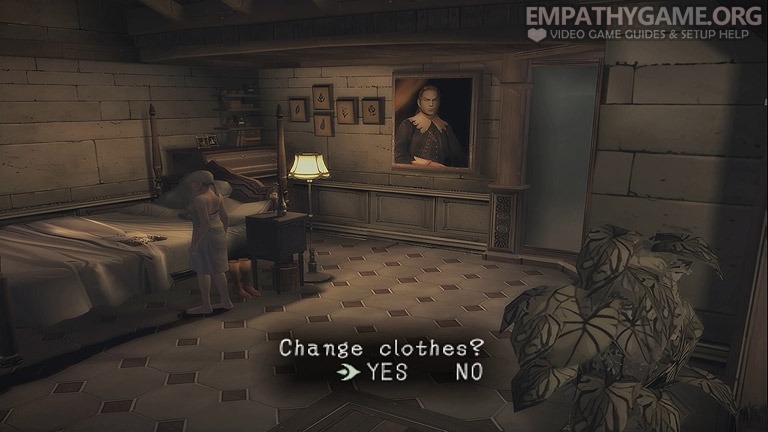
At its best, this design rewards leaving early rather than waiting to confirm a pursuer is nearby. At its worst, it produces a cascade of punishment. A camera shift can turn a directional input into a clumsy correction, that delay increases panic, and the resulting fall leaves Fiona exposed. Repeated in a familiar corridor, that cascade feels more irritating than frightening.
Hewie Makes Trust a Real Gameplay Decision
Hewie is far more than a companion who follows at a fixed distance. He can investigate suspicious places, fetch objects beyond Fiona’s reach, point out hazards, and attack someone long enough for her to get away. His watchful pauses, barks, and affectionate responses offer rare warmth amid the hostility.
Praise, food, and consistent treatment encourage cooperation; neglect can damage it. Yet even a well-treated Hewie is not perfectly obedient. An attack may come too late to save Fiona, and a search command may appear to fail when a puzzle needs him in a particular place. There is an important nuance here: his response can depend on Fiona’s facing and the target she is indicating, not just their relationship. When an item lies above a ladder or on rubble Fiona cannot climb, aiming the command carefully toward the actual point of interest may succeed where issuing it from the obvious standing spot does not. It is an intriguing but poorly explained distinction.
Even calling Hewie carries a potential cost. A shouted call near a stalker may reveal Fiona’s location, so dog commands cannot be treated as silent interface buttons. The game gains tension from making companionship part of the stealth problem, not merely its solution.
The strangest extension of that design is Sylvesta Esca, an alchemical dog item that increases Hewie’s aggression but can make him hostile even toward Fiona and damages their relationship. Strengthening a protector can jeopardize the partnership, with little warning about the consequences.
Debilitas and Daniella Change the Meaning of a Chase
The pursuers succeed because they are recognizable personalities rather than anonymous monsters. Debilitas is physically overwhelming but behaves with a disturbing, childlike fixation. Daniella, the unnaturally composed maid, is threatening in another way: her measured movements and bursts of hostility make even an apparently quiet room uncomfortable. Riccardo brings a more deliberate menace to the castle’s obsession with Fiona. Their contrasting behavior keeps pursuit from feeling entirely uniform.
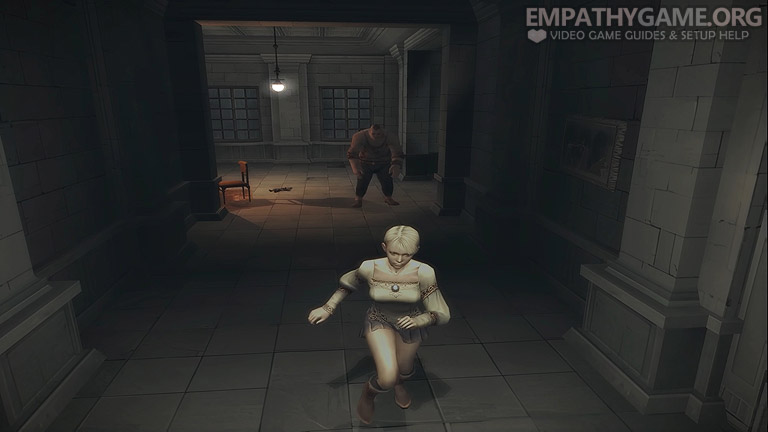
Level design does just as much to distinguish them. Debilitas often appears in areas with larger rooms and more breathing space, where breaking contact can become a route-planning problem. Daniella’s stretches lean more heavily on compact interiors, narrow connectors, and revisits to rooms whose puzzles are not yet finished. When a sequence sends Fiona back through the same cramped stretch immediately after a discovery, an encounter can feel almost unavoidable. The geography, not just Daniella herself, makes those chases harder.
Some of the tension comes from never being certain when a stalker has truly abandoned the search. The soundtrack can warn of a nearby threat, but it may take an awkwardly long time to settle. Hiding in the same refuge too often is risky, yet an unfamiliar location can also fail without clear explanation. That uncertainty turns surprise into a recurring interruption of puzzle-solving.
Alchemical Puzzles Are Inventive but Often Poorly Signposted
Inscribed Plate-Keys, responsive golems, and occult machinery suggest the inhabitants’ experiments have shaped the castle. Making a word on a Plate-Key and watching a stone figure respond feels more distinctive than finding another colored key for a matching door. The strongest puzzles reward observation of nearby documents and repeated use of familiar mechanisms in new situations.
Yet the line between mystery and obscurity is thin. An early golem accepts the expected EMETH inscription, but using METH instead produces an optional Obsidian Choker. Elsewhere, MAGNUS unlocks hidden equipment, while a three-headed dragon puzzle requires working out a relationship between alchemical substances and the environment. These details give returning players worthwhile secrets to uncover, but their clues are easy to miss or misunderstand. The secrets are cleverer than the clues that reveal them.
Hewie improves this structure when a puzzle clearly relies on his senses or ability to reach an inaccessible object. The broken puppet retrieved from rubble is a good example of cooperation replacing a generic inventory solution. But a failed command rarely reveals whether the target, the angle, or Hewie is at fault. A puzzle can then become an argument with the interface instead of a test of reasoning.
Gothic Beauty and Disturbing Framing Work Against Each Other
The architecture is elegant but rarely welcoming. Ornate furniture, gardens, pale stone, decaying interiors, and laboratory equipment share the same spaces, making the castle seem inhabited by people who have confused domestic life with experimentation. Cinematic camera angles conceal what lies ahead or dwarf Fiona within large rooms.
Those same cameras are less graceful during quick movement. A dramatic cut at a corner can upset the player’s sense of direction, and Fiona’s turning or recovery animations do not always respond with the urgency a chase demands. Its visual power comes at a real cost to responsiveness. The camera also lingers on Fiona’s body in ways that complicate the game’s concern with vulnerability. Its horror deals deliberately with objectification and bodily autonomy, yet certain angles risk reproducing the same exploitative gaze rather than interrogating it.
Sound often handles tension more elegantly. Ambient noise thins out, familiar music disappears, and a stalker’s distinctive theme or Hewie’s low warning can announce danger before the camera reveals it. A bark can feel reassuring one moment and risky the next. Some English dialogue, by contrast, sounds stilted or theatrical. The increasingly elaborate story also risks explaining away more of the original unease than it needs to. Its atmosphere remains strongest when the surroundings imply a terrible purpose without spelling everything out.
Hard Mode Gives Replayability a Different Rhythm
Progress means learning routes and Hewie’s abilities, conserving supplies, and discovering useful alchemical equipment rather than gaining experience levels. Medallions can be refined into useful supplies and accessories, but the machine’s timing and occasionally harmful results discourage blind experimentation. In the standard campaign it is possible to rely heavily on found items. In Hard Mode, where ordinary recovery pickups are replaced by medallions, mastering refinement becomes much more consequential.
Failed refinement costs precious recovery, and Hewie’s critical injuries can end a Hard Mode run. The game also makes repeated play more interesting through four endings, hidden equipment, costumes with mechanical effects, and completion classifications. The relationship with Hewie can shape the outcome, giving all those small acts of care a consequence beyond whether he obeyed the last command.
Knowing shortcuts and inscriptions makes later runs easier and opens the hunt for secrets. But once a pursuer’s usual routes and the puzzle solutions are familiar, prolonged waiting and repeated traversal stand out more clearly. The strongest incentive to return is not a fundamentally new campaign; it is the chance to become a more deliberate survivor in a place that once felt impossible to read.
Final Verdict
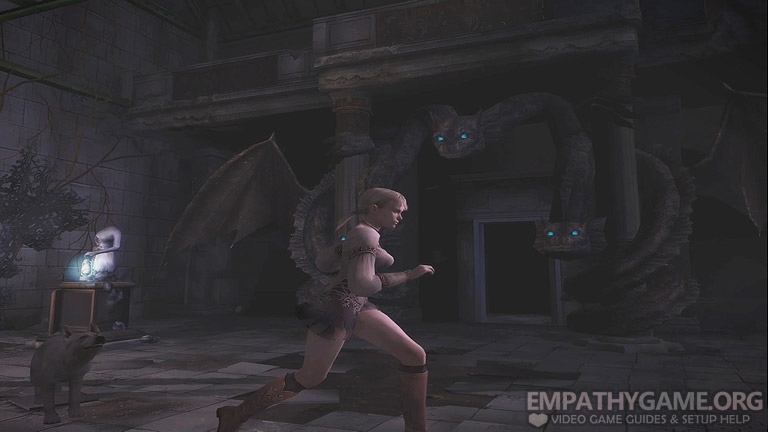
Haunting Ground is a rare horror game in which the protagonist’s closest ally is also one of the systems she must learn to understand. Hewie is affectionate, resourceful, and occasionally uncooperative; he can turn an encounter around, but he cannot erase Fiona’s vulnerability. That tension gives the partnership more weight than a conventional companion mechanic and makes small successes, from retrieving an inaccessible object to escaping a stalker together, genuinely rewarding.
Its weaknesses are closely tied to its ambitions. Panic can create memorable danger but also magnify awkward camera transitions. Pursuers make the castle feel hostile but too often interrupt careful exploration. Alchemical puzzles suggest an intriguing hidden logic, then sometimes conceal essential clues so thoroughly that experimentation becomes guesswork. Hard Mode and alternate outcomes reward mastery, although they cannot remove the underlying repetition.
For players drawn to unsettling Gothic settings, exploration under pressure, and horror built around dependency rather than weapons, those compromises are worth considering. Anyone who wants precise movement, fully predictable stealth, or puzzles that always communicate their rules may find the experience more exasperating than frightening. Haunting Ground is not at its best when Fiona is utterly powerless. It is at its best when the frightened woman and the dog beside her manage, through trust and imperfect decisions, to find a way out.
Haunting Ground Pros & Cons
Haunting Ground PC System Requirements
Official Windows PC requirements: Not available. Haunting Ground was not released as a native Windows PC game, and Capcom has not published PC minimum or recommended hardware specifications for it.
PCSX2 emulator requirements: The specifications below summarize the PCSX2 project’s general Windows hardware guidance. They are not official Haunting Ground benchmarks or guaranteed performance targets for this game. Actual requirements vary with rendering resolution, graphics settings, emulator version, and hardware.
PCSX2 MINIMUM PC REQUIREMENTS:
OS: Recent 64-bit Windows 10 or compatible Windows 11 installation
CPU: x86-64 processor with SSE4.1, approximately 1,500 or higher PassMark single-thread score, and two physical cores with simultaneous multithreading
RAM: 8 GB
GPU: Graphics adapter supporting Vulkan 1.1, Direct3D 11, or OpenGL 3.3, with approximately 600 or higher PassMark G3D score
Storage: Space for PCSX2, BIOS files, virtual memory cards, and the user’s own game-disc backup; total game storage varies with image format
Input: Keyboard or compatible controller; gamepad recommended
Additional Notes: Minimum hardware does not guarantee full performance in every PS2 game, particularly with increased rendering resolution or accuracy-intensive effects
PCSX2 MODERATE PC REQUIREMENTS:
OS: Windows 11, 64-bit
CPU: x86-64 processor with AVX2, approximately 2,000 or higher PassMark single-thread score, and four physical cores
RAM: 16 GB
GPU: Graphics adapter supporting Vulkan 1.3 or Direct3D 12, with approximately 6,000 or higher PassMark G3D score and 4 GB VRAM
Storage: SSD recommended for convenient emulator, library, and save-file management; not an official Haunting Ground requirement
Input: Xbox-compatible, PlayStation-compatible, or another gamepad recognized by PCSX2
Additional Notes: PCSX2 identifies hardware in this class as suitable for a broad range of PS2 games, but demanding rendering effects and higher internal resolutions can still affect performance
These are the emulator project’s published hardware tiers rather than a benchmark measured specifically with Haunting Ground. See official PCSX2 System Requirements for the full specifications, additional hardware examples, and platform-specific notes.
Additional PC Performance and Setup Notes
Rendering resolution: Begin at the native PS2 resolution to establish a working baseline. Once the game runs correctly, try increasing PCSX2’s internal resolution to 2x or 3x if the graphics hardware allows it. A sharper image is useful for environmental detail, but Haunting Ground relies on post-processing, lighting, and cinematic effects that may not upscale perfectly.
Graphics renderer: Vulkan is a sensible first choice on compatible Windows hardware. The PCSX2 compatibility wiki specifically recommends switching to Vulkan or OpenGL when certain shadows glitch under Direct3D 11 or 12. If a scene still displays incorrectly, compare the result at native resolution and consider software rendering as a diagnostic fallback, recognizing that it may be slower.
Aspect ratio and widescreen: For the most faithful presentation, start with 4:3 and avoid forcing the image to fill a widescreen display. Unofficial 16:9 patches may expand the visible area, but some cutscene effects remain designed around the original image boundaries, potentially producing missing effects, exposed edges, or clipping.
PAL and NTSC versions: The North American release provides conventional NTSC output, while the European version offers display-mode choices including 60 Hz and progressive output. The region choice affects original display behavior, but a higher refresh option should not be confused with a guarantee of higher internal gameplay frame rates.
Controller configuration: A gamepad is particularly helpful when responding quickly to approaching pursuers, moving through fixed-camera areas, or issuing commands to Hewie. Configure the D-pad, analog stick, face buttons, shoulder buttons, and Start button according to the game’s original PS2 layout. Test controls in a safe area before relying on them during a chase.
Saving and troubleshooting: Create normal in-game saves on PCSX2’s virtual memory card rather than relying exclusively on save states. If you encounter an unexpected loading failure, verify the integrity of your own disc backup. If you see strange lighting or distorted cutscenes, try default game settings, native resolution, a different renderer, and a recent official PCSX2 build before applying community fixes.
Video Trailer
Frequently Asked Questions
Is Haunting Ground worth playing in 2026?
Yes, particularly for survival-horror fans who enjoy vulnerable protagonists, psychological tension, environmental puzzles, and avoiding enemies rather than fighting them. Fiona’s partnership with Hewie gives Haunting Ground a distinctive identity, although its unpredictable companion AI, repeated chases, and older control conventions require patience.
Is Haunting Ground connected to Clock Tower?
Haunting Ground is a separate Capcom game rather than an officially numbered Clock Tower sequel. It shares important design ideas with Clock Tower 3, including a vulnerable female protagonist, persistent pursuers, hiding places, and a panic system, but introduces its own characters, story, alchemy puzzles, and dog-companion mechanics.
Does Haunting Ground have an official remake or remaster?
No official remake or remaster has been announced or released by Capcom. The original PlayStation 2 game remains the version covered by this guide; improved graphics through PCSX2 emulation or unofficial community projects should not be mistaken for a native PC remake.
Is Haunting Ground an open-world game?
No. Fiona explores an interconnected castle and its surrounding locations, gradually opening new routes by solving puzzles and obtaining key items. Areas can be revisited, and many transitions occur without conventional loading screens, but story progression determines when certain locations become accessible.
How long does it take to finish Haunting Ground?
A first playthrough generally takes around 10–15 hours, depending on puzzle-solving speed, exploration, and time spent escaping pursuers. Subsequent runs can be shorter once players understand the castle layout, while completing all endings and unlocking extras requires additional playthroughs.
What should beginners focus on first in Haunting Ground?
Learn where clocks, hiding places, and safe escape routes are located, and spend time training Hewie rather than treating him as an automatic combat assistant. Save regularly, conserve Fiona’s stamina, and pay attention to changes in background music before entering unfamiliar rooms.
Can Fiona fight enemies in Haunting Ground?
Yes, but her defensive abilities are deliberately limited. Fiona can kick, shove, and use certain throwable or placeable items to interrupt enemies, while Hewie can attack on command. These options are primarily useful for creating an opportunity to escape rather than winning conventional fights, although some story encounters allow pursuers to be defeated.
Why do enemies keep finding Fiona in hiding places?
Pursuers can become familiar with hiding spots that Fiona repeatedly uses, and hiding while an enemy can see her enter a location is especially risky. Rotate between available hiding places, break line of sight before hiding, and avoid assuming that every wardrobe, bed, or dark corner provides guaranteed protection.
How can you tell when a stalker is approaching Fiona?
Background music, footsteps, and Hewie’s behavior provide important warnings. The normal ambience may fade or change as danger approaches, while Hewie may growl, bark, or react toward a nearby threat. After escaping into a hiding place, wait for the normal ambient sounds to return rather than relying solely on the “Coast Clear” message.
Why does Fiona lose control during panic attacks?
Haunting Ground uses a panic system rather than a conventional visible fear meter. As Fiona becomes increasingly frightened, the screen develops distorted visual effects and her movement becomes harder to control; severe panic can cause her to stumble, run unpredictably, or collapse. Escaping danger before panic escalates is usually safer than trying to recover while a pursuer remains nearby.
How do you restore Fiona’s stamina and reduce panic?
Stamina and panic are separate conditions. Resting, hiding, and recovery items help Fiona regain stamina, while calming items such as Lavender or certain alchemical products reduce panic. Some environmental recovery points, including usable water sources, also help her recover, making it worthwhile to remember their locations during exploration.
What are Luminescents in Haunting Ground?
Luminescents are small glowing entities that follow Fiona and can trigger panic when they collide with her. Their disturbance can also attract a nearby pursuer, so they are dangerous even when they do not directly inflict conventional damage. Avoid contact, move through nearby doorways, and use obstacles to separate Fiona from them.
How do you make Hewie obey commands more reliably?
Hewie’s responsiveness improves as Fiona builds trust through consistent interaction and appropriate training. Praise him after successfully following commands, offer treats when useful, and use corrective feedback when he deliberately disobeys. His behavior also depends on his condition and the situation, so even a well-trained Hewie may occasionally hesitate.
What can Hewie do besides attacking enemies?
Hewie can search for hidden objects, retrieve otherwise inaccessible items, investigate suspicious locations, warn Fiona about danger, and help solve puzzles. Commands also allow him to follow, wait, or prepare for an attack. When an apparently inaccessible object or passage blocks progress, checking whether Hewie can interact with it is often worthwhile.
Can Hewie get injured or die in Haunting Ground?
Yes, Hewie can be injured or incapacitated by enemies, reducing his ability to protect Fiona until he recovers. Food and appropriate care help restore his condition. Hard Mode is less forgiving: a critical injury to Hewie can result in a Game Over, making his safety particularly important.
What are evasion and retaliation points in Haunting Ground?
These are environmental opportunities that help Fiona escape or temporarily counter a pursuer. Some involve hiding or maneuvering around obstacles, while others trigger special defensive interactions, occasionally with Hewie’s assistance. Certain opportunities can be used only once, so identifying them before a dangerous encounter can make escaping considerably easier.
How do you save your game in Haunting Ground?
Examine one of the grandfather clocks found throughout the castle to access the game’s save function. Progress is recorded through the PS2 memory-card system, which PCSX2 emulates using virtual memory cards. Save whenever you reach an available clock, because the game does not provide a modern continuous autosave system.
What are Plate-Keys used for in Haunting Ground?
Plate-Keys are inscribed objects created with special typewriter-like machines and used in various alchemical mechanisms. Certain inscriptions instruct golems or activate mechanisms needed to open pathways, while other combinations produce optional effects or rewards. Clues found in the environment help identify the inscriptions needed for progression.
What do Medallions and the alchemy machine do?
Medallions are materials used in the castle’s refining machines to produce consumables, equipment, and other items through an alchemical process. The results depend on the medallions and the machine’s timing-based interaction, and not every resulting item is beneficial. Experimentation can provide useful stamina, panic-recovery, or defensive supplies, but it is sensible to preserve rare materials until their value is understood.
Does Haunting Ground have different difficulty settings?
Yes. The initial playthrough uses Normal difficulty, while Hard Mode becomes available after completing the game. Hard Mode increases the challenge through stronger threats, scarcer recovery supplies, and greater consequences for Hewie’s injuries. It also includes cosmetic differences and additional completion rewards.
How many endings does Haunting Ground have?
Haunting Ground has four main endings, conventionally labeled A, B, C, and D. The outcome depends on particular story decisions, how Fiona handles certain encounters, and her relationship with Hewie. Some outcomes require another playthrough rather than being accessible through an ordinary first completion.
Does the way Fiona treats Hewie affect the ending?
Yes. Hewie’s trust and relationship with Fiona influence more than his willingness to follow commands. Poor treatment and a weak bond can affect an important late-game event and lead to a substantially different outcome. Players seeking a more favorable result should look after Hewie, respond to his condition, and build a dependable partnership throughout the story.
What unlocks after completing Haunting Ground?
Completing the game unlocks additional replay options, including Hard Mode, the Secret Room, and access to various extras such as costumes, artwork, movies, and a Hewie-focused minigame. Further rewards depend on the ending and completion results achieved. Some alternate costumes also change gameplay behavior rather than merely changing appearances.
What are Play Types in Haunting Ground?
Play Types are end-of-game classifications based on aspects of Fiona’s performance, such as her relationship with Hewie, collected items, panic occurrences, injuries, and completion time. Examples include Top Breeder and Treasure Hunter. Different classifications provide an additional challenge for players who want to explore the game’s hidden systems and completion rewards.
Still have questions? Check the Haunting Ground Reddit community, Haunting Ground GameFAQs discussion board, or PCSX2 support forums for gameplay advice, puzzle discussions, emulator troubleshooting, and additional community guidance.
Sources & References
Key factual and technical information in this guide was checked against official publisher documentation, emulator-project resources, and established gaming publications, including:
- Capcom — Demento PlayStation 2 Support — Capcom’s original-platform support listing under the game’s Japanese title, confirming its PS2 identity.
- PCSX2 Wiki — Haunting Ground — game-region information, compatibility classification, technical test reports, and documented graphical issues and fixes.
- PCSX2 — Dumping Discs — official instructions for making backup game images from physical PlayStation 2 discs.
- PCSX2 — Dumping BIOS — official guidance for obtaining the proprietary PS2 BIOS files required by the emulator from owned hardware.
- PCSX2 — System Requirements — published minimum and higher-performance emulator hardware tiers used for the PC specifications and recommendations.
- Metacritic — Haunting Ground — original PS2 critic reception, Metascore, and platform information.
- GameSpot — Haunting Ground Review — contemporary coverage of the game’s companion system, survival mechanics, atmosphere, controls, weaknesses, and replay features.
Similar Games Like Haunting Ground
- Silent Hill 2 (2001)
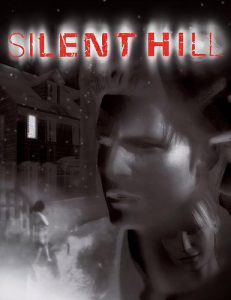
- Silent Hill
- Friday the 13th: The Game
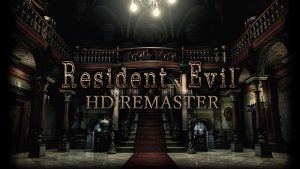
- Resident Evil 1 HD Remaster
- Resident Evil Code: Veronica X HD
- Resident Evil 2 Remake




Found something worth playing through DecideGame?
DecideGame.com is an independent gaming project run by Editor Zero. If this guide helped you discover a game, solve a problem, or find useful information, you can support DecideGame.com and help keep new and updated game guides coming.
DecideGame — PC Game Guides, Reviews & Setup Help