
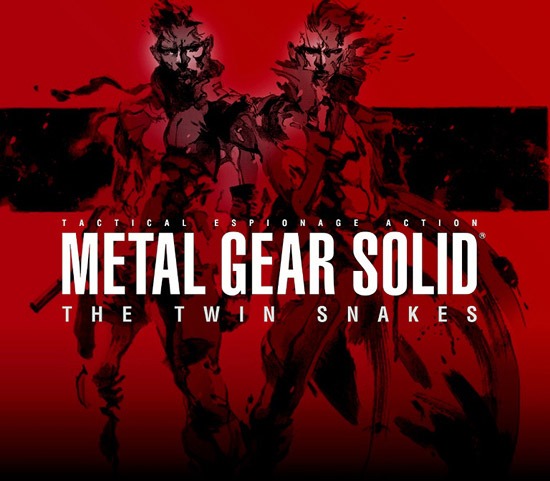
Use this updated 2026 Metal Gear Solid: The Twin Snakes PC guide to confirm its GameCube-only official availability, follow the recommended Dolphin emulation route using a personally owned copy, configure both game discs and controls, and check compatibility, PC requirements, enhancements, and modern Metal Gear collection differences.
 By Editor Zero — independently researched, edited, and maintained.
Last updated: 18 September 2026
Last reviewed: 18 September 2026
Table of Contents
- Quick Summary
- Quick Facts
- Official PC Store Status, Emulation & Installation
- Metal Gear Solid: The Twin Snakes Review
- Pros & Cons
- PC System Requirements
- Frequently Asked Questions
- Similar Games
Metal Gear Solid: The Twin Snakes Quick Summary
✔ GameCube remake of the original Metal Gear Solid with rebuilt visuals, re-recorded dialogue, and extensively reworked cinematics
✔ Adds MGS2-style first-person aiming, ledge hanging, body handling, and more reactive guards, changing how many Shadow Moses encounters play
✔ Similar to Metal Gear Solid 1 because it retells the same operation while substantially changing the controls, presentation, cinematics, and encounter balance
✔ There is no official Windows PC version, Steam release, or modern digital re-release of The Twin Snakes; Konami’s modern collections use the original MGS1 instead
✔ On PC, the practical route is Dolphin with game data dumped from your own GameCube discs; Dolphin currently rates the game Playable, so minor emulation issues can still occur
Metal Gear Solid: The Twin Snakes Quick Facts
Official PC Store Status, Emulation & Installation
👇 Metal Gear Solid: The Twin Snakes has no official Windows PC release, so the practical PC route is to emulate the original GameCube version with Dolphin using game data prepared from your own legally owned discs.
- Official PC status: Metal Gear Solid: The Twin Snakes has never received an official Windows PC port. Konami continues to catalogue it as a Nintendo GameCube title, so there is no legitimate Steam, Epic Games Store, GOG, Microsoft Store, or other native PC game download to purchase.
- Best console version: The Nintendo GameCube release is not merely the preferred version to emulate—it is the only official console version of The Twin Snakes. There is no PlayStation 2, Xbox, PSP, Wii, or later console port that offers an alternative emulation route.
- Recommended emulator: Dolphin Emulator is the established open-source GameCube and Wii emulator and is the recommended PC route for this game. Dolphin’s current compatibility list rates The Twin Snakes Playable, meaning it can be completed while minor graphical or audio issues may still occur.
- Master Collection: Do not confuse The Twin Snakes with Konami’s modern collections. Master Collection Vol.1 includes the original Metal Gear Solid rather than the GameCube remake, while Master Collection Vol.2 contains Metal Gear Solid 4, Metal Gear Solid: Peace Walker, and Metal Gear: Ghost Babel.
- Original ownership: The Twin Snakes was distributed on two GameCube discs. With no active first-party digital edition, original physical copies are generally obtained through the second-hand market rather than a current Konami or Nintendo storefront.
- Game-file safety: Dolphin does not include commercial games. This guide does not host, recommend, or link to third-party ISO, ROM, game-image, or file-download sources. The safest route is to create the required disc images from your own physical copy by following Dolphin’s official game-ripping guide; laws concerning personal backups can vary by jurisdiction.
 View Metal Gear Solid: The Twin Snakes on Konami
 Download Dolphin Emulator from the Official Site

How to Play Metal Gear Solid: The Twin Snakes on PC with Dolphin
- 1. Download Dolphin: Get the current release directly from the official Dolphin download page. For most players, the current release build is the sensible starting point; development builds are mainly useful when a newer emulator fix or feature is specifically needed.
- 2. Check the Windows prerequisite: Current Windows versions of Dolphin require the 64-bit Microsoft Visual C++ Redistributable. Dolphin’s official download page identifies the required Microsoft runtime if it is not already installed on your PC.
- 3. Prepare both GameCube discs: Create personal backup images of Disc 1 and Disc 2 from your own copy. Dolphin’s official ripping documentation explains supported methods, including CleanRip with compatible GameCube/Wii hardware and certain supported PC optical-drive configurations. GameCube discs contain 1.36 GiB each when dumped uncompressed.
- 4. Add the game to Dolphin: Store both disc images together in a clearly labelled folder, open Dolphin, and add that folder to the emulator’s game paths. Both discs should then remain available so the second disc can be selected when the story reaches the changeover point.
- 5. Configure controls: Open Options → Controller Settings, set GameCube Port 1 to Standard Controller, choose your PC controller or keyboard, and map the GameCube inputs. Dolphin’s official controller configuration guide explains button mapping, analog-stick calibration, rumble, and controller profiles.
- 6. Use a real GameCube controller if preferred: Dolphin also supports Nintendo’s USB GameCube Controller Adapter and compatible alternatives. Windows users should follow Dolphin’s official GameCube Controller Adapter guide because native adapter operation requires the correct USB-driver setup.
- 7. Start with Disc 1: Launch the first disc from Dolphin and use the emulator’s normal virtual GameCube memory-card saving. Avoid depending exclusively on save states; normal in-game saves are preferable for long-term progress and emulator-version changes.
- 8. Change to Disc 2: When The Twin Snakes asks for its second disc, keep emulation running and use Dolphin’s File → Change Disc function to select your personally dumped Disc 2 image. Dolphin supports changing discs for multi-disc GameCube titles without restarting the game.
- 9. Start with default graphics: Dolphin’s default settings are designed as a balance between performance and compatibility. Confirm that the game runs properly before increasing internal resolution, anisotropic filtering, anti-aliasing, widescreen settings, or loading custom textures. The official Dolphin Performance Guide explains what each major graphics setting changes.
- 10. Watch for Twin Snakes-specific graphics issues: Dolphin’s game-specific Twin Snakes documentation warns that MSAA or SSAA can break shadows when using Vulkan, OpenGL, or Direct3D 12. Direct3D 11 avoids that documented issue.
- 11. Treat widescreen as optional: Community Gecko codes can provide a 16:9 presentation, but Dolphin documents additional performance cost and possible extra lag. The game’s original presentation remains the safest baseline before applying widescreen or HD-texture enhancements.
- 12. Regional version note: Dolphin documents a PAL-version issue where 60 Hz mode cannot normally be selected at startup; forcing 60 Hz through a code can cause FMV synchronization problems. If you already own the North American NTSC version, it is therefore the simpler 60 Hz emulation target, although the PAL release remains usable.
Important: Emulator software such as Dolphin is separate from the commercial game itself. DecideGame.com links only to the emulator’s official website and documentation and does not provide or direct readers to downloadable copies of Metal Gear Solid: The Twin Snakes. Use game data from media you legally own and follow the laws applicable where you live.
Metal Gear Solid: The Twin Snakes Review
A fascinating remake that gives Snake better tools, sharper enemies, and a louder cinematic identity—without fully rebuilding Shadow Moses around any of them.
Metal Gear Solid: The Twin Snakes is most interesting when it stops being treated as a replacement for the 1998 original. Silicon Knights preserves the structure, rooms, bosses, Codec-heavy storytelling, and central tensions of Shadow Moses, then overlays them with mechanics drawn from Metal Gear Solid 2: first-person weapon aiming, tranquilizer weapons, guard hold-ups, body dragging, lockers, ledge hanging, a forward roll, and more reactive enemy behavior. Those additions make Snake far more capable, but they also expose how carefully the original game was balanced around his limitations.
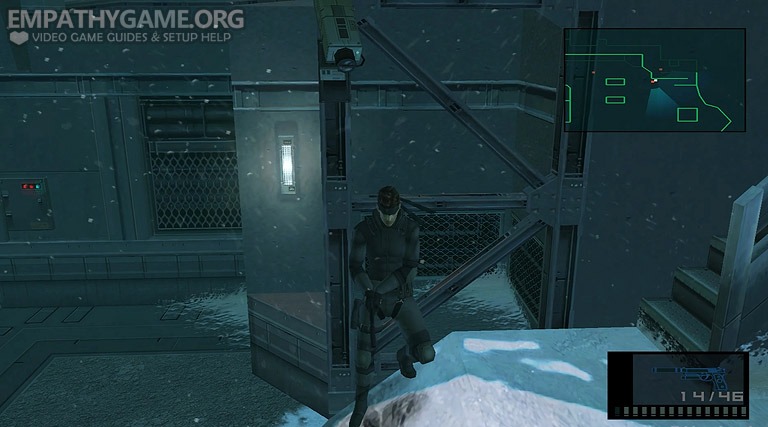
The result is a remake with productive contradictions. Precision aiming can dismantle encounters that once demanded positioning and patience, yet more perceptive guards can make ordinary infiltration unexpectedly tense. The rebuilt presentation gives the story greater visual energy, while the newly directed action scenes sometimes push Snake beyond the grounded spy-thriller tone surrounding him. Players who enjoy mechanical freedom and extravagant direction may find this the more immediately playable version of Shadow Moses. Those who value the original’s restraint and tightly constrained encounter design will notice that modernization changes the game rather than simply improving it.
MGS2 Mechanics Make Stealth More Expressive—and Less Fragile
The basic loop remains wonderfully compact: enter a room, read patrols and camera coverage, identify noisy surfaces or safe corners, cross without being seen, and improvise if the plan collapses. The remake broadens almost every step of that process. A guard can be tranquilized from a distance, held at gunpoint for a dog tag, knocked unconscious and dragged out of sight, or bypassed by using lockers and ledges that did not matter in the original. Bodies no longer conveniently disappear, so a clean takedown can create a second problem if another soldier discovers the result.
First-person aiming is the largest change because it rewrites the geometry of Shadow Moses. Security cameras that once forced careful timing or chaff use can often be destroyed with a suppressed shot. At the Heliport, the ability to target lights and distant threats lets Snake alter an approach before stepping into danger. The same precision makes headshots with the SOCOM decisive and turns the M9 tranquilizer into a powerful non-lethal answer to patrols. Even environmental details become tactical tools: metal grates and puddles can betray careless movement, while destructible objects and cameras give the player more ways to manipulate a room.
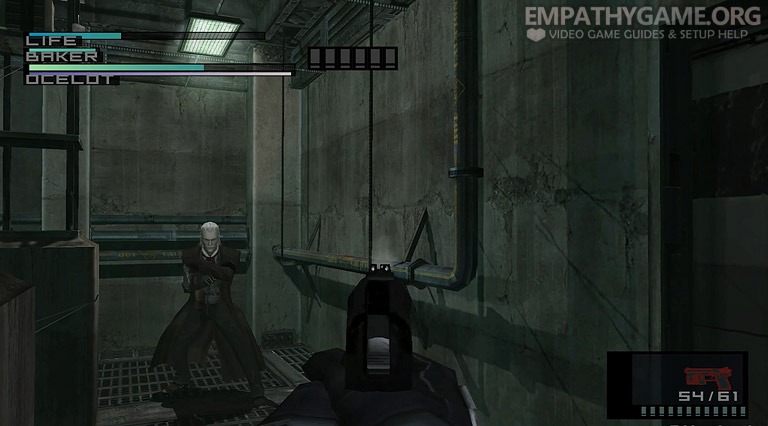
That flexibility feels good because it creates genuine choice, but it is not matched by a comparable redesign of the spaces. The original layouts expected Snake to work around fixed limitations; now he can often neutralize the problem from outside its intended pressure zone. Revolver Ocelot illustrates the tradeoff clearly. His arena still revolves around pillars, Baker’s position, ricocheting shots, and Ocelot’s reload windows, yet first-person aiming allows precise attacks that reduce the need to chase his rhythm around the room. Shooting nearby pipes can even briefly disrupt him. The encounter is still memorable, but the remake gives Snake answers that the arena was never built to resist.
Smarter Guards Expose the Old Camera’s Blind Spots
The common criticism that The Twin Snakes is simply easier misses half of what changed. Its Genome soldiers inherit more of MGS2’s awareness and communication behavior. Guards can react to suspicious noise, investigate disturbances, notice bodies, and trigger broader searches when routine radio contact fails. Running across a grated floor can draw attention from another level, which makes the acoustic layout of a room matter in a way that is easy to underestimate when the radar is doing most of the work.
Disable the radar and a different weakness becomes obvious: Shadow Moses largely retains the original overhead camera logic even though enemy perception has grown more demanding. In areas such as the opening Dock, approaching a guard can become awkward because the fixed framing may not show enough of the space that the soldier can hear or investigate. Similar tension appears in multi-level rooms, where a patrol above or below Snake may react to footsteps before the camera gives a clear visual explanation. MGS2 designed many of its rooms around the same style of AI; The Twin Snakes frequently asks that AI to operate inside much older sightlines.
This mismatch creates an unusual difficulty curve. On standard settings, first-person tranquilizer shots can erase patrol problems before they develop. With fewer navigational aids, stricter self-imposed stealth, or higher difficulty, the same rooms can become more demanding because guard awareness matters more than the geometry communicates. That tension is one of the remake’s strongest qualities when it works: stealth is less about memorizing a vision cone and more about controlling sound, bodies, sightlines, and escalation. It is also one of its roughest seams, because the camera and spaces do not always support the smarter behavior cleanly.
The Story Gains Spectacle but Loses Some Restraint
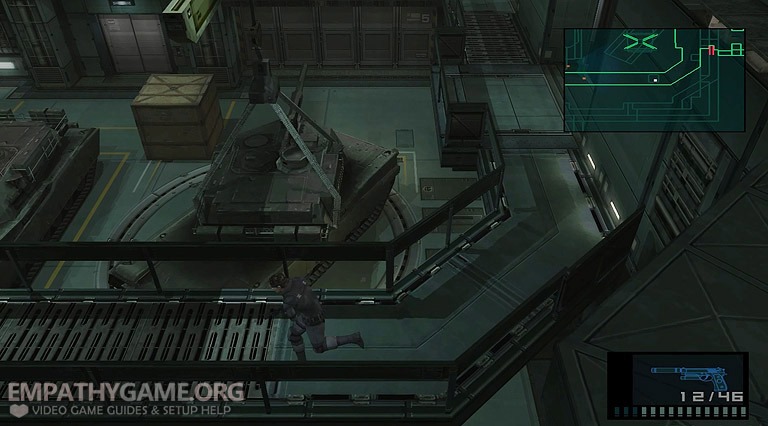
The narrative remains one of Metal Gear’s most efficient setups. Solid Snake is pulled from retirement and sent alone into the seized Shadow Moses nuclear facility, where a hostage rescue rapidly expands into a crisis involving FOXHOUND, Metal Gear REX, nuclear deterrence, genetic legacy, and competing personal loyalties. Liquid Snake, Revolver Ocelot, Psycho Mantis, Sniper Wolf, Vulcan Raven, Gray Fox, Meryl, Otacon, Naomi Hunter, and Colonel Campbell give the relatively compact campaign an unusually dense cast, while Codec calls create a second layer of storytelling outside the physical environment.
The remake does not radically rewrite that structure, but it changes how the story feels. Dialogue was recorded again and the cutscenes were rebuilt under action-film director Ryuhei Kitamura, whose staging favors acrobatics, slow motion, elaborate gunplay, and emphatic physical spectacle. Gray Fox benefits especially from the added kinetic energy; a cybernetic ninja should feel barely contained by normal human movement, and several sequences sell that danger far more vividly than the PlayStation hardware could. Larger confrontations also gain clearer choreography and facial acting.
Snake is a more complicated fit. The surrounding script still presents him as a hardened operative who survives through discipline, fieldcraft, and improvisation, while some new cinematics have him performing feats that look closer to superhero action. The problem is not that Metal Gear was ever realistic—it was already full of psychic powers, giant walking weapons, and melodrama—but that the remake changes the balance between absurdity and restraint. The original often let bizarre ideas emerge from a cold military atmosphere. The Twin Snakes foregrounds the spectacle itself. That makes it entertaining on its own terms, but less tonally severe.
Progression Is Light, but System Knowledge Creates Its Own Rewards
This is not a progression game in the modern sense. Snake gathers weapons, equipment, and key cards as the mission advances rather than building a character through skills or statistics. One subtle change actually removes a sense of growth from the original: Snake begins with his full-length life bar instead of gradually increasing maximum health after boss encounters. The practical effect is modest, but the psychological one matters. The original quietly made the player feel tougher as Shadow Moses escalated; the remake gives that durability up front, contributing to its more forgiving baseline.
Where The Twin Snakes does reward mastery is through route knowledge and remake-specific shortcuts. Near Metal Gear REX, hidden pipes can change the PAL key’s temperature, avoiding much of the long hot-and-cold backtracking required by the original route. Ledge hanging can also turn vertical spaces into shortcuts, including opportunities to drop from upper walkways instead of tracing the full camera-guarded path. These changes are easy to overlook because they are less flashy than first-person shooting, yet they are among the remake’s smartest additions: they let a knowledgeable player compress familiar traversal rather than merely overpower familiar enemies.
The broader pacing remains unmistakably Metal Gear. Short stealth rooms, sudden boss encounters, scripted set pieces, and long stretches of Codec dialogue constantly trade control back and forth. That rhythm supports the game’s identity because exposition and character conflict are not decoration; they are part of the experience. It can still feel abrupt for anyone expecting uninterrupted infiltration, especially when a carefully paced stealth sequence gives way to an extended conversation. The remake modernizes movement much more than it modernizes structure.
Presentation and Controls Give the Remake Its Own Personality
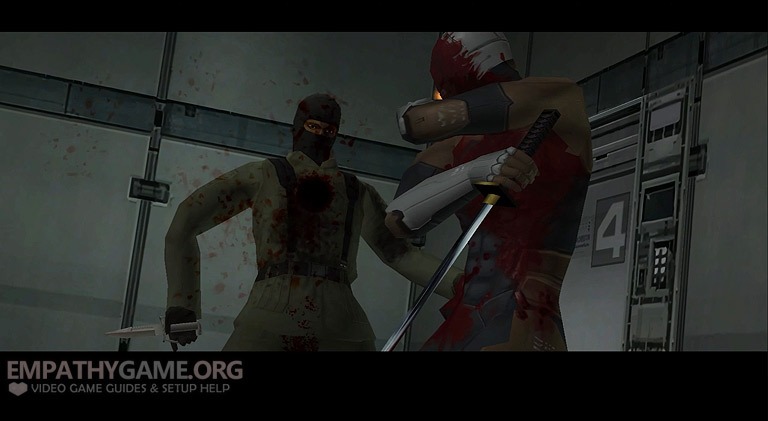
GameCube-era character models, rebuilt environments, stronger effects, and more expressive animation make Shadow Moses far easier to read visually than its low-polygon predecessor, but the most consequential presentation change may be audio. The dialogue was rerecorded, and the score was extensively reworked rather than simply restored. That inevitably changes the mood. The original soundtrack’s colder, more immediately recognizable identity is difficult to replace, yet the remake’s music deserves more than a blanket dismissal: encounters such as Gray Fox and Psycho Mantis receive distinctive themes, and pieces tied to the communications-tower descent and other set pieces give individual moments a stronger musical stamp.
The GameCube controller is less elegant. The mechanics themselves are responsive, but fitting MGS2’s command vocabulary onto fewer shoulder inputs produces combinations that can feel busier than the actions warrant. First-person aiming, weapon readiness, item selection, Codec access, and pressure-sensitive-style behavior have to be translated into a different physical layout. The scheme becomes workable with familiarity, but it never feels as naturally matched to the hardware as MGS2’s original control design. That friction is most noticeable when a tense situation asks for several commands in quick succession rather than during ordinary movement.
Replayability Rewards Challenge Runs More Than New Content
Repeat playthroughs are supported by difficulty options, performance ranks, alternate ending outcomes, post-clear rewards such as the Bandana and Stealth camouflage, collectible dog tags, and the opportunity to exploit routes more efficiently once Shadow Moses is familiar. Dog tags change across difficulty levels, giving completionists a reason to revisit guards, although collecting them is more a self-imposed challenge than a deep progression system.
Boss Survival is the more demanding extra. On Hard, it is substantially harsher than the campaign’s ordinary boss balance: the fights use Extreme-level settings, health carries from one encounter to the next, and resources are tightly restricted. That turns familiar fights into endurance management rather than isolated set pieces. Demo Theater serves the opposite purpose, allowing the heavily reworked cinematics to be revisited without replaying the whole mission. These extras are worthwhile, but they do not amount to a second campaign or a substantial mission pack; replay value depends mainly on mastery, alternate constraints, and affection for the core run.
Final Verdict
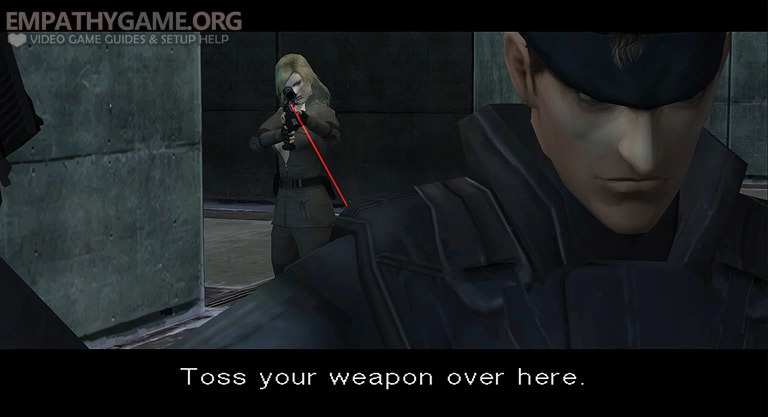
Metal Gear Solid: The Twin Snakes works best as a revealing alternate version of MGS1 rather than a definitive upgrade. Its MGS2-derived mechanics make stealth more flexible, expressive, and often more immediately satisfying: precision aiming, tranquilizer weapons, hold-ups, body management, and ledge movement all give Snake options that the original never allowed. At the same time, those tools expose how little Shadow Moses was rebuilt around them. Some cameras and bosses lose pressure, while smarter guards can clash with old camera framing and create surprisingly awkward stealth when the radar is removed.
The same tension defines the presentation. Rebuilt visuals, rerecorded dialogue, encounter-specific music, and Kitamura’s energetic cinematics give the remake a strong identity, but the increased spectacle changes the colder tone that made the original so distinctive. Small design revisions such as PAL-key shortcuts show thoughtful adaptation; the full starting health bar and uneven controller mapping show where modernization can flatten progression or introduce new friction.
For players who want Shadow Moses with broader stealth tools and a more theatrical presentation, The Twin Snakes remains a compelling interpretation. For those who value the original’s carefully restricted mechanics, austere atmosphere, and encounter balance, it is better approached as a companion piece. Its flaws are inseparable from what makes it worth discussing: this is a remake that demonstrates how changing what a character can do can change an entire game’s tension, even when nearly every corridor remains familiar.
Metal Gear Solid: The Twin Snakes Pros & Cons
Metal Gear Solid: The Twin Snakes PC System Requirements
OFFICIAL WINDOWS PC REQUIREMENTS:
Konami and Nintendo have not published Windows PC minimum or recommended specifications for Metal Gear Solid: The Twin Snakes because the game has never received an official native PC release.
The specifications below are therefore Dolphin Emulator host requirements, not official requirements for The Twin Snakes itself.
Dolphin Emulator Host Requirements
OS: 64-bit Windows 10 version 1903 or newer; Dolphin also supports current compatible Linux and macOS systems
CPU: 64-bit x86-64 or AArch64 processor; four or more CPU cores are highly recommended by Dolphin
RAM: 2 GB or more recommended
GPU: Graphics hardware supporting Direct3D 11.1, OpenGL 4.4, or Vulkan 1.1 is recommended
Storage: Varies with emulator files and enhancements; Dolphin states that an uncompressed GameCube disc image occupies 1.36 GiB, and The Twin Snakes uses two game discs
Additional Windows Requirement: Current Windows builds of Dolphin require the 64-bit Microsoft Visual C++ Redistributable for Visual Studio 2022
Additional PC Performance and Setup Notes
- Begin with Dolphin’s default configuration before increasing internal resolution, anti-aliasing, anisotropic filtering, or other enhancements. This makes it easier to identify which setting causes a visual or performance problem. See Dolphin’s official Performance Guide for the purpose and trade-offs of individual settings.
- Dolphin’s current compatibility list rates Metal Gear Solid: The Twin Snakes Playable, meaning it can be completed while minor graphical or audio issues may still occur. The Dolphin Twin Snakes game page also documents game-specific enhancement and graphics caveats, while practical performance still depends on the host CPU, GPU, graphics backend, drivers, and optional enhancements.
- For a standard PC controller, open Dolphin’s Controller Settings, assign Port 1 as a Standard Controller, select the connected input device, and map the GameCube buttons and analog controls to your preferred layout. Dolphin provides a detailed controller configuration guide.
- Dolphin also supports Nintendo’s USB GameCube Controller Adapter. Windows requires additional adapter-driver setup, while the exact configuration differs on Linux and macOS; follow Dolphin’s GameCube Controller Adapter guide rather than installing random controller-driver packages.
- The Dolphin game-specific documentation warns that MSAA or SSAA can break shadows when using Vulkan, OpenGL, or Direct3D 12. Direct3D 11 avoids that documented shadow problem.
- Community widescreen codes can provide a 16:9 presentation, but Dolphin documents possible additional performance cost or lag. The original game was designed around its native presentation, so widescreen modifications are optional rather than required.
- Custom HD texture packs and other community enhancements are unofficial. Back up Dolphin saves and configuration files before making extensive changes, and avoid mixing unrelated packs or configuration fixes without checking their compatibility.
- Use Dolphin’s official Ripping Games guide for preparing your personally owned GameCube media. This guide does not provide, host, or link to downloadable copies of the commercial game.
Official Trailer
Note: This IGN-hosted GameCube trailer shows Solid Snake returning to Shadow Moses with the remake’s rebuilt environments, cinematic presentation, stealth action, and MGS2-influenced mechanics, while the written guide adds present-day PC availability, Dolphin compatibility, controller, ownership, and setup context.
Frequently Asked Questions
Is Metal Gear Solid: The Twin Snakes worth playing in 2026?
Yes, especially if you want to revisit the Shadow Moses story with MGS2-style controls, first-person aiming, rebuilt GameCube visuals, and much more elaborate cinematics. Its biggest limitation is that those newer mechanics can make encounters designed around the original MGS1 rules noticeably easier, so it works best as an alternative interpretation rather than a complete replacement for the PlayStation original.
Is Metal Gear Solid: The Twin Snakes a remake or a remaster?
It is a full remake of the original Metal Gear Solid rather than a simple remaster. Silicon Knights rebuilt the game for GameCube with new graphics, re-recorded dialogue, redesigned cinematics, and gameplay systems based heavily on Metal Gear Solid 2.
Does The Twin Snakes tell the same story as the original Metal Gear Solid?
Yes. The central Shadow Moses plot, characters, bosses, locations, and major story developments remain substantially the same, but the remake changes the presentation through new cinematography, re-recorded performances, altered music, and much more exaggerated action choreography.
Should I play the original Metal Gear Solid or The Twin Snakes first?
The original is the better starting point if you want to experience Shadow Moses with the mechanics, pacing, audiovisual direction, and encounter balance it was originally designed around. The Twin Snakes can be easier to approach if older PlayStation controls and visuals are a barrier, but it is deliberately a different interpretation rather than an identical modernized version.
Do I need to play Metal Gear and Metal Gear 2 before The Twin Snakes?
No. The main story gives enough information to follow Solid Snake’s Shadow Moses mission, and the Special menu includes a Previous Operations section summarizing important earlier events. Playing the older games still provides additional context for Snake, Big Boss, Gray Fox, and their history.
Why is Metal Gear Solid: The Twin Snakes often easier than the original?
The remake places MGS2-era abilities into environments originally designed around MGS1’s more restrictive movement and aiming. First-person shooting, the tranquilizer pistol, improved movement, guard hold-ups, body manipulation, and other additions can bypass or simplify situations that were more demanding in the original.
Can Snake aim weapons in first person in The Twin Snakes?
Yes. First-person weapon aiming is one of the remake’s most significant gameplay changes, allowing much more precise shots against guards, cameras, environmental objects, and some bosses than the original MGS1 permitted.
Does The Twin Snakes have non-lethal stealth?
Yes. Snake can use the M9 tranquilizer pistol to incapacitate many enemies without killing them, giving the remake a stronger non-lethal option than the original PlayStation game. The MGS2-style hold-up system also lets Snake threaten guards and interact with them while remaining in control of an encounter.
What do dog tags do in Metal Gear Solid: The Twin Snakes?
Guards can be held up and made to surrender their dog tags, with different sets appearing across the game’s difficulty levels. They primarily function as a collection and replay challenge rather than providing a major gameplay reward for completing the entire set.
Does Metal Gear Solid: The Twin Snakes have VR Missions?
No. The remake does not include the VR training missions associated with the original Metal Gear Solid and its expanded releases. Its Special menu instead contains features such as the Dog Tag Viewer, Photo Album, Previous Operations, Boss Survival, and Demo Theater.
What is Boss Survival in The Twin Snakes?
Boss Survival is an unlockable mode that sends you through the game’s boss encounters consecutively with restricted resources while tracking your performance. It becomes available after completing the main game.
Can you rewatch The Twin Snakes cutscenes after finishing the game?
Yes. Completing the game unlocks Demo Theater, which lets you revisit the game’s cinematic sequences instead of replaying the entire campaign to see them again.
What difficulty modes does Metal Gear Solid: The Twin Snakes have?
The game includes Very Easy, Easy, Normal, Hard, and Extreme difficulties, although Extreme is unlocked after completing the game. Finishing the campaign also unlocks a Game Over If Discovered option for Hard and Extreme, where being detected immediately ends the attempt.
Does Metal Gear Solid: The Twin Snakes have multiple endings?
Yes. A decision during the torture sequence determines which of two ending variations you receive and also affects the bonus item awarded afterward. Players who want to see both outcomes can pursue the alternative choice on another playthrough.
Does The Twin Snakes have New Game Plus?
It does not present a modern mode explicitly labelled New Game Plus, but cleared save data can be used for additional playthroughs with earned bonuses. Different endings can unlock the Bandana or Stealth camouflage, while further clears on the same progression can reveal additional costume variations.
How does the Psycho Mantis controller trick work in The Twin Snakes?
The remake retains the famous controller-port concept, although the GameCube version expands how the trick behaves during the fight. When playing through Dolphin, its controller settings can emulate different GameCube controller ports, so the mechanic can be handled through emulator controller configuration rather than physically reconnecting a PC gamepad.
Does Metal Gear Solid: The Twin Snakes have multiplayer or co-op?
No. The Twin Snakes is a single-player game with no competitive multiplayer, online co-op, local co-op, or split-screen mode.
How long does Metal Gear Solid: The Twin Snakes take to finish?
A first playthrough commonly takes roughly 8–12 hours when watching the story scenes and exploring at a normal pace, although unfamiliar bosses and extensive Codec listening can push it longer. Repeat runs can be considerably shorter once you know the routes, puzzles, and boss strategies.
Is Metal Gear Solid: The Twin Snakes included in Master Collection Vol.1 or Vol.2?
No. Master Collection Vol.1 uses the original Metal Gear Solid rather than The Twin Snakes, while Vol.2 contains Metal Gear Solid 4: Guns of the Patriots and Metal Gear Solid: Peace Walker, with Metal Gear: Ghost Babel included as bonus content. The GameCube remake therefore remains separate from both collections.
Can you buy Metal Gear Solid: The Twin Snakes on Steam or another PC store?
No. There is no official Windows version or Steam release of The Twin Snakes, and it is not sold as a native PC game through the major PC storefronts. PC players who legally own the GameCube release can instead use Dolphin with game data prepared from their own discs.
Does Metal Gear Solid: The Twin Snakes run well in Dolphin?
Yes. Dolphin’s current compatibility list rates the game Playable, which Dolphin defines as running well with only minor graphical or audio glitches and being playable all the way through. Practical results can still vary with graphics backend, drivers, and optional enhancements.
Is Metal Gear Solid: The Twin Snakes canon?
The Twin Snakes is an official remake of the Shadow Moses story rather than a separate sequel or alternate campaign. The underlying events correspond to Metal Gear Solid, while differences in cinematic staging and presentation are best understood as the remake’s interpretation of those events rather than an entirely different storyline.
Were the voice acting and music changed in The Twin Snakes?
Yes. The dialogue was recorded again for the GameCube remake, and much of the musical presentation was also changed rather than simply carrying over the original PlayStation audio. These differences contribute significantly to the remake’s distinct atmosphere alongside its new visuals and cinematics.
Still have questions? Check the Metal Gear Solid Reddit community, Dolphin Forums, or Dolphin Discord for additional gameplay, controller, and emulation help.
Sources & References
Key factual and technical information in this guide was checked against relevant official and established sources, including:
- Konami — Metal Gear Solid: The Twin Snakes — original GameCube platform, Japanese release information, and Konami’s description of the remake as MGS1’s story rebuilt around MGS2’s gameplay systems
- Konami — Metal Gear Solid: Master Collection Vol.1 and Konami — Master Collection Vol.2 — current modern-platform collection lineups and confirmation that The Twin Snakes is not included in either collection
- Dolphin Emulator Compatibility List and Dolphin Twin Snakes game page — current compatibility rating, graphics-backend caveats, widescreen information, and game-specific emulation notes
- Dolphin Emulator — Ripping Games — official guidance for creating personal GameCube disc dumps and the documented size of uncompressed GameCube disc images
- Dolphin — Configuring Controllers, GameCube Controller Adapter Guide, and Performance Guide — PC controller mapping, native GameCube-controller support, emulator requirements, graphics backends, and performance configuration
- Metacritic — Metal Gear Solid: The Twin Snakes and IGN archived review — historical critic scores used in Quick Facts
Similar Games Like Metal Gear Solid: The Twin Snakes
- Metal Gear Solid 1
- Metal Gear Solid 2: Sons of Liberty
- Metal Gear Solid 4: Guns of the Patriots
- Metal Gear Solid Delta: Snake Eater
- Tom Clancy’s Splinter Cell: Chaos Theory
- 007 First Light


Found something worth playing through DecideGame?
DecideGame.com is an independent gaming project run by Editor Zero. If this guide helped you discover a game, solve a problem, or find useful information, you can support DecideGame.com and help keep new and updated game guides coming.
DecideGame — PC Game Guides, Reviews & Setup Help