
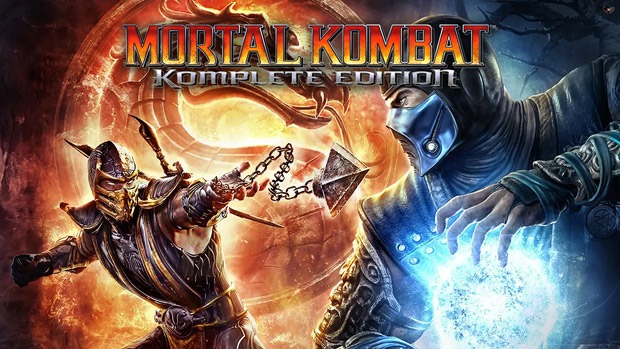
📅 Game released: 2012
Mortal Kombat Komplete Edition brings the 2011 reboot’s fast 2.5D battles, cinematic Story Mode, X-Ray attacks and four DLC fighters to Windows PC. This guide explains its official download status, how existing Steam owners can reinstall it, the included content, local and online multiplayer limitations, PC system requirements, Steam Deck compatibility and practical setup options.
 By Editor Zero — independently researched, edited, and maintained.
Last updated: 4 November 2026
Last reviewed: 4 November 2026
Table of Contents
- Quick Facts
- Official PC Stores, Download & Installation
- Mortal Kombat Komplete Edition Review
- Pros & Cons
- PC System Requirements
- Frequently Asked Questions
- Similar Games
Mortal Kombat Komplete Edition Quick Facts
- Game: Mortal Kombat Komplete Edition / Mortal Kombat (2011) / Mortal Kombat 9 / MK9
- Developer: NetherRealm Studios; Windows PC adaptation by High Voltage Software
- Publisher: Warner Bros. Interactive Entertainment
- Genre: Fighting, Multiplayer
- Release: Komplete Edition — February 28, 2012 (PS3 and Xbox 360); Windows PC — July 3, 2013 (digital). The original Mortal Kombat debuted April 19, 2011.
- Platforms: Windows PC, PS3, Xbox 360, PS Vita (related version with additional handheld-specific content)
- Komplete Edition content: Original fighting game plus Skarlet, Kenshi, Rain, Freddy Krueger, 15 Klassic skins, and three Klassic Fatalities; the PC version does not include PlayStation-exclusive Kratos
- Modes: Story Mode, Arcade and Tag Ladders, 300-stage Challenge Tower, training, minigames, local versus and Tag Team play; native Steam matchmaking status remains unverified
- Steam Deck: Playable for existing Steam owners; launcher/setup interaction may require touchscreen or virtual keyboard
- Engine: Unreal Engine 3
- Community: Steam Discussions, Mortal Kombat Reddit community, WB Games support
- PC modding: Nexus Mods for MK9 hosts unofficial character, graphics and configuration modifications; no official Steam Workshop
- Metacritic score: 81/100 (Windows PC Komplete Edition)
- IGN score: N/A / Not scored (no separate Windows PC Komplete Edition review verified)
- GameSpot score: 8.5/10 (Windows PC Komplete Edition)
- Steam user reception: Very Positive overall; Steam release no longer sold to new customers
Official PC Store Status, Download & Installation
👇 Use the notes below to check Mortal Kombat Komplete Edition’s official PC purchase status, existing-owner installation, included content and practical PC access options.
- Steam purchase status: Mortal Kombat Komplete Edition (Steam app 237110) has been retired and is not offered as a normal new purchase. The original Steam listing and community pages are retained for reference.
- Reinstalling an owned copy: If the game is already licensed to your Steam account, open Steam Library, locate Mortal Kombat Komplete Edition and select Install. Use Steam’s normal game-file verification if an existing installation behaves incorrectly.
- Retail copies and activation: Historical boxed copies and unused Steam keys may exist, but a listing alone does not guarantee a working license. Check the exact version, key validity, region restrictions and seller before considering a purchase; no third-party key marketplace is an official Steam replacement.
- Included DLC: The Windows Komplete Edition already includes Skarlet, Kenshi, Rain, Freddy Krueger, 15 Klassic character skins and three Klassic Fatalities. These do not need separate DLC purchases for the complete PC package.
- PC versus PlayStation content: Kratos is not included in the Windows edition. The PS Vita adaptation also contains handheld-specific stages, outfits and challenges not included in the PC package.
- Steam features: The Steam release lists achievements, Steam Cloud, leaderboards, controller support, local/shared play and Remote Play Together. Family Sharing depends on normal Steam eligibility and account settings.
- Native online matches: WB Games explicitly discontinued the PS3 and Xbox 360 online multiplayer services and the Message of the Day feature on Steam. Its public notice does not explicitly confirm a Steam multiplayer shutdown; however, functioning PC matchmaking has not been independently verified for this update. Do not rely on finding an online opponent.
- Play with friends remotely: Steam Remote Play Together can stream supported local multiplayer to invited friends without using the game’s original online matchmaking. Connection and input quality depend on the streaming setup.
- Steam Deck: Valve rates the game Playable for existing Steam owners. Gameplay supports the default controller configuration, but the separate launcher/setup utility may need touchscreen or virtual-keyboard input.
- Modern Windows and offline play: The published Windows Vista/7/8 specifications are historical. The current Steam client requires Windows 10 or later, and the game’s single-player content does not require an active internet connection once it has been installed and set up; Steam Cloud synchronization still uses internet access.
- Mods and file safety: Unofficial PC modifications may replace original game assets or settings. Back up saves and modified files, check version compatibility and avoid unknown replacement executables or unofficial full-game downloads.
 View Mortal Kombat Komplete Edition on Steam — Purchase Unavailable
 Visit Official Mortal Kombat Games Support

Mortal Kombat Komplete Edition Review
Fast, vicious fighting and an unusually rich single-player package make MK9 endure, even when its AI and story pacing show rough edges.
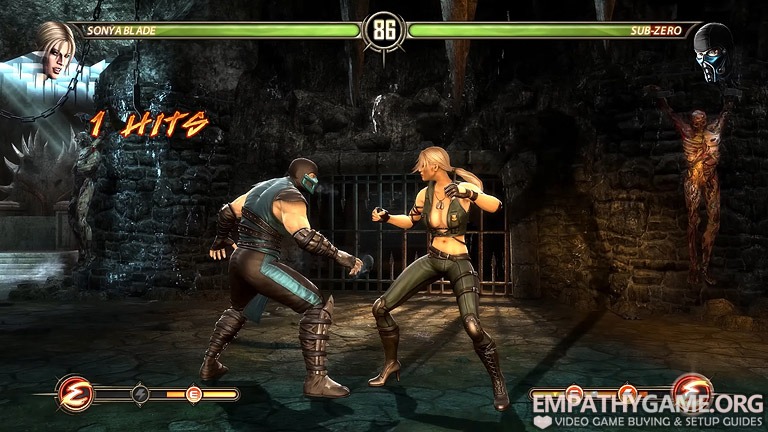
Mortal Kombat Komplete Edition is more than the entry that made X-Ray attacks a spectacle. Its lasting strength is the clarity of the reboot beneath all that broken-bone theatre. NetherRealm Studios pulled the series back onto a single 2D plane, built each fighter around an immediately readable set of strengths, and tied offense and defense together with a three-section Super Meter. The result is aggressive without being mindless: every round asks whether meter is better spent extending pressure, escaping a damaging combo, or gambling on a full X-Ray.
That focus is matched by a generous structure around the fights. Story Mode revisits the first three Mortal Kombat games, the 300-stage Challenge Tower constantly changes the rules, Tag Team turns familiar matchups into chaotic experiments, and the Komplete roster adds Skarlet, Kenshi, Rain, and Freddy Krueger.
It is not frictionless. Attack strings can feel stiffer than later NetherRealm games, the CPU sometimes responds with unnerving immediacy, and the campaign rushes through events so quickly that some characters barely develop. Yet the fighting system has strong identity and the single-player package feels unusually deliberate. Anyone who values classic Mortal Kombat characters, local competition, authored challenges, and fast 2.5D combat will find plenty beyond the Fatalities.
The Super Meter Gives Every Round a Real Trade-Off
The four-button attack layout is easy to understand because each button corresponds to a limb, but the game becomes much more interesting once the Super Meter enters the equation. One section enhances a special move, two sections power a Breaker that can interrupt an opponent’s combo, and all three are required for an X-Ray attack. The flashy option is obvious, but the strongest tactical choice often is not.
Consider a round against an opponent who has already shown that they can convert one opening into a long juggle. Saving two bars for a Breaker may prevent far more damage than an X-Ray would inflict later. Against a character who is struggling to escape pressure, spending a single bar on an enhanced special can instead maintain momentum or alter the properties of a familiar move. A full meter therefore creates tension rather than merely signaling that a super attack is ready. The player who burns everything for spectacle can be left defenseless seconds later.
Character identity makes those decisions matter differently. Scorpion’s spear and teleport punish bad spacing, Sub-Zero’s ice attacks control space, Cyrax can build traps and juggles, and Johnny Cage thrives up close. Learning a new fighter therefore changes movement, safe strings, launchers, and meter priorities rather than merely replacing special-move inputs.
The downside is that MK9’s attack flow has hard edges. Strings are authored sequences rather than loose chains, so pressing attacks that do not naturally link can produce a conspicuous pause. That rigidity is part of the game’s identity, but it can make the combat look and feel less fluid than its speed suggests. Once the correct strings and cancels become familiar, the system starts to click; before that point, the gap between what the player intends and what the animation allows can be jarring.
Difficulty Can Feel Reactive Rather Than Fair
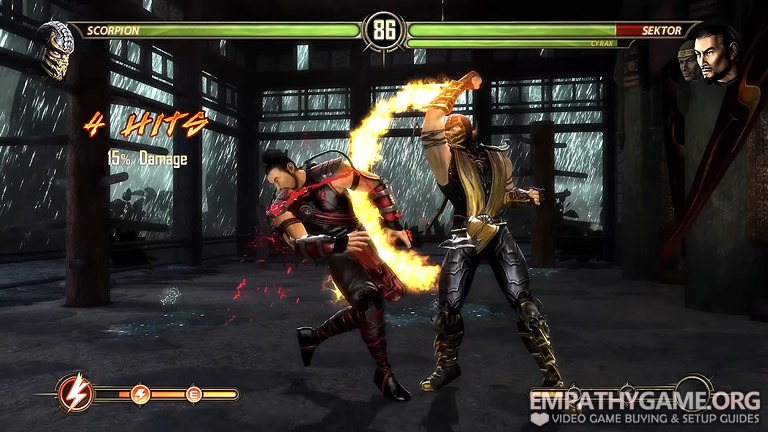
The CPU is often at its least convincing when it seems to react instantly to an opening. A blocked special or interrupted string may be followed by a defense so quick that an attempted punish is itself blocked, and repeated patterns are often shut down with little hesitation. It does not make every match unfair, but on higher-pressure Story and Tower fights it can create the impression that the opponent is responding to inputs rather than reading the same visual situation as the player.
That distinction matters because Mortal Kombat works best when a loss teaches something useful: a teleport was predictable, a launcher was unsafe, or meter should have been saved for a Breaker. Some CPU encounters instead encourage exploiting a narrow weakness until the AI stops answering effectively. Shao Kahn is the clearest example. His armor, heavy damage, projectiles, and hammer attacks make him intimidating, but fighting him can become less about the normal push-and-pull of the roster and more about baiting a punishable move and repeating the safest response.
There is still satisfaction in solving those encounters. Blocking patiently, refusing to press after every apparent opening, and learning which moves are genuinely punishable matters more than simply attacking faster. The problem is not the difficulty itself; the toughest AI occasionally blurs the line between demanding execution and artificial-feeling resistance.
Story Mode Is Ambitious, Energetic, and Too Rushed
Story Mode gives the reboot a stronger identity than a collection of arcade endings could. It begins with Raiden receiving a warning from the disastrous future seen around Armageddon, then uses his attempts to change fate as a reason to revisit events inspired by the original trilogy. Control shifts by chapter between fighters such as Johnny Cage, Sonya Blade, Scorpion, Cyrax, Liu Kang, Jax, Sub-Zero, Kitana, Kung Lao, and others, turning the campaign into a guided tour of the roster.
The rotating chapters are effective at introducing different play styles. Someone who would never select Jax or Stryker in versus mode still has to learn enough of their toolkit to survive several fights, keeping the campaign mechanically varied while giving classic rivalries room to collide.
The cost is pacing. Major betrayals, deaths, realm-threatening developments, and character introductions arrive with very little breathing room between them. The first half benefits from the clean tournament framework, but later chapters pile conflicts together so quickly that emotional consequences struggle to settle before the next fight begins. The campaign can feel like an enthusiastic retelling of several games compressed into one long action film.
Character treatment is uneven as well. Sonya and Kitana receive meaningful roles, but several other women function more as opponents, visual icons, or supporting pieces than developed participants in the story. The exaggerated costume design and broad presentation fit Mortal Kombat’s deliberately lurid style, yet parts of it have aged less gracefully than the core mythology. The writing is strongest when it embraces simple character friction—Johnny Cage’s arrogance, Scorpion’s rage, Sub-Zero’s loyalties, Raiden’s growing desperation—rather than racing to the next piece of timeline machinery.
The Challenge Tower Turns Frustration Into Progress
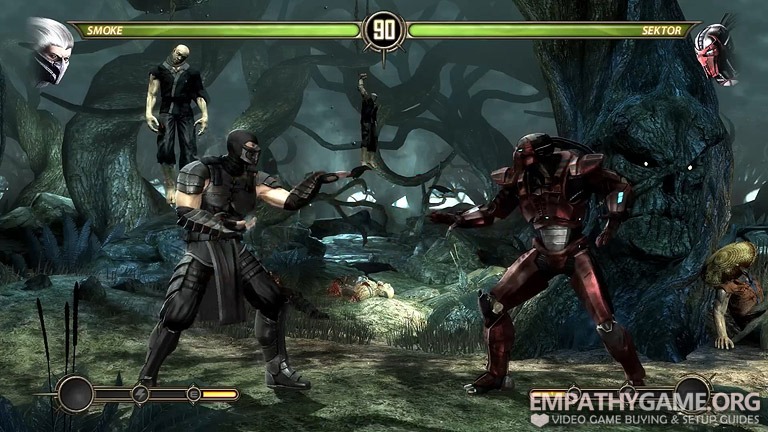
The 300-stage Challenge Tower is arguably the feature that best explains why the game remains so satisfying away from versus matches. It does not merely stack hundreds of ordinary CPU fights. Traditional battles are mixed with one-versus-many encounters, Tag Team stages, minigames, altered rules, disabled abilities, unusual objectives, and character-specific restrictions. The result feels authored: even when a challenge is irritating, it usually has a small joke, mechanical twist, or cruel idea that distinguishes it from the stage before it.
Early challenges can function like disguised tutorials. One asks Jax to target different parts of Baraka’s body rather than simply reduce a health bar, nudging the player to think about which attacks hit which regions. Much later, Challenge 299 asks Sheeva to defeat Goro without being hit, turning a familiar boss into an exercise in restraint. Challenge 300 then throws Goro, Kintaro, Mileena, and Shao Kahn into one final endurance test. The Tower steadily moves from teaching systems to deliberately abusing them.
That escalation can be maddening, but the slow climb creates a stronger sense of achievement than randomized modifiers. Koins can skip many challenges, so progress need not stop at one wall, yet beating a stage that repeatedly punished the same mistake is far more satisfying. Even when the balance is mean, the player remembers what made that particular stage mean.
Tag Team Is Messy in Exactly the Right Way
Tag Team changes the game’s resource economy and combo logic without replacing the standard one-on-one format. Two fighters can be brought into the same side, with tag attacks switching the active character and assists allowing the partner to briefly contribute an attack. Because assists and extensions interact with the same meter that powers enhanced moves and defensive Breakers, a team can spend resources aggressively to keep a combo alive and then discover it has sacrificed its best escape option.
The system is not tournament-clean. Certain pairings can create oppressive pressure or unusually damaging extensions, and once assists start covering approaches the screen can become much harder to read than an ordinary duel. That looseness is precisely why the mode works so well as local experimentation. Finding two characters whose tools complement each other, then discovering an assist that turns an ordinary string into a longer sequence, has a playful laboratory quality that the main format deliberately avoids.
It also gives local multiplayer a different social rhythm through teammates and quick substitutions. For strict competitive balance, one-on-one remains the cleaner game. For a group on the same system, Tag Team is one of MK9’s most memorable detours.
The Krypt and Presentation Give the Reboot Personality
Progression is mostly horizontal. Koins earned through fights and challenges are spent in the Krypt, where graves and other containers conceal alternate costumes, artwork, music, Fatality information, Kombat Kodes, and related extras. Mechanically, it is a reward menu disguised as a macabre scavenger hunt, but the presentation makes unlocking material feel more in character than selecting items from a conventional shop.
The mystery is part appeal and part annoyance. Rewards are hidden behind specific containers, so the Krypt can feel exciting when something useful appears and perfunctory when it does not, while its animations become repetitive over time. Still, even this reward menu is dressed in Mortal Kombat’s tone rather than presented as a neutral checklist.
That tone extends to the arenas and sound design. The Living Forest, the Pit, Goro’s Lair, the Subway, and other returning locations are not subtle, but they are immediately readable and full of series identity. Hits land with exaggerated weight, the announcer gives even routine rounds a ceremonial edge, and X-Rays turn a successful opening into a grotesque anatomy demonstration. The violence is absurd enough to become part horror effect, part punch line.
Visually, the game has aged. Facial animation can look stiff, transitions are less polished than in later NetherRealm productions, and some character designs lean heavily into the excesses of their era. What holds up is clarity: fighters separate cleanly from backgrounds, special moves are easy to track, and most arenas communicate their theme immediately.
Replayability Comes From Mastery, Not Grind
Mortal Kombat Komplete Edition does not need a character-level treadmill to create reasons to return. Arcade ladders provide individual endings, the Krypt feeds completionists, the Challenge Tower becomes a long-term project, and local versus can last as long as the competition does. The Komplete roster adds four fighters with distinct tools rather than cosmetic extras.
The most meaningful replay loop is learning. A character who initially seems awkward can become compelling once one safe string, one launcher, and one reliable punish are understood. Meter management then changes again because that fighter may gain more from an enhanced special than from saving for an X-Ray. That is a better source of longevity than grinding numbers: the player’s knowledge expands even though the character sheet does not.
Not every mode has equal staying power. Story Mode is fixed once its surprises are known, the Krypt eventually becomes a completion exercise, and Tower gimmicks lose some impact after they are solved. Versus play and roster mastery carry the longest tail, with Tag Team as the less balanced alternative.
Final Verdict

Mortal Kombat Komplete Edition succeeds because the spectacle is attached to a fighting system with clear decisions. The three-section Super Meter makes offense compete directly with defense, the roster gives familiar archetypes sharply different tools, and the 2.5D structure keeps the action readable even when combos become elaborate. X-Rays and Fatalities may be the images everyone remembers, but Breakers, spacing, safe strings, punishes, and meter discipline are what make the rounds worth replaying.
Its weaknesses are equally identifiable. The CPU can feel excessively reactive, bosses such as Shao Kahn sometimes encourage narrow exploits rather than expressive fighting, and the cinematic campaign moves so quickly that several characters and dramatic turns are underserved. The animation and character presentation also reveal the game’s age more clearly than its underlying combat does.
What lifts MK9 above a merely nostalgic revisit is the amount of personality around that core. The Challenge Tower turns hundreds of stages into a sequence of authored tests, the Krypt makes unlockables feel like part of the fiction, and Tag Team provides a wonderfully unstable side mode for local play and combo experimentation. It is especially well suited to players who want Mortal Kombat with fast pacing, classic roster identity, substantial solo content, and enough mechanical structure to reward serious practice without burying every match under layers of systems. The brutality attracts attention; the decisions underneath it are why the game lasts.
Mortal Kombat Komplete Edition Pros & Cons
- Pro: Excellent return to 2.5D Mortal Kombat combat with responsive character-specific combos, special moves, X-Ray attacks, Fatalities, and Tag Team mechanics
- Pro: One of the series’ most substantial single-player packages through Story Mode, the 300-stage Challenge Tower, Arcade ladders, training, the Krypt, minigames, and unlockables
- Pro: Komplete Edition places Skarlet, Kenshi, Rain, Freddy Krueger, Klassic skins, and additional Fatalities directly into the PC package
- Pro: Strong local multiplayer value and enough offline content to remain useful independently of native online matchmaking
- Pro: Existing Steam owners retain useful PC features including achievements, Steam Cloud, controllers, Remote Play Together, and Steam Deck Playable compatibility
- Con: No normal official PC storefront currently sells the game to new Steam customers
- Con: Native PC online matchmaking is not reliably verifiable, and the small remaining player base makes spontaneous matches uncertain
- Con: The PC conversion shows its age through legacy configuration behavior and older pre-rendered story-video presentation
- Con: Some campaign encounters and boss fights rely on deliberately punishing AI and balance that can feel cheap compared with normal versus matches
Mortal Kombat Komplete Edition PC System Requirements
OFFICIAL WINDOWS PC REQUIREMENTS:
MINIMUM:
OS: 32-bit Windows Vista, Windows 7, or Windows 8
CPU: Intel Core 2 Duo 2.4 GHz / AMD Athlon X2 2.8 GHz or better
RAM: 2 GB
GPU: NVIDIA GeForce 8800 GTS / AMD Radeon HD 3850 or better
DirectX: Version 10
Storage: 10 GB available space
Internet: Broadband internet connection listed in the original requirements
Additional Notes: Windows XP and DirectX 9.0c or earlier are not supported
RECOMMENDED:
OS: 64-bit Windows Vista, Windows 7, or Windows 8
CPU: Intel Core i5-750 2.67 GHz / AMD Phenom II X4 965 3.4 GHz or better
RAM: 4 GB
GPU: NVIDIA GeForce GTX 560 / AMD Radeon HD 6950 or better
DirectX: Version 11
Storage: 10 GB available space
Internet: Broadband internet connection listed in the original requirements
Additional Notes: Windows XP and DirectX 9.0c or earlier are not supported
Additional PC Performance and Setup Notes
- The official requirements above are the original specifications published for the PC release and therefore reference operating systems that are now obsolete.
- The Steam client itself requires Windows 10 or newer, so existing Steam owners using a modern PC should not interpret the old Vista/7/8 listing as a requirement to install an outdated operating system.
- Use the game’s configuration utility and an appropriate native display resolution before troubleshooting more aggressively, particularly after moving the installation to another PC or monitor.
- If the game begins crashing, loses files, or behaves incorrectly after modification, use Steam’s file-integrity verification before reinstalling the entire game.
- Steam Cloud is supported, but maintaining a separate backup before experimenting with configuration files, save-related fixes, or mods gives an additional recovery option.
- Steam Deck is rated Playable rather than Verified because interaction with the launcher/setup tool may require touchscreen or virtual-keyboard input even though normal gameplay works with the default controller configuration.
Official Trailer
Note: The Mortal Kombat Komplete Edition PC launch trailer highlights the roster, violent 2.5D battles, X-Ray attacks, Fatalities, and the expanded Komplete package, while this written guide adds present-day Steam availability, ownership, installation, requirements, Steam Deck, multiplayer, and modding guidance.
Frequently Asked Questions
Is Mortal Kombat Komplete Edition the same as Mortal Kombat 9?
Yes. Mortal Kombat (2011) is commonly called Mortal Kombat 9 or MK9. Komplete Edition bundles the original game with its major DLC fighters, costumes and Klassic Fatalities; the Windows release uses this expanded package.
Can I still download Mortal Kombat Komplete Edition if I already own it on Steam?
Yes. Owners with the game in their Steam Library can normally reinstall it through Steam even though new purchases are no longer offered. You do not need to obtain replacement game files from unofficial sites.
Why was Mortal Kombat Komplete Edition removed from Steam?
Warner Bros. has not published a confirmed explanation for the delisting. Claims involving Freddy Krueger’s licensing are speculation, not an officially established cause.
Which characters and DLC are included, and is Kratos on PC?
The PC Komplete Edition includes Skarlet, Kenshi, Rain, Freddy Krueger, 15 Klassic skins and three Klassic Fatalities. Kratos remains exclusive to Sony versions and is not part of the Windows roster.
Do I need to play the older Mortal Kombat games before MK9?
No. The cinematic story revisits the first three games through Raiden’s attempt to change the timeline. Familiarity with earlier entries enriches some character relationships, but the campaign is intended to work as a new starting point.
Are Quan Chi and Cyber Sub-Zero playable on PC?
Yes. Both characters are in the Windows Komplete Edition’s playable roster. Their role in the original Story Mode and associated achievements does not mean a separate DLC purchase is required.
What are the Challenge Tower and the Krypt?
Challenge Tower contains 300 challenges with unusual match rules, minigames and character objectives. The Krypt uses Koins earned through play to unlock art, music, Fatality information and other extras; it is separate from the main story.
Does Mortal Kombat 9 have an Arcade Mode?
Yes, under the Ladder naming. Arcade Ladder provides a sequence of CPU fights culminating in a character ending, while Tag Ladder uses two-character teams.
Can Mortal Kombat Komplete Edition’s Story Mode be played cooperatively?
No. Story Mode is single-player and switches automatically between characters. Cooperative play is available in appropriate Tag Team modes rather than in the campaign.
How many people can play Mortal Kombat 9 locally on one PC?
Standard versus play supports two local participants, while Tag Team supports up to four players on a single PC, two per side. It uses a shared arena rather than split-screen; a third and fourth local player need compatible controller input.
Does Mortal Kombat Komplete Edition’s original Steam online multiplayer still work?
Its live matchmaking status cannot be guaranteed. WB Games confirms the PlayStation 3 and Xbox 360 multiplayer shutdown and a Steam Message of the Day shutdown, but its support notice does not explicitly announce a Steam multiplayer shutdown. Accessible menus or leaderboards alone do not prove that matches will connect; local play and Steam Remote Play Together are more dependable options.
Does Mortal Kombat 9 support crossplay or native LAN matches?
No cross-platform matchmaking is supported between the Steam version and consoles, and the PC version has no documented native LAN mode for linking several PCs. Local same-PC play and Steam’s remote-streaming feature are separate options.
Can friends play using Steam Remote Play Together?
Yes. A Steam owner can invite friends to supported local multiplayer through Remote Play Together, which streams the host’s game to another device. This is not the same as the original MK9 online lobby system.
How do I select a different costume on the PC version?
At character selection, press the relevant controller Pause input or the 1 key on the numeric keypad when using a PC keyboard. The Select Costume menu appears before the match; the character model is updated once fighting begins.
Does Mortal Kombat Komplete Edition work on Steam Deck?
Valve rates it Playable for existing Steam owners. The default controller layout supports gameplay, but using the separate configuration/launcher utility may require touchscreen or virtual-keyboard interaction.
Can Mortal Kombat Komplete Edition run on Windows 10 or Windows 11?
The legacy Windows release can run on modern PCs, although its published specifications list Vista, 7 and 8. Compatibility varies with drivers, resolution handling and launcher settings; Steam’s current client requires Windows 10 or later.
Why does MK9 sometimes slow down, and can it run beyond 60 FPS?
The fighting engine targets 60 FPS and its game speed is linked to frame rate. A sustained drop below that target can make fights run in slow motion; lowering demanding settings and using a standard supported display resolution is safer than forcing a higher frame rate. Pre-rendered cutscenes may play at 30 FPS.
Does Mortal Kombat Komplete Edition support ultrawide monitors?
It does not offer consistently native ultrawide presentation. Community aspect-ratio tools exist, but they are unofficial and may introduce compatibility issues; standard widescreen is the safer troubleshooting baseline.
Are mods available for Mortal Kombat Komplete Edition on PC?
Yes. Unofficial mods can alter character appearances, visuals and configuration, but there is no official NetherRealm mod toolkit or Steam Workshop. Back up saves and replaced game files and verify that a mod matches your specific PC version.
What should I do if Mortal Kombat Komplete Edition crashes or fails to launch?
Verify the files from Steam, remove recently installed mods, and test the game’s original configuration utility and conservative display settings. Avoid downloading unknown replacement executables to solve ordinary compatibility problems.
Still have questions? Check the Mortal Kombat Reddit community, Mortal Kombat Komplete Edition Steam Discussions, or official WB Games Mortal Kombat (2011) service notice.
Sources & References
Release history, official PC ownership status, features and technical information in this guide were checked against the following sources:
- GameSpot — 2012 Komplete Edition announcement and Warner Bros. — 2013 PC announcement — console and Windows release dates, developer and included DLC.
- SteamDB — Mortal Kombat Komplete Edition — retired Steam app, overall user reception, platform features and Steam Deck Playable metadata.
- Steam Support — Mortal Kombat Komplete Edition — original minimum and recommended PC specifications.
- WB Games — Mortal Kombat (2011) status update and costume-selection help — documented service changes and PC costume input.
- PCGamingWiki — Mortal Kombat Komplete Edition — Windows setup, frame-rate, display, engine and local-player technical reference.
- Metacritic — PC critic reviews and GameSpot — PC review — version-specific reception and review scores.
Similar Games Like Mortal Kombat Komplete Edition
- Mortal Kombat 11
- Def Jam: Fight for NY
- Dragon Ball Z: Budokai Tenkaichi 3
- Yakuza 0 Director’s Cut
- Yakuza Kiwami
- Spider-Man: Shattered Dimensions




Found something worth playing through DecideGame?
DecideGame.com is an independent gaming project run by Editor Zero. If this guide helped you discover a game, solve a problem, or find useful information, you can support DecideGame.com and help keep new and updated game guides coming.
DecideGame — PC Game Guides, Reviews & Setup Help