
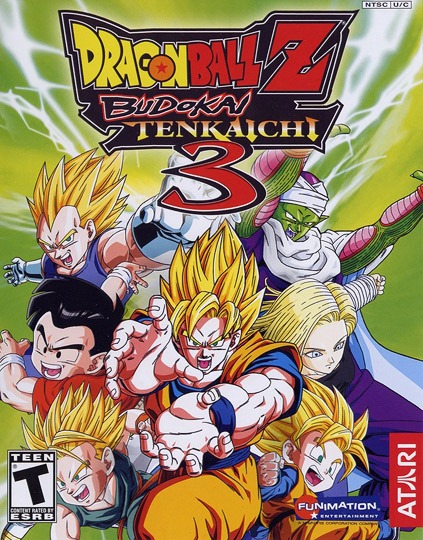
📅 Game released: 2007
Dragon Ball Z: Budokai Tenkaichi 3 is a 3D arena fighter built around high-speed aerial duels, destructive energy attacks, and a huge Dragon Ball roster, but it has no official Windows download. This PC guide explains playing the Wii version through Dolphin or the PS2 version through PCSX2, including lawful disc backups, controller setup, emulator system requirements, and widescreen options.
 By Editor Zero — independently researched, edited, and maintained.
Last updated: 6 November 2026
Last reviewed: 6 November 2026
Table of Contents
- Quick Facts
- Official PC Stores, Download & Installation
- Dragon Ball Z: Budokai Tenkaichi 3 Review
- Pros & Cons
- PC System Requirements
- Frequently Asked Questions
- Similar Games
Dragon Ball Z: Budokai Tenkaichi 3 Quick Facts
- Game: Dragon Ball Z: Budokai Tenkaichi 3 / Dragon Ball Z: Sparking! Meteor (Japan) / DBZ Budokai Tenkaichi 3
- Developer: Spike
- Publisher: Namco Bandai Games (Japan); Atari (North America and Europe)
- Genre: Fighting (3D arena fighter), Multiplayer
- Release: October 4, 2007 (Japan, PS2 and Wii); November 13, 2007 (PS2, North America); December 3, 2007 (Wii, North America); February 15, 2008 (Wii, Europe); no official Windows release
- Platforms: PS2, Wii
- Modes: Single-player, local two-player battles; original Wii online matches discontinued after Nintendo Wi-Fi Connection shut down
- Recommended PC emulation: Wii edition using Dolphin; PS2 edition using PCSX2 is an excellent alternative for PS2 owners
- Version differences: Wii supports Wii Remote, Classic Controller, and GameCube controller layouts; PS2 offers Disc Fusion with original Budokai Tenkaichi 1 or 2 discs
- Engine: Not officially disclosed
- Community: Dragon Ball Z Reddit, Dolphin Forums, PCSX2 Forums
- PC modding: Unofficial emulator-based texture and widescreen patches exist; no official Windows mod tools or Steam Workshop support
- Metacritic score: 73/100 (PS2); 72/100 (Wii)
- IGN score: 8/10 (PS2 and Wii reviews)
- Steam user reception: Not available on Steam
Official PC Store Status, Download & Installation
👇 Dragon Ball Z: Budokai Tenkaichi 3 has no official Windows storefront edition. The routes below explain how to emulate a legitimate copy of the original Wii or PS2 game, where to obtain the emulator software, and why the console version you own matters.
- Official Windows availability: No native PC edition is listed for Steam, Epic Games Store, GOG, or Microsoft Store. The original commercial game was released on PS2 and Wii; Dragon Ball: Sparking! ZERO is a different, newer game, not a Windows edition of Budokai Tenkaichi 3.
- Best choice for most PC users: Start with the Wii version in Dolphin if you have a legitimate Wii copy. Dolphin’s game compatibility documentation rates this title Perfect, it supports ordinary PC gamepads, and a separate proprietary PS2 BIOS is not needed.
- Traditional gamepad controls on Wii: Motion gestures are optional, not compulsory. The Wii release officially supports GameCube and Classic Controller input. In Dolphin, choose Controllers > GameCube Controllers > Port 1 > Standard Controller > Configure, map your Windows gamepad, and use that compatible control mode instead of motion controls.
- Prepare your Wii game copy: Dolphin does not supply the commercial game. Its official Wii-disc backup guide explains how to copy your own Wii disc through a Wii or Wii U in Wii mode using CleanRip and suitable storage. Supported personal-disc formats include ISO and RVZ; follow the guide and applicable local copyright rules.
- Set up Dolphin: Install Dolphin from its official site, add the folder holding your lawfully created Wii game image to the game list, configure the controller, and start the game. Begin with Dolphin’s default graphics settings. Increase the internal resolution gradually if your PC has headroom, but return to native resolution if glow or bloom effects become distorted.
- PS2 alternative: PCSX2 is the recommended emulator for a PS2 copy. It preserves the PS2 controller experience and can access the PS2-only Disc Fusion feature with genuine Budokai Tenkaichi 1 or 2 discs; the feature is not part of the Wii edition. PCSX2’s compatibility records identify Budokai Tenkaichi 3 as playable, although some older tests report occasional graphical artifacts in hardware rendering.
- PS2 BIOS ownership: PCSX2 requires firmware dumped from a PlayStation 2 console you own. It does not include Sony’s BIOS. Follow the emulator team’s official PS2 BIOS dumping instructions; avoid third-party BIOS repositories.
- Prepare your PS2 disc: A backup of an original PS2 disc can be made on a computer using a compatible optical drive. PCSX2 provides an official disc-dumping guide. After importing your own BIOS into PCSX2, add the folder holding the backed-up game and launch it from the emulator’s game list.
- PCSX2 first-run settings: Map your gamepad through PCSX2’s controller configuration and start with the default emulation settings. Vulkan or Direct3D is a sensible Windows graphics starting point when supported by your hardware. Increase the internal resolution cautiously; rendering at a higher resolution does not by itself make a 4:3 game display in true widescreen.
- Local and online battles: The original games support two-player local fighting. The Wii version once offered Nintendo Wi-Fi Connection online battles, but that official service ended in 2014. Dolphin’s separate Netplay feature is an emulator feature, not a restoration of the original Nintendo online matchmaking.
- Game-file responsibility: Neither emulator includes the copyrighted Budokai Tenkaichi 3 game. Anyone seeking game-image files from third-party sites does so independently and bears responsibility for legality and device security; this guide does not recommend, verify, or link to such sources. The documented approach is to make a permitted backup of a genuine game disc you own.
- Ownership and region: A console disc is not a PC license, and emulators do not remove the original game’s copyright restrictions. Keep game images and BIOS backups tied to lawfully owned hardware and media, and ensure any region-specific patches match your actual game revision.
 Download Dolphin Emulator from Its Official Website
Download PCSX2 Emulator from Its Official Website

Dragon Ball Z: Budokai Tenkaichi 3 Review
A thrilling Dragon Ball battle sandbox whose freedom and complexity do not always cooperate.
Most fighting games make distance something to manage carefully. Dragon Ball Z: Budokai Tenkaichi 3 lets a fighter erase it in an instant. One moment, two opponents are facing each other across a rocky wasteland. A few hits later, they are trading blows high above it, with an energy attack ready to send one of them crashing back down. The appeal is obvious to anyone who remembers Dragon Ball’s battles for the sudden reversals as much as the finishing moves. Spike’s third Tenkaichi game gives those moments room to happen rather than confining them to elaborate animations.
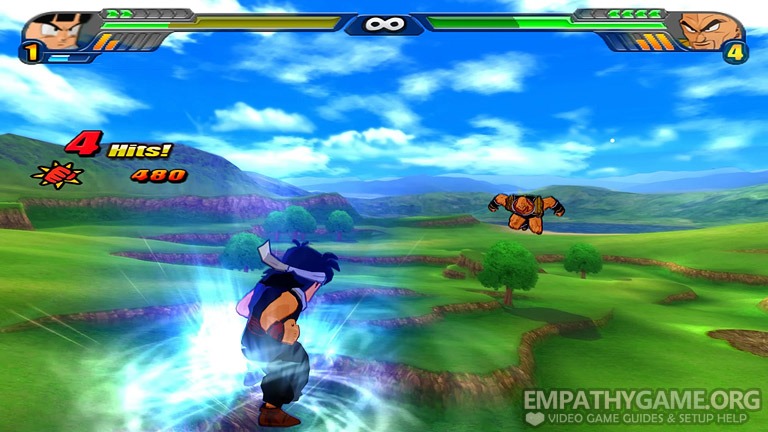
What makes it interesting beyond the spectacle is that so much of the chaos can be influenced. Movement, Ki management, attack timing, and character knowledge all affect how a confrontation unfolds. Uneven explanation and an unreliable camera can obstruct that depth, but the battles reward more thought than their frantic presentation suggests.
Movement Makes the Arena Part of the Fight
BT3’s battles stretch in every direction. Fighters circle from a distance, change altitude, fire small Ki blasts, and close in with Dragon Dash when an opening appears. Even a strong knockback may not end an exchange. With enough Ki, an attacker can pursue the opponent across the arena and continue fighting before they have properly recovered. That momentum feels closer to an anime confrontation than a conventional exchange of turns.
Yet Dragon Dash and powerful techniques consume Ki, so pursuit comes at a cost. Spending everything to keep an opponent under pressure can leave a fighter unable to defend effectively once the initiative changes. Charging Ki presents the opposite risk: it restores offensive options but requires enough space and time to stand still. Against an opponent who is prepared to close the gap, retreating to recharge can be just as dangerous as attacking recklessly.
That gives distance a slightly different meaning from what it has in a conventional fighting game. Being far away is not automatically safe, and knocking someone across the battlefield does not always mean the exchange is over. Wide arenas and breakable scenery sell the spectacle, but rapid changes in elevation demand more from the camera than it can always deliver.
Counters and Combos Reward Deliberate Decisions
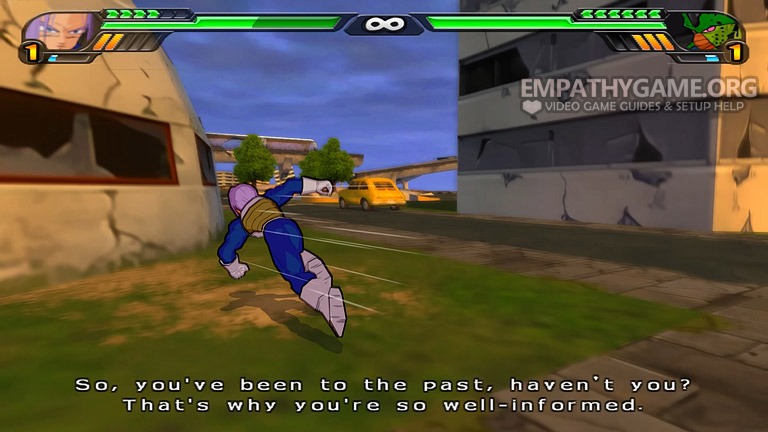
The basic rush attacks are accessible enough to make almost anyone feel powerful. Quick strikes lead to a knockback and an extravagant finishing technique. But the fighting system becomes more interesting when a combo is treated as a series of choices rather than a string to complete as quickly as possible. Ground Slash can leave an opponent vulnerable to further attacks, while Heavy Finish changes the timing and position of the next opportunity. Moves such as Kiai Cannon, Flying Kick, and Rolling Hammer offer different ways to extend pressure or change the angle of an attack.
Piccolo provides a useful illustration. Following Heavy Finish with another melee sequence is one option; creating a little separation for a Blast 2 attack is another. Neither is automatically correct. The opponent’s position and the time left before they recover determine which route makes sense. It rewards deliberate offense, although executing those distinctions consistently can be awkward.
Defense requires similar judgment. A precisely timed Z-Counter can stop a rush, but a successful escape is not necessarily the end of the danger. A sequence of teleports and counterattacks may follow, with offensive reversals spending Ki while a non-attacking vanish has a different cost. A fighter who appears to be winning the defensive exchange can exhaust their resources and end up vulnerable to the final counter. Nor can the initial counter simply be mashed until it works, because failed attempts are subject to a brief cooldown. Timing, restraint, and the amount of Ki left on both sides matter.
There is a genuine learning curve here, particularly against stronger CPU opponents. Predictable downward-slash follow-ups and repeated rush patterns may be interrupted or avoided rather than rewarded indefinitely. Its behavior varies, sometimes feeling more punishing than instructive, but it encourages shorter combos, better energy management, and less predictable follow-ups. BT3 can be very satisfying when those decisions are intentional. It is considerably less satisfying when a crowded camera or demanding input window makes the correct decision difficult to carry out.
The Huge Roster Has More Personality Than Competitive Balance
It is difficult to separate BT3 from the pleasure of browsing its roster. Goku and Vegeta are expected, but Nail, King Cold, Bardock, and Nuova Shenron give the selection a much broader sense of Dragon Ball history. Characters from the original series, Z, GT, and the films can be matched in combinations the stories never considered. Transformations and fusions make those encounters even more entertaining, especially when a fight changes direction after a familiar character takes on a stronger form.
An extensive roster does not guarantee equally varied fighting styles. Many characters rely on similar melee foundations, with their special attacks, animations, and statistics providing much of the difference. That can disappoint anyone expecting each matchup to demand an entirely new strategy. On the other hand, some distinctions become more meaningful once opponents stop behaving alike. Giant fighters resist many grabs and cinematic rush attacks, forcing a different choice of finishing move. Super Saiyan 3 Goku’s Dragon Fist and Tapion’s Brave Sword Attack are notable exceptions that can connect with giants when many comparable techniques cannot.
Those exceptions make learning a character worthwhile without solving the underlying balance problem. A carefully chosen ability can alter a difficult matchup, but not every fighter stands an equal chance competitively. Its strongest purpose is to let players experiment with the characters and confrontations they care about. That is a reasonable priority for this kind of Dragon Ball game.
Dragon History Recreates the Moments, Not the Whole Journey
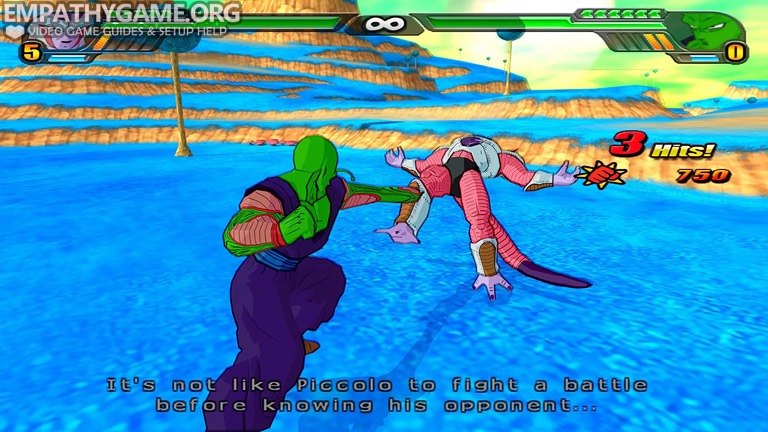
Dragon History takes a different approach from a long, continuous story campaign. It selects recognizable conflicts from the Saiyan, Frieza, Android, and Majin Buu arcs, then reaches into the original Dragon Ball, GT, and the films. Dialogue and scripted developments appear during fights, sometimes advancing a transformation or another familiar event while the player is still controlling a character. It preserves momentum by letting part of the story happen inside the battle rather than another lengthy cutscene.
The cost is context. Compared with the more expansive adventure structure in Budokai Tenkaichi 2, these episodes often move quickly from one major event to the next. Fans can fill the gaps; newcomers may recognize a confrontation’s importance without understanding why it matters.
There is also an interesting boundary to the freedom offered by the combat. During the confrontation with Nappa, for example, defeating him as Tien may change the immediate acknowledgement, but it does not rewrite the events that follow. The campaign returns to the established storyline. The separate What If scenarios deliberately imagine other situations, yet they are authored alternatives, not branching consequences of every unexpected result. Individual victories can change, but the broader narrative stays on course.
Some scripted moments are less successful because they interrupt the fighting for a different kind of challenge. Beam struggles look spectacular as two energy attacks collide, but rotating an analog stick rapidly is not the same skill as reading an opponent or managing Ki. When a clash is built into a story sequence, losing it can feel like failing a test of controller dexterity rather than making a poor combat decision. Sufficient health may allow the fight to continue, but that does not make the interruption any more enjoyable. The moment looks right, but controlling it is another matter.
Presentation Sells the Power, but the Camera Can Lose the Fight
BT3’s cel-shaded presentation works because it understands which details matter during a fast battle. Strong character silhouettes, exaggerated impact effects, bright energy attacks, and debris flying across an arena communicate force more effectively than intricate surface detail would. Familiar voices and emphatic sound effects help distinguish characters, while energetic music keeps matches moving with the urgency of the anime. The constant shouting can become tiring, but the atmosphere remains faithful to the source.
The camera is a more serious compromise. When an opponent rises sharply or vanishes behind a fighter, the viewpoint may struggle to communicate their new position even though targeting remains active. That uncertainty undermines defensive responses that demand precise timing. In local two-player battles, a divided screen makes judging distance and elevation more difficult still. It is a revealing conflict in the design: the arenas offer impressive freedom, yet the player sometimes has to fight for the basic information needed to use it. The biggest obstacle to BT3’s speed is not always the opponent.
Extra Modes Add Depth Alongside Some Unnecessary Friction
There is plenty to do beyond Dragon History. Mission 100 presents themed challenges with particular conditions, Survival puts endurance ahead of a single decisive victory, and Dragon World Tour changes the structure through tournaments and their different rules. Duel offers direct matchups without campaign restrictions. They preserve the combat system while changing what matters across consecutive encounters. Conserving health, choosing a dependable character, or planning for the next opponent becomes more relevant than winning one isolated exchange.
Sim Dragon is especially interesting because its central challenge happens before the fight. A limited preparation period allows training, exploration, and rest, with decisions affecting the character’s condition and attributes. Repeating one type of training is not always productive. Excessive training can lower stats, and improving attack can come at the expense of defense. The result is a small but meaningful trade-off between specialization and readiness. It makes preparation more thoughtful than selecting an upgrade and watching a number rise.
Dragon World Tour has a less convincing kind of uncertainty. Tournaments rotate according to in-game time, while difficulty can vary independently. A completion goal that requires a three-star Yamcha Game tournament may involve repeatedly cycling the available events until the correct combination appears. The real challenge should be winning the tournament, not finding the right one in the schedule.
Customization and Local Duels Keep the Roster Useful
Evolution Z provides a reason to invest in characters beyond their default move sets. Z Points and Potara items allow adjustments to attack, defense, Ki-related abilities, and other strengths, while equipment-slot limits prevent every benefit from being stacked together. A powerful item may take more space than several modest ones, so improving a fighter involves deciding which advantages actually suit the intended strategy. It does not create the depth of an RPG progression system, but it can make an overlooked fighter more interesting to revisit.
Local Duel gives those choices a particularly enjoyable setting. Ordinary team battles encourage improbable combinations, while DP Battle adds a budget by assigning fighters different Destruction Point costs. Filling a team with powerful characters means accepting fewer members; selecting a broader group usually means compromising on individual strength. That turns uneven character balance into a constraint to work around rather than simply a reason to complain.
Against another person, the small habits of combat become easier to appreciate. A predictable dash, an unnecessary Ki expenditure, or a telegraphed counter can matter more than a difference in raw power. That gives familiar matchups a different life from repeated CPU battles without making BT3 perfectly balanced. The rewards eventually thin out, some unlock conditions become tedious, and shared move structures limit how different every character can feel. Building a new team or finding an answer to a rival’s favorite tactic gives the game more staying power than its campaign alone.
Final Verdict
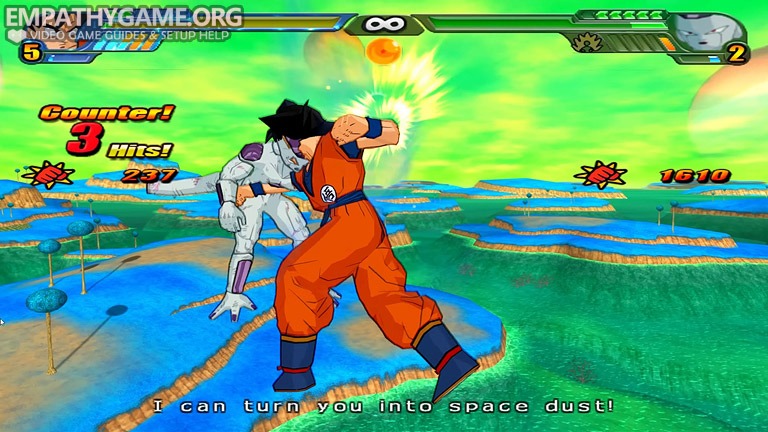
Dragon Ball Z: Budokai Tenkaichi 3 is at its best when a fight changes direction several times before anyone lands the finishing move. A pursuit becomes a counterattack, a defensive teleport costs more Ki than expected, or an unusual character ability turns a seemingly poor matchup into something worth exploring. There is enough mechanical logic beneath the visual excess that these moments do not depend entirely on luck or spectacle. Learning that logic makes the battles considerably more satisfying.
It also makes the shortcomings harder to ignore. The camera can obscure crucial movement, strict timing sometimes clashes with the speed of the action, and the extensive roster shares more mechanical DNA than its presentation suggests. Dragon History favors memorable fragments over a complete narrative, while some unlocks involve more patience with menus than skill in the arena. Players who want carefully balanced competition or a thorough introduction to the Dragon Ball story have good reasons to look elsewhere.
For fans drawn to aerial combat, transformations, unusual matchups, and the freedom to make their own Dragon Ball confrontations, BT3 offers something more lasting than a large character count. It does not always manage its own chaos gracefully. What keeps it interesting is the amount of judgment a player can bring to that chaos, and how differently the same fight can unfold once its systems are understood.
Dragon Ball Z: Budokai Tenkaichi 3 Pros & Cons
- Pro: Expansive Dragon Ball, Z, GT, and movie-era fighter roster with distinct transformations and signature attacks.
- Pro: Fast, free-moving 3D battles capture aerial pursuit, explosive attacks, and large anime-style arenas.
- Pro: Plenty of solo challenges and local versus options support repeated matches and character experimentation.
- Pro: Both original console versions can be played on PC through established emulators with configurable gamepad input and higher internal resolutions.
- Con: Dragon History is less comprehensive than the preceding game’s story mode, with important arcs condensed into selected fights.
- Con: Many roster variations share familiar movement and attack patterns, so fighter count exceeds the number of radically different play styles.
- Con: No official native Windows version or contemporary official purchase/download route for PC players.
- Con: Emulator setup requires a legitimate original game copy; PCSX2 additionally needs a dumped PS2 BIOS, and the Wii’s former online service is unavailable.
Dragon Ball Z: Budokai Tenkaichi 3 PC System Requirements
There are no official native Windows PC system requirements for Dragon Ball Z: Budokai Tenkaichi 3. It was released on PS2 and Wii, so PC hardware needs are determined by the emulator, game settings, and rendering resolution. The figures below come from the emulator projects, not from Spike, Atari, or Bandai Namco as requirements for a PC edition of the game.
Dolphin Emulator — Wii Version
MINIMUM EMULATOR REQUIREMENTS:
OS: Windows 10 version 1903 or newer (64-bit Dolphin build); also supports compatible Linux and macOS systems
CPU: Processor with SSE2 support
GPU: A reasonably modern graphics card supporting Direct3D 11.1 or OpenGL 3.3
Game copy: Personal Wii disc backup created by an authorized method
RECOMMENDED EMULATOR HARDWARE:
CPU: Modern dual-core processor around 3 GHz or better
GPU: Direct3D 11.1 or OpenGL 4.4-capable graphics hardware
Controls: PC gamepad configured as an emulated GameCube controller; original supported Wii controller types are alternatives
Performance: Higher internal rendering resolutions demand additional GPU power; start with default settings
PCSX2 Emulator — PS2 Version
MINIMUM EMULATOR REQUIREMENTS:
OS: Supported Windows 10 build (64-bit); macOS and Linux builds are also available
CPU: x86-64 with SSE4.1, at least four physical cores with SMT, and PassMark single-thread score of 2000 or higher
RAM: 8 GB
GPU: Vulkan 1.1, Direct3D 11, or OpenGL 3.3 capability; PassMark G3D score of at least 600
Additional requirement: A BIOS extracted from your own PS2 and a legitimate copy of the PS2 game
MODERATE EMULATOR REQUIREMENTS:
OS: Windows 11
CPU: x86-64 with AVX2, six physical cores, and PassMark single-thread score of at least 2500
RAM: 16 GB
GPU: Vulkan 1.3, Direct3D 12, or OpenGL 4.6 capability; PassMark G3D score of at least 6000 and 4 GB VRAM
Performance: Appropriate for more demanding rendering configurations; per-game results are not guaranteed
Additional PC Performance and Setup Notes
True 16:9 on the PS2 edition: Budokai Tenkaichi 3’s original presentation is designed around 4:3. PCSX2 distributes a Widescreen Hack for the North American PS2 release SLUS-21678 and European PS2 release SLES-54945 in its bundled patch collection; the exact North American widescreen patch file can be inspected in the official PCSX2 repository. Install an up-to-date PCSX2 build, add your own game backup, then open its game Properties > Patches and enable the applicable widescreen group; PCSX2 also documents the global Apply Widescreen Patches option. Set the output aspect ratio to 16:9 and restart the game. The actual patch alters how the scene is drawn rather than merely stretching a 4:3 image; menus, HUD elements, and visual effects may still have limitations. If your game revision is not recognized or the picture looks wrong, disable the patch and return to 4:3 instead of forcing an unsupported file.
Wii edition display: Dolphin can raise internal resolution, but resolution scaling is not the same thing as expanding the original field of view. The Wii release does not provide dependable native 16:9 presentation; use the original 4:3 aspect ratio for accurate proportions unless you have verified a game-specific widescreen solution. Dolphin’s compatibility notes also report that bloom may render incorrectly at higher resolutions; lowering internal resolution or disabling Scaled EFB Copy can help, but test changes individually.
Control and performance troubleshooting: Check the selected input device before blaming lag on the game. In Dolphin, avoid mapping one physical gamepad simultaneously as both a GameCube controller and Wii Remote. In PCSX2, test the default hardware renderer first and switch to the software renderer temporarily if an effect or background artifact appears. Back up normal in-game save data before experimenting with patches, texture packs, or emulator settings.
Emulator specifications were checked against the Dolphin project documentation and PCSX2 system requirements. Emulation performance varies by hardware, operating system, emulator build, and individual game settings.
Official Trailer
Note: This original-era Wii trailer highlights the game’s 3D battles and anime presentation. The guide above covers the separate steps needed to run an owned Wii or PS2 copy on PC through emulation.
Frequently Asked Questions
Is Dragon Ball Z: Budokai Tenkaichi 3’s story mode open-world like Budokai Tenkaichi 2?
No. Dragon History uses a selection of individual battles rather than the explorable story map found in Budokai Tenkaichi 2. It covers major conflicts from Dragon Ball Z, the original Dragon Ball, GT, and the movies, but condenses many storylines into shorter sequences.
What does the on-screen button prompt during Dragon History battles mean?
It signals a scripted story event that can trigger a transformation, character change, or another development from the anime. Press the indicated button when the prompt appears; on the original PS2 controls, this is generally R3. Some scenarios depend on these events to advance correctly, so simply defeating the opponent is not always the intended objective.
How do you unlock the What If stories in Budokai Tenkaichi 3?
Complete the regular Dragon History scenarios to unlock the additional What If battles. These alternative encounters become available through story progression rather than requiring a hidden action during a particular fight.
How do you unlock more playable characters in Budokai Tenkaichi 3?
Additional fighters become available through Dragon History, certain Dragon World Tour tournament victories, and Dragon Ball wishes. Different characters have different unlock conditions, so completing the story alone will not necessarily fill every slot on the character-selection screen.
How do you collect Dragon Balls and summon Shenron?
Dragon Balls can be discovered by destroying certain buildings, rocks, and other environmental objects during Dragon History battles. Collect seven to unlock the summoning option on the main menu. Depending on the dragon summoned, wishes can award characters, stages, Z Points, or special customization items.
Why does Dragon World Tour only show one tournament?
The main Dragon World Tour rotates its available tournaments according to an in-game clock. Leaving and re-entering the mode advances that clock, allowing different events to appear. Free mode lets you select tournaments directly, but its victories do not provide the same progression unlocks as the main tournament mode.
Why are only 25 battles available in Mission 100?
Mission 100 does not make every challenge available immediately. Additional groups of battles can be unlocked through events in Sim Dragon, including encounters with Bulma while exploring between fights. Progressing through those events gradually expands the mission selection.
How do you unlock Survival mode in Budokai Tenkaichi 3?
Complete 30 challenges in Mission 100 to unlock Survival mode under Ultimate Battle. Survival features extended sequences of opponents, with only limited health recovery between victories, making it more demanding than ordinary single battles.
What is Sim Dragon mode, and how does it work?
Sim Dragon combines battles with a short training and preparation system. You have ten in-game days to improve your fighter, explore, recover, and prepare before facing an opponent. Actions consume time, so the challenge involves deciding how to balance training with recovery and other opportunities.
What does Evolution Z do in Budokai Tenkaichi 3?
Evolution Z lets you customize fighters with Potara items and improve attributes such as attack, defense, and Ki-related performance using earned Z Points. Equipment has slot limits, so stronger items may require sacrificing other upgrades. You can also create character passwords to share customized fighters with other players.
What is the difference between Ki and Blast Stocks?
Ki powers energy attacks and movement techniques such as Dragon Dash, and it can be replenished by charging. Blast Stocks accumulate separately during combat and are used for certain special abilities, transformations, and fusions. Having a full Ki gauge does not automatically mean you have enough Blast Stocks to perform every available action.
How do you fuse Goku and Vegeta during a battle?
Choose compatible versions of Goku and Vegeta together in a team battle and accumulate the required Blast Stocks. When the conditions are satisfied, perform the fusion command shown under the character’s transformation options in the pause-menu Skill List. The same general system applies to compatible pairs such as Goten and Kid Trunks, although available fusions and commands depend on the selected forms.
What is the difference between Team Battle and DP Battle?
Team Battle allows multiple fighters to be selected for a match, with characters switched as the battle progresses. DP Battle adds a Destruction Point budget: powerful fighters cost more points, forcing a choice between a smaller team of strong characters and a larger team of less expensive ones. It is a useful alternative when unrestricted teams feel unbalanced.
Can you use password characters created by other players?
Yes. Evolution Z can generate a password representing a customized fighter, while the Data Center provides the option to enter another player’s character password. Imported password fighters can be used in supported modes such as Duel and training, without requiring an online account or a character-file download.
Does Budokai Tenkaichi 3 support split-screen multiplayer on PC?
Yes, through emulation of the original local two-player versus mode. Configure two controllers in Dolphin or PCSX2, then choose the human-versus-human option in Duel mode. Both players fight on the same PC using the game’s local battle presentation; this is competitive versus play, not a cooperative story campaign.
Can you play Budokai Tenkaichi 3 online after the Wii servers shut down?
The original Nintendo Wi-Fi Connection matchmaking service is permanently discontinued. Dolphin provides a separate Netplay feature that can simulate local multiplayer across computers, but Wii Netplay is experimental and may encounter synchronization problems. It does not restore Nintendo’s original matchmaking service, and participants need their own lawful game copies.
Is Disc Fusion necessary to unlock every character?
No. Disc Fusion is a PS2-exclusive feature that uses discs from the first two Budokai Tenkaichi games to access additional challenge modes. It is not required to unlock the normal playable roster, although its optional battles offer separate rewards. The Wii edition does not include Disc Fusion.
Is Dragon Ball: Sparking! ZERO a remake of Budokai Tenkaichi 3?
No. Dragon Ball: Sparking! ZERO is a newer sequel in the Budokai Tenkaichi series, not a remaster or PC port of the 2007 game. It builds on the original arena-fighting formula with different systems, presentation, modes, and playable content. Buying Sparking! ZERO does not provide a copy of Budokai Tenkaichi 3.
Still have questions? Check the Budokai Tenkaichi 3 GameFAQs community, Dolphin Emulator Forums, or PCSX2 Forums for gameplay discussions, emulator configuration help, and compatibility advice.
Sources & References
Key factual and technical information in this guide was checked against official platform documentation, emulator projects, and established review references, including:
- Nintendo — Budokai Tenkaichi 3 (Wii) — original Wii features, controller support, modes, and European release date
- Metacritic — Budokai Tenkaichi 3 — separate PS2 and Wii critic averages and historical reception
- Dolphin — Game Compatibility List — Wii emulation compatibility assessment
- Dolphin — Ripping Games — copying an owned Wii disc for emulator use
- PCSX2 Wiki — Budokai Tenkaichi 3 — PS2 region identifiers, compatibility reports, and rendering observations
- PCSX2 — System Requirements — emulator hardware tiers and platform compatibility
Similar Games Like Dragon Ball Z: Budokai Tenkaichi 3
- Def Jam: Fight for NY
- Mortal Kombat 9 Komplete Edition
- Mortal Kombat 11
- Transformers: Devastation
- Metal Gear Rising: Revengeance
- The Matrix: Path of Neo

Found something worth playing through DecideGame?
DecideGame.com is an independent gaming project run by Editor Zero. If this guide helped you discover a game, solve a problem, or find useful information, you can support DecideGame.com and help keep new and updated game guides coming.
DecideGame — PC Game Guides, Reviews & Setup Help