
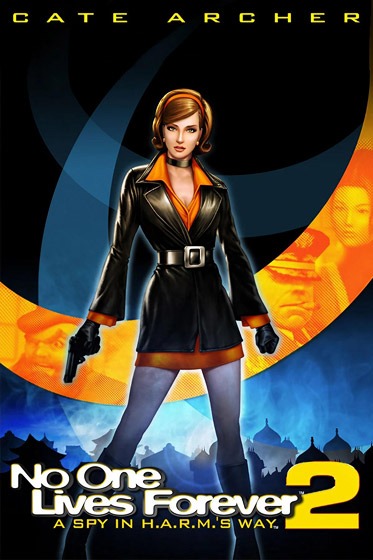
📅 Game released: 2002
Use this updated 2026 No One Lives Forever 2 PC guide to check official download availability, understand original-disc ownership and installation, review system requirements, and explore Windows 10/11 compatibility, NOLF 2 Modernizer, widescreen support, multiplayer, and co-op before returning to Cate Archer’s Cold War espionage adventures.
 By Editor Zero — independently researched, edited, and maintained.
Last updated: 14 October 2026
Last reviewed: 14 October 2026
Table of Contents
- Quick Summary
- Quick Facts
- Official PC Stores, Download & Installation
- No One Lives Forever 2 Review
- Pros & Cons
- PC System Requirements
- Frequently Asked Questions
- Similar Games
No One Lives Forever 2 Quick Summary
✔ A story-driven first-person shooter set in a stylized 1960s Cold War, following British secret agent Cate Archer as she investigates a dangerous Soviet project while battling the eccentric criminal organization H.A.R.M.
✔ Stealth and gunplay share the spotlight across international missions, with disguises, unusual spy gadgets, enemy distractions, intelligence documents, environmental hazards, and character skill upgrades encouraging different approaches.
✔ Similar to The Operative: No One Lives Forever through its 1960s espionage atmosphere, first-person combat, spy gadgets, witty dialogue, international locations, and the continuing adventures of Cate Archer.
✔ The original Windows version remains a native PC game, but no authorized modern digital storefront purchase was verified. Existing owners can use their original installation media, although older disc protection and Windows compatibility issues may require attention.
✔ The game includes a separate cooperative campaign for up to four players and competitive multiplayer modes, while community projects such as NOLF 2 Modernizer offer unofficial improvements for modern displays, controls, and multiplayer connectivity.
✔ Players looking for a humorous single-player FPS with memorable characters and varied missions will find its design distinctive, although dated technology, occasional frustrating enemy behavior, and limited official availability complicate a return.
No One Lives Forever 2 Quick Facts
Official PC Store Status, Download & Installation
👇 Use the notes below to understand No One Lives Forever 2’s official PC availability, legitimate ownership options, original-disc installation, and modern Windows compatibility without relying on unauthorized game-file sources.
- Official PC availability: No One Lives Forever 2 originally launched as a commercial Windows PC game, but no authorized purchase or installation listing was verified on Steam, GOG, Epic Games Store, or Microsoft Store. The absence of a modern storefront release means there is no normal official digital purchase-and-download process for new buyers.
- Original retail copies: The original Windows edition was distributed on two CDs. A complete, legitimately obtained physical copy is the clearest documented ownership route, although used-disc availability, condition, regional editions, serial information, and compatibility can vary. A used retail copy is not equivalent to receiving a Steam or GOG library entitlement.
- GOG Dreamlist: The game has a GOG Dreamlist entry where fans can express interest in its preservation and return. This is a community request page, not confirmation that GOG sells the game, has secured its distribution rights, or will release it.
- Licensing and ownership: The No One Lives Forever series has faced longstanding publishing and intellectual-property complications that have obstructed a modern commercial rerelease. Its absence from stores does not make the game public domain or establish permission for unauthorized redistribution.
- Retail installation: With an original Windows copy, the documented installation process begins by inserting Disc 1, launching its setup program, following the InstallShield prompts, and supplying the required installation media. The original manual describes Minimum and Typical installations, with Typical copying more data to the hard drive to reduce reliance on disc access during ordinary gameplay.
- Legacy disc protection: Original Windows retail releases used SecuROM protection, with versions differing by region. Legacy authentication components may not work correctly on Windows 10 or Windows 11. An original disc, successful file installation, or a community display fix does not guarantee that the game’s original authentication will function on a modern system. This guide does not provide methods for bypassing copy protection.
- Original publisher updates: Sierra released updates and additional multiplayer content for the retail Windows game, including Team Deathmatch, Doomsday, and additional maps. An archive of the original Sierra retail update is maintained by the PCGamingWiki community. This update is not a replacement for the commercial game and does not itself provide a valid game installation.
- Windows compatibility and Modernizer: Owners with a functioning installation can investigate NOLF 2 Modernizer, a community-maintained project providing widescreen support, input improvements, selected crash fixes, and multiplayer enhancements. It is unofficial, may require game-specific configuration, and does not include the commercial game. Back up the installation and save files before applying modifications.
- Multiplayer access: Original cooperative and competitive modes supported LAN and internet play, but the historical GameSpy service is discontinued. Modern multiplayer may require community-maintained networking tools, compatible game versions, direct-IP connections, or private LAN arrangements. Do not assume that the original public server browser or matchmaking service still functions.
- Mac and handheld versions: MacPlay published an original Mac OS X version, but that historical port should not be mistaken for a supported modern Apple Silicon release. There is also no Steam edition or Valve Steam Deck compatibility classification, and playing on a handheld involves separate unofficial compatibility considerations.
 Get the Archived Original Sierra Game Update

No One Lives Forever 2: A Spy in H.A.R.M.’s Way Review
Sharper stealth and irresistible spy-film wit meet a campaign that sometimes mistakes searching for intrigue.
There is something wonderfully undignified about being an elite secret agent who must contend with armed mimes, a ninja clan and a tornado in an Ohio trailer park. No One Lives Forever 2: A Spy in H.A.R.M.’s Way embraces that absurdity without abandoning the satisfaction of a well-planned infiltration. Cate Archer’s second assignment combines a story-led first-person shooter with patient surveillance, improvised gadgets and firefights that can erupt after one carelessly opened door.
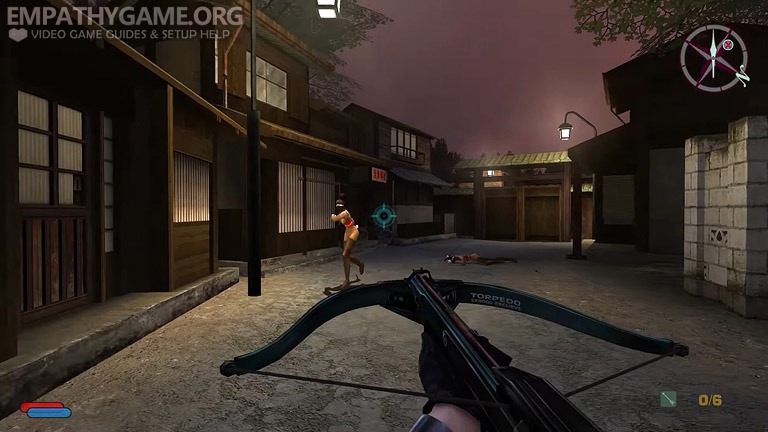
Monolith’s most important improvement over The Operative: No One Lives Forever is not the bigger collection of weapons or more expressive characters. It is the freedom to recover when stealth fails. Guards look for Cate rather than possessing permanent knowledge of her position, and many encounters can shift from observation to panic and back to concealment. The spell breaks when it demands an obscure item, interrupts an action sequence with clumsy mechanics or forces a fight that sidelines careful specialization. Yet its blend of tactical curiosity and absurd personality is hard to mistake for another shooter.
Stealth Works Because Being Spotted Is Not the End
A typical infiltration begins before the first shot. Guards have activities to watch, corridors to patrol and conversations worth overhearing. Some work or rest while colleagues patrol, making it worthwhile to learn a route rather than eliminate everyone. Side passages, cover and controllable lighting make that reconnaissance useful. Cate can lean around corners, extinguish or shoot out lights, and move bodies away from a path where another guard might discover them.
The sequel’s detection system gives these choices convincing consequences. Footsteps are not equally discreet on every surface: crossing gravel is more conspicuous than creeping across grass, while a disturbed bottle can betray an otherwise cautious approach. In Siberia, footprints left in the snow provide another clue for patrolling soldiers. Even staying in darkness is not an absolute guarantee of safety. Concealment feedback can improve as Cate remains hidden, but firing a weapon or making noise while reloading can expose her at precisely the moment she expects to be protected. A dark corner is a chance to disappear, not permission to behave noisily.
Once a guard becomes suspicious, the system is at its best. An alerted soldier may investigate a sound, inspect a fallen colleague, switch on a light or search a nearby hiding place. Others can approach from a side route instead of obligingly advancing into the player’s sights. Getting caught therefore produces a new decision: fight through the patrol, lay a distraction, or break line of sight and wait for the search to subside. Alertness tends to remain local rather than instantly spreading across an entire mission, so a messy encounter need not ruin the next area.
That flexibility is not flawless simulation. Enemies can be inconsistent about how easily they lose Cate, and alarms or repeated reinforcements sometimes make retreat feel less practical than simply clearing the room. Direct shooting is serviceable rather than exceptionally precise, particularly when several opponents are attacking at once. Higher difficulty settings also increase the cost of a mistake. Still, the important change is structural: the game generally treats detection as a complication to manage instead of an immediate demand to reload a save.
Inventive Gadgets Cannot Entirely Replace Preparation
Cate’s equipment provides the other half of the stealth puzzle. A silenced pistol or crossbow makes careful removal of a sentry possible, but the more distinctive tools seem to have escaped from a deliberately silly espionage laboratory. Banana peels and bear traps can interrupt pursuit; the explosive robotic cat turns an enemy’s curiosity into a hazard. A lipstick camera and a compact-style code breaker disguise practical tools as everyday accessories. These are more than visual jokes when they solve problems that bullets would handle noisily.
Gadgets also encourage a different way of reading a room. A useful escape route is not merely the shortest corridor; it may be the passage where a trap can delay pursuers long enough for Cate to vanish. A lock or security device becomes a calculated exposure because interacting with it takes time. The best moments make equipment, patrol timing and environment work together, while the weaker encounters reduce the arsenal to amusing alternatives to a faster gunshot. Plenty of tools are entertaining without being equally essential.
Oddly, the sequel is less convincing about how a professional spy prepares for a mission. The first game allowed equipment selection before deployment. Here Cate receives a predetermined starting loadout and often finds additional UNITY supplies in the field, sometimes including the very gadget needed to advance. The resulting hunt can feel contrived: rather than choosing the right equipment for a known assignment, a supposedly prepared operative must search an already hostile site for something her own organization left behind. Removing pre-mission selection streamlines the adventure, but it also reduces the pleasure of planning a second approach with an entirely different kit.
International Missions Alternate Between Inspiration and Busywork
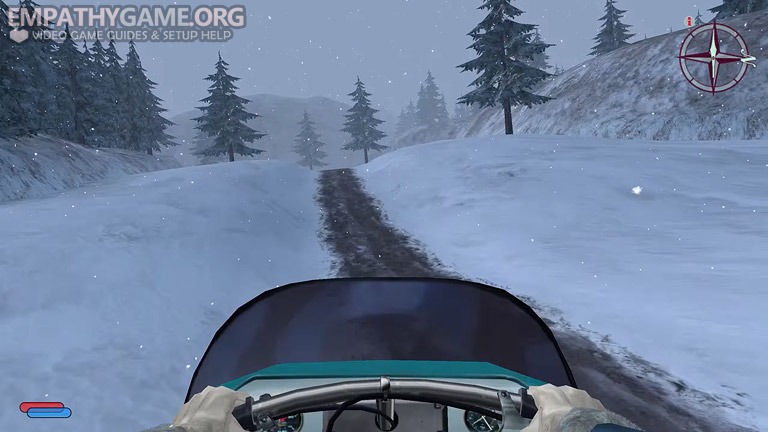
The campaign continually changes location and, more importantly, the sort of trouble Cate faces. A Japanese village occupied by Isako’s ninjas calls for awareness of close routes and sudden attacks. Snow-covered Siberian compounds make signs of movement unusually visible. Crowded Indian streets encourage a different pace from enclosed military installations, while an Ohio trailer park becomes the setting for an extraordinary collision of assassins and violent weather. Their layout and atmosphere change the pace rather than just the scenery.
The most memorable set pieces understand when to abandon routine espionage. Fighting ninjas as a tornado tears through the trailer park is preposterous, yet the spectacle works because it commits completely to the game’s spy-movie logic. An Antarctic research base creates almost the opposite effect. With Magnus Armstrong involved, an encounter centred on a single pursuing super-soldier turns investigation and escape into something approaching survival horror. Its threat comes less from complicated attacks than from how little comfort ordinary tactics provide. Later action-heavy appearances of similar enemies can diminish that initial menace: a threat made unsettling through isolation loses something once it becomes another combat obstacle.
Not every change of pace survives contact with its controls. The Siberian snowmobile sequence promises a fast escape across hostile terrain, but incoming fire can make stopping to eliminate distant enemies safer than maintaining speed. Awkward impacts and turning further undermine the feeling of a flowing chase. The promised momentum gives way to cautious stopping and shooting.
Less spectacular but more persistent are the searches for mission-critical objects. Chapters connect multiple areas, and some objectives legitimately reward noticing a clue, remembering a locked route or returning with the proper gadget. Others merely send Cate back through rooms to locate a small item or supply package she could easily have missed. With searching already central to the play loop, it matters whether the hunt feels like investigation or rummaging. The fantasy of resourceful espionage falters when progress depends on one unexamined drawer.
Cate Archer Keeps the Spy Spoof Grounded
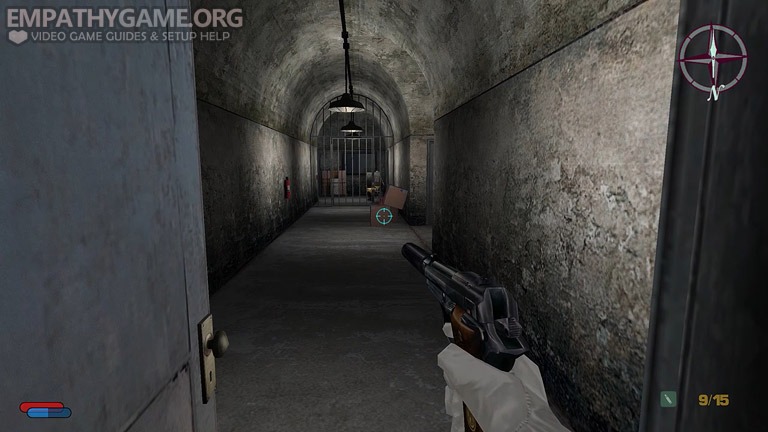
At the centre of this wandering adventure is Cate herself, a capable UNITY operative facing H.A.R.M.’s elaborate schemes and a Soviet-linked threat with international consequences. Isako gives the conflict a more personal edge, while returning faces and new eccentrics crowd the margins of a conspiracy that takes itself just seriously enough to hold together. Cate is the essential counterweight. She responds to the danger as a professional even when everyone around her seems to be auditioning for the least sensible espionage film ever made.
Much of the writing’s pleasure comes from moments that do not advance the central plot. H.A.R.M. henchmen argue, gossip and complain during their shifts, making eavesdropping an entertainment in its own right. Waiting to hear a conversation can be as rewarding as finding a safer passage, and the fact that those same speakers may investigate a stray noise gives their routines unusual coherence. The shorter cutscenes keep the story from swallowing the play, while expressive faces, exaggerated costumes and lively voice performances help jokes land without constant explanatory dialogue.
The sequel does not always integrate those tones as gracefully as the original. Some stretches play like relatively conventional military action, followed by a broad comic interruption or a sudden serious development. The scenes themselves work better than some of the transitions between them. That unevenness is worth recognizing, but the overall presentation remains distinctive. Bright period colour, animated character expressions and a soundtrack that moves between orchestral suspense and playful lounge-style music make the setting recognizable even when the actual mission is ordinary.
Skill Upgrades Reward Curiosity but Complicate Specialization
The eight-skill system gives the abundant intelligence files a practical purpose. Completing objectives, optional assignments and document hunts earns points that improve abilities including Stealth, Marksmanship, Weapons, Search, Gadgets, Stamina, Armor and Carrying. The changes are tangible rather than merely statistical decoration. Better Search reduces the time spent exposed over a desk or body; Gadgets makes certain interactions faster; Stealth softens the noise of Cate’s actions and helps her escape pursuit. Marksmanship improves shot placement, while Weapons strengthens the effectiveness and handling of the firearms she sometimes has no choice but to use.
This creates an appealing tension between quick progress and thorough investigation. Stopping to inspect an office might earn a future upgrade, but every extra moment near a patrol risks detection. Investing in Search or Gadgets can then shorten those vulnerable interruptions on later missions. Exploration thus shapes how Cate operates rather than merely raising a completion percentage.
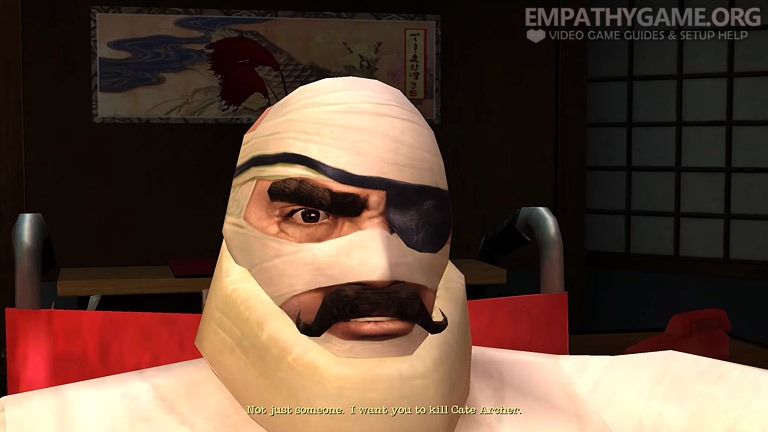
There is a catch to focusing entirely on quiet play. The campaign contains confrontations and boss encounters where slipping past opponents is not an option, and a Cate built almost exclusively around stealth may have fewer useful advantages once the shooting starts. Health, protection and fighting skills have broader value in these compulsory battles. That does not make Stealth a wasted investment: quieter movement and faster escapes substantially improve the missions designed to reward patience. It does mean the game encourages specialized approaches more enthusiastically than its toughest fixed encounters consistently support. A balanced build is the less risky choice, even if an all-in stealth approach sounds more faithful to Cate’s occupation.
Replay Value Comes from Tactics More Than Different Outcomes
The story follows a fixed path, with no major branching decisions to uncover on a return visit. What can change is the route through a familiar encounter: bypass a patrol instead of eliminating it, invest points in faster searches rather than more damaging weapons, or turn a failed infiltration into a deliberate distraction. The locations with interconnected routes support these experiments best. Because equipment is largely assigned by the mission, however, repeat attempts offer less freedom to reinvent Cate’s starting kit than the first game did.
The separate four-player cooperative campaign has a more concrete reason to exist than a simple replay of the single-player missions. It adapts locations for team-based operations and includes objectives that demand division of labour. In one scenario, an operative carrying an unconscious Cate cannot simultaneously defend themselves with a readied weapon, so the others must provide cover while the group moves to safety. What would be a simple escort becomes a shared problem of protection and movement. The compact campaign works best when its objectives demand coordination rather than merely more gunfire.
Final Verdict
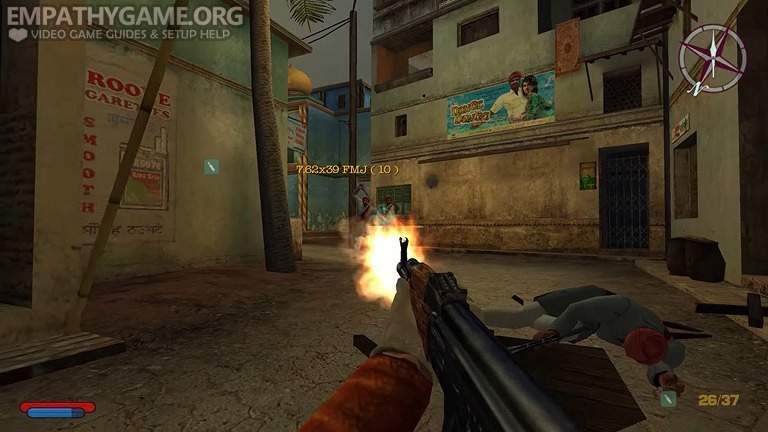
No One Lives Forever 2 remains compelling because it understands that a spy adventure is strongest when observation, uncertainty and improvisation matter as much as marksmanship. Sneaking past a guard who is busy with an everyday task, managing the noise of an apparently safe movement or retreating into darkness after a botched encounter provides a more distinctive thrill than another exchange of gunfire. The bizarre gadgets, international locations and deadpan dialogue keep those quieter stretches full of personality, while Cate supplies a credible centre to the chaos.
The game is not as flexible as its best systems initially suggest. Required item hunts interrupt the rhythm, prescribed equipment weakens preparation, occasional vehicle sequences struggle with their own spectacle, and unavoidable fights can punish narrowly stealth-oriented upgrades. Its shifting mixture of comedy, conventional action and ominous science fiction is memorable without always being perfectly balanced. These shortcomings are most noticeable when the level design stops rewarding decisions and starts insisting on one specific solution.
For anyone who wants a tightly authored FPS that still allows room to sneak, improvise and laugh at the absurdity of its villains, Cate Archer’s second mission has much to offer. Those seeking consistently polished gunplay, fully open-ended stealth or uninterrupted action may find its older adventure-game habits frustrating. At its best, though, No One Lives Forever 2: A Spy in H.A.R.M.’s Way does something rarer than simply letting a player feel powerful: it makes being observant, resourceful and occasionally ridiculous feel like the job.
No One Lives Forever 2 Pros & Cons
No One Lives Forever 2 PC System Requirements
The following are the original Windows PC hardware requirements from the North American Sierra retail manual. They describe the supported computers and operating systems at the time of release, not officially tested requirements for Windows 10, Windows 11, or modern handheld PCs.
ORIGINAL OFFICIAL WINDOWS PC REQUIREMENTS:
MINIMUM:
OS: Windows 98, Windows ME, Windows 2000 with latest service pack, or Windows XP
CPU: Intel Pentium III 500 MHz or equivalent
RAM: 128 MB (256 MB for Windows XP)
GPU: 32 MB Direct3D-compatible graphics card with hardware Transform & Lighting (T&L), 32-bit color support, and DirectX 8.1-compatible driver
DirectX: DirectX 8.1 or higher
Storage: 1.2 GB of free hard-drive space for the minimum installation, plus additional space for Windows swap files and saved games
Optical Drive: 4x CD-ROM drive
Sound Card: 16-bit DirectX 8.1-compatible sound card
Network: 56K modem or LAN for multiplayer
Input: Keyboard and mouse
RECOMMENDED:
OS: Windows 98, Windows ME, Windows 2000 with latest service pack, or Windows XP
CPU: Intel Pentium III 1 GHz or equivalent
RAM: 256 MB
GPU: 64 MB Direct3D-compatible graphics card with hardware T&L, 32-bit color support, and DirectX 8.1-compatible driver
DirectX: DirectX 8.1 or higher
Storage: 1.6 GB of free hard-drive space for the typical installation, plus additional space for Windows swap files and saved games
Optical Drive: 4x CD-ROM drive
Sound Card: 16-bit DirectX 8.1-compatible sound card with EAX 2.0 support
Network: Cable modem or LAN for multiplayer
Input: Keyboard and mouse
Regional requirements note: Another original English-language retail manual lists approximately 1.4 GB minimum and 1.7 GB recommended storage. The figures can therefore differ by regional packaging or manual edition. Allow additional room for save files, updates, and optional community modifications.
Additional PC Performance and Setup Notes
Windows 10 and Windows 11: Modern processors and graphics cards generally exceed the game’s original performance requirements by a substantial margin, but hardware power alone is not a guarantee of compatibility. The primary difficulties concern older disc authentication, the original Direct3D rendering environment, input behavior, display modes, and the way legacy software interacts with newer Windows versions. No official Windows 10 or Windows 11 hardware requirements were published for the original retail product.
Widescreen and display scaling: The original game was designed around older display conventions. NOLF 2 Modernizer adds widescreen resolution handling, field-of-view controls, and related display improvements. It also includes options for retaining the original 4:3 presentation of cutscenes. These changes are unofficial and should be tested against the installed game version rather than assumed to work identically with every release.
Frame rate and animations: Higher frame rates are not automatically an improvement in this engine. Community technical documentation identifies cases where very high frame rates can affect weapon animation, movement timing, and scripted behavior. Start with conservative display and frame-rate settings and confirm that mission sequences, animations, and interaction timing behave correctly before experimenting with unlocked frame rates.
Mouse, keyboard, and controllers: Mouse and keyboard remain the most natural control scheme for the original Windows edition. Modernizer rewrites parts of the game’s input handling and offers improved gamepad compatibility, although controller support can still involve additional configuration. Expect less controller-oriented interface behavior than in modern console-first shooters.
Save files and backups: The Windows game stores single-player save data in a Save\Player\SinglePlayer subfolder beneath the game installation directory. Configuration files such as autoexec.cfg and display.cfg are also associated with the installation. Back up these files before changing mods, reinstalling the game, or moving between computers. Community tools are not an official cloud-save service.
Unofficial modification safety: Community fixes may be useful, but they are not maintained by the original publisher. Prefer identifiable project repositories or reputable technical communities, read compatibility instructions, and avoid applying multiple overlapping modifications simultaneously without checking for conflicts. Do not assume that an older executable or unfamiliar installer is safe merely because it claims to fix a classic game.
Video Trailer
Frequently Asked Questions
Is No One Lives Forever 2: A Spy in H.A.R.M.’s Way worth playing in 2026?
Yes. No One Lives Forever 2 remains an excellent choice for players who enjoy humorous Cold War espionage, inventive spy gadgets, stealth, varied shooting encounters, and memorable characters. Its aging technology and difficult official availability are significant drawbacks, but its unusual mission design and personality still distinguish it from more conventional first-person shooters.
Do I need to play the first No One Lives Forever before No One Lives Forever 2?
No. The sequel introduces its main conflict clearly enough for newcomers, although playing The Operative: No One Lives Forever first makes Cate Archer’s relationships, returning villains, and references to earlier events more meaningful. The second game also expands the original’s stealth systems, enemy behavior, graphics, and character progression.
Is Contract J.A.C.K. part of No One Lives Forever 2?
No. Contract J.A.C.K. is a separate spin-off released after No One Lives Forever 2, with a story set between the two main games. It follows H.A.R.M. operative John Jack rather than Cate Archer and emphasizes direct combat more heavily. Playing it is not required to understand the sequel.
Is No One Lives Forever 2 open-world or mission-based?
It is a story-driven, mission-based FPS rather than an open-world game. Cate travels through distinct environments in Japan, Siberia, India, Ohio, and other locations, with objectives spread across interconnected scenes. Some missions allow backtracking between areas, but there is no continuous world to explore freely.
Can you complete No One Lives Forever 2 using stealth instead of fighting?
Many encounters support stealth, but the complete campaign cannot be finished as a strict nonviolent or undetected playthrough. Players can hide, avoid patrols, disable security devices, use distractions, and conceal bodies, while other missions require combat or scripted confrontations. Certain objectives also prohibit killing civilians or demand that Cate avoid detection.
How does the hiding system work in No One Lives Forever 2?
Cate can hide in designated dark corners, doorways, closets, and other concealed spaces. When she enters a suitable location unseen and stops moving, a purple hiding indicator appears and gradually fills until she is concealed. If an enemy already sees her entering the hiding spot, she must first break line of sight before hiding can work.
How do enemy alarms and security cameras work?
Guards may investigate suspicious noises, discover bodies, alert nearby enemies, or activate alarms that summon reinforcements. Security cameras give Cate a short opportunity to leave their field of view, but destroying a camera can immediately trigger an alarm. The CT-180 Utility Launcher provides camera-disabling ammunition for a quieter approach.
Why do enemies keep respawning in No One Lives Forever 2?
Some missions continuously introduce replacement guards or reinforcements, particularly around guarded facilities and alarm-sensitive areas. Eliminating every enemy is therefore not always a practical strategy. Focus on completing objectives, disabling threats when possible, and moving through the area rather than repeatedly clearing the same patrol route.
Can Cate Archer hide or move unconscious enemy bodies?
Yes. Cate can search fallen enemies and carry unconscious or dead bodies into less visible areas to prevent patrols from discovering them. The default Move Body key is G, although she cannot run, jump, or fire weapons while carrying someone without first dropping the body.
How do you earn skill points in No One Lives Forever 2?
Skill points are awarded for completing objectives, achieving optional mission goals, recovering intelligence, and other exploration-related accomplishments. They can be spent on eight skills covering stealth, marksmanship, stamina, armor, carrying capacity, searching, gadgets, and weapons. Thoroughly investigating offices, containers, and mission areas can improve Cate’s development.
Which skills should beginners upgrade first in No One Lives Forever 2?
Marksmanship is a useful early choice for improving weapon accuracy, while Stealth reduces the noise Cate makes and helps her escape detection. Stamina can make difficult firefights more forgiving, and Searching reduces time spent examining bodies and documents. The best priorities depend on whether you prefer careful infiltration or direct combat.
What should I do if I cannot find a mission objective?
Check the Mission Briefing for updated objectives and restrictions, then inspect the Inventory and Intelligence screens for keys, documents, and clues. Cate’s transmissions frequently explain nearby obstacles, and the default T key can display recent messages. Some missions require returning to an earlier scene after obtaining a particular item or completing another objective.
How do you know which spy gadget to use on a locked object?
The interaction prompt provides an important clue: orange text generally indicates an available action, while gray text means another item or condition is required. Different obstacles may require tools such as the lockpick, code breaker, camera equipment, or another mission-specific gadget. Aim the appropriate tool at the relevant part of the object and check whether its interaction becomes available.
Can you change the difficulty during No One Lives Forever 2?
Yes. Difficulty can be changed through the Game Options menu without restarting the entire campaign. Normal is the original manual’s recommended starting point, and adjusting the difficulty is useful if a stealth-heavy mission or combat encounter becomes frustrating.
Does No One Lives Forever 2 have quicksave and manual saving?
Yes. The original Windows controls use F6 for quicksave and F9 for quickload, and the game also supports named manual saves. Automatic saves are created at the beginning of scenes, so keeping additional manual saves is advisable before difficult encounters or important mission decisions.
How long does it take to finish No One Lives Forever 2?
A typical main-story playthrough takes approximately 10–15 hours, depending on difficulty, exploration, and familiarity with the missions. Searching thoroughly for intelligence, completing optional objectives, and replaying difficult sections can extend that considerably. The separate cooperative and competitive modes provide additional playtime.
Can you play the entire Cate Archer campaign in co-op?
No. The original cooperative mode contains its own missions in which up to four players control UNITY agents performing operations connected to Cate’s adventures. These missions take place around events in the main story rather than simply allowing several players to control Cate in the standard single-player campaign.
Can teammates revive each other in No One Lives Forever 2 co-op?
Yes. A downed UNITY agent can be revived when another player approaches and activates them, although the revived character returns with very little health. Players can also respawn, but doing so can mean losing collected weapons, ammunition, skill points, and other items. Cooperation is especially important because everyone must gather at rally points before the team can move into the next scene.
Does No One Lives Forever 2 support split-screen or couch co-op?
No. The original PC game does not provide split-screen multiplayer or simultaneous local play on one computer. Cooperative sessions require separate computers connected through a supported network arrangement, such as LAN or an appropriately configured online connection.
Can No One Lives Forever 2 multiplayer be played over LAN?
Yes. The original Windows release includes LAN hosting and joining for cooperative and competitive multiplayer. Players need compatible game installations and network settings, while optional community modifications may introduce additional compatibility requirements.
What multiplayer modes does No One Lives Forever 2 include besides co-op?
The game also offers Deathmatch, Team Deathmatch, and Doomsday through its original multiplayer additions. Doomsday is a team-based objective mode in which players compete to collect the components of a doomsday device and assemble them at their base. These competitive modes are separate from the cooperative UNITY missions.
Are the original No One Lives Forever 2 multiplayer servers still online?
The original GameSpy-backed online service is discontinued, so the historical public server browser cannot be relied upon. Community projects, including NOLF 2 Modernizer with OpenSpy integration, provide replacement server-discovery options. Finding a playable session still depends on compatible versions, community-hosted servers, and other players being available.
Is No One Lives Forever 2 available on Steam or GOG?
No authorized Steam or GOG purchase listing has been verified for the original game. Its GOG Dreamlist entry allows players to express interest in a rerelease, but it does not provide ownership or installation access. The official store-status section above explains the original retail-copy situation in greater detail.
Can you play No One Lives Forever 2 offline?
Yes. The original single-player campaign does not require an active internet connection or the discontinued GameSpy service. However, an installed retail copy must still satisfy its original launch and disc-authentication requirements, which may present compatibility problems on modern Windows systems.
Does No One Lives Forever 2 work on Windows 10 and Windows 11?
It can work on modern Windows systems, but compatibility is not guaranteed. Legacy disc protection, the original DirectX-era renderer, display settings, and older input behavior can prevent an otherwise capable computer from launching or running the game correctly. NOLF 2 Modernizer can address several game-related issues, but it does not guarantee that every original retail edition will authenticate successfully.
Can No One Lives Forever 2 be played with an Xbox or PlayStation controller?
Controller play is possible, although keyboard and mouse remain the most straightforward option. NOLF 2 Modernizer provides an updated input system and improved gamepad handling, but its controller implementation has limitations, including menu navigation and certain bindings. Players may need to configure additional inputs manually.
What should I check if No One Lives Forever 2 crashes or shows a DirectX error?
First identify whether the problem occurs during installation, original disc authentication, or graphics initialization, since these require different solutions. If the installed game can launch normally, check its display settings and the compatibility notes for your exact retail edition and any installed Modernizer components. Avoid combining several unrelated fixes or using unfamiliar replacement executables, and back up the game configuration before making changes.
Why can movement or weapon animations behave strangely at high frame rates?
Some gameplay behavior in the original LithTech Jupiter engine can become inconsistent when the game runs far above its intended frame-rate range. Excessive frame rates have been associated with unusually slow movement, especially when crouching, and other timing-related problems. Using a conservative frame-rate limit is a sensible first troubleshooting step when these symptoms appear.
Still have questions? Check the No One Lives Forever Reddit community, UnityHQ community forums, or NOLF 2 Modernizer issue tracker for additional gameplay discussions, legacy multiplayer assistance, and community-supported PC troubleshooting.
Sources & References
Key factual and technical information in this guide was checked against relevant original documentation, established gaming publications, and community technical resources, including:
- Original No One Lives Forever 2 Retail Manual — original Windows system requirements, CD installation, game controls, single-player structure, and cooperative multiplayer documentation.
- PCGamingWiki — No One Lives Forever 2 — retail copy protection, save locations, modern Windows compatibility, widescreen support, input behavior, and multiplayer limitations.
- NOLF 2 Modernizer — Project Repository — developer-maintained documentation for the unofficial widescreen, controller, graphics, stability, and multiplayer improvements.
- GOG Dreamlist — No One Lives Forever 2 — the game’s community preservation/request listing, distinguished from an authorized commercial store release.
- Metacritic — No One Lives Forever 2 — original Windows PC critical reception and aggregated review score.
- GameSpot — No One Lives Forever 2 Multiplayer Additions — historical verification of Sierra’s competitive Team Deathmatch and Doomsday modes and associated multiplayer content.
Similar Games Like No One Lives Forever 2
- The Operative: No One Lives Forever
- 007: Nightfire
- 007 First Light
- 007: Quantum of Solace
- Tom Clancy’s Splinter Cell: Chaos Theory
- Hitman World of Assassination



Found something worth playing through DecideGame?
DecideGame.com is an independent gaming project run by Editor Zero. If this guide helped you discover a game, solve a problem, or find useful information, you can support DecideGame.com and help keep new and updated game guides coming.
DecideGame — PC Game Guides, Reviews & Setup Help