
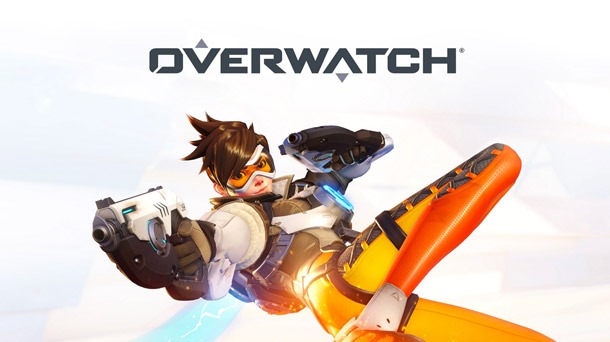
📅 Game released: 2016
Overwatch 1 is Blizzard’s original six-versus-six hero shooter, built around distinct tanks, damage heroes, supports, and objective-based team fights. The standalone 2016 game is retired; this PC guide explains its official download status, how to access the continuing free-to-play Overwatch through Battle.net or Steam, account and phone-number rules, system requirements, and Steam Deck compatibility.
 By Editor Zero — independently researched, edited, and maintained.
Last updated: 14 November 2026
Last reviewed: 14 November 2026
Table of Contents
- Quick Facts
- Official PC Stores, Download & Installation
- Overwatch 1 Review
- Pros & Cons
- PC System Requirements
- Frequently Asked Questions
- Similar Games
Overwatch 1 Quick Facts
- Game: Overwatch (2016) / Overwatch 1 / Origins Edition / Game of the Year Edition / Legendary Edition
- Developer: Blizzard Entertainment
- Publisher: Blizzard Entertainment
- Genre: First Person Shooter, Multiplayer (hero shooter)
- Release: May 24, 2016 (original Windows PC, PS4, Xbox One game)
- Original Service Retirement: October 3, 2022; October 2 was the final full day of official play
- Live-Service Successor: Overwatch 2 launched October 4, 2022; Blizzard renamed the continuing service Overwatch in February 2026
- Platforms: Original: Windows PC, PS4, Xbox One, Nintendo Switch; live service: Windows PC, PS5, PS4, Xbox Series X|S, Xbox One, Nintendo Switch, Nintendo Switch 2
- Live Game Modes: Core 5v5, 6v6 Open Queue, rotating or experimental formats, Arcade, Custom Games, Competitive, and Stadium
- Cross-Play and Progression: Supported across appropriately linked Battle.net and console accounts; some wallet and entitlement restrictions apply
- Steam Deck: Playable (Valve rating for the modern Steam version); no native SteamOS/Linux game build
- Engine: Blizzard proprietary engine
- Community: Official News, Official Forums, Steam Discussions
- Custom Content: File-based mods are not officially supported; Workshop and Custom Games support custom rules and community modes
- Original PC Metacritic score: 91/100 (2016 release)
- Original IGN score: 10/10 (2020 updated review; the initial 2016 score was 9.4/10)
- Steam user reception: Mostly Negative overall across all languages (modern live Overwatch, not the retired original)
Official PC Store Status, Download & Installation
👇 Overwatch 1 is no longer offered as a separate official Windows game. The continuing free-to-play Overwatch service can be downloaded through Battle.net or Steam.
- Original game status: Blizzard retired the 2016–2022 Overwatch 1 client and its official servers on October 3, 2022. There is no separate supported legacy store purchase, matchmaking service, or installer that restores its original balance and progression.
- Current title: The successor launched as Overwatch 2 on October 4, 2022. Blizzard removed the “2” in February 2026; the official live game is now called Overwatch.
- Official PC access: Install the free-to-play Windows game through Blizzard’s Battle.net desktop app or Steam. Both routes connect to the same continuing service rather than the retired Overwatch 1 build.
- Battle.net installation: Sign in to a Battle.net account, install Blizzard’s desktop client, select Overwatch, and use its Play/Install option. Broadband internet is required to play.
- Steam installation: Add the free Overwatch game to your Steam library and install it. A Battle.net account is still required and must be linked to the correct Steam account; using Steam does not create a separate character or progression profile.
- Phone-number rules: New Battle.net accounts generally must link an eligible mobile number for SMS Protect. Blizzard exempts qualifying returning original Overwatch accounts that were already connected to Battle.net. Supported prepaid mobile numbers may be accepted, but VoIP and some other numbers are ineligible; follow the account-specific prompt if verification is required.
- Existing cosmetics and progress: Eligible original Overwatch collection items and currencies remain associated with the same Battle.net account. Console progress requires the correct platform account to be linked and, where applicable, merged; some purchased currencies and platform entitlements do not transfer.
- Costs and optional content: The core multiplayer game is free-to-play. Battle Passes, skins, Overwatch Coins, Mythic Prisms, bundles, and the Invasion Story Missions package are optional purchases. Check bundle contents before buying overlapping packs.
- Game Pass: A Game Pass subscription is not required for the free game. Eligible linked Game Pass accounts may receive separate perks; their availability and redemption platform depend on the applicable offer.
- 6v6 versus the original: The live game includes 6v6 Open Queue alongside its core 5v5 experience, but today’s hero kits, maps, balance, interface, modes, and progression differ from those of Overwatch 1. Additional 6v6 formats may be offered separately.
- Steam Deck and handhelds: Valve rates the Steam release Playable on Steam Deck, with possible small text, keyboard, and graphics-configuration caveats. Blizzard labels general Battle.net handheld compatibility Mostly Compatible. Neither constitutes a native Linux/SteamOS version of the game.
- Unofficial files: Avoid downloads advertised as an official “Overwatch 1 offline installer,” private-server package, or launcher bypass. Blizzard does not supply a supported path back to the retired standalone service.
Play Overwatch through Battle.net


Overwatch 1 Review
A colorful hero shooter where teamwork could turn a losing fight around.
Editorial scope: This review covers the original 2016–2022 version of Overwatch, rather than treating later versions of the live game as identical. Its standalone service has been retired, but its heroes, maps, and competitive ideas remain important to understanding what made the original distinctive.
Overwatch stood apart from the military shooters surrounding it. Blizzard built a bright, character-driven world, then made success depend on much more than aiming well. Two teams of six fought over objectives using heroes with sharply different movement, weapons, defensive tools, and ultimate abilities. A match could feel like a precise tactical contest one minute and an almost uncontrollable collision of powers the next.
What made that mixture interesting was the dependence between roles. A skilled damage player could secure an opening, but a tank had to create room for the team to use it, and a support could determine whether the push lasted long enough to matter. It was an accessible concept with an unusually demanding second layer: learning how the whole team worked, not just how one hero handled.
Fast-Paced Gameplay Built Around Teamwork
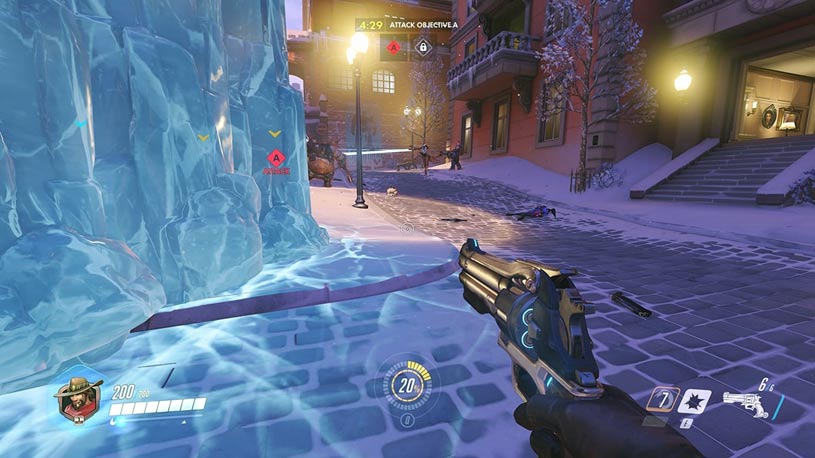
The basic loop was straightforward. Choose a hero, approach a payload or control point, contest space, build ultimate charge, and try to win the next decisive fight. The difficulty came from recognizing when that fight was actually ready to happen. Charging through a choke with teammates still returning from spawn could achieve little, even if the first few shots landed. Waiting for six players to regroup often accomplished more than another solo elimination.
Reinhardt’s barrier could let allies cross exposed ground, Winston could jump past a defense to threaten its supports, and Tracer could force opponents to turn away from the objective. None of those actions guaranteed success in isolation. The interesting decisions came from timing them together. This gave Overwatch a different cooperative pressure from Abiotic Factor, where a small group can usually approach its shared survival problems at a self-directed pace.
Assault maps revealed how much mattered beyond winning visible duels. On second objectives such as Hanamura’s, defenders spawned nearby and could keep contesting in a frustrating trickle. The original game had an attacker-advantage system that lengthened defender respawns when attackers maintained a numerical advantage on the final objective. A team fighting successfully just outside the capture area could therefore struggle to finish, while committing enough suitable heroes to the point helped make those eliminations count. The balance between occupying the objective and holding a useful firing angle was more subtle than the interface suggested.
That tension was central to the appeal. A team fight might collapse after one support was picked off, then turn back because Zarya caught several enemies in Graviton Surge or Reinhardt landed Earthshatter. Individual skill mattered, but the question was always what the team could do with it.
Diverse Heroes and the Real Cost of Switching
The original roster had a clarity that many ability-heavy games struggle to achieve. Tracer’s Blink and Recall encouraged constant movement and brief attacks on isolated targets. Reinhardt’s hammer and barrier made him feel almost like a moving piece of cover. Widowmaker could control a long sightline without standing anywhere near the objective, while Reaper’s close-range pressure made an exposed backline dangerous.
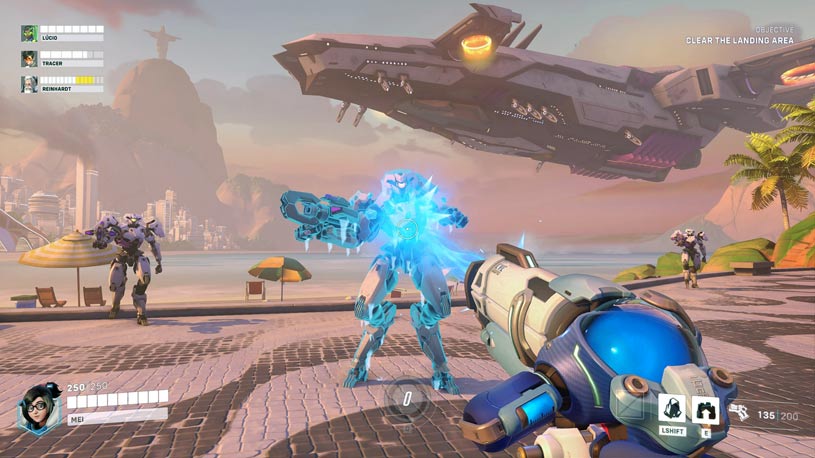
Hero identity was reinforced by sound. Hearing Reaper’s approach or the warning of an enemy ultimate could change a decision before its source appeared on screen. The distinct silhouettes and ability effects were not merely decoration; they made rapid tactical recognition possible even when a fight became visually crowded.
Mobility also created decisions that were easy to miss when concentrating only on damage. D.Va’s Boosters could carry her straight into a vulnerable enemy, but ending the movement in front of that target exposed her mech to return fire. Using the same movement to reach nearby high ground could preserve an escape route and force opponents to change their aim. It was a small positional choice with a large effect on whether the dive remained useful after the opening attack.
Switching heroes mid-match was one of Overwatch‘s boldest ideas. A troublesome Pharah invited a hitscan response; a stubborn shield defense could demand a different angle or tool. Yet the system carried a contradiction. Swapping discarded accumulated ultimate charge, so a Zarya close to Graviton Surge might stay in a poor matchup rather than surrender a powerful ability. Adaptation was encouraged, but not free. A smart switch sometimes meant accepting a short-term loss for a better next fight.
Some of the most revealing designs belonged to hero kits that changed during the original game’s life. Early Symmetra could deploy a limited-use teleporter linking spawn to a hidden exit near the action. Finding and destroying that exit became an objective of its own for the opposing team. Its value came less from direct damage than from rewriting the distance defeated teammates had to travel. That older teleporter was different from the short-range ability introduced by her later rework, and it illustrates how inventive the original hero concepts could be.
Combat, Roles and Team Synergy
A good fight involved far more than aim. Cooldowns, shields, healing, high ground, target priority, and knowledge of the enemy’s ultimates all competed for attention. Zarya’s Graviton Surge could set up Hanzo’s Dragonstrike, while Ana’s Nano Boost could transform Genji’s Dragonblade into a team-wiping threat. Those combinations were exciting because they required someone to recognize the opening and someone else to respond before it vanished.
Smaller interactions were equally important. Lúcio’s speed aura was not just a pleasant bonus for nearby teammates. With Reinhardt, it could help a group cross a dangerous choke, close the distance into hammer range, or retreat before being overwhelmed. If Reinhardt remained planted behind his shield while the speed boost ran, much of that advantage was lost. This exposed an important weakness of team-based design: a useful ability could look ineffective simply because teammates did not understand how to act on it.
The same principle applied to defensive heroics. A last-second Reinhardt barrier could protect allies from D.Va’s Self-Destruct. A Lúcio wall-ride might keep an objective contested just long enough for reinforcements to arrive. A Reaper waiting behind the enemy for Death Blossom could change the fight, although a poorly timed attempt could remove one more teammate from an already fragile push. The memorable plays were not always the loudest ones.
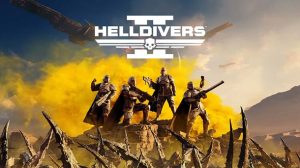
For a cooperative shooter with a very different rhythm, Helldivers 2 turns teamwork into a battle against enemy swarms, extraction pressure, and the danger of friendly fire. Overwatch‘s tension was more tightly concentrated: two teams reading and countering one another over a few meters of contested ground.
Competitive Play, Role Queue and Misleading Rewards
Competitive play gave those decisions consequences beyond a single round. Players could learn the basics through Soldier: 76, Mercy, or Reinhardt, but climbing the ranks required understanding sightlines, ultimate economy, positioning, and when not to force a losing engagement. Mechanical skill alone could not rescue a team that repeatedly entered fights one at a time.
The original’s approach to composition changed significantly over its lifetime. Early matches allowed players to move between tank, damage, and support roles, offering creativity but also the familiar misery of a team full of damage heroes with nobody willing to support. The later 2-2-2 role queue gave teams a dependable structure. It also removed a kind of flexibility that had helped define the game: a tank could change to another tank, but could no longer step into the support role to cover a struggling teammate in a role-locked match. The improvement was real, and so was the sacrifice.
Feedback within matches could be deceptive, too. The original medal system compared teammates on statistics such as eliminations, damage, and healing, but those numbers did not necessarily reflect useful contribution. Roadhog could accumulate impressive self-healing while feeding enemy ultimate charge by absorbing damage. An elimination could be credited for a relatively minor contribution to a kill. As a result, a gold medal was an easy argument to make in a disagreement, but a weak explanation of why the team was losing.
Different eras brought different problems. Dive compositions rewarded coordinated mobility, while tank-heavy and shield-focused strategies could turn attacks into prolonged contests of barriers and cooldowns. Crowd control could make a caught hero feel helpless. The shifting balance kept high-level learning interesting, but not every meta was equally enjoyable for players who preferred a faster, more open fight.
Visual Style and Maps With Distinct Personalities
The animated visual direction was part of the game’s function, not simply its charm. Bright colors, recognizable character shapes, and clear audio cues helped distinguish heroes in a crowded battle. The world itself was communicated through map details, voice lines, and animated shorts rather than a traditional story campaign. Tracer, Winston, Mercy, Genji, and the wider cast gained personality without needing the competitive matches to pause for exposition.
Maps gave those personalities somewhere interesting to collide. King’s Row used tight streets and a demanding first approach to reward coordinated pushes. Route 66 and Dorado mixed exposed payload routes with useful high ground and flanking paths. Watchpoint: Gibraltar encouraged fights across elevations, while Hanamura’s Assault objectives could make the difference between a convincing attack and a stalled finish painfully clear.
King’s Row was especially good at creating anticipation. A defense could look immovable until one elimination or synchronized flank opened the choke. The important feature was not just the narrow entrance, but the way nearby routes allowed a team to rethink the problem rather than fire into the same barrier indefinitely.
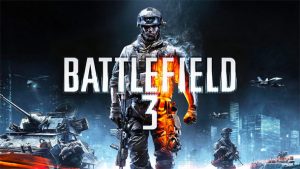
Battlefield 3 demonstrates how differently a team shooter can create scale through vehicles, destruction, and sprawling objectives. Overwatch achieved its own sense of scale through concentrated, character-specific decisions, where one rooftop or doorway could determine the entire engagement.
Replayability, Progression and the Frustration of Dependence
Replayability came from combinations rather than a huge selection of weapons. Even on familiar ground, different tank pairings, flankers, supports, and ultimate plans could change how a match unfolded. A slow shield war on one attempt might become a fast dive on the next. Learning a new hero did not simply mean learning a new gun; it meant discovering a different way to contribute.
Competitive ranks offered an external goal, while account levels, loot boxes, skins, and event cosmetics gave casual play a collection-based reward loop. Those unlocks could be enjoyable, though the randomness of loot boxes was less satisfying when a particular cosmetic was the real target. The more enduring progression happened in the player’s understanding of the game: recognizing a lost fight earlier, saving an ultimate for the right moment, or discovering that positioning could matter more than damage.
That learning curve was also the source of the game’s sharpest frustration. A team that grouped up and shared an idea could make every role feel valuable. One that staggered from spawn, ignored its supports, or insisted on six separate plans could make the exact same map miserable. The rules asked people to cooperate without guaranteeing that they wanted to. For solo players in particular, this meant personal improvement did not always translate into a satisfying match.
Yet the possibility of recovering a bad round was difficult to dismiss. An overtime push could make several minutes of failed attacks feel like preparation for one decisive moment. Few of the game’s victories were entirely individual, which made the best ones feel earned together, even among strangers.
Final Verdict
The original Overwatch remains a distinctive example of how a shooter can make teamwork its main source of excitement. Its heroes were immediately recognizable, its maps rewarded experimentation, and the combination of movement, timing, and ultimate abilities created situations that pure aim could not solve. Beneath the colorful presentation sat an unusually intricate contest over space and cooperation.
It was not consistently comfortable to play. Restrictive compositions, oppressive balance periods, misleading performance medals, and the dependence on uncooperative teammates could make a match more aggravating than rewarding. Players seeking individual control over every outcome or a conventional narrative campaign had good reasons to prefer another shooter.
For those who enjoyed learning a role, adapting to an opposing team, and coordinating under pressure, though, Overwatch offered something special. Its strongest moments were not just spectacular ultimates. They were the smaller decisions that allowed six different heroes to work as one team.
Overwatch 1 Pros & Cons
- Pro: Distinctive hero kits made tanks, damage heroes, and supports feel mechanically different
- Pro: Six-player teams rewarded tank partnerships, coordinated pushes, and ultimate combinations
- Pro: Clear silhouettes, audio cues, colorful maps, and responsive controls helped make fights readable
- Pro: Hero switching, ranked roles, seasonal events, and shifting strategies rewarded long-term mastery
- Pro: Custom Games and the Workshop encouraged training tools and inventive community modes
- Con: The original 6v6 client, matchmaking, balance, and progression are no longer independently playable on official servers
- Con: Uncoordinated teams, leavers, and stubborn hero choices could make individual effort feel wasted
- Con: Barrier-heavy strategies, crowd-control chains, queue times, and loot-box randomness weakened parts of its later life
Overwatch PC System Requirements
Important: These official specifications describe the modern live Overwatch service available on Battle.net and Steam, not a downloadable standalone copy of the retired Overwatch 1 client.
MINIMUM:
OS: Windows 10 64-bit with the latest service pack
CPU: Intel Core i3 / AMD Phenom X3 8650
RAM: 6 GB
GPU: NVIDIA GeForce GTX 600 series / AMD Radeon HD 7000 series
DirectX: Version 11
Storage: 50 GB available space
Internet: Broadband internet connection
Display: 1024 × 768 minimum resolution
Additional: Battle.net account required; eligible mobile number needed for new accounts unless an account exemption applies
RECOMMENDED:
OS: Windows 10 64-bit with the latest service pack
CPU: Intel Core i7 / AMD Ryzen 5
RAM: 8 GB
GPU: NVIDIA GeForce GTX 1060 / GTX 1650, AMD Radeon R9 380 / RX 6400, or Intel Arc A770
DirectX: Version 11
Storage: 50 GB available space
Internet: Broadband internet connection
Display: 1024 × 768 minimum resolution
Additional: Battle.net account required; eligible mobile number needed for new accounts unless an account exemption applies
Additional PC Performance and Setup Notes
- Blizzard does not support SLI or CrossFire configurations for the current game.
- Battle.net users can open the cog beside the Play button and use Scan and Repair. Steam users can verify installed files through the game’s Properties menu.
- For unstable frame rates, lower render scale, dynamic reflections, shadow detail, local fog detail, effects detail, anti-aliasing, and model detail before reducing texture quality on a GPU with sufficient memory.
- Update graphics drivers, remove unstable CPU or GPU overclocks, disable conflicting overlays, and close heavy background applications when crashes or stuttering begin after an update.
- Overwatch is always online. Latency, packet loss, server maintenance, Battle.net outages, or regional routing problems cannot be fixed solely by lowering graphics settings.
- The Steam installation requires a linked Battle.net account. Confirm that Steam is connected to the intended Battle.net profile before purchases or console-account merging; new accounts may also need SMS Protect.
- Valve rates the Steam build Playable on Steam Deck. Some text may be small, the on-screen keyboard may need manual invocation, and graphics settings may require adjustment. Battle.net separately lists general handheld compatibility as Mostly Compatible; there is no native SteamOS release.
- Use the in-game Workshop and Custom Games for supported community creations rather than altering protected game files.
Official Trailer
Note: Blizzard’s official Reign of Talon – Season 1 trailer introduces the February 2026 Overwatch era that replaced the “Overwatch 2” branding. The historical review above focuses on the retired original game.
Frequently Asked Questions
Can you still play the original Overwatch 1 on PC?
No. Blizzard shut down its original online service on October 3, 2022, and does not offer the 2016–2022 client as a separate supported game. The free-to-play Overwatch service on Battle.net and Steam is its successor, not an archived copy of the original.
Why is Overwatch 2 now called Overwatch?
Blizzard launched Overwatch 2 on October 4, 2022, then removed the “2” in February 2026 to emphasize the continuously evolving live game. The name change did not restore the retired original client.
Can the original Overwatch 1 be played offline or installed from an old disc?
No official offline mode exists. The original game depended on Blizzard’s servers, and possessing an old disc, game key, or installer does not restore official online access. Avoid sites claiming to provide an official offline or private-server replacement.
Where can I officially download Overwatch for Windows PC?
Use Blizzard’s Battle.net desktop application or the official Steam listing. Both download the live free-to-play game; neither offers Overwatch 1 as a separate legacy version.
Is Battle.net or Steam the better way to install Overwatch?
Both connect to the same Battle.net progression and multiplayer service. Battle.net is Blizzard’s direct launcher, while Steam adds its own library features and achievements; the Steam version still requires a Battle.net account.
Does Overwatch require a phone number?
New Battle.net accounts generally require an eligible mobile number for SMS Protect. Blizzard exempted qualifying returning Overwatch 1 accounts linked to Battle.net before the free-to-play transition. Some prepaid numbers qualify, but VoIP numbers do not; follow Blizzard’s account-specific instructions if prompted.
Is Overwatch free, and do I need to have owned Overwatch 1?
The live multiplayer game is free-to-play, with no original Overwatch purchase required. Cosmetics, premium passes, bundles, and Invasion Story Missions are optional paid products.
Do Overwatch 1 skins and progress transfer?
Eligible original cosmetics, credits, and account collection items remain associated with the same Battle.net account. Console owners must use the correct linked platform account and complete any applicable account merge; purchased currencies and certain platform-specific entitlements can have restrictions.
Does the live Overwatch game still offer 6v6?
Yes. Blizzard supports 6v6 Open Queue alongside core 5v5 play and may offer additional 6v6 competitive or experimental formats. The 6v6 team size does not bring back Overwatch 1’s historical hero balance, original maps and rules, interface, or reward systems.
What is the difference between 5v5 and 6v6?
Standard 5v5 teams use one tank, two damage heroes, and two supports in Role Queue. A 6v6 team has an additional player and, in Open Queue, more freedom to combine roles. Both reward teamwork, but the extra frontline presence changes space control, pressure, and composition decisions.
Does Overwatch have cross-play and cross-progression?
Yes. Linked Battle.net, PlayStation, Xbox, and Nintendo accounts can participate in cross-platform play and share eligible progression. Some purchased currency balances and platform-specific content remain restricted.
Is Overwatch included with PC Game Pass?
No subscription is needed because the core game is free. Depending on the active offer and linked account, eligible Game Pass memberships may provide additional in-game benefits, with redemption restrictions between Battle.net, Xbox, and Steam.
Did Overwatch 1 have a story campaign?
No permanent conventional single-player campaign existed. Its narrative was told through animated shorts, comics, dialogue, maps, and limited-time Archives PvE missions such as Uprising, Retribution, and Storm Rising.
Are loot boxes available in the live game?
Yes. Loot boxes have returned as obtainable rewards, but their place in the live game’s monetization and progression is not identical to the original Overwatch 1 system.
Can you play Hanamura and other Assault (2CP) maps?
The original Assault mode was removed from standard Quick Play and Competitive rotations during the transition to Overwatch 2. Some classic maps can still appear in alternative or custom contexts, but access and the precise modes may differ.
Does Overwatch work on Steam Deck?
Valve classifies the Steam version as Playable. It uses Proton rather than a native SteamOS build, and some menus or text may require extra input or graphics adjustments. Check Valve’s Steam Deck compatibility details for the current build.
Can Overwatch be modded or played with a controller on PC?
The live client supports controllers, Custom Games, and the in-game Workshop for custom rules and training modes. Blizzard does not support third-party file modifications that alter protected competitive gameplay.
How can I troubleshoot stuttering or launching problems?
Check Blizzard’s service status first for login or online outages. For local issues, update the GPU driver, verify or repair the installed files, disable conflicting overlays, and lower demanding graphics settings; the official PC requirements are listed above.
Still have questions?
Visit the official Overwatch forums, Steam Discussions, or the Overwatch community on Reddit.
Sources & References
Key historical, account-access, PC, and version-specific facts were checked against these sources:
- Blizzard — Overwatch 2 Ready Check — original service shutdown, successor launch, and account migration context.
- Blizzard — Defense Matrix SMS Protect Updates — phone verification exemptions and prepaid eligibility.
- Blizzard — Overwatch Spotlight — modern game systems and the new Overwatch branding.
- Blizzard — Director’s Take on 5v5 and 6v6 — enduring team-size options and their differences.
- Steam — Overwatch — PC specifications, Steam access, live game review reception, and Steam Deck classification.
- Blizzard — April 2026 Retail Notes — official Nintendo Switch 2 release confirmation.
Similar Games Like Overwatch 1
- Call of Duty: Black Ops III
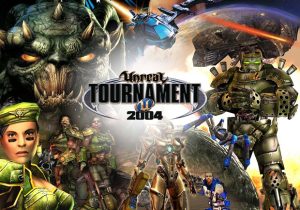
- Unreal Tournament 2004
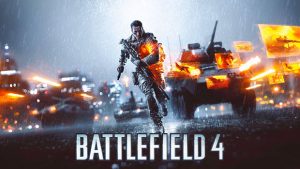
- Battlefield 4
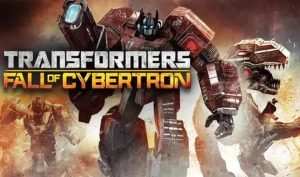
- Transformers: Fall of Cybertron
- Battlefield 3
- Helldivers 2
Found something worth playing through DecideGame?
DecideGame.com is an independent gaming project run by Editor Zero. If this guide helped you discover a game, solve a problem, or find useful information, you can support DecideGame.com and help keep new and updated game guides coming.
DecideGame — PC Game Guides, Reviews & Setup Help