
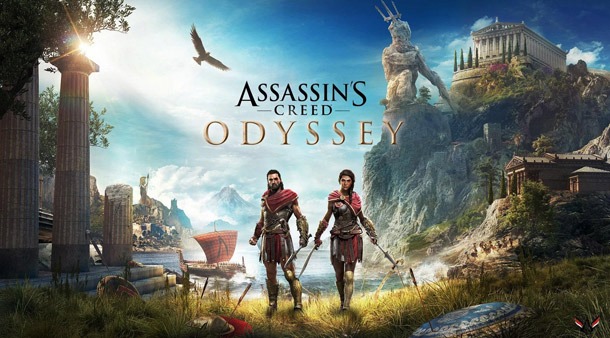
📅 Game released: 2018
Assassin’s Creed Odyssey is a vast Ancient Greece action RPG built around Kassandra or Alexios, dialogue choices, mercenary battles, naval voyages, and a branching family story. This PC guide compares official download and installation options, Gold and Ultimate editions, Season Pass DLC, Ubisoft Connect, Game Pass, Steam Deck support, system requirements, mods, and practical setup advice.
 By Editor Zero — independently researched, edited, and maintained.
Last updated: 12 November 2026
Last reviewed: 12 November 2026
Table of Contents
- Quick Facts
- Official PC Stores, Download & Installation
- Assassin’s Creed Odyssey Review
- Pros & Cons
- PC System Requirements
- Frequently Asked Questions
- Similar Games
Assassin’s Creed Odyssey Quick Facts
- Game: Assassin’s Creed Odyssey / Standard Edition / Deluxe Edition / Gold Edition / Ultimate Edition / Season Pass
- Developer: Ubisoft Quebec, with support from multiple Ubisoft studios
- Publisher: Ubisoft
- Genre: Action-Adventure, Open World, Action RPG
- Release: October 5, 2018
- Platforms: Windows PC, PS4, Xbox One
- Major Paid DLC: Legacy of the First Blade and The Fate of Atlantis (three episodes each); Season Pass also includes The Secrets of Greece bonus mission
- Game Pass: Microsoft lists the PC version in eligible Game Pass plans; subscription access should not be treated as ownership or as including the Season Pass
- Steam Deck: Playable; Valve’s compatibility data notes launcher interaction, manual keyboard use, occasional non-Deck icons, internet requirements, and imperfect exit behavior
- Engine: AnvilNext 2.0
- Modes: Single-player only; no official co-op, PvP, or traditional multiplayer
- Community: Steam Discussions, Odyssey Reddit, Ubisoft Support
- PC modding: Nexus Mods hosts unofficial ReShade presets, appearance changes, inventory or save edits, visual tweaks, and configuration modifications; official mod tools and Steam Workshop support are not provided
- Metacritic score: 86/100 on PC
- IGN score: 9.2/10
- OpenCritic average: 84/100 (multiplatform critic aggregate)
- Steam user reception: Very Positive overall
Official PC Stores, Download & Installation
👇 Compare the official PC stores and edition contents below before purchasing, downloading, installing, or adding DLC to Assassin’s Creed Odyssey.
- PC availability: The Windows version is officially sold through Ubisoft Store, Steam, Epic Games Store, and Microsoft Store / Xbox app.
- Ubisoft Connect: PC access uses Ubisoft Connect and a Ubisoft account. Purchases made through another storefront also remain tied to that store account, so link the intended Ubisoft account before beginning a long save.
- Standard Edition: Includes the complete base campaign and free additions such as Lost Tales of Greece, New Game Plus, Discovery Tour, Story Creator Mode, and Those Who Are Treasured.
- Deluxe Edition: Includes the base game and Deluxe Pack. It does not include the Season Pass or the two major story expansions.
- Gold Edition: Includes the base game and Season Pass, making it the direct edition for players who want the two major story arcs without the Deluxe Pack.
- Ultimate Edition: Includes the base game, Season Pass, and Deluxe Pack. The Deluxe Pack adds gear, naval items, and temporary XP and drachma boosts rather than another story campaign.
- Season Pass: Includes Legacy of the First Blade, The Fate of Atlantis, Assassin’s Creed III Remastered, Assassin’s Creed Liberation Remastered, and the bonus mission The Secrets of Greece. Existing base-game owners can buy it separately instead of repurchasing Gold or Ultimate Edition.
- Ubisoft+: Subscription contents are not identical to the retail Ultimate package. Ubisoft notes that its Ubisoft+ Ultimate access excludes the temporary XP and drachma boosts plus Assassin’s Creed III Remastered and Assassin’s Creed Liberation Remastered.
- Game Pass: Microsoft lists the PC version in eligible Game Pass plans. Subscription access is not ownership, and the paid Season Pass should not be assumed to be included unless the Xbox app explicitly shows it.
- Microsoft ownership: Microsoft maintains a separate Windows PC listing for Odyssey and does not identify that product as Xbox Play Anywhere, so an Xbox console purchase should not be assumed to grant a separate PC license.
- DRM and online access: Steam lists Denuvo Anti-Tamper with a limit of five different machine activations per day and requires Ubisoft Connect. Valve’s Steam Deck compatibility data also flags active internet for first-time setup and single-player gameplay.
- Saves and reinstalls: Cloud synchronization can involve both the purchasing storefront and Ubisoft Connect. Confirm that saves are synchronized before reinstalling Windows, changing PCs, moving to Steam Deck, or using save-editing tools.
 Buy Assassin’s Creed Odyssey on Ubisoft Store
 Buy Assassin’s Creed Odyssey on Steam
 Buy Assassin’s Creed Odyssey on Epic Games Store
 Buy Assassin’s Creed Odyssey on Microsoft / Xbox Store
 Visit the Official Assassin’s Creed Odyssey Website

Assassin’s Creed Odyssey Review
A vast Greek adventure whose freedom is both its greatest strength and its burden.
Assassin’s Creed Odyssey is the point where the series stops treating role-playing systems as supporting features and lets them shape almost everything. Ancient Greece is not just a backdrop for assassinations. It is a place to take contracts, interfere in a war, investigate a secretive cult, develop a fighting style, and occasionally forget the main objective because another island looks inviting. That freedom makes the journey unusually absorbing. It also changes the series’ familiar priorities: stealth is one option among several, not the rule around which the whole game is built.
Its greatest achievement is how naturally these activities overlap. A straightforward trip to a quest marker might involve a ship battle, a fort worth infiltrating, and a mercenary attracted by an earlier crime. Yet the same abundance can dilute the family story at the centre of the adventure. Odyssey is at its best when its enormous world feels like somewhere to travel through, rather than a list of obligations to finish.
The choice between Kassandra and Alexios establishes a more personal kind of Assassin’s Creed. They follow the same broad campaign, but their performances give its conversations different textures. Kassandra’s delivery can move from sarcasm to genuine hurt without making the transition feel forced, which helps when the story asks for difficult responses to people tied to the protagonist’s past.
Story & Player Choice
Family, exile, revenge, and the search for belonging give the narrative its direction. The Peloponnesian War between Athens and Sparta supplies the wider political pressure, but the most affecting scenes tend to involve a much smaller group of characters. Reuniting with someone, deciding whether to trust a former enemy, or discovering the cost of an earlier choice has more weight than another speech about who should control Greece.
Dialogue decisions matter partly because they are not always announced as major turning points. A seemingly modest village problem can have consequences beyond its first conversation, while some family decisions influence the direction of the larger story. This makes it worth paying attention to people rather than selecting responses merely for immediate rewards. The writing is less assured when a character’s personal conflict gets buried under a long chain of errands, but its better questlines make moral choices feel connected to ordinary life in this world.
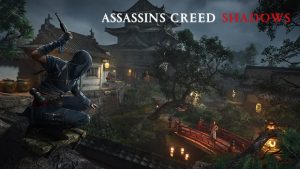
That distinction also explains why the game is not simply a historical adventure with dialogue bolted on. Role-playing affects how players interpret events, even though it does not make every decision equally consequential. Players interested in how the franchise develops this approach can compare it with Assassin’s Creed Shadows, which places a different balance on stealth, role-playing systems, and narrative focus.
Gameplay: Action RPG Freedom
The basic rhythm is easy to understand: enter a region, investigate its landmarks, complete quests, raid forts, gather equipment, improve abilities, and continue across Greece. The pleasure comes from deciding how to handle each problem. Ikaros can scout a fortress and identify guards before an infiltration. Sabotaging the alarm brazier and picking off isolated targets may keep the operation quiet; a missed assassination can turn it into a running battle involving captains, archers, and anyone chasing the bounty on your head.
Fighting is fast and built around movement, timing, and adrenaline. Dodges and parries create openings, while abilities supply the dramatic responses: Hero Strike delivers a concentrated burst of damage, Spartan Kick gives room to breathe near a ledge, and Hunter abilities make a bow useful beyond the opening shot. There is an interesting limit to that early freedom. Ordinary soldiers remain vulnerable to being kicked backward, but heavier opponents and tougher mercenaries can resist the spectacular knockback. An ability that initially seems to solve every awkward encounter gradually becomes a situational tool for interruption or nonlethal takedowns.
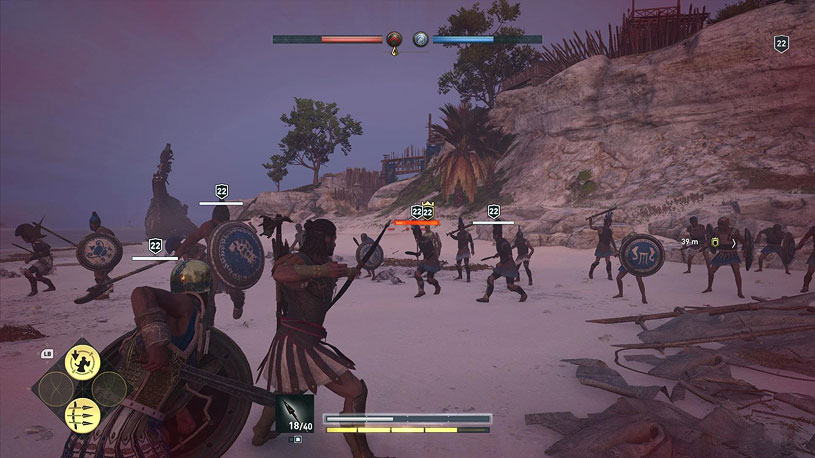
Hunter, Warrior, and Assassin abilities offer meaningful starting identities, but Odyssey encourages combinations rather than strict classes. An Assassin-focused character might soften an enemy from range before using Hero Strike in melee; a Warrior can use the bow to control an approaching group. Poison is especially revealing. Once an enemy becomes intoxicated, the effect weakens their damage and defenses as well as wearing down health. It can therefore protect a fragile Assassin build during a long fight, rather than functioning only as an alternative to fire damage.
Stealth remains enjoyable, though not always in the familiar one-hit-kill sense. Levels, armor, and assassination-damage bonuses influence whether a hidden strike finishes its target. A poorly prepared attempt against an elite guard can turn careful planning into an open fight. That can be frustrating for players who expect the hidden blade to override statistics, but it gives equipment and skill choices consequences. The most satisfying approach is often flexible: begin quietly, make use of the environment, then improvise when the plan stops working.
Gameplay Systems & Progression
Almost every activity contributes to a progression system. Quests award XP, forts yield loot and materials, cultist hunts advance a separate chain of rewards, and the Adrestia needs resources for ship upgrades. Weapons and armor arrive with bonuses that can meaningfully alter a build, while engravings let players emphasize critical damage, elemental effects, bow attacks, or assassination strength. Respeccing abilities makes experimentation relatively approachable, even if the constant arrival of higher-level equipment sometimes turns a favorite weapon into another item to maintain or replace.
The mercenary hierarchy is the clearest example of progression interacting with ordinary play. Theft, public killings, and other offenses can attract bounty hunters, who may enter a fortress while its guards are already alerted. Some arrive with animal companions; others have strengths that make a straightforward duel unwise. A bounty can be paid off or its sponsor eliminated, but accepting the pursuit creates valuable opportunities to claim equipment, advance through mercenary ranks, or recruit a capable lieutenant.
There is a further twist that makes the system feel less compartmentalized: a sufficiently persistent bounty can follow the protagonist out to sea. A dangerous pursuer on land becomes a different problem when the encounter involves the upgraded Adrestia. It is a small connection between two major systems, but an important one. Preparing a ship is not entirely separate from preparing the character.
The Cult of Kosmos provides a more deliberate long-term pursuit. Clues point toward members scattered across Greece, and eliminating them helps upgrade the Spear of Leonidas. Not every target needs to be formally identified before being encountered, however. Some cultists occupy the world before the investigation screen reveals their identity, making it possible to uncover one unexpectedly during another activity. That possibility gives the conspiracy a welcome sense of existence outside the player’s checklist, although other members remain tied to specific quests.
Huge & Living Open World
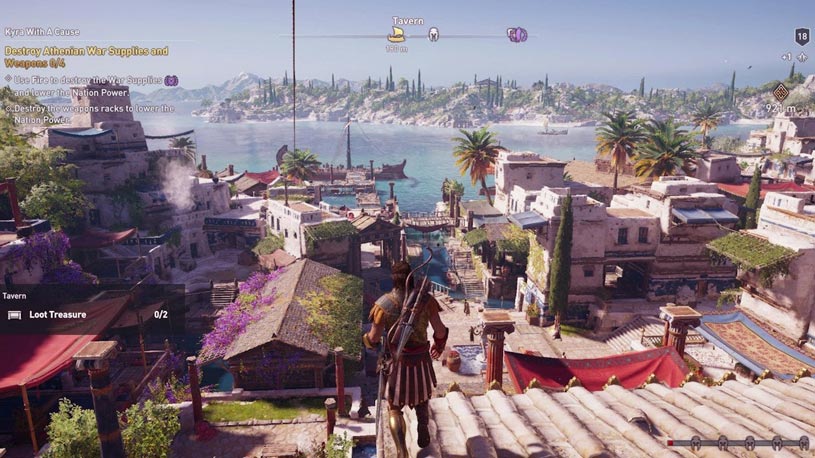
Greece earns its scale through contrasts. Dusty roads in Lakonia lead to quiet hillsides; Athens fills its streets with marble, markets, and crowds; islands open onto bright harbors and stretches of Aegean water. Mountains, tombs, ruins, and underwater sites invite detours, while the music and ambient life help the journey retain a sense of place between fights. The scenery is not merely decorative. Cliffs offer vantage points, coastlines shape travel, and the next settlement is often visible long before it becomes an objective.
How players navigate matters more than the map initially suggests. Following every question mark and fast-travel point can make Greece feel like a series of small tasks. Exploration Mode and a lighter reliance on markers instead encourage attention to roads, coastlines, and recognizable landmarks. That is a slower way to play, not an automatically superior one, but it can change a journey from a route between icons into an experience of finding a place. Odyssey gives players the tools for both approaches, sometimes without making the difference obvious.
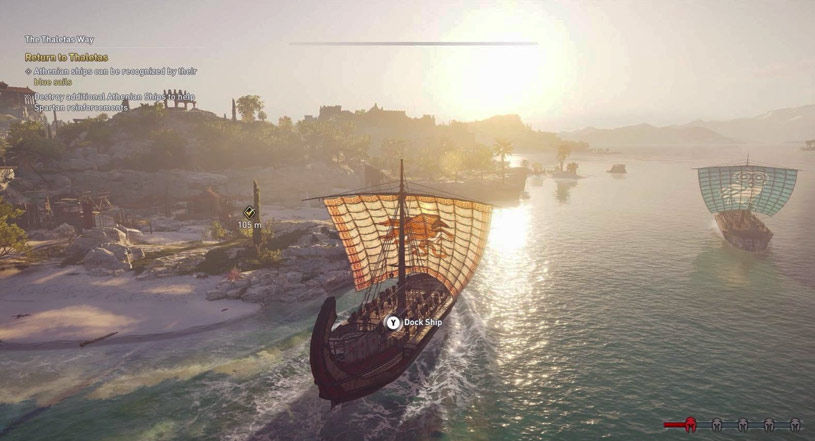
The Adrestia brings welcome variation. Ship upgrades strengthen its hull, arrows, javelins, and fire attacks; boarding a battered vessel changes a naval engagement into a close-quarters fight. Its crew and lieutenants also connect recruitment to the wider journey. The water gives Greece continuity, making travel between islands feel like part of the adventure rather than a loading screen between separate regions.
Conquest battles are less convincing as a strategy system. Weakening a region and choosing Athens or Sparta leads to a lively clash, particularly for combat-heavy builds, yet the victory does not create lasting political allegiance or allow players to win the war for one side. Territory can change again, and repeatedly supporting one faction may even leave fewer enemies of that faction available for certain contracts. The battles work best as large combat encounters, not as evidence that the protagonist is permanently rewriting Greek politics.
For players most drawn to ruins, climbing, and discovery rather than the scale of the RPG systems, Rise of the Tomb Raider provides a more concentrated adventure built around environmental puzzles, exploration, and cinematic momentum.
Meaningful Side Quests & Activities
Odyssey’s side content has two very different personalities. Authored quests can turn an ordinary request into a family dispute, an awkward moral decision, or a comic misunderstanding involving local beliefs and dubious authority figures. They make small settlements feel inhabited by people with interests beyond the main campaign. Repeatable message-board contracts serve another purpose: delivering XP, resources, and reasons to fight. Treating every recurring errand as a unique story mission is a quick way to make an already long game feel endless.
Outside those quests are tombs with ancient steles, Ainigmata Ostraka riddles, mercenary targets, arena fights, underwater treasures, and legendary animals. The animal hunts deserve more attention than their place on a checklist suggests. The Kalydonian Boar can overwhelm an otherwise confident fighter with smaller boars, while the Erymanthian Boar applies poison pressure. Such encounters interrupt familiar human-combat habits, demanding movement, target awareness, and some respect for the limitations of a preferred build.
Its best unscripted moments still come from overlapping systems. A nighttime fort infiltration can become a desperate escape after a captain notices a body, a brazier summons reinforcements, and a mercenary arrives while the walls are full of archers. There is no single correct way to recover from that situation. The freedom to make a mistake and then survive it is a large part of the game’s appeal.
Replayability & Longevity
A second journey can differ through dialogue decisions, character choice, and build direction. New Game Plus gives developed characters another route through the campaign, while the flexibility of abilities and engravings makes a Hunter-oriented approach feel meaningfully different from a stealth-heavy or direct Warrior setup. The pleasure of returning is not simply seeing more question marks. It is discovering how familiar encounters respond to a different set of priorities.
That abundance also demands restraint. Legendary sets, naval upgrades, cultist clues, contracts, and regional battles can keep progression moving long after a more focused adventure would have ended. Yet the same systems compete for attention when the family plot needs urgency. Odyssey rarely tells players clearly which distractions are worth their time, and its leveling rhythm can make side content feel necessary rather than optional.
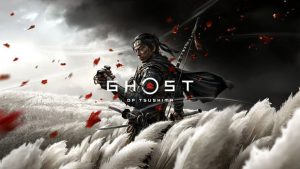
Those attracted to the feeling of travelling through a beautiful historical landscape, with occasional quiet rides between intense battles, may also appreciate Ghost of Tsushima. It offers a more directed samurai journey with less loot management and no comparable naval RPG layer. Neither approach is inherently better; the distinction is how much structure the player wants around exploration.
Final Verdict
Assassin’s Creed Odyssey is a confident action RPG with an unusually inviting world, flexible combat, and side stories that often give its historical setting more personality than the central war. Its finest design choice is allowing systems to meet: a cult investigation can interrupt exploration, a bounty can complicate stealth or sailing, and an uncertain conversation can matter long after it ends.
The compromise is focus. Gear maintenance, repeatable errands, uneven stealth lethality, and a map crowded with opportunities sometimes weaken the momentum of an otherwise personal story. Players seeking tightly designed assassinations and a short campaign may find the sprawl tiring. Those who enjoy shaping a character, wandering without a strict timetable, and letting unexpected problems change the journey will find Ancient Greece unusually rewarding. Odyssey succeeds most when its size feels like freedom, not homework.
Assassin’s Creed Odyssey Pros & Cons
- Pro: Ancient Greece is a visually varied open world of islands, cities, mountains, forts, tombs, battlefields, caves, and sea routes that rewards unplanned exploration
- Pro: Kassandra or Alexios, dialogue choices, family outcomes, romance encounters, cultist investigations, and regional stories give the long campaign a personal identity
- Pro: Warrior, Hunter, and Assassin builds combine effectively with engravings, legendary sets, elemental damage, ability synergies, ship upgrades, and flexible respec options
- Pro: Mercenaries, conquest battles, naval combat, mythological bosses, New Game Plus, Lost Tales, and two substantial DLC arcs provide unusually strong long-term value
- Pro: The Fate of Atlantis delivers striking environments, powerful abilities, Isu lore, and a satisfying fantasy-heavy endgame for players who enjoy Odyssey’s RPG direction
- Con: The enormous map, level scaling, repeated camps, bounty contracts, and equipment management can make progression feel padded when the main story is rushed
- Con: Damage-sponge enemies and failed assassinations can frustrate players who expect the cleaner stealth rules of older Assassin’s Creed games
- Con: The main story’s emotional momentum is sometimes interrupted by travel, level requirements, and long stretches of optional regional content
- Con: Ubisoft Connect, a second store account, Denuvo activation limits, and imperfect Steam Deck launcher behavior make PC access less direct than a launcher-free single-player game
Assassin’s Creed Odyssey PC System Requirements
Official requirements: The hardware tiers below preserve Ubisoft’s original PC specification and its published 720p/30 FPS, 1080p/30 FPS, and 4K/30 FPS targets. Ubisoft’s newer support article lists the same general hardware tiers but different target labels (1080p/30 FPS, 1080p/60 FPS, and 4K/60 FPS), so these figures are not guarantees of performance. The original Windows 7 SP1, Windows 8.1, and Windows 10 entries are historical; use a supported 64-bit Windows system accepted by your store and Ubisoft Connect. Steam and Epic list DirectX 11 and 46+ GB of available storage; leave extra space for installation and updates.
MINIMUM — 720p / Low Preset / 30 FPS:
OS: Windows 7 SP1 / Windows 8.1 / Windows 10, 64-bit
CPU: AMD FX-6300 at 3.8 GHz / AMD Ryzen 3 1200 / Intel Core i5-2400 at 3.1 GHz
RAM: 8 GB
GPU: AMD Radeon R9 285 / NVIDIA GeForce GTX 660
VRAM: 2 GB
Shader Model: 5.0
DirectX: DirectX June 2010 Redistributable in Ubisoft’s original specification
Storage: 46 GB available space
Target: 1280 × 720, Low preset, 30 FPS
RECOMMENDED — 1080p / High Preset / 30 FPS:
OS: Windows 7 SP1 / Windows 8.1 / Windows 10, 64-bit
CPU: AMD FX-8350 at 4.0 GHz / AMD Ryzen 5 1400 / Intel Core i7-3770 at 3.5 GHz
RAM: 8 GB
GPU: AMD Radeon R9 290 / NVIDIA GeForce GTX 970
VRAM: 4 GB
Shader Model: 5.0
DirectX: DirectX June 2010 Redistributable in Ubisoft’s original specification
Storage: 46 GB available space
Target: 1920 × 1080, High preset, 30 FPS
4K CONFIGURATION — 2160p / High Preset / 30 FPS:
OS: Windows 10, 64-bit
CPU: AMD Ryzen 7 1700X at 3.8 GHz / Intel Core i7-7700 at 4.2 GHz
RAM: 16 GB
GPU: AMD Radeon Vega 64 / NVIDIA GeForce GTX 1080
VRAM: 8 GB
Shader Model: 5.0
DirectX: DirectX June 2010 Redistributable in Ubisoft’s original specification
Storage: 46 GB available space
Target: 3840 × 2160, High preset, 30 FPS
Additional PC Performance and Setup Notes
- Use the built-in benchmark after each major settings change. Compare average FPS and frame-time consistency rather than judging one quiet scene.
- Volumetric Clouds is one of the most demanding settings. Lower it first, then test shadows, anti-aliasing, environment detail, character detail, depth of field, and resolution scale.
- Odyssey can be CPU-heavy in cities and large battles. A sensible frame-rate cap can improve pacing when the GPU is fast but the processor cannot maintain a higher target.
- An SSD is not part of Ubisoft’s original requirement, but it remains a practical choice for faster loading and asset access.
- For crashes or launch failures, update Ubisoft Connect and the graphics driver, verify files through the purchasing store, disable overlays, remove unstable overclocks, and test without mods.
- If a controller causes rhythmic stutter or duplicate inputs, test a wired connection, disable one input layer, close unused controller software, and compare Steam Input with native Ubisoft input.
- Back up saves before using appearance mods, ReShade, inventory editors, XP adjustments, or save tools. Odyssey has no official mod toolkit, and unsupported edits can cause progression or synchronization problems.
Official Trailer
Note: The official launch trailer presents Kassandra and Alexios, Ancient Greece, naval exploration, large battles, dialogue choices, family conflict, mythological threats, and the action-RPG structure covered in this guide.
Frequently Asked Questions
Do I need to play Assassin’s Creed Origins first?
No. Odyssey’s historical family story stands on its own and takes place centuries before Origins. Playing Origins first provides some context for the present-day Layla Hassan storyline, but it is not necessary to understand the Greek adventure.
Should I choose Kassandra or Alexios?
Both follow the same main quests and use the same abilities. Kassandra is the canonical Eagle Bearer in later official continuity, but Alexios is a complete protagonist choice; select the voice performance and personality you prefer.
Does Odyssey have multiple endings?
Yes. Important dialogue and mercy decisions involving Nikolaos, Stentor, Myrrine, and Deimos affect the family storyline’s outcome. The Cult and Isu plotlines have more fixed structures, while individual side quests can end differently.
How long does Assassin’s Creed Odyssey take to complete?
The main family story commonly takes around 40–60 hours, depending on exploration and side quests. Completing the Cult storyline, region activities, mythical encounters, and both major DLC arcs can take well over 100 hours.
Which PC edition should I buy?
Standard includes the complete base campaign and free additions. Gold adds the Season Pass with both large story expansions; Ultimate adds the Deluxe Pack on top of Gold’s main contents. Check the storefront’s exact package before paying for an edition or separate DLC.
What does the Season Pass include?
It contains Legacy of the First Blade, The Fate of Atlantis, Assassin’s Creed III Remastered, Assassin’s Creed Liberation Remastered, and The Secrets of Greece bonus mission. The two Odyssey story expansions each have three episodes; the remastered games are separate titles, not Odyssey quests.
Can Standard Edition owners buy the story DLC later?
Yes. The Season Pass and individual story expansions can be purchased separately. Use the same compatible store and Ubisoft account ecosystem as the base game, and check existing entitlements before buying a bundle.
Is Assassin’s Creed Odyssey available through PC Game Pass?
Microsoft lists Odyssey for PC through eligible Game Pass subscriptions. Game Pass grants subscription access rather than permanent ownership, and the Season Pass is not automatically included; confirm the Xbox app’s live offer before subscribing.
Does an Xbox console purchase also include the Windows PC version?
Not automatically. The Microsoft PC product is a separate listing and is not marked as Xbox Play Anywhere. Check the owned games associated with your Microsoft account rather than assuming a console license transfers to PC.
Can Assassin’s Creed Odyssey be played offline on PC?
Do not rely on fully offline access without checking your exact launcher and store setup. Ubisoft Connect is required, and Valve’s Steam Deck compatibility notes flag internet for first-time setup and single-player play on the Steam build.
Is Assassin’s Creed Odyssey Steam Deck Verified?
No. Valve rates it Playable, not Verified. The game itself meets the Playable control and performance checks, but the Ubisoft launcher, keyboard interaction, controller icons, internet dependency, and exiting behavior can require extra attention.
Does Odyssey have co-op, PvP, or split-screen multiplayer?
No. The main campaign, ship combat, conquest battles, Discovery Tour, and both story expansions are designed for one player. There is no official cooperative campaign, competitive mode, split-screen, or cross-play.
What is Discovery Tour: Ancient Greece, and is it included?
Discovery Tour is a combat-free historical exploration mode with guided activities about Ancient Greece. It is included for Odyssey owners and has also been offered as a separate PC product for people interested in its educational content without the main game.
When should I play Those Who Are Treasured?
Treat this free crossover story as late-game content. The Great Escape quest can become available earlier, but its events make more sense after the family, Cult, and major mythology storylines and may spoil important developments.
When should I play Legacy of the First Blade and The Fate of Atlantis?
Legacy of the First Blade fits best after substantial progress through the family and Cult stories. Save The Fate of Atlantis until you have completed its prerequisite mythology and Isu quests; its expanded abilities and supernatural settings work best as later-game material.
What is a good beginner build, and can I reset abilities?
Focus initially on one main damage style—Warrior, Hunter, or Assassin—and choose gear and engravings to support it. Second Wind helps with survival, while Hero Strike, Rush Assassination, and bow skills suit different approaches. Ability points can be reset for drachmae if you want to change direction.
Why can’t I assassinate every enemy in one hit?
Odyssey calculates assassination damage using your level, Assassin statistics, gear, engravings, and the target’s toughness. Stronger enemies can survive a normal stealth attack; a specialized Assassin loadout and Critical Assassination improve the odds of a lethal opening.
Is legendary gear always better than epic gear?
No. Legendary sets provide coordinated set bonuses, but properly chosen epic items can yield more flexible combinations of stats and engravings. Which is stronger depends on the build rather than rarity alone.
Does Assassin’s Creed Odyssey have New Game Plus?
Yes. New Game Plus restarts the story while carrying over much of your progression, including level, abilities, equipment, resources, and ship upgrades. Story, quest, and Cult progress reset, allowing different character and dialogue choices.
What should I try first if the PC version stutters or crashes?
Run the built-in benchmark and reduce Volumetric Clouds or demanding visual settings if performance is uneven. For crashes or launch failures, update your graphics driver and Ubisoft Connect, verify files through the original store, and test without overlays, mods, or unstable overclocks. The performance/setup notes above provide a more complete checklist.
Are PC mods available, and what should I back up?
Odyssey has unofficial visual, outfit, inventory, and save modifications, but no official mod toolkit or Steam Workshop integration. Use established mod pages, check version requirements, and make backups of your saves before changing files or progression values.
Still have questions? Check the Assassin’s Creed Odyssey community on Reddit, Steam Discussions, and Ubisoft Support.
Sources & References
Key factual and technical information in this guide was checked against relevant official and established PC sources, including:
- Ubisoft Store — Assassin’s Creed Odyssey for Ubisoft Connect activation, official PC availability, and launch-era hardware requirements.
- Steam — Assassin’s Creed Odyssey for PC release data, Denuvo, Ubisoft account requirements, Steam Deck status, and overall user reception.
- Microsoft / Xbox — Assassin’s Creed Odyssey for PC for Windows availability, editions, Ubisoft Connect requirements, and Game Pass access.
- Ubisoft — PC Specs and System Requirements for the official minimum, recommended, 4K, benchmark, and performance-target specifications.
- PCGamingWiki — Assassin’s Creed Odyssey for the AnvilNext 2.0 engine identification and PC-specific technical cross-checking.
- Metacritic — Assassin’s Creed Odyssey PC Critic Reviews for the PC-specific Metascore.
- Steam — Assassin’s Creed Odyssey Season Pass for the precise list of the two story expansions, separate remasters, and The Secrets of Greece mission.
- Ubisoft Support — Odyssey System Requirements for the current hardware requirements and the differently labelled resolution/frame-rate targets.
Similar Games Like Assassin’s Creed Odyssey
- Assassin’s Creed Shadows
- The Witcher 3: Wild Hunt
- Assassin’s Creed IV: Black Flag
- Ghost of Tsushima
- Crimson Desert
- Middle-Earth: Shadow of Mordor


Found something worth playing through DecideGame?
DecideGame.com is an independent gaming project run by Editor Zero. If this guide helped you discover a game, solve a problem, or find useful information, you can support DecideGame.com and help keep new and updated game guides coming.
DecideGame — PC Game Guides, Reviews & Setup Help