
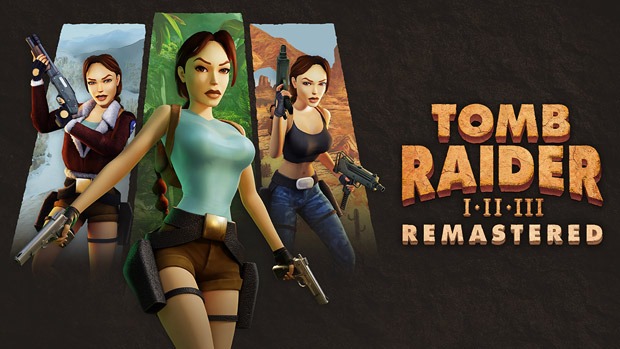
Use this updated 2026 Tomb Raider I-III Remastered PC guide to compare official Steam, GOG, and Epic download and installation options, understand Challenge Mode, classic and modern controls, graphics switching, Steam Deck support, system requirements, mods, and practical setup before returning to Lara Croft’s original trilogy.
 By Editor Zero — independently researched, edited, and maintained.
Last updated: 29 September 2026
Last reviewed: 29 September 2026
Table of Contents
- Quick Summary
- Quick Facts
- Official PC Stores, Download & Installation
- Tomb Raider I-III Remastered Review
- Pros & Cons
- PC System Requirements
- Frequently Asked Questions
- Similar Games
Tomb Raider I-III Remastered Quick Summary
✔ Collection of Lara Croft’s first three classic adventures, preserving their original level layouts, traps, secrets, puzzles, combat, and exploration while adding modern presentation options
✔ Similar to Tomb Raider IV-VI Remastered through classic-era Lara movement, level-based exploration, difficult platforming, puzzle logic, and the same preservation-focused remaster approach
✔ Includes Tomb Raider I with Unfinished Business, Tomb Raider II with Golden Mask, and Tomb Raider III with The Lost Artifact in one package
✔ Lets players switch instantly between classic polygon visuals and remastered graphics, choose classic or modern controls, and use Photo Mode
✔ New Game Plus and Challenge Mode add harder replay options, completed-level modifiers, achievements, and unlockable outfits with Challenge Mode effects
✔ PC buyers can choose Steam, DRM-free GOG, or Epic Games Store, while Steam Deck is officially Verified
Tomb Raider I-III Remastered Quick Facts
Official PC Stores, Download & Installation
👇 Compare the official Steam, GOG, and Epic Games Store PC options below before purchasing, downloading, or installing Tomb Raider I-III Remastered.
- PC availability: The Windows PC version is officially sold through Steam, GOG, and Epic Games Store.
- Included collection: Every current PC storefront package includes Tomb Raider I + Unfinished Business, Tomb Raider II + Golden Mask, and Tomb Raider III + The Lost Artifact.
- Steam: The Steam version includes achievements, trading cards, Steam Cloud, Family Sharing, controller support, and the platform’s normal client-based installation and update management.
- GOG: GOG sells a DRM-free version with a fully offline installer. GOG Galaxy is optional for installation and play, while Galaxy can provide achievements and cloud-save features.
- Epic Games Store: Epic sells the Windows version with cloud saves, controller support, single-player play, and platform achievements.
- Challenge Mode: Current PC builds include completed-level replay with configurable modifiers, additional achievements, and 10 unlockable outfits with optional Challenge Mode effects.
- Graphics and controls: Players can switch between classic polygon visuals and remastered graphics and choose between classic tank-style controls and modern camera-relative controls.
- Offline play: GOG explicitly supports launcher-free offline installation and play. Steam and Epic versions remain managed through their respective store ecosystems for purchase, installation, cloud features, and updates.
- Steam Deck: Valve rates the Steam version Verified. External Bluetooth or USB controllers may require manually changing the active controller through SteamOS.
- Store ownership: Steam, GOG, and Epic purchases are separate licenses; buying the game on one PC storefront does not add it to the others.
- Bundles: Steam and GOG also list bundles that combine Tomb Raider I-III Remastered with Tomb Raider IV-VI Remastered, so check owned content before buying a larger collection.
 Buy Tomb Raider I-III Remastered on Steam
 Buy Tomb Raider I-III Remastered on GOG
 Buy Tomb Raider I-III Remastered on Epic Games Store

Tomb Raider I-III Remastered Review
A respectful restoration of Lara Croft’s original adventures, where precision movement, lonely level design, and old-school puzzle logic still matter more than modern comfort
Tomb Raider I-III Remastered is not trying to make Lara Croft’s first three adventures feel like modern cinematic action games. That is the right decision. These games were built around entering a large space, reading its shape, noticing ledges and switches, judging distance, finding keys, surviving traps, and slowly understanding how a level folds back into itself. The remaster improves presentation and access without removing that old design philosophy.
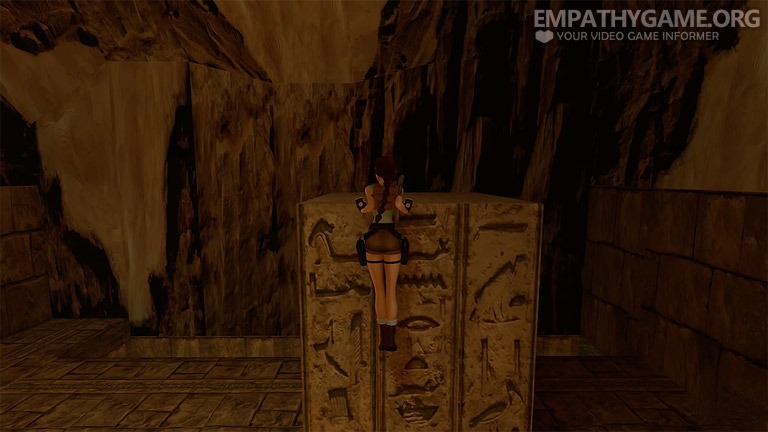
That makes the collection both valuable and demanding. Players raised on objective markers, generous checkpoints, automatic ledge grabs, and constant camera guidance may find the trilogy stiff or vague. Players who enjoy being trusted to solve a space will understand why these games still matter: the tomb itself is often the real opponent.
The package combines Tomb Raider, Tomb Raider II, Tomb Raider III, and their expansions with updated visuals, instant classic-graphics switching, modern and classic controls, Photo Mode, achievements, New Game Plus, and Challenge Mode. It is a restoration of old-school design rather than a remake that replaces it.
The Trilogy Still Lives Through Movement
The heart of classic Tomb Raider is movement. Lara can run, walk, hop backward, perform standing and running jumps, grab ledges, roll, climb, swim, shimmy, and push blocks, but the levels are built around those actions with unusually careful spacing. A jump is not simply a jump; it is a question of distance, alignment, timing, and confidence.
That is why classic tank controls still matter. Walking to an edge, hopping backward to prepare a running jump, holding grab at the right moment, and turning with predictable animation timing are part of the original level language. Once that language clicks, Lara feels less clumsy and more deliberate.
Modern controls make general movement and camera handling more familiar, but they do not erase geometry designed around classic alignment. Newcomers may prefer modern movement for exploration while finding the classic scheme more predictable for difficult jumps. The best approach is to treat both as tools rather than assume one is universally better.
Tomb Raider I Is Still the Purest Adventure
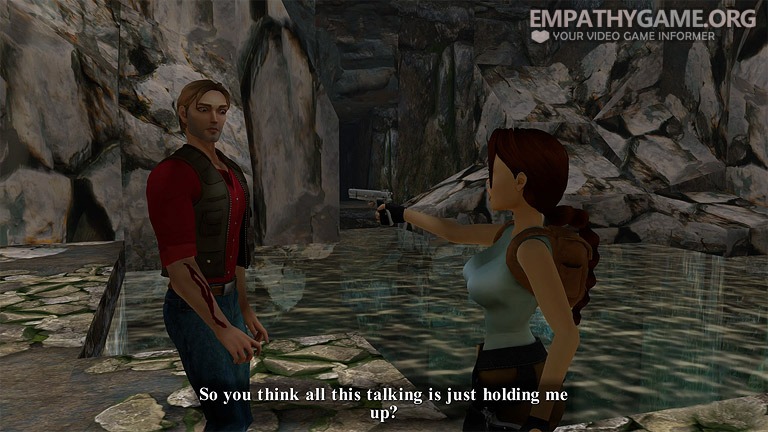
The first Tomb Raider remains the strongest of the three in atmosphere and level clarity. Peru, Greece, Egypt, and Atlantis feel sparse, quiet, and hostile rather than packed with dialogue or set pieces. A room may initially look empty, yet a ledge, pool, switch, animal encounter, or hidden door can change how the whole space is understood.
Its challenge is usually readable once the player starts building a mental map. When progress stops, the answer is often already somewhere in the environment: a higher ledge, a water route, a switch behind a pillar, a locked door glimpsed earlier, or a block that seemed decorative before its purpose became clear.
Combat exists, but exploration carries more weight. Wolves, bears, raptors, lions, crocodiles, and stranger creatures create danger, while the architecture supplies the real pressure. The progression from caves to mythic ruins and finally Atlantis remains an excellent demonstration of how silence, movement, and puzzle spaces can carry an adventure.
Tomb Raider II Adds Energy, But Also More Combat Friction
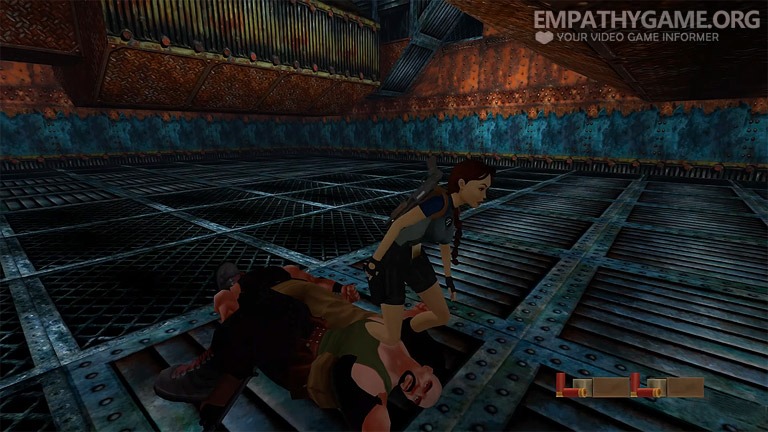
Tomb Raider II is more outwardly exciting. Venice, the Great Wall, underwater wreckage, Tibetan monasteries, snow, boats, vehicles, human enemies, and the Dagger of Xian give it broader variety and a stronger sense of globe-trotting action.
The price is more combat friction. Lara’s lock-on pistols and heavier weapons work well enough against animals or isolated threats, but repeated human enemies can turn some rooms into awkward gunfights. The more the sequel emphasizes shooting, the clearer it becomes that classic Tomb Raider is strongest when combat supports exploration rather than replaces it.
Its best levels remain memorable because they shift tone boldly. Venice provides an urban adventure, the wreck levels create submerged spatial confusion, and Tibet restores a stronger sense of atmosphere and scale. The remastered presentation can make some routes easier to read, but a missed switch or hidden passage can still stop progress until the player studies the level again.
Tomb Raider III Is Ambitious, Harsh, and Sometimes Unfair
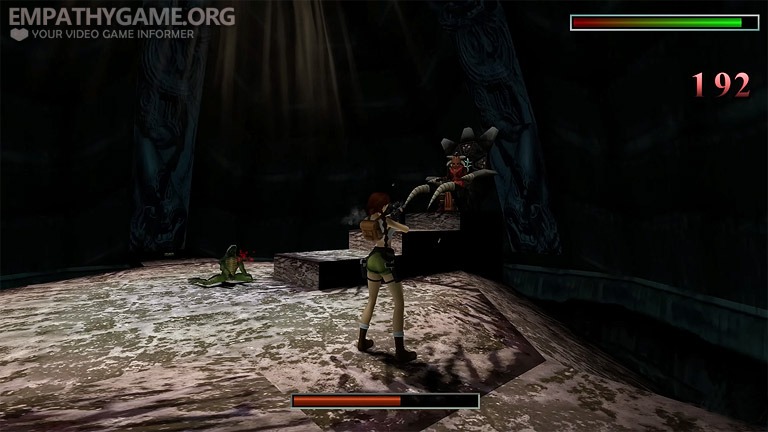
Tomb Raider III is the most ambitious game in the collection and the easiest to criticize. India, London, Nevada, the South Pacific, Antarctica, and the meteorite-artifact storyline create enormous variety, while the level design pushes harder on traps, alternate routes, environmental hazards, and obscurity.
At its best, that ambition produces some of the trilogy’s strangest and most memorable spaces. At its worst, switches give too little feedback, routes are easy to overlook, and solutions can be hidden so aggressively that consulting a hint feels reasonable rather than defeatist.
The remaster cannot fully solve that without redesigning the game. Better visuals and modern options improve readability, but Tomb Raider III remains a demanding collection of beautiful, sometimes cruel spaces. Completionists may find it the most rewarding entry; newcomers may find it the one that tests patience hardest.
Switches, Keys, and Feedback Are Still Part of the Challenge
Classic Tomb Raider expects players to remember large spaces. A lever may open a door elsewhere, drain water in another chamber, release an enemy, or alter a route passed much earlier. Sometimes the camera shows what changed and sometimes it does not, turning exploration into backtracking detective work.
The graphics toggle becomes practical here, not merely nostalgic. Some pickups, ledges, shadows, or route details are easier to read in one visual mode than the other. Action indicators and brighter pickup visibility can reduce unnecessary searching, but the collection still leaves enough old-school ambiguity that moving slowly after a major interaction is often wise.
The Remastered Visuals Respect the Old Shape
The visual upgrade succeeds because it improves the games without replacing their geometry. Lara’s model is cleaner, textures and water are sharper, lighting is richer, and distant spaces are easier to parse, yet rooms, blocks, slopes, ledges, and old traversal rules still behave like classic Tomb Raider.
That restraint matters. Rebuilding every level around automatic climbing and cinematic movement would create a different game. Here, players still need to judge ledges, line up jumps, and understand the original pathing.
Instant visual switching is therefore one of the collection’s strongest features. The remastered art often adds warmth and clarity, while the original graphics can preserve a stark atmosphere or make certain geometry easier to understand. Photo Mode complements that preservation approach by letting players inspect memorable spaces without altering how they function.
The Stories Are Simple, but the Atmosphere Carries Them
Players should not expect modern character arcs. The Scion, Dagger of Xian, and meteorite-artifact stories provide enough motive to move across the world, but architecture, danger, isolation, and escalation do most of the narrative work. Lara is confident, dry, capable, and defined more by action than introspection.
That makes the trilogy very different from later entries such as Rise of the Tomb Raider, where cinematic survival, character motivation, crafting, combat arenas, and progression systems take a larger role. The remastered trilogy is colder, lonelier, and more mechanical; it asks players to understand ruins before it asks them to understand Lara.
Combat Is the Weakest Major Pillar
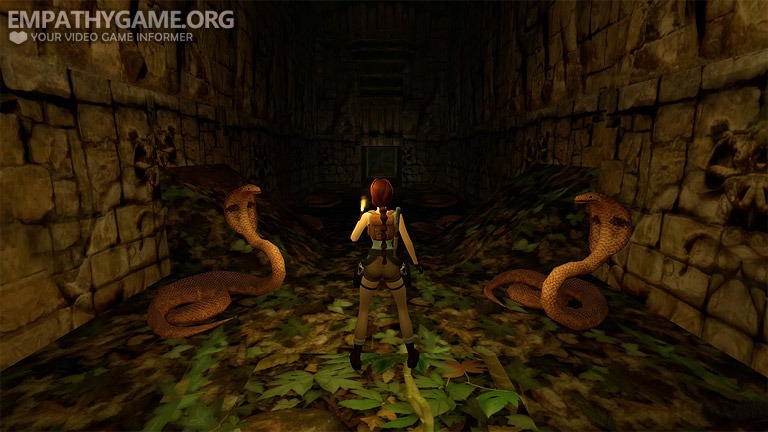
Combat is part of classic Tomb Raider’s identity, but it is rarely the best part. Dual pistols, shotguns, Uzis, harpoons, and other weapons provide enough variety, yet most fights reduce to locking on, moving, keeping distance, and draining enemy health. This works better against animals and monsters than against repeated human enemies.
Boss health bars improve feedback without changing the underlying combat model. New Game Plus and Challenge Mode can make familiar encounters much harsher through resource pressure, stronger enemies, or custom modifiers, but the most satisfying fights are still those connected to space: using elevation, preserving ammunition, escaping an ambush, or treating combat as another part of the room’s puzzle.
Expansions and Replay Modes Add Real Value
Unfinished Business, Golden Mask, and The Lost Artifact make this more than a basic three-game rerelease. The expansions assume that players already understand the mechanics, so they often feel less like introductory bonus stages and more like advanced tests of each game’s design language.
Replayability is also stronger than it first appears. Secrets, achievements, route mastery, New Game Plus, completed-level replays, Challenge Mode modifiers, and unlockable outfits give experienced players reasons to revisit familiar spaces. Challenge Mode is particularly flexible because it can alter Lara’s health and regeneration, equipment, enemy health and damage, enemy numbers, and other conditions without changing the base campaigns.
The result is a package that works both as preservation and as a long-term mastery project. Players who only want the stories can stop after the campaigns; players who enjoy learning routes and testing stricter conditions can keep finding reasons to return.
Newcomers Should Adjust Expectations Early
Tomb Raider I-III Remastered is easier to buy, run, view, and configure than the original releases, but the level design has not been softened into a guided modern adventure. Getting stuck, missing a jump, backtracking after a switch, and wondering whether a route was overlooked are still normal parts of the experience.
The best starting advice is simple: begin with Tomb Raider I, learn the movement slowly, save often, use the graphics toggle when visibility feels suspicious, and treat modern controls as an option rather than an automatic upgrade. A guide or hint after a long search does not invalidate the experience; some 1990s solutions genuinely value secrecy over readability.
How It Compares to Modern Tomb Raider
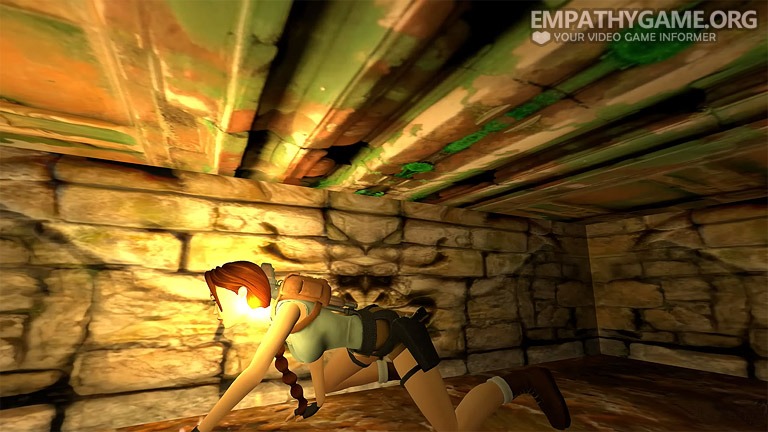
The shift is easiest to feel beside Tomb Raider (2013). The survivor-era games emphasize cinematic storytelling, third-person combat, crafting, progression, set pieces, and guided traversal, while the original trilogy is more abstract and architectural. It does not ask how Lara feels about a tomb; it asks whether the player can understand it.
Players who enjoyed the stronger tomb and puzzle emphasis in Shadow of the Tomb Raider may find this collection interesting as a much older, stricter expression of that instinct. There is less dialogue and less guidance, but far more emphasis on reading space, precise movement, and accepting silence as part of the adventure.
Final Verdict
Tomb Raider I-III Remastered succeeds because it respects the original trilogy’s design instead of apologizing for it. Precision movement, lonely exploration, hidden routes, traps, secrets, and large spaces still define the experience, while remastered visuals, instant graphics switching, Photo Mode, achievements, expansions, New Game Plus, and Challenge Mode make the package easier to revisit.
Its weaknesses come from the same loyalty. Combat is dated, modern controls do not perfectly fit geometry designed around classic movement, visual changes do not always improve readability, and Tomb Raider III can still be obscure enough to send patient players toward a walkthrough.
Even with those caveats, this is a valuable restoration. Tomb Raider I offers the cleanest puzzle-platforming atmosphere, Tomb Raider II adds variety and action, and Tomb Raider III pushes ambition into harsher territory. For players willing to learn the movement language, the trilogy still shows why every ledge, switch, underwater tunnel, and silent chamber once felt important.
Tomb Raider I-III Remastered Pros & Cons
Tomb Raider I-III Remastered PC System Requirements
OFFICIAL WINDOWS PC MINIMUM — STEAM:
OS: Windows 7 or later
CPU: Intel Core i3-3240 / AMD FX-4100
RAM: 4 GB
GPU: NVIDIA GT 730 / AMD R7 240
DirectX: Version 12
Storage: 5 GB available space
Architecture: 64-bit processor and operating system required
Storefront note: Steam does not publish a meaningful higher recommended hardware tier beyond the 64-bit requirement. Epic Games Store and GOG display separate recommended blocks, but their listed legacy CPU/GPU values do not form a sensible higher-performance tier than the minimum specification, so this guide does not present them as a modern performance recommendation.
Additional PC Performance and Setup Notes
- The game’s Steam minimum still lists Windows 7 or later, but the current Steam client requires Windows 10 or newer. GOG and Epic also provide Windows 10-era storefront guidance, so Windows 10 or Windows 11 is the practical choice for a current PC installation.
- Storefront storage figures vary slightly: Steam lists 5 GB minimum space, while GOG and Epic show up to 6 GB in their current requirement blocks. Keep additional free space available for updates, saves, screenshots, and mod backups.
- Current builds include a brightness slider, 60 FPS support in Classic Graphics Mode, and brighter key-item highlighting in HD Graphics Mode. Use these options when the remastered presentation makes a route or pickup harder to read.
- Test classic and modern controls separately. Classic controls are often more predictable for grid-based jumps and exact ledge alignment, while modern controls can feel more natural during general exploration and camera movement.
- Use manual saves before difficult jumps, timed doors, trap rooms, long underwater sections, boss encounters, and unfamiliar routes.
- If visual readability feels wrong, switch between remastered graphics and the original look. Some ledges, shadows, switches, pickups, and room boundaries are easier to judge in one presentation than the other.
- For crashes, missing assets, or unusual behavior, verify installation files through the official storefront, update graphics drivers, temporarily remove recent mods, and test with clean configuration files where practical.
- Back up saves and changed game files before installing unofficial texture, outfit, interface, model, or quality-of-life mods.
- Steam Deck is officially Verified. If an external Bluetooth or USB controller is not selected automatically, change the active controller through SteamOS’s Quick Access Menu.
Official Trailer
Note: The official trailer shows the remastered graphics, classic visual switching, Lara Croft’s original adventures, combat, platforming, puzzles, environments, and Challenge Mode additions, while the written guide adds Steam, GOG, and Epic store differences, Steam Deck status, requirements, modding, and setup guidance.
Frequently Asked Questions
Is Tomb Raider I-III Remastered worth playing in 2026?
Yes. It is one of the most complete ways to play Lara Croft’s first three adventures because it preserves the original level design while adding remastered visuals, modern controls, Photo Mode, achievements, the expansions, New Game Plus, and Challenge Mode. It suits players who enjoy exploration, puzzles, precise platforming, secrets, and demanding old-school level design.
What kind of game is Tomb Raider I-III Remastered?
It is a single-player action-adventure collection built around exploration, puzzle solving, platforming, swimming, trap avoidance, secrets, and third-person combat. The games use structured levels rather than an open world.
Is Tomb Raider I-III Remastered a remake or a remaster?
It is a remaster. Aspyr retained Core Design’s original source code and engine, then layered modern rendering, control options, Photo Mode, and other features over the classic level structures and gameplay logic.
Which games are included?
The package includes Tomb Raider I, Tomb Raider II, and Tomb Raider III. Each game is selected separately from the collection’s menus.
Are Unfinished Business, Golden Mask, and The Lost Artifact included?
Yes. Tomb Raider I includes Unfinished Business, Tomb Raider II includes Golden Mask, and Tomb Raider III includes The Lost Artifact, giving the collection the major classic bonus campaigns alongside the main trilogy.
Where can I officially buy Tomb Raider I-III Remastered on PC?
The Windows PC version is officially sold through Steam, GOG, and Epic Games Store.
What is the difference between the Steam, GOG, and Epic versions?
Steam provides Steam achievements, Steam Cloud, trading cards, Family Sharing, and Steam Deck integration. GOG is the DRM-free option with an offline installer and optional GOG Galaxy features. Epic supports cloud saves, controllers, single-player play, and Epic achievements.
Is Tomb Raider I-III Remastered DRM-free?
The GOG version is DRM-free and does not require GOG Galaxy to install or play. Steam and Epic purchases use their respective storefront ecosystems.
Can Tomb Raider I-III Remastered be played offline?
Yes, the campaigns are single-player. GOG explicitly supports launcher-free offline installation and play; Steam and Epic versions use their normal clients for installation, updates, and platform services.
Should I buy Tomb Raider I-III Remastered or a Tomb Raider I-VI Remastered bundle?
Choose I-III if you only want the first trilogy. A bundle containing Tomb Raider I-III Remastered and Tomb Raider IV-VI Remastered is the more complete classic-era option if you also want The Last Revelation, Chronicles, and The Angel of Darkness.
What is the difference between classic and modern controls?
Classic controls preserve tank-style movement and the deliberate alignment used by the original level geometry. Modern controls use camera-relative movement and freer camera handling, which feels more familiar but can be less predictable for certain old-school jumps.
Which control scheme should beginners use?
Modern controls are a reasonable starting point for general exploration. If a difficult jump, ledge grab, side flip, or trap sequence feels inconsistent, try classic controls because the original spaces were designed around that movement system.
Can I switch between original and remastered graphics?
Yes. The visual modes can be switched during play, making the feature useful both for nostalgia and for checking geometry, lighting, pickups, or route visibility.
Does the collection have Photo Mode?
Yes. Photo Mode lets players pose Lara, change visual presentation, and frame environments, enemies, secrets, and other scenes without changing the original level layouts.
What is Challenge Mode?
Challenge Mode lets you replay completed levels with configurable modifiers affecting factors such as Lara’s health and regeneration, equipment, enemy health and damage, enemy numbers, and other conditions. It also adds extra achievements and unlockable outfits whose bonuses can be enabled during Challenge Mode.
Does Tomb Raider I-III Remastered have New Game Plus?
Yes. New Game Plus becomes available after completing the relevant game and creates a tougher replay with altered resource and enemy conditions. It is separate from the more customizable Challenge Mode.
Does the collection have achievements and trophies?
Yes. PC and console versions include extensive achievement or trophy goals across the three games, expansions, secrets, unusual actions, and Challenge Mode.
What order should I play the games in?
Tomb Raider I, then Tomb Raider II, then Tomb Raider III is the most natural order because it shows how the movement, combat, environments, vehicles, and level complexity evolved. Their expansions are best approached after the corresponding main game.
Which game is the best starting point for a newcomer?
Tomb Raider I is usually the clearest introduction because its level design is more focused and its combat is less dominant. Tomb Raider III is the least beginner-friendly because routes, traps, and progression are more obscure.
Does Tomb Raider I-III Remastered have multiplayer or co-op?
No. The collection is single-player only and does not include online multiplayer, campaign co-op, split-screen, LAN play, or cross-play.
Does the PC version support controllers?
Yes. Controller play is supported, and Steam also lists full controller support. Keyboard controls remain available for players who prefer a classic PC-style input setup.
Does Tomb Raider I-III Remastered have mods?
Yes, unofficial PC mods are available through established communities such as Nexus Mods. They include visual, model, texture, interface, save, and quality-of-life changes, but there are no official public modding tools or Steam Workshop integration listed for the game.
Does the game work on Windows 10 and Windows 11?
Yes. The storefront requirements are light by modern standards, but current Steam client support itself requires Windows 10 or newer. Windows 10 or Windows 11 is therefore the practical setup for Steam users.
How much storage does Tomb Raider I-III Remastered need on PC?
Steam lists 5 GB of available space for the minimum installation, while GOG and Epic show up to 6 GB in their requirement blocks. Leave additional free space for platform files, updates, saves, screenshots, and backups.
What should I try if the game crashes or behaves strangely?
Verify files through the official storefront, update graphics drivers, disable or remove recent mods, restart the store client, and test with clean configuration files where practical. Back up saves before changing or deleting local files.
Is Tomb Raider I-III Remastered good on Steam Deck?
Valve rates the Steam version Verified. The game runs on SteamOS with legible text, matching controller icons, and suitable default graphics settings; an external Bluetooth or USB controller may need manual controller-order selection.
What other platforms have native versions?
The remaster is available on Windows PC, PS5, PS4, Xbox Series X|S, Xbox One, Nintendo Switch 2, Nintendo Switch, iOS, and Android.
What beginner tips help most?
Save often, walk near dangerous ledges, line up long jumps carefully, search water and vertical spaces, revisit doors after pulling switches, and use the graphics toggle when a pickup or route is hard to read. Learning the movement rules is more useful than trying to rush through the levels like a modern action game.
Still have questions? Check the Aspyr Tomb Raider I-III Remastered support page, Steam Discussions, or the Tomb Raider subreddit.
Sources & References
Key factual and technical information in this guide was checked against relevant official and established sources, including:
- Steam — Tomb Raider I-III Remastered — PC features, minimum requirements, Steam bundles, and overall user reception
- GOG — Tomb Raider I-III Remastered — DRM-free ownership, offline installer availability, system information, and bundle status
- Epic Games Store — Tomb Raider I-III Remastered — Windows availability, cloud/controller features, Challenge Mode, achievements, and OpenCritic panel
- Aspyr Support — Challenge Mode — permanent Challenge Mode modifiers, outfits, and additional achievements
- Tomb Raider — Everything You Need to Know About Tomb Raider I-III Remastered — original engine/source-code preservation, controls, visuals, and Photo Mode
- Metacritic — PC Critic Reviews — PC Metascore and PC Gamer review score
Similar Games Like Tomb Raider I-III Remastered
- Tomb Raider IV-VI Remastered
- The Legend of Zelda: Twilight Princess
- Shadow of the Colossus
- Rise of the Tomb Raider
- Shadow of the Tomb Raider
- The Legend of Zelda: Breath of the Wild




Found something worth playing through DecideGame?
DecideGame.com is an independent gaming project run by Editor Zero. If this guide helped you discover a game, solve a problem, or find useful information, you can support DecideGame.com and help keep new and updated game guides coming.
DecideGame — PC Game Guides, Reviews & Setup Help