
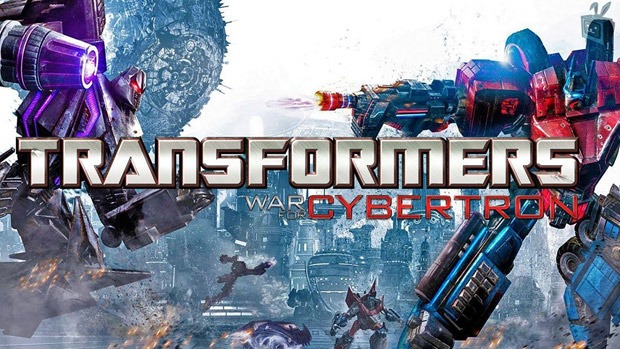
📅 Game released: 2010
Use this updated 2026 Transformers: War for Cybertron PC guide to understand its delisted Steam status, legal ownership and installation options, retired official online services, community multiplayer restoration, system-requirements status, PC compatibility, and save-backup precautions before returning to Cybertron.
 By Editor Zero — independently researched, edited, and maintained.
Last updated: 23 September 2026
Last reviewed: 23 September 2026
Table of Contents
- Quick Summary
- Quick Facts
- Official PC Stores, Download & Installation
- Transformers: War for Cybertron Review
- Pros & Cons
- PC System Requirements
- Frequently Asked Questions
- Similar Games
Transformers: War for Cybertron Quick Summary
✔ Third-person sci-fi shooter set entirely on Cybertron during the war between the Autobots and Decepticons, with separate campaigns showing both sides of the conflict
✔ Every playable Transformer can change between robot and vehicle form during movement and combat, combining firearms, melee attacks, abilities, driving, and flight without separate transformation stages
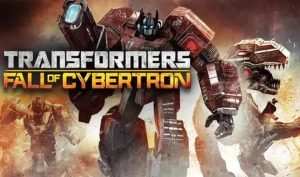
✔ Similar to Transformers: Fall of Cybertron, its direct sequel, through Cybertronian warfare, transforming combat, multiple playable characters, large mechanical environments, and story-driven third-person shooting
✔ The original release supported online campaign co-op, four-player Escalation and competitive multiplayer, but the official PC online service is no longer available
✔ An unofficial Warehouse community service can restore online functionality for players who already possess the PC game; it is separate from Activision and does not provide a copy of the game
✔ New PC buyers do not have a normal verified official digital purchase option, making legitimate existing ownership, old retail copies, compatibility, and save backups especially important
Transformers: War for Cybertron Quick Facts
Official PC Store Status, Download & Installation
👇 Use the notes below to understand the current official PC availability status for Transformers: War for Cybertron and avoid unsafe or unofficial acquisition options.
- Current PC availability: Transformers: War for Cybertron is not currently offered through a verified normal official PC storefront for new digital purchases. Steam retains the historical app and game depots, but the title has no current Steam purchase price.
- Existing Steam ownership: If the game is already attached to your Steam account, use your own Steam Library and normal Steam installation tools rather than looking for replacement game files from unofficial download sites.
- Physical PC copies: Original retail Windows editions also exist. These belong to an older activation and DRM era, so an authentic disc and key may involve legacy compatibility or activation issues on a modern Windows installation.
- Legacy activation: Steam metadata retains a legacy key-registration entry for War for Cybertron, while historical retail releases used older copy-protection technology. Do not bypass activation or DRM; use legitimate owned media, keys, Steam support, or the original account associated with the game.
- Official online services: The original Activision PC multiplayer infrastructure is no longer available. Steam metadata marks the game with
NoServers, so the original campaign co-op, Escalation, and competitive modes should not be expected to connect through the former official service. - Community multiplayer: Warehouse operates an unofficial community multiplayer service for legitimate PC owners. Its current guide provides a launcher or manual multiplayer-enabling setup and explicitly states that it does not supply the game itself. Warehouse is a community project, not an Activision service.
- GOG status: War for Cybertron is not sold on GOG. It currently appears in the GOG Dreamlist, where users can vote for a possible future preservation release.
- PC DLC: Activision’s official Map and Character Pack release was offered for Xbox 360 and PlayStation 3 rather than as a Windows PC DLC package, so PC players should not expect a current official DLC store listing.
- Save backups: Back up the game’s save directory before troubleshooting, experimenting with community tools, or alternating between War for Cybertron and Fall of Cybertron. The two PC games can use overlapping Transformers save-folder structures, creating a risk of overwritten or corrupted data.
- Modern Windows setup: This is a DirectX 9-era, 32-bit Unreal Engine 3 PC release. Modern hardware greatly exceeds the game’s original performance targets, but legacy dependencies, the default frame-rate limit, old activation systems, controller behavior, or configuration files can still require attention.

Transformers: War for Cybertron Review
Instant transformation gives a familiar third-person shooter a distinct combat rhythm, even when repetitive corridors and uneven AI expose its age.
Transformers: War for Cybertron succeeds by making the defining fantasy of Transformers matter every few seconds instead of saving it for scripted spectacle. High Moon Studios builds a third-person shooter around the idea that robot and vehicle forms are two halves of the same combat language. A firefight can begin behind cover-like scenery, turn into a boosted dash across exposed ground, and end with a transformed attack from a better angle. The shooting itself relies on recognizable 2010-era archetypes, but transformation keeps the campaign from feeling like a generic licensed action game wearing Cybertronian character models.
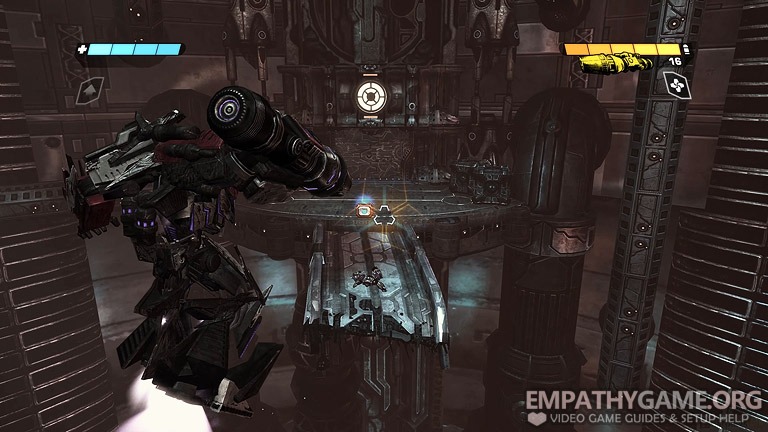
That strength carries the game through several obvious limitations. Enemy variety is modest, ammunition pressure can slow the pace, squad AI is inconsistent, and too many interior spaces collapse into another dark metal corridor filled with glowing circuitry. Yet the campaign repeatedly recovers whenever it leans into what only a Transformers game can do: switching forms mid-fight, sending jets through large aerial spaces, giving tanks real weight, and framing encounters around characters whose abilities change how a familiar battlefield is approached. It is a focused, sometimes rough shooter whose best ideas remain unusually well matched to its license.
Transformation Gives Familiar Shooting Its Identity
The basic loop is conventional on paper. Advance through a linear battlefield, clear enemies, search for ammunition and health, use a character ability when pressure rises, then move into the next arena. The weapon roster also fits recognizable roles: automatic guns for sustained fire, close-range weapons for aggressive pushes, scoped options for distant targets, and explosives for heavier threats. None of that is especially novel by itself.
Transformation is what changes the texture. Because switching forms is immediate, movement does not have to stop when combat starts. A car-form Transformer can boost through a dangerous lane, transform behind a piece of scenery, fire several shots, then shift again before enemies fully collapse on the new position. Tank forms trade some agility for stronger firepower, while jets turn vertical space into part of the encounter rather than background decoration. The result is not a deep tactical simulator, but it does create a rhythm that ordinary cover shooters of the period rarely had.
The lack of a dedicated snap-to-cover system makes that mobility more important. Cybertron is full of waist-high geometry and large mechanical structures that function as informal cover, but the game expects manual positioning rather than a Gears-style attachment system. When enemy fire becomes dense, standing still and exchanging shots is usually less effective than breaking line of sight, relocating, or using vehicle speed to reset the fight. That gives transformation practical value beyond simply reaching the next objective faster.
Character abilities add smaller variations to that loop. Whirlwind encourages a direct close-range push, Cloak rewards repositioning or surprise, Dash helps escape pressure, Hover changes vertical control, while Warcry and healing-oriented powers support a squad more directly. The abilities are not equally useful in every chapter, but they stop the fixed character selection from feeling purely cosmetic. Choosing a Transformer means accepting a particular combination of body type, vehicle form, weapons, and utility.
Squad Structure Adds Variety, but the AI Is a Weak Partner
Each chapter is built around a predetermined three-Transformer squad, with the player choosing one character while the other two are controlled by AI in solo play. This is a smart structure because it lets High Moon design encounters around specific roles instead of allowing any character to enter any mission. A flying chapter can assume access to jet movement; a heavier combat sequence can be balanced around characters with more direct offensive tools.
The weakness is that the solo companions rarely feel like true tactical partners. They contribute fire and help sell the scale of a faction moving through Cybertron together, but they are not reliable enough to become the foundation of a strategy. Under heavy pressure, the player still does most of the meaningful positioning, target prioritization, and resource management. This makes some long firefights feel more attritional than cooperative, especially when ammunition is low and allies are present without decisively changing the outcome.
That also explains why the campaign’s three-character construction makes more sense in co-op than it does alone. With human players occupying the roles, a squad can divide attention, revive momentum after a mistake, and use mobility or support abilities with deliberate timing. In solo play, the same composition is more about flavor and character choice than genuine squad tactics.
The Campaign Is Best When It Escapes the Corridors
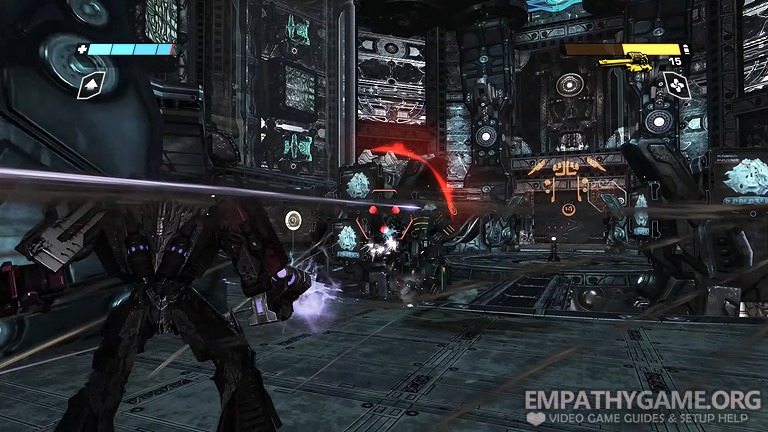
War for Cybertron is a ten-chapter linear campaign, and its pacing rises or falls with how confidently each mission uses the setting. The weaker stretches rely on familiar patterns: repeated enemy waves, doors and switches, escort-like movement, and enclosed arenas connected by narrow mechanical hallways. Because the enemy roster is not especially broad, those structures can begin to blur together over a long session.
The stronger missions break that pattern with scale or movement. Flight sequences are an obvious highlight because jet forms finally get enough space to feel essential rather than decorative. Vehicle-heavy stretches work for the same reason: speed becomes a combat decision, not just a faster way to cross an empty hallway. Large mechanical spaces also give the art direction room to breathe, making Cybertron look like a civilization built for transforming machines rather than a collection of interchangeable sci-fi interiors.
Boss encounters benefit from the same emphasis on scale. Omega Supreme is memorable not simply because of size, but because the fight visually communicates that the campaign has moved beyond ordinary corridor battles. Not every boss uses that spectacle equally well, though. Some encounters lean too heavily on periods where damage cannot be meaningfully dealt, turning what should be a tense pattern-reading exercise into waiting for the next vulnerable phase. The problem is pacing rather than difficulty: a boss is more satisfying when survival and attacking remain connected instead of occurring in separate blocks.
Two Factions Give the Story More Character Than the Plot Needs
The narrative is divided into five Decepticon chapters followed by five Autobot chapters, and that split is more valuable for tone than for plot complexity. The Decepticon half establishes Megatron’s pursuit of Dark Energon and lets the game embrace arrogance, rivalry, and open hostility inside its own squad. Starscream’s ambition and Megatron’s contempt make even routine mission dialogue feel sharper. The Autobot half shifts toward cooperation and defense as Cybertron’s crisis worsens, giving Optimus a different kind of authority from Megatron.
This faction contrast keeps the campaign from feeling like the same shooter repeated with different colors. The story itself is straightforward enough for newcomers to follow, but established relationships, references to the Matrix, and characters such as Soundwave or Omega Supreme give longtime Transformers fans extra context. Importantly, the game does not require exhaustive franchise knowledge to make its conflict understandable.
Peter Cullen’s Optimus provides the most immediately recognizable performance, but the broader cast does just as much work in separating the campaigns. Megatron’s aggression, Starscream’s self-interest, Soundwave’s loyalty, and the Autobots’ more cooperative exchanges create personality through short mission conversations rather than long cutscenes. That suits a game whose momentum depends more on combat and movement than on extended narrative detours.
Cybertron Feels Alien, Even When It Starts to Look Repetitive
The decision to set the entire game on Cybertron is one of its strongest artistic choices. There are no Earth cities, civilian cars, or ordinary human spaces to soften the mechanical premise. Vehicles look native to Cybertron, architecture is built from massive industrial forms, and even the scenery suggests a world where transformation is normal rather than extraordinary.
The downside is visual sameness. Dark metal, luminous circuitry, industrial chambers, tunnels, bridges, and layered machinery create a coherent identity, but coherence sometimes becomes monotony. Long indoor sequences can be difficult to distinguish from one another, especially when combat structure is repeating at the same time. The art direction is stronger at the level of theme than at the level of constant visual variety.
Interface presentation shows its age in smaller ways as well. On PC, controller use is functional, but the game does not always surface gamepad information as clearly as it should, which can make simple actions less discoverable than expected. It is not a major control failure, but it is the kind of friction that separates a serviceable port from a fully polished one.
Multiplayer Design Adds More Strategy Than the Campaign Progression
The campaign does not have a persistent upgrade tree that reshapes a character across the story, so long-term progression is relatively light. Replay value comes more from selecting a different Transformer, choosing another difficulty, experimenting with weapons, and revisiting chapters whose vehicle or flight sections support a different pace.
The deeper system design appears in competitive multiplayer, where Leader, Soldier, Scientist, and Scout classes create clearer roles than the campaign’s fixed squads. Leaders support and strengthen a team, Soldiers lean into durability and heavy weapons, Scientists combine flight with healing or disruption, and Scouts favor speed, cloaking, and hit-and-run pressure. The interesting part is not simply that four classes exist, but that vehicle form reinforces their battlefield identity. A Scientist’s mobility changes how support reaches teammates, while a Scout’s speed makes positioning part of its offense.
Escalation is even better at turning simple rules into practical decisions. Teams defeat waves, earn Energon, and spend it on health, ammunition, weapons, and access to additional parts of the map. Opening a door is therefore not just progression. Every new route can weaken a defensible funnel and give enemies another angle from which to surround the group, so spending points carelessly can make a later wave harder. The mode becomes a small economy of risk: immediate access to better resources has to be weighed against the geometry being opened up.
That design gives War for Cybertron more multiplayer depth than its licensed-game status might suggest. The campaign is still the main showcase for transformation, but Escalation and class-based competitive play reveal how well the same mechanics support coordinated roles, resource decisions, and movement under pressure.
Final Verdict
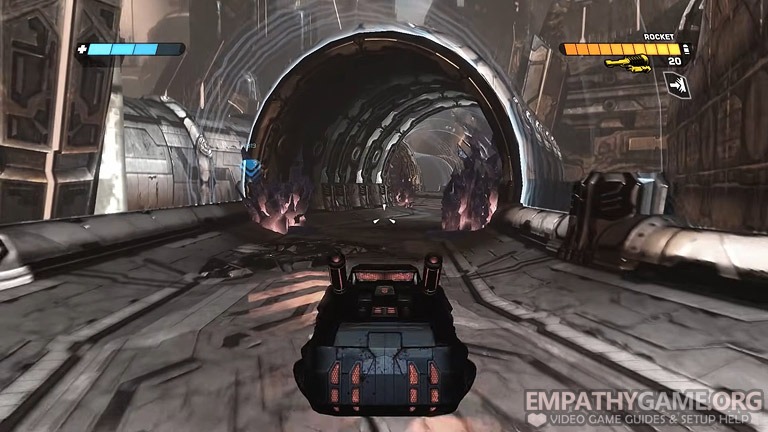
Transformers: War for Cybertron works because its best idea is not merely faithful to the license; it changes how the shooter is played. Instant transformation turns movement into a combat tool, vehicle forms create different ways to cross and control space, and the campaign is at its strongest when levels are large enough for those systems to matter. The two-faction structure, recognizable character performances, and all-Cybertron setting give the action a personality that many licensed games never find.
Its weaknesses are just as clear. Repeated metallic corridors, a limited enemy roster, inconsistent squad AI, ammunition-heavy stretches, and boss phases that sometimes favor waiting over active problem-solving all expose the conventional shooter underneath the Transformers skin. The campaign also offers limited long-term character progression, so much of its replay value depends on different characters, difficulty, co-op structure, or the more role-driven multiplayer modes rather than radically different builds.
For players who want a focused third-person shooter with strong franchise identity, brisk transformation, faction-specific character, and enough mechanical variety to keep a linear campaign moving, War for Cybertron remains a distinctive adaptation. It does not reinvent the genre, but it understands the fantasy better than most licensed action games: being a Transformer should affect where you move, how you attack, and how quickly a battlefield can change.
Transformers: War for Cybertron Pros & Cons
Transformers: War for Cybertron PC System Requirements
Official Windows PC requirements status: A surviving live Activision or Steam page containing the original official minimum and recommended PC specification could not be verified for this delisted release. To avoid presenting third-party archival specifications as official requirements, this guide does not reconstruct or relabel those figures as an official requirements table.
Additional PC Compatibility and Setup Notes
- Legacy PC technology: War for Cybertron is a 32-bit Unreal Engine 3 game from the DirectX 9 era. Modern PCs normally exceed its original hardware class by a large margin, but raw hardware power does not eliminate compatibility issues caused by older software components.
- Default frame rate: The unmodified PC version is capped at 30 FPS. Community utilities can raise that limit, but PCGamingWiki documents side effects at higher frame rates involving vehicle-mode camera sensitivity, certain visual timing and level-of-detail behavior. Treat higher-frame-rate tools as optional unofficial modifications rather than required setup.
- Save location: PCGamingWiki documents save data under
%USERPROFILE%\Documents\My Games\Transformers\TransGame\SaveData\. Back up this directory before changing files or testing community fixes. - Fall of Cybertron conflict: War for Cybertron and Transformers: Fall of Cybertron can use the same broader
My Games\Transformers\TransGamestructure. Existing save data should be backed up before switching between the two games because one installation can interfere with data belonging to the other. - Retail DRM: Some original retail PC releases use legacy SecuROM-era activation. A legitimate old disc does not guarantee frictionless activation on every modern Windows configuration, and this guide does not recommend DRM-bypass methods.
- Troubleshooting: Existing Steam owners should first use Steam’s normal file-verification and installation tools. For display, frame-rate, configuration, controller or legacy-PC issues, PCGamingWiki provides a useful technical reference, but individual third-party utilities remain unofficial.
Official Trailer
Note: The official TransformersGame trailer introduces Cybertron’s mechanical battlefields, Optimus, Megatron, Autobots, Decepticons and the game’s darker pre-Earth interpretation of the Transformers war, while the written guide adds current PC availability, delisting, multiplayer status, compatibility and setup information.
Frequently Asked Questions
Is Transformers: War for Cybertron worth playing in 2026?
Yes. Its Cybertron setting, instant transformation, two-faction campaign and focused third-person combat still give it a distinctive identity, especially for Transformers fans. The biggest limitation is access: the PC version is delisted and its original official online service is gone, so it is easiest to recommend to legitimate existing owners.
Is Transformers: War for Cybertron connected to the Netflix War for Cybertron Trilogy?
No. High Moon Studios’ game is a separate Transformers story that predates the Netflix War for Cybertron Trilogy by many years. The shared name can be confusing, but the game is not an adaptation of the Netflix series.
Should I play Transformers: War for Cybertron before Fall of Cybertron?
Yes. Transformers: Fall of Cybertron directly continues this game’s Cybertron storyline, characters and conflict. Playing War for Cybertron first provides the stronger narrative introduction to Megatron’s campaign, Optimus and the escalating war.
Should I play the Decepticon or Autobot campaign first?
Play the Decepticon campaign first if you want the story in its intended chronological flow. Its five chapters establish Megatron’s rise and the worsening crisis on Cybertron before the five Autobot chapters continue the conflict from Optimus’s side.
How many campaign chapters are in Transformers: War for Cybertron?
There are ten main campaign chapters: five for the Decepticons and five for the Autobots. The campaigns are separate in the menu, but together they form the game’s complete story.
Can you choose which Transformer to play during the campaign?
Yes. Each chapter offers a squad of three specific Transformers, and you choose which one to control before starting the mission. The other two are AI-controlled in solo play, while online co-op was designed to let additional players take those roles.
Is Transformers: War for Cybertron open world?
No. It is a linear, mission-based third-person shooter rather than an open-world game. Individual areas can provide room for vehicle movement, flying and combat approaches, but progression follows a defined campaign path.
How does transforming work in Transformers: War for Cybertron?
Transformation happens instantly during normal gameplay rather than through a separate mode or scripted sequence. Characters can switch between robot and vehicle forms for movement, combat, boosting and traversal, with vehicles ranging from cars and trucks to tanks and jets.
How does campaign co-op work in Transformers: War for Cybertron?
The campaign was designed for up to three-player online drop-in/drop-out co-op, with each player controlling one of the three Transformers assigned to that chapter. When playing alone, the remaining squad members are controlled by the AI.
Does Transformers: War for Cybertron support split-screen or local co-op?
No. The standard PC, PlayStation 3 and Xbox 360 version uses online rather than split-screen campaign co-op. The Wii game Transformers: Cybertron Adventures is a different title and includes its own two-player second-reticle feature, so information about that version should not be confused with War for Cybertron on PC.
Are the official Transformers: War for Cybertron servers still online?
No. The original official online service has been shut down, so the unmodified PC release should not be expected to connect to Activision’s former multiplayer infrastructure. The single-player campaign does not depend on those multiplayer servers.
Can Transformers: War for Cybertron multiplayer still be played on PC?
Community multiplayer is possible through Warehouse, an unofficial restoration service for players who already possess the PC game. Warehouse is separate from Activision, requires additional community setup, and explicitly does not provide the game itself.
What is Escalation mode in Transformers: War for Cybertron?
Escalation is a cooperative survival mode for two to four players fighting increasingly difficult waves of enemies. Defeating enemies awards points that can be spent on weapons, ammunition, health and opening additional areas of the map.
What are the multiplayer classes in Transformers: War for Cybertron?
The four original competitive classes are Leader, Scout, Soldier and Scientist. They differ in weapons, abilities and vehicle form: Scouts emphasize speed and stealth, Soldiers heavy firepower, Scientists mobility and support, while Leaders provide durable team-oriented abilities.
What is Prime Mode in Transformers: War for Cybertron?
Prime Mode was the original multiplayer prestige-style progression system. After maximizing all four multiplayer classes, a player could activate it to reset class experience, skills and abilities in exchange for a special status icon.
Can you still buy Transformers: War for Cybertron on PC?
There is no normal verified official digital PC purchase option. Steam retains the game’s app and depot records but has no current sale price, while its GOG page is a Dreamlist preservation request rather than a purchasable release; existing owners should use their legitimate Steam account or original owned retail copy.
Did the PC version of Transformers: War for Cybertron receive the console DLC?
No. Activision officially released its two Map and Character Packs for Xbox 360 and PlayStation 3, not Windows PC. Community attempts to bring some of that material to PC exist, but they are unofficial modifications rather than official PC DLC.
Is Transformers: War for Cybertron locked to 30 FPS on PC?
Yes. The original PC game has a 30 FPS cap by default. Community tools can raise it, but some animation, camera, texture-streaming and other behavior is tied to frame rate, so 60 FPS modifications can introduce side effects and should be treated as optional unofficial changes.
Does Transformers: War for Cybertron work on Windows 10 and Windows 11?
It can run on modern Windows systems, but it is a legacy 32-bit DirectX 9 game and was never designed around Windows 10 or 11. Existing owners may encounter configuration, PhysX, compatibility or startup issues that do not affect every PC in the same way.
Does Transformers: War for Cybertron support controllers on PC?
Yes. The PC version supports XInput-compatible controllers, including the traditional Xbox-style controller layout. One limitation is that the game can continue displaying keyboard button prompts rather than proper controller prompts.
Does Transformers: War for Cybertron work on Steam Deck?
There is no useful modern official Steam Deck support rating to rely on for this delisted release. Community users have successfully run the owned PC version through Proton, but installation can require manual compatibility setup and should be considered an unofficial Linux/SteamOS configuration rather than native Steam Deck support.
Can Transformers: War for Cybertron be modded on PC?
Yes, through unofficial community modifications and configuration tools, but there is no official modding toolkit or Steam Workshop integration. Back up saves and configuration files before installing mods, and check each modification’s requirements because old tools and different game configurations can conflict.
Can War for Cybertron and Fall of Cybertron overwrite each other’s PC saves?
Yes. The two PC games can use the same broader Documents\My Games\Transformers\TransGame save structure, and PCGamingWiki warns that one game’s data can overwrite or corrupt the other’s. Back up the SaveData folder before switching between the two installations.
Still have questions? Check the Transformers: War for Cybertron Steam Discussions, Warehouse War for Cybertron PC guide, or TransformersFOC Reddit community for additional help and community discussion.
Sources & References
Key factual and technical information in this guide was checked against relevant official and community sources, including:
- Activision — Transformers: War for Cybertron Hits Retail Shelves Nationwide — verified the Windows release date, High Moon Studios, platforms, campaign structure, transformation gameplay, online co-op, competitive multiplayer, and four-player Escalation
- SteamDB — Transformers: War for Cybertron App 42650 — checked present Steam metadata, app/depot status, lack of a current purchase price, legacy key-registration metadata, review metadata, and the
NoServersflag - GOG Dreamlist — Transformers: War for Cybertron — checked its present preservation-list status and corroborated the game’s delisting and retired official online service
- PCGamingWiki — Transformers: War for Cybertron — used for PC compatibility, legacy DRM, save/configuration behavior, frame-rate limitations, and modern-PC technical guidance
- Warehouse Wiki — Transformers War for Cybertron PC Guide — checked the current unofficial community multiplayer process and its explicit requirement that players provide their own copy of the game
- Metacritic — Transformers: War for Cybertron PC Critic Reviews — verified the PC Metascore and IGN review score
Similar Games Like Transformers: War for Cybertron
Found something worth playing through DecideGame?
DecideGame.com is an independent gaming project run by Editor Zero. If this guide helped you discover a game, solve a problem, or find useful information, you can support DecideGame.com and help keep new and updated game guides coming.
DecideGame — PC Game Guides, Reviews & Setup Help