
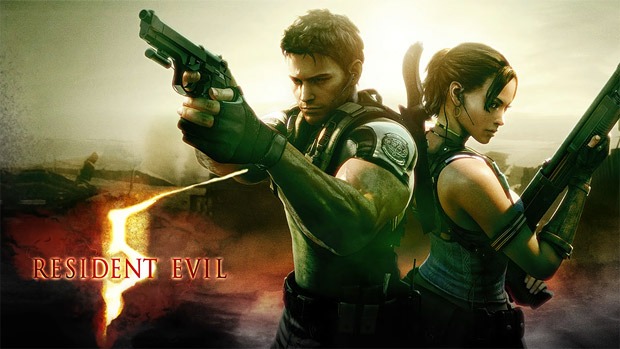
📅 Game released: 2009
Resident Evil 5 sends Chris Redfield and Sheva Alomar into a bioterror outbreak built around coordinated third-person combat, shared resources, and replayable co-op action. This PC guide covers the official Steam purchase and download, Gold Edition and Untold Stories DLC, online and split-screen co-op, system requirements, Steam Deck support, mods, and installation tips.
 By Editor Zero — independently researched, edited, and maintained.
Last updated: 9 November 2026
Last reviewed: 9 November 2026
Table of Contents
- Quick Facts
- Official PC Stores, Download & Installation
- Resident Evil 5 Review
- Pros & Cons
- PC System Requirements
- Frequently Asked Questions
- Similar Games
Resident Evil 5 Quick Facts
- Game: Resident Evil 5 / Biohazard 5 / Resident Evil 5 Gold Edition
- Developer: Capcom; Windows PC port by Mercenary Technology
- Publisher: Capcom
- Genre: Survival Horror, Zombie Games, Third-Person Shooter, Co-op Shooter
- Release: March 5, 2009 (Japan, PS3 and Xbox 360); Windows PC: September 15, 2009 (North America)
- Platforms: PS3, Xbox 360, Windows PC, NVIDIA Shield Android TV, PS4, Xbox One, Nintendo Switch
- PC Gold Edition content: Untold Stories Bundle: Lost in Nightmares, Desperate Escape, The Mercenaries Reunion, Versus, extra figures, and costumes
- Co-op: Two-player campaign online or local split-screen on Steam; solo play with an AI-controlled partner
- Steam Deck: Playable; default controls work, but manual quitting or switching external controllers may be necessary
- Engine: MT Framework
- Community: Steam Discussions, Resident Evil subreddit
- PC modding: Nexus Mods hosts unofficial visual and quality-of-life modifications; no official Steam Workshop support is listed
- Metacritic score: 86/100 (Windows PC)
- IGN score: 9.3/10 (Windows PC)
- Steam user reception: Very Positive overall
Official PC Stores, Download & Installation
👇 Compare the official Steam purchase, download, DLC, activation, and co-op details below before installing Resident Evil 5 on Windows PC.
- Windows PC availability: Steam is the verified official Windows storefront used for this guide.
- Gold Edition purchase: Steam presents the main purchase as Resident Evil 5 Gold Edition, which includes the base game and Untold Stories DLC content. Do not buy the separate DLC again if Gold Edition is already in your library.
- Existing base-game owners: The Untold Stories Bundle is sold separately and Steam states that buying it is the same as upgrading Resident Evil 5 to Gold Edition, so check your library before purchasing another package.
- Untold Stories content: The bundle includes Lost in Nightmares, Desperate Escape, The Mercenaries Reunion, Versus, extra figures, and additional costumes.
- Co-op: The Steam version supports online co-op and official local split-screen co-op; the campaign remains fully playable solo with an AI-controlled partner.
- Games for Windows Live: The Steam version no longer requires Games for Windows Live, so old guides that depend on GFWL fixes or sign-in steps are obsolete for the normal Steam build.
- Steam features: The store lists Steam Cloud, achievements, trading cards, leaderboards, Family Sharing, multiplayer, co-op, and full controller support.
- DRM and activation: Steam metadata lists The Enigma Protector as third-party DRM, and the official requirements state that an internet connection is required for game activation.
- Steam Deck: Valve rates Resident Evil 5 as Playable. The default controller configuration is supported and performance is acceptable at default settings, but the game may need to be quit manually through the Steam overlay and external controllers may require manual controller switching.


Resident Evil 5 Review
A replayable co-op action-horror sequel where partner tactics, melee setups, weapon upgrades, and Wesker spectacle matter more than traditional fear
Resident Evil 5 is one of the most divisive mainline entries because it is not really trying to be classic survival horror. It has parasites, grotesque mutations, bioweapons, dark laboratories, limited inventory space, and moments of tension, but its true identity is co-op action. This is a game about two characters holding ground together, sharing ammunition, saving each other from danger, setting up melee attacks, upgrading weapons, replaying chapters, and surviving increasingly absurd set pieces until Chris Redfield is punching through the series’ mythology with both fists.
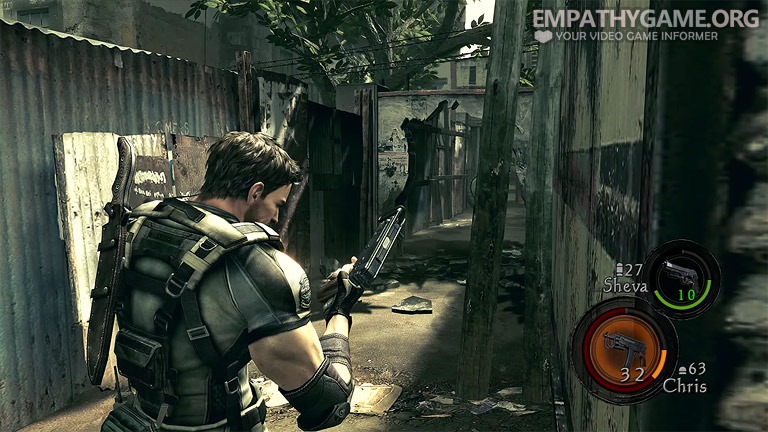
That shift is exactly why Resident Evil 5 still works for some players and disappoints others. Anyone expecting the slow loneliness of the older games may find it too loud, too linear, and too focused on spectacle. But players who treat it as a two-player action-horror campaign built on the combat language of the original Resident Evil 4 can find a lot to enjoy. The newer Resident Evil 4 Remake is a useful comparison for players who want that over-the-shoulder action-horror foundation in a more modern solo form. The best version of Resident Evil 5 is not Chris dragging an AI partner through firefights. It is two people dividing space, calling out threats, trading ammo, rescuing each other, and turning messy encounters into coordinated chaos.
Resident Evil 5 is not the scariest Resident Evil, and it is not the most elegant one. Its enduring strength is the way combat, inventory pressure, chapter replay, and partner actions reinforce one another. As a replayable, weapon-driven, two-player action campaign with strong Mercenaries value, it still has a clear place in the series.
Co-op Is the Heart of the Game
Resident Evil 5 makes the most sense when played with another person. The level design, inventory pressure, revive system, partner actions, split routes, and boss encounters are all built around two characters solving combat problems together. Chris and Sheva are not simply two skins in the same campaign. Their constant partnership changes how space, resources, and mistakes work.
With a real partner, the game becomes more deliberate. One player can hold a chokepoint while the other reloads. One can carry a rifle for distant weak points while the other handles crowds with a shotgun. One can heal, the other can save grenades. A partner can follow up melee attacks, help with puzzles, revive during a dying state, or cover the player while they interact with an object. The campaign’s rougher ideas make more sense when another human is reacting with you.
This is especially obvious in encounters that split the pair. When the game separates Chris and Sheva across platforms, cages, switches, doors, cranes, or elevated positions, solo play can feel like babysitting. In co-op, those same moments become small communication tests. A section that feels annoying with AI can suddenly feel designed when one player is calling for cover while the other rushes to free them.
Some set pieces can even be manipulated with awareness. The ship cage sequence in Chapter 6-1 is a good example: if the player spots and shoots the enemy before he reaches the control, the trap can be skipped entirely. That kind of detail makes the campaign more interesting on replay because it rewards knowledge instead of only asking players to survive scripted chaos.
Resident Evil 5 is still playable solo, but co-op reveals the purpose behind many of its design choices. The campaign is not simply easier with a friend. It is clearer.
The Combat Is Deeper Than “Stop and Shoot” Suggests
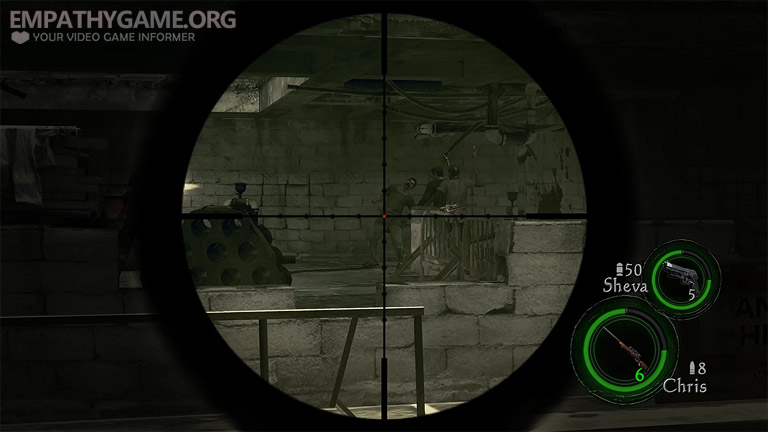
Resident Evil 5 keeps the older stop-and-shoot combat style. Chris and Sheva cannot freely move while aiming, which can feel stiff by modern standards. But the restriction is not meaningless. Standing still to fire makes positioning, reload timing, partner cover, and crowd control more important. A missed shot matters because enemies close distance quickly, and a badly timed reload can leave both characters exposed.
The melee system adds more texture than the game first explains. Shooting a Majini in the head, knee, or shoulder can open a stun window. Running in quickly allows Chris or Sheva to trigger a melee attack before the enemy recovers. Head stuns tend to produce a consistent follow-up, while knee and shoulder setups can change depending on whether the player attacks from the front or behind. Shoulder stuns are especially useful because they can create partner follow-up opportunities when the AI or co-op partner reacts in time.
That turns good play into more than accurate shooting. A handgun bullet to the leg can be more valuable than wasting shotgun shells. A melee follow-up can hit surrounding enemies, create breathing room, and conserve ammunition. A downed enemy can be stomped before it recovers. During melee animations, the player often receives enough protection to use the attack as both offense and emergency positioning. This gives the combat a rhythm: stun, close in, melee, reposition, reload, repeat.
Weapon choice supports that rhythm. Handguns are reliable setup tools, shotguns control crowds, rifles handle distant weak points, machine guns provide pressure, magnums punish bosses, and grenades solve emergencies. The game is rarely about one perfect weapon. It is about choosing what each partner carries and how those tools cover each other’s weaknesses.
This is why Resident Evil 5 can feel clumsy at first but satisfying once its combat language clicks. It is not asking players to circle-strafe like a modern shooter. It is asking them to manage danger in short, deliberate bursts.
Sheva’s AI Is Frustrating, But Not Hopeless
Sheva’s AI is one of the game’s most common complaints, and the frustration is understandable. In solo play, she can use healing items earlier than expected, spend ammunition inefficiently, stand in dangerous positions, or fail to chain melee attacks when the opportunity is obvious. Because the entire campaign is built around partnership, any AI mistake feels more personal than a normal companion issue.
But Sheva is not useless. She becomes far more manageable when treated as a partner with a defined role rather than a second inventory bag. Setting her to Cover and giving her a rifle can work surprisingly well because the AI is accurate, tends to fire more slowly, and wastes less ammunition than it might with rapid-fire weapons. A rifle-focused Sheva can support from range, hit weak points, and avoid burning through shared resources too quickly.
Inventory discipline matters. Giving the AI too many weapon types, too much ammo, or too many healing items can create problems. Keeping her loadout simple makes her behavior more predictable. Solo players who complain that Sheva ruins everything are not always wrong, but the game does give ways to reduce the damage.
Still, the solo version never reaches the same quality as co-op. The issue is not only Sheva’s intelligence. It is that Resident Evil 5’s best moments depend on another human understanding intent. An AI can revive, shoot, and follow, but it cannot laugh through failed quick-time events, call out a flank, decide to save magnum ammo for a boss, or deliberately set up a melee chain with you. That human layer is the game’s strongest feature.
The Early Game Has Daylight Horror Before the Camp Takes Over
Resident Evil 5’s atmosphere is often dismissed as “not scary,” but the opening does have a specific kind of horror. Chris and Sheva moving through Kijuju in harsh daylight creates discomfort because the violence is public, exposed, and social rather than hidden in a dark mansion. The early scenes of infection, villagers surrounding the area, and a woman transforming after trying to escape have a seriousness that feels closer to daylight body horror than campy action.
The Public Assembly encounter remains one of the campaign’s strongest openings. It traps the player in a hostile space with limited supplies, aggressive Majini, a ticking survival structure, and the Executioner Majini turning the crowd into a panic test. It is not traditional horror, but it is tense. The fear comes from being exposed, outnumbered, and forced to hold out with a partner.
As the campaign continues, that tone changes. Ricardo Irving pushes the story toward cartoonish villainy, and once Wesker takes center stage the game fully embraces operatic action. By the final stretch, Resident Evil 5 is no longer pretending to be grounded. It becomes sunglasses, trench coats, matrix dodges, giant bioweapons, volcanic absurdity, and Chris Redfield as a muscle-bound force of nature.
That shift can be awkward, but it is also part of the game’s charm. Resident Evil 5 starts with an attempt at serious bioterror dread and ends in full franchise mythology spectacle. The transition is not smooth. It is, however, very Resident Evil.
The Story Matters More for Chris, Jill, and Wesker Than for Its Local Plot
The main story follows Chris Redfield and Sheva Alomar as they investigate black-market bioweapons, Tricell’s role in continuing old research, and the spread of Uroboros. The local outbreak gives the campaign its immediate threat, but the larger Resident Evil value comes from Chris, Jill Valentine, Albert Wesker, Umbrella’s legacy, and the series’ long-running obsession with viral evolution.
Chris is older and more physically imposing than in his S.T.A.R.S. days, but he is also haunted by loss. His search for Jill gives the plot a more personal thread than the opening bioterror investigation first suggests. Sheva works because she grounds the campaign in partnership. She has her own reason to fight bioterrorism, and even when the writing does not explore her as deeply as it should, her presence gives the gameplay and story the same shape: survival through cooperation.
Wesker is the real dramatic engine. He turns the campaign from a field operation into a major mythology chapter. His arrogance, speed, voice, and theatrical presence make him the kind of villain Resident Evil can get away with because the series has always balanced horror with absurd villainy. Excella Gionne and Irving are weaker, but Wesker’s role gives the finale the exaggerated energy people remember.
The story is not subtle, and parts of its setting and imagery have aged poorly. The depiction of Africa, infected villagers, tribal imagery, and bioterror spectacle remains uncomfortable in ways that cannot be ignored. The game is best discussed honestly: it is not necessarily malicious in intent, but some of its visual choices feel dated and clumsy today.
Level Design Is Stronger in Co-op Than in Solo
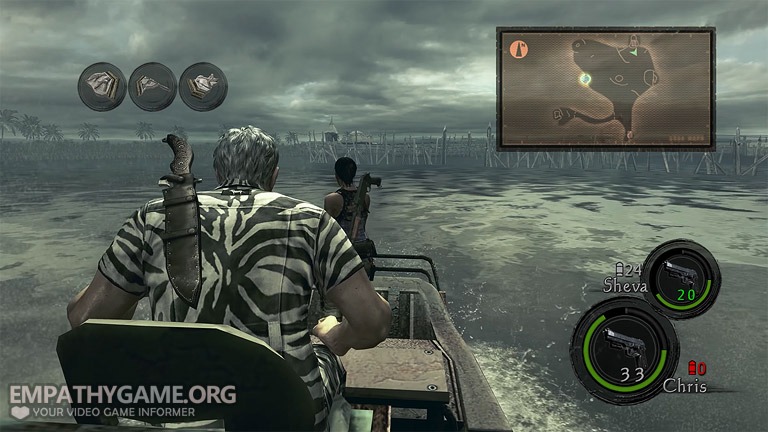
Resident Evil 5’s levels are more linear and set-piece-driven than Resident Evil 4’s village, castle, and island progression. The campaign moves through settlements, mines, marshlands, ruins, oilfields, laboratories, a tanker, and the final volcanic confrontation. There is variety, but some areas feel closer to late-2000s action shooters than classic Resident Evil spaces.
The best levels are the ones that make the partnership matter. The mines reduce visibility and force careful movement. The marshlands open the structure with boat travel and several objectives. Split-path sections ask one player to operate machinery, cover from above, or rescue the other. Boss arenas work better when each partner has a role rather than both players simply firing at the same weak point.
The weaker sections lean too heavily on turrets, quick-time events, cover behavior, or repeated enemy waves. Ndesu, vehicle sequences, and some late action encounters can feel more like spectacle than interesting survival. The game sometimes confuses bigger with better.
This is also why Resident Evil 5 can feel like a different series compared with earlier entries. It follows the action formula that Resident Evil 4 popularized, but pushes it toward louder co-op shooting. Compared with later games such as Resident Evil Village, which mixes action with gothic horror spaces, exploration, and several distinct villains, Resident Evil 5 feels more like a straight campaign of combat rooms and set pieces. It has atmosphere, but the atmosphere often serves action rather than fear.
Bosses Are Memorable, But Uneven
Resident Evil 5 has several memorable boss encounters because they are designed around scale and pressure. The Executioner Majini works because he appears early, towers over the crowd, and turns an already dangerous survival encounter into a panic situation. Popokarimu introduces a more traditional weak-point monster fight. U-8 brings spectacle and arena pressure. Wesker encounters force the game into its most theatrical form.
The best bosses involve teamwork. One player distracts while the other aims at a weak point. One handles smaller enemies while the other prepares heavy damage. One saves ammunition while the other uses explosives. When the fight makes players coordinate, the boss structure fits Resident Evil 5 perfectly.
The weaker bosses depend too much on repeated patterns, mounted weapons, or quick-time prompts. Quick-time events in particular have aged badly. They can punish a player not because they misunderstood the fight, but because they missed a sudden input during a cinematic moment. In co-op, at least, failing them together can become funny. In solo, they are mostly irritation.
Wesker’s fights are not the most mechanically elegant encounters in the series, but they are among the most memorable because they embrace the game’s full camp. The sunglasses, superhuman dodges, dramatic speeches, and volcanic finale are ridiculous. Resident Evil 5 knows this by the end and commits anyway.
PC Controls Are Better Than Expected, With Some Old Quirks
The PC controls are more comfortable than the game’s old reputation suggests. Mouse aiming makes weak points and quick headshots easy to line up, while keyboard shortcuts help with turning, inventory access, and weapon selection. The real-time inventory keeps item management tense because the action does not fully stop while Chris or Sheva reorganizes equipment.
The awkward part is inherited from the combat design rather than the PC port alone. Resident Evil 5 still asks the player to stop moving while aiming, and some context-sensitive interactions feel built around a controller-first interface. That can make the opening chapters feel rigid until the rhythm of aim, fire, melee, reposition, and reload becomes familiar.
Controller play remains natural, especially for couch co-op, while keyboard and mouse offer more precise aiming for solo and online play. Neither input method removes the deliberate movement restrictions, so the better choice depends on whether you value traditional gamepad handling or faster mouse precision.
Weapon Upgrades Give the Campaign Strong Replay Value
Resident Evil 5’s upgrade economy is one of its biggest strengths. Money, treasures, chapter replay, and weapon investment create a constant reason to revisit earlier levels. Firepower, reload speed, capacity, critical chance, and special unlocks gradually turn ordinary weapons into long-term favorites.
The upgrade system also creates decisions. Investing heavily in one handgun, shotgun, rifle, or magnum can pay off, but spreading money too thin can leave the player underpowered. Co-op makes this more interesting because partners can specialize. One player can focus on a shotgun and handgun for crowd control, while the other upgrades a rifle and magnum for weak points and bosses.
Chapter replay supports the whole structure. Missed treasures, BSAA emblems, better ranks, money farming, weapon upgrades, and difficulty preparation all feed into the next run. Resident Evil 5 is linear, but it is not a one-and-done campaign. It is built for repetition.
Infinite ammo and bonus weapons can eventually change the game dramatically. They are not the best way to experience a first run, but they make later playthroughs more relaxed and more experimental. The ranking system gives action-focused players another reason to optimize clear time, accuracy, deaths, and enemy kills.
Mercenaries Shows the Combat at Its Cleanest
Mercenaries is one of Resident Evil 5’s best modes because it removes the story pacing issues and focuses entirely on combat execution. The mode is built around enemy control, time bonuses, combo maintenance, character loadouts, map knowledge, and risk management. Every second matters, and every melee setup can extend a run.
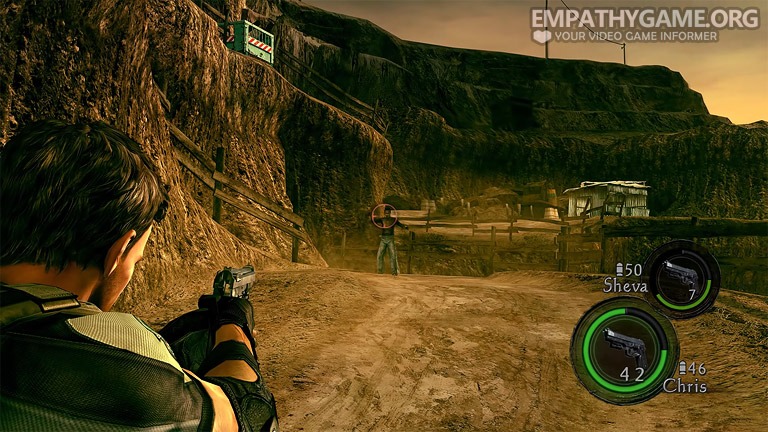
Resident Evil 5’s combat systems shine here because the mode rewards mastery. Headshots, leg shots, shoulder stuns, melee finishers, crowd spacing, item routing, and partner coordination all become part of score chasing. The same stop-and-shoot limitations that can feel stiff in campaign become tactical under time pressure.
Mercenaries Reunion adds more character variety and gives the Gold Edition package stronger long-term value. For many players, Mercenaries is not a side mode. It is the reason Resident Evil 5 stays installed after the story ends. It is also why the game remains one of the most replayable action-focused Resident Evil entries.
The mode works solo, but co-op makes it better. Two players maintaining combos, splitting enemy spawns, collecting timers, and rescuing each other under pressure can turn a small arena into one of the most addictive parts of the whole package.
Lost in Nightmares and Desperate Escape Complete the Package
The Gold Edition content improves Resident Evil 5 because it shows two different sides of the game. Lost in Nightmares is the more important episode for classic fans because it brings Chris and Jill into a mansion-like environment connected to Oswell Spencer. It is shorter and more restrained than the main campaign, but it reconnects Resident Evil 5 with old horror architecture, locked doors, atmosphere, and the feeling of investigating a dangerous estate.
Desperate Escape goes the other direction. It is action-heavy, tense, and built around survival under pressure with Jill and Josh. It does not pretend to be classic horror. It is a concentrated action scenario that fits Resident Evil 5’s louder side.
Together, the extra episodes make the complete package easier to recommend. Lost in Nightmares gives players a taste of the mansion tension that the main campaign often lacks, while Desperate Escape doubles down on the combat-forward identity. Versus, extra costumes, and Mercenaries Reunion add more value, but the two story episodes are the most important DLC pieces for understanding the full game.
Final Verdict
Resident Evil 5 is not one of the series’ strongest horror games, but it is one of its strongest co-op action games. Its best moments come from partnership: sharing ammo, reviving under pressure, splitting objectives, chaining melee attacks, upgrading complementary weapons, surviving boss encounters, and laughing through the kind of ridiculous Wesker spectacle only Resident Evil can deliver.
Its flaws are real. Solo play depends too much on Sheva’s AI, the stop-and-shoot controls feel old, several set pieces lean on noise rather than tension, the level design can feel generic compared with Resident Evil 4, and parts of the setting and imagery have aged poorly. The campaign also shifts from serious daylight horror to full action camp in a way that will not work for everyone.
Even so, the Gold Edition package is easy to respect. The weapon upgrade loop remains satisfying, chapter replay gives the campaign strong momentum, Lost in Nightmares and Desperate Escape round out the experience, and Mercenaries is still excellent. Players looking for slow survival horror should choose another entry. Players who want a replayable two-player Resident Evil campaign with strong combat rhythm, memorable bosses, and one of the series’ best co-op structures should still give Resident Evil 5 a fair shot.
Resident Evil 5 Pros & Cons
- Pro: Co-op remains the strongest reason to play, because the whole campaign is built around Chris and Sheva sharing ammo, healing items, positioning, boss pressure, and rescue moments
- Pro: Gold Edition / Untold Stories content strengthens the PC package with Lost in Nightmares, Desperate Escape, Versus, extra costumes, figures, and Mercenaries Reunion
- Pro: The Steam version no longer requires Games for Windows Live and officially supports local split-screen co-op alongside online co-op
- Pro: Combat, weapon upgrades, melee finishers, boss fights, Mercenaries, chapter ranking, and unlockables create strong replay value for action-horror fans
- Pro: Steam Deck Playable support, full controller support, Steam Cloud, achievements, and modest hardware requirements make the PC version convenient on modern systems
- Con: Resident Evil 5 is much more action-focused than classic survival horror, so players expecting slow tension, puzzles, limited ammo, and lonely exploration may prefer other entries
- Con: Sheva’s AI can still frustrate solo players, especially with ammo use, healing behavior, and positioning during tougher fights
- Con: The stop-and-shoot movement, quick-time events, and some set pieces feel dated beside newer third-person action games
- Con: Enigma DRM, unofficial mod compatibility, and co-op connection quirks can still require troubleshooting
Resident Evil 5 PC System Requirements
OFFICIAL WINDOWS PC REQUIREMENTS:
MINIMUM:
OS: Windows 10
CPU: Intel Core 2 Quad 2.4 GHz or better / AMD Phenom II X4 3.4 GHz or better
RAM: 4 GB or better
GPU: 512 MB VRAM, NVIDIA GeForce 9800 series or better / ATI Radeon HD 7770 or better
Display: Minimum 800 × 600 resolution
Sound: DirectSound-compatible device with DirectX 9.0c or higher
DirectX: DirectX 9.0c / Shader Model 3.0 or better
Storage: 15 GB free hard-drive space
Input: Keyboard and mouse
Internet: Connection required for game activation
RECOMMENDED:
OS: Windows 10
CPU: Intel Core i5-3570 or better / AMD Phenom II X4 3.4 GHz or better
RAM: 4 GB or better
GPU: 512 MB VRAM, NVIDIA GeForce GTX 650 or better / ATI Radeon HD 7770 or better
Display: Minimum 1280 × 720 resolution
Sound: DirectSound-compatible device with DirectX 9.0c or higher
DirectX: DirectX 9.0c / Shader Model 3.0 or better
Storage: 15 GB free hard-drive space
Input: Keyboard and mouse; controller supported
Internet: Connection required for game activation
Additional PC Performance and Setup Notes
- Use the current Steam requirements above rather than older Windows XP/Vista requirement lists still copied by legacy guides.
- Resident Evil 5 is light by modern hardware standards, but its older MT Framework renderer, display behavior, controller detection, overlays, mods, and co-op networking can still create compatibility problems.
- Install and test a clean Steam copy before adding reshades, model swaps, save files, configuration tweaks, or other unofficial changes.
- For crashes or failed launches, verify Steam files, update graphics drivers, disable conflicting overlays, remove recent mods, and reset old configuration files before reinstalling.
- For online co-op problems, make sure both players use compatible game files, remove conflicting mods, check Steam connectivity and firewall/NAT behavior, and retry the invite from a clean session.
- For local split-screen, confirm that both input devices are detected correctly before changing graphics, controller-order, or mod settings.
- Steam Deck is rated Playable. The game may require manual quitting through the Steam overlay, and external Bluetooth or USB controllers can require manual active-controller switching.
- Back up saves and configuration files before modding, especially when using character swaps, inventory edits, graphics injectors, or changes that may affect co-op behavior.
Official Trailer
Note: The official trailer shows Chris, Sheva, Majini enemies, co-op combat, boss encounters, action-horror pacing, and the campaign’s cinematic tone, while the written guide explains Steam, Gold Edition, Untold Stories, split-screen, Steam Deck, DRM, system requirements, modding, and setup guidance.
Frequently Asked Questions
What is the difference between Resident Evil 5 and Gold Edition on Steam?
Gold Edition includes the main game and the Untold Stories Bundle. If you already own the Steam base game, the separate Untold Stories DLC is an upgrade path rather than a reason to purchase Gold Edition again. Check your Steam library and owned content before buying.
What does the Untold Stories Bundle add?
It adds Lost in Nightmares, Desperate Escape, The Mercenaries Reunion, Versus, extra figures, and costumes. Lost in Nightmares follows Chris and Jill on an earlier mission at the Spencer estate and leans toward classic horror; Desperate Escape follows Jill and Josh Stone in a combat-heavy escape. The bundle requires the Steam base game.
Does Resident Evil 5 have online co-op and local split-screen on PC?
Yes. The Steam version supports two-player online campaign co-op and official local split-screen co-op. Split-screen was restored in an official PC update; the normal Steam build does not need an unofficial split-screen modification.
What do I need for split-screen co-op on one PC?
Connect compatible input devices, make sure Steam and the game detect both players’ controls, and select the local co-op option. If the second player cannot join, check controller assignment before installing unofficial fixes. Full controller support is listed on Steam.
Can Resident Evil 5 be played completely solo?
Yes. Sheva becomes an AI-controlled partner. Keeping her weapon and ammunition choices focused can make solo play easier to manage, although the game’s shared resources and partner actions work best with another person.
How many players can play Resident Evil 5?
The story campaign accommodates one or two players. Gold Edition’s Versus mode supports online matches of up to four players, with Slayers and Survivors variations; Mercenaries is a separate score-attack mode.
Does Resident Evil 5 support cross-play or cross-save?
No standard cross-platform system links Steam with PlayStation, Xbox, or Nintendo Switch for multiplayer or shared saves. Plan to play online with someone using the same compatible platform version.
Does the Steam version still require Games for Windows Live?
No. The standard Steam version no longer needs Games for Windows Live. Old installation instructions based on that service are not suitable for the normal Steam build.
Does Resident Evil 5 require internet access or use third-party DRM?
Steam’s official requirements say an internet connection is necessary for activation. Steam also lists The Enigma Protector as third-party DRM. Online co-op and Steam online services need connectivity; those requirements should not be confused with mandatory online co-op in the single-player campaign.
Is Resident Evil 5 playable on Steam Deck?
Valve rates it Playable, not Verified. Default controller inputs and game performance meet its Playable criteria, but it may not exit cleanly, and an external controller might need manual selection in the Steam Deck interface.
Why might Resident Evil 5 fail to launch or crash on Windows?
Start by verifying files through Steam, removing recently installed mods, checking driver updates, and disabling conflicting overlays. Test a clean game installation before applying old Games for Windows Live-era fixes or changing multiple settings at once.
Are there mods for Resident Evil 5 on PC?
Yes. Nexus Mods hosts community-made visual, character, and quality-of-life changes. These are unofficial, and compatibility can vary. Back up saves and avoid mismatched gameplay modifications in online co-op.
Can Chris and Sheva move while aiming or shooting?
No. Both characters stop to aim and fire. This makes positioning, crowd control, stagger-to-melee setups, and partner cover important rather than letting players rely on constant movement while shooting.
How long does the campaign take?
A first playthrough often takes roughly 10–12 hours, depending on difficulty and pace. Weapon upgrades, chapter rankings, collectibles, the DLC episodes, and Mercenaries can substantially extend playtime.
Which difficulty and weapon upgrades are best for beginners?
Amateur or Normal is a reasonable first choice, especially with the AI partner. Prioritize a reliable handgun and a useful shotgun or rifle rather than dividing upgrade money across every weapon. Save higher difficulties for when you understand enemy patterns and partner management.
Is Resident Evil 5 more action than horror?
Yes. It emphasizes firefights, teamwork, and spectacle rather than the slower exploration and isolation of Resident Evil 1 HD Remaster, Resident Evil 2 Remake, or Resident Evil 7: Biohazard. The early chapters retain some tension, but action gradually takes over.
How does Resident Evil 5 connect to the wider series?
The campaign develops Chris Redfield’s history with Jill Valentine and Albert Wesker, building on earlier Umbrella-related storylines. Its over-the-shoulder combat follows Resident Evil 4’s direction, while Resident Evil 6 further expands the co-op action formula.
Still have questions? Check the Capcom Resident Evil 5 support page, Steam Discussions, or the Resident Evil subreddit for official support and community discussion.
Sources & References
Key release, PC edition, technical, and feature information in this guide was checked against the following sources:
- Resident Evil 5 on Steam — Gold Edition purchase, PC features, requirements, DRM, and Steam Deck rating
- Resident Evil 5: Untold Stories Bundle on Steam — DLC episodes, bonus modes, figures, costumes, and base-game requirement
- Official Resident Evil 5 Steam announcements — removal of Games for Windows Live and restoration of local split-screen
- Capcom’s Resident Evil 5 release information — original Japanese and international console release dates
- Capcom’s Windows PC launch announcement — September 15, 2009 PC release
- PCGamingWiki: Resident Evil 5 — Windows port and PC compatibility context
Similar Games Like Resident Evil 5
- Resident Evil 6
- Resident Evil 4 Remake
- Resident Evil Revelations 2
- Gears of War 2
- Resident Evil Revelations
- Helldivers 2






Found something worth playing through DecideGame?
DecideGame.com is an independent gaming project run by Editor Zero. If this guide helped you discover a game, solve a problem, or find useful information, you can support DecideGame.com and help keep new and updated game guides coming.
DecideGame — PC Game Guides, Reviews & Setup Help