
📅 Game released: 2002
Grand Theft Auto: Vice City follows Tommy Vercetti as he builds a criminal empire in a neon-lit 1980s city of fast cars, rival gangs, and ambitious property deals. This PC guide compares official Steam, Epic Games Store, and Rockstar download and installation options for the Definitive Edition and classic Trilogy, plus GTA+ access, system requirements, Steam Deck setup, and mod compatibility.
 By Editor Zero — independently researched, edited, and maintained.
Last updated: 7 November 2026
Last reviewed: 7 November 2026
Table of Contents
- Quick Facts
- Official PC Stores, Download & Installation
- Grand Theft Auto: Vice City Review
- Pros & Cons
- PC System Requirements
- Frequently Asked Questions
- Similar Games
Grand Theft Auto: Vice City Quick Facts
- Game: Grand Theft Auto: Vice City / GTA Vice City / Grand Theft Auto: Vice City – The Definitive Edition
- Developer: Rockstar North (original); Rockstar Games, adapted by Grove Street Games (Definitive Edition)
- Publisher: Rockstar Games
- Genre: Action-Adventure, Open World, Third-Person Shooter
- Release: Original game — October 27, 2002 (Rockstar-listed date); Windows PC — May 13, 2003; Definitive Edition — November 11, 2021
- Platforms: Original — Windows PC, macOS, PS2, Xbox, PS4, iOS, Android, Kindle; Definitive Edition — Windows PC, PS5, PS4, Xbox Series X|S, Xbox One, Nintendo Switch, iOS, Android
- Steam Deck: Playable (Steam Definitive Edition); first-time setup requires internet and may need touchscreen or virtual keyboard
- Engine: RenderWare (original); Unreal Engine 4 (Definitive Edition)
- Modes: Single-player; no official co-op, split-screen, LAN multiplayer, cross-play, or cross-progression
- Community: Rockstar Support, Steam Discussions, Vice City Reddit Community
- PC modding: Nexus Mods for classic GTA Vice City hosts fixes and gameplay mods; Definitive Edition mods require separate tools and compatible versions
- Metacritic score: Original Windows PC: 94/100; individual Definitive Edition: N/A / Not separately scored on PC (the Definitive Edition Trilogy has a separate score)
- IGN score: Original Windows PC: 9.3/10; original PS2: 9.7/10; individual Definitive Edition: N/A / Not separately scored
- Steam user reception: Very Positive overall (Vice City – The Definitive Edition)
Official PC Stores, Download & Installation
👇 Compare the official Steam, Epic Games Store, Rockstar Store, and GTA+ PC options below before purchasing, downloading, installing, or choosing between classic and Definitive Edition versions of GTA Vice City.
- Definitive Edition: Grand Theft Auto: Vice City – The Definitive Edition is part of Grand Theft Auto: The Trilogy – The Definitive Edition, which also includes GTA III and GTA San Andreas.
- Steam: The Vice City Definitive Edition has its own Steam app page, but the purchase package is the full Definitive Edition Trilogy. The game is also included with GTA+ while it remains in the subscription library.
- Epic Games Store: Epic lists Vice City – The Definitive Edition as purchasable only through Grand Theft Auto: The Trilogy – The Definitive Edition rather than as a separate standalone purchase.
- Rockstar Store: Rockstar sells Grand Theft Auto: The Trilogy – The Definitive Edition for Rockstar Games Launcher and also sells the older Grand Theft Auto: The Trilogy package containing the classic PC versions of GTA III, Vice City, and San Andreas.
- Classic Steam ownership: The original standalone GTA Vice City Steam app is retired from new purchases. Existing owners may retain library access, while new buyers should use an available official Trilogy package.
- GTA+: GTA+ includes Grand Theft Auto: Vice City – The Definitive Edition and the Definitive Edition Trilogy while they remain in the rotating games library. Subscription access is not permanent ownership.
- Definitive Edition features: The remaster adds GTA V-style controls and targeting, higher-resolution assets, longer draw distances, achievements, autosaving, updated visual effects, and Classic Lighting mode.
- Rockstar account and activation: The Definitive Edition uses Rockstar account and launcher components for activation and entitlement verification even when installed through Steam or Epic Games Store.
- Steam features: Steam lists single-player, full controller support, achievements, a third-party Rockstar Games Social Club account requirement, and exclusion from Steam Family Sharing.
- Steam Deck: Valve rates the Steam Definitive Edition as Playable. The default configuration performs well, but first-time setup needs internet and launcher screens may require touchscreen or virtual-keyboard input.
- Mods and saves: Classic and Definitive Edition builds use different engines, executables, save structures, and mod formats. Do not install classic ASI, CLEO, widescreen, or RenderWare mods into the remaster unless the mod author explicitly supports that edition.
- Other stores: No official GOG or fully DRM-free Windows release was verified. Use Rockstar, Steam, Epic, GTA+, or an existing legitimate library entitlement.
 View GTA Vice City – The Definitive Edition on Steam
 View GTA Vice City – The Definitive Edition on Epic Games Store
 Buy GTA: The Trilogy – The Definitive Edition on Rockstar Store
Buy the Classic GTA Trilogy on Rockstar Store
View GTA+ PC Membership on Rockstar Store

Grand Theft Auto: Vice City Review
A focused neon crime fantasy where Tommy Vercetti, unforgettable radio stations, and meaningful property ownership give a small city enormous personality
Grand Theft Auto: Vice City remains one of the most distinctive open-world games Rockstar has made because nearly every part of it serves the same fantasy. The pastel hotels, palm trees, sports cars, speedboats, nightclubs, mansions, radio stations, drug deals, mob connections, and property purchases all support Tommy Vercetti’s rise through a fictional version of 1980s Miami. The city is not enormous, the side activities are not endlessly deep, and the mechanics have aged unevenly, but the identity is unusually complete.
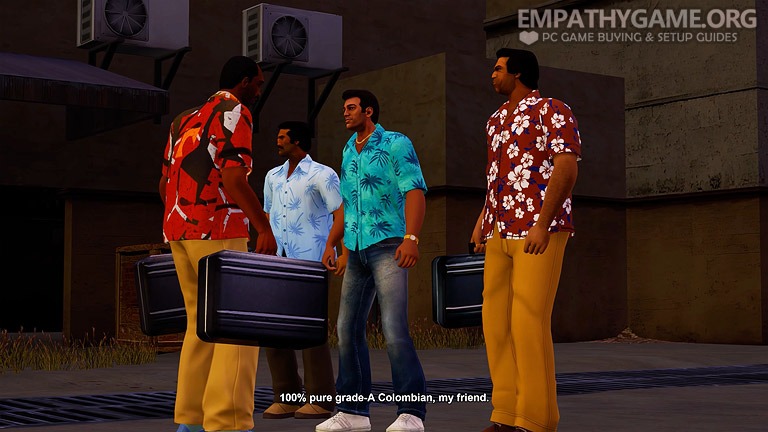
Vice City begins with Tommy arriving as an outsider. A drug deal is ambushed, money and merchandise disappear, and Liberty City mob boss Sonny Forelli expects an explanation. What starts as damage control becomes a takeover. Tommy meets the people who control different pieces of the city, removes those standing above him, buys businesses, builds income, and gradually transforms from a recently released criminal into the owner of a visible empire.
That progression is simpler than the character-stat systems of San Andreas or the enormous economies of newer open-world games, but it is clear and satisfying. Tommy’s success appears on the map. A nightclub becomes his. A mansion becomes his. A taxi company, film studio, print works, car showroom, boatyard, and other businesses begin producing income. Vice City makes money feel connected to ambition rather than merely functioning as a number used for ammunition.
The game can be difficult to approach today. Shooting is stiff, checkpoints are sparse in the classic release, aircraft controls can be awful on a keyboard, traffic can ruin missions, and Tommy dies immediately in deep water. Some optional content feels shallow, while several famous missions are remembered more for irritation than brilliance. Even so, players who accept its early-2000s friction will find a crime story and open world with more character than many technically larger games.
Tommy Vercetti Gives the Game Its Criminal Drive
Vice City was a major step forward for Grand Theft Auto because Tommy Vercetti is not a silent player vessel. He has a voice, temper, history, and obvious ambition. He does not simply accept jobs because mission icons exist. He reacts to the people using him, recognizes opportunities, insults incompetence, and gradually realizes that he can replace the men who expected to control him.
Ray Liotta’s performance gives Tommy controlled menace. He can sound irritated without losing authority, sarcastic without becoming harmless, and violent without feeling like an empty psychopath. Tommy frequently works with ridiculous people, but he rarely seems confused about his own goal. He wants the missing money recovered, the betrayal answered, and eventually the city under his control.
That direct ambition makes him an excellent GTA protagonist. Ken Rosenberg panics around him. Ricardo Diaz explodes with insecurity and rage. Lance Vance wants respect but lacks Tommy’s patience and judgment. Sonny Forelli assumes Tommy will remain subordinate. Tommy’s strength is that he understands the hierarchy around him and eventually decides to build his own.
Later GTA protagonists are more psychologically detailed. The leads of GTA 5 have more dialogue, relationship conflict, and cinematic development. Tommy is broader, but he may be more immediately suited to a pure crime-empire fantasy. He enters the city with nothing, identifies its weak points, and takes control without losing the sharp personality that made his early missions entertaining.
The Story Is Simple, Focused, and Effective
Vice City’s story does not need the sprawling structure of a modern Rockstar campaign. Its central idea is clean: a deal goes wrong, Tommy searches for the responsible people, his local connections grow, and recovery turns into conquest. The plot borrows openly from 1980s crime cinema, but the influences support rather than replace the game’s identity.
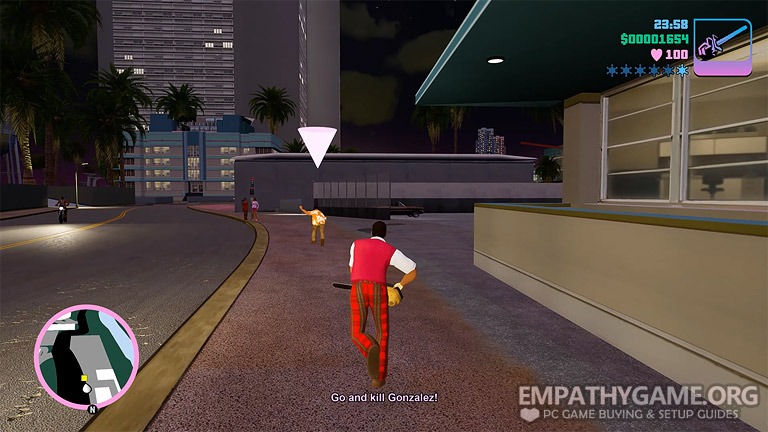
The early missions introduce Vice City through people with recognizable roles. Ken Rosenberg is Tommy’s nervous legal connection. Colonel Cortez operates with old-world confidence from his yacht. Avery Carrington treats property development as another form of organized violence. Ricardo Diaz represents the criminal power Tommy initially lacks. Lance Vance begins as a useful ally whose insecurity becomes increasingly dangerous.
As Tommy moves through the city, the supporting cast expands without becoming completely interchangeable. Kent Paul connects him to nightlife and music. Umberto Robina brings him into Little Havana’s conflict. Auntie Poulet manipulates him from Little Haiti. Phil Cassidy provides weapons, alcohol, and explosive incompetence. Love Fist turns the music industry into a sequence of criminal errands.
The writing is broad, and several ethnic or cultural caricatures have aged poorly. Vice City belongs to a period when Rockstar often pushed satire through exaggeration without much restraint. Some material is still funny because the characters have strong performances and clear personalities. Other jokes now feel more careless than sharp.
Even with those problems, the story remains satisfying because Tommy’s direction is easy to understand. The campaign is not asking whether he can survive Vice City. It is showing how long it takes him to own it.
The Small Map Is One of Vice City’s Greatest Strengths
Vice City is small by modern open-world standards, but that size makes it memorable. Players quickly learn Ocean Beach, Washington Beach, Starfish Island, Downtown, Little Havana, Little Haiti, Vice Point, the airport, the docks, and the causeways connecting the islands. Roads become familiar because they are travelled repeatedly, and landmarks are distinctive enough to guide the player without constant dependence on a map.
Ocean Beach establishes the fantasy immediately. Pastel hotels, neon lights, palm-lined roads, sports cars, beach views, and nightclubs make the eastern island feel glamorous and artificial. Starfish Island places mansions between the two halves of the city, visually separating wealth from ordinary streets. Downtown becomes harsher and more vertical, while the western districts add industry, gang conflict, docks, and working-class neighborhoods.
The compact design makes police chases stronger. A player learns where the Pay ’n’ Spray is, which causeways create bottlenecks, where police bribes appear, and which alleys can break pursuit. A high wanted level feels connected to route knowledge rather than simply driving toward a distant icon.
The map is also easy to remember years later. A returning player may forget individual objectives but still know how to reach the Malibu Club, Ocean View Hotel, Vercetti Estate, airport, film studio, or Sunshine Autos. Almost every major property has a clear visual and geographic identity.
This is a useful reminder that open-world quality is not measured only in square kilometers. Vice City cannot compete with the scale or simulation expected from GTA 6, but its focus remains instructive. A smaller world can feel significant when locations support the story, atmosphere, navigation, and progression instead of existing mainly to increase travel time.
The World Is Memorable but Sparse by Modern Standards
Vice City’s map is well designed, but the world itself can feel empty today. Pedestrian and traffic variety is limited, most interiors are inaccessible, NPC behavior is simple, and there are few dynamic activities beyond police chases, random violence, hidden pickups, and scheduled side content. The city looks alive more often than it behaves alive.
Exploration still has value. Back alleys, rooftops, parking areas, docks, and hidden corners can contain weapons, armor, packages, stunt opportunities, or useful vehicles. Learning these locations makes difficult missions easier because Tommy can prepare without buying everything.
However, free roaming does not provide the same depth expected from newer open worlds. There are no complex pedestrian routines, major emergent events, detailed social systems, or large numbers of enterable buildings. Once the story, assets, and important side activities are complete, some players may find little reason to remain beyond nostalgia, police chases, cheats, or completion goals.
This does not destroy the atmosphere because the radio, lighting, vehicles, landmarks, and visual style remain strong. It simply means Vice City is better approached as a focused story-and-asset sandbox than as an endlessly reactive life simulation.
Driving Is Still the Best Everyday Activity
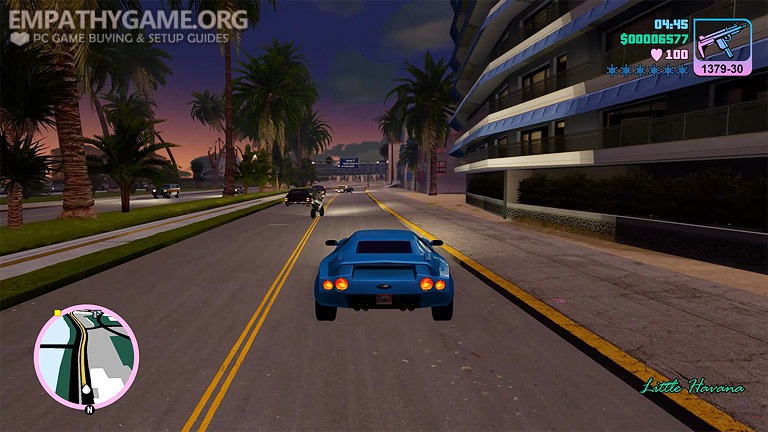
Driving holds Vice City together. The game’s sports cars, sedans, motorcycles, vans, boats, helicopters, and specialist vehicles give the map several different rhythms. Ocean Beach is ideal for fast cars and motorcycles. Downtown encourages tighter routes and harder turns. The causeways create natural chase lines, while boats make the water between districts useful rather than decorative.
The handling is arcade-heavy, but most vehicles are easy to understand. Cars slide, bounce, and lose control more readily than in modern GTA games, yet the compact roads make that looseness entertaining. A small collision can become a police chase, a damaged vehicle can force an improvised theft, and a mission route can collapse because traffic crossed at the wrong moment.
Motorcycles are fast and useful but expose Tommy to collisions, gunfire, and sudden ejection. Boats are less versatile but reinforce the coastal setting. Helicopters add a meaningful vertical dimension and make the city feel larger once they become available. Flying above the hotels, mansions, beaches, and downtown towers reveals how tightly the whole map fits together.
Vehicle durability can be frustrating in missions. A car may begin smoking after a few bad collisions, and an unlucky traffic impact can ruin an otherwise successful attempt. Later releases generally make vehicles and Tommy feel a little more forgiving, but old mission scripting can still punish randomness.
Despite that friction, moving through Vice City remains enjoyable because the city, radio, and vehicles reinforce one another. The journey is rarely only transportation. It is where much of the atmosphere happens.
Shooting Has Aged Much Worse Than Driving
Classic Vice City gunplay is functional against small groups but clumsy in larger encounters. The lock-on system can select the wrong enemy, struggle with differences in height, or make indoor fights awkward. Tommy has no modern cover system, and the camera can become a problem inside tight rooms or around staircases.
Some weapons allow more direct aiming, especially on PC, but the game was not built around modern precision. Enemy AI is simple and often compensates through numbers, placement, or damage. Tommy can lose a large amount of health quickly when several enemies fire at once, particularly if the targeting system is fighting the player.
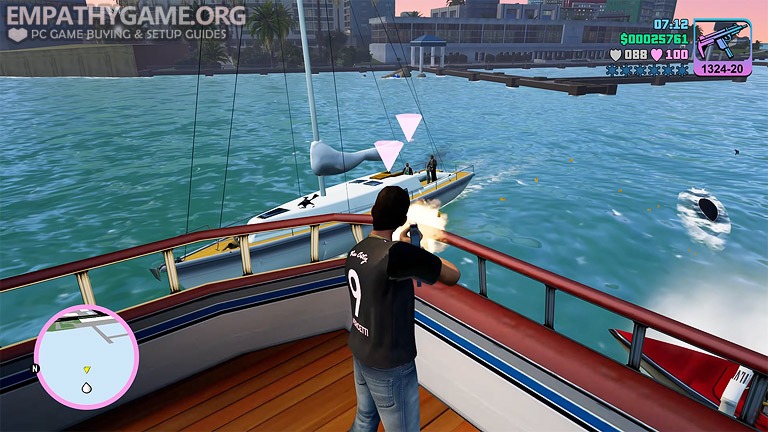
The Definitive Edition’s revised targeting makes combat more approachable. Better lock-on behavior and more familiar controls reduce the feeling that Tommy is helpless while enemies surround him. Increased durability also gives the player more time to react, take cover behind level geometry, and return fire.
But new targeting does not rebuild the encounter design. Enemies still behave according to old scripts. Interiors remain cramped. Some missions still place attackers where the camera or aiming system is uncomfortable. Improved controls make the original combat easier to manage; they do not transform it into modern third-person shooting.
The best firefights succeed because of context. Attacking Diaz’s mansion, participating in gang conflicts, protecting allies, robbing the Malibu bank, or fighting through the final missions feels memorable because the characters and objectives matter. The gunplay carries those scenes rather than elevating them.
Mission Design Is Varied but Frequently Unforgiving
Vice City offers strong mission variety for its era. Tommy races cars, assassinates targets, destroys property, protects clients, drives boats, flies helicopters, robs a bank, participates in gang wars, works for businesses, and completes jobs across nearly every district.
The Job remains one of the campaign’s highlights because it turns the Malibu Club asset into a proper bank-robbery sequence with preparation, a crew, disguises, changing objectives, and an escape. G-Spotlight uses a motorcycle and the city’s rooftops in a way few other missions do. The property chains give mechanical context to Tommy’s growing empire.
Other missions are famous mainly because the controls and scripting fight the player. Demolition Man requires moving explosives through a construction site with an RC helicopter under time pressure. The mission is manageable once the flight controls are understood, but learning them while the timer runs is an unpleasant introduction.
The Driver is frustrating for different reasons. Hilary receives a faster car, traffic can destroy a clean attempt, and the player has limited ways to compensate beyond memorizing the route and driving carefully. The mission demonstrates a recurring Vice City problem: difficulty can come from traffic randomness and imposed disadvantages rather than interesting decisions.
Classic versions provide little checkpoint protection. Dying or failing can mean losing weapons, replacing armor, travelling back to the mission giver, and repeating earlier sections. Later versions reduce some of that travel through improved retry systems, autosaving, or taxi-style shortcuts after failure, but the missions remain rooted in old assumptions about repetition.
Aircraft Controls Are Especially Rough on Keyboard
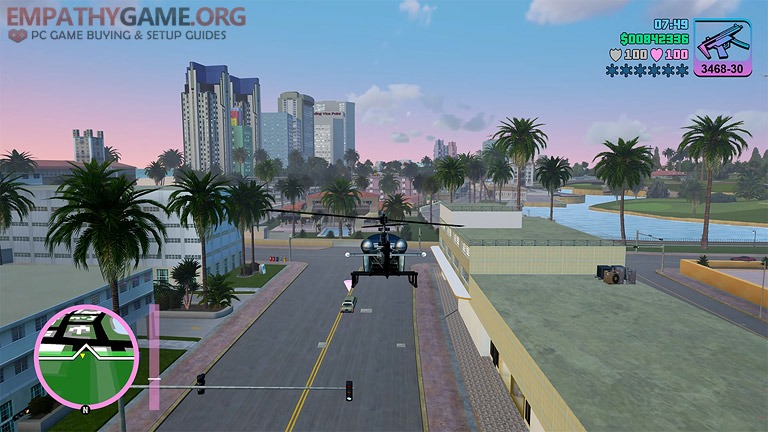
Vice City’s helicopters create some of its most memorable moments, but PC keyboard controls can make them far more difficult than intended. Pitch, roll, rotation, altitude, camera movement, and forward momentum are awkward to coordinate through digital keys, particularly during timed missions or confined routes.
Demolition Man exposes the problem immediately because the RC helicopter must enter a construction site, avoid obstacles, carry explosives, and move between floors. Later helicopter missions are easier to appreciate once the controls become familiar, but they remain uncomfortable for many keyboard players.
A controller can make aircraft substantially easier because analog input allows smaller adjustments. Players who prefer keyboard and mouse for shooting and driving may still benefit from switching to a controller for helicopter or plane missions. Vice City does not always transition elegantly between input methods, but aircraft are one area where the difference can be dramatic.
The issue is not that flying has no place in the game. Helicopters improve the sandbox and give Vice City valuable vertical freedom. The problem is that the original PC controls make learning them unnecessarily hostile.
Vice City’s Atmosphere Is Its Greatest Achievement
Vice City’s visual and musical identity remains stronger than many larger games. Ocean Beach glows with neon and pastel architecture. Palm trees line roads filled with sports cars and motorcycles. Nightclubs, hotels, mansions, marinas, shopping areas, industrial districts, and downtown towers create a concentrated version of 1980s South Florida fantasy.
The city changes dramatically between daylight, sunset, rain, and night. It can look bright and inviting during the day, then become more theatrical after dark when neon reflections, headlights, and hotel signs dominate the streets. The atmosphere rarely aims for realism. It aims for a remembered version of the decade built from crime films, television, advertising, fashion, and popular music.
The Definitive Edition’s Classic Lighting option helps restore some of the stronger color and sky identity associated with the original presentation. Cleaner textures and longer draw distances make the city easier to view, but greater visual clarity is not always an automatic improvement. Part of the original atmosphere came from haze, color grading, and limited visibility making the city feel warmer and more stylized.
Even when character models or environmental details show their age, the art direction remains coherent. Vice City knows what it wants to be from the first hotel-lined road to the final confrontation at Tommy’s mansion.
The Radio Stations Are Part of the World-Building
Vice City’s radio stations are not optional decoration. They are one of the main reasons driving remains enjoyable. Flash FM, V-Rock, Emotion 98.3, Wave 103, Wildstyle, Fever 105, K-Chat, and the other stations create different versions of the city through music, personalities, advertisements, satire, and talk shows.
The licensed soundtrack defines the era more efficiently than exposition could. Pop, rock, metal, new wave, hip-hop, R&B, and Latin music give neighborhoods, vehicles, and missions an emotional context. A simple drive along Ocean Beach can become one of the game’s most memorable moments because the correct song begins at the correct time.
DJs and advertisements extend the satire beyond cutscenes. The stations discuss consumerism, celebrity, politics, self-help, masculinity, technology, and local absurdity. K-Chat and talk programming make Vice City sound like a place full of eccentric people even when the pedestrian simulation is simple.
Later releases have lost some music because of licensing changes, which weakens the exact historical experience for returning players. The remaining selection is still central to the game, but soundtrack differences can meaningfully alter the mood. Vice City’s atmosphere is so dependent on music that removed tracks feel more important here than they would in many other games.
Properties Make Money and Power Feel Meaningful
The property and asset system is Vice City’s best progression mechanic. Early in the campaign, Tommy earns money from individual jobs. Later, he spends that money to buy businesses, complete their requirements, unlock mission chains, and generate continuing income. The relationship between crime and ownership becomes visible.
The Malibu Club leads into one of the game’s strongest mission chains. Kaufman Cabs creates a taxi-business conflict. The Film Studio turns production into criminal work. Sunshine Autos combines property ownership with races and vehicle collection. The Print Works connects directly to the final story. Other businesses use shorter activities or unusual completion conditions.
Not every asset is equally developed, but the system makes money relevant. Buying ammunition is useful, yet purchasing a business changes what Tommy can do. It places another icon on the city, generates income, and reinforces his transition from hired criminal to owner.
This is one area where Vice City remains unusually strong. Later GTA games often give protagonists more expensive possessions, but few connect property acquisition to the central crime fantasy as directly. Tommy does not merely become wealthy in dialogue. He acquires the places that define Vice City’s economy and nightlife.
The Second Half Is More Non-Linear Than It First Appears
After Tommy gains control of the Vercetti Estate, the campaign changes structure. Instead of following one obvious line of contact missions, the player can choose between properties, optional character chains, assassination work, gang storylines, music-industry missions, and other opportunities.
This gives the second half welcome freedom. Players do not need to complete every available chain in the same order. They can prioritize the assets they find interesting, leave disliked activities unfinished, and decide how much optional character content to explore before triggering the finale.
The problem is communication. The game does not clearly explain that final progression depends on the Vercetti Estate storyline, the Print Works, and enough completed qualifying assets. A player may finish the visible contact missions and wonder why no new story icon appears.
The requirement fits thematically. Tommy cannot call himself the city’s new criminal power until he owns functioning businesses. But what feels like empire building to an informed player can feel like a hidden checklist to a newcomer.
Once understood, the non-linearity is a strength. It lets different playthroughs reach the ending through slightly different property choices. The game gives players freedom without abandoning the idea that Tommy’s criminal empire must become real before the final conflict begins.
No Swimming and Weapon Loss Reflect Old GTA Risk
Tommy cannot swim. Falling into deep water normally kills him immediately, despite Vice City being built around beaches, marinas, boats, islands, and causeways. By modern standards, this is one of the game’s strangest limitations.
The world is designed around bridges, boats, docks, helicopters, and road connections, so swimming is not required for normal progress. Water acts as a hard boundary and a hazard. That can add tension during boat missions or shoreline jumps, but it can also make a minor driving mistake disproportionately punishing.
Death and arrest can also remove Tommy’s weapons in classic versions. This creates meaningful risk: carrying an expensive arsenal matters because failure has a cost. Safehouses, hidden weapon pickups, armor locations, and frequent saving reduce the punishment for prepared players.
Still, losing weapons and restarting without modern checkpoints can turn one failed mission into a long preparation process. These systems fit the older GTA philosophy that players should fear death and arrest. Whether they remain enjoyable depends heavily on tolerance for repetition.
Later releases soften some of this friction, but no update changes the fact that water is lethal and mission failure can be inconvenient. These are not necessarily design mistakes in their original context, yet they are important barriers for modern players.
Side Content Adds Breadth, Not Always Lasting Enjoyment
Vice City has a long completion list: hidden packages, unique jumps, rampages, RC challenges, street races, stadium events, vehicle import lists, robberies, vigilante work, paramedic missions, firefighting, taxi driving, and pizza delivery.
Some activities provide excellent rewards. Vehicle missions can increase health, armor, sprint ability, fire resistance, or other useful capabilities. Hidden packages unlock weapons and special vehicles, giving exploration a practical purpose. Sunshine Autos offers a satisfying combination of vehicle collection and racing.
Other activities have aged poorly. Repeating taxi fares, ice-cream sales, emergency routes, rampages, or RC challenges can feel more like checklist work than meaningful play. Enemy and pedestrian AI are too simple to make prolonged free-roam combat consistently satisfying, while vehicle missions often depend on repetition rather than new mechanics.
This means many players will enjoy the story and key assets without feeling compelled to reach 100%. Vice City rewards dedicated completionists, but its best material is not evenly distributed across the checklist.
The compact map helps because travel times are short and route knowledge improves quickly. Even so, completion should be treated as an optional mastery project rather than the required way to appreciate the game.
The Classic and Definitive Editions Change the Friction
The classic game preserves the original visual direction, radio-era presentation, old controls, and mature mod ecosystem. It can also require careful setup on modern PCs because frame rate, widescreen support, mouse behavior, controller input, and executable version all matter.
The Definitive Edition provides more familiar aiming, autosaving, quicker retries, achievements, improved durability, higher-resolution assets, and easier compatibility with modern displays and controllers. These changes make the campaign more approachable, especially for players who do not want to configure an older PC release.
However, improved access does not mean a completely redesigned game. Enemy AI, mission scripting, aircraft mechanics, city density, and the inability to swim remain tied to the original. Visual changes can also be divisive, especially when cleaner models or longer draw distances weaken the atmosphere players remember.
The classic version is often better for original presentation and extensive legacy modding. The Definitive Edition is usually better for convenience and modern input. The right choice depends on whether the player values authenticity, flexibility, or reduced friction.
Replayability Comes From Familiarity and Choice
Vice City becomes easier to replay once the map, missions, and asset requirements are understood. A returning player knows where weapons and armor are hidden, which properties provide useful garages, which mission chains are worth prioritizing, and how to avoid wasting money before the asset stage.
The second-half freedom also supports different routes. One playthrough may focus on the Malibu Club and Film Studio. Another may complete faster businesses first and leave difficult optional chains until later. The story eventually converges, but the path toward the finale has enough flexibility to feel personal.
Route knowledge reduces the frustration of sparse checkpoints. Players know when to save, which vehicle to bring, where traffic is dangerous, and when a controller will make aircraft missions easier. What felt unfair during a first attempt can become manageable through preparation.
Cheats and mods add further longevity on PC, although they should be separated from serious completion saves. Classic modifications can improve widescreen support, controls, frame behavior, visuals, vehicles, or entire gameplay systems. The Definitive Edition has its own separate mod ecosystem and should not be mixed with classic files.
Vice City is not endlessly replayable because its world simulation is deep. It is replayable because its campaign is focused, its map is memorable, Tommy’s rise is satisfying, and the player can return with enough knowledge to remove much of the original friction.
Final Verdict
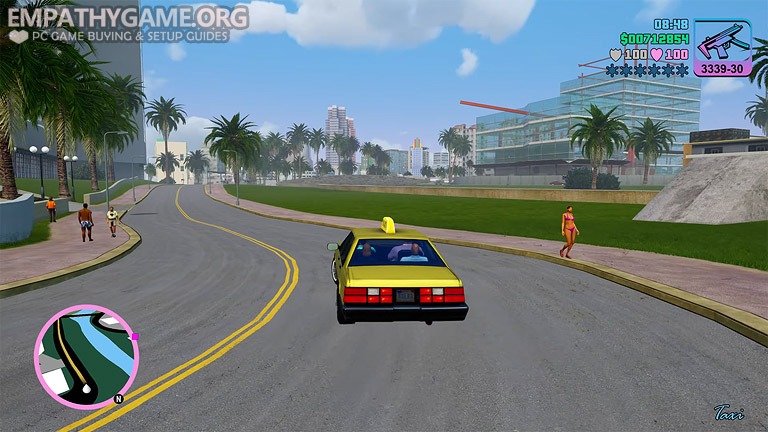
Grand Theft Auto: Vice City remains compelling because it understands the value of focus. Its map is small enough to memorize, its radio stations define the era, its characters give missions context, and its properties turn Tommy’s criminal rise into something visible. The city, story, music, vehicles, and progression all reinforce the same neon crime fantasy.
The weaknesses are substantial. Shooting is dated, indoor cameras are awkward, aircraft controls can be miserable on keyboard, traffic can ruin missions, checkpoint design is harsh, Tommy cannot swim, and much of the optional content feels repetitive today. The world is atmospheric but mechanically sparse compared with modern open-world games.
Yet Vice City has something scale alone cannot provide: identity. Tommy Vercetti is a memorable protagonist, the supporting cast rarely feels interchangeable, and the asset system gives money a clear purpose. Buying the Malibu Club, Print Works, Film Studio, taxi company, and other businesses feels like taking control of the city rather than filling a property menu.
Players expecting modern gunplay, dense simulation, or forgiving mission design may struggle. Players willing to accept early-2000s friction will find one of Rockstar’s most coherent open-world games: stylish, compact, funny, occasionally cruel, and still powered by the feeling that every drive through the neon streets is another step toward owning Vice City.
Grand Theft Auto: Vice City Pros & Cons
- Pro: Distinctive 1980s atmosphere, neon city design, radio stations, licensed music, voice performances, fashion, vehicles, and crime-film influences give Vice City a unique identity
- Pro: Tommy Vercetti’s rise from betrayed outsider to property-owning crime boss provides stronger personal progression than GTA III’s mostly silent protagonist
- Pro: Properties, business assets, side missions, hidden packages, vehicles, helicopters, boats, weapons, and open-world chaos support substantial replay value
- Pro: Current PC players can choose the Definitive Edition for modern controls and achievements or Rockstar’s classic Trilogy package for original presentation and mature legacy mod support
- Pro: Classic Lighting and other permanent fixes make the Definitive Edition more visually faithful and stable than its original launch build
- Con: Official PC availability is confusing because Vice City is usually tied to a Trilogy package rather than sold as one simple standalone game
- Con: Rockstar account, launcher, activation, and entitlement requirements add friction to an otherwise offline single-player experience
- Con: Definitive Edition character models, effects, animations, visual changes, and remaining bugs remain divisive among fans of the original art direction
- Con: Classic mods do not transfer automatically to the remaster, while careless modding can break missions, saves, cutscenes, audio, or launcher file verification
Grand Theft Auto: Vice City PC System Requirements
Official Windows PC requirements below apply to Grand Theft Auto: Vice City – The Definitive Edition. Steam lists a 10 GB installation requirement for the individual app, while Rockstar Support lists 45 GB for its PC package, so leave additional free space when using Rockstar Games Launcher or installing updates.
MINIMUM:
OS: Windows 10, 64-bit
CPU: Intel Core i5-6600K / AMD FX-6300
RAM: 8 GB
GPU: NVIDIA GeForce GTX 760 2 GB / AMD Radeon R9 280 3 GB
Storage: 10 GB on Steam; Rockstar Support lists 45 GB for its PC package
Sound Card: DirectX-compatible
Internet: Required for activation, Rockstar account login, launcher setup, and periodic entitlement verification
RECOMMENDED:
OS: Windows 10, 64-bit
CPU: Intel Core i7-2700K / AMD Ryzen 5 2600
RAM: 16 GB
GPU: NVIDIA GeForce GTX 970 4 GB / AMD Radeon RX 570 4 GB
Storage: 10 GB on Steam; keep additional free space available when using Rockstar Games Launcher
Sound Card: DirectX-compatible
Internet: Required for activation, Rockstar account login, launcher setup, and periodic entitlement verification
Additional PC Performance and Setup Notes
- The Rockstar classic Trilogy store still lists legacy minimum specifications including a 1 GHz Pentium III or AMD Athlon processor, 256 MB RAM, a 64 MB GeForce 3-class graphics card, and 3.6 GB for a minimal Trilogy installation. Those legacy specifications do not guarantee smooth compatibility on modern Windows systems.
- The classic PC version may need version-compatible frame limiting, widescreen support, controller configuration, or other compatibility fixes on newer Windows releases.
- Use Steam, Epic, or Rockstar Games Launcher file verification before adding mods if the Definitive Edition crashes, fails to launch, or displays missing textures.
- Steam Deck users should expect Playable behavior. Complete the first Rockstar account login with internet access and use the touchscreen or virtual keyboard if launcher navigation does not respond correctly.
- Rockstar subsequently fixed the documented Steam Deck OLED fatal-launch error in the Steam version. If a similar error appears, update the game and SteamOS/Proton before attempting an older launch-option workaround.
- Classic Vice City mods are highly version-sensitive. Keep a clean installation and back up saves before using ASI loaders, CLEO scripts, widescreen modifications, vehicle packs, texture projects, or total conversions.
- Definitive Edition mods belong in the remaster’s own directory and should explicitly support the installed Steam, Epic, or Rockstar build. Do not combine complete classic and remaster mod packs.
Video Trailer
Frequently Asked Questions
Which GTA Vice City version should I play on PC: classic or Definitive Edition?
Choose the Definitive Edition for modern targeting, autosaves, achievements, and simpler installation on modern Windows systems. Choose the original PC game for its original visual style, established legacy mods, and familiar controls if you are comfortable with compatibility setup. The versions use different engines, saves, and mod files.
Can I still buy the original GTA Vice City on Steam or from Rockstar?
The original standalone Steam release is not normally sold to new customers, although previous owners may still have access in their libraries. Rockstar sells the classic game as part of Grand Theft Auto: The Trilogy, alongside GTA III and San Andreas.
Can I buy GTA Vice City – The Definitive Edition separately?
The remaster has its own Steam and Epic Games Store pages, but the standard purchase is through Grand Theft Auto: The Trilogy – The Definitive Edition. Epic explicitly lists Vice City as purchasable only through that package; check the current store offer before paying.
Does GTA+ include Vice City on PC?
Yes. GTA+ lists Vice City – The Definitive Edition and the Definitive Edition Trilogy in its rotating PC games library. Access lasts only while your membership is active and the titles remain included; it does not permanently add them to your library.
Does GTA Vice City have DLC or story expansions?
No. Neither the original Vice City campaign nor the Definitive Edition includes a conventional story expansion or season pass. The Trilogy packages bundle separate games, not Vice City DLC.
What does Classic Lighting change in the Definitive Edition?
Classic Lighting adjusts the sky and environmental atmosphere to more closely resemble the original release. It is a permanent visual option, not a separate edition or download.
Are all original Vice City radio songs included in the Definitive Edition?
No. Some licensed songs from the original 2002 soundtrack are missing from later versions due to changes in music licensing. The remaster retains the radio-station concept but not the complete original track list.
When does the mainland become accessible in GTA Vice City?
The western mainland opens as Tommy advances through the early main story. It is not necessary to finish all side activities on the eastern beach island before crossing over.
Why are there no new missions after Tommy takes over the Vercetti Estate?
The final story sequence is tied to business ownership and asset progression, not just the initial estate missions. Complete the Print Works asset storyline and enough other qualifying income-producing assets to unlock the remaining main missions.
Is the Print Works mandatory for finishing GTA Vice City?
Yes. Purchasing and completing the Print Works asset missions is required for the final story progression. It is not simply an optional property for extra cash.
What counts toward 100% completion in Vice City?
Completion requires more than finishing the story. It includes qualifying asset missions and properties, hidden packages, stunt jumps, rampages, vehicle jobs, races, stadium events, RC activities, and other specified challenges. Check the in-game statistics against a version-appropriate checklist to find missed tasks.
Why are Demolition Man and The Driver difficult?
Demolition Man demands precise RC-helicopter control under time pressure, while The Driver puts Tommy in an inferior car against a fast opponent. Practicing the route and controls is usually more useful than repeatedly rushing; the remaster’s control improvements do not remove the mission designs.
Can Tommy Vercetti swim?
No. Tommy cannot swim in the classic game or the Definitive Edition. Entering deep water is fatal, unlike in several later GTA entries.
How do saves and checkpoints differ between versions?
The original PC game primarily uses manual saves at safehouses and other save points. The Definitive Edition adds autosaving and more convenient mission retries, but keeping separate manual saves is still sensible before major missions or modding changes.
Can I use original GTA Vice City mods in the Definitive Edition?
Usually not. Classic ASI, CLEO, RenderWare, and widescreen mods do not automatically work with the Unreal Engine 4 remaster. Use modifications made specifically for your edition, back up your saves, and retain a clean installation.
Does GTA Vice City work on Windows 10 or Windows 11?
The Definitive Edition officially lists 64-bit Windows 10 as its minimum OS and is the more straightforward modern Windows option. The original PC release targets much older systems and may require version-compatible frame limiting, widescreen, input, or other compatibility fixes; modern Windows behavior can vary by build.
Why does the classic PC version misbehave at high frame rates?
Certain physics, animations, and mission behaviors in the original game depend on its frame-rate timing. Use the built-in frame limiter or a trusted fix made for your particular classic build rather than forcing an unlimited frame rate.
How well does GTA Vice City run on Steam Deck?
Valve labels the Steam Definitive Edition Playable. First-time Rockstar setup requires an internet connection, and some launcher interactions can require the touchscreen or virtual keyboard. Rockstar has also addressed a previously documented Steam Deck OLED launch error in a Steam-specific fix.
Does Vice City have multiplayer, co-op, split-screen, or cross-play?
No. The official classic and Definitive Edition PC releases are single-player only. Multiplayer projects made by the community are unofficial and do not add Rockstar-supported co-op, split-screen, or cross-play.
Still have questions? Check the GTA Vice City subreddit, Rockstar’s GTA Vice City support page, and Steam Discussions.
Sources & References
Key factual and technical information in this guide was checked against relevant official and community sources, including:
- Rockstar Store — Grand Theft Auto: The Trilogy – The Definitive Edition — current Rockstar Games Launcher availability, included games, release identity, and remaster features
- Rockstar Store — Grand Theft Auto: The Trilogy — current classic Trilogy availability and legacy PC system requirements
- Rockstar Support — GTA Vice City Definitive Edition PC system requirements — official hardware, storage, activation, account, and entitlement requirements
- Steam — GTA Vice City – The Definitive Edition and SteamDB app metadata — Steam package structure, GTA+ access, system requirements, overall user reception, account metadata, Family Sharing status, and Steam Deck compatibility
- Epic Games Store — GTA Vice City – The Definitive Edition — Epic availability, Trilogy-only purchase status, achievements, cloud saves, and controller support
- PCGamingWiki — Grand Theft Auto: Vice City and PCGamingWiki — The Definitive Edition — engine/version distinctions and PC-specific compatibility context
Similar Games Like Grand Theft Auto: Vice City
- GTA Vice City Stories
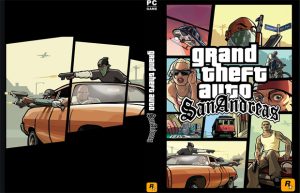
- GTA San Andreas
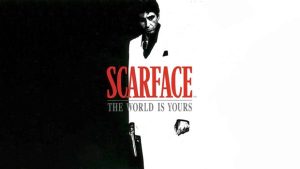
- Scarface: The World Is Yours
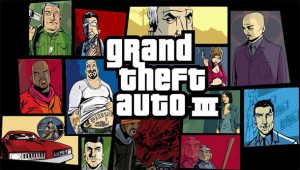
- GTA 3
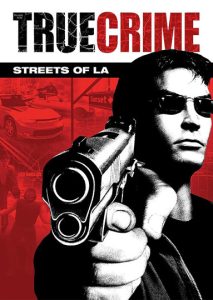
- True Crime: Streets of LA
- The Godfather
Found something worth playing through DecideGame?
DecideGame.com is an independent gaming project run by Editor Zero. If this guide helped you discover a game, solve a problem, or find useful information, you can support DecideGame.com and help keep new and updated game guides coming.
DecideGame — PC Game Guides, Reviews & Setup Help