
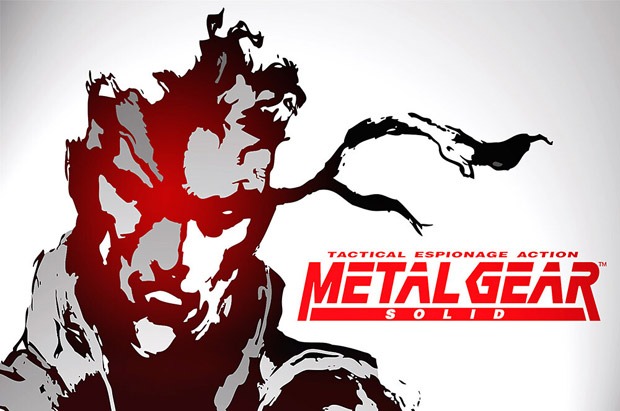
📅 Game released: 1998
Metal Gear Solid follows Solid Snake through the Shadow Moses nuclear-facility takeover, blending patrol-based stealth, inventive gadgets, Codec conversations, and cinematic boss encounters. This PC guide compares official Steam Master Collection and GOG legacy-port download and installation options, controls, resolution modes, system requirements, Steam Deck support, and mods.
 By Editor Zero — independently researched, edited, and maintained.
Last updated: 15 November 2026
Last reviewed: 15 November 2026
Table of Contents
- Quick Facts
- Official PC Stores, Download & Installation
- Metal Gear Solid Review
- Pros & Cons
- PC System Requirements
- Frequently Asked Questions
- Similar Games
Metal Gear Solid (1998) Quick Facts
- Game: Metal Gear Solid / MGS1 / Metal Gear Solid – Master Collection Version
- Developer: Konami Computer Entertainment Japan; Master Collection adaptation by M2
- Publisher: Konami
- Genre: Tactical Espionage, Stealth Action, Action-Adventure
- Release: September 3, 1998 (PS1, Japan); Windows PC: September 25, 2000 (original port); Master Collection: October 24, 2023
- Platforms: PS1, Windows PC, PS4, PS5, Xbox Series X|S, Nintendo Switch
- Master Collection MGS1 content: Metal Gear Solid, VR Missions/Special Missions, regional versions, Screenplay Book, Master Book, achievements, and collection launcher features
- Steam Deck: Playable; the default controls and graphics configuration pass Valve’s tests, though controller prompts can differ and external controllers may need manual selection
- PC controls: Rebindable Steam keyboard controls; no mouse aiming; XInput controller listed in Steam requirements
- Engine: Original game: not officially confirmed; Master Collection: M2’s m2engage emulation with a Unity launcher
- Community: Official Master Collection Website, Steam Discussions, Metal Gear Solid Reddit Community
- PC modding: Nexus Mods for Metal Gear Solid – Master Collection hosts MGSM2Fix, custom-resolution support, widescreen changes, borderless mode, filtering controls, launcher skipping, restored visual elements, save files, and other community modifications
- Metacritic score: 94/100 on PlayStation
- IGN score: 9.8/10 for the original PlayStation release
- Steam user reception: Very Positive overall
Official PC Stores, Download & Installation
👇 Compare the official Steam Master Collection and GOG legacy PC options below before purchasing, downloading, or installing Metal Gear Solid.
- Steam Master Collection: The modern official Windows route for the original PlayStation-era Metal Gear Solid is Metal Gear Solid – Master Collection Version on Steam.
- Standalone or collection: Metal Gear Solid can be purchased without buying the complete Master Collection Vol. 1 package. Vol. 1 is the broader option for players who also want Metal Gear, Metal Gear 2: Solid Snake, Metal Gear Solid 2, Metal Gear Solid 3, digital books, graphic novels, soundtrack material, and bonus games.
- Duplicate-purchase check: Review the current Steam package contents and owned items before buying another bundle that overlaps with an MGS1 Master Collection purchase.
- MGS1 content: The Master Collection presentation includes the original Metal Gear Solid plus VR Missions/Special Missions, regional versions, digital Screenplay and Master Books, achievements, and collection launcher features.
- Preservation release: This is not a ground-up remake comparable to Metal Gear Solid Delta. Character models, environments, animations, level design, voice work, camera structure, and core gameplay remain rooted in the original PlayStation release.
- Display modes: Steam offers Original, High Resolution, and Max Resolution modes. High Resolution renders at 1280×960 and Max Resolution at 2560×1920 while retaining the game’s 4:3 presentation; the unmodified release does not provide native 4K internal rendering.
- Display limitations: Resolution mode is selected before entering the game and cannot be changed after gameplay begins. High Resolution and Max Resolution also restrict smoothing, screen-filter, and Pixel Perfect options compared with Original mode.
- Controls: The Steam release supports rebindable keyboard controls but not mouse gameplay. The options also include a Confirm/Cancel button swap. A controller remains the recommended input method, and Steam’s requirements table still lists an XInput controller.
- Steam features: The release supports achievements, Family Sharing, full controller support, Steam Cloud, and offline single-player. Steam Deck is rated Playable, although external Bluetooth or USB controllers may require manual controller-order selection.
- GOG legacy port: GOG sells the separate DRM-free 2000 Windows version. It includes VR Missions, optional first-person play, multiple-controller support, improved quick-saving, optional GOG Galaxy cloud saves and overlay features, and a standalone offline installer.
- Version differences: The older Windows port handles some PlayStation-specific ideas differently because PC hardware does not reproduce original memory cards, controller ports, and vibration behavior in the same way. Saves, fixes, mods, display tools, and configuration files are not directly interchangeable with the Master Collection.
- Other PC stores: No official Epic Games Store version of Metal Gear Solid – Master Collection Version was verified; Steam is the verified Windows storefront for the Master Collection release, while GOG sells the legacy port.
 Buy Metal Gear Solid – Master Collection Version on Steam
Buy Metal Gear Solid: Master Collection Vol. 1 on Steam
 Buy the Legacy Metal Gear Solid PC Port on GOG
 Visit the Official Metal Gear Solid: Master Collection Website

Metal Gear Solid Review
A compact stealth thriller where every guard, gadget, and strange encounter has a purpose.
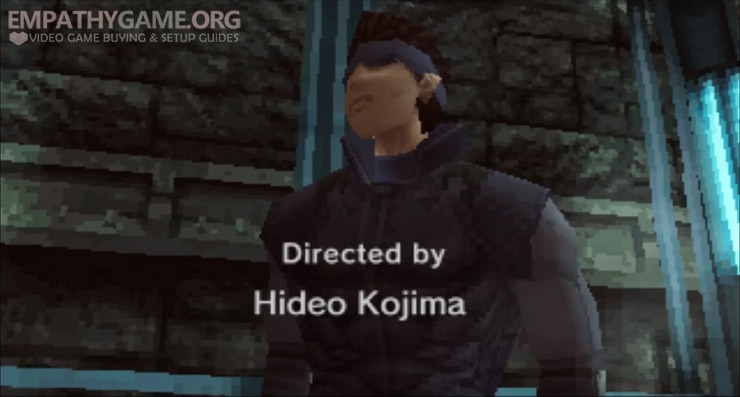
Metal Gear Solid is a good reminder that a game’s sense of scale does not necessarily come from the size of its world. Shadow Moses Island is a relatively small facility, Snake moves with unmistakable PlayStation-era stiffness, and the campaign is shorter than its double-disc reputation suggests. Yet its rooms, bosses, tools, and conversations leave the impression of a much larger adventure. Few elements feel interchangeable.
The stealth is closer to a series of carefully constructed puzzles than a modern tactical sandbox. Guards follow readable routes, the Soliton Radar exposes their vision, and success usually means noticing a gap rather than overpowering anyone. The game asks for patience before it asks for reflexes. That focus makes its limitations easier to accept, though it does not erase them. Gunfights are awkward, the camera can be restrictive, and some backtracking tests patience.
What keeps the journey distinctive is how confidently it moves between controlled infiltration, conspiratorial drama, absurd humor, and surprisingly personal moments. It can feel like a military thriller hiding an extravagant science-fiction anime inside it. The disguise never quite holds, and that is part of the appeal.
The Stealth Is About Reading Patterns
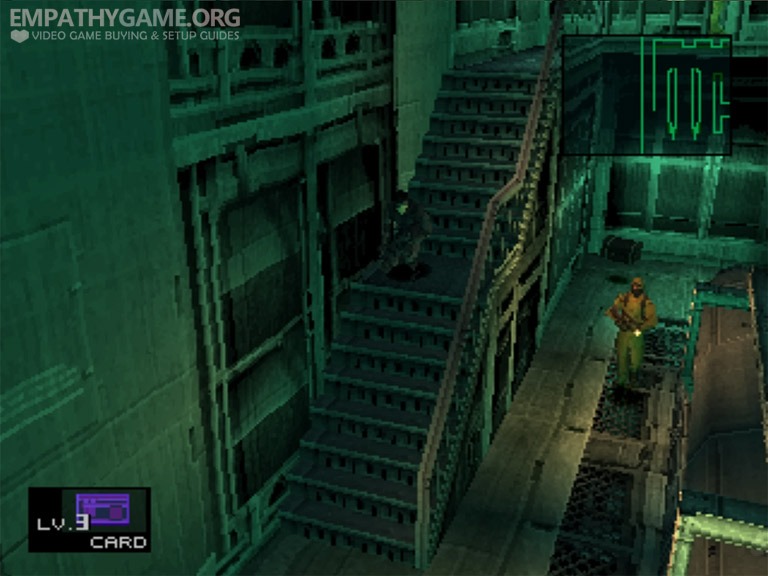
A hallway with two patrolling guards and a security camera can be more interesting than a room full of enemies in a newer action game. One guard turns, the other crosses an intersection, and for a moment the route is clear. Snake can wait for that opening, crawl beneath a camera, or knock on a wall to redirect attention. Understanding the room matters more than continuously manipulating it.
The rules are simple enough to read but strict enough to make small decisions count. Unlike stealth games that provide free aiming, generous hiding spots, and several ways to fight out of trouble, Metal Gear Solid gives Snake relatively little room for improvisational combat. That can initially feel restrictive. Once the patrol rhythm becomes familiar, though, passing through a guarded area without disturbing anything has its own quiet satisfaction. The challenge is not to control the entire space, but to recognize when it briefly belongs to you.
Detection Changes the Rules
Getting spotted changes more than the number of enemies chasing Snake. Alert, Evasion, and Caution phases interrupt the normal patrol pattern, and the radar disappears just when its information would be most useful. Suddenly the familiar room feels less predictable. Guards search rather than merely follow their routes, and trying to win a prolonged firefight is usually a poor response.
Escaping line of sight, changing position, or crawling into cover becomes a second kind of stealth puzzle. An alert is recoverable, but it costs time and control. This makes mistakes meaningful without requiring an immediate restart. Higher difficulties push that idea further by limiting radar assistance or increasing Snake’s vulnerability; routes that seemed obvious with constant vision-cone information demand closer attention to the environment.
Shadow Moses Is a Place You Learn
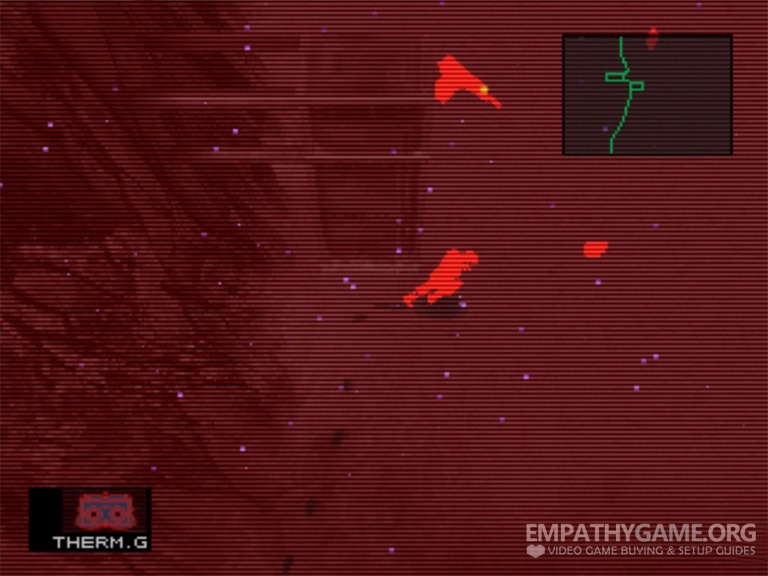
Snowfields, hangars, armories, caves, communication towers, and underground rooms form a facility that gradually becomes familiar. Higher-level key cards open previously inaccessible doors, while later objectives give old corridors new purposes. Rather than constantly presenting fresh scenery, Shadow Moses asks the player to remember how its spaces connect. An area first approached cautiously may later become an escape route or the setting for a confrontation.
There is a cost to that coherence. The late PAL key sequence involves repeated travel between hot and cold areas, and its deliberate structure does not make the walking less tedious. The base is compact, but certain returns can feel disproportionately long. Still, knowing the facility offers rewards beyond basic navigation. The transport trucks, for instance, make it possible to bypass some of those journeys when Snake has the appropriate cardboard box.
The Cardboard Box Is More Than a Joke
The box captures the game’s design personality. It is funny to watch a legendary operative hide beneath ordinary packaging, but it is not simply a visual gag. Guards respond differently depending on where and how the disguise is used. In the back of a truck, a destination-specific box can even send Snake to another part of Shadow Moses. A ridiculous object becomes a practical route-planning tool.
Other equipment works through the same kind of curiosity. Cigarette smoke can reveal infrared beams, although smoking costs health. Thermal Goggles provide a safer way to identify hazards, while Chaff Grenades interfere with electronic security. These items are memorable because their uses are tied to particular situations. The game rewards understanding what a tool actually does, sometimes more than upgrading combat ability would.
Combat Is Another Equipment Puzzle

Ordinary firefights expose the controls at their weakest. Directional aiming, limited movement, and fixed camera angles do not support the kind of fluid shooting that modern players might expect. Facing the correct direction and relying on the game’s automatic targeting is often more effective than attempting to aim everything manually. That is not especially intuitive if newer third-person shooters are the reference point.
Scripted pressure sequences make better use of these restrictions. During the communication-tower climb, Stun Grenades can interrupt pursuers long enough for Snake to keep moving. Equipped Rations can also activate automatically when his health runs out. What looks like a test of shooting precision is really a test of preparation and item knowledge. The distinction matters: combat becomes less frustrating when approached on the game’s terms, even if the underlying gunplay remains dated.
The Bosses Are Mechanical Personalities
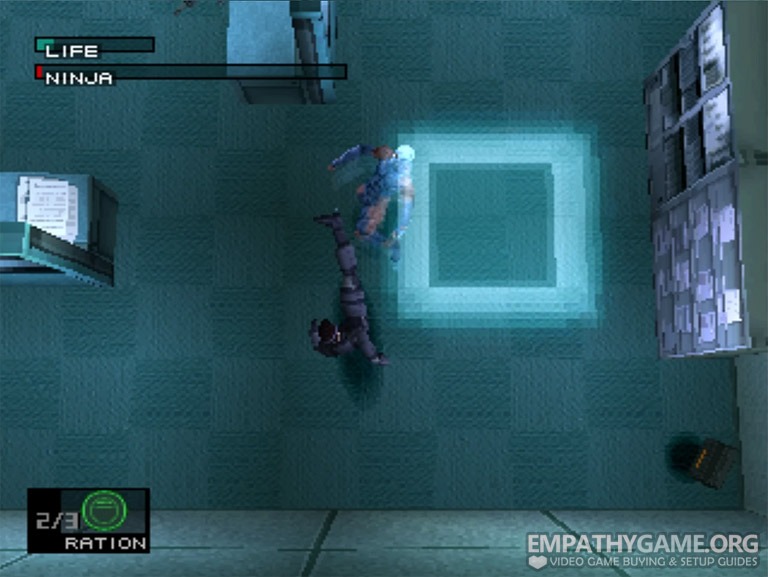
The bosses are memorable because each encounter changes the rules rather than merely presenting a larger health bar. Revolver Ocelot turns a confined room into a duel about positioning and firing windows. Sniper Wolf asks for patience and a different kind of weapon control. Vulcan Raven makes movement and explosives more important than direct confrontation. Even where the mechanics have aged, the fights remain closely tied to the personalities behind them.
Psycho Mantis takes that relationship between character and mechanic further. References to memory-card data and the original controller-port trick make the fight appear to understand the player rather than just Snake. Different releases have to adapt those hardware-specific ideas, but the central joke still lands: solving the encounter requires thinking beyond ordinary combat rules. Gray Fox adds a more personal kind of unease, while Liquid Snake carries the story’s increasingly theatrical stakes. The fights are distinctive not because they are all mechanically smooth, but because they are difficult to confuse with one another.
The Codec Makes Isolation Feel Personal
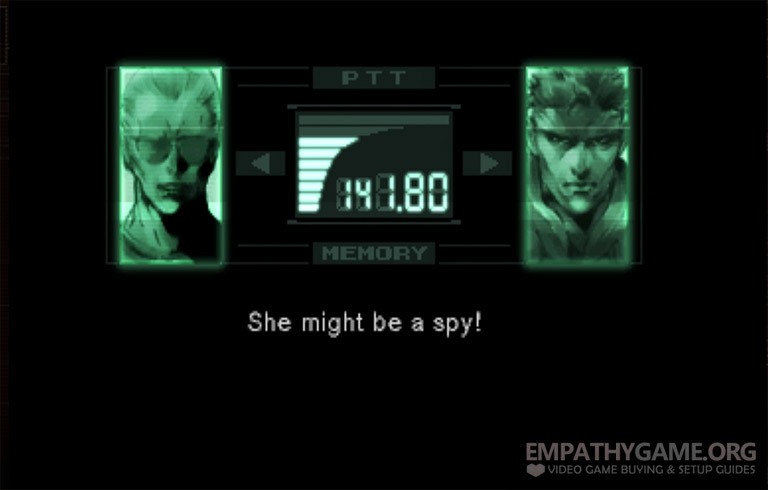
Snake spends much of the operation physically alone, yet the Codec makes him feel connected to a whole group of people beyond the walls of Shadow Moses. Colonel Campbell, Naomi Hunter, Mei Ling, Master Miller, and Nastasha Romanenko offer different mixtures of practical advice, personal conversation, and political context. Calling for help is part of the design, not a sign that the player has failed to understand it.
There is an interesting contrast between these intimate voices and the cold spaces Snake crosses. A conversation can transform an otherwise ordinary corridor into the place where a major revelation is heard. The drawback is pacing: lengthy calls sometimes interrupt the infiltration just as it gathers momentum. Still, the supporting cast feels unusually present because the story develops through communication as well as cutscenes.
The Story Believes in Its Own Absurdity
The plot mixes nuclear deterrence, genetic engineering, inherited identity, military conspiracy, psychic powers, and giant walking weapons. Some explanations are scientifically dubious, and the dialogue occasionally keeps explaining a theme long after it has become clear. Yet the emotional commitment is genuine. The script treats war not just as a geopolitical crisis, but as something that shapes people who may never be able to leave it behind.
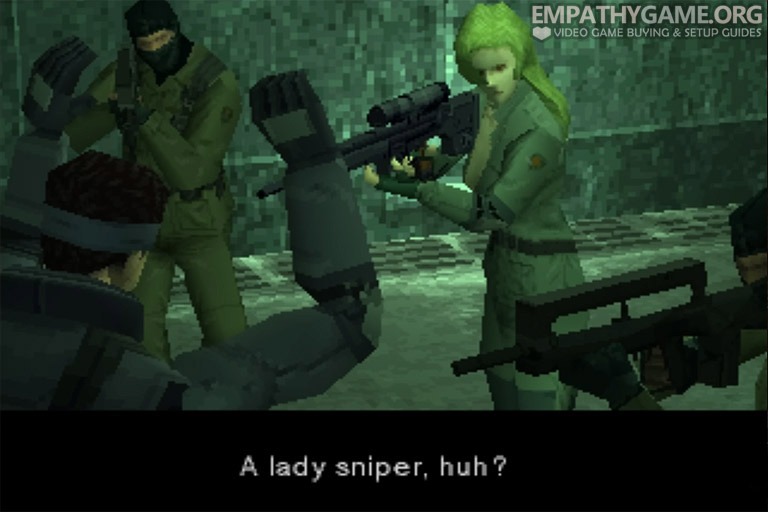
FOXHOUND’s members are larger-than-life antagonists, but their histories complicate the usual hero-versus-villain structure. Sniper Wolf, in particular, receives a degree of sympathy that makes her more than another obstacle to remove. The contrast between tragic speeches and almost cartoonish spectacle should not work as well as it does. Voice acting, music, and confident scene direction hold those extremes together. Metal Gear Solid is often excessive, but rarely indifferent to what it is saying.
Snake’s Relationships Give the Plot Its Shape
Solid Snake initially treats the mission as work he would rather leave behind. Meryl challenges his emotional distance, while Otacon brings guilt, idealism, and a perspective far removed from that of a soldier. Gray Fox connects the immediate crisis to Snake’s past. Liquid’s resentment turns the conflict into something intensely personal, even when his speeches become extravagant.
The torture sequence gives these relationships a mechanical consequence. Resisting or submitting changes the ending companion and the post-game reward without changing the larger mission. One route is not simply a failed version of the other. That makes a physically demanding button-mashing sequence more consequential than it first appears, though its execution can be uncomfortable for reasons unrelated to narrative choice.
A Short Campaign With Reasons to Return
For all its elaborate presentation, the main mission is comparatively brief. A direct run that skips optional Codec conversations can end far sooner than the game’s reputation suggests. More curious players spend longer exploring locked rooms, experimenting with equipment, and listening to the cast. The difference says something useful about its design: Shadow Moses is dense with authored details rather than large for its own sake.
Knowledge transforms subsequent playthroughs. Patrols that once demanded cautious observation can be crossed in seconds, and familiar bosses become tests of execution rather than discovery. Alternate endings unlock the Bandana’s infinite ammunition or Stealth Camouflage, which hides Snake from most ordinary guards. Higher difficulties, rankings, and challenge runs add further motivation. These rewards do not merely make Snake stronger; they let the player deliberately upset situations that were tense the first time.
VR Missions Show How Much the Rules Can Do
VR Missions and Special Missions separate the mechanics from the cinematic story and build focused challenges around sneaking, weapons, timing, targets, and unusual objectives. The expanded collection contains hundreds of scenarios, including playable Ninja challenges and detective-style diversions. Fast retries make experimentation easier than in the campaign.
Not every challenge is equally compelling, but the format demonstrates the strength of a narrow rule set. A radar cone, a guard’s timing, or an awkward weapon can support a surprisingly different problem when the surrounding objective changes. Players who particularly enjoy mastering the stealth systems may find as much lasting interest here as in another trip through the story.
The Original Design Remains Beneath the Sharper Picture
The Master Collection preserves the original level layouts, character models, animations, camera language, and dramatic pacing rather than rebuilding them as a modern remake. Improved image clarity can make rooms and interfaces easier to read, but it also exposes the simple geometry and limited facial detail. More pixels do not change the age of the underlying art. Fortunately, the composition, music, and vocal performances do much of the expressive work.
A controller remains a natural match for movement, inventory management, and directional aiming. Keyboard options improve access without turning the experience into a mouse-driven stealth shooter. The older Windows release available through GOG follows a different technical lineage, so the two PC presentations should not be mistaken for identical versions of the same package. The important review point is unchanged: no presentation option removes the need to learn the original control logic.
Its Influence Is Clear, but Its Priorities Are Different
Later entries expanded the size of infiltration areas, flexibility of movement, and usefulness of direct combat. By Metal Gear Solid 4: Guns of the Patriots, the series was considerably more comfortable with modern camera control and cinematic combat. The first game offers less freedom, yet its tightly placed guards, cameras, vents, and boss solutions give its smaller spaces a character of their own.
That difference is worth understanding before playing. Metal Gear Solid is not an early version of a limitless stealth sandbox. Its strength lies in deliberate encounters, odd tools, and the pleasure of learning a system that initially seems less welcoming than it really is.
Final Verdict
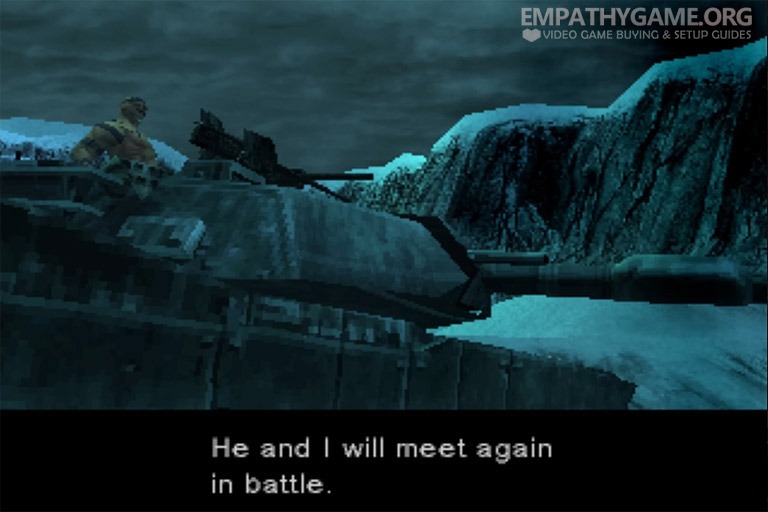
Metal Gear Solid remains compelling because its most unusual ideas have consequences during play. Guard routes reward patience, alerts disrupt comfortable plans, equipment solves problems in unexpected ways, and bosses ask the player to reconsider the rules. The Codec and theatrical cast make a lonely facility feel full of personality.
There is no avoiding the stiff aiming, clumsy firefights, occasionally exhausting dialogue, and late backtracking. Players who want modern movement, broad stealth freedom, or precise mouse shooting may find those limitations difficult to accept. But for anyone interested in carefully authored infiltration and storytelling that is both sincere and extravagantly strange, Shadow Moses still offers something distinctive. Its influence matters, certainly. What makes it worth experiencing is how deliberately its small world fits together.
Metal Gear Solid (1998) Pros & Cons
- Pro: Enemy vision, sound detection, footprints, cameras, radar, hiding locations, distractions, weapons, gadgets, and alert phases created an unusually readable and influential stealth system
- Pro: Shadow Moses remains tightly designed, using connected facilities, backtracking, changing security conditions, environmental hazards, memorable bosses, and hidden information
- Pro: Codec conversations, cinematic direction, voice acting, political themes, betrayals, fourth-wall tricks, and character development give the story an identity that still stands apart
- Pro: VR Missions provide focused stealth and weapon challenges outside the main campaign, while alternate endings, rankings, difficulty levels, unlockable equipment, and hidden details reward replaying
- Pro: The Steam release now offers clearer high-resolution presentation choices and configurable keyboard controls while preserving the original game rather than replacing its visual identity
- Pro: Steam and GOG provide two legal PC choices: a modern Master Collection release and a DRM-free version of the older Windows port
- Con: The fixed camera, directional aiming, limited first-person interaction, older inventory design, and controller-first movement can feel restrictive to players accustomed to modern stealth games
- Con: The Master Collection preserves low-poly models, original environmental geometry, compressed source material, and PlayStation-era animation rather than offering a full visual remake
- Con: The highest built-in Steam rendering mode remains 2560×1920 in a 4:3 presentation rather than native 4K or native ultrawide
- Con: Steam and GOG contain fundamentally different versions, which can confuse buyers and makes saves, fixes, settings, walkthrough details, and mods difficult to transfer between them
- Con: Some original hardware-specific Psycho Mantis tricks and controller interactions must be adapted or simulated on modern PC hardware
Metal Gear Solid PC System Requirements
OFFICIAL STEAM STORE REQUIREMENTS FOR METAL GEAR SOLID – MASTER COLLECTION VERSION:
MINIMUM:
OS: Windows 10, 64-bit
CPU: Intel Core i7-3770
RAM: 8 GB
GPU: NVIDIA GeForce GTX 760 / Intel HD Graphics 4000
DirectX: Version 11
Storage: 9 GB available space
Sound Card: DirectX 11-compatible sound card
Controller: Steam’s requirements table lists an XInput-compatible controller
Additional Notes: A 64-bit processor and operating system are required. The current Steam release also supports configurable keyboard controls, but mouse gameplay is not supported.
RECOMMENDED:
OS: Windows 10, 64-bit
CPU: Intel Core i5-7600
RAM: 16 GB
GPU: NVIDIA GeForce GTX 980
DirectX: Version 11
Storage: 9 GB available space
Sound Card: DirectX 11-compatible sound card
Controller: XInput-compatible controller recommended
High and Max Resolution Hardware Notes
HIGH RESOLUTION MINIMUM:
CPU: Intel Core i5-12400
RAM: 16 GB
GPU: NVIDIA GeForce GTX 1060
MAX RESOLUTION MINIMUM:
CPU: Intel Core i5-12400
RAM: 16 GB
GPU: NVIDIA GeForce GTX 1650
GOG Legacy PC-Port Requirements
OS: Windows 10
CPU: 1.8 GHz processor
RAM: 2 GB
GPU: DirectX 9.0c-compatible 3D graphics card
Storage: 1 GB
Internet: Not required after downloading the official offline installer
Additional Notes: GOG Galaxy is optional. It can provide cloud saves and overlay features, but the game can be installed and played offline.
Additional PC Performance and Setup Notes
- Original mode keeps the lowest-resolution presentation closest to the preserved PlayStation source, while High Resolution renders at 1280×960 and Max Resolution renders at 2560×1920.
- High Resolution and Max Resolution retain a 4:3 game image and do not provide native ultrawide or native 4K internal rendering. Community tools such as MGSM2Fix can provide additional custom-resolution and widescreen options.
- If High Resolution or Max Resolution causes instability, return to Original mode or default display settings. The higher modes also disable some smoothing, screen-filter, and Pixel Perfect choices.
- The Steam version supports configurable keyboard bindings but no mouse gameplay. A controller remains the most natural choice for movement, inventory use, directional aiming, and boss mechanics.
- If an external controller does not work on Steam Deck, open the Quick Access controller menu and manually change the active controller order.
- If cutscenes fail to play, try the game’s default presentation settings and verify the installation through Steam before introducing third-party codec or rendering modifications.
- Verify the Steam files before reinstalling if cutscenes stop playing, analog movement behaves incorrectly, saves fail to load, or the launcher becomes damaged.
- Do not apply GOG/Integral executables or fixes directly to the Master Collection directory. The releases use different files and compatibility tools.
- MGSM2Fix can add custom rendering, widescreen behavior, borderless/windowed modes, filtering controls, launcher skipping, and mod loading, but check compatibility with the installed game build before using it.
- Back up saves and configuration files before combining mods, changing regional versions, replacing textures, or experimenting with launcher and display modifications.
Official Trailer
Frequently Asked Questions
Which PC version should I choose: Steam or GOG?
Steam sells the PlayStation-based Master Collection version with regional versions, virtual memory-card features, achievements, and built-in resolution options. GOG sells the separate DRM-free port of the 2000 Windows release with different saves, menus, controls, and compatible fixes. Choose the version based on which original presentation and PC features you prefer.
Is Metal Gear Solid – Master Collection Version a remake?
No. It preserves the original PlayStation-era maps, models, performances, camera behavior, and basic gameplay rather than rebuilding Shadow Moses as a new game.
Can I buy the MGS1 Master Collection version separately?
Yes. Steam offers Metal Gear Solid – Master Collection Version independently of the larger Vol. 1 bundle. Check the contents of any bundle first to avoid paying for overlapping items.
Can Metal Gear Solid be played offline on PC?
Yes. The Steam single-player game does not need a persistent internet connection after installation, while GOG provides a DRM-free offline installer. Downloading files, updates, or optional content still requires access to the relevant service.
Does Metal Gear Solid have co-op or multiplayer?
No. The story campaign and the VR Missions/Special Missions content in the versions covered by this guide are single-player.
Does the Steam version support keyboard and mouse?
Keyboard controls can be rebound, but the game does not provide normal mouse aiming or mouse-driven gameplay. An XInput-compatible controller is the simplest way to use its controller-first movement and combat system.
What are the built-in resolution options, and is native 4K supported?
The Master Collection offers Original, High Resolution (1280×960), and Max Resolution (2560×1920) modes. Its built-in renderer keeps a 4:3 presentation and does not offer native 4K or native ultrawide; unofficial mods can extend display options. Set the resolution before launching gameplay, as it cannot be changed mid-session.
How well does the Master Collection version work on Steam Deck?
Valve rates it Playable: the default controller setup works, text is legible, and the default graphics settings perform well. Some controller icons may differ, and external controllers can require changing their order in Steam Deck’s Quick Access menu.
Do I need to play Metal Gear and Metal Gear 2 first?
No. The Shadow Moses story gives enough context to follow Solid Snake, but the earlier games provide extra background for Big Boss, Gray Fox, and Snake’s past assignments.
How long is Metal Gear Solid?
Length depends on Codec conversations, retries, exploration, and familiarity with the controls. The main campaign is relatively compact; VR Missions, alternate endings, higher difficulty settings, and replay rankings add time beyond the story.
What are the most useful beginner tips?
Watch the Soliton Radar, memorize patrol routes, and use the Codec when a puzzle or boss seems unclear. Keep Rations available and experiment with Chaff Grenades, Stun Grenades, and environmental cover instead of treating every encounter as a gunfight.
How do I save progress in Metal Gear Solid?
Call Mei Ling through the Codec and select the save option. The Master Collection handles the original PlayStation memory-card behavior through its virtual save system.
What is Meryl’s Codec frequency?
Meryl’s frequency is 140.15. The original game asks players to find it on the physical CD case; later versions provide the necessary reference material without requiring that case.
What are VR Missions and Special Missions?
They are standalone stealth, weapons, puzzle, and timing challenges outside the main Shadow Moses campaign. The Master Collection includes the mission content, with naming and regional packaging differing between versions.
What is Metal Gear Solid: Integral?
Integral is an expanded Japanese release associated with additional game content and VR challenges. The 2000 Windows port is related to that edition, while the Master Collection provides regional versions and the challenge content within its own menus.
Does Metal Gear Solid have multiple endings?
Yes. Whether Snake resists or submits during the torture sequence affects the ending and a subsequent-playthrough reward. Neither choice makes the completed campaign invalid.
How does the Psycho Mantis encounter work without an original PlayStation?
The original boss uses tricks involving controller ports and memory-card data. The Master Collection supplies virtual-controller and saved-data options to recreate the intended interaction on modern hardware.
Can Metal Gear Solid be modded, and are Steam and GOG fixes interchangeable?
The Master Collection has community tools such as MGSM2Fix for widescreen, window modes, and related changes. Do not mix Steam and GOG executables, saves, or mod files: the two ports have different underlying technologies. Back up files and check supported versions first.
Still have questions?
Check the Metal Gear Solid subreddit, Konami’s Metal Gear support section, and Steam Discussions.
Sources & References
Key factual and technical information in this guide was checked against official storefronts, publisher announcements, and established PC technical references:
- Konami — Metal Gear Solid: Master Collection Vol. 1 — collection contents, platforms, bonus material, and Master Collection release information
- Steam — Metal Gear Solid: Master Collection Version — current PC availability, controls, features, user reception, and official Windows requirements
- Konami Steam Announcements — current built-in resolution modes, display restrictions, keyboard configuration, and higher-resolution hardware guidance
- GOG — Metal Gear Solid — legacy Windows-port availability, DRM-free/offline ownership, features, release date, and system requirements
- PCGamingWiki — Metal Gear Solid: Master Collection Version — PC-specific rendering resolutions, input behavior, Master Collection technology, and community-fix context
- Metacritic — Metal Gear Solid for PlayStation — original PlayStation critic aggregate
Similar Games Like Metal Gear Solid (1998)
- Metal Gear Solid 2: Sons of Liberty
- Metal Gear Solid: The Twin Snakes
- Metal Gear Solid Delta: Snake Eater
- Tom Clancy’s Splinter Cell: Chaos Theory
- Hitman World of Assassination
- 007 First Light




Found something worth playing through DecideGame?
DecideGame.com is an independent gaming project run by Editor Zero. If this guide helped you discover a game, solve a problem, or find useful information, you can support DecideGame.com and help keep new and updated game guides coming.
DecideGame — PC Game Guides, Reviews & Setup Help