
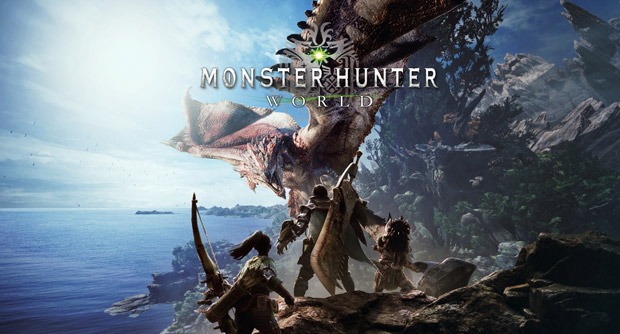
📅 Game released: 2018
Monster Hunter: World is a hunting-action RPG about studying giant monsters, mastering fourteen weapons, and crafting equipment from each successful hunt. This PC guide explains official Steam download and installation options, Iceborne and Master Edition choices, co-op restrictions, system requirements, Steam Deck support, mods, and performance advice.
 By Editor Zero — independently researched, edited, and maintained.
Last updated: 13 November 2026
Last reviewed: 13 November 2026
Table of Contents
- Quick Facts
- Official PC Stores, Download & Installation
- Monster Hunter: World Review
- Pros & Cons
- PC System Requirements
- Frequently Asked Questions
- Similar Games
Monster Hunter: World Quick Facts
- Game: Monster Hunter: World / Monster Hunter World: Iceborne / Iceborne Master Edition
- Developer: CAPCOM Co., Ltd.
- Publisher: CAPCOM Co., Ltd.
- Genre: Hunting Action, Action RPG, Multiplayer
- Release: January 26, 2018; Windows PC: August 9, 2018
- Platforms: Windows PC, PS4, Xbox One
- Steam Deck: Verified; default controls function, controller icons match, text is legible, and Valve considers the default graphics configuration suitable
- Engine: MT Framework
- Multiplayer: Solo or online co-op for up to four hunters in most quests; no local split-screen
- Cross-Platform Features: No cross-play or cross-progression between PC, PS4, and Xbox One; each platform uses separate save data
- Iceborne Access: Requires ownership of the base game, completion of its main story, and Hunter Rank 16
- Community: Official Monster Hunter World: Iceborne Website, Steam Discussions, Monster Hunter: World Reddit Community
- PC modding: Nexus Mods for Monster Hunter: World hosts cosmetic, interface, performance, save, camera, shop, and gameplay modifications; official mod tools and Steam Workshop are not provided
- Metacritic score: 88/100 on PC
- IGN score: 9.5/10 for PC
- OpenCritic average: 90/100
- Steam user reception: Very Positive overall
Official PC Stores, Download & Installation
👇 Compare the official Steam packages below before purchasing, downloading, installing, or adding Iceborne to Monster Hunter: World.
- PC storefront: Steam is the current official Windows PC storefront for Monster Hunter: World and Iceborne. PlayStation and Xbox editions are separate console purchases.
- Base game: Monster Hunter: World includes Low Rank, High Rank, the complete base campaign, fourteen weapon types, online co-op, event content, and the original endgame without Master Rank.
- Iceborne expansion: Monster Hunter World: Iceborne requires the Steam base game. Existing World progress, Hunter Rank, items, loadouts, and owned add-ons remain available after Iceborne is activated.
- Master Edition: Iceborne Master Edition bundles Monster Hunter: World with the Iceborne expansion and is the straightforward package for a new player who wants both campaigns and Master Rank content.
- Digital Deluxe bundles: Iceborne Digital Deluxe is for a base-game owner who wants Iceborne plus the Deluxe Kit. Master Edition Digital Deluxe combines the base game, Iceborne, and the same Deluxe Kit.
- Deluxe Kit: The kit adds cosmetic layered armor, gestures, stickers, room décor, a hairstyle, and face paint. It does not add another story, monster, weapon class, rank, or gameplay region.
- DLC collections: Steam sells large cosmetic DLC collections and individual add-ons. Bundle contents can overlap and the available bundle lineup can change, so review the current package contents and owned items before purchasing.
- High Resolution Texture Pack: This optional free Steam add-on requires at least 8 GB of VRAM and substantially more storage and GPU performance than the normal installation.
- Steam features: The PC release supports achievements, Steam Cloud, trading cards, Family Sharing, HDR, online co-op, controller support, cross-region multiplayer, and a Steam Deck Verified configuration.
- Offline single-player: Finish normal Steam installation, updates, and first-run setup while online before using Steam Offline Mode. Multiplayer, SOS flares, Steam Cloud synchronization, updates, and other online services require connectivity.
- Expansion compatibility: Base-game and Iceborne owners can hunt together in compatible base-game quests, but a player without Iceborne cannot enter Master Rank, Hoarfrost Reach, or expansion-only content.
- Platform ownership: PC ownership does not grant PS4 or Xbox One copies. Cross-play and cross-progression are unavailable, so friends who want to hunt together must use the same platform.
 Buy Monster Hunter: World on Steam
Compare Iceborne Editions on Steam
View the Free High Resolution Texture Pack on Steam
Monster Hunter: World Review
A demanding hunting RPG where the greatest upgrade is learning why the last attempt failed.
Monster Hunter: World is built around repetition, but not the empty repetition of filling a progress bar. A hunter tracks a monster, learns its attacks, crafts equipment and returns with a better plan. The numbers improve, yet the more important change happens in the player.
Anjanath makes this clear early. Its reach, fire and sudden charges can make the first serious encounter feel unreasonable. Attack through every opening and a poorly timed heal may end the hunt. Return later and the same creature begins to make sense: the head turns before a bite, the body commits before a charge, and a retreat creates time to sharpen. That shift from panic to understanding is the game’s central reward. Equipment matters, but recognizing behavior matters more.
The New World Feels Like an Ecosystem, Not a Sequence of Arenas
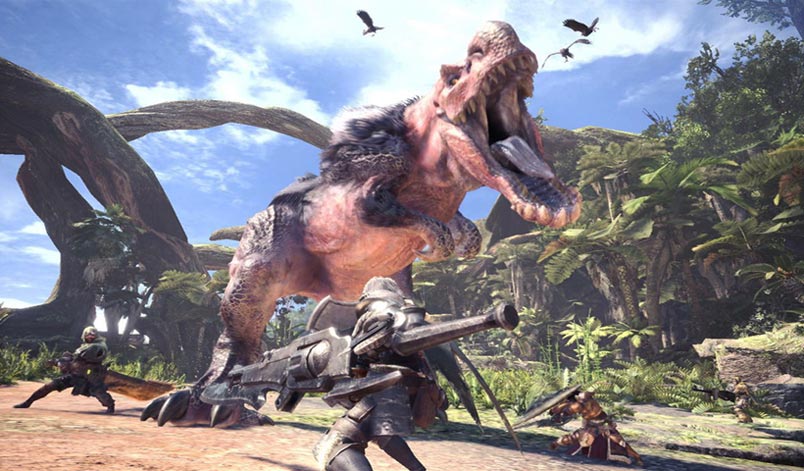
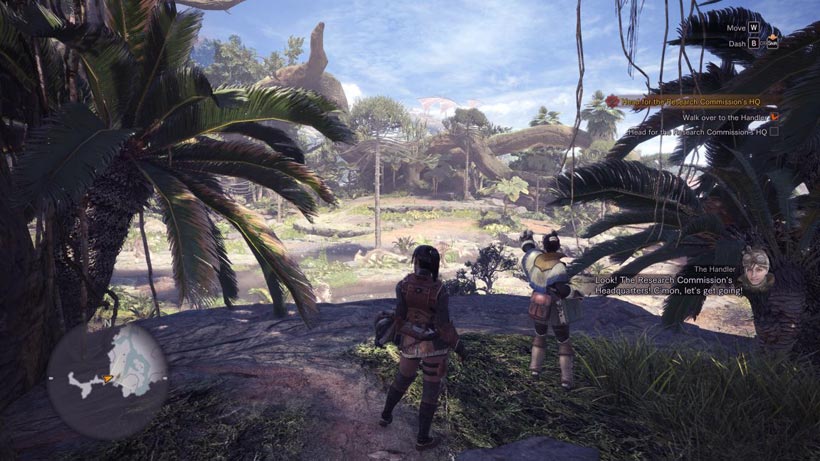
Astera provides the familiar structure of a hunting hub, with its smithy, canteen, researchers and quest boards. The hunting areas feel less orderly. Monsters travel between nests, feeding grounds, tunnels and territory occupied by other predators. The Ancient Forest’s tangled roots and vertical paths are initially frustrating, even with Scoutflies following tracks. Gradually, knowing the route to Rathalos’s nest becomes more useful than following a glowing trail.
Wildspire Waste shifts between desert and marsh, Coral Highlands climbs through strange formations, and Rotten Vale makes an ecosystem from the remains below. Elder’s Recess has a harsher volcanic character. These places affect movement, preparation and encounters, rather than functioning as interchangeable backdrops.
Turf wars are the clearest expression of that design. Another monster can interrupt a carefully managed fight, forcing a decision between watching the confrontation, using dung pods or withdrawing altogether. The maps are not open world, yet life appears to continue beyond the quest. This is one connection with Dragon’s Dogma 2: its journeys are freer, but both games let a large creature turn an ordinary route into an unexpected problem.
Fourteen Weapons Create Fourteen Ways to Read a Monster
Combat asks for commitment. Great Sword swings cannot simply be withdrawn when the target moves; charged attacks work best when the hunter predicts where it will arrive. Long Sword builds spirit levels around precise opportunities and counters. Sword and Shield prizes mobility and item access, while Dual Blades exchange reach for sustained close-range pressure. Hammer and Hunting Horn favor the head, though knockouts and musical buffs give them different responsibilities.
Lance turns threatening attacks into blocks and counters; Gunlance adds explosive shelling. Switch Axe alternates forms, while Charge Blade demands an understanding of phials, guard points and discharges. Insect Glaive combines kinsect extracts with aerial movement. Bow, Light Bowgun and Heavy Bowgun introduce their own demands around positioning, stamina, coatings or ammunition. This is not one combat system divided into fourteen cosmetic choices.
The best weapon lessons are more subtle than memorizing a combo. Hammer’s sliding attack makes a slope an offensive opportunity, while chasing a mobile monster’s head indefinitely can waste time that could have been spent attacking reachable parts. Insect Glaive is similarly misleading at first glance. Its airborne moves are expressive, but grounded combinations and well-timed kinsect commands can be more efficient, collecting extracts while shortening an attack’s recovery. Mastery is partly learning when a weapon’s most recognizable move is not its best option.
Trying another weapon can expose habits the first one concealed. A ranged hunter learns the danger of standing underneath a monster; a Dual Blades specialist discovers the patience needed for a charged strike. That commitment has a parallel in Black Myth: Wukong, although Wukong offers a more continuous single-player journey rather than repeated cooperative hunts and equipment crafting.
Preparation Begins Before the First Attack
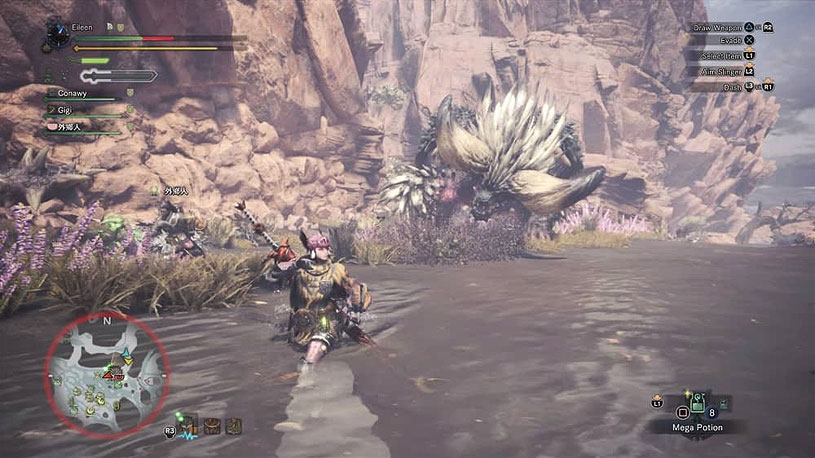
A hunt can begin going wrong at the equipment box. Food, elemental resistance, antidotes, environmental drinks, traps, tranq items, flash pods, dung pods, barrel bombs, mantles and weapon ammunition all serve different situations. Saved item and equipment loadouts eventually turn preparation from menu work into a deliberate choice: a capture set for one target, different protection for another, and no traps wasted on an Elder Dragon.
Sharpness illustrates the importance of timing. Let it deteriorate and attacks lose effectiveness or bounce off hard parts; sharpen carelessly and the monster may punish the interruption. Capturing a weakened target can end a hunt sooner, but part breaks, rewards and quest conditions mean killing is sometimes preferable. Neither aggression nor efficiency is a single fixed rule.
Solo hunts gain another strategic layer from Palico gadgets. Shieldspire can draw attention and open space to attack, Coral Orchestra provides buffs, Meowlotov contributes damage, and Vigorwasp offers healing that is not always available exactly when needed. Choosing support according to the monster and weapon can matter more than expecting one companion setup to solve every fight. Even a monster changing areas becomes useful downtime for sharpening, restocking or reconsidering that setup.
Monster Behavior Is the Real Difficulty System
Rathian teaches tail awareness, poison and aerial positioning. Diablos punishes careless placement in front of its horns. Odogaron demands quick reactions, while Nergigante’s growing spikes make increasing danger visible. A head angle, roar, tired stumble or retreat can reveal more than a conventional warning marker. Watching only the hunter’s attack animation means missing half the fight.
There are defensive choices beyond dodging. After a heavy knockdown, remaining prone briefly can be safer than rushing to stand, because the recovery state provides a short window of protection against follow-up attacks. Against an aggressive monster such as Nergigante, the instinct to recover immediately can be precisely the wrong decision. It is an unusually thoughtful lesson in restraint for a game so focused on enormous weapons.
Part breaks add another reason to observe the target. Severing a tail can reduce its reach; damaging particular limbs can alter a monster’s movement. Fainting, or carting, also has consequences because most quests limit how many failures the group can share. As in Elden Ring, repeated failure becomes more interesting when it produces knowledge, although Monster Hunter develops each major opponent into a longer, repeatable relationship rather than a single boss victory.
The Hunt, Craft, Upgrade Loop Gives Repetition a Purpose
Materials become weapons and armor that visibly reflect the creatures they came from. Anjanath equipment carries its fiery identity, while Odogaron and Elder Dragon sets suggest different skills and priorities. There is no conventional character-level ladder that makes an earlier mistake irrelevant. Health Boost, Weakness Exploit, Critical Eye, Guard, Evade Window, elemental bonuses and other armor skills let hunters trade maximum damage for comfort or survival.
Investigations vary reward boxes, time limits, permitted faints and targets. Optional quests unlock tools and facilities; event quests create other reasons to revisit familiar monsters. But the decoration system can turn a specific build into a long lottery. The game offers plenty of worthwhile projects without guaranteeing that the desired jewel or rare material will arrive on a satisfying schedule.
Its unusual weakness is that gaining experience does not always make progression feel smoother. A carefully prepared hunter may understand exactly which upgrade is needed and still be dependent on chance. That tension between mastery and random rewards shapes the endgame.
Co-Op Produces Brilliant Hunts and Avoidable Friction
With four hunters, a Hammer knockout can create an opening for a Long Sword tail cut while ranged attacks apply status and another hunter prepares a trap. SOS flares can rescue a difficult quest and introduce tactics worth borrowing. Fixed roles are unnecessary, but awareness of teammates makes a noticeable difference.
Cooperation also introduces interference. Hunters crowding the same weak point can stagger one another, and a poorly timed flash may disrupt an otherwise controlled encounter. More hunters increase the monster’s health, so simply adding people is not an automatic shortcut. Assigned story quests are more frustrating: players can be forced to watch introductory cutscenes separately before joining friends. The campaign’s desire to introduce each monster theatrically works directly against its cooperative appeal.
The Zorah Magdaros siege reveals another weakness in story pacing. Its scale is memorable, but repeated cannon work and scripted movement cannot match the responsiveness of an ordinary hunt. Even after clearing objectives quickly, hunters may still be left waiting for the creature to reach the next barrier.
Ordinary optional hunts and investigations are far more comfortable. Once the cutscene restriction stops interrupting the journey, multiplayer becomes a source of different strategies rather than repeated administration.
Iceborne Is an Expansion and a Second Learning Curve
Iceborne’s Master Rank asks hunters to relearn apparently familiar creatures. High Rank armor soon loses its authority, and faster monsters punish assumptions developed during the base campaign. Hoarfrost Reach adds snowy routes, caves and hot springs, while Seliana offers a more convenient hub. Barioth is an instructive obstacle: breaking its forelegs can make its restless movement less threatening, rewarding hunters who identify the source of a problem rather than simply pursuing damage.
The Clutch Claw allows grappling onto monsters, tenderizing parts and sending them into walls. These actions produce satisfying opportunities, but tenderizing can become another chore layered onto already complex encounters. There is an awkward contradiction, too: the special recoil associated with a clutch-claw stagger may pull a monster out of range just as a Long Sword or Great Sword finisher is about to connect. A supposed opening can undo the careful timing that created it.
Raging Brachydios, Alatreon and Fatalis raise the demands further. Elemental preparation matters especially against Alatreon; Fatalis applies severe damage and time pressure. These encounters can feel restrictive, but they give experienced hunters demanding reasons to reconsider their builds and technique.
The Guiding Lands brings several biomes together, with regional levels controlling available monsters and upgrade materials. Its weakness goes beyond unclear menus. Raising one region can mean lowering another, and a hunter specializing in high-level areas may struggle to obtain ordinary materials from lower-level targets. Visiting another hunter’s expedition can help, but their priorities may not match. This makes a generous endgame unexpectedly awkward when the goal is one specific craft.
Defender Gear Helps Returning Players More Than New Hunters
Defender weapons and Guardian armor deliberately accelerate the path to Iceborne. That is welcome when restarting or catching up with friends, but the shortcut can conceal the very systems that make the game rewarding. Powerful armor reduces the cost of poor positioning; easy upgrades remove incentives to investigate normal weapon trees, resistances and skills.
A new hunter can arrive in Master Rank without understanding why a previous fight was manageable. Avoiding this gear is not a purity test, just a sensible choice for someone who wants the base campaign’s intended learning curve. Experienced players may reasonably value speed instead.
PC Presentation and the Modding Community Extend Its Life
The PC presentation gives the game’s expressive monster animation and dense environments room to shine, whether using a controller or mouse and keyboard. Its creature designs hold up particularly well because movement, posture and habitat communicate information useful in combat, not merely attractive scenery.
Community modifications can change interfaces, camera behavior, cosmetic details and even progression. They offer options for particular frustrations, but gameplay-altering changes can also distort the shared hunting experience. Monster Hunter: World does not need mods to feel complete; they make more sense after the original systems have had a chance to explain themselves.
Replayability Comes From Mastering Another Weapon
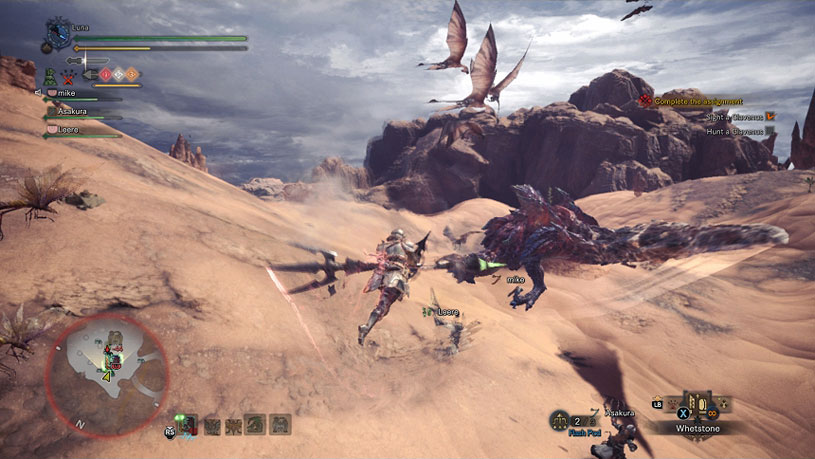
Tempered investigations, event quests, sieges, decorations, augments and layered armor can outlast the story by a wide margin. Arena quests present an interesting contrast to ordinary progression: predetermined equipment and limited items take away carefully crafted advantages, sometimes making a familiar weapon feel weaker than expected. Yet those constraints can encourage experimentation with Charge Blade timing or Long Sword counters that a comfortable personal loadout never demanded.
Learning a new weapon is almost like starting again without discarding the world already understood. Great Sword asks where the monster will be, Bow asks how distance and stamina can be maintained, and Lance asks which attack should be countered rather than avoided. This measured commitment also connects hunting with Dark Souls III, although Dark Souls favors tighter levels and one-off progression over material farming. The overlap is in how repeated danger becomes manageable through attention.
Final Verdict
Monster Hunter: World succeeds because improvement is visible without being reduced to a level number. Its ecosystems, unpredictable interruptions, distinct weapons and preparation systems make each monster worth understanding, while Iceborne provides a substantial second journey for those who enjoy that discipline.
It is not equally welcoming to every player. Dense tutorials, awkward Assigned quest co-op, rare-drop farming, Clutch Claw maintenance and some highly restrictive late encounters can turn worthwhile complexity into friction. The best moments are also demanding: recognizing when to stay down, target a different limb or stop attacking long enough to prepare.
For players willing to learn a creature rather than overpower it immediately, the satisfaction is unusually durable. Those looking for a brisk campaign with constant forward momentum may find the repetition exhausting. The game’s real achievement is making a familiar hunt interesting again because the hunter now understands something that was missed the first time.
Monster Hunter: World Pros & Cons
- Pro: Fourteen genuinely distinct weapons create an unusually deep combat and mastery system
- Pro: Living maps, tracking, turf wars, part breaks, captures, environmental tools, and monster behavior make hunts feel physical and unpredictable
- Pro: Equipment crafting, armor skills, investigations, event quests, decorations, and weapon experimentation sustain long-term progression
- Pro: Iceborne adds a campaign-sized expansion with Master Rank, Hoarfrost Reach, Seliana, new monsters, Clutch Claw actions, and Guiding Lands endgame
- Pro: Solo scaling, four-player hunts, SOS flares, Steam Deck verification, broad PC options, and a mature mod community keep the game accessible
- Con: Assigned story quests use awkward cutscene restrictions before friends can join
- Con: Dense tutorials, menus, weapon complexity, and poorly explained endgame systems can overwhelm new hunters
- Con: Defender equipment can bypass important learning, while rare materials and decoration farming can become repetitive
- Con: Iceborne tenderizing and several final monsters can feel mechanically restrictive or unusually demanding
Monster Hunter: World PC System Requirements
Important: Steam still displays Windows 10 in the official requirements. Capcom stopped guaranteeing normal operation on Windows 10 after October 14, 2025, although the game can still run there. Windows 11 is the safer supported environment for a new installation.
MINIMUM:
Performance Target: 1080p / 30 FPS at Low settings
OS: Windows 10, 64-bit
CPU: Intel Core i5-4460 / Intel Core i3-9100F / AMD FX-6300 / AMD Ryzen 3 3200G
RAM: 8 GB
GPU: NVIDIA GeForce GTX 760 / GTX 1050 / AMD Radeon R7 260X / RX 560
DirectX: Version 11
Network: Broadband internet connection
Storage: 52 GB available space
Sound Card: DirectSound-compatible sound card using DirectX 9.0c or later
Additional: 64-bit processor and operating system required
RECOMMENDED:
Performance Target: 1080p / 30 FPS at High settings
OS: Windows 10, 64-bit
CPU: Intel Core i7-3770 / Intel Core i3-8350 / Intel Core i3-9350F / AMD Ryzen 5 1500X / AMD Ryzen 5 3400G
RAM: 8 GB
GPU: NVIDIA GeForce GTX 1060 3 GB / GTX 1650 / AMD Radeon RX 480 / RX 570
DirectX: Version 11
Network: Broadband internet connection
Storage: 52 GB available space
Sound Card: DirectSound-compatible sound card using DirectX 9.0c or later
Additional: 64-bit processor and operating system required
HIGH RESOLUTION TEXTURE PACK — MINIMUM
Performance Target: 1080p / 30 FPS
OS: Windows 10, 64-bit
CPU: Intel Core i5-4460 at 3.20 GHz / AMD FX-6300
RAM: 8 GB
GPU: NVIDIA GeForce GTX 1070 / AMD Radeon RX Vega 56
VRAM: At least 8 GB required to install and display the textures correctly
Network: Broadband internet connection
Storage: 88 GB available space
Sound Card: DirectSound-compatible sound card using DirectX 9.0c
HIGH RESOLUTION TEXTURE PACK — RECOMMENDED
Performance Target: 2160p / 30 FPS
OS: Windows 10, 64-bit
CPU: Intel Core i7-3770 at 3.4 GHz / Intel Core i3-8350 at 4 GHz / AMD Ryzen 5 1500X
RAM: 8 GB
GPU: NVIDIA GeForce GTX 1080 Ti / AMD Radeon VII
VRAM: At least 8 GB required
DirectX: Version 11
Network: Broadband internet connection
Storage: 88 GB available space
Sound Card: DirectSound-compatible sound card using DirectX 9.0c or later
Additional PC Performance and Setup Notes
- DirectX 12 requires Windows 10 version 1809 or later and a graphics card with at least 4 GB of VRAM. Test DX11 and DX12 separately because performance and stability vary by system.
- Volumetric Rendering Quality is one of the most demanding settings. Lower volumetrics, ambient occlusion, shadows, foliage sway, contact shadows, and anti-aliasing before reducing textures when enough VRAM is available.
- Install the normal texture set first. The High Resolution Texture Pack is optional, substantially increases storage and VRAM use, and is not a sensible choice for Steam Deck or a GPU below its requirements.
- Capcom’s Windows 10 notice does not mean the game stopped launching on October 14, 2025. It means future compatibility and investigation of new Windows 10-specific problems are no longer guaranteed.
- Steam Deck is Verified. Valve says the default controller works, Deck button icons appear, interface text is legible, and default graphics perform suitably; an external controller may require changing controller order through the Quick Access Menu.
- When the game crashes or fails to launch, update Windows and the GPU driver, verify Steam files, disable conflicting overlays, remove unstable overclocks, and test a clean installation without mods.
- Capcom’s troubleshooting guide identifies
graphics_option.iniin the game installation folder as the file that stores selected graphics options. Back it up before any manual configuration changes, and verify Steam files when troubleshooting damaged or altered game files. - Back up saves and configuration files before adding Stracker’s Loader, ReShade, camera tools, shop changes, cosmetic replacements, or other unofficial modifications.
- Remove outdated loaders and restore clean files after updates. A mod built for another revision can cause startup crashes, missing models, failed quests, or incorrect online behavior.
Official Trailer
Note: This official Capcom announcement trailer introduces the New World, large-monster hunts, environmental interactions, tracking, cooperative play, weapon combat, and the living ecosystem that defines Monster Hunter: World.
Frequently Asked Questions
Which Monster Hunter: World edition should a new PC player buy?
Iceborne Master Edition includes the base game and Iceborne expansion, making it the simplest full gameplay package. Master Edition Digital Deluxe adds the cosmetic Iceborne Deluxe Kit; it is not required to access Master Rank, its monsters, or the Guiding Lands.
When can I start Iceborne, and does my progress carry over?
You need the expansion, completion of World’s main story, and Hunter Rank 16. Speak with the Feisty Fiver in Astera to begin; your existing character, equipment, items, and progression carry over into Master Rank.
Can I finish Monster Hunter: World alone, or is co-op necessary?
The main World and Iceborne campaigns can be completed solo, with your Palico providing support. Most quests allow up to four online hunters, but some siege-style and optional endgame encounters are designed more comfortably around coordinated groups. There is no split-screen mode.
Why can’t a friend join my Assigned story quest?
Many Assigned quests require each player to reach and watch the monster’s introductory cutscene before joining another hunter. Once the quest permits multiplayer, meet in the same online session or use an SOS flare; you may need to leave separate attempts before joining together.
Can someone without Iceborne hunt with an Iceborne owner?
Yes, in compatible base-game quests. A hunter who only owns World cannot enter Iceborne’s Master Rank quests, Hoarfrost Reach, or other expansion-only areas and content.
Does Monster Hunter: World have cross-play or cross-save?
No. Steam/PC, PlayStation, and Xbox players cannot hunt together, and Capcom does not support transferring saves or progression between those platforms. Multiplayer within a platform supports cross-region play.
Can I play Monster Hunter: World offline on PC?
Yes, for single-player after installing, updating, and completing normal first-run Steam setup while online. Steam Offline Mode does not provide SOS flares, online co-op, cloud synchronization, or updates.
Should beginners use Defender weapons and Guardian armor?
They are intended to help players move through the base campaign more quickly toward Iceborne. For a first playthrough, ordinary gear progression teaches crafting, armor skills, defense, and monster positioning more gradually; use Defender and Guardian gear if speed matters more than learning those systems.
Which weapon should a beginner choose?
Sword and Shield is flexible, Hammer has a clear goal of striking the head, Long Sword offers reach, and Dual Blades emphasize mobility. Try several in the Training Area and choose the weapon whose timing and defensive options feel easiest to understand rather than chasing a universal ‘best’ choice.
Is capturing better than slaying monsters?
Capturing a weakened capturable monster is usually faster, but hunt objectives and desired materials can change the better choice. Elder Dragons cannot be trapped and captured, and specific part breaks or carve goals may influence how you finish a quest.
What are the Guiding Lands in Iceborne?
The Guiding Lands are a multi-biome Master Rank endgame area where regional levels influence monster appearances. Special materials from its encounters feed into equipment augmentations, layered armor, and other late-game upgrades.
Is the Clutch Claw essential in Iceborne?
You can complete the expansion without using it perfectly, but tenderizing monster parts and sending monsters into walls can create important openings. Learning its timing helps in many Master Rank encounters, although maintaining tenderized parts can feel repetitive.
Is Monster Hunter: World Steam Deck Verified?
Yes. Valve lists it as Verified, including suitable default controls, readable text, matching controller icons, and performance on the default configuration. The optional High Resolution Texture Pack is not a sensible choice for Steam Deck’s graphics memory and storage budget.
Will Monster Hunter: World still run on Windows 10?
It may still run, and Steam continues to list Windows 10 in the game’s published requirements. However, Capcom no longer guarantees proper operation or investigates new Windows 10-specific issues following Microsoft’s end of standard support; Windows 11 is the more suitable choice for a new installation.
Should I use DirectX 11 or DirectX 12 on PC?
Try both on your own system; results can differ by hardware and drivers. DirectX 12 requires Windows 10 version 1809 or later and a GPU with at least 4 GB of VRAM, while DirectX 11 remains the base game’s published API requirement.
Why does Monster Hunter: World crash or stutter on PC?
Possible causes include graphics drivers, insufficient video memory, demanding visual settings, overlays, unstable overclocks, modified files, and outdated mod loaders. Start by checking Capcom’s official troubleshooting guidance, verifying Steam files, and testing without third-party modifications.
Does the PC version support controllers, keyboard and mouse, and ultrawide monitors?
Yes. Steam provides gamepad and mouse-and-keyboard options, and the Iceborne PC feature list confirms ultrawide display support. Some cinematic sequences may retain a 16:9 presentation.
Are Monster Hunter: World mods officially supported?
Capcom does not provide official game mod tools or Steam Workshop integration, but the PC community maintains unofficial cosmetics, interface changes, and gameplay modifications. Back up your saves and avoid cheats or progression-altering mods during online hunts.
Still have questions? Check the official Capcom Monster Hunter: World support centre, Steam Discussions, or Monster Hunter: World Reddit community.
Sources & References
Release, storefront, compatibility, and technical information was cross-checked using these sources:
- Capcom — Monster Hunter: World and Iceborne release and platform details
- Steam — Monster Hunter: World store page, requirements, features, DLC packages, and user reception
- Steam — Monster Hunter World: Iceborne editions, expansion requirement, and PC features
- Capcom Support — cross-play, cross-region multiplayer, and save-transfer status
- Capcom Support — Steam troubleshooting and configuration guidance
- Official Monster Hunter: World Steam announcements — Windows 10 support notice and Steam Deck verification
- PCGamingWiki — engine, ultrawide behavior, and PC technical reference
Similar Games Like Monster Hunter: World
Found something worth playing through DecideGame?
DecideGame.com is an independent gaming project run by Editor Zero. If this guide helped you discover a game, solve a problem, or find useful information, you can support DecideGame.com and help keep new and updated game guides coming.
DecideGame — PC Game Guides, Reviews & Setup Help