
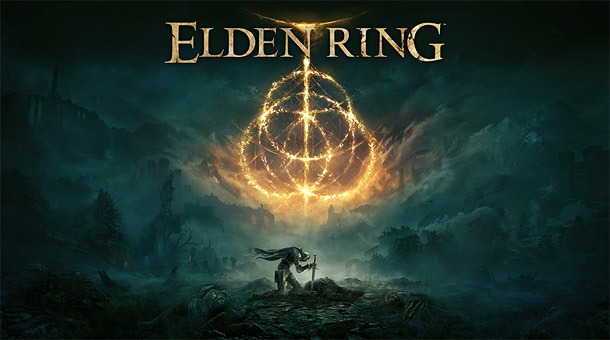
📅 Game released: 2022
Elden Ring is an open-world dark-fantasy action RPG in which a Tarnished explores the Lands Between, develops flexible weapon and magic builds, and faces demanding bosses while uncovering hidden routes and cryptic quests. This PC guide compares official Steam purchase and download options, Shadow of the Erdtree editions and the Tarnished Pack, and explains installation, system requirements, Steam Deck support, co-op, mods, and performance considerations.
 By Editor Zero — independently researched, edited, and maintained.
Last updated: 12 November 2026
Last reviewed: 12 November 2026
Table of Contents
- Quick Facts
- Official PC Stores, Download & Installation
- Elden Ring Review
- Pros & Cons
- PC System Requirements
- Frequently Asked Questions
- Similar Games
Elden Ring Quick Facts
- Game: Elden Ring / Shadow of the Erdtree / Tarnished Pack
- Developer: FromSoftware, Inc.
- Publisher: FromSoftware, Inc. and Bandai Namco Entertainment
- Genre: Action RPG, Open World, Soulslike, Fantasy
- Release: February 24, 2022
- Platforms: Windows PC, PS4, PS5, Xbox One, Xbox Series X|S; Nintendo Switch 2 (Tarnished Edition)
- Expansions & add-ons: Shadow of the Erdtree expansion; Tarnished Pack content add-on
- Steam Deck: Verified; Valve approves the default controller configuration, interface legibility, and graphics configuration
- Engine: Not officially confirmed
- Modes: Single-player, online co-op with up to two summoned guests, invasions, duels, and Colosseum PvP
- Anti-Cheat: Easy Anti-Cheat for official online multiplayer
- Community: Elden Ring Reddit Community, Steam Discussions, Elden Ring Discord
- PC modding: Nexus Mods hosts unofficial co-op, randomizers, practice tools, visual changes, interface improvements, and overhauls; no official Steam Workshop or developer mod tools
- Metacritic score: 94/100 on PC
- IGN score: 10/10 for Elden Ring
- OpenCritic average: 95/100 (original Elden Ring)
- Steam user reception: Very Positive overall
Official PC Stores, Download & Installation
👇 Compare official Steam editions and add-ons before purchasing, downloading, installing, or expanding Elden Ring on PC.
- Official PC storefront: Steam is the officially listed Windows PC store for Elden Ring. No official Epic Games Store, GOG, Microsoft Store PC, or PC Game Pass version is listed.
- Base game: The standard Elden Ring purchase contains the full Lands Between campaign, without Shadow of the Erdtree or the separately sold Tarnished Pack.
- Shadow of the Erdtree expansion: The expansion requires the Elden Ring base game on the same Steam account. It does not provide a standalone executable or a second game license.
- Shadow of the Erdtree Edition: Includes the base game and expansion in one purchase. It is the straightforward option for new players who want both campaigns.
- Shadow of the Erdtree Premium Bundle: Includes the expansion plus its digital art book and soundtrack. It does not include the base game, so an existing Elden Ring license is required.
- Shadow of the Erdtree Deluxe Edition: Includes the base game, expansion, and digital art books and soundtracks for the base game and expansion. Check owned content before buying a package that overlaps with another edition.
- Tarnished Pack: A separate paid add-on for Steam owners of the base game. It adds the Heavy Knight and Idus Knight starting classes, four armor sets, additional weapons, three customizable looks for Torrent, and two NPC invasion encounters. It adds no new story region and is not automatically included with the Shadow of the Erdtree Edition or Deluxe Edition.
- Nintendo Switch 2 edition: Tarnished Edition combines the base game, Shadow of the Erdtree, and Tarnished Pack content on Nintendo Switch 2. It is a separate console purchase, not a Steam upgrade or PC edition.
- Nightreign: Elden Ring Nightreign is a separate standalone game, not a DLC for Elden Ring. Its Forsaken Hollows DLC also belongs only to Nightreign.
- Steam installation & saves: Install Elden Ring through the Steam library, then enable owned DLC through the game’s Steam properties if needed. Steam offers achievements, Steam Cloud, Family Sharing, and controller support; let Steam finish updates and synchronize saves before switching PCs.
- Online multiplayer: Co-op, invasions, and PvP require the current compatible game files, internet access, and Easy Anti-Cheat. PC and console versions do not share unrestricted cross-play, and Steam ownership does not grant a console copy.
- Unofficial PC mods: Back up saves, follow the version requirements of each mod and mod loader, and keep modded play separate from official Easy Anti-Cheat matchmaking. Return to clean files and a valid save before official online play.
 Buy Shadow of the Erdtree on Steam
Buy the Elden Ring Tarnished Pack on Steam
Elden Ring Review
A dark-fantasy journey where curiosity and preparation matter as much as reflexes.
Elden Ring makes a strong impression before you fully understand what is happening. You step into Limgrave, see the golden Erdtree glowing in the distance, and receive little more than an invitation to choose a direction. A road leads toward Stormveil Castle, but a ruined church, cave entrance, mounted knight, or suspicious coastline can pull you away before the journey has properly begun. The absence of a crowded objective map is not an omission. It changes how you look at the world.
FromSoftware takes the tense, stamina-based combat of its Dark Souls lineage and spreads it across an open landscape, with echoes of Bloodborne and Sekiro in its appetite for demanding encounters. The important difference is freedom to withdraw. When a boss seems impossible, leaving to find levels, equipment, another summon, or simply a different route is part of the intended rhythm. Progress depends on judgment as much as execution.
George R. R. Martin helped shape the mythology behind the Lands Between, but the game rarely delivers that history in conventional scenes. Broken family relationships, item descriptions, ruined churches, and unsettling characters invite interpretation. There is a cost to this approach: a player can understand the danger of a place long before understanding why it matters, and important dialogue may disappear into optional interactions.
Even a central character can slip out of view because of how exploration works. Defeating groups of enemies can replenish flasks without resting, while resting at a Site of Grace respawns many ordinary foes. Someone who keeps moving may therefore overlook the optional “Talk to Melina” prompts at certain Graces. The system preserves momentum, but it can quietly reduce the time spent with a character the story relies on.
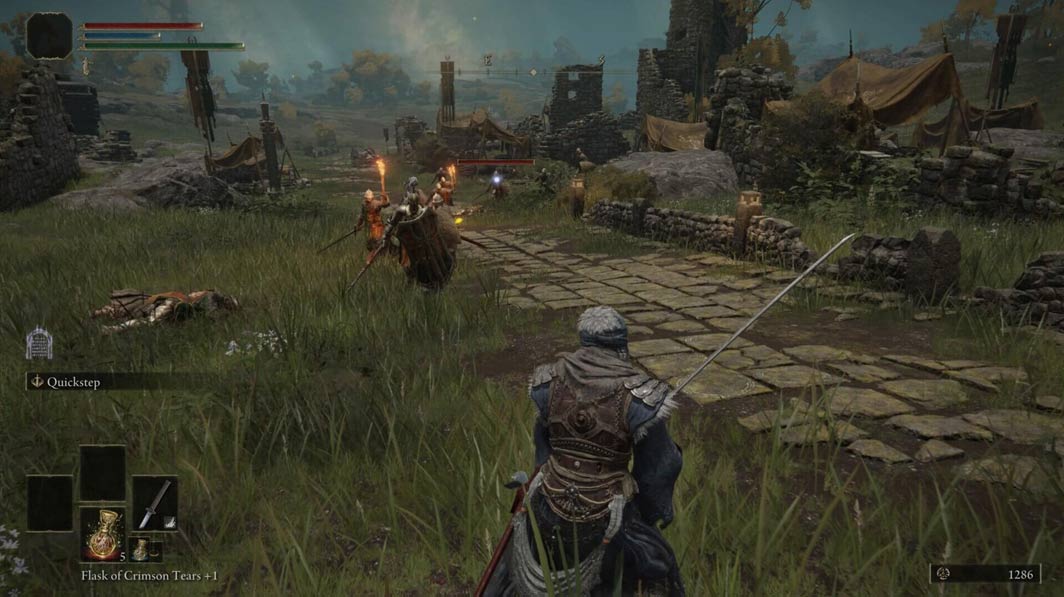
That uncertainty is part of the appeal. Sorcery, incantations, shields, colossal swords, status effects, Spirit Ashes, and self-imposed challenges all change how the same world is approached. Another route, weapon, or interpretation can remain interesting long after the credits.
The Lands Between Reward Curiosity
Guidance of Grace points toward major objectives without insisting that you follow. The game trusts a ruined tower, distant tree, underground staircase, or wandering mausoleum to provoke its own question: what is over there? For a more relaxed open-world experience, The Elder Scrolls V: Skyrim provides a useful contrast. Its freedom is inviting; Elden Ring’s is exciting partly because the wrong detour may be dangerous.
Riding Torrent through Limgrave makes that distinction clear. At the Gatefront Ruins, soldiers guarding a map fragment can be approached with stealth, fought directly, or avoided until better equipped. A spear-wielding knight may end an early attempt in seconds. The lesson is not simply to gain levels. It is to observe patrols, weigh a reward against the risk, and recognize retreat as a sensible decision rather than failure.
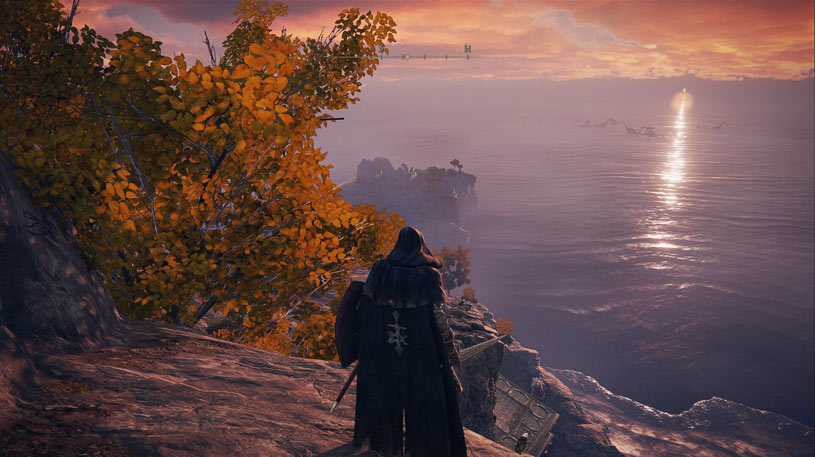
Exploration rewards this attention to small details. A broken bridge suggests another approach; an ordinary lift opens onto an underground landscape lit by artificial stars. Even Rainbow Stones, easily dismissed as minor consumables, can help read a place. They can indicate a dangerous drop or mark explored passages in confusing catacombs and the sewers beneath Leyndell. That improvised trail says something important about Elden Ring: the world often gives you tools without explaining all their uses.
Each region has an identity beyond a different map color. Caelid’s red sky and diseased ground communicate catastrophe before any character explains it. Liurnia feels drowned and haunted, while Leyndell’s grandeur is inseparable from decay. Stormveil looks majestic on approach and becomes rotten and claustrophobic inside. These spaces make discovery compelling even when their stories remain incomplete.
The consistency weakens later. After the densely rewarding early regions, the Mountaintops of the Giants can feel sparse, with longer journeys between meaningful finds and familiar enemies doing less to sustain curiosity. Its desolation is thematically appropriate, and some players may welcome a quieter stretch after so much exploration. Others will miss the earlier feeling that almost every detour leads to something worth seeing.
Combat Is Punishing, but Usually Teaches a Lesson
Ordinary enemies can punish a careless approach, and bosses expose panic rolls, greedy follow-up attacks, empty stamina bars, and poor positioning. Yet the most productive question after dying is often surprisingly specific: did you attack once too many, dodge too soon, or stand where the next swing was already heading? Elden Ring rewards learning those differences rather than merely reacting faster.
The loop connects exploration, combat, death, adjustment, and progress. Runes pay for levels and purchases, but dying leaves your unspent supply at the place you fell. Reaching it without making the same mistake adds tension to a return trip. The appeal of Dragon’s Dogma 2 is related: dangerous travel and large creatures can turn an unplanned detour into a story, although its combat is more party-driven and less punishing.
Delayed attacks complicate the familiar dodge-and-counter pattern. A raised weapon may hang in the air just long enough to catch an automatic roll, so reading the whole sequence matters more than recognizing its beginning. Heavy attacks, jump attacks, and guard counters also build stance damage. When a large enemy finally staggers, the opening feels earned because surviving long enough to create it required deliberate pressure.
Not every resource supports that learning rhythm equally well. Activating a Great Rune with a consumable Rune Arc grants benefits that vanish on death. During repeated practice attempts, that can make each failure feel unnecessarily expensive. It is reasonable to save the item until a boss’s patterns become familiar, even though its purpose is to provide an advantage during the fight. A small resource rule can therefore discourage using a helpful system precisely when the challenge is greatest.
Your Tarnished, Your Rules
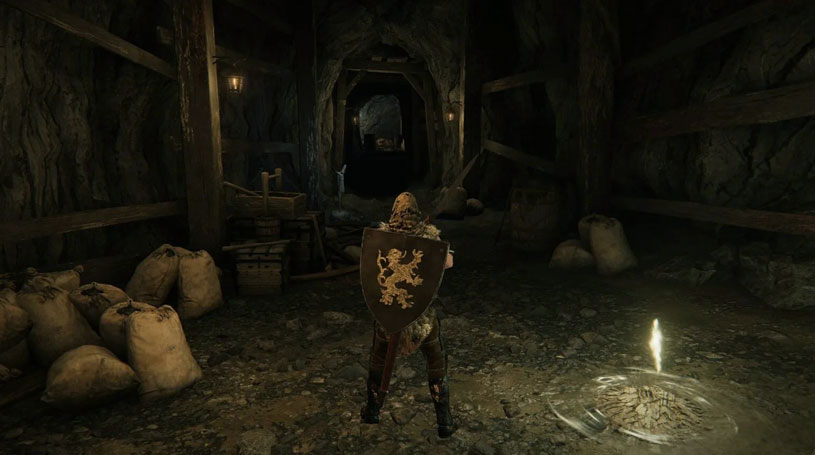
A starting class defines early equipment and attributes, not a permanent identity. A Vagabond can become a Faith-focused fighter, a Samurai can lean into bleed or spellcasting, and an Astrologer can wield a greatsword if the necessary statistics are developed. Talismans, spells, shields, armor, consumables, and status effects multiply the possibilities. Runes are both experience and currency, making the choice between leveling, buying supplies, and risking further exploration meaningful.
There is an important catch beneath the apparent freedom. A newly discovered weapon may have an appealing moveset but perform poorly beside one already strengthened with Smithing Stones. During much of a first journey, limited access to higher-tier upgrade materials makes committing to unfamiliar equipment expensive. Bell Bearings later make many stones purchasable, and a weapon’s moveset can be sampled before investing, but finding something interesting does not always mean being ready to build around it. Discovery outpaces practical experimentation at times.
Ashes of War help bridge that gap by changing weapon skills and, where supported, affinities and attribute scaling. A familiar sword can suddenly serve a different build without being discarded. Spirit Ashes offer another kind of flexibility: they may divide a boss’s attention, giving a solo character time to cast, heal, or regain stamina. Those openings are opportunities rather than promises, however, particularly when an aggressive enemy switches targets or moves across the arena unexpectedly.
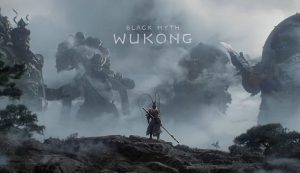
There is no single correct solution to a difficult fight. A slow greatsword user may benefit from guard counters, a faster weapon, frost buildup, a summon, or eventually a respec. The best experimentation changes how you understand an encounter, not just its damage numbers. Black Myth: Wukong shares the pleasure of learning formidable fantasy opponents, but its more focused structure makes Elden Ring’s freedom to rethink an entire build especially distinctive.
Boss Fights Stay in Your Head
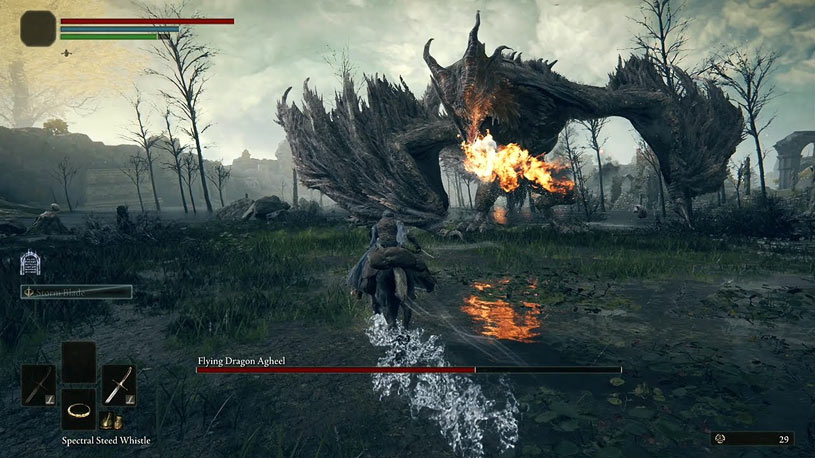
Flying Dragon Agheel transforms an ordinary-looking lake into a battlefield. Fire covers large stretches of ground, and Torrent makes repositioning around the dragon possible. The encounter teaches that fighting on horseback can be an advantage, though the mount is not automatically the best answer to every large enemy.
Margit, the Fell Omen is a different kind of lesson. His delayed strikes, sudden daggers, and changing combinations punish dodging when the weapon first rises. Learning to wait, then recognizing the recovery after an attack, makes victory feel like understanding a language rather than simply overcoming a health bar. Later encounters develop that tension through duels, magic, status effects, enormous creatures, and multi-stage fights.
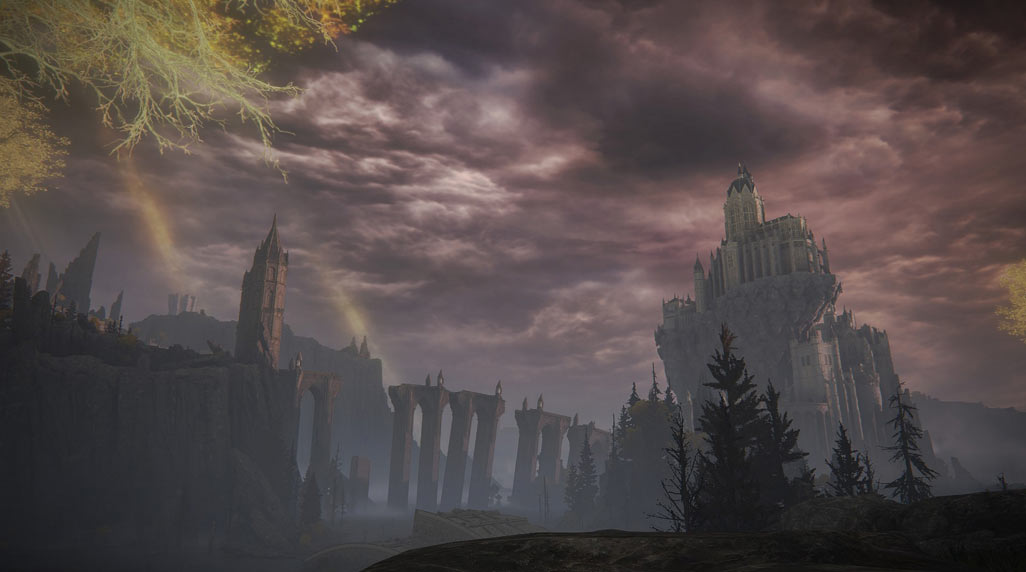
The design sometimes pushes too far. Long combinations, repeated boss types, unwieldy camera angles against towering enemies, and delays that seem designed to punish instinct can turn careful learning into irritation. Even dodging has a less obvious logic than it first appears: rolling toward or through an attack may leave the Tarnished beside the boss and outside the follow-up, whereas retreating can keep the character in the path of the next strike. Understanding that difference is satisfying, though the game often leaves players to discover it through costly mistakes.
For players more interested in a tightly directed, character-driven fantasy journey, Clair Obscur: Expedition 33 offers a different approach to memorable confrontations.
Shadow of the Erdtree Is a True Endgame Expansion
Shadow of the Erdtree is a substantial second journey, not a brief diversion. The Realm of Shadow folds layered ruins, concealed regions, legacy dungeons, equipment, spells, and NPC quests into a world that often seems smaller on the map than it feels on foot. A visible plateau may be reachable only from a distant route. That makes discovery satisfying, but also makes quest connections and navigation easy to lose track of.
Ordinary levels alone will not solve its difficulty. Scadutree Fragments strengthen the Tarnished’s damage and defenses within the expansion, while Revered Spirit Ashes improve summons and Torrent there. A strong base-game character can still struggle by rushing from boss to boss instead of exploring for blessings. That choice is consistent with Elden Ring’s larger design, although players who mainly want the next fight may find the extra search frustrating.
The new bosses also expose limits in familiar strategies. During the Rellana encounter, a summon such as Mimic Tear can draw attention without guaranteeing a safe moment to heal; a rapid change of target or position can bring the danger straight back. This does not establish any special hidden AI behavior, but it makes the practical point: sharing an arena with an ally is not the same as controlling an enemy’s attention.
Commander Gaius offers a different complication. Facing a mounted opponent from Torrent sounds like a natural duel, yet healing both rider and steed can consume additional resources, being knocked off can be punishing, and the boss’s sharp charges can be awkward to answer on horseback. Fighting on foot may prove more manageable. The expansion provides freedom to choose an approach, but it does not make every plausible approach equally comfortable.
The hardest encounters demand precise timing, stamina control, positioning, and a willingness to reconsider preparation. For some, this escalation is the final examination the base game has been building toward. For others, sustained aggression and high damage make it exhausting. Both reactions follow from the same design.
Replayability and Long-Term Value
No single journey reveals every optional dungeon, questline, boss, alternate route, ending, or reward. New Game Plus allows a developed character to continue, but beginning again with different attributes can alter more than the difficulty. A sorcerer values distance and casting windows; a shield user reads attacks through guard counters; a bleed build looks for sustained pressure. Knowing the map does not remove the need to relearn combat through those choices.
Shadow of the Erdtree adds another large region and equipment pool to revisit. The optional Tarnished Pack changes starting options and appearances rather than offering another campaign. Build discussions, challenge runs, PvP strategies, and competing lore interpretations keep the world open to new approaches, while the standalone Nightreign favors shorter survival expeditions instead of this slow, personal kind of wandering.
Final Verdict
Elden Ring works because its systems continually return responsibility to the player. Exploration offers alternatives when combat becomes oppressive; equipment and builds let the same obstacle be understood in several ways; environments make discovery interesting before their histories are explained. At its strongest, a hard-won victory or an unexpected underground passage feels connected to a decision you made rather than a task the game assigned.
Its freedom has costs. Sparse explanations make quests and character moments easy to overlook, upgrade materials can discourage trying new weapons, and some late-game spaces or boss patterns stretch patience. The difficulty is not equally satisfying in every encounter. Players who want clear storytelling, consistent rewards, or a gentler learning curve may prefer something more directed. For those who enjoy making sense of unfamiliar places and gradually mastering dangerous systems, Elden Ring is an unusually absorbing open-world RPG, precisely because it asks so much of the person exploring it.
Elden Ring Pros & Cons
- Pro: Vast dark-fantasy world that rewards curiosity with hidden routes, underground regions, legacy dungeons, optional bosses, equipment, and lore
- Pro: Demanding but flexible combat supported by extensive weapons, spells, Ashes of War, Spirit Ashes, status effects, co-op, and PvP
- Pro: Character builds, exploration order, multiple endings, NPC quests, challenge runs, and New Game Plus provide exceptional replay value
- Pro: Shadow of the Erdtree adds a dense late-game region, major bosses, new weapon categories, spells, equipment, and its own blessing progression
- Pro: Strong PC community creates co-op, randomizer, overhaul, practice, interface, visual, and quality-of-life modifications
- Con: Difficulty, delayed attacks, cryptic quests, and minimal direction can overwhelm new players
- Con: Repeated bosses and dungeons occasionally weaken the otherwise exceptional sense of discovery
- Con: Official PC presentation remains capped at 60 FPS and lacks complete native ultrawide support
- Con: Shader or frame-pacing problems, Easy Anti-Cheat errors, ray-tracing instability, and outdated mods can create PC friction
Elden Ring PC System Requirements
OFFICIAL STANDARD REQUIREMENTS:
MINIMUM:
OS: Windows 10, 64-bit
CPU: Intel Core i5-8400 / AMD Ryzen 3 3300X
RAM: 12 GB
GPU: NVIDIA GeForce GTX 1060 3 GB / AMD Radeon RX 580 4 GB
DirectX: Version 12
Storage: 60 GB available space
Sound Card: Windows-compatible audio device
RECOMMENDED:
OS: Windows 10 or Windows 11, 64-bit
CPU: Intel Core i7-8700K / AMD Ryzen 5 3600X
RAM: 16 GB
GPU: NVIDIA GeForce GTX 1070 8 GB / AMD Radeon RX Vega 56 8 GB
DirectX: Version 12
Storage: 60 GB available space
Sound Card: Windows-compatible audio device
OFFICIAL RAY-TRACING MINIMUM — 1080p / Low Ray Tracing
OS: Windows 10, 64-bit
CPU: Intel Core i5-10600K / AMD Ryzen 5 3600XT
RAM: 16 GB
GPU: NVIDIA GeForce RTX 3060 Ti 8 GB / AMD Radeon RX 6700 XT 12 GB
Graphics Target: 1080p, Low quality, Low Ray Tracing
OFFICIAL RAY-TRACING RECOMMENDED — 1080p / High Ray Tracing
OS: Windows 11, 64-bit
CPU: Intel Core i7-10700K / AMD Ryzen 7 3800XT
RAM: 16 GB
GPU: NVIDIA GeForce RTX 3070 Ti 8 GB / AMD Radeon RX 6900 XT 16 GB
Graphics Target: 1080p, High quality, High Ray Tracing
Additional PC Performance and Setup Notes
- Steam lists 60 GB of available space for both the base game and Shadow of the Erdtree. Keep additional room available for patches, shader caches, saves, screenshots, mod archives, and temporary update files.
- An SSD is not listed as mandatory, but it reduces loading and is preferable for a large open-world installation.
- The official PC version is capped at 60 FPS. Community tools can alter the cap, field of view, and ultrawide presentation, but these modifications should remain separate from official Easy Anti-Cheat online play.
- Native full ultrawide gameplay is not officially supported in the way many 21:9 and 32:9 users expect. Community fixes can break after patches and should be tested offline.
- Ray tracing can substantially reduce performance. Bandai Namco advises disabling it when the game becomes unstable and checking that current graphics drivers are installed.
- If “Inappropriate activity detected” appears unexpectedly, verify the integrity of the Steam files and test a clean unmodified installation before changing additional settings.
- Third-party applications that control mouse behavior have caused unstable frame rates on some systems according to official patch notes. Disable unnecessary overlays and input utilities when troubleshooting.
- Back up saves before installing regulation changes, overhaul mods, randomizers, Seamless Co-op, save tools, or major content replacements. Match every mod loader and regulation file to the current game and DLC version.
Official Trailer
Note: Bandai Namco’s official Shadow of the Erdtree launch trailer shows the Realm of Shadow, Miquella’s followers, Messmer, new enemies, weapons, spells, environments, and major encounters. This guide separately explains Steam editions, the Tarnished Pack, PC requirements, Steam Deck, mods, co-op, and troubleshooting.
Frequently Asked Questions
Do I need Shadow of the Erdtree or the Tarnished Pack to enjoy Elden Ring?
No. The standard game contains the complete Lands Between campaign. Shadow of the Erdtree adds a substantial separate endgame region, while the optional Tarnished Pack contributes starting classes, equipment, and Torrent customization rather than a new story area.
Does the Tarnished Pack add exclusive classes, and can existing characters use its equipment?
The Heavy Knight and Idus Knight are starting-class choices for new characters, not permanently exclusive character types. The add-on also offers armor, weapons, and Torrent appearances that can be acquired through gameplay on eligible saves; you do not need to abandon an established character to use the additional equipment.
Is Elden Ring Tarnished Edition available on PC?
No. Tarnished Edition is the Nintendo Switch 2 package containing the base game, Shadow of the Erdtree, and the Tarnished Pack content. On PC, Steam sells the base game, expansion editions, and Tarnished Pack separately.
Is Elden Ring Nightreign DLC for Elden Ring?
No. Nightreign is a separately purchased, standalone survival-action game with a different expedition-based structure. Its Forsaken Hollows expansion belongs to Nightreign, not Elden Ring or Shadow of the Erdtree.
How do you enter Shadow of the Erdtree?
Own and install the expansion, defeat Starscourge Radahn and Mohg, Lord of Blood, then interact with Miquella’s cocoon in Mohgwyn Palace. The expansion continues from the same character and save as the base game.
What level should I be for Shadow of the Erdtree?
Many players enter around level 120–150 with a well-upgraded weapon and substantial Vigor. There is no required level, and collecting Scadutree Fragments after entering the Realm of Shadow matters more than simply gaining extra base-game levels.
What are Scadutree Fragments and Revered Spirit Ashes?
Scadutree Fragments improve the Tarnished’s attack and defense within the Realm of Shadow. Revered Spirit Ashes strengthen Spirit Ash summons and Torrent there. These blessings reward exploration and do not replace normal weapon or attribute progression.
How long are Elden Ring and Shadow of the Erdtree?
A relatively focused first run through the base game can take around 50–70 hours, while players who explore broadly may spend more than 100 hours. Shadow of the Erdtree can add roughly 25–40 hours or more, depending on boss attempts and optional exploration.
Is Elden Ring too difficult for beginners?
It can be demanding, but it allows retreat, exploration, leveling, upgraded weapons, Spirit Ashes, and co-op. Limgrave and the Weeping Peninsula provide useful early practice before committing to harder routes.
Which starting class and early stats are best for beginners?
Vagabond is forgiving for a melee start, while Samurai begins with a versatile katana and bow. Prioritize Vigor early, meet the requirements for a preferred weapon, and upgrade it rather than spreading points equally across every damage attribute. Starting classes do not lock later builds.
Are Spirit Ashes, NPC summons, and co-op intended ways to beat bosses?
Yes. They are built-in options, not exploits. Summons can divide enemy attention and give players more room to learn attacks, heal, or cast spells; using them is a valid way to progress.
Can you respec your character in Elden Ring?
Yes. After defeating Rennala at Raya Lucaria Academy, you can spend Larval Tears to redistribute attributes. Your original starting-class minimums remain fixed.
Does Elden Ring support co-op, PvP, and cross-play?
Official multiplayer includes summoning up to two co-op guests, invasions, duels, and Colosseum fights. PC and console players cannot join one another through unrestricted cross-play; friends should check that their versions belong to a compatible platform family.
Can the full campaign be played seamlessly in official co-op?
No. Official summoned guests normally join particular areas, leave after certain boss completions or conditions, and cannot ride Torrent in the host’s world. Progression primarily belongs to the host.
What is the Seamless Co-op mod?
Seamless Co-op is an unofficial PC mod that allows longer shared sessions with fewer normal summoning boundaries. It uses separate arrangements for saves and online connections and should not be mixed with official Easy Anti-Cheat matchmaking. Check the mod author’s compatibility instructions before installing.
Can Elden Ring mods cause online penalties or stop working after updates?
Yes. Modified regulation files, impossible equipment, or altered saves can create anti-cheat risk, and game updates can break mod loaders or overhauls. Back up saves, follow trusted mod documentation, and use clean game files and valid saves for official online play.
Why does Elden Ring stutter, crash, or fail to start on PC?
Potential causes include frame-pacing issues, graphics drivers, Easy Anti-Cheat errors, overlays, ray-tracing settings, mouse-related utilities, unstable system settings, or incompatible mods. Verify files through Steam and test without modifications before trying individual fixes.
Does Elden Ring support ultrawide gameplay or more than 60 FPS?
The unmodified PC game is limited to 60 FPS and does not provide complete native ultrawide gameplay. Community fixes can change these behaviors, but they require offline-safe setup and may break after game updates.
Is Elden Ring good on Steam Deck?
Valve rates Elden Ring Verified. Its standard controls and interface meet Steam Deck compatibility criteria, although demanding areas and the expansion still benefit from conservative graphics and frame-rate settings.
Should I use a controller or keyboard and mouse?
Both work. Many players prefer a controller for dodging, movement, lock-on, and melee actions, while keyboard and mouse can make camera control and ranged aiming more direct after remapping awkward defaults.
Can you keep exploring after the ending, and when should you start New Game Plus?
Yes. You can keep exploring after finishing the story and choose when to begin Journey 2. First-time DLC players may prefer to finish Shadow of the Erdtree before starting New Game Plus, since the next journey changes enemy scaling.
Does Elden Ring have multiple endings and missable quests?
Yes. Several endings depend on major NPC quests, decisions, and items. Story progression can change or close quest opportunities, so keep notes or consult a spoiler-light quest guide if a particular outcome matters to you.
Still have questions? Check the Elden Ring community on Reddit, the Steam Discussions, or the official Elden Ring Discord.
Sources & References
Key official and technical details in this guide were checked against the following sources:
- Elden Ring on Steam — Windows requirements, purchase options, Steam Deck compatibility, multiplayer, and Steam user reception
- Shadow of the Erdtree on Steam — expansion ownership requirements and edition contents
- Tarnished Pack on Steam — separate PC add-on availability and base-game ownership requirement
- Bandai Namco: Tarnished Edition and New Content — released Nintendo Switch 2 package and new Tarnished Pack content
- Bandai Namco PC Ray Tracing Specifications — official minimum and recommended ray-tracing hardware guidance
- PCGamingWiki: Elden Ring — technical context for the 60 FPS limit, ultrawide presentation, and unofficial modifications
- Metacritic: Elden Ring PC Reviews — platform-specific critic aggregate
Similar Games Like Elden Ring
- Dark Souls III
- Demon’s Souls
- Sekiro: Shadows Die Twice
- Black Myth: Wukong
- Dragon’s Dogma: Dark Arisen
- Dragon’s Dogma 2



Found something worth playing through DecideGame?
DecideGame.com is an independent gaming project run by Editor Zero. If this guide helped you discover a game, solve a problem, or find useful information, you can support DecideGame.com and help keep new and updated game guides coming.
DecideGame — PC Game Guides, Reviews & Setup Help