
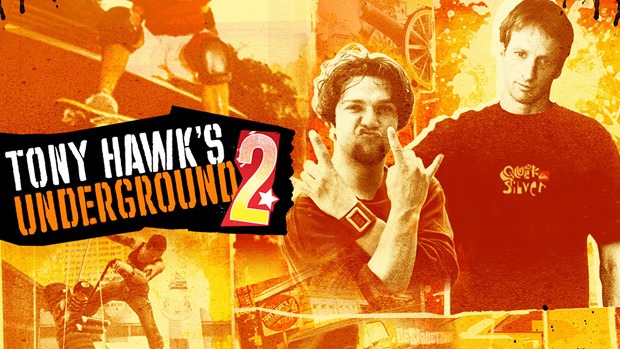
📅 Game released: 2004
Use this updated 2026 Tony Hawk’s Underground 2 PC guide to verify official download availability, understand retail-disc ownership and SafeDisc compatibility limits, check system requirements, and see how THUG Pro supports modern multiplayer and community content.
 By Editor Zero — independently researched, edited, and maintained.
Last updated: 2 October 2026
Last reviewed: 2 October 2026
Table of Contents
- Quick Summary
- Quick Facts
- Official PC Stores, Download & Installation
- Tony Hawk’s Underground 2 Review
- Pros & Cons
- PC System Requirements
- Frequently Asked Questions
- Similar Games
Tony Hawk’s Underground 2 Quick Summary
✔ Fast arcade skateboarding built around long trick combos, open-ended levels, environmental destruction, and a World Destruction Tour rivalry between Tony Hawk and Bam Margera
✔ Story Mode mixes skating with pranks, graffiti, off-board exploration, special characters, rideable objects, Focus slow motion, Sticker Slaps, and extensive skater, park, trick, graphic, and goal creation
✔ Similar to Jet Set Radio Future through trick-focused urban movement, graffiti, expressive traversal, unconventional level routes, and a strong music-driven identity
✔ Classic Mode brings the older two-minute Tony Hawk structure into THUG2’s levels with familiar goals such as S-K-A-T-E, high scores, and secret tapes
✔ A native Windows PC version exists, but no current official digital storefront release is verified; the original retail edition uses SafeDisc 3, creating compatibility problems on modern Windows
✔ THUG Pro is an independent community mod that requires Tony Hawk’s Underground 2 for Windows and adds community multiplayer, user-created content, and levels collected from across the Tony Hawk series
Tony Hawk’s Underground 2 Quick Facts
Official PC Store Status, Download & Installation
👇 Use the notes below to understand the current official PC availability status for Tony Hawk’s Underground 2 and avoid unsafe or unofficial acquisition options.
- Official digital status: No current downloadable Windows edition from Activision, Steam, Epic Games Store, GOG, or Microsoft Store is verified. The original Windows version remains a legacy retail PC release rather than a normally purchasable digital game.
- Original PC edition: Activision released Tony Hawk’s Underground 2 for PC/CD-ROM alongside the console versions. Retail Windows copies were distributed on three CDs or one DVD, depending on the edition and region.
- Existing retail owners: Install the game from your own original Windows media when possible. Ownership of a physical copy does not provide a Steam, GOG, Epic, or Microsoft digital entitlement, and no publisher-managed PC re-download library is currently identified for this release.
- SafeDisc 3: The retail PC edition uses legacy SafeDisc 3 copy protection. This generation of SafeDisc is not supported normally by Windows 10 or Windows 11, so owning the original discs does not guarantee that an untouched retail installation will launch on a modern PC.
- Modern Windows safety: Re-enabling obsolete SafeDisc system drivers can reintroduce known security risks. This guide does not recommend that method or unauthorized replacement executables; use carefully documented community projects intended for a legally owned Windows installation instead.
- THUG Pro: THUG Pro is an independent, non-profit community modification rather than a copy of Tony Hawk’s Underground 2. Its official installer requires an existing Windows installation of THUG2 and adds community multiplayer, user-created content, and levels from across the Tony Hawk series.
- Original multiplayer: The Windows release supported local two-player play, LAN for up to eight players, and GameSpy-based online multiplayer. The original GameSpy service has shut down, so community solutions such as THUG Pro are now the practical route for modern online play.
- PSP Remix: Tony Hawk’s Underground 2 Remix is a separate PSP release with additional locations including Las Vegas, Atlanta, Kyoto, and Santa Cruz. It is not an expansion, patch, or replacement Windows edition of the original PC game.
- Steam Deck and Linux: There is no Steam edition or Valve Steam Deck rating. THUG Pro’s developers provide an official Windows version but do not officially support macOS or Linux, so handheld Linux setups depend on unofficial compatibility methods.
 Download THUG Pro from the Official Mod Site

Tony Hawk’s Underground 2 Review
A superb combo sandbox whose mechanical freedom outlasts its World Destruction Tour excess.
Tony Hawk’s Underground 2 is at its best when the story stops demanding attention and a city block starts looking like a scoring equation. Neversoft takes the remarkably flexible skating language built across the earlier games—manuals, reverts, transfers, grinds, wall moves and off-board movement—and gives players even more ways to turn disconnected objects into one continuous line. The result is one of the series’ richest mechanical sandboxes, where a staircase rail, quarter-pipe, wall and street sign can all become parts of the same improvised route.
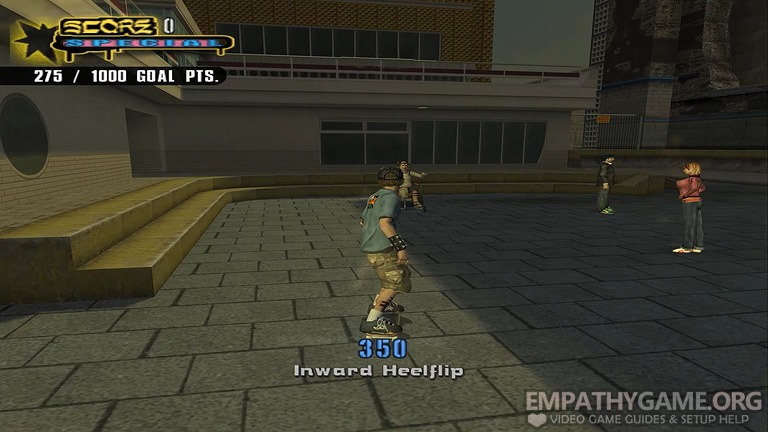
The sequel surrounds that foundation with a deliberately obnoxious World Destruction Tour led by Tony Hawk and Bam Margera. Pranks, vandalism, celebrity cameos, bizarre guest characters and Jackass-era gross-out humor replace much of the first Underground’s more personal rise-to-pro story. That tonal shift has aged far less gracefully than the skating. THUG2 remains easy to admire mechanically, but whether its campaign is funny, exhausting or both depends heavily on a player’s tolerance for early-2000s stunt-show chaos.
Every Level Becomes a Combo Route
The pleasure of THUG2 comes from learning to read architecture as movement. A grind does not have to end when the rail ends: a manual can bridge the pavement to another object, a revert can keep a vert combo alive after landing, and a wall can become a turning point rather than a dead end. Getting off the board expands that vocabulary further by letting the skater climb, reposition and reach places that would be awkward or impossible through skating alone. The best levels reward this constant reinterpretation of ordinary scenery.
Sticker Slap is the sequel’s smartest addition because it strengthens that existing language instead of distracting from it. Hitting a wall and rebounding in the opposite direction can redirect a combo back through terrain that already seemed exhausted, preserving momentum and opening a new line without forcing the player to stop. It is immediately useful for ordinary exploration, but it also has an interesting downside at the extreme end of score chasing: once a player identifies a highly efficient rail-to-wall loop, repeated Sticker Slaps can turn optimization into a mechanical routine. The move increases routing freedom, yet the most efficient route is not always the most expressive one.
THUG2 also expands the aerial trick vocabulary with full-body flips and rolls that can be layered into ordinary jumps, adding both score and visual variety without occupying the role of a single special trick. They are a smaller change than manuals or reverts, but they fit the series well because they reward the same instinct to squeeze more value from every second of airtime. Focus Mode is more situational. Activating it while the Special meter is available slows the action and makes balance or difficult landings easier to manage, which can rescue a demanding objective but is hardly essential for experienced players.
Natas Spin, which balances the skater on narrow objects such as poles and hydrants, and Freak Out, which turns a bail into an exaggerated tantrum that can feed the next scoring attempt, fit the game’s anything-goes personality more than they transform its fundamentals. That distinction matters. THUG2 contains plenty of novelty, but the reason the skating remains satisfying is that the best new ideas support an already coherent system rather than replacing it.
Story Mode Rewards Wandering More Than Following the Plot
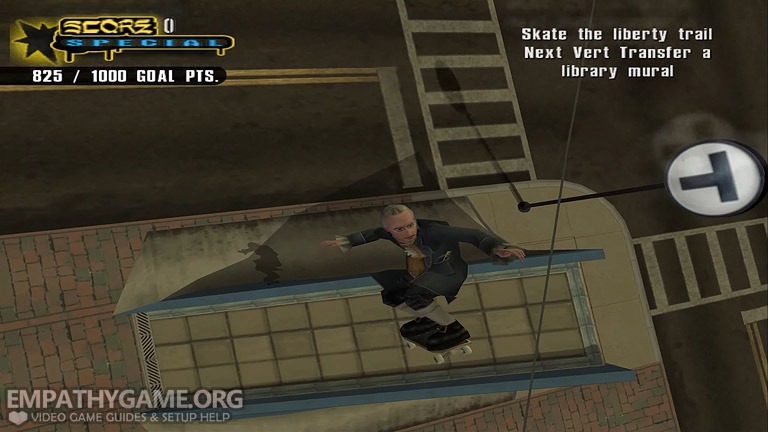
Story Mode changes the rhythm of progression by giving each location a broad goal list rather than arranging every objective around individual mission-givers. Completing enough goals earns the points needed to move on, so clearing a level becomes an exercise in choosing which challenges suit the player rather than obeying a single fixed sequence. Boston, Barcelona, Berlin, Australia, New Orleans and the later tour stops are dense enough that searching for objectives naturally overlaps with learning gaps, rails, rooftops and environmental triggers.
That structure is freer than it first appears. The created skater handles much of the work, but pro teammates, hidden guests and novelty characters introduce their own objectives, encouraging another pass through the same space with different capabilities. Some of those switches are genuinely funny; others expose the limits of the joke. Controlling an unconventional rideable such as Steve-O’s mechanical bull is memorable because it is ridiculous, not because it is as responsive or deep as skating. THUG2 is strongest when absurdity changes the context around the board, and weaker when the board is effectively sidelined for the gag.
The destruction events follow the same pattern. Triggering a bull rampage in Barcelona or tearing open part of another level gives the World Destruction Tour a sense of spectacle, but the damage behaves more like a repeatable environmental switch than a persistent change to the world. Reloading or revisiting a location does not turn the campaign into a permanently scarred tour diary. That makes the destruction fun to discover but less consequential than the premise suggests.
Smaller atmospheric touches are more convincing. Story levels can transition between day and night, with street lamps coming on and storefront details changing as the lighting shifts. None of this alters the skating in a major way, yet it makes the locations feel a little less static while the player circles them for unfinished goals. The contrast is revealing: THUG2 often sells chaos through giant scripted destruction, but some of its most effective world-building is quiet enough to miss during a long combo.
The World Destruction Tour Has Personality, Not Much Character Growth
The campaign’s premise is intentionally thin. Tony and Bam divide skaters into competing teams, then carry the created character around the world for a contest built from points, humiliation, vandalism and escalating stunts. It gives every level an excuse to introduce new personalities and destructive objectives, but it abandons much of the first Underground’s sense of personal progression. The created skater is no longer trying to break into professional skating; the character mostly becomes the audience surrogate inside Tony and Bam’s traveling circus.
That makes the story less emotionally engaging, but also extremely specific to its era. Bam Margera, Tony Hawk, Eric Sparrow, pro skaters, celebrities and bizarre unlockable characters share a deliberately exaggerated world in which almost any stunt can become the next objective. The humor is juvenile by design, and some jokes land more as artifacts of their moment than timeless comedy. Players who preferred Underground’s rivalry and career arc may find the sequel shallow, while those who enjoy the anarchic energy can treat the cutscenes as short bursts of attitude between skating sessions.
The presentation commits fully to that personality. Character faces and animations are caricatured, environments are colorful and crowded with interactive details, and the soundtrack jumps through punk, hip-hop, metal, classic rock and deliberately unexpected choices such as Frank Sinatra. The eclectic music does more to unify the tour than the plot does. Even when the writing is grating, the audiovisual identity is difficult to confuse with a safer sports game.
Classic Mode Is the Better Test of Mastery
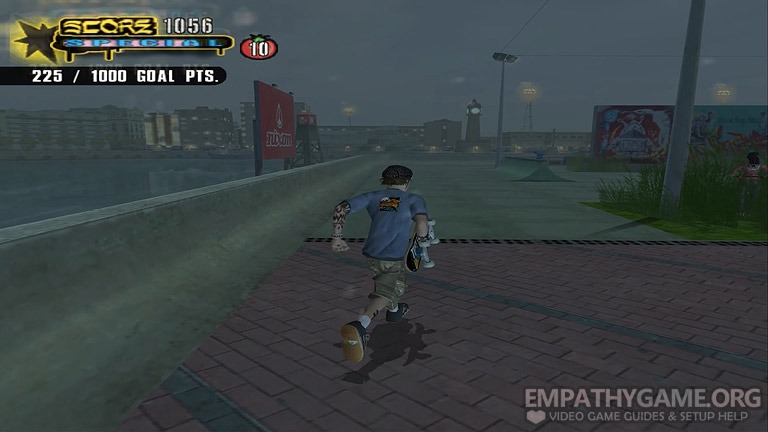
Classic Mode is where THUG2 most clearly proves that its skating systems can survive without the World Destruction Tour. Two-minute runs bring back score targets, S-K-A-T-E letters, Secret Tapes and other familiar objectives, mixing THUG2 locations with returning stages such as School, Downhill Jam, Philadelphia, Los Angeles, Canada and Airport. The timer immediately changes how a level is read. Wandering is replaced by route planning: a useful line is not merely one that scores well, but one that connects several objectives without wasting movement.
It is not quite a pure return to the old Pro Skater rules. Some collectible placements assume the expanded movement introduced during the Underground era, including climbing, wall interaction and getting off the board at carefully chosen moments. That hybrid design is important because it stops Classic Mode from feeling like an emulator of THPS1–3 inside a newer game. Old goals are being solved with a broader movement toolset, which can make knowledge from earlier games helpful without making it sufficient.
The two careers also develop skater stats differently. Story Mode raises attributes through performance challenges—maintaining grinds, landing large combos and meeting other skill tests—while Classic Mode returns to collectible stat points placed around levels. Story’s method feels more directly tied to skating ability, although skilled players can complete many stat challenges early in Training and front-load a large part of their progression. Classic Mode spreads improvement through exploration instead, tying character growth to how efficiently the player learns the map.
Difficulty also lands differently between the modes. Story Mode can usually be advanced by earning enough points from whichever objectives are most comfortable, allowing irritating vehicle or prank goals to be skipped. Classic Mode is less forgiving when score thresholds rise and a large map has to be stripped of collectibles inside a two-minute window. High-level play therefore asks for two skills at once: the technical ability to hold a large combo and the route knowledge to avoid spending precious seconds recovering from a bad line. For experienced Tony Hawk players, this is where THUG2’s challenge becomes most convincing.
Creation Tools Turn Finished Levels Into Raw Material
Replayability extends well beyond clearing both careers. Create-A-Skater, Create-A-Park and Create-A-Trick return alongside Create-A-Graphic and a more useful Create-A-Goal suite. The important detail is that custom goals are not confined to custom parks; they can be built into the game’s existing levels. That makes the official maps reusable spaces rather than static content that loses purpose once every shipped objective is complete. A familiar route can be repurposed around a new score target, collectible line or custom challenge.
This matters because THUG2’s strongest asset is not the World Destruction Tour itself but the density of places where its movement system can be exercised. Free skating, Classic Mode, custom goals and creation tools all provide different reasons to return to the same geometry. The campaign is comparatively brisk, yet the game does not feel small because mastery is measured less by seeing every cutscene than by discovering cleaner, stranger and more ambitious ways through spaces the player already knows.
Final Verdict
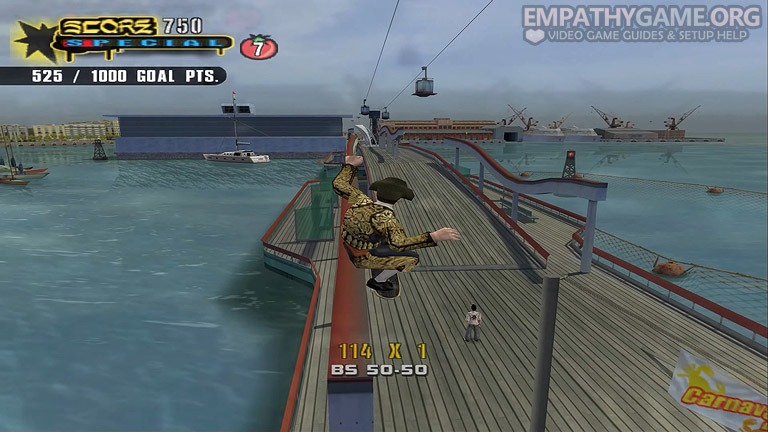
Tony Hawk’s Underground 2 is a mechanically confident sequel wrapped in a campaign that deliberately tries to be louder than the game beneath it. The skating is the reason to stay. Manuals, reverts, transfers, off-board movement and dense level layouts already support enormous freedom, while Sticker Slap and expanded aerial tricks give skilled players even more ways to redirect or extend a line. Classic Mode then strips away much of the story’s noise and turns that system into a sharper test of execution, memory and route planning.
The weaknesses are just as tied to the sequel’s identity. The World Destruction Tour sacrifices the first Underground’s more personal arc for pranks, celebrity chaos and destruction that often feels more temporary than transformative. Guest vehicles can be amusing without being satisfying to control, and highly optimized scoring can occasionally reduce the same expressive mechanics to repetitive loops.
Yet THUG2 understands something fundamental about the Tony Hawk formula: the best level is not simply a place to complete objectives, but a space that keeps revealing new lines after those objectives are gone. Players who want a grounded skateboarding story may prefer the first Underground. Players who value mechanical freedom, high-score routing, Classic Mode pressure and creation tools will find a deeper game than its juvenile surface suggests. Its humor is inseparable from its era; its skating barely feels confined by it.
Tony Hawk’s Underground 2 Pros & Cons
Tony Hawk’s Underground 2 PC System Requirements
No current Activision system-requirements page is available for this legacy Windows release. The original retail minimum specifications preserved in PC technical documentation are listed below. These describe the hardware expected in 2004 and should not be treated as a guarantee of compatibility with modern Windows.
ORIGINAL RETAIL MINIMUM:
OS: Windows 98, Windows ME, Windows 2000, or Windows XP
CPU: Intel Pentium III 800 MHz or AMD Athlon 800 MHz
RAM: 256 MB
GPU: DirectX 9.0c-compatible 3D graphics card with 32 MB VRAM
DirectX: DirectX 9.0c
Storage: 2.5 GB of uncompressed disk space, plus approximately 200 MB for the Windows swap file
Sound Card: DirectX 9.0c-compatible 16-bit sound hardware
Optical Drive: 4x CD-ROM or compatible DVD-ROM drive for the physical Windows edition
No sufficiently reliable current official recommended specification was verified, so a modern recommended tier is intentionally not invented.
Modern PC Performance & Setup Notes
The original hardware requirements are extremely light by modern standards; compatibility is the larger concern. The retail release uses SafeDisc 3, whose required legacy protection components are not normally supported on Windows 10 or Windows 11. Restoring obsolete SafeDisc drivers is not recommended because doing so can expose the system to known security vulnerabilities.
The original online component used GameSpy, whose services have shut down. Local two-player and LAN functionality are separate from that discontinued internet service, while THUG Pro provides a community-oriented option for modern online play.
For THUG Pro itself, the project’s current recommended specifications call for Windows 10 64-bit, 4 GB RAM, roughly 2–4 GB of additional storage, a DirectX 9-compatible GPU, and a processor from 2004 or newer. These are requirements for the community mod and should not be confused with the historical retail requirements above.
Official Trailer
Note: IGN’s archived E3 trailer shows Tony Hawk’s Underground 2’s World Destruction Tour tone, skating, characters, tricks, and destruction-heavy presentation. The written guide adds current Windows ownership, compatibility, requirements, and THUG Pro context.
Frequently Asked Questions
Is Tony Hawk’s Underground 2 worth playing in 2026?
Yes, especially if you enjoy the fast combo system and large trick-focused levels of the Neversoft-era Tony Hawk games. Story Mode’s humor is deliberately chaotic and may not appeal to everyone, while the original PC release needs more setup than a modern game, but Classic Mode and the underlying skating remain strong reasons to return.
What is the difference between Story Mode and Classic Mode in Tony Hawk’s Underground 2?
Story Mode follows the World Destruction Tour and gives each level character-specific objectives, pranks, destruction events, and team goals. Classic Mode uses traditional two-minute sessions with objectives such as collecting S-K-A-T-E, finding the Secret Tape, reaching score targets, and collecting stat points.
Is Tony Hawk’s Underground 2 a direct sequel to Tony Hawk’s Underground?
Yes. THUG2 continues with the created skater from the first Underground and brings back several familiar characters, including Tony Hawk and Eric Sparrow, but its World Destruction Tour is largely its own storyline. Playing the first game adds context, but the basic premise is easy to follow without it.
Is Tony Hawk’s Underground 2 an open-world game?
Not in the seamless modern sense. The game is divided into individual locations such as Boston, Barcelona, Berlin, Australia, New Orleans, and Skatopia, but each acts as a relatively open skating playground that can be explored for goals, gaps, collectibles, and alternative lines.
Can you just free skate in Tony Hawk’s Underground 2 without doing objectives?
Yes. Free Skate lets you explore unlocked levels and practice tricks without following the Story or Classic Mode progression. It is useful for learning gaps, experimenting with combo routes, or simply skating a favorite level.
Can you play as different skaters during Story Mode?
Yes. Story levels include objectives for your created skater as well as pro teammates, guest characters, and secret characters, so progression regularly changes who or what you control. Some guests also use unusual equipment or movement that changes how their goals are approached.
Can you use your own created skater in the THUG2 story?
Yes. Your custom skater is the main player character in Story Mode, continuing the personalized-protagonist approach introduced by the first Underground. Appearance and equipment can be customized without replacing the central role that character has in the World Destruction Tour.
What do Focus, Sticker Slap, and Natas Spin do in Tony Hawk’s Underground 2?
Focus slows the action when the Special meter is available, making balance and precise combo control easier. Sticker Slap replaces the older Wallplant-style move by bouncing the skater away from a wall while leaving a sticker, while the Natas Spin lets the skater balance and spin on narrow objects such as poles and hydrants.
Does Tony Hawk’s Underground 2 include levels from older Tony Hawk games?
Yes. Classic Mode mixes THUG2 locations with returning stages such as School, Downhill Jam, Philadelphia, Los Angeles, Canada, and Airport. These older stages are adapted to THUG2’s movement and trick systems rather than functioning as separate emulated versions of the original games.
Can you create your own parks, tricks, goals, and graphics?
Yes. THUG2 includes Create-A-Skater, Create-A-Park, Create-A-Trick, Create-A-Goal, and Create-A-Graphic tools. Custom graphics can also be used for elements such as graffiti tags, shirts, and skateboard deck designs.
Can you play as Shrek in Tony Hawk’s Underground 2?
Yes. Shrek is one of THUG2’s secret unlockable skaters on PC and the main console versions. On PC, completing Story Mode on Easy is one way to unlock him.
Does Tony Hawk’s Underground 2 have multiplayer or co-op?
THUG2 has competitive multiplayer, but the Story Mode is not a cooperative campaign. Multiplayer is built around skating modes and score or objective competition rather than two players progressing through the World Destruction Tour together.
Does Tony Hawk’s Underground 2 have split-screen on PC?
Yes. The original Windows version supports two-player local versus play on one PC, with horizontal or vertical split-screen available when a second controller is connected. THUG Pro should be treated separately: it does not provide native split-screen multiplayer.
Does Tony Hawk’s Underground 2 support LAN multiplayer?
Yes. The original PC release supports LAN games for up to eight players. LAN is separate from the discontinued GameSpy internet service, although modern systems may still require compatibility work before the original Windows game itself runs correctly.
Are the original Tony Hawk’s Underground 2 online servers still available?
No. The original PC internet multiplayer relied on GameSpy, whose service has shut down. Community projects such as THUG Pro provide a separate modern multiplayer environment rather than restoring the original GameSpy service itself.
What does THUG Pro add to Tony Hawk’s Underground 2?
THUG Pro is an independent community modification built on the Windows version of THUG2. It focuses on multiplayer and free skating while adding levels from multiple Tony Hawk games, expanded customization, user-created content, modern controller support, and other community features.
Does THUG Pro replace the original Tony Hawk’s Underground 2?
No. THUG Pro requires an existing Windows installation of Tony Hawk’s Underground 2 and should be viewed as an additional community experience rather than a replacement for the original Story and Classic modes. Keep the base game installed if you want to play THUG2’s original campaign content.
Does Tony Hawk’s Underground 2 support modern Xbox controllers on PC?
The original Windows release was designed around older DirectInput controllers, so modern XInput pads can have mapping limitations. THUG Pro includes XInput support, making contemporary Xbox-style controllers considerably easier to use there than with an untouched retail installation.
Does Tony Hawk’s Underground 2 support widescreen on PC?
The original PC release does not provide proper modern widescreen and ultrawide handling by itself. Established community compatibility projects can add corrected widescreen resolutions, but these are unofficial improvements rather than original Activision features.
Does Tony Hawk’s Underground 2 work on Windows 10 and Windows 11?
The game itself is lightweight enough for modern hardware, but the retail PC version’s SafeDisc protection creates a major compatibility problem on modern Windows. There is no current Activision-supported Windows 10 or Windows 11 release, so owners should expect legacy-game setup considerations and avoid unsafe methods that restore obsolete DRM drivers.
Is Tony Hawk’s Underground 2 available on Steam or GOG?
No normal official Steam or GOG purchase is available. GOG lists Tony Hawk’s Underground 2 on its Dreamlist for users who want to see the game preserved and rereleased, but that page is not a purchasable GOG edition.
What is the difference between Tony Hawk’s Underground 2 and Underground 2 Remix?
Underground 2 Remix is a separate PSP adaptation rather than a PC expansion or enhanced Windows edition. It retains the core THUG2 experience while adding four major locations—Las Vegas, Atlanta, Kyoto, and Santa Cruz—along with additional goals and handheld-specific content.
Still have questions? Check the THUG Pro community page or the r/THPS community for additional Tony Hawk’s Underground 2, THUG Pro, multiplayer, modding, and setup discussion.
Sources & References
Key factual and technical information in this guide was checked against relevant official and community sources, including:
- Activision — Tony Hawk’s Underground 2 release announcement — verified the original release, Windows PC edition, developers, Story Mode, Classic Mode, customization, and gameplay features
- PCGamingWiki — Tony Hawk’s Underground 2 — verified the Windows release, Neversoft Engine, retail availability, SafeDisc 3, GameSpy status, multiplayer formats, and historical PC requirements
- THUG Pro official community site — verified that THUG Pro requires Tony Hawk’s Underground 2 for Windows and provides community multiplayer and additional content
- GOG Dreamlist — Tony Hawk’s Underground 2 — checked the game’s present GOG availability status
- Activision — Tony Hawk’s Underground 2 Remix announcement — verified that Remix is a separate PSP version and its additional locations
- Metacritic — Tony Hawk’s Underground 2 PC critic reviews — verified the PC Metascore
Similar Games Like Tony Hawk’s Underground 2
- Tony Hawk’s Underground
- SSX Tricky
- Jet Set Radio Future
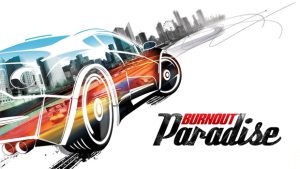
- Burnout Paradise
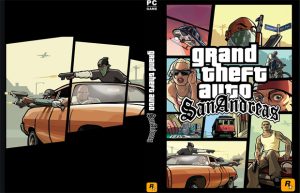
- GTA San Andreas
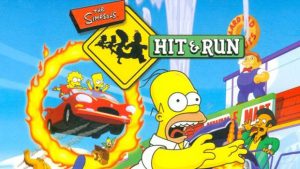
- The Simpsons: Hit & Run
Found something worth playing through DecideGame?
DecideGame.com is an independent gaming project run by Editor Zero. If this guide helped you discover a game, solve a problem, or find useful information, you can support DecideGame.com and help keep new and updated game guides coming.
DecideGame — PC Game Guides, Reviews & Setup Help