
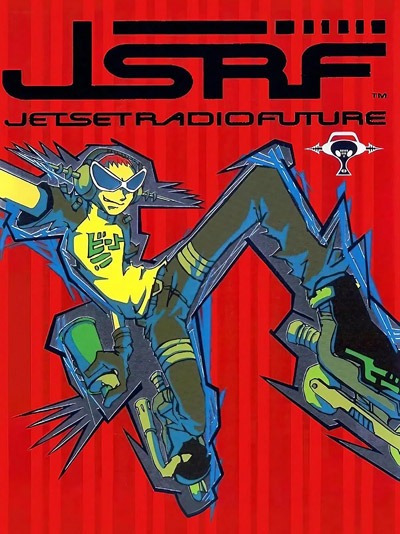
📅 Game released: 2002
Jet Set Radio Future is a cel-shaded skating action-platformer set in a rebellious, futuristic Tokyo, where the GGs claim territory through graffiti, grinding, and exploration. There is no official Windows edition or game download: this PC guide explains lawful original-Xbox ownership, xemu setup, emulator system requirements, controller and local multiplayer support, compatibility limitations, and experimental fan-made PC alternatives.
 By Editor Zero — independently researched, edited, and maintained.
Last updated: 7 November 2026
Last reviewed: 7 November 2026
Table of Contents
- Quick Facts
- Official PC Stores, Download & Installation
- Jet Set Radio Future Review
- Pros & Cons
- PC System Requirements
- Frequently Asked Questions
- Similar Games
Jet Set Radio Future Quick Facts
- Game: JSRF: Jet Set Radio Future / Jet Set Radio Future
- Developer: Smilebit
- Publisher: SEGA
- Genre: Platformer, Action-Adventure
- Release: Xbox — February 22, 2002 (Japan), February 25, 2002 (North America), March 14, 2002 (Europe); no official Windows PC release
- Platforms: Xbox; Xbox 360 (backward-compatible play of the original Xbox game)
- Modes: Single-player story; local competitive VS Mode for up to four players; no native online mode
- Recommended PC Route: Original Xbox game through xemu with a lawfully created XISO backup
- Steam Deck: Not available on Steam; no Valve rating. xemu has Linux builds, but game-specific emulation results vary
- Engine: Not officially confirmed
- Community: Jet Set Radio Reddit community; xemu JSRF compatibility reports
- PC modding: No official PC mod tools or native Windows edition; xemu configuration and fan-made recompilation projects are unofficial
- Metacritic score: 88/100 (original Xbox release)
- IGN score: 9.1/10 (original Xbox review)
- GameSpot score: 8.7/10 (original Xbox review)
- Steam user reception: Not available on Steam
Official PC Store Status, Download & Installation
👇 Check Jet Set Radio Future’s official PC availability and prepare a lawful original-Xbox copy before choosing xemu or exploring an experimental fan-made alternative.
- Official Windows status: SEGA released Jet Set Radio Future for the original Xbox, not for Windows. There is no official JSRF Steam, Epic Games Store, GOG, Microsoft PC Store, or SEGA PC installer. Do not confuse it with the separate original Jet Set Radio game.
- Recommended emulator: xemu is a free, open-source original Xbox emulator with Windows, macOS, and Linux builds. Its dedicated JSRF entry classifies the standalone game as Playable, meaning minor issues may still occur.
- Original Xbox edition: The standalone Xbox disc is the primary version covered by this guide. There is no separate PlayStation, Dreamcast, or GameCube release of Jet Set Radio Future to emulate.
- Combo-disc alternative: The Sega GT 2002 + JSRF: Jet Set Radio Future Xbox compilation includes the full JSRF game. xemu separately rates that compilation Playable, though its compatibility report is older and mentions some visual and performance limitations.
- Make a lawful game backup: xemu loads original Xbox game data in XISO format, normally using an
.isofilename. Follow xemu’s official disc-image instructions for media you own and check the rules applicable to making personal backups where you live. - Xbox system files: xemu also needs an MCPX Boot ROM image, a compatible Xbox Flash ROM/BIOS, and a virtual Xbox hard-disk image. The official Required Files guide explains these components; proprietary boot/BIOS files are not supplied with the emulator.
- Initial xemu setup: Download xemu from the official project, extract/install it, configure the required Xbox system files, then load the XISO created from your own copy. Test default settings before trying game-specific changes or workarounds.
- Gamepad and local play: JSRF was designed for an Xbox controller. xemu supports modern PC controllers, including multiple connected controllers for the original local VS Mode, subject to the emulator and input setup working correctly.
- Unofficial PC recompilations: JSRF Unleashed and the Windows/Linux-focused JSRF-PC are independent fan projects that run recompiled game code and require your own game assets. They are not SEGA releases, are still described by their maintainers as early or incompletely tested, and require the standalone US (NTSC-U) release—not the Japanese, European, or Sega GT combo-disc build. Review their repository documentation and risks before using them; they are not the baseline xemu route in this guide.
- Original Xbox 360 compatibility: JSRF also received legacy Xbox 360 backward compatibility, but that does not give owners a native Windows version or a transferable PC license.
- Preserve saves: Keep backups of xemu’s virtual Xbox hard-drive data before experimenting with community fixes, alternative firmware configurations, or major emulator changes. Continue to use the game’s ordinary save points for long-term progress.
- Copyright and safety: This guide does not provide or link to copyrighted JSRF disc images, Xbox firmware downloads, ROM archives, or unlicensed full-game packages. Obtain the game through legitimate ownership and consult original-project documentation rather than unknown file-hosting sites.
 Get xemu from the Official Website
 View Jet Set Radio Future in SEGA’s Xbox Archive

Jet Set Radio Future Review
Fast, expressive skating and route-rich city design turn Tokyo into a movement playground, even when navigation and completionist chores slow the momentum.
Jet Set Radio Future is at its best when an ordinary trip across town becomes a line to solve. A guardrail leads into a power cable, the cable points toward a billboard, the billboard becomes a wallride, and a rooftop landing opens another route that was easy to miss from street level. Smilebit builds the game around that chain of recognition. Graffiti gives each district a purpose, rival gangs and police provide interruptions, and collectibles reward detours, but the central pleasure is learning how the city connects and then crossing it with less hesitation each time.
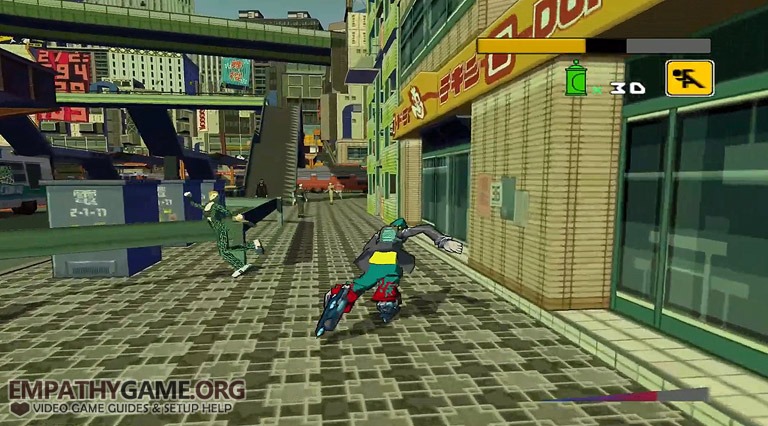
That emphasis also explains the game’s sharpest weaknesses. JSRF gives players unusually large, vertical spaces without always giving equally strong navigation tools. A route can feel brilliant once understood and needlessly obscure while it is being discovered. Repeated tagging and late-game cleanup can turn expressive movement into checklist work, while the camera is least reliable precisely when a rail, wall, or landing demands quick spatial judgment. Players who enjoy momentum, route discovery, score chasing, and highly stylized worlds are likely to appreciate the trade-off. Anyone wanting tightly guided platforming, deep combat, or constant mission variety may find the repetition harder to ignore.
Movement Turns Tokyo Into a Route-Finding Game
The most important change from the original Jet Set Radio is that graffiti no longer interrupts the skating rhythm with directional-stick patterns. The skater can hold the spray trigger while passing marked points, including sequences placed along grindable routes. That pushes skating, not tagging technique, to the center of the design. Grinding, wallrides, jumps, handplants, aerial tricks, and the Boost Dash become parts of the same navigation language.
The deeper rhythm appears once rails enter the route. Grinding is generally faster than simply skating along the street, and long rail lines reward active trick timing instead of passive travel. A clean run becomes a routing problem: reach the rail with enough speed, keep the line alive, jump at the right point, then land on the next useful surface instead of dropping back to ground level. Shibuya Terminal demonstrates this early. Its buses, elevated walkways, rails, ramps, and upper balconies make the district readable from several heights, so the shortest-looking path is often less useful than a longer route that preserves momentum.
Spray cans add a simple resource tension because ten cans can be traded for a temporary Boost Dash. Paint is therefore both mission currency and mobility. Burning cans to clear a gap or accelerate through a race feels worthwhile until the next large tag leaves the supply low. Character differences matter most in situations like this. Acceleration, cornering, grinding ability, stamina, graffiti skill, and can capacity do not turn JSRF into a build-driven game, but they can change which skater feels comfortable for a technical route or paint-heavy objective.
Great Levels Reward Curiosity; Weak Navigation Punishes It
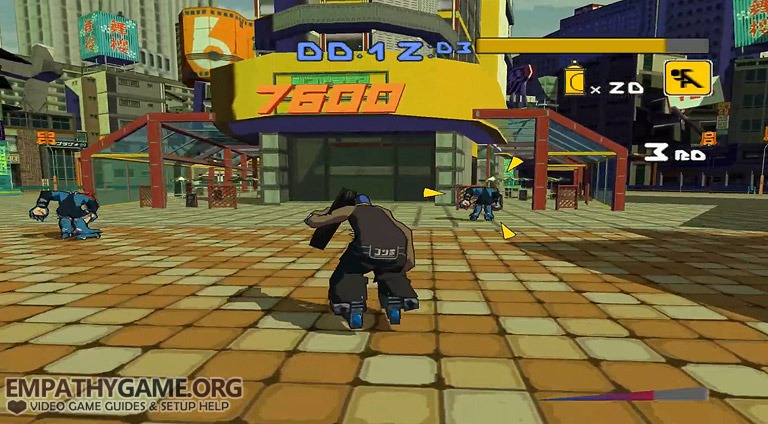
The strongest districts are designed vertically enough that scenery becomes instruction. A cable above a street may be the cleanest route to a balcony. A billboard can function as a wallride surface. A half-pipe may exist less for tricks than for gaining the height needed to reach another layer of the map. 99th Street and Sky Dinosaurian Square push this idea especially far, asking the player to read architecture as a network rather than a backdrop.
Successful exploration feels rewarding because progress often comes from understanding space rather than finding a key. The problem is that the same design becomes opaque when a connection is missed. The map shows destinations more reliably than it explains elevation or the object linking two apparently adjacent platforms. When only one graffiti point or collectible remains, the challenge can shift from skating well to repeatedly circling an area while trying to identify the expected rail or wallride.
Hikage Street exposes both sides of the design. Its separated sections and huge stairway structures create memorable long routes, but moving between them can demand considerable backtracking. Paint placement can make planning matter too: a skater with generous can capacity is useful when an objective-heavy path does not replenish spray cans conveniently. That is interesting when it encourages preparation, less so when missing a pickup sends the player through already-cleared ground.
The camera compounds the problem. It can be corrected manually, but tight corners, sudden height changes, and fast landings sometimes ask for more precision than the view comfortably provides. JSRF feels best when the player is reading three moves ahead; it feels clumsiest when the camera forces a last-second correction in a game built around preserving flow.
Graffiti and Combat Work Best When They Stay in Motion
Graffiti is structurally important but mechanically simple. Small tags take a single point, while larger pieces are broken into several spray points that can be covered continuously while running or grinding. The strongest placements turn a wall into a route objective: the player is not merely locating a marked surface, but working out how to approach it without killing momentum.
Police and Rokkaku encounters are less consistent because JSRF is not built around deep combat. Most confrontations are variations on movement, positioning, boosting, and spraying rather than an independent fighting system. When an enemy can be handled by circling into position, using the environment, and tagging at the right moment, the encounter feels like an extension of skating. When the game asks for repeated contact with an awkward target, the lack of precise combat tools becomes more obvious.
The terror drone in Hikage Street is a good example. The obvious approach is to grind along its legs toward the visible graffiti points, but the moving geometry can make that awkward. When a target swings close enough, jumping directly toward the marked point and holding the spray trigger can be cleaner than forcing the entire leg grind. Rival-gang events fit the design more naturally because races and tagging contests ask for the same route knowledge, boosts, shortcuts, and spatial judgment used during exploration.
Progression Rewards Mastery but Sometimes Wastes It
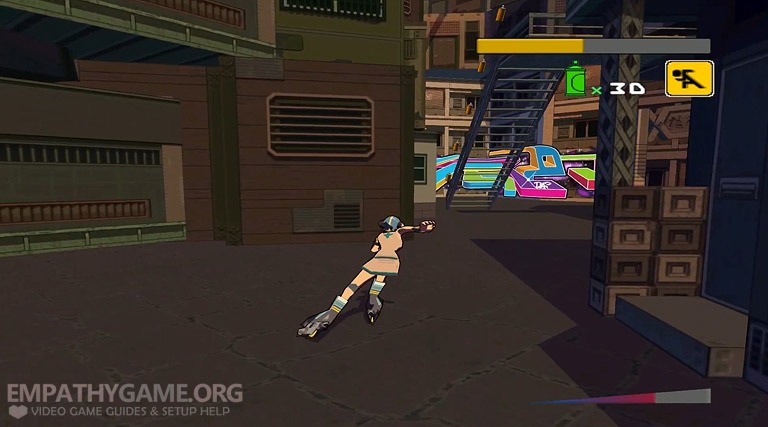
The main story advances through districts, graffiti objectives, rivals, and police confrontations, but the deeper progression layer sits in Mystery Tapes, Street Challenges, Graffiti Souls, character recruitment, and post-story Test Runs. This lets a straightforward playthrough coexist with a much more demanding completion path. Familiar districts later support score targets, long trick chains, specialized movement tasks, and time-based optimization.
Mystery Tapes are the hinge between exploration and mastery. Finding one reveals that area’s Street Challenges in the GG Notebook. Those objectives can demand grind or air combos, point totals, trick counts, or a location-specific feat; completing them causes additional Graffiti Souls to appear. It is a smart way to give old spaces a second purpose.
There is one irritating catch: Street Challenges are not retroactive. If the required feat is performed before the area’s Mystery Tape has been collected, it does not count. A curious player can discover a difficult route naturally, only to learn later that the game wants the same feat again after the checklist has been formally unlocked. The problem is not difficulty but recognition—JSRF sometimes fails to credit mastery simply because it happened in the wrong order.
Graffiti Souls provide a cleaner completion loop, expanding the available artwork while feeding access to Test Runs and hidden characters. The system gives completionists meaningful reasons to revisit districts, even if the path from exploration to checklist completion is occasionally more procedural than the free-flowing movement deserves.
Style and Sound Carry More Weight Than the Story
The plot provides a frame rather than a deep dramatic arc. The GGs, with Professor K broadcasting over pirate radio, push against rival gangs, the Rokkaku Police, and Gouji Rokkaku’s expanding control over Tokyo. Beat, Gum, Corn, and the wider roster are defined more by silhouette, attitude, animation, and voice than by elaborate character development. The rebellion works because it gives the city momentum and identity, not because the story builds toward subtle emotional payoffs.
Art direction does far more narrative work. Tokyo is rendered as a collage of thick outlines, exaggerated proportions, signage, concrete, neon, elevated infrastructure, and architecture bent toward playability. Cel shading keeps skaters readable against dense backgrounds, while animation makes basic traversal feel performative. Grinding a rail or twisting through an aerial trick is not only faster than walking the route; it looks like a declaration of ownership over the space.
The soundtrack completes that effect. Hideki Naganuma tracks such as “The Concept of Love,” “Funky Dealer,” and “Teknopathetic” sit beside music from artists including Cibo Matto and The Latch Brothers, creating a mix of electronic, hip-hop, rock, and sample-heavy pop that feels inseparable from the movement. Because music is arranged through chapter- and area-based rotations rather than an endlessly shuffled library, long completion sessions can expose how often the same cluster of tracks repeats. Even then, the soundtrack remains one of the main reasons the game has such a distinct rhythm.
Test Runs Reveal Both Depth and Exploitable Shortcuts
Test Runs are the clearest expression of JSRF’s replay value. Each eligible area includes Jet Graffiti and Jet Tech plus either Jet Dash or Jet Flag, turning familiar districts into speed, scoring, routing, or collection challenges. Earning Jet rankings is tied to hidden character unlocks, so completion asks the player to learn what each mode actually rewards.
Jet Graffiti turns paint capacity and route order into practical concerns. Jet Dash rewards grinding and Boost Dash management, making the fastest route different from the visually shortest one. Jet Flag tests how quickly map knowledge can be translated into successive pickups. These modes are strongest when they force a district to be seen differently from the campaign.
Jet Tech is less elegant. Its scoring heavily rewards high-value rails and repeated trick multipliers, so what appears to be a broad freestyle challenge can collapse into finding a 500-point rail and repeatedly using the more lucrative trick input. Once that optimization is discovered, route creativity matters less than exploiting the best scoring surface. It exposes a recurring tension: JSRF’s movement system invites expression, but some formal objectives reward narrow solutions.
VS Mode adds five local competitive variants—City Rush, Ball Hog, Flag, Graffiti Wars, and Tagger’s Tag—for up to four players. They cleverly reuse the same movement vocabulary, especially when shortcuts or boost timing decide a race, but multiplayer feels like an extension rather than the center of the package. The stronger long-term appeal lies in mastering the single-player city’s routes, challenges, and hidden unlocks.
Final Verdict
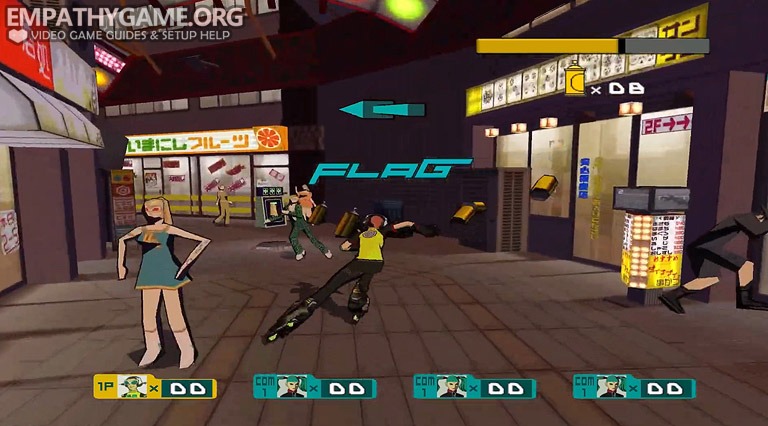
Jet Set Radio Future succeeds because nearly every memorable part of it points toward the same idea: movement should be expressive. Graffiti is streamlined so skating can continue, the city is built from surfaces that invite chaining, the soundtrack pushes the pace, and the art direction makes every district feel designed to be claimed rather than merely crossed. Learning that a rail is faster than the street beneath it, spotting a wallride that turns into a rooftop route, or finding a cleaner angle on an awkward enemy captures the game at its best.
Its flaws are tied to that ambition. Large vertical districts can become confusing when the map fails to communicate how spaces connect. The camera is least dependable when speed and elevation demand confidence. Mystery Tape progression can force unnecessary repetition, some cleanup stretches overuse familiar objectives, and Test Runs occasionally reward narrow scoring tricks instead of the wider movement vocabulary.
Those problems do not erase what is unusual about JSRF. Players drawn to route discovery, momentum, score chasing, stylized urban spaces, and music-driven platforming will find a game with a remarkably coherent identity. Players looking for deep combat, heavy narrative development, or constant objective variety may find its structure too loose. Jet Set Radio Future is most convincing when treated not as a series of missions, but as a city-sized skating system waiting to be understood.
Jet Set Radio Future Pros & Cons
- Pro: Distinctive cel-shaded Tokyo districts, graffiti culture, and a memorable, eclectic soundtrack
- Pro: Grinding, boosting, wallrides, tricks, and vertical routes make skating and route discovery the main attraction
- Pro: Graffiti challenges, Mystery Tapes, Graffiti Souls, Test Runs, and hidden characters reward mastering familiar areas
- Pro: Four-player competitive VS Mode and a graffiti editor add worthwhile variety beyond the campaign
- Con: The camera and limited navigation cues can make high-speed movement and finding elevated routes frustrating
- Con: Some Street Challenges and post-story rankings demand repetitive cleanup or narrow scoring techniques
- Con: There is no official Windows edition or normal PC storefront installation
- Con: xemu requires separately obtained Xbox system files and owned game data, and its Playable rating is not a guarantee of flawless emulation
Jet Set Radio Future PC System Requirements
Jet Set Radio Future has no official native-Windows system requirements because SEGA never released a Windows version. The guidance below comes from xemu’s official emulator documentation and does not describe an official JSRF PC port or guarantee game-specific performance.
xemu — Recommended Original Xbox Emulation Route
Operating System: A vendor-supported Windows release (Windows 10 or later); xemu also offers macOS and Linux builds
Windows Builds: x86_64 and ARM64
GPU: OpenGL 4.0-compatible graphics hardware
Integrated Graphics: Most recent integrated GPUs can run xemu, according to the emulator project
CPU: No fixed universal minimum published by xemu; results depend on the Xbox title and host CPU
RAM: No official game-specific minimum or recommended value published for JSRF on xemu
Controller: PC-compatible controller recommended; multiple controllers supported for local multiplayer
Game Image: A compatible Xbox XISO made from a lawfully owned JSRF disc
Required Xbox Data: MCPX Boot ROM, compatible Flash ROM/BIOS, and Xbox hard-disk image
Additional PC Performance and Setup Notes
- Jet Set Radio Future is rated Playable rather than Perfect by xemu. Compatibility reports describe occasional rendering, audio, slowdown, caching, and stability problems that can vary between systems and emulator builds.
- Begin with default xemu settings and verify that your game XISO and required Xbox system files are correct before applying unofficial fixes.
- If loading or stability problems occur, check the official xemu FAQ and JSRF compatibility reports before relying on an old workaround.
- Rendering resolution can be scaled inside xemu, but higher scaling does not replace original textures or remove emulation-specific glitches. The original Xbox presentation is primarily 4:3; increasing resolution alone is not a verified native 16:9 conversion.
- A controller is preferable for analog movement, grinding, camera input, tricks, and Boost Dash. Preserve ordinary in-game saves and back up the virtual Xbox hard drive; emulator snapshots are not a substitute for a separate save backup.
- Unofficial static-recompilation projects have their own hardware requirements, supported disc region, and compatibility limitations. Do not treat their Windows/Linux builds as interchangeable with xemu or its XISO/system-file setup.
Official Trailer
Note: SEGA’s official Jet Set Radio 60th-anniversary retrospective includes Jet Set Radio Future footage and historical context for the series. The written guide above adds the game’s Windows availability status, xemu setup route, lawful XISO guidance, current emulator compatibility, and PC hardware notes.
Frequently Asked Questions
Is Jet Set Radio Future officially available on PC or Steam?
No. SEGA has not released a native Windows or Steam version of Jet Set Radio Future. The PC approaches discussed here are original-Xbox emulation or separate unofficial fan projects, not an official PC game download.
Are JSRF Unleashed and JSRF-PC official Windows ports?
No. They are independent, experimental recompilation projects and need files from your own standalone US (NTSC-U) game disc. Their maintainers warn that not every area has been fully tested, and the Sega GT combo-disc version is not supported by these recompilations. JSRF Unleashed documentation explains the restrictions.
Can I use the Sega GT 2002 + JSRF combo disc with xemu?
Yes. xemu separately lists the compilation as Playable, and it contains the complete JSRF game. Use a lawful XISO backup of the disc you own; do not assume its game files will also work with the newer unofficial recompilation projects.
Do I need to play the original Jet Set Radio first?
No. Jet Set Radio Future reimagines the original Dreamcast game with revised areas, story events, graffiti mechanics, and characters, so its campaign stands on its own. Playing the earlier game adds context but is not necessary.
Is Jet Set Radio Future a fully open-world game?
Not in the modern seamless-world sense. Its story opens a network of large, interconnected Tokyo districts, and players can return to unlocked areas for graffiti, character recruitment, collectibles, and challenges.
How does graffiti work compared with Jet Set Radio?
Future replaces the original game’s directional-input graffiti patterns with marked spray points. Hold the appropriate spray trigger while passing those points, even during grinding, to keep tagging integrated with movement.
What are Mystery Tapes, Street Challenges, and Graffiti Souls?
A district’s Mystery Tape reveals its Street Challenges in the GG Notebook. Completing those movement tasks makes additional Graffiti Souls available, expanding graffiti designs and supporting post-story completion. Challenges completed before their tape is found generally do not count retroactively.
How do I unlock more characters in Jet Set Radio Future?
Story races and recruitment events add characters as you progress. Additional hidden characters are tied to area challenges and post-story Test Runs; the full unlockable roster contains 24 skaters with different handling and graffiti-related attributes.
What does Boost Dash do, and how much paint does it cost?
Boost Dash converts 10 collected spray cans into a burst of speed. It helps clear gaps, chase rivals, and navigate demanding routes, but using it repeatedly can leave too little paint for large graffiti targets.
Does Jet Set Radio Future save automatically?
Do not depend on automatic saving. Use the Garage or a Graffiti Stop to save your progress, especially before difficult encounters or long collectible runs.
Can I keep exploring and unlock Test Runs after the story?
Yes. After the main story, players can revisit districts, finish Street Challenges, collect Graffiti Souls, earn Jet rankings in area Test Runs, and work toward hidden characters.
Is the campaign cooperative, and does JSRF have four-player split-screen?
The campaign is single-player, not co-op. A separate original-Xbox VS Mode supports up to four local players in activities such as City Rush, Graffiti Wars, Tagger’s Tag, Jet Flag, and Ball Hog; an emulated setup needs appropriate working controllers.
Does Jet Set Radio Future have online multiplayer?
No. Its original multiplayer was designed for local competition rather than Xbox Live. Emulating it in xemu does not add an official online mode.
Can I use a modern controller or upscale the game in xemu?
Yes. xemu supports modern controllers and internal resolution scaling. Raising the render scale can sharpen the presentation, but it will not supply new textures or necessarily fix game-specific visual issues.
Does Jet Set Radio Future work on Steam Deck?
There is no official Steam release or Valve compatibility rating. xemu provides Linux builds, but JSRF performance and stability vary by hardware, emulator version, and settings. Do not treat a Playable compatibility listing as a Steam Deck guarantee.
Why does JSRF sometimes freeze, slow down, or display visual glitches in xemu?
xemu’s JSRF page records unresolved issues involving stability, audio, visual effects, caching, and performance. Start by checking the emulator’s official FAQ and title-specific reports, and back up your game saves before experimenting with settings or fixes.
Still have questions? Check the Jet Set Radio Reddit community, official xemu FAQ, or JSRF compatibility reports for community help and emulator troubleshooting.
Sources & References
Key historical, platform, and technical facts were checked against the following publisher, emulator, review, and original-project sources:
- SEGA — Xbox Game Archive — original Xbox release and Japanese release date.
- xemu — Jet Set Radio Future Compatibility — Playable rating and documented game-specific issues.
- xemu — Sega GT 2002 + JSRF Compatibility — the compilation’s separate compatibility status.
- xemu — About & System Requirements — supported host platforms and graphics requirements.
- xemu — Disc Images and Required Files — lawful backups, XISO format, and console-system dependencies.
- JSRF Unleashed and JSRF-PC — independent project status, requirements, and US-disc limitation.
- Metacritic — Original Xbox Reviews and GameSpot — JSRF — version-specific reception and critic scores.
Similar Games Like Jet Set Radio Future
- Tony Hawk’s Underground 2
- Tony Hawk’s Underground
- SSX Tricky
- Sonic Heroes
- The Simpsons: Hit & Run
- Burnout Paradise

Found something worth playing through DecideGame?
DecideGame.com is an independent gaming project run by Editor Zero. If this guide helped you discover a game, solve a problem, or find useful information, you can support DecideGame.com and help keep new and updated game guides coming.
DecideGame — PC Game Guides, Reviews & Setup Help