
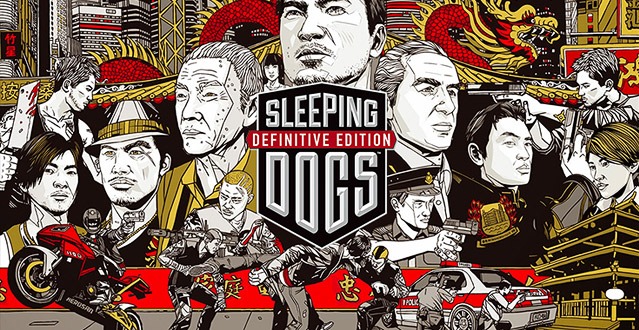
📅 Game released: 2014
Use this updated 2026 Sleeping Dogs: Definitive Edition PC guide to compare official Steam and GOG purchase, download, and installation options, understand the included story DLC, and check system requirements, Steam Deck compatibility, performance, and mods before returning to Hong Kong.
 By Editor Zero — independently researched, edited, and maintained.
Last updated: 22 October 2026
Last reviewed: 22 October 2026
Table of Contents
- Quick Summary
- Quick Facts
- Official PC Stores, Download & Installation
- Sleeping Dogs: Definitive Edition Review
- Pros & Cons
- PC System Requirements
- Frequently Asked Questions
- Similar Games
Sleeping Dogs: Definitive Edition Quick Summary
✔ Hong Kong-set open-world crime action-adventure following Wei Shen, an undercover police officer infiltrating the Sun On Yee Triads while balancing competing loyalties
✔ Hand-to-hand martial arts, contextual environmental takedowns, shooting, parkour, driving, vehicle hijacking, and street-level side activities distinguish it from gun-focused crime sandboxes
✔ Similar to Yakuza 0 Director’s Cut through its Asian urban crime drama, close-quarters fighting, memorable supporting cast, and wealth of optional activities
✔ The Definitive Edition enhances the presentation and folds major story episodes and other DLC into the game; it is a separate release from the original 2012 PC version
✔ The Windows edition is sold through Steam and GOG; choose Steam for its client features or GOG for DRM-free files and optional launcher-free installation
✔ Single-player only, with no cooperative campaign or competitive multiplayer; Steam Deck is rated Playable, and PC modifications are unofficial and edition-dependent
Sleeping Dogs: Definitive Edition Quick Facts
Official PC Stores, Download & Installation
👇 Compare the verified Steam and GOG PC versions below before purchasing, downloading, or installing Sleeping Dogs: Definitive Edition; Square Enix also offers an official Steam-key purchase.
- Steam: The Windows version is available as a standalone Definitive Edition purchase with integrated DLC. Buy it on Steam, open your Library, choose the game, and select Install. Steam provides achievements, Steam Cloud, full controller support, and Family Sharing eligibility.
- GOG: GOG sells the Windows Definitive Edition without DRM. You may install it using GOG Galaxy or download its offline installation files from your owned-game library; GOG Galaxy is optional. Achievements and cloud synchronization use Galaxy where supported.
- Square Enix Store: The publisher’s official digital listing provides a Steam activation key, not a third independent PC build. Check the listing’s region and product details before purchasing.
- Edition differences: Definitive Edition is a separate remastered product from the original Sleeping Dogs (2012). Improvements include updated textures, visual and environmental presentation, and reorganized DLC content; owning the original does not automatically mean you own the remaster.
- Included expansions: Nightmare in North Point is a supernatural side story, Year of the Snake adds a police-focused episode, and Zodiac Tournament adds martial-arts tournament content. Much of the other bonus content is integrated into progression rather than purchased separately.
- DLC access: Nightmare in North Point and Year of the Snake are separate story selections in the main menu; other unlocks and rewards are available through the main campaign. The Definitive Edition is not a simple one-to-one archive of every original booster or promotional item.
- Accounts and offline play: Steam purchases use a Steam account and the Steam client, including its initial installation and activation process; offline play depends on Steam’s Offline Mode being configured. GOG’s DRM-free edition does not require online activation or GOG Galaxy to play after installation.
- Ownership and saves: Steam and GOG are separate purchases with different cloud-save systems. Do not assume progress automatically transfers between storefronts or between the original game and Definitive Edition; back up local saves before trying manual migration.
- Regional availability: Store availability and activation restrictions can differ by country. In particular, the Definitive Edition has documented Steam restrictions in Germany; verify the official product page in your own region instead of assuming that a third-party key will work.
- Steam Deck: Valve lists the Steam edition as Playable rather than Verified. It is a Windows game run through SteamOS compatibility tools, so handheld text, controls, or other usability details may still need attention.
- PC mod compatibility: Many older mods were made for the 2012 release and are not interchangeable with Definitive Edition. Check the exact game version and storefront requirements before adding third-party modifications; there is no official mod installation requirement for normal play.
 Buy Sleeping Dogs: Definitive Edition on Steam
 Buy Sleeping Dogs: Definitive Edition on GOG

Sleeping Dogs: Definitive Edition Review
A gripping Hong Kong crime thriller whose brutal martial arts and vivid city outshine its uneven shooting and driving.
Sleeping Dogs: Definitive Edition understands something that many open-world crime games overlook: a street fight can be more exciting when the protagonist has no gun. Wei Shen is an undercover police officer working his way into Hong Kong’s Sun On Yee Triads, but his most dependable weapons are his fists, quick reactions, and the objects scattered around him. A crowded restaurant, nightclub, or back alley becomes a makeshift fighting arena where a well-timed counter or environmental takedown can end an encounter more decisively than a long combination of punches.
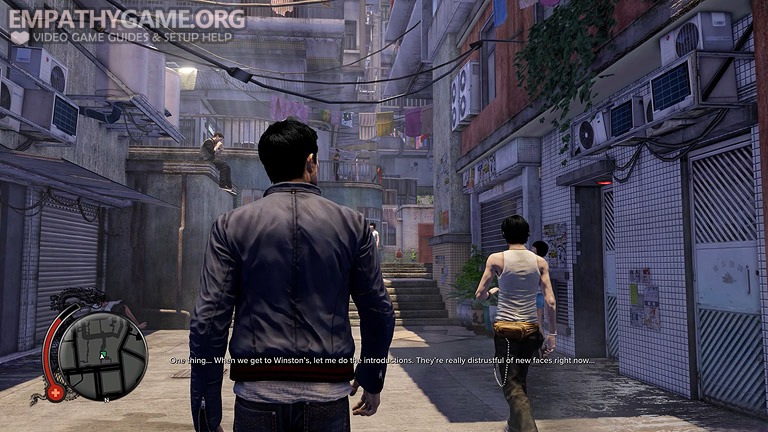
Beyond the violence is a surprisingly personal crime drama. Wei’s criminal associations gradually become friendships, complicating a police operation that initially seems straightforward. Hong Kong gives those relationships a convincing backdrop, moving between packed markets, neon-lit nightlife, expensive commercial districts, and narrow residential streets. The Definitive Edition improves the city’s visual presentation and incorporates additional content, but preserves the original game’s relatively concentrated scale.
Not everything reaches the same standard. Gunplay lacks the personality of the melee combat, vehicle handling favors spectacle over precision, and certain activities become repetitive. Yet the combination of cinematic action, memorable characters, and a distinctive urban atmosphere makes this a compelling alternative to larger, more system-heavy crime sandboxes.
Hong Kong Makes a Smaller Open World Feel Busy
One of Sleeping Dogs’ greatest strengths is how quickly its world delivers something worthwhile. North Point’s bustling night markets, Central’s polished shopping streets, and the contrasting neighborhoods of Aberdeen and Kennedy Town give Hong Kong recognizable identities without demanding long journeys between objectives. A short drive can lead to a gang confrontation, police assignment, street race, or unexpected favor. The city feels designed around maintaining momentum rather than stretching travel time.
That density also makes ordinary movement enjoyable. Wei can vault market stalls, climb obstacles, scramble across rooftops, and cut through alleys during foot pursuits. When several vaults connect smoothly, a chase resembles a choreographed Hong Kong action sequence. The limitation is the contextual parkour system: missing a prompt or approaching an obstacle at the wrong angle can interrupt the flow, particularly during timed pursuits. Movement is exciting when the environment cooperates, but less flexible than it first appears.
The world is also more carefully scripted than deeply simulated. Pedestrians, traffic, shops, and street activities create a convincing setting, but they do not support the breadth of emergent interactions found in more ambitious open-world games. Sleeping Dogs works best when treated as a tightly organized action adventure with room to explore, not an unrestricted urban simulator.
Martial Arts Combat Rewards Timing, Positioning, and Enemy Awareness
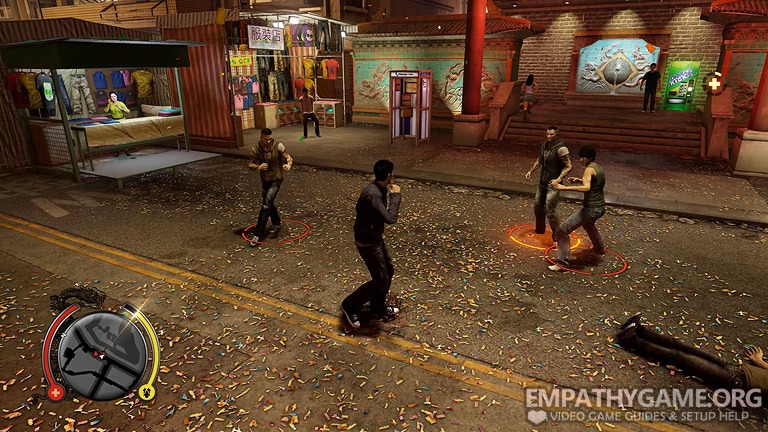
Hand-to-hand fighting is the system that gives Sleeping Dogs its identity. Wei combines light attacks, heavy strikes, counters, grapples, and environmental finishers into encounters that emphasize timing rather than button-mashing. Enemies signal incoming attacks, creating opportunities to interrupt their momentum and retaliate. The controls are approachable, but dealing efficiently with several attackers requires more awareness than simply waiting for counter prompts.
Enemy classes make an important difference. Ordinary brawlers are vulnerable to grabs, allowing Wei to drag them toward environmental hazards. Defensive strikers can block careless combinations, encouraging more deliberate openings. Larger grapplers resist conventional grabs and can punish attempts to treat them like weaker opponents. Against these enemies, stunning attacks, well-timed counters, and powerful strikes become more reliable than repeatedly attempting throws.
Environmental takedowns provide the most memorable moments. An enemy near an aquarium, electrical fixture, or industrial object becomes an opportunity for a spectacular finish. Rather than wearing down every opponent through ordinary punches, Wei can create space, grab a vulnerable thug, and move him toward a highlighted hazard. These interactions give positioning a purpose and make individual locations feel like part of the combat design.
The system is not consistently demanding. Large groups can interfere with target selection, the camera occasionally struggles near walls, and upgraded attacks eventually make familiar enemies easier to control. Encounters can settle into a predictable counterattack rhythm. The optional Death by a Thousand Cuts challenge exposes the opposite extreme: waves of armed enemies inflict a draining damage effect that makes close-range mistakes unusually punishing. Disarming attackers and throwing their knives back at them can be more effective than relying on ordinary melee combinations. It is a useful demonstration of how the combat changes when keeping distance becomes essential, even if the challenge can feel excessively harsh.
What keeps the fighting enjoyable is its physical presentation. A successful counter launches an attacker into a convincing stagger, heavy blows interrupt combinations, and brutal finishers give the action the theatrical character of martial-arts cinema. Few mechanics are especially complex in isolation, but together they make even a routine gang encounter entertaining.
Shooting and Driving Favor Spectacle Over Precision
Firearms play a supporting role rather than dominating Wei’s adventures. Guns usually appear during particular missions or after disarming armed opponents, reinforcing the game’s preference for close combat. Shootouts use conventional cover mechanics, while vaulting across obstacles can trigger slow-motion aiming. The resulting sequences are visually dramatic, especially when Wei moves through cover while targeting several enemies.
The weakness is that shooting offers fewer interesting decisions than fighting. Cover, aim, fire, and reposition form a familiar loop, without the enemy-specific counters and environmental interactions that make melee distinctive. On PC, mouse aiming offers useful precision for these encounters, while a controller can feel more natural for analog movement, driving, and martial-arts combinations. Neither input method completely resolves the relatively ordinary gunplay.
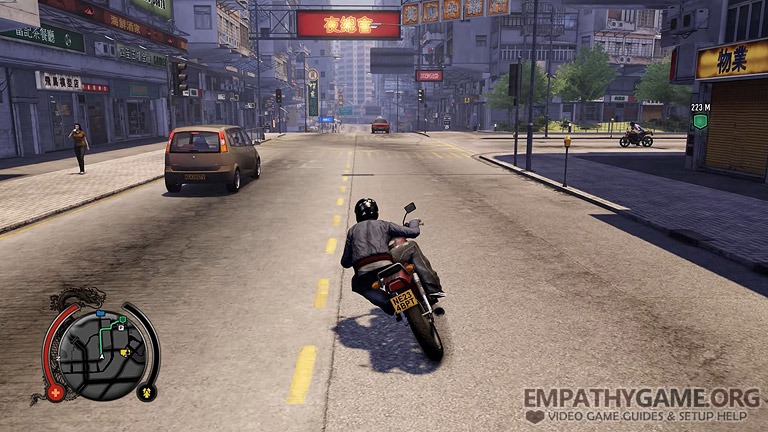
Driving takes an equally cinematic approach. Vehicles are responsive enough for pursuits, but their loose handling and exaggerated collisions can make sharp turns unpredictable. The dedicated ram maneuver lets Wei knock pursuing vehicles sideways, turning traffic into another offensive tool. More memorable is Action Hijack, which allows him to leap from one moving vehicle onto another. During a chase, successfully lining up the jump and taking control of the target car delivers the sort of reckless stunt that would otherwise belong in a scripted cutscene.
Motorcycles offer a nimbler way through traffic, while street races encourage experimenting with faster cars. The driving is most satisfying when its exaggerated rules serve a chase or stunt. Players expecting realistic vehicle weight, consistently precise steering, or demanding racing physics will find it less convincing.
Wei Shen’s Double Life Gives the Story Its Emotional Weight
Wei’s undercover assignment begins with a familiar crime-story premise: infiltrate an organization, gain the trust of its members, and help dismantle it from within. His childhood friendship with Jackie Ma provides an entrance into the Sun On Yee, where Winston Chu becomes an important early influence. What complicates the operation is that the people Wei must deceive are not presented simply as disposable criminals.
Jackie brings humor, loyalty, and vulnerability to a story otherwise filled with intimidation and violence. Winston’s fierce commitment to his associates makes the gang feel like a dysfunctional family rather than a collection of mission-givers. Their relationships give Wei credible reasons to become emotionally involved, even when his professional responsibilities demand distance.
The conflict is strongest when Wei’s police duties and criminal obligations pull him in opposite directions. An act that earns respect among the Triads may make his superiors question his judgment. The campaign explores identity, loyalty, and the personal consequences of prolonged deception without reducing them to a simple morality meter. Wei is not choosing between branching police and criminal storylines; the drama comes from watching those identities become increasingly difficult to separate.
The writing sometimes moves too quickly for its own good. Wei rises through the criminal hierarchy at a pace that occasionally makes his growing influence feel insufficiently earned. Certain supporting relationships receive substantial attention, while others are introduced and moved aside before their potential is fully explored. Nevertheless, the central performances and interpersonal tensions give the campaign more emotional substance than its straightforward mission structure might suggest.
Progression Rewards Style, but Not Every Upgrade Feels Significant
Sleeping Dogs separates character progression into three main reputations: Cop, Triad, and Face. Cop XP rewards competent police work and avoiding unnecessary collateral damage. Triad XP emphasizes expressive combat, encouraging varied attacks, counters, and intimidating finishers. Face XP increases Wei’s public reputation through favors, races, and other activities, unlocking shopping privileges, vehicles, discounts, and combat-related benefits.
This division cleverly reflects Wei’s competing identities, but advancement is not perfectly balanced. A player can approach the end of the campaign with Cop and Face progression substantially ahead of Triad rank. Repeatedly relying on safe attacks may complete missions efficiently without earning the strongest Triad scores. Replaying missions can improve those results, although only the improvement over the previous score contributes additional experience. That makes the final Triad ranks potentially more troublesome than the other progression tracks.
Martial-arts training provides a more tangible sense of growth. Returning Jade Statues to Sifu Kwok allows Wei to learn additional fighting techniques. Moves such as the Leg Breaker create openings against groups, while upgrades including the Spinning Heel Kick improve the crowd-control usefulness of familiar attack combinations. Not every unlock changes how Wei fights dramatically; some refine an established sequence rather than providing an entirely new tactical option.
Health Shrines increase maximum health as Wei collects enough of them, while clothing bonuses can strengthen particular activities or experience gains. Together, these systems reward exploration and experimentation without overwhelming the player with complicated equipment management. The downside is that a fully upgraded Wei can become so effective that ordinary encounters lose some of their early tension.
Side Activities Are Best When They Connect to the Main Adventure
The strongest optional activities reinforce Sleeping Dogs’ central mechanics. Drug Busts combine gang fights with surveillance-camera hacking and identifying suspects through later monitoring. Martial Arts Clubs provide concentrated combat challenges, while street races make practical use of the vehicle collection. These activities give exploration a purpose beyond clearing symbols from the map.
Some quieter diversions have more value than they initially suggest. Dating missions are not simply romantic interludes: completing certain encounters reveals collectible locations. Amanda’s date helps locate Health Shrines, Tiffany’s reveals Jade Statues, and other dates uncover security cameras or lockboxes. This creates a useful connection between character interactions and exploration. Players who enjoy finding secrets unaided can delay those rewards, while completion-focused players gain a convenient way to avoid aimless searching.
The weaker activities rely too heavily on familiar routines. Certain favors repeat short pursuits, confrontations, or errands without adding much to the underlying mechanics. Karaoke and other distractions contribute to the city’s personality, but their novelty can fade before every optional objective is finished. Thankfully, the compact map makes choosing between worthwhile activities easy, and the campaign rarely demands exhaustive completion.
The Definitive Edition’s Expansions Add Variety, Not Equal Depth
The Definitive Edition incorporates additional missions, outfits, vehicles, and several substantial bonus episodes. Their strongest contribution is allowing Sleeping Dogs to explore different sides of its Hong Kong setting, although they vary considerably in quality.
Nightmare in North Point transforms the familiar streets into a supernatural adventure inspired by Chinese ghost stories and horror cinema. Its Jiang Shi enemies, eerie atmosphere, and exaggerated confrontations offer an amusing departure from the main campaign. Unfortunately, the expansion is brief, and several encounters rely on repeatedly grappling supernatural enemies and disposing of them through environmental hazards or energy portals. The unusual setting is more inventive than the underlying mission design.
Year of the Snake provides a different perspective by returning Wei to ordinary police duties. Arrests and taser attacks change the character of confrontations, emphasizing apprehension rather than the gangland brutality of the original story. It provides an entertaining contrast, although its relatively short campaign does not develop those mechanics as extensively as it could.
Zodiac Tournament focuses more directly on martial arts, sending Wei to a secluded island for a sequence of increasingly dangerous fights. Its exaggerated tournament presentation makes it a particularly natural extension of the game’s strongest system. Unlike the two standalone story episodes, this content is encountered through the main campaign world. The tournament is enjoyable for players who want additional fighting challenges, but it is not a replacement for the narrative weight or variety of the central adventure.
Atmosphere and Sound Give the Remaster Its Lasting Appeal
Hong Kong is at its most convincing after dark. Shop signs illuminate wet streets, vehicles weave around dense traffic, and narrow markets contrast with the glass towers and wider roads of the wealthier districts. The Definitive Edition’s improved lighting, textures, environmental effects, and street presentation reinforce this atmosphere without substantially changing the underlying world design.
Sound contributes just as much. Conversations shift between English and Cantonese, street vendors compete for attention, and radio stations offer a mixture of electronic music, pop, hip-hop, and other styles. Driving across the city while listening to the radio can be enjoyable independently of any mission objective.
The remaster still shows its origins. Facial expressions occasionally struggle to match the emotional intensity of the dialogue, some animations are stiff, and the camera can behave awkwardly during crowded action. These imperfections are noticeable, but the strength of the art direction and environmental detail keeps Hong Kong recognizable and absorbing despite them.
Final Verdict
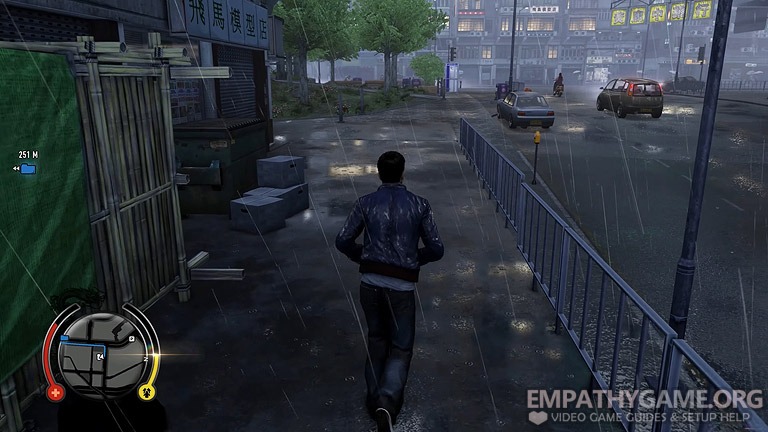
Sleeping Dogs: Definitive Edition succeeds because its best elements support one another. Wei’s undercover predicament gives meaning to his criminal relationships, the concentrated Hong Kong map maintains a satisfying pace, and martial-arts combat makes ordinary confrontations feel like miniature action-film sequences. Environmental takedowns, enemy-specific tactics, and spectacular vehicle hijacks provide the mechanical personality that separates it from more conventional open-world crime games.
Its shortcomings are equally clear. Gunplay lacks depth, vehicle handling can be imprecise, and some side activities depend on repetition rather than invention. Progression is enjoyable but occasionally uneven, while the additional story episodes are entertaining without consistently matching the quality of the main campaign. The visual improvements also cannot completely conceal the original game’s aging animation and camera behavior.
Players looking for a vast simulation, realistic driving, complex character builds, or branching narrative decisions may find the adventure restrictive. Those interested in Hong Kong crime cinema, satisfying close-quarters combat, distinctive urban exploration, and a focused story about conflicting loyalties are much better served.
Sleeping Dogs does not need the largest world or the greatest number of activities to establish its identity. Its memorable characters, tightly connected environments, and exhilarating hand-to-hand encounters make Hong Kong a place worth exploring long after the novelty of its individual mechanics has faded.
Sleeping Dogs: Definitive Edition Pros & Cons
Sleeping Dogs: Definitive Edition PC System Requirements
OFFICIAL WINDOWS PC REQUIREMENTS:
MINIMUM:
OS: Windows Vista / 7 / 8, 64-bit (historical official specification; see modern-Windows note below)
CPU: Intel Core 2 Duo 2.4 GHz or AMD Athlon X2 2.7 GHz
RAM: 4 GB
GPU: DirectX 10/11-compatible; ATI Radeon HD 3870 or better, NVIDIA GeForce 8800 GT or better with 512 MB VRAM, or Intel HD Graphics 2500 or better
DirectX: Version 10
Storage: 20 GB available space
Sound Card: DirectX-compatible sound card
RECOMMENDED:
OS: Windows Vista / 7 / 8, 64-bit (historical official specification; see modern-Windows note below)
CPU: Intel Core i5-2300 or AMD Phenom II X4 940 or better
RAM: 8 GB
GPU: DirectX 10/11-compatible; AMD Radeon HD 7750, NVIDIA GeForce GTX 560 or better with 1 GB VRAM, or Intel HD Graphics 4000 or better
DirectX: Version 11
Storage: 20 GB available space
Sound Card: DirectX-compatible sound card
Additional PC Performance and Setup Notes
Modern Windows: The published requirements describe supported operating systems at release, not a new recommendation to install an obsolete version of Windows. The modern Steam client requires Windows 10 or later. Windows 10/11 systems should use up-to-date graphics drivers and test the game normally before trying unofficial compatibility adjustments.
Graphics and frame pacing: Definitive Edition supports standard widescreen displays and includes an in-game benchmark and PC graphics options. Test performance in busy, rain-soaked city scenes as well as quiet interiors; reducing expensive anti-aliasing, ambient-occlusion, or shadow effects may help on weaker hardware. Some in-engine cutscene frame pacing and display quirks are documented by the community even when ordinary gameplay runs smoothly.
Unofficial fixes and mods: The PCGamingWiki Definitive Edition page documents settings, known PC issues, save locations, and links to community fixes. These are not official Square Enix patches. Verify that any fix explicitly supports Definitive Edition and your Steam or GOG build, and keep backups of saves and changed files before installing it. A 16:9 widescreen patch is not required for this edition.
Official Trailer
Note: This official PlayStation launch trailer shows the Definitive Edition’s Hong Kong setting, undercover story, combat, and remastered presentation; the guide above covers Windows-specific purchase, DLC, installation, and system requirements.
Frequently Asked Questions
Is Sleeping Dogs: Definitive Edition worth playing in 2026?
Yes. Its Hong Kong setting, undercover crime story, and martial-arts combat still make it a distinctive open-world adventure. The driving, gunplay, and some PC presentation issues show their age, but players who enjoy story-driven crime games with satisfying close-quarters fighting have plenty to appreciate.
Is Sleeping Dogs connected to the True Crime games?
Sleeping Dogs began development as True Crime: Hong Kong before Square Enix acquired the project and released it under a new name. However, the finished game is a standalone story rather than a direct sequel to True Crime: Streets of LA or True Crime: New York City. No knowledge of those games is necessary.
Does Sleeping Dogs: Definitive Edition have multiplayer or co-op?
No. It is a single-player game without online co-op, local co-op, split-screen, LAN multiplayer, or competitive PvP. The Social Hub includes score comparisons and leaderboards on supported services, but players cannot explore Hong Kong together.
Can you change the difficulty in Sleeping Dogs: Definitive Edition?
No. The game does not provide selectable Easy, Normal, or Hard difficulty settings. Combat becomes more manageable through unlocked moves, increased maximum health, equipment bonuses, and improved counterattack timing rather than changing a difficulty option.
Does Sleeping Dogs have multiple endings or story choices?
No. Wei Shen’s main storyline follows a fixed narrative with one principal ending. Dialogue interactions and side activities add variety, but they do not create branching story paths or alternative endings based on whether Wei behaves more like a police officer or a Triad member.
Can you keep playing Sleeping Dogs after finishing the story?
Yes. Completing the final mission returns Wei to Hong Kong’s open world, where you can continue exploring, collecting items, purchasing vehicles, finishing remaining side activities, and playing eligible bonus content. You do not need to complete every optional activity before the final mission.
Does Sleeping Dogs: Definitive Edition have New Game Plus?
No official New Game Plus mode is included. However, you can replay completed main-story missions and street races through the pause menu’s Social Hub, including attempts to improve previous scores. Police cases and many one-time side activities cannot be replayed through the same system.
How long does it take to beat Sleeping Dogs: Definitive Edition?
The main campaign typically takes around 14–16 hours. Completing a substantial amount of side content can extend that to roughly 20–25 hours, while collecting everything and pursuing full completion may take 35–45 hours or longer. The included bonus stories add further playtime.
Should you play the Sleeping Dogs DLC before or after the main story?
Finishing the main campaign first is the safest choice for understanding the characters and avoiding story-context confusion. Year of the Snake is particularly suited to playing afterward, while Nightmare in North Point is a largely self-contained supernatural adventure. Zodiac Tournament and several other bonus missions are integrated into the main campaign and can be completed as they become available.
Why can’t I find the Zodiac Tournament DLC in the main menu?
Zodiac Tournament is integrated into the main-story world rather than presented as a separate main-menu campaign. Continue progressing through Wei’s story and relevant martial-arts activities until the tournament invitation and map marker become available. Nightmare in North Point and Year of the Snake are the separate DLC stories accessed directly from the main menu.
What is the difference between Cop XP, Triad XP, and Face XP?
Cop XP unlocks police-related abilities and utility upgrades, while Triad XP develops Wei’s combat skills. Face XP represents his reputation around Hong Kong and unlocks access to better merchandise, vehicles, discounts, and combat advantages. These three progression systems operate independently, so advancing one does not automatically raise the others.
How do you earn more Triad XP in Sleeping Dogs?
Use varied combat techniques during story missions, including counters, combos, environmental takedowns, and other high-scoring attacks. If your Triad level remains low after completing the campaign, replay missions through the Social Hub and improve your previous Triad scores. Only the additional experience above your earlier result is added to your progression.
Why do I lose Cop XP during missions?
Damaging civilian vehicles, harming innocent pedestrians, or causing unnecessary property damage can reduce your Cop score during missions and police cases. Completing the objective does not automatically guarantee the maximum reward. Drive carefully and minimize collateral damage when pursuing Cop upgrades; replayable missions also provide opportunities to improve previous scores.
What is the Face meter, and how is it different from Face XP?
Face XP permanently raises Wei’s reputation level, while the Face meter fills temporarily during combat when he performs effective or intimidating attacks. Once filled, it activates short-lived fighting advantages that improve as his Face level increases. Completing favors and street races helps raise Face XP, but the combat meter must be built during individual encounters.
How do you unlock new martial-arts moves in Sleeping Dogs?
Find the hidden Jade Statues throughout Hong Kong and return them to Sifu Kwok at the martial-arts school in North Point. Each returned statue allows Wei to learn another fighting technique. These moves complement the separate Cop and Triad skill trees, making statue collection particularly useful before tackling difficult combat challenges.
What do Health Shrines do in Sleeping Dogs?
Praying at the red Health Shrines scattered around Hong Kong permanently increases Wei’s maximum health. Every five shrines visited provide a 10% maximum-health increase, represented by an additional blue portion of the health meter. Collecting them early makes extended fights and demanding missions more forgiving.
How do you counter enemies and win difficult melee fights?
Watch for enemies flashing red and time your counter input as their attacks begin. Avoid repeating only light punches: combine counters, heavy-strike finishers, grapples, and environmental takedowns using objects highlighted in red. Against large groups, maintaining space and reacting to incoming attacks is generally more reliable than committing to long combinations while surrounded.
How do you beat Death by a Thousand Cuts in Sleeping Dogs?
This optional Triad Enforcer challenge becomes difficult because armed enemies can inflict a damaging status effect, making repeated hits especially dangerous. Consider dropping the starting cleaver to make unarmed counters easier, keep moving to avoid being surrounded, and pick up fallen knives to throw at dangerous opponents. Additional martial-arts moves, health upgrades, and temporary food bonuses can help considerably.
How do Drug Busts and security cameras work?
First, defeat the gang members guarding a Drug Bust location and hack the nearby security-camera control box. Then return to a safehouse, use the television surveillance system, select the corresponding camera feed, and identify the drug supplier so police can arrest them. Clearing the enemies and hacking the camera alone does not finish the entire bust.
Is there fast travel in Sleeping Dogs: Definitive Edition?
Yes. Hong Kong’s taxis provide paid fast travel to selectable map destinations. Approach a taxi, hold the appropriate interaction button to hire it, and choose where you want to go. This is useful for travelling between distant districts without repeatedly driving across the entire city.
How do you perform an Action Hijack between moving vehicles?
While driving close to another vehicle, activate and hold the Action Hijack control to prepare Wei’s jump. Position your vehicle alongside the target, then release and press the control again when the directional arrow turns green. Wei will leap between the moving vehicles, allowing you to take control of the target without stopping it first.
How do you unlock and store cars in Sleeping Dogs?
Vehicles can be purchased from dealerships around Hong Kong and collected from parking lots, which serve as garages for your owned vehicles. Cars are divided into performance classes, and street races require appropriate vehicle classes. Higher Face levels help unlock access to more expensive vehicles, so reputation progression is useful for players interested in racing.
Do clothing and outfits provide gameplay bonuses?
Yes. Certain clothing items, matching sets, and special outfits grant benefits such as improved experience gains, combat advantages, or other character bonuses. Outfits can be purchased or unlocked and changed through the wardrobe in Wei’s safehouse. Clothing is therefore more than cosmetic, especially when working toward particular experience levels.
Why can’t I find the last lockboxes in North Point?
Two lockboxes in the Victoria Point area count toward North Point’s collectible total. If the North Point counter shows missing boxes despite searching the main neighborhood, check Victoria Point before assuming the game has failed to register a collectible. This location distinction is documented in Feral Interactive’s official Definitive Edition FAQ.
Can you play Sleeping Dogs: Definitive Edition with a controller on PC?
Yes. The Windows release supports gamepads as well as keyboard and mouse controls. Xbox-style controllers are a straightforward choice, while some PlayStation or third-party controllers may require Steam Input or device-specific configuration. If a controller is not recognized, check the game’s input settings and any controller-translation options before installing unrelated software.
Can Sleeping Dogs: Definitive Edition run above 60 FPS on PC?
Yes. PC gameplay supports frame rates above 60 FPS on suitable hardware, with graphics and frame-limiting options available. However, some in-engine cutscenes have separate frame-pacing behavior and may appear uneven despite smooth gameplay. A high frame-rate counter therefore does not guarantee that every cinematic sequence will display equally smoothly.
What should you try if Sleeping Dogs stutters or crashes on PC?
First verify the game installation through Steam or GOG Galaxy, update your graphics drivers, and ensure that a laptop is using its dedicated GPU when available. Reducing demanding graphics settings, testing a different display mode, or using a reasonable frame-rate limit may help with some problems. Test the unmodified game before experimenting with unofficial fixes, since individual hardware and software configurations can behave differently.
Does Sleeping Dogs: Definitive Edition work on Windows 10 and Windows 11?
The Windows release can run on modern 64-bit Windows systems, but its published requirements originally targeted older versions of Windows. Compatibility is not guaranteed on every Windows 10 or Windows 11 configuration, particularly where unusual display, graphics-driver, or input problems occur. Use the legitimate store installation and test the default configuration before attempting version-specific community adjustments.
Still have questions? Check the Sleeping Dogs Reddit community or Steam Discussions for Sleeping Dogs: Definitive Edition for additional gameplay advice, troubleshooting discussions, and help from other players.
Sources & References
Key factual and technical information in this guide was checked against relevant official and community sources, including:
- Steam — Sleeping Dogs: Definitive Edition — Windows release date, Steam features, Valve’s Steam Deck rating, reviews, and official PC system requirements
- GOG — Sleeping Dogs: Definitive Edition — DRM-free ownership, offline installation, DLC contents, and GOG platform features
- Feral Interactive — Definitive Edition FAQ — included DLC packs, bonus-story access, and the Mac edition’s support information
- PCGamingWiki — Definitive Edition — PC settings, region restrictions, version-specific technical notes, and community fix references
- SkookumScript technical FAQ — confirmation of United Front Games’ proprietary engine technology and scripting
- Metacritic — Definitive Edition — edition-specific critic reception and platform labeling
Similar Games Like Sleeping Dogs: Definitive Edition




Found something worth playing through DecideGame?
DecideGame.com is an independent gaming project run by Editor Zero. If this guide helped you discover a game, solve a problem, or find useful information, you can support DecideGame.com and help keep new and updated game guides coming.
DecideGame — PC Game Guides, Reviews & Setup Help