
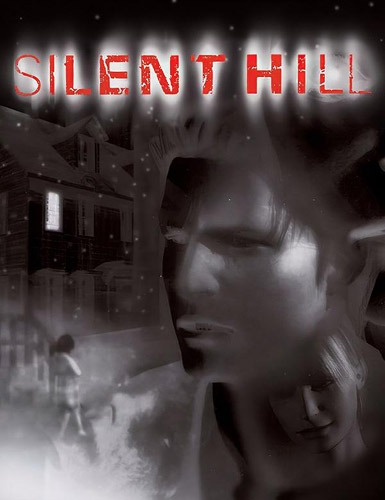
📅 Game released: 1999
Silent Hill (1999) follows Harry Mason into a fog-covered town where searching for his missing daughter becomes a disturbing survival-horror mystery. This PC guide explains the original game’s official download status and how to play a lawfully owned PS1 copy with DuckStation or RetroArch, including emulator requirements, BIOS, controller setup, widescreen, and compatibility.
 By Editor Zero — independently researched, edited, and maintained.
Last updated: 15 November 2026
Last reviewed: 15 November 2026
Table of Contents
- Quick Facts
- Official PC Stores, Download & Installation
- Silent Hill (1999) Review
- Pros & Cons
- PC System Requirements
- Frequently Asked Questions
- Similar Games
Silent Hill (1999) Quick Facts
- Game: Silent Hill / Silent Hill 1 / Silent Hill (1999)
- Developer: Konami Computer Entertainment Tokyo (Team Silent)
- Publisher: Konami
- Genre: Survival Horror, Horror, Puzzle-Solving
- Release: February 24, 1999 (North America, PS1); August 1, 1999 (Europe)
- Platforms: PS1, PS3, PSP, PS Vita
- Modes: Single-player only; no co-op or multiplayer
- Recommended PC emulation: Original PS1 version through DuckStation; RetroArch with Beetle PSX HW is an alternative
- Controls: Original PlayStation digital controls and DualShock support; modern controller or keyboard mapping through an emulator
- Engine: Not officially confirmed as a named engine
- Community: Official Konami Game Page, Silent Hill Reddit Community, Silent Hill Memories PC Emulation Guide
- PC modding: No official native PC mod support. DuckStation offers emulator-level texture replacement, graphics options, and community-created patches; compatibility varies by game revision and configuration
- Metacritic score: 86/100 (original PS1 release)
- IGN score: 9/10 (original PS1 release)
- GameSpot score: 8.2/10 (original PS1 release)
- Steam user reception: Not available on Steam
Official PC Store Status, Download & Installation
👇 Silent Hill (1999) has no official native Windows download. Use the information below to understand legitimate ownership options, choose the appropriate PlayStation emulator, and configure an owned game copy for Windows PC.
- Official PC availability: The original Silent Hill was developed for the first PlayStation. Konami has not published a native Windows version through Steam, GOG, Epic Games Store, Microsoft Store, or a dedicated PC launcher. Other Silent Hill games sold on PC are separate products and do not include this original release.
- Best console version: The original PlayStation 1 release is the correct version to emulate. Silent Hill did not receive a separate PS2, GameCube, Xbox, or PSP-native remake or port. Later PSone Classics releases for PS3, PSP, and PS Vita delivered the original PlayStation game through Sony’s compatibility software rather than introducing substantially different versions.
- Recommended emulator: DuckStation is the preferred option for most Windows players. It has a dedicated interface, controller mapping, memory-card support, several graphics renderers, internal-resolution scaling, save states, and game-specific settings. The official Windows installer and portable builds are available through the DuckStation project’s release page.
- Alternative emulator: RetroArch supports the original PlayStation through cores including Beetle PSX and Beetle PSX HW. The latter provides hardware-accelerated rendering and graphical enhancements. RetroArch is useful for players maintaining a multi-console emulation library, although its core and firmware setup takes additional configuration.
- Game ownership: A second-hand original PlayStation disc is an ownership option. Historic PSone Classics purchases may remain accessible to eligible PlayStation accounts on supported legacy devices, subject to Sony’s regional and account restrictions. An original PlayStation digital purchase does not automatically provide a Windows-compatible game installation.
- Prepare your game copy: Create a disc-image backup from a legally obtained PS1 disc where permitted by applicable law. DuckStation supports PlayStation images including BIN/CUE and CHD. For an ordinary BIN/CUE backup, keep the .bin track file and its matching .cue file together, and load the .cue file so the emulator can identify the disc structure correctly. These are PlayStation disc-image formats, not Windows installation packages.
- PlayStation BIOS: DuckStation requires a PS1 or compatible PS2 BIOS image to start PlayStation games. The emulator does not distribute Sony’s proprietary BIOS. Follow the official DuckStation project documentation and supply a firmware backup obtained from your own compatible console, in accordance with applicable law. During initial setup, configure the BIOS location and use automatic region detection where appropriate.
- Regional versions: The North American NTSC release operates within the PlayStation’s 60 Hz video standard, while the European PAL release uses a 50 Hz standard. For players who legally own both, the North American edition can be a straightforward English-language choice for NTSC timing. Regional language differences and disc-specific compatibility still matter, so use the region appropriate to your owned copy rather than assuming all releases are identical.
- DuckStation installation: Download the official Windows build, install or extract it, and complete its first-run configuration. Add the folder containing your owned PlayStation game backup, configure the controller under the emulator’s controller settings, and start Silent Hill from the game list. Begin with the emulator’s default compatibility settings before increasing internal resolution or enabling other enhancements.
- Graphics compatibility: Use the original 4:3 aspect ratio initially. Higher internal resolution can improve 3D image clarity, but optional PGXP geometry correction, widescreen rendering, and certain game patches can cause freezes or incorrect geometry in Silent Hill. If a scene hangs, restore the default settings or switch temporarily to the software renderer. Additional practical settings are explained in the System Requirements section below.
- Independent game-file sources: This guide does not provide or direct readers to third-party Silent Hill game images or BIOS archives. Anyone choosing to search for game files independently is responsible for verifying their source, permissions, and compliance with copyright laws. Owning a physical game does not automatically authorize downloading someone else’s copy, and the availability of a file online does not establish permission to use it.
- Remake distinction: Konami has separately announced a remake of the original Silent Hill with Bloober Team. This does not turn the 1999 PlayStation release into a native Windows product. Likewise, the modern Silent Hill 2 remake and Silent Hill f are different games and should not be mistaken for PC editions of Silent Hill 1.
 Get DuckStation from the Official Project
Get RetroArch from the Official Website
 View the Original Silent Hill on Konami

Silent Hill (1999) Review
A father’s search turns familiar streets and buildings into a carefully constructed nightmare.
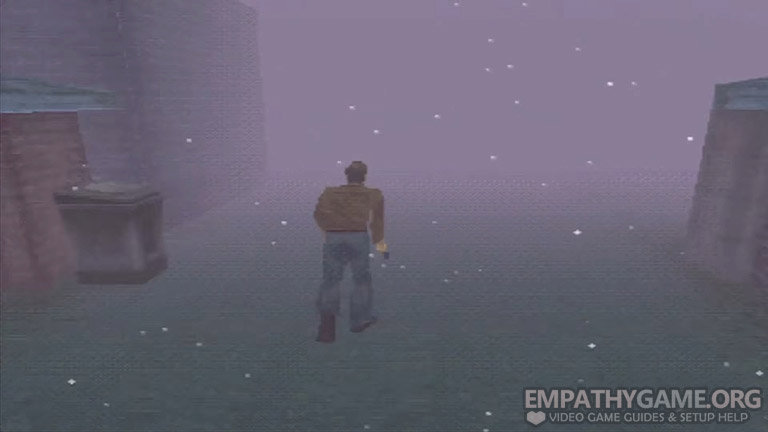
In Silent Hill (1999), the most frightening thing is often a doorway that should lead somewhere familiar. Harry Mason arrives in a fog-covered resort town after a car crash, only to find that his daughter Cheryl has disappeared. Even a simple journey becomes uncertain. Streets end in collapsed roads, a radio breaks into static when something approaches, and familiar buildings seem capable of changing their layout while Harry is inside.
The original PlayStation game builds fear without relying on constant attacks. Exploration, puzzles, sound, and the layout of the town all contribute to the same uneasy experience. There is friction too. Harry moves awkwardly, melee attacks can be difficult to judge, and some clues barely explain what is expected. Still, dismissing the controls as merely outdated misses the decisions underneath them. Silent Hill rewards attention, patience, and knowing when avoiding a creature is wiser than fighting it. It will not suit everyone, but it gives the game a distinctive identity.
The Town Makes Every Route Feel Uncertain
Silent Hill appears to be an ordinary town with streets, intersections, and a map that should make navigation straightforward. Then a road drops away, nearby doors are locked or jammed, and an overlooked alley becomes the only useful way forward. This is no open world; each area has a planned route. The clever part is that reaching it involves investigation rather than simply following directions.
Harry’s paper map is central to that process. He marks doors he cannot open and records other discoveries, so each detour provides information. Reaching Midwich Elementary School involves learning which streets connect, which entrances are useless, and where an earlier obstruction might matter. The approach feels logical. The map does not solve the navigation problem; it helps the player decide where to investigate next.
Fog complicates those journeys. An Air Screamer may be heard before it can be seen, and crossing an exposed street can turn into a hurried escape. Running past threats often makes more sense than wasting ammunition. But that choice carries a risk, since a collapsed road or wrong turn may force Harry back toward danger. Detours can become tiring, yet recognizing a familiar corner after wandering through the fog brings real relief.
Midwich and Alchemilla Frighten in Different Ways
Midwich Elementary School takes the same uncertainty indoors. Classrooms, hallways, and a music room should feel ordinary, but the school never allows them to feel completely safe. Progress comes through checking doors, studying the map, searching rooms, and interpreting clues while disturbing sounds make lingering uncomfortable. Ordinary tasks become disturbing as the building grows less recognizable.
The piano puzzle captures both the appeal and frustration of this design. A poem about birds hints at the colors and positions of keys that produce no sound. The wording must be understood before the sequence makes sense. It is more interesting than entering a code found on a nearby wall, but it can seem needlessly obscure when the connection is missed. The satisfaction comes from interpreting clues, not from mastering a mechanical trick.
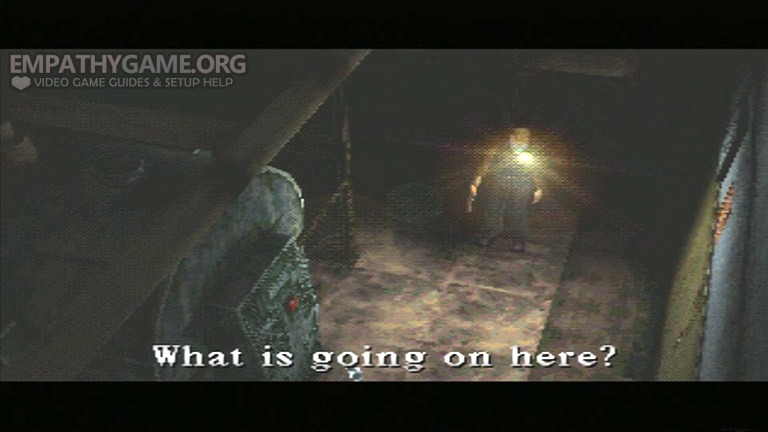
Alchemilla Hospital takes a different approach. Its ordinary corridors are so quiet that the lack of immediate danger becomes suspicious. After the school, that stillness suggests another attack. Instead, one of the hospital’s best unsettling moments comes from an elevator that suddenly offers a fourth floor that should not exist. Nothing needs to jump out. A familiar interface has contradicted the building itself, making the surroundings feel unreliable.
The hospital’s decayed version then replaces anticipation with persistent pressure. Similar-looking rooms and narrow passages slow exploration, while Puppet Nurses make encounters difficult to avoid cleanly. Rechecking corridors can feel laborious, especially when rooms begin to blur together. The contrast with the earlier silence shows an impressive grasp of pacing. Silent Hill can unsettle the player by withholding danger before surrounding them with it.
Combat Has More Options Than Its Awkwardness Suggests
Harry is an ordinary father, and the combat rarely lets anyone forget that. Turning toward a threat takes effort, melee range is difficult to judge, and some camera angles conceal enemies preparing to attack. The handgun helps keep a creature at a distance, while the shotgun is reassuring when retreat is difficult. Neither makes Harry feel especially capable. A fight can end successfully without ever feeling smooth or satisfying, but that vulnerability suits the setting.
There is more control beneath those stiff animations than a first impression suggests. Harry can sidestep, strafe, retreat while aiming, and change his position rather than remain planted in front of an enemy. Lowering and raising a firearm can also reload it without opening the inventory. Learning them does not modernize combat, but it reveals room for positioning and timing rather than pure ammunition spending.
Enemy behavior gives those choices a purpose. Air Screamers can punish frantic movement, so recognizing the timing of a swoop makes escaping less chaotic. Against the smaller enemies at Midwich, keeping some distance and waiting for an attack may create an opening. The camera can still interfere. What matters is that observing a creature can sometimes be more valuable than trying to overpower it.
The flashlight and radio introduce another judgment. Static warns that something is nearby without showing exactly where it is. Light makes searching and aiming easier, but turning the flashlight off can make Harry less noticeable to some creatures. Visibility may be essential in a tight corridor, whereas running away often works better on an open street. Information and exposure remain closely connected.
Survival pressure depends on play style. Thorough searching on Easy can supply generous ammunition; higher difficulty or a habit of fighting every enemy makes conservation more important. Uncertainty about what lies ahead often creates more tension than actual shortages. Boss encounters are less successful at balancing these elements. They can become exercises in positioning and endurance rather than interesting battles. Silent Hill makes confrontation frightening more consistently than it makes combat enjoyable.
Sound and Distorted Spaces Carry the Horror
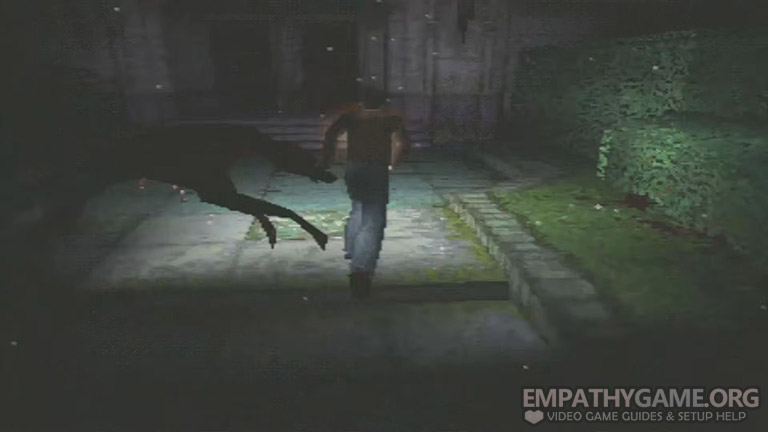
Akira Yamaoka’s sound design may be the game’s strongest tool. Scraping machinery, harsh industrial rhythms, distant impacts, and stretches of silence give empty corridors a strange sense of activity. A noise may suggest an enemy, an unseen mechanism, or nothing identifiable. Because the radio has taught the player to listen for danger, every unexplained sound becomes difficult to dismiss.
The Otherworld transformations deepen that uncertainty. Familiar rooms return with rusted surfaces, stained walls, and chain-link barriers, while a siren can suggest that another change is approaching. The disturbing part is not simply how unpleasant these environments look. It is remembering where a room once led and discovering that this knowledge no longer feels dependable. The game turns familiarity against the player, making its changing environments especially memorable.
The PlayStation presentation has aged visibly. Character models are coarse, textures distort, visibility is limited, and some voice acting weakens conversations that matter. But the direction uses those limitations effectively. Fog conceals shapes before they can be understood, darkness hides the proportions of rooms, and sound suggests threats the graphics never show. Low fidelity is not inherently scarier, but here the visual limitations and deliberate atmosphere reinforce each other.
A Simple Search Leads Into a Difficult Story
Harry’s motivation stays easy to understand. Cheryl is missing, and he refuses to leave without her. That gives the mystery a human center. Harry is not a detective equipped to explain the town or a soldier prepared to fight through it. His uncertainty mirrors the player’s own, keeping the strange events connected to something more personal than surviving another encounter.
The people he meets rarely make things clearer. Cybil Bennett suggests practical help might be possible, while Dahlia Gillespie seems evasive. Dr. Michael Kaufmann and nurse Lisa Garland hint at a history extending beyond Harry’s search. Lisa is especially effective because her vulnerability brings a human presence into an otherwise hostile environment. Uneven voice performances sometimes undermine these scenes, but the characters give the mystery an emotional foundation.
The story is strongest when it trusts locations, notes, and encounters to raise questions. It is less convincing when the plot finally attempts to connect everything. Some revelations arrive abruptly, and important relationships between events remain difficult to follow. Ambiguity helps, but some missing explanations feel accidental. Silent Hill is better at making the player sense that something is wrong than at explaining exactly why.
Nowhere and the Endings Reward Close Attention
Near the conclusion, Nowhere changes the rules of exploration. The annotated maps that made earlier buildings manageable are gone. Previously visited rooms appear in a strange arrangement, and progress depends on remembering entrances, keys, and connections without the usual reference points. Some objectives are not far apart, yet finding the right route can feel like crossing an enormous labyrinth.
It is an interesting reversal. The game spends hours teaching methodical exploration, then removes the tool that supported it. That makes sense as horror, but item searches and return journeys become exhausting. Purposeful disorientation and needless backtracking become difficult to separate. Nowhere shows both the imagination of the level design and its willingness to test the player’s patience.
The endings introduce another uncertainty. Certain outcomes depend on encounters and investigations that seem optional, without a clear signal that they may change the conclusion. A secondary thread in the resort area matters far more than its presentation implies. This rewards another playthrough, but a first ending can feel incomplete. The game expects attention without always showing which details deserve it most.
Next Fear Is More Than a Victory Lap
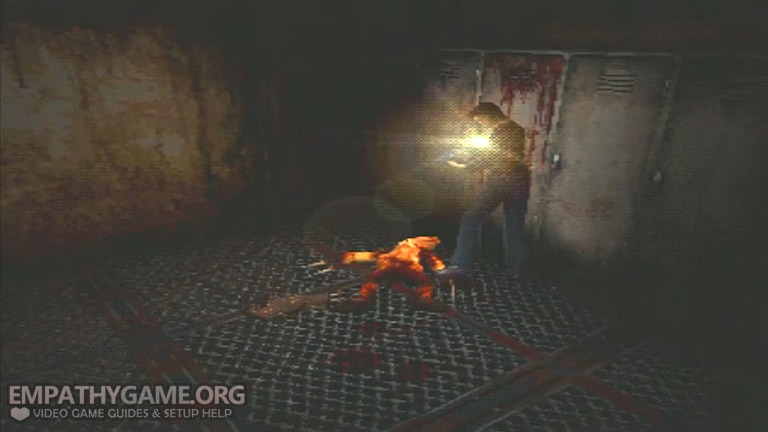
Completing Silent Hill unlocks Next Fear, its replay mode for pursuing other endings and discovering special equipment. The Chainsaw and Rock Drill provide entertaining alternatives to ordinary weapons, while the hidden UFO ending offers a playful break from the oppressive mood. Revisiting familiar threats has its own appeal.
Next Fear is not simply an easier journey with extra equipment. It skips the introductory nightmare and begins at the café, changing the opening’s rhythm. It also raises the difficulty one level until Hard is reached, so familiar enemies may be tougher on a return visit. New tools do not remove the need for caution.
Replay value has limits. Puzzle answers stay the same, the main route is largely fixed, and the mystery becomes less unsettling once the player knows what to expect. Replays mainly reward alternate endings, unlockables, and overlooked details. Another journey offers a different understanding of the adventure rather than an entirely different adventure.
Final Verdict
Silent Hill succeeds because its important systems support the same unsettling idea: familiar places cannot be fully trusted. The map encourages careful observation, the radio makes listening an act of survival, and the Otherworld undoes the confidence built from exploring a location. Midwich asks the player to interpret strange clues, Alchemilla turns an elevator button into a disturbing discovery, and Nowhere eventually removes the map altogether. Together, these choices make the horror unusually coherent.
That does not excuse every frustration. Melee combat can be unreliable, the camera sometimes creates confusion without adding tension, and the story can withhold information to the point of obscurity. Understanding Harry’s movement improves encounters without making combat responsive. Exploration has a similar trade-off: solving a difficult riddle or finding a hidden route is deeply satisfying, while the trial and backtracking needed to get there can become excessive.
For anyone who enjoys patient exploration, psychological unease, and horror built around uncertainty, those compromises may be worthwhile. Players looking for satisfying gunplay, generous directions, or a cleanly resolved mystery may find the rough edges harder to forgive. Silent Hill’s lasting achievement is the way it makes a school corridor, an elevator button, or a distant sound more disturbing than a monster standing in plain sight.
Silent Hill (1999) Pros & Cons
- Pro: Fog, limited visibility, unsettling sound design, and shifting environments create psychological tension without relying entirely on combat or scripted scares.
- Pro: Exploration through Midwich Elementary School, Alchemilla Hospital, and the surrounding town combines environmental clues, unusual puzzles, locked routes, and meaningful backtracking.
- Pro: The radio’s warning static, flashlight, limited ammunition, and vulnerable protagonist make encounters feel dangerous even when enemies are mechanically simple.
- Pro: Multiple endings, optional decisions, and unlockable equipment provide reasons to revisit the campaign.
- Pro: DuckStation provides a practical route to modern displays and controllers while retaining the original PS1 presentation, with optional visual enhancements for players willing to configure them carefully.
- Con: Movement, aiming, camera behavior, and melee combat can feel awkward compared with modern third-person survival-horror games.
- Con: Some puzzles offer limited guidance, and the dated map and interaction systems can make navigation frustrating without careful attention.
- Con: No native Windows release or ordinary official PC purchase option exists, while emulation requires compatible firmware and an appropriately obtained game copy.
- Con: DuckStation graphics enhancements can introduce freezes, clipping, or visual artifacts, particularly when PGXP and widescreen modifications are combined.
Silent Hill (1999) PC System Requirements
There are no official native Windows PC system requirements for Silent Hill (1999) because Konami never released the original game as a Windows product. The information below concerns the PC hardware and software needed to run a PlayStation emulator; it must not be confused with official requirements issued by Konami for the game.
DUCKSTATION EMULATOR — PC HOST REQUIREMENTS AND COMPATIBILITY
Operating System: Windows 10 (version 1809 or newer) or Windows 11 for current DuckStation Windows builds
CPU: x64 processor with SSE4.1 support for the standard Windows x64 build; a separate SSE2 build is available for older compatible x86 processors
GPU: Graphics hardware compatible with Direct3D 11 Feature Level 10.0, OpenGL 3.1, OpenGL ES 3.1, or Vulkan 1.0 (one supported backend is sufficient)
RAM: No official Silent Hill-specific RAM requirement exists; emulator performance depends on the host system and enabled enhancements
Storage: Sufficient space for the emulator, BIOS, owned PlayStation disc image, and save files; Konami publishes no official Windows installation size for this release
Firmware: Compatible PlayStation BIOS image supplied independently from hardware you own
Game Media: Legally prepared original PS1 disc image, such as a BIN/CUE backup or compatible CHD
Controller: Compatible Windows gamepad or keyboard configured through DuckStation
Internet: Not required for the original single-player gameplay once the emulator and necessary local files are configured
These are emulator compatibility guidelines, not independently measured minimum or recommended hardware specifications for Silent Hill. Basic PlayStation emulation is generally much less demanding than modern 3D PC gaming, but internal-resolution scaling, enhanced geometry, texture replacement, and advanced rendering options can increase GPU or CPU requirements.
Additional PC Performance and Setup Notes
Recommended initial graphics configuration: In DuckStation, start with the original 4:3 aspect ratio, standard emulation speed, and default graphics compatibility options. Keep PGXP geometry correction, widescreen patches, and unofficial frame-rate modifications disabled initially. A gamepad with PlayStation-style button mapping generally provides a more natural experience than keyboard controls. Increase internal resolution gradually after confirming that gameplay, dialogue, transitions, and saves work correctly.
Optional 16:9 widescreen setup: The original PlayStation game was designed for a 4:3 display. DuckStation offers a built-in widescreen-rendering option rather than requiring a separate Windows game patch. Install the official DuckStation build, open Silent Hill’s game properties, navigate to Graphics > Rendering, select a 16:9 aspect ratio, and enable Widescreen Rendering. Where available, enable Force 4:3 for FMVs to preserve the original shape of pre-rendered videos. This expands the rendered 3D view rather than merely stretching a 4:3 picture, but it may expose scenery outside the intended camera framing or cause instability. Disable widescreen rendering and return to 4:3 if problems appear.
Important Silent Hill-specific issue: Community documentation identifies problematic scenes around Balkan Church, the drawbridge, and later story sequences when PGXP geometry correction or widescreen enhancements are enabled. If the emulator freezes, create or retain a safe in-game save, disable PGXP Geometry Correction and widescreen options, or temporarily select the software renderer through the game’s graphics properties. Restart or reload as necessary and test the scene without enhancements. The Silent Hill Memories emulation guide documents these specific issues and their reported workarounds.
Rendering and frame rate: Higher internal resolution sharpens polygon edges but does not remake the original low-resolution textures, animations, or environment assets. Optional high-frame-rate patches and emulated CPU overclocking can alter timing and introduce audio problems. For a first playthrough, keeping the original game timing and conservative graphics settings is the safer choice.
Audio, saves, and controller checks: Preserve the original audio effects and music, because radio static, footsteps, metallic noises, and distant sounds are essential to Silent Hill’s atmosphere. Use normal in-game memory-card saves as the primary progress record and save states as an additional convenience. Back up the emulator’s memory-card files before changing major settings or experimenting with community patches.
RetroArch alternative: Install RetroArch, obtain the Beetle PSX HW core through its Core Downloader, configure the firmware location, and open your owned PS1 disc image with that core. The official RetroArch PS1 setup guide explains core installation, supported disc-image formats, and relevant firmware configurations. Keep its initial aspect ratio at 4:3 and enable optional graphics enhancements only after verifying normal operation.
Official Trailer
Note: This archived copy of Konami’s original E3 1998 Silent Hill promotional trailer shows the early PlayStation presentation, disturbing environments, and atmospheric direction that defined the finished game. The video is an archival upload by Silent Hill Memories rather than a current publisher-channel upload. The written guide above covers the separate topic of running the original PS1 release on modern Windows systems.
Frequently Asked Questions
Is the original Silent Hill included in Silent Hill HD Collection?
No. Silent Hill HD Collection contains remastered versions of Silent Hill 2 and Silent Hill 3, not the original 1999 game. Purchasing the collection does not provide access to Harry Mason’s first adventure.
Is Silent Hill: Shattered Memories a remake of Silent Hill (1999)?
Shattered Memories is a reimagining rather than a faithful remake. It retains the premise of Harry Mason searching for his missing daughter but changes the narrative structure, introduces psychological profiling based on player behaviour, and removes traditional combat. It is a substantially different experience, not a replacement for the original game.
Should I play Silent Hill 1 before Silent Hill 3?
Preferably, yes. Silent Hill 3 is a direct narrative sequel to the first game, and understanding Harry Mason’s original story makes several later revelations and character connections more meaningful. Silent Hill 2 follows a largely separate storyline, so it can be enjoyed without completing Silent Hill 1 first.
Does Pyramid Head appear in the original Silent Hill?
No. Pyramid Head was introduced in Silent Hill 2 and is closely associated with James Sunderland’s story. The first game instead features creatures such as Air Screamers, Grey Children or Mumblers depending on the region, and various monsters found inside its schools, hospitals, and other locations.
How long does Silent Hill (1999) take to complete?
A first playthrough typically takes around 6–10 hours, depending on how thoroughly you explore and how much time you spend solving puzzles. Familiarity with the town can make subsequent runs considerably shorter, especially when pursuing alternate endings or unlockable equipment.
Is Silent Hill (1999) an open-world game?
Not in the modern open-world sense. Harry can explore interconnected streets and revisit accessible parts of Silent Hill, but collapsed roads, locked doors, scripted events, and inaccessible districts restrict progression. Schools, hospitals, sewers, and other major locations function more like interconnected survival-horror environments than freely explorable open-world areas.
Which difficulty should beginners choose in Silent Hill 1?
Easy is a reasonable starting point for players unfamiliar with classic survival horror, while Normal offers the intended balance for those comfortable with older combat systems. Hard increases enemy durability, damage, and aggression significantly. Difficulty is selected when starting a new game and cannot normally be changed during that playthrough.
Do Silent Hill 1 puzzles change with the difficulty setting?
No. Unlike some later Silent Hill games, the original does not provide separate puzzle difficulty settings. Puzzles have fixed solutions regardless of whether you choose Easy, Normal, or Hard, so selecting a lower combat difficulty will not simplify the riddles.
What do the markings on Harry’s map mean?
Harry automatically annotates maps as he explores, recording important clues and marking doors according to their accessibility. A squiggly mark generally indicates a jammed door that cannot be opened, while a solid line indicates a locked door that may require a key or another route. Checking these markings frequently helps prevent unnecessary backtracking.
Does the radio static attract monsters in Silent Hill?
No. The original PlayStation instruction manual explicitly states that monsters cannot hear the radio’s static. The noise is a warning system that changes when creatures are nearby, allowing Harry to detect threats even when fog, darkness, or the camera prevents him from seeing them.
Does turning off the flashlight help avoid enemies?
Yes. Some creatures have more difficulty detecting Harry when his flashlight is switched off, which can help him move past dangerous encounters. The trade-off is reduced visibility, poorer firearm accuracy, and an inability to examine certain objects or read maps in darkness, so keeping the light off permanently is impractical.
Should I kill every monster in Silent Hill 1?
No. Running past enemies is often more efficient, especially in outdoor areas where Harry has enough room to escape. Save ammunition for dangerous indoor encounters and bosses, use melee weapons when reasonably safe, and remember that clearing every street is not necessary for progression.
How do you save your progress in Silent Hill (1999)?
The original game uses specific save points represented by notepads with red clipboards scattered throughout the town and major buildings. Interacting with one allows you to save to a PlayStation memory card. DuckStation additionally supports emulator save states, but normal in-game saves are worth maintaining separately for reliability.
How do you solve the piano puzzle at Midwich Elementary School?
The clue is the poem about birds without a voice found in the school’s Music Room. Focus on the piano keys that produce no musical note, then use the birds’ colours and positions described in the poem to determine the correct order. You do not need musical knowledge to solve it, only careful interpretation of the riddle.
Can you get the Shotgun if you missed it in Midwich Elementary School?
Yes. If you miss the Shotgun during your exploration of Midwich Elementary, another opportunity to collect it appears in a side room of the Police Station in the shopping district. Missing its first location therefore does not automatically prevent you from obtaining the weapon.
Can you recover the Alchemilla Hospital map after entering the Nightmare Hospital?
No. The hospital map must be collected from behind the Reception counter during the ordinary hospital section. Once Harry progresses through the mysterious fourth-floor transition into the Nightmare Hospital, he cannot return to retrieve it, making this a permanently missable navigation aid.
Why is there no map for the area called Nowhere?
Nowhere deliberately combines rooms and corridors resembling earlier locations without following a normal, consistent building layout. The game does not provide an in-game map for this section. Players must navigate by recognising rooms, remembering connections, and keeping track of their own movements.
How many endings does Silent Hill (1999) have?
There are five endings: Good, Good+, Bad, Bad+, and the secret UFO ending. The four main endings depend on optional actions involving Dr. Kaufmann and Cybil Bennett, rather than dialogue choices alone. The UFO ending is a hidden bonus outcome available through a subsequent playthrough.
Can you save Cybil Bennett in Silent Hill 1?
Yes. Minor gameplay spoiler: collect the Plastic Bottle from Alchemilla Hospital’s Kitchen and use it to obtain the Unknown Liquid in the Director’s Office. Later, using that liquid on Cybil during the Lakeside Amusement Park encounter can save her and influence which ending you receive.
Does Silent Hill 1 have New Game Plus?
Yes. After completing the game and saving the results, you can load the completed file to begin a mode called Next Fear. It preserves eligible unlockables and allows you to pursue additional endings, while automatically increasing difficulty by one level on subsequent runs until reaching Hard.
Can you unlock additional weapons in Silent Hill (1999)?
Yes. Subsequent Next Fear playthroughs allow you to obtain special weapons such as the Chainsaw and Rock Drill, while the Katana and Hyper Blaster require particular ending achievements. These rewards provide additional replay value, but they are not necessary for completing the original campaign.
How do you unlock the UFO ending in Silent Hill 1?
First complete a Good+ ending, then begin a Next Fear run and collect the Channeling Stone from the Convenience Store in Old Silent Hill. Use it at five specific locations, ending at the Lighthouse, to trigger the hidden joke ending.
Are there differences between the American and European versions of Silent Hill 1?
Yes. Besides their NTSC and PAL display standards, the versions have a notable enemy difference: the European PAL release replaces the childlike Grey Children with Mumblers in several locations, including Midwich Elementary School. This means some gameplay footage and enemy descriptions may not match the exact regional version being played.
Still have questions?
Check the Silent Hill Reddit community, Silent Hill Memories game FAQ, or DuckStation community for additional gameplay, puzzle, compatibility, and emulator help.
Sources & References
Key factual and technical information in this guide was checked against relevant official and established gaming sources, including:
- Konami — Silent Hill Official Product Page — confirms the original game’s identity, Harry Mason’s premise, European release information, and PlayStation platform history.
- DuckStation — Official Project Documentation — documents emulator downloads, operating-system and CPU support, BIOS requirements, disc-image formats, controller features, and graphics capabilities.
- RetroArch — Official PlayStation Setup Guide — explains supported PS1 cores, firmware configuration, compatible disc-image formats, and alternative emulator setup.
- Silent Hill Memories — PC Emulation Guide — provides game-specific DuckStation configuration advice and documented community workarounds for widescreen and PGXP-related compatibility issues.
- Metacritic — Silent Hill (1999) — verifies the original PlayStation release’s critic aggregate and historical reception.
- GameSpot — Silent Hill (1999) — corroborates the original release date, developer, publisher, platform, and GameSpot review score.
- Video Games Chronicle — Silent Hill Remake Announcement — documents Konami’s announcement of a separate remake project developed with Bloober Team.
Similar Games Like Silent Hill (1999)
- Silent Hill 2 (2001)
- Silent Hill f
- Haunting Ground
- Resident Evil 1 HD Remaster
- Resident Evil Code: Veronica X HD
- Resident Evil 0 HD Remaster
Found something worth playing through DecideGame?
DecideGame.com is an independent gaming project run by Editor Zero. If this guide helped you discover a game, solve a problem, or find useful information, you can support DecideGame.com and help keep new and updated game guides coming.
DecideGame — PC Game Guides, Reviews & Setup Help