

📅 Game released: 2017
Hollow Knight is a hand-drawn, exploration-driven 2D action adventure in which a silent wanderer descends beneath Dirtmouth into the interconnected ruins of Hallownest, mastering precise combat and movement to uncover hidden paths. This PC guide compares official Steam, GOG and Xbox download options, the four included content packs, Game Pass and Steam Deck support, modding, system requirements, and practical setup advice.
 By Editor Zero — independently researched, edited, and maintained.
Last updated: 3 November 2026
Last reviewed: 3 November 2026
Table of Contents
- Quick Facts
- Official PC Stores, Download & Installation
- Hollow Knight Review
- Pros & Cons
- PC System Requirements
- Frequently Asked Questions
- Similar Games
Hollow Knight Quick Facts
- Game: Hollow Knight; Hollow Knight: Voidheart Edition is the Microsoft/Xbox edition name
- Developer: Team Cherry
- Publisher: Team Cherry
- Genre: Metroidvania, Platformer, Action-Adventure, Fantasy
- Release: February 24, 2017 (Windows PC); later releases on other platforms
- Platforms: Windows PC, macOS, Linux, Nintendo Switch, Nintendo Switch 2, PS4, PS5, Xbox One, Xbox Series X|S
- Content packs: Hidden Dreams, The Grimm Troupe, Lifeblood, and Godmaster — all included at no additional charge
- Modes: Single-player; no built-in cooperative or competitive multiplayer
- Cloud Access: Xbox Cloud Gaming through an eligible Game Pass plan; ownership and plan conditions apply
- Xbox Play Anywhere: Supported for the Microsoft digital edition on Windows PC and eligible Xbox consoles, with Xbox cloud saves
- Steam Deck: Verified
- Engine: Unity
- Community: Steam Discussions, r/HollowKnight, Official Support
- PC modding: Unofficial community mods; Lumafly is a community mod manager, not an official Team Cherry tool
- Metacritic score: 87/100 (PC)
- IGN score: 9.4/10 (PC review)
- OpenCritic average: 89/100
- Steam user reception: Overwhelmingly Positive overall
Official PC Stores, Download & Installation
👇 Compare the official Steam, GOG and Microsoft/Xbox PC editions before purchasing or downloading Hollow Knight, especially if you want DRM-free installation, Xbox Play Anywhere, Game Pass access or the soundtrack bundle.
- Native PC availability: Hollow Knight is officially sold for Windows PC on Steam, GOG, and Microsoft/Xbox. Team Cherry also links the Humble Store from its official games page; verify the exact offer and delivery method before purchasing.
- Four free content packs: Hidden Dreams, The Grimm Troupe, Lifeblood and Godmaster are part of the complete game experience; their bosses, quests, improvements and challenges do not require separate paid gameplay DLC purchases.
- Soundtrack versus DLC: Steam sells an optional Hollow Knight & Soundtracks bundle and separate music downloads, including Gods & Nightmares. These are soundtracks, not additional paid story or boss expansions; buy the base game alone if you only want to play.
- Microsoft Voidheart Edition: The Xbox/Microsoft storefront calls its version Hollow Knight: Voidheart Edition. It includes the original game and all four content packs, not a separate sequel or an exclusive new Windows campaign.
- Xbox Play Anywhere: Buying the eligible Microsoft digital edition grants access in the supported Windows/Xbox ecosystem, with Xbox achievements and cloud saves. A Steam or GOG license does not automatically grant a Microsoft copy or share its cloud-save system.
- Game Pass and cloud play: The Microsoft listing includes the game in eligible PC Game Pass, Game Pass Premium and Ultimate subscriptions. Xbox Cloud Gaming availability depends on plan and region; the store also distinguishes subscription-included streaming from streaming a purchased copy. Check the listing before relying on subscription access, because catalogs and benefits can change.
- GOG offline ownership: GOG offers a DRM-free download and an offline installer without requiring GOG Galaxy to run the game. GOG Galaxy is optional for features such as achievements and cloud saves.
- Steam installation: Purchase the game on Steam and install it from your Library. The Steam edition supports Steam Cloud, achievements and controller input; Hollow Knight is also available natively on macOS and Linux through supported PC stores.
- Steam Deck: Valve rates Hollow Knight as Verified. It is a native PC purchase on Steam, so no console emulation, custom ROM or third-party game files are necessary.
- PC and console editions: Team Cherry also released enhanced editions for Nintendo Switch 2, PS5 and Xbox Series X|S. These console releases do not replace the existing Windows PC edition, which received refinements and native ultrawide aspect-ratio support.
- PC mods: The game has an established unofficial modding community. Install community tools only from their original project pages, keep a backup of save data and check whether each mod supports your installed game build.


 Buy or Play Hollow Knight: Voidheart Edition on Microsoft / Xbox Store
 Visit the Official Hollow Knight Website

Hollow Knight Review
A haunting labyrinth where every discovery has to be earned.
One of Hollow Knight‘s most satisfying moments can happen in a place the Knight visited hours earlier. A ledge that seemed unreachable suddenly makes sense after learning to climb walls. An old corridor leads somewhere unexpected once dashing becomes second nature. There might be no quest marker pointing back to either place. The pleasure comes from remembering it yourself. Team Cherry builds its 2D action adventure around this kind of discovery, giving the ruined kingdom of Hallownest a geography that gradually becomes familiar without ever feeling completely safe.
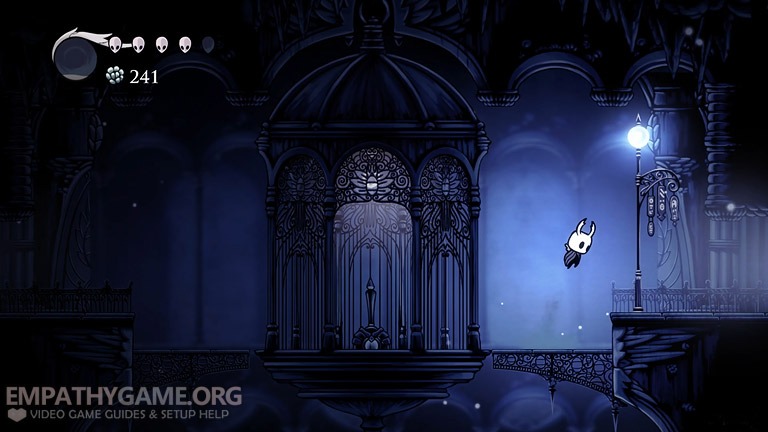
It also asks a lot of patience. The opening offers little direction, new paths regularly end at barriers the Knight cannot yet cross, and death can mean a long walk back to another attempt at a boss. Its reputation for difficult combat is deserved, although many ordinary enemies are far less demanding than the major encounters. What keeps the experience engaging is the relationship between these parts: learning to move better changes exploration, combat and even how a familiar room is understood. The frustration comes from that same design, particularly when the next meaningful discovery remains frustratingly out of reach.
Hallownest Is a Puzzle Before It Is a Map
The descent from Dirtmouth into Forgotten Crossroads begins with a few exits, vertical chambers and doors that offer almost no explanation of where the adventure is heading. Greenpath brings more demanding jumps and aggressive wildlife. In Fungal Wastes, bouncing from purple mushrooms with a downward Nail strike becomes a way of crossing space, not simply another environmental trick. Each region has its own logic. Learning the routes is part of learning the place, which makes Hallownest more convincing than a series of levels connected by loading screens.
Even finding a map is a little adventure. Cornifer sells area maps, but they do not automatically record every step. With the Quill, newly explored rooms are drawn in after the Knight rests at a Bench. The Wayward Compass makes navigation easier by marking the Knight’s location, yet it occupies a Charm Notch that might otherwise be useful in combat. It is a small decision with an interesting consequence: knowing exactly where you are comes at the expense of another ability. Stag Stations eventually make long journeys more manageable, and finding one deep in an unfamiliar area can be a greater relief than opening another treasure chest.
This approach does not always feel liberating. A path through Crystal Peak may reveal another obstacle, while acid crossings and distant towers promise routes that remain inaccessible until the right movement ability appears. Encounter enough of these barriers in succession and exploration changes character. Instead of following curiosity, the player may begin systematically searching for one missing upgrade. The freedom feels considerably greater once more abilities are available, but getting there requires accepting that several promising detours might accomplish very little. Hollow Knight is comfortable leaving the player uncertain; whether that uncertainty feels intriguing or wasteful depends partly on how much direction they expect from an adventure.
Movement and the Nail Are Closely Connected
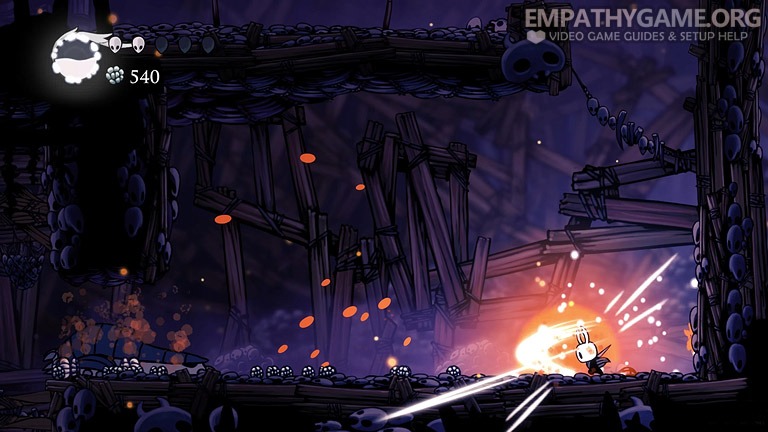
The Mothwing Cloak’s dash and Mantis Claw’s wall climb are important because they transform familiar geography as well as unlock new areas. A shaft that once required a lengthy detour becomes a quick climb. A difficult jump turns into part of a smooth route. There is a real sense of progress in crossing an old room confidently without needing to fight everything inside it. The Knight’s movements are simple enough to understand quickly, but their precision gives skilled movement plenty of room to develop.
Even an ordinary Nail strike has implications for positioning. Connecting with an enemy produces a small backward movement. On flat ground, that recoil can help maintain distance; while airborne beside a narrow ledge, it can ruin a jump that otherwise seemed perfectly judged. Striking downwards behaves differently, bouncing the Knight upwards from suitable enemies, hazards and surfaces. Mastering this ‘pogo’ technique turns combat into an extension of platforming and opens possibilities that are easy to miss when the Nail is treated only as a weapon. The Steady Body Charm can remove horizontal recoil, although that solution takes a Notch away from other advantages. Small mechanical choices have consequences beyond the immediate fight.
The quality of ordinary encounters is more uneven. Slow crawlers and similar basic enemies often demand little more than a couple of hits, and the SOUL generated by those attacks can make healing between rooms relatively straightforward. They serve a purpose by filling passages with activity and resources, but clearing them is not always interesting in itself. Encounters improve when enemies force the Knight to consider footing, range and hazards at the same time. This distinction is important: Hollow Knight’s combat is not uniformly intense. Its real depth becomes obvious when a room, an enemy or a boss makes those familiar actions difficult to use carelessly.
Bosses Turn Simple Actions Into Difficult Decisions
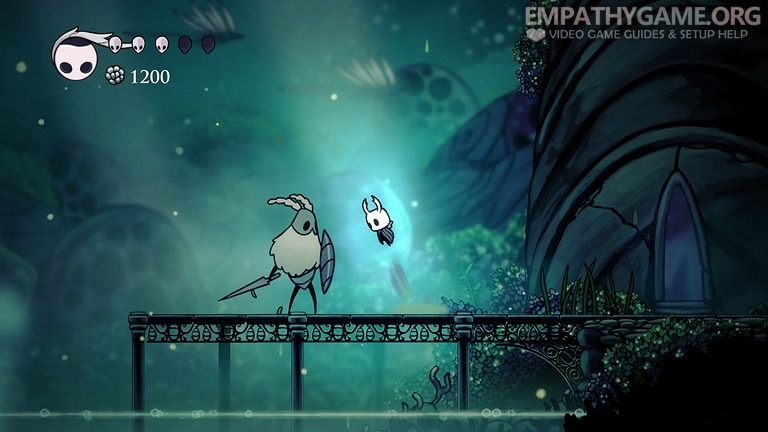
Hornet is an early example of how much Team Cherry can do with a limited move set. Her lunges and airborne attacks require attention to spacing, while changes in range punish the instinct to keep swinging. The Mantis Lords build on that discipline. The fight begins by establishing an attack rhythm, then asks the Knight to read coordinated patterns as two opponents enter the battle. What initially seems overwhelming can become remarkably controlled once the attacks are understood. Winning feels less like overpowering the enemy and more like finally seeing what the encounter has been asking all along.
SOUL makes every opening more interesting. Nail hits replenish the resource required for Focus healing and offensive spells such as Vengeful Spirit. Spending it on damage might bring a dangerous phase to an end sooner, but it also removes the safety of a later heal. A boss stagger may allow enough time to recover; attempting Focus during an unsafe moment can simply cost another Mask. These are decisions made in seconds, and they give the otherwise narrow Nail combat a useful tension. The strongest battles test judgment as much as reflexes.
Some fights also reward understanding systems that initially appear unrelated. Against the optional Failed Champion, striking the fallen boss’s armour can prolong a stagger rather than immediately advancing the fight by hitting the exposed head. That breathing room can be used to land a Dream Nail strike, replenish SOUL and heal. The Dream Nail is therefore not limited to gathering Essence or uncovering fragments of the kingdom’s story. In a suitable encounter, it becomes another resource-management tool. Discovering an interaction like this makes the combat feel deeper without requiring a bigger arsenal or a separate set of boss-specific controls.
The difficulty is easier to appreciate than the journey back to it. A distant Bench may leave several rooms between the Knight and a boss, so another attempt begins with repeated traversal rather than the part of the game the player is trying to learn. Death also leaves a Shade that holds the lost Geo, while the Knight must recover it to restore normal SOUL capacity. That second obligation can make an already difficult return more stressful. Long approaches sometimes reinforce the danger of Hallownest, but repeated walks after a familiar failure can interrupt the very process of learning that makes the boss fights satisfying.
The Kingdom Tells Its Story Through What Changes
Hallownest feels old before its history is properly understood. Empty houses, damaged infrastructure and creatures affected by the Infection establish a sense of collapse without stopping the journey for a long explanation. The Knight hears fragments from Quirrel, Elderbug and Hornet, each of whom sees the kingdom from a different position. Their conversations suggest a larger story without arranging every event into a clear sequence. This gives the player room to form connections, but some important meaning is easily missed. A person looking for a strongly directed narrative may admire the world while still wishing its central conflict were easier to follow.
One particularly effective piece of storytelling happens in Mantis Village. After the Mantis Lords are defeated, the ordinary mantises that previously attacked the Knight stop fighting and bow instead. Nothing about the settlement’s appearance needs to change. Its inhabitants simply treat the visitor differently, and the player can pass through what was once hostile territory. It gives the tribe a sense of custom and hierarchy that dialogue alone would struggle to establish. Hallownest feels more believable when its creatures respond to the Knight as a participant in their world rather than merely an intruder passing through enemy-filled rooms.
The atmosphere is just as carefully constructed. Rain falling through the City of Tears makes its monumental buildings feel strangely abandoned, while Deepnest replaces open passages with dark, cramped spaces where even moving forward becomes uncomfortable. The hand-drawn animation gives the inhabitants expression without making the ruins feel overly lively. Christopher Larkin’s music shifts from restrained melancholy to urgent tension, but some of the most affecting passages are quiet ones. A nearly empty corridor or a distant sound allows the imagination to do some of the work. The regions do not merely look different; their art, sound and hazards change the way the player approaches them.
Charms Can Improve One Skill While Complicating Another
Progression happens through movement abilities, spells, Nail upgrades, extra Masks and SOUL capacity rather than conventional character levels. Charms add flexibility to that permanent growth. Mark of Pride extends the Nail’s reach, Quick Slash favours aggressive attacks, and spell-focused or healing-oriented setups invite different solutions to the same encounter. Because Charm Notches are limited and combinations can generally be changed at a Bench, preparation matters. A boss that resists one approach may become more manageable when the player changes how they intend to fight, not simply how fast they press the attack button.
Choosing an advantage also means thinking about its drawbacks. Sharp Shadow makes the Shade Cloak’s shadow dash damage enemies and increases its travel distance. That extra reach can help in combat but disrupt a jump sequence built around the normal dash. A narrow platform that was once easy to reach may suddenly be overshot, and the dash cannot simply be cancelled in mid-movement. It is a good illustration of what makes the Charm system worthwhile. The most effective combat setup is not always the best for exploration, and a seemingly stronger ability can require the player to relearn familiar spacing.
Optional Challenges Reconsider Familiar Skills
Hollow Knight offers plenty to do beyond finding the most direct route through the kingdom, but its better optional challenges are not just harder versions of ordinary fights. The Colosseum of Fools is a test of endurance and adaptability. During the Trial of the Fool, a section without safe flooring makes the Knight fight while staying airborne, leaving few chances to stop and heal. Charged Nail Arts such as Great Slash become particularly useful for quickly removing flying enemies. The challenge changes what effective combat looks like. A move that seemed secondary during exploration can suddenly become the most reliable way to survive.
The Delicate Flower delivery is demanding for almost the opposite reason. Carrying a fragile gift to Queen’s Gardens without taking damage makes a familiar journey depend on advance planning. Routes need to be remembered, dangerous enemies can be cleared beforehand, and the player has to account for which threats return when moving between rooms. Trams are safe for the flower, but Stagways and Dreamgate travel destroy it. That restriction is frustrating when a single mistake forces another attempt, yet it gives the geography a fresh purpose. Instead of searching for new places or mastering a boss, the challenge is to move through known territory with unusual care.
Dream encounters, the Grimm Troupe and Godhome take combat in a different direction. The Hall of Gods allows bosses to be fought again individually, while Pantheons test consistency across longer sequences. Multiple endings provide reasons to investigate the kingdom more thoroughly, and Steel Soul offers a severe challenge where an ordinary death ends the run. There is no shortage of reasons to continue, though replayability depends heavily on what first made Hallownest appealing. Players drawn to precision and boss mastery may enjoy these trials for a long time. Those who came mainly for new environments and quiet discoveries may find repeated combat less rewarding than the original journey.
Final Verdict
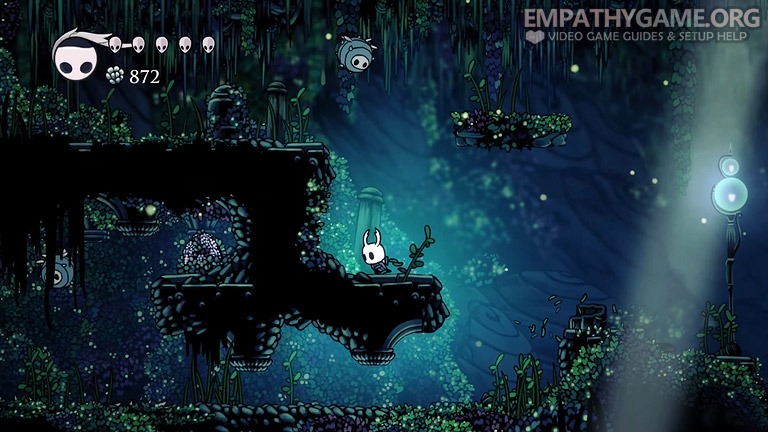
Hollow Knight earns much of its reputation through the way its systems support each other. Exploration makes movement abilities meaningful; those abilities change how the Knight fights and how old routes are crossed. The strongest bosses turn basic actions into precise decisions, while small details such as the Mantis tribe’s respect make Hallownest feel like a kingdom rather than a connected set of challenges. Its hand-drawn presentation and carefully used music give the ruins a personality that remains compelling even when the story is reluctant to explain itself.
The compromises are real. Too many blocked routes can make the early adventure feel like an upgrade hunt, ordinary enemies cannot always match the bosses, and long returns after failure slow the learning process. Some optional challenges ask for more repetition and precision than exploration-minded players may enjoy. Still, the game has a rare ability to make an old location interesting again, simply because the player has learned something new. For anyone who enjoys finding their own way, refining difficult techniques and interpreting a world through its details, that is a strong reason to enter Hallownest. Players who prefer clear guidance, quick boss retries or a gentler platforming experience may find the journey harder to appreciate.
Hollow Knight Pros & Cons
- Pro: Hallownest rewards careful exploration with memorable shortcuts, secrets and distinct regions.
- Pro: Responsive nail combat, spells and charm combinations make boss encounters mechanically varied.
- Pro: Hand-drawn animation and Christopher Larkin’s music give the ruined kingdom a distinctive mood.
- Pro: All four major gameplay content packs are included without extra DLC charges.
- Pro: Official Windows, macOS and Linux versions; Steam Deck Verified and a DRM-free GOG option.
- Con: Sparse guidance and an initially limited map can make early exploration disorienting.
- Con: Long returns to difficult boss fights can make repeated failures especially frustrating.
- Con: Some demanding platforming and late-game boss challenges may overwhelm less patient players.
- Con: Dying before reclaiming the Shade can cause permanent loss of the Geo you were carrying.
- Con: Steam, GOG and Microsoft ownership and cloud-save ecosystems do not automatically combine.
Hollow Knight PC System Requirements
These are the official Windows requirements shown on the Steam store page for the PC release. Other storefronts may display older specifications, so check the listing for the exact edition you intend to install.
OFFICIAL WINDOWS PC REQUIREMENTS:
MINIMUM:
OS: Windows 10 version 21H1 (build 19043) or newer, 64-bit
CPU: Intel Core i3-3240 or AMD FX-4300
RAM: 4 GB
GPU: NVIDIA GeForce GTX 560 Ti (1 GB) or AMD Radeon HD 7750 (1 GB)
DirectX: Version 10
Storage: 9 GB available space
RECOMMENDED:
OS: Windows 10 version 21H1 (build 19043) or newer, 64-bit
CPU: Intel Core i5-3470
RAM: 8 GB
GPU: NVIDIA GeForce GTX 1050 (2 GB) or AMD Radeon R9 380 (2 GB)
DirectX: Version 10
Storage: 9 GB available space
Additional PC Performance and Setup Notes
Widescreen and ultrawide: Hollow Knight supports standard 16:9 widescreen natively. Team Cherry also confirms full 21:9 and 16:10 support on PC, so these aspect ratios do not require an unofficial widescreen patch for the updated game. Select a suitable display resolution in the game settings rather than stretching the image externally.
Controller detection: If a connected gamepad is not detected or behaves unexpectedly, Team Cherry’s official support notes explain that the game uses Unity’s newer Input System and provides platform-specific options in an Advanced Settings menu, including a switch back to the previous input system. Try that documented option before relying on third-party controller fixes.
Save-data backups and mods: Team Cherry lists the Windows save folder as %USERPROFILE%\AppData\LocalLow\Team Cherry\Hollow Knight\. Back up that directory before testing unofficial modifications. The community-made Lumafly mod manager provides game-mod installation and management tools, but mod compatibility can change when the base game is updated. For troubleshooting, first reproduce any issue with mods disabled.
Official Trailer
Note: Team Cherry’s official release trailer introduces Hallownest’s hand-drawn environments, platforming and combat. The written guide covers modern PC storefronts, content-pack ownership, setup, system requirements and support considerations that the original trailer does not address.
Frequently Asked Questions
What should I do first if I get lost in Hollow Knight?
Find Cornifer to purchase a map of the area, then visit Iselda’s shop in Dirtmouth for the Quill and Wayward Compass charm. The Quill fills in explored passages when you rest at a Bench, while Wayward Compass shows your location on the map when equipped. If you reach a blocked passage, mark or remember it and explore another route.
Where should I go after obtaining the Mantis Claw?
The Mantis Claw opens several routes by allowing the Knight to climb walls. A natural next destination is the City of Tears, reached through Fungal Wastes, although you can also investigate other connected areas. Hollow Knight becomes considerably less linear at this point, so there is no requirement to defeat every nearby boss before moving elsewhere.
How do you bounce off enemies and spikes in Hollow Knight?
Jump above an enemy, certain spikes, or a suitable environmental object and strike downward with the Nail. This technique, commonly called pogo-jumping, makes the Knight bounce upward and can extend jumps or help avoid damage. Purple mushrooms in Fungal Wastes also launch the Knight higher when struck from above.
How do SOUL, healing, and spells work?
Hitting enemies with the Nail generates SOUL, which the Knight can spend either on healing through Focus or on offensive spells such as Vengeful Spirit. Both use the same resource, so spending SOUL on damage leaves less available for recovery. Healing also takes time, making it safer between enemy attacks rather than during an exposed moment.
What happens when you die in Hollow Knight?
The Knight respawns at the last Bench, leaving behind a Shade that carries the lost Geo. Defeating that Shade restores the Geo and repairs the reduced SOUL capacity. Dying again before recovering it removes the previous Shade and permanently loses the Geo it carried, although unlocked abilities and other permanent progression remain intact.
Can I recover my Shade without returning to where I died?
Yes. In normal mode, Confessor Jiji can summon your missing Shade to her room in Dirtmouth in exchange for a Rancid Egg. Her room is behind a door requiring a Simple Key, and you must still defeat the summoned Shade to recover your Geo. This is especially helpful when the original Shade is behind a difficult boss or platforming section.
How do Charms and Charm Notches work?
Charms modify abilities such as attack range, spell damage, healing speed, and movement, but each consumes a certain number of Charm Notches. You normally change your equipped Charms while resting at a Bench, and additional Notches can be discovered or purchased. It is also possible to become Overcharmed by equipping beyond the normal limit, but doing so causes the Knight to take double damage.
How do I upgrade the Nail in Hollow Knight?
Visit the Nailsmith in the City of Tears to increase the damage of the Knight’s primary weapon. The first upgrade requires Geo, while subsequent improvements require both Geo and Pale Ore, with four upgrades available in total. Spell upgrades and combat-focused Charms provide other ways to increase damage without relying entirely on the Nail.
What is the Dream Nail used for?
The Dream Nail allows the Knight to interact with certain thoughts, spirits, and dream-related encounters while collecting Essence for progression rewards. It also opens access to special challenges and areas connected to Hallownest’s deeper mysteries. After earning enough Essence, the Knight can unlock Dreamgate, which provides a useful additional travel ability.
Does Hollow Knight have fast travel?
Yes. Stag Stations connect major parts of Hallownest once their routes are unlocked, while trams provide transportation between particular underground regions after obtaining the Tram Pass. Dreamgate eventually allows the Knight to place a return point in many locations, although it cannot be used everywhere and travelling to it consumes Essence.
Can you change the difficulty in Hollow Knight?
No. The standard campaign has no conventional Easy, Normal, or Hard difficulty selector. You can make encounters more manageable by improving the Nail, collecting Mask Shards, upgrading spells, changing Charms, and returning to difficult bosses after exploring elsewhere. Steel Soul is a separate, more punishing mode rather than an adjustable difficulty setting.
What is Godhome, and can you replay bosses there?
Godhome is the boss-challenge area introduced through the Godmaster content pack, accessible through the Godseeker in the Junk Pit. Its Hall of Gods allows unlocked bosses to be fought repeatedly at different challenge levels, while Pantheons arrange encounters into demanding sequences. It is particularly useful for practising difficult bosses without repeating the normal journey to their locations.
What does 112% completion mean in Hollow Knight?
The maximum in-game completion percentage is 112%, including content from the game’s free expansions. It involves collecting major upgrades, Charms, completing particular challenges, and clearing the first four Godhome Pantheons. The fifth Pantheon and Path of Pain are not required for 112%, although they offer additional challenges. To earn the Pure Completion achievement, you must also finish the game after reaching 112%.
Can you continue playing Hollow Knight after beating the final boss?
Yes. After an ending, loading the same save returns the Knight to a point before the final encounter, allowing further exploration, upgrades, and optional challenges. Hollow Knight also has multiple endings with different requirements. One important spoiler-light warning: obtaining Void Heart prevents the original basic ending from being earned on that save, so consider completing that ending first if you want its achievement.
Does Hollow Knight have New Game Plus or a permadeath mode?
There is no traditional New Game Plus that carries your equipment and upgrades into a new campaign. After completing the game, you can unlock Steel Soul Mode, which starts a fresh adventure where a normal death ends that save permanently. It is designed for experienced players seeking a stricter survival challenge, not for continuing an upgraded character.
Can you play Hollow Knight with a friend on PC?
Not through the official game. Hollow Knight is single-player and has no built-in online co-op, local co-op, split-screen, or cross-platform multiplayer. Unofficial community multiplayer modifications exist, but they are not supported by Team Cherry and their compatibility can depend on the installed game version.
Is Hollow Knight: Silksong DLC or a separate game?
Hollow Knight: Silksong is a standalone sequel featuring Hornet as the playable protagonist in a different kingdom. It is not one of the original Hollow Knight’s four free content packs, and ownership of Hollow Knight does not automatically include Silksong. The two games are separate purchases.
How long does Hollow Knight take to finish?
A first main-story playthrough commonly takes around 25–30 hours, while exploring a substantial amount of optional content can extend that to roughly 40–50 hours. Completion-focused runs often exceed 60 hours, especially when difficult Godhome challenges require extensive practice. The actual time varies considerably with exploration habits and boss-fighting experience.
Still have questions? Check the Hollow Knight Reddit community, Steam Discussions, or official Hollow Knight support page for additional gameplay advice, PC troubleshooting, and community discussion.
Sources & References
Key factual and technical information in this guide was checked against relevant official and community sources, including:
- Hollow Knight on Steam — Windows system requirements, release date, free content packs, Steam features, Steam Deck rating and store reception
- Hollow Knight on GOG — DRM-free PC ownership, offline installer, optional GOG Galaxy functionality and soundtrack products
- Hollow Knight: Voidheart Edition on Xbox — Microsoft PC availability, Xbox Play Anywhere, included content, subscription access and cloud services
- Official Hollow Knight website — core game description, developer information and the four included content packs
- Team Cherry platform and PC enhancements announcement — native console editions and additional PC aspect-ratio support
- Official Hollow Knight help — controller input settings and documented PC save-data locations
Similar Games Like Hollow Knight
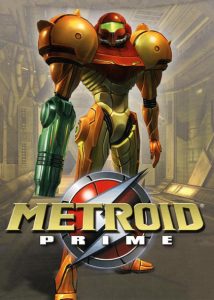
- Metroid Prime
- Dark Souls III
- Elden Ring
- Sekiro: Shadows Die Twice
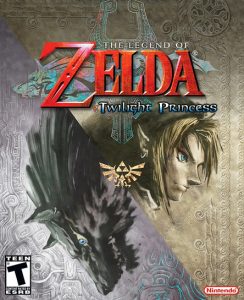
- The Legend of Zelda: Twilight Princess
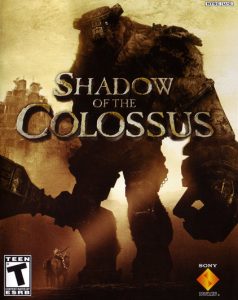
- Shadow of the Colossus



Found something worth playing through DecideGame?
DecideGame.com is an independent gaming project run by Editor Zero. If this guide helped you discover a game, solve a problem, or find useful information, you can support DecideGame.com and help keep new and updated game guides coming.
DecideGame — PC Game Guides, Reviews & Setup Help