
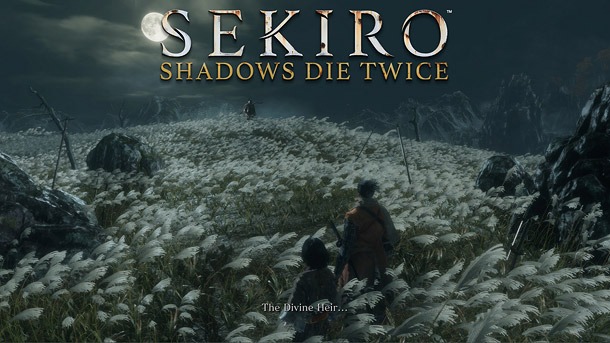
📅 Game released: 2019
Sekiro: Shadows Die Twice is a demanding single-player shinobi adventure about Wolf’s fight to protect Kuro, built around sword deflections, posture breaks, stealth, and supernatural boss duels. This PC guide covers the official Steam GOTY Edition purchase and download, Reflections of Strength, Gauntlets of Strength, Remnants, system requirements, Steam Deck support, mods, and practical setup notes.
 By Editor Zero — independently researched, edited, and maintained.
Last updated: 10 November 2026
Last reviewed: 10 November 2026
Table of Contents
- Quick Facts
- Official PC Stores, Download & Installation
- Sekiro: Shadows Die Twice Review
- Pros & Cons
- PC System Requirements
- Frequently Asked Questions
- Similar Games
Sekiro: Shadows Die Twice Quick Facts
- Game: Sekiro: Shadows Die Twice – GOTY Edition
- Developer: FromSoftware, Inc.
- Publisher: Activision outside Japan and parts of Asia; FromSoftware in Japan and regional publishing in Asia
- Genre: Action-Adventure, Stealth Action, Soulslike, Fantasy
- Release: March 22, 2019 (including Windows PC)
- Platforms: Windows PC, PS4, Xbox One
- GOTY Content: Reflections of Strength, Gauntlets of Strength, Remnants, and three unlockable cosmetic skins; no paid story expansion
- Modes: Single-player campaign with asynchronous online Remnants; no co-op or PvP
- Steam Deck: Verified
- Engine: FromSoftware’s proprietary in-house engine; no publicly confirmed engine name
- Community: Steam Discussions, Reddit Sekiro Community, Official Sekiro Website
- PC modding: Nexus Mods offers unofficial visual, gameplay, interface, challenge, and technical modifications
- Metacritic score: 88/100 on PC
- IGN score: 9.5/10 for the original multiplatform release
- OpenCritic average: 90/100
- Steam user reception: Overwhelmingly Positive overall
Official PC Stores, Download & Installation
👇 Use the official Steam listing below to purchase, download, and install Sekiro: Shadows Die Twice – GOTY Edition on Windows PC.
- Official Windows store: The native PC version is sold through Steam; install it through the Steam client after purchasing or redeeming an eligible license.
- Xbox version: The separate Microsoft/Xbox listing supports Xbox One and Xbox Series X|S, not a native Windows PC entitlement. It is not an Xbox Play Anywhere purchase for Windows.
- GOTY content: The Steam package includes the full campaign and its permanent bonus content: Reflections of Strength, Gauntlets of Strength, Remnants, and three unlockable outfits. These are not separate paid story DLC.
- Online and offline: The core campaign can be played offline after normal installation and Steam account setup; internet is needed for the asynchronous Remnant feature, updates, and Steam online services.
- Steam features: The listing includes achievements, Steam Cloud, trading cards, Family Sharing, Remote Play on TV and Tablet, and controller support. Steam Cloud should not be treated as a substitute for local save backups.
- Steam Deck: Valve rates the game Verified, with usable default controls, readable interface text, matching button icons, and suitable default graphics settings.
- Unofficial PC mods: Mod Engine packages, cosmetic replacements, randomizers, and FPS/display changes are community-made rather than official DLC. Back up saves and return to unmodified files if problems appear.
 Buy Sekiro: Shadows Die Twice – GOTY Edition on Steam
 Visit the Official Sekiro Website

Sekiro: Shadows Die Twice Review
A brutal, precise action game where hesitation gets you killed.
Sekiro: Shadows Die Twice is unusually clear about what it wants from the player, even if learning to provide it can be painful. Where Dark Souls gives you different weapons, armor and character builds to approach a difficult encounter, Sekiro puts much more responsibility on how you handle a single sword. You play Wolf, a shinobi whose speed, grappling hook and prosthetic arm make him agile, but never comfortably safe. The game rewards standing close enough to read an enemy’s intentions, then answering at precisely the right moment.
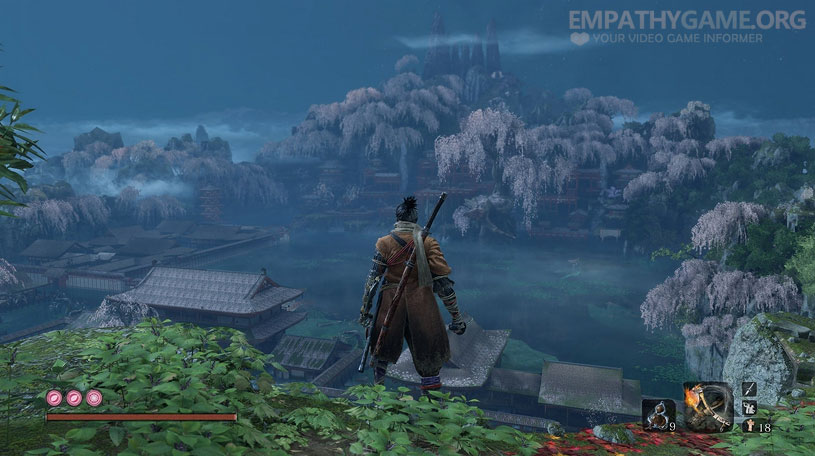
That makes its difficulty different from simply fighting enemies with large health bars. An opponent who seems impossibly fast can become manageable once the rhythm of their attacks makes sense. Equally, a moment of panic can undo several careful minutes. There is satisfaction in that honesty, although it comes with a cost: when a particular fight refuses to click, there are fewer alternative paths to victory than in FromSoftware’s build-driven RPGs.
Stealth, vertical exploration and specialized tools keep the journey from becoming an uninterrupted series of duels. Still, the sword is the point around which everything else turns. Sekiro is most rewarding for players who find the process of learning a demanding system as compelling as the victory itself.
Story and Setting
The story unfolds in a dark, mythic version of late Sengoku-era Japan. Wolf’s duty is to protect Kuro, the young Divine Heir, whose mysterious bloodline attracts powerful figures desperate to preserve or control immortality. As Ashina’s military struggle grows more desperate, that personal obligation draws Wolf into a conflict much stranger than the opening suggests.
The narrative is more direct than in Dark Souls, yet FromSoftware still trusts the setting to do much of the explaining. Ashina Castle’s soldiers seem to be holding together a place already approaching collapse. Hirata Estate gives Wolf’s past a more intimate, tragic shape, while Senpou Temple gradually reveals the disturbing consequences of a supposedly sacred pursuit. These places do not exist merely to connect one boss to another. Their architecture, enemies and quiet details help explain what the people of Ashina have become willing to sacrifice.
Wolf also has more definition than a customizable RPG protagonist. He speaks sparingly, but his bond with Kuro gives each dangerous journey a recognizable purpose. The restrained dialogue will not satisfy everyone looking for an elaborate character drama, and some of the world’s history remains deliberately obscure. Yet that restraint suits a story about duty, loyalty and what happens when people become unable to accept death.
Mechanics and Gameplay
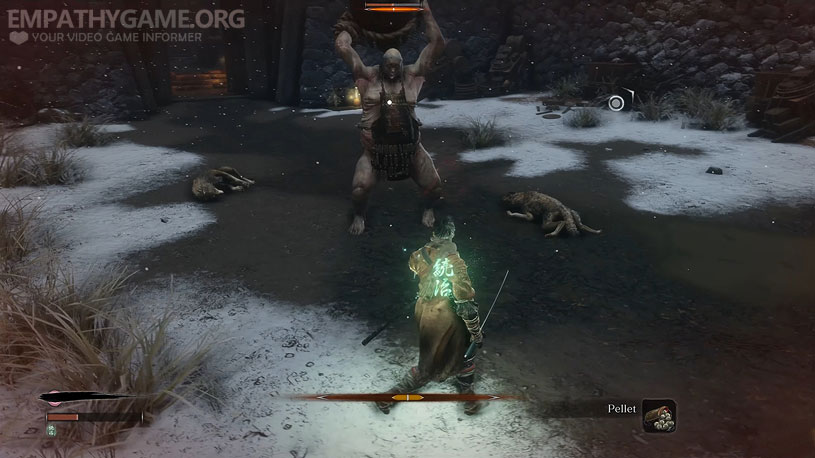
The most important thing to understand about Sekiro is that damaging an enemy’s vitality is not always the fastest way to defeat them. Attacks and precisely timed deflections build their Posture until a Deathblow becomes possible. At the same time, lower vitality makes an opponent’s Posture recover more slowly. There is an interesting tension here: aggression keeps the pressure on, but a few real hits can be necessary before that pressure will stick. Simply waiting for an opening, landing one slash and retreating often makes a duel longer and harder.
The best sword encounters become exchanges of initiative rather than a contest of frantic inputs. An enemy may block several attacks before producing a sharper deflection sound, a useful signal that Wolf’s offensive turn is ending. Recognizing that change means preparing to answer the counterattack instead of blindly continuing a combo. The sound design is doing practical work here. It helps transform what first resembles visual chaos into a conversation of steel, with attacks, responses and deliberate changes of tempo.
Perilous attacks complicate that language. The warning symbol tells you danger is coming, but not whether the correct answer is to jump a sweep, avoid a grab or meet a thrust with the Mikiri Counter. That last technique is particularly satisfying: a move that initially encourages retreat becomes an invitation to step directly into danger. The confidence feels earned because the timing still matters. Panic-deflecting and button-mashing may get Wolf through minor fights, but stronger opponents expose those habits quickly.
His ability to resurrect after a fatal blow adds another layer without making defeat trivial. Returning to the same encounter creates a chance to recover, reposition or finish a weakened enemy, but it does not erase the mistake that put him down. The temptation to rush after reviving can be just as dangerous as the original misread. It is another example of Sekiro allowing aggression while asking the player to control it.
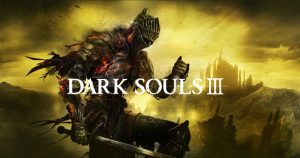
If you enjoy that FromSoftware tension but prefer a conventional dark fantasy action RPG, Dark Souls 3 offers a useful contrast. Stamina management, weapons, armor and character builds give it more ways to solve a difficult encounter. Sekiro removes most of those alternatives, making the quality of each deflection, counter and decision more important than the equipment behind it.
Stealth, Mobility, and Prosthetic Tools
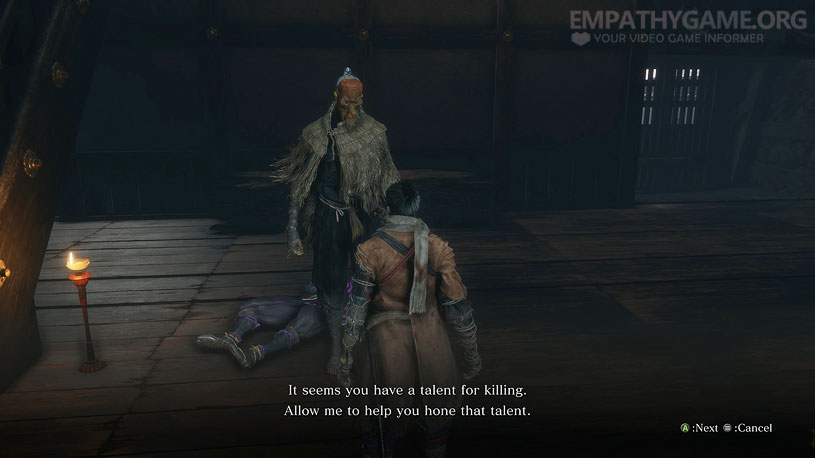
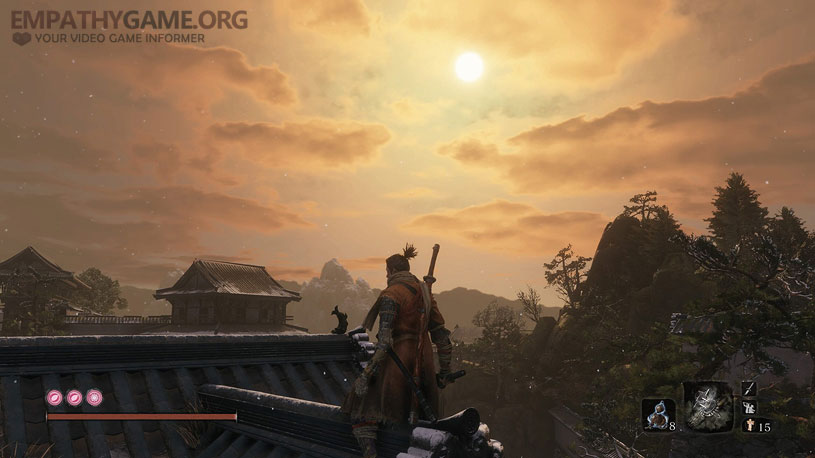
Stealth gives Wolf control over encounters that would otherwise be unpleasantly crowded. In Ashina Outskirts, a rooftop approach or deathblow from tall grass can remove a dangerous guard before a confrontation begins. Around Ashina Castle, the grappling hook makes rooftops, branches and walls part of the tactical space. It is a pleasure simply to find a higher route and examine the patrols below. Unlike the grounded, cautious movement of some earlier FromSoftware games, Sekiro often lets you leave a bad position quickly and reconsider the approach.
Later abilities also make stealth more inventive than merely eliminating the nearest enemy. Puppeteer Ninjutsu can turn a defeated guard into a temporary ally, redirecting a group against one of its own and opening a route for Wolf to strike or escape. It is particularly interesting when several strong enemies occupy the same area. A successful stealth entry can change the balance of the encounter rather than just reduce its numbers, although the technique’s Spirit Emblem cost limits how freely it can be used.
The Shinobi Prosthetic offers a similar mix of freedom and restraint. Loaded Shuriken can punish an enemy trying to jump away, the Loaded Axe breaks shields, and Shinobi Firecrackers create valuable breathing room against beasts. Flame Vent and the Spear have their own useful matchups. These tools are most satisfying when they solve a specific combat problem, then hand control back to Wolf’s sword. They rarely substitute for understanding the enemy’s next move.
There is a genuine friction in the resource economy, however. Prosthetic abilities spend Spirit Emblems, and repeated deaths can leave a struggling player short of both emblems and the Sen needed to buy more. At precisely the moment experimenting with an unfamiliar tool might help, conserving resources can feel safer. Players who build large reserves may barely notice the limitation, but for others it narrows a system that initially appears to encourage creative trial and error.
Boss Fights Are the Heart of the Experience
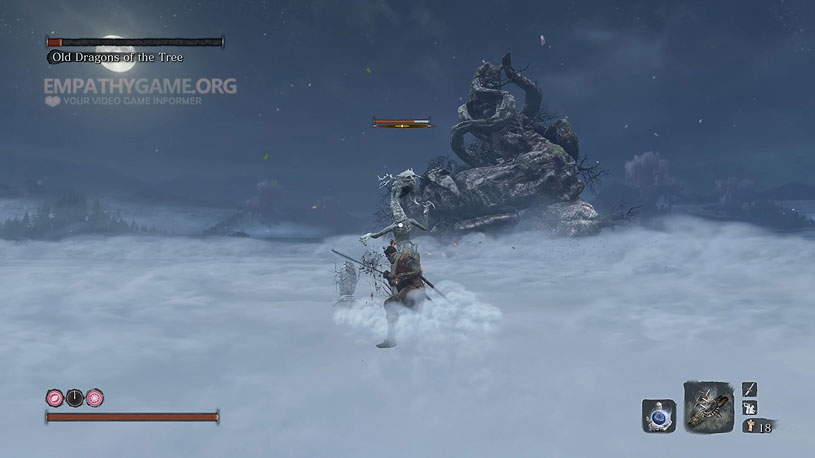
Sekiro is at its strongest when a boss takes everything learned in ordinary combat and demands that it be used without hesitation. Genichiro Ashina is an especially effective test because his combinations reward sustained pressure while punishing the instinct to flee whenever a blade moves. Learning to handle his thrusts, sweeps and lightning reversal changes the way the rest of the game’s sword duels are understood. The fight does not merely ask for faster reactions. It asks for a different relationship with danger.
Lady Butterfly provides an earlier lesson in staying composed when the arena becomes confusing. She moves between close-range exchanges and airborne attacks, then uses illusions to disrupt the player’s control of space. Guardian Ape, by contrast, begins as a violent creature encounter before developing a much stranger rhythm. The shift works because the game has already taught a language of deflection and then asks whether it can be applied to an opponent that looks nothing like a swordsman.
The supporting mini-boss roster is less uniformly elegant. Seven Ashina Spears can be as intimidating as a main boss, but some mini-bosses are accompanied by guards that must be avoided or cleared before the real duel can begin. Repeating that preparation after every failed attempt creates downtime just when the player wants to concentrate on a difficult attack sequence. The stealth layer is interesting the first few times; it becomes less welcome when a routine group clear separates each attempt at learning the same opponent.
Camera behavior can also make the challenge feel less fair than the underlying combat deserves. The agile Lone Shadow enemies are demanding in open space, but a confined arena can push Wolf against a wall, disrupt target tracking and obscure an attack that would otherwise be readable. Positioning helps, but not every failure in these encounters comes from misunderstanding the swordplay. This matters in a game whose strongest argument is that careful attention should lead to improvement.
Optional supernatural enemies introduce a different kind of strain. A Headless encounter adds Terror buildup and the practical value of Divine Confetti and Pacifying Agents to an already threatening fight. Using up those supplies during unsuccessful attempts can make experimentation feel costly in a way that normal sword duels usually avoid. It is a deliberate change of pace, but the encounter is easier to appreciate once it is understood as a preparation challenge, not another pure test of deflection. Fortunately, such enemies can be left alone until Wolf is better equipped.
At their best, repeated attempts lead to a gradual change in perception. The pause before a thrust becomes visible. A combo that once seemed impossibly long starts to have a recognizable ending. That is why the memorable bosses endure beyond their difficulty. They make progress feel less like increasing a number and more like understanding something that had previously escaped you.
Players drawn to this style of boss learning may also appreciate Stellar Blade. Eve’s parries damage enemy Balance rather than Posture, while perfect dodges, Blink, Repulse and energy-powered skills give her more ways to respond. The comparison is not about identical combat, but about the moment an intimidating attack sequence becomes an opportunity for a deliberate counter.
For those who prefer a more dodge-led approach, Black Myth: Wukong combines demanding mythological encounters with staff stances, spells and transformations. Its broader combat toolkit offers more freedom than Wolf’s focused swordplay, even though both games reward patience, pattern recognition and knowing when aggression is justified.
Progression and Upgrades
Character progression strengthens Wolf without fundamentally changing what he must learn. Prayer Beads increase Vitality and Posture, Gourd Seeds improve the number of healing uses, and Memories earned from major bosses increase Attack Power. These upgrades are meaningful, particularly when an extra healing charge gives room to recover from a mistake. They cannot, however, turn an unfamiliar boss into a harmless enemy.
Skill trees add practical techniques, passive benefits and stealth options. The Mikiri Counter changes how thrusts are handled, while other upgrades improve recovery or expand combat choices. Prosthetic improvements create more specialized responses to shields, beasts and particular attack patterns. There is progression here, but it develops a relatively fixed fighting style instead of inviting players to reinvent Wolf with a different weapon or class.
That decision affects exploration as much as combat. A hidden route can lead to a Prayer Bead, a prosthetic attachment or useful materials, but it will not reveal an entirely new sword-and-armor build. Anyone accustomed to searching every corner of a Souls RPG for transformative equipment may find the rewards restrained. The pleasure of exploration is more often in discovering a route, an encounter or a piece of Ashina’s history. Whether that feels focused or disappointing depends on what the player expects from a secret.
Atmosphere and World Design
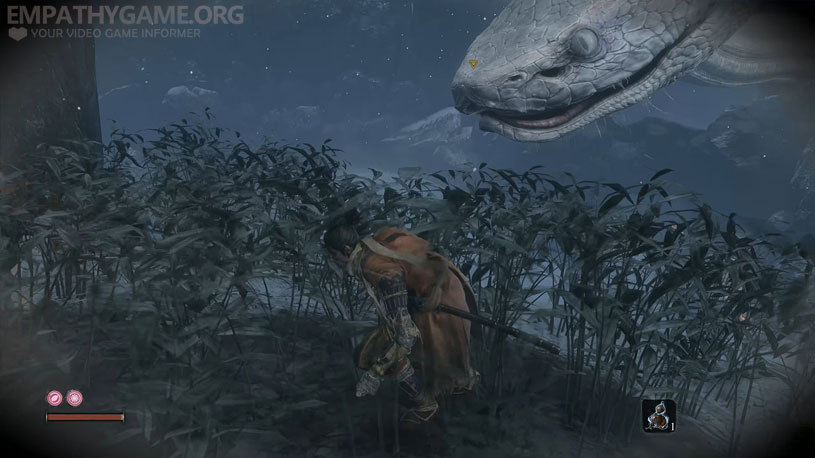
Ashina is appealing because its beauty never feels separate from its danger. Castle rooftops provide magnificent views and useful escape routes, but they also expose Wolf to threats on several levels. Hirata Estate’s fire-lit paths suggest a past still haunting the present. Senpou Temple places peaceful scenery beside disturbing practices, while the Sunken Valley and Mibu Village lead the game toward increasingly unsettling territory. These places have distinct moods without feeling like unrelated levels.
The world also benefits from the grappling hook’s unusual sense of scale. Looking upward becomes as important as checking the next path ahead. A branch can lead to an unexpected approach, a wall can hide a shortcut, and a familiar courtyard may look quite different from the roof above it. The environments are not as freely navigable as a true open world, yet their layered routes give even compact areas room for discovery.
Sound contributes to more than combat timing. The quiet between patrols makes an approaching threat easier to notice, while percussion and dramatic scoring lend major encounters a different weight from the peaceful moments outside them. There is a distinctive contrast between a still mountain landscape and the sudden violence of a blade clash. Sekiro rarely lets the beauty exist without an awareness of what might be waiting beyond it.
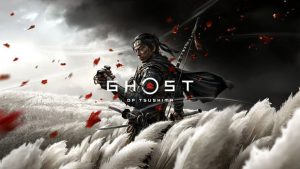
If its Japanese setting, stealth approaches and striking landscapes matter more to you than its strict combat rules, Ghost of Tsushima offers a natural alternative. It is more open-world, cinematic and forgiving, with a different emphasis on exploration and swordplay. Both games understand how much a quiet path through a memorable landscape can contribute before the next confrontation begins.
Replayability and Long-Term Appeal
Sekiro has strong replay value, though not because a second character build changes the whole game. Multiple endings and optional encounters reward another journey, and familiar bosses can become surprisingly fluid once their patterns are understood. A fight that previously demanded constant survival can shift into a more confident exchange, with the player knowing exactly when to advance and when to stop.
New Game Plus restores some danger by making enemies tougher, while choosing to give up Kuro’s Charm adds a more demanding test of defensive precision. Ordinary blocking then allows damage through, making imperfect timing costly even for someone who already knows the boss. A duel such as Owl Father can become tense again when Wolf’s Posture is under constant pressure. Familiarity helps, but it does not mean there is nothing left to learn.
Reflections of Strength make individual boss rematches possible without another full campaign run, and Gauntlets of Strength turn that knowledge into a sequence of encounters where consistency matters. These modes fit the combat exceptionally well because they make the act of refining a duel an objective in itself. Their appeal is narrower for players who want new quests, equipment or radically different playstyles rather than repeated mastery challenges.
Final Thoughts
Sekiro: Shadows Die Twice is a remarkable example of a game committing to one combat idea and following it through. Deflection and Posture give each sword duel a clear purpose, while stealth, vertical movement and carefully chosen prosthetic tools offer enough flexibility to keep the journey from feeling one-dimensional. Ashina’s unsettling beauty and Wolf’s duty to Kuro give those mechanical challenges a setting worth caring about.
That focus also produces limitations. Some mini-boss approaches become repetitive, cramped arenas can interfere with the camera, and Spirit Emblem costs sometimes discourage the experimentation the prosthetic invites. Players who enjoy making radically different builds, lowering difficulty or finding a way around a stubborn encounter may prefer another action RPG.
For anyone willing to learn a demanding combat language, though, few games make the difference between simply surviving and genuinely understanding an enemy so tangible. Sekiro asks for patience, but rewards it with something more lasting than a stronger sword: a clearer sense of what you are capable of doing with the one you already have.
Sekiro: Shadows Die Twice Pros & Cons
- Pro: One of FromSoftware’s sharpest combat systems, built around deflection timing, posture pressure, Mikiri Counter, and decisive deathblows
- Pro: Excellent boss design with memorable duels, monster encounters, and skill checks that reward genuine mastery rather than stat grinding
- Pro: Stealth, grappling, prosthetic tools, vertical routes, and interconnected areas give exploration a distinctive shinobi rhythm
- Pro: GOTY content adds permanent boss rematches, Gauntlets of Strength, Remnants, and cosmetic rewards without fragmenting the game into paid story DLC
- Pro: Steam Deck Verified support and modest original hardware requirements make the PC version accessible on a wide range of current systems
- Con: The difficulty curve can be severe because major bosses cannot be bypassed through co-op summons, radically different builds, or heavy overleveling
- Con: Build and weapon variety is deliberately narrower than Elden Ring, Dark Souls III, and more traditional action RPGs
- Con: The native PC presentation remains capped at 60 FPS and does not provide complete ultrawide support without unofficial community fixes
- Con: Spirit Emblem costs can discourage experimentation with prosthetic tools during difficult boss attempts
Sekiro: Shadows Die Twice PC System Requirements
OFFICIAL WINDOWS PC REQUIREMENTS:
Important: Activision’s published game specifications still list Windows 7, Windows 8, and Windows 10 because they reflect the original PC release. Steam requires Windows 10 or later, so Windows 10/11 64-bit is the practical choice for a standard Steam installation.
MINIMUM:
OS: Windows 7 64-bit / Windows 8 64-bit / Windows 10 64-bit in the original game specification
CPU: Intel Core i3-2100 / AMD FX-6300
RAM: 4 GB
GPU: NVIDIA GeForce GTX 760 / AMD Radeon HD 7950
DirectX: Version 11
Storage: 25 GB available space
Internet: Broadband internet connection listed officially; required for asynchronous Remnants and online Steam functions, while Activision states the single-player game itself does not require a continuous connection
Sound Card: DirectX 11 compatible
RECOMMENDED:
OS: Windows 7 64-bit / Windows 8 64-bit / Windows 10 64-bit in the original game specification
CPU: Intel Core i5-2500K / AMD Ryzen 5 1400
RAM: 8 GB
GPU: NVIDIA GeForce GTX 970 / AMD Radeon RX 570
DirectX: Version 11
Storage: 25 GB available space
Internet: Broadband internet connection listed officially; required for asynchronous Remnants and online Steam functions
Sound Card: DirectX 11 compatible
Additional PC Performance and Setup Notes
- The Windows version is normally capped at 60 FPS. Higher-refresh-rate play depends on unofficial community tools, so test animation, camera, input, and game-speed behavior carefully after changing the cap.
- Native ultrawide support is limited. Community fixes can expand the rendered view or adjust presentation, but HUD elements, cutscenes, aspect-ratio behavior, and compatibility can vary by tool.
- Steam lists full controller support, while keyboard and mouse are also usable. If inputs conflict, disconnect unused controllers, disable duplicate remapping layers, and test Steam Input before installing third-party controller utilities.
- Steam Deck is officially Verified and does not require manual keyboard invocation or a separate launcher according to Valve’s compatibility data.
- If the game stutters, freezes, or crashes, verify Steam files, update graphics drivers, disable unnecessary overlays, return overclocks to stable settings, and test without mods before reinstalling.
- Back up save data before installing Mod Engine files, randomizers, overhaul mods, FPS unlockers, ultrawide fixes, or tools that patch the game executable or memory.
Official Trailer
Note: This official launch trailer presents Wolf, Kuro, Ashina, prosthetic tools, stealth, vertical movement, resurrection, and the sword-focused combat at the center of Sekiro, while the written guide above covers Steam access, GOTY content, system requirements, Steam Deck support, PC limitations, mods, and setup guidance.
Frequently Asked Questions
Where can I buy and download Sekiro on PC, and is it on PC Game Pass?
Steam sells the native Windows GOTY Edition. The Microsoft/Xbox product is a console release without a Windows entitlement, and Sekiro is not listed as a PC Game Pass game.
Does Sekiro’s GOTY Edition include a separate story DLC?
No. The GOTY package includes the campaign, boss rematches through Reflections of Strength, boss-rush Gauntlets of Strength, asynchronous Remnants, and three unlockable cosmetic outfits. These additions are included in the game rather than sold as a separate story expansion.
When can I unlock Gauntlets of Strength, and what happens if I die?
Gauntlets become available after completing the story and meeting the boss-defeat requirements for each route; some require progress across different endings. Each Gauntlet must be completed in one run. Dying restarts that Gauntlet, while Reflections let you practice individual bosses you have already defeated.
Do Reflections and Gauntlets consume my healing items or Spirit Emblems permanently?
These challenges use their own temporary item state. Consumables and Spirit Emblems spent during a Reflection or completed Gauntlet attempt are restored when you return to normal play, but items are not replenished between individual fights within a Gauntlet. Attack Power is also adjusted for these challenge modes.
Can I summon friends, play co-op or PvP, or leave multiplayer messages?
Sekiro has no traditional co-op, invasions, split-screen, or PvP. Remnants are short asynchronous recordings with messages left for other players to watch and rate; they are not playable companions or summons.
Can I play Sekiro offline?
Yes. The single-player campaign does not need a continuous internet connection, although game downloads and updates, Steam cloud synchronization, and online Remnants require connectivity.
Does Sekiro work on Steam Deck?
Yes. Valve rates it Verified. The default controls and button icons are compatible with the handheld, though battery life and performance depend on your settings.
Is a controller necessary, or can I use a mouse and keyboard?
Both input methods work on PC. A controller can feel natural for sword duels and movement, while keyboard and mouse can suit precise camera control. If inputs act strangely, test Steam Input and disconnect other remapping utilities before installing third-party tools.
Can Sekiro run above 60 FPS or fill an ultrawide display?
The unmodified PC game normally runs up to 60 FPS and has limited native ultrawide support. Unofficial fixes can change the frame cap, field of view, or display behavior, but they may require updates and can affect presentation or stability. See the PC Performance and Setup Notes above.
Are Sekiro mods officially supported?
Mods are community-made, not official FromSoftware content. Popular types include cosmetic skins, technical fixes, randomizers, and major difficulty or combat overhauls. Back up your save and keep a clean installation available for troubleshooting.
Does Sekiro have an easy mode or adjustable difficulty?
There is no standard Easy, Normal, or Hard menu. Healing upgrades, prosthetic tools, skills, and route choices can make encounters more manageable. The Demon Bell and options involving Kuro’s Charm allow experienced players to make the challenge harder.
Why does an enemy’s posture recover so quickly?
Posture recovery is linked to remaining vitality: enemies with high health generally recover posture faster. Deal some vitality damage, keep pressure on the enemy, and time deflections rather than backing away for too long. Breaking posture allows a deathblow even when vitality remains.
How do I counter perilous thrusts, sweeps, and grabs?
The red warning symbol does not identify which perilous attack is coming. Read the enemy’s animation: Mikiri Counter answers many thrusts, jumping avoids many sweeps and can lead to a jumping counter, and grabs generally require movement or evasion. Not every enemy obeys exactly the same timing.
Which upgrades and tools should beginners prioritize?
Mikiri Counter is a strong early skill. Gourd Seeds improve healing, Prayer Beads increase vitality and posture, and Shinobi Firecracker can interrupt many enemies. Loaded Axe is useful against shields; shuriken help punish certain mobile or airborne foes. The best option depends on the encounter.
What happens to Sen and skill experience when I die?
A true death normally risks losing half your carried Sen and progress toward your next skill point, with Unseen Aid offering a chance to prevent the loss. Bank Sen in coin purses or spend it before difficult bosses; already earned skill points remain available.
Can Dragonrot permanently block story progress?
No. Dragonrot can lower the chance of Unseen Aid and temporarily interrupt some NPC-related steps, but it does not permanently destroy a playthrough. It can be treated through the associated cure system and Dragon’s Blood Droplets.
Is Sekiro open world?
No. Its regions are interconnected and often have optional routes and shortcuts, but the world is structured around distinct areas and major progression milestones rather than a seamless open-world map.
How long does it take to finish Sekiro?
A first completion commonly takes around 30–45 hours, with wide variation depending on how long bosses take, optional exploration, and how much of the game you attempt to complete.
How many endings are there, and does Sekiro have New Game Plus?
There are four main endings: Shura, Immortal Severance, Purification, and Return. New Game Plus lets you replay with much of Wolf’s earned progression retained, while story-specific items and progression reset.
Still have questions? Check the Sekiro community on Reddit, Steam Discussions, and official Activision Sekiro Support.
Sources & References
Key factual and technical information in this guide was checked against relevant official and specialist sources, including:
- Sekiro on Steam — the GOTY package, official PC release, Steam features, system requirements, and overall user reception
- Activision’s Sekiro game support article — PC and console release context, offline campaign play, and save behavior
- Activision’s bonus-content explanation — Reflections, Gauntlets, Remnants, and unlockable outfits
- Sekiro on Xbox Store — the console-only playable platform listing
- PCGamingWiki: Sekiro — the PC frame-rate cap, ultrawide limitations, and unofficial display fixes
- Metacritic PC critic reviews — the Windows PC review aggregate and IGN’s review score
Similar Games Like Sekiro: Shadows Die Twice


Found something worth playing through DecideGame?
DecideGame.com is an independent gaming project run by Editor Zero. If this guide helped you discover a game, solve a problem, or find useful information, you can support DecideGame.com and help keep new and updated game guides coming.
DecideGame — PC Game Guides, Reviews & Setup Help