
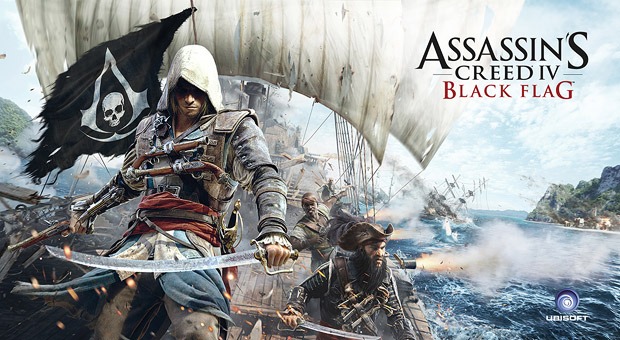
📅 Game released: 2013
Assassin’s Creed IV: Black Flag follows Edward Kenway through the Golden Age of Piracy, combining Caribbean sea battles, ship upgrades, island exploration, and stealth assassinations. This guide covers official PC download and installation options through Steam, Ubisoft, and Microsoft/Xbox, the Gold Edition and Freedom Cry DLC, differences from Black Flag Resynced, system requirements, Steam Deck compatibility, and practical setup advice.
 By Editor Zero — independently researched, edited, and maintained.
Last updated: 4 November 2026
Last reviewed: 4 November 2026
Table of Contents
- Quick Facts
- Official PC Stores, Download & Installation
- Assassin’s Creed IV: Black Flag Review
- Pros & Cons
- PC System Requirements
- Frequently Asked Questions
- Similar Games
Assassin’s Creed IV: Black Flag Quick Facts
- Game: Assassin’s Creed IV: Black Flag (2013) / Assassin’s Creed IV Black Flag Gold Edition / AC4 Black Flag; separate from Assassin’s Creed Black Flag Resynced (remake)
- Developer: Ubisoft Montreal, with support from other Ubisoft studios
- Publisher: Ubisoft
- Genre: Action-Adventure, Open World, Stealth Action
- Release: October 29, 2013 (first release, PS3/Xbox 360/Wii U); Windows PC: November 19, 2013
- Platforms: Windows PC, PS3, PS4, Xbox 360, Xbox One, Wii U, Nintendo Switch (via The Rebel Collection)
- DLC / Editions: Gold Edition includes the original game and Season Pass content such as Freedom Cry, plus additional missions, outfits, ship cosmetics, and multiplayer packs; Freedom Cry is also sold separately
- Modes: Single-player story and original competitive multiplayer; online service access and matchmaking can vary, and Wii U online services have been retired
- Steam Deck: Playable (Valve rating for the original Steam release); launcher, text-entry, and online requirements may require attention
- Engine: AnvilNext (original 2013 game)
- Community: Steam Discussions, Assassin’s Creed Reddit, Ubisoft Support
- PC modding: Nexus Mods hosts unofficial visual, ship, character, interface, and gameplay modifications; no official Steam Workshop integration
- Metacritic score: 84/100 (original Windows PC release)
- IGN score: 8.5/10 (original 2013 review)
- OpenCritic average: 85/100 (original game)
- Steam user reception: Very Positive (overall, original Steam release)
Official PC Stores, Download & Installation
👇 Compare the original Assassin’s Creed IV: Black Flag Gold Edition through Steam, Ubisoft Store, and Microsoft/Xbox before purchasing, downloading, installing, or choosing a Game Pass subscription.
- Choose the correct version: This guide covers Assassin’s Creed IV: Black Flag from 2013. Assassin’s Creed Black Flag Resynced is a separately sold ground-up remake with reworked systems and much higher PC requirements. Buying the original does not automatically grant the remake.
- Steam purchase: Steam sells the original Assassin’s Creed Black Flag – Gold Edition, including the base game and Season Pass. Use the original game’s Steam listing (app 242050), not the separate Resynced listing.
- Ubisoft Store: Ubisoft offers Assassin’s Creed IV Black Flag (2013) Gold Edition for Windows PC through Ubisoft Connect. A Ubisoft account and the Ubisoft Connect PC application are required.
- Microsoft/Xbox PC: The Microsoft/Xbox Store separately lists the original Gold Edition with PC as a playable platform. Its PC listing also shows access through eligible PC Game Pass and Game Pass Ultimate plans. Check the regional listing and subscription terms before relying on catalogue access; this is not the console-only Xbox One edition.
- Gold Edition contents: Gold bundles the original story, Freedom Cry single-player DLC starring Adéwalé, the Season Pass, Illustrious Pirates content, additional ship and outfit packs, and multiplayer character packs. Some older online-dependent extras may not function as they originally did.
- Freedom Cry standalone: Ubisoft also sells Assassin’s Creed Freedom Cry as a separate game. If you buy Gold mainly for the original campaign and Adéwalé’s adventure, check your included DLC before paying again for a standalone copy.
- Ubisoft+ subscription: The original edition has also been listed in Ubisoft+ Classics/Premium catalogues. These catalogues and eligible plans can change by region; confirm the live Ubisoft+ catalogue under your account before subscribing specifically for Black Flag.
- Launcher and activation: Steam uses a linked Ubisoft account and Ubisoft Connect; the Ubisoft Store version is activated in Ubisoft Connect. Sign in to the same linked accounts used for ownership and DLC activation. For a Microsoft/Xbox PC copy, install through the Xbox app/Store with the account that holds the license, then follow any Ubisoft-account prompt displayed.
- Install and download: For Steam, purchase Gold and use Library > Install, allowing the first launch to set up Ubisoft Connect. For Ubisoft Store purchases, open Ubisoft Connect, locate the game in your library, and choose Download. For the Microsoft PC listing, use the Xbox app or Microsoft Store’s install action. Leave space for launcher files and updates beyond the game’s listed storage requirement.
- Internet and offline caution: Steam’s original-game compatibility information flags an internet requirement for setup and single-player operation on Steam Deck, while Ubisoft Connect also handles account authentication. Do not assume a fully disconnected first launch will work; test any offline setup while you still have a connection.
- Legacy multiplayer: The 2013 PC listing retains its original multiplayer designation, but this does not guarantee easy matchmaking or availability of all old online rewards. Ubisoft’s retirement list explicitly identifies the Wii U Black Flag online service, not a confirmed blanket PC multiplayer closure. Treat PC online features as service-dependent rather than a reason to purchase.
- Steam Deck: Valve rates the original Steam version Playable, not Verified. The game itself can run on SteamOS, but account sign-in, manual keyboard entry, and network availability may affect the experience. Resynced has a separate rating and should not be confused with this version.
 Buy Assassin’s Creed IV Black Flag Gold Edition on Steam
 Buy Assassin’s Creed IV Black Flag Gold Edition on Ubisoft Store
 Buy or Play Black Flag Gold Edition for PC on Microsoft / Xbox Store
 Visit the Official Assassin’s Creed IV Black Flag Page

Assassin’s Creed IV: Black Flag Review
A pirate adventure at its best when Edward forgets where he was going.
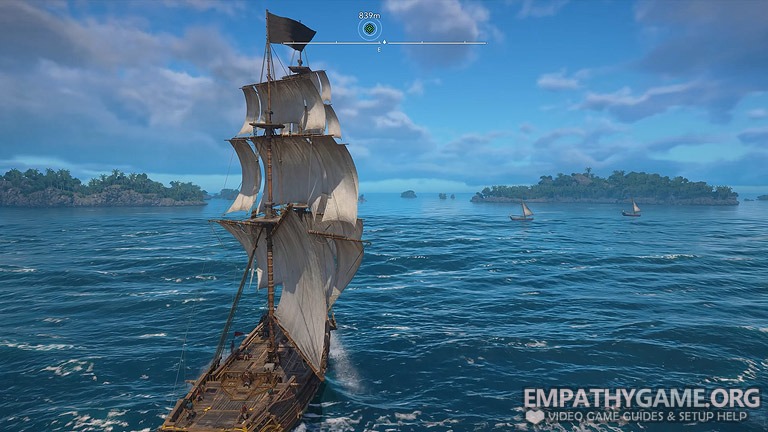
When Assassin’s Creed IV: Black Flag sends Edward Kenway to Kingston, the journey has a habit of competing with the destination. A merchant ship passes carrying the metal needed for an upgrade. Beyond it lies an island that has not been explored, and farther out, a storm gathers over a tempting stretch of open water. Each detour can seem more appealing. Ubisoft Montreal takes the naval battles introduced in Assassin’s Creed III and builds a Caribbean adventure in which sailing, piracy, exploration, and on-foot action continually lead into one another.
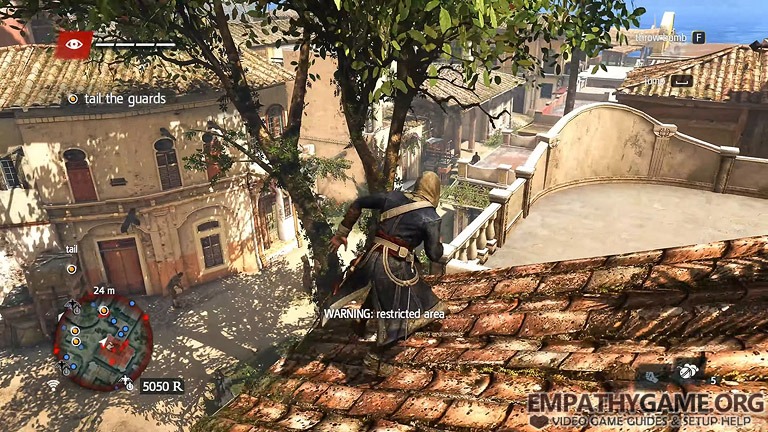
Not every part fits equally well. The freedom Edward enjoys aboard the Jackdaw contrasts sharply with missions that insist he follow a guard at precisely the right distance, while older parkour and sword-fighting systems struggle to match the naval combat’s sense of possibility. Its pirate adventure is often more compelling than the familiar Assassin’s Creed structure holding it together.
The Jackdaw Makes Travel Part of the Game
The Jackdaw gives the Caribbean a purpose beyond its size. A journey is never just a line between two locations because passing ships carry materials that may be worth more than reaching the next mission quickly. The spyglass reveals their cargo and relative strength before Edward commits to an attack. A merchant vessel loaded with cloth may promise easy money, but a smaller haul of metal can be the smarter prize when the Jackdaw needs stronger cannons. Suddenly, even a routine encounter asks a question: is this the right ship to fight?
That decision matters because piracy funds further piracy. Captured resources improve the hull, weapons, and ammunition stores, making stronger frigates and more heavily defended waters accessible. Upgrades remain tied to the world they change. There is a downside, though. When one resource becomes scarce, choosing targets can feel like a supply chore rather than opportunistic piracy.
Convoys, shipwrecks, coastal forts, and small islands make it easy to find another reason to change course. Fast travel saves time, especially when retracing long distances, but it also skips the encounters that give the world much of its character. Travel becomes interesting because meaningful decisions arise before the next destination.
Naval Combat Rewards Positioning More Than Button-Mashing
The Jackdaw handles with the immediacy of an action-game vehicle, yet its weapons create more tactical variety than those simple controls suggest. Broadside cannons deal heavy damage when a target is alongside the hull. Forward-facing chain shot slows an enemy ahead, mortars strike from a distance, and fire barrels discourage ships pursuing from behind. Heavy shot is especially punishing up close. The skill lies in combining these accessible weapons.
A stronger frigate, for example, is dangerous not merely because it has more health, but because allowing it a clear broadside can be costly. Mortars can soften it before the ships meet, chain shot can help limit its movement, and circling toward a safer firing angle creates an opening for the Jackdaw’s cannons. Controlling the enemy’s position matters more than firing every weapon as soon as it is ready.
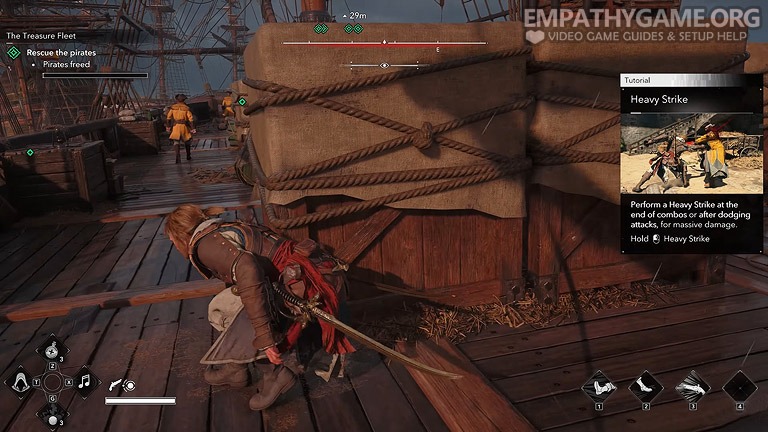
Defensive timing is just as important. Bracing protects the Jackdaw against incoming fire, but it also means giving up an opportunity to attack. Storms complicate matters further: large waves require attention to the ship’s direction, and a poorly timed turn can leave Edward exposed to both the sea and an enemy broadside. These are the moments when naval combat feels like a contest of judgment instead of a test of upgraded statistics.
The limitation is that ships eventually reveal fairly predictable patterns, and the Jackdaw is far more responsive than a realistic sailing vessel. Wind does not demand the careful route planning expected of a maritime simulator. The simplification keeps exploration lively and battles approachable, although anyone seeking deep sailing physics will find a more arcade-oriented experience.
Boarding Connects Two Games, but Eventually Becomes Routine
Boarding is where Black Flag’s two styles of action meet most convincingly. After disabling a vessel, the Jackdaw pulls alongside it and Edward can cross into a fight on the enemy deck. Cannon fire gives way to blades and pistols without making the captured ship feel like an unrelated reward screen. Taking a vessel also offers choices such as repairing the Jackdaw or lowering notoriety.
The swivel gun used just before boarding is a small but worthwhile detail. Its limited shots reward looking for groups of sailors or explosive powder reserves rather than firing at the first visible target. Because the angle changes as the ships draw together, an early opportunity can disappear within seconds. On smaller vessels, careful shooting can remove much of the resistance before Edward even steps across. It makes the transition more deliberate.
There is also some unexpected flexibility. Under suitable circumstances, Edward can leave the Jackdaw, swim toward an enemy vessel, and attempt to deal with its crew personally. It is an unconventional approach, not a reliable substitute for the naval battle and boarding rules in every encounter. It shows the appeal of a world where sea and land systems sometimes overlap unexpectedly.
Unfortunately, the excitement fades when collecting upgrade materials requires repeated captures. Boarding another small ship often means defeating a familiar number of sailors, while larger ones add variations such as taking out officers or destroying powder stores. Those objectives add variety, but cannot keep every raid interesting. A memorable act of piracy can gradually become the last repetitive task before claiming another cargo shipment.
Stealth and Swordplay Cannot Always Match That Freedom
Havana, Nassau, and Kingston still offer the recognisable pleasures of Assassin’s Creed: moving across rooftops, disappearing into vegetation, using crowds for cover, and reaching a guarded target from an unexpected direction. Eagle Vision identifies enemies and points of interest. Sleep darts can quietly remove a lookout, while berserk darts turn an enemy’s attention against nearby guards. Plantation warehouse raids and assassination contracts benefit from these tools because the approach is often left largely to Edward.
Yet the stealth rarely demands the same careful reading of a situation as a difficult naval battle. Guard awareness can be forgiving, and open fighting is frequently a more convenient solution than setting up a complicated infiltration. Edward’s paired swords and pistols look impressive, but familiar counterattacks and chained executions make many encounters predictable once the basic rhythm is learned. That accessibility suits chaotic boardings but can undermine stealth on land.
Parkour creates a different frustration. Edward may grab a ledge when the intended action was to move past it, or start climbing a nearby surface while trying to escape. The dense architecture of a city and the clutter of a ship deck make these mistakes more noticeable. Losing control for a moment is irritating during free exploration; in a tightly scripted mission, it can undo several minutes of careful movement.
Tailing and eavesdropping objectives expose the contradiction most clearly. The campaign can require Edward to remain inside a narrow following distance, listen from an approved position, and avoid a route the game considers incorrect. Failure may restart the sequence even though the surrounding sandbox has spent hours encouraging experimentation. The rope dart raises another question about how freely the systems are offered: its pulling and hanging takedowns are interesting stealth options, but it arrives so late in the original campaign that there is limited story time to explore them. Black Flag gives Edward a varied toolkit, then does not always give him the freedom to use it.
Treasure Hunts and Diving Give Exploration Different Rules
The smaller islands are not all equally rewarding. Some offer little more than a few chests, but treasure maps show how much better exploration can be when finding the reward requires actual observation. Their coordinates indicate a general location; the illustrated landmarks help reveal where the treasure is buried. A particular ruin, shoreline shape, or rock formation matters more than standing on an exact map marker. The distinction can initially confuse, but reading the landscape is more satisfying than following a cursor.
Diving-bell expeditions work for a different reason. Underwater, Edward cannot approach danger as he would from the Jackdaw. Air is limited, routes are more confined, and jellyfish, eels, and sharks make careless movement costly. The challenge becomes judging which wreck chamber to search first and where to replenish oxygen along the way. Swimming responds to the camera’s direction, a control detail that can make navigation feel unintuitive until it becomes familiar.
The best dives are small exercises in planning. A chest visible across a wreck may not be the sensible first destination if reaching it leaves too little air for the return trip. The awkward controls will not suit everyone, especially those who prefer fast combat. Still, diving gives the Caribbean another pace and another kind of adventure.
Edward’s Story Has Weight, Even When Time Skips Leave Gaps
Edward is an unusually fitting protagonist for this kind of open world because his motives are not especially noble at the beginning. He wants wealth, independence, and a better life, and he sees the Assassin–Templar conflict partly as an opportunity to obtain them. That makes his willingness to chase another prize across the Caribbean feel consistent with the man the story introduces. The Assassin’s Creed mythology matters, but Edward’s ambitions give the campaign its focus.
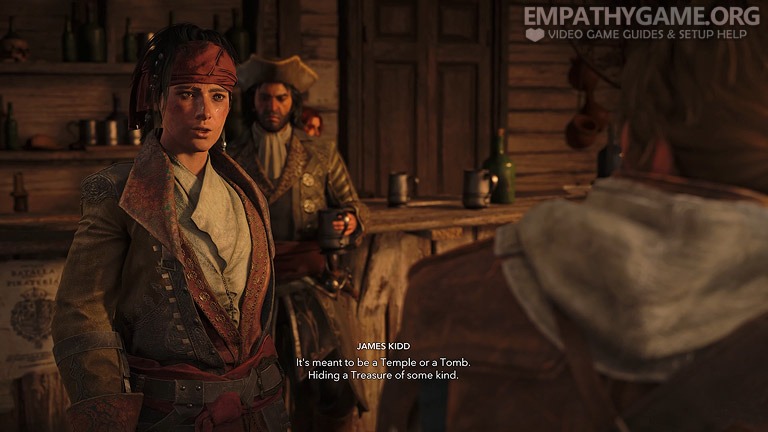
His companions give those ambitions consequences. Adéwalé often provides a more grounded perspective, while Edward Teach, Benjamin Hornigold, and James Kidd challenge different parts of Edward’s idea of loyalty and freedom. Nassau’s pirate society is an especially effective setting for those relationships. It represents a chance to escape imperial control, but the people trying to build that independence do not necessarily agree on what should come next. Edward’s gradual change feels earned when the things he wants begin to conflict with the people he values.
The story is less convincing when it moves too quickly through the passage of time. Large gaps between sequences sometimes leave Nassau’s changing fortunes insufficiently developed. The destination of a character arc may make sense, yet the steps that would make a particular political or personal development feel inevitable are not always shown. Meanwhile, the present-day Abstergo Entertainment sequences offer an amusing commentary on turning history into entertainment, but their office-bound pacing interrupts a journey that finds its strongest expression outside, aboard the Jackdaw.
Sound and Sea Conditions Carry Much of the Atmosphere
Black Flag does not need an elaborate quest to make a stretch of open sea appealing. Crew shanties turn quiet sailing into a shared activity, while their interruption by combat or bad weather changes the mood immediately. Timber creaks, cannons echo across the water, and the sea shifts from bright, inviting blue to something much less welcoming under storm clouds. Havana’s orderly streets, Nassau’s rough waterfront, and overgrown island ruins give the land its own variety without making every location feel designed around another objective marker.
Some of the most interesting environmental details are easy to overlook with the full interface enabled. With HUD indicators reduced, the little flags near the Jackdaw’s wheel, distant sails, incoming waves, and changes in the weather become cues worth paying attention to. This does not make the wind model realistic or turn Black Flag into a demanding navigation game. It simply changes the player’s relationship with the journey: instead of checking a minimap for every threat, there is a reason to look at the sea itself. The extra attention is rewarding, although not everyone will want to give up the clarity of the standard interface.
Ship Upgrades Give Progression Purpose, Not Every Collectible
Captured cargo and reales pay for the Jackdaw’s stronger hull, cannons, mortars, ram, and ammunition capacity. The benefits are tangible. A vessel that once seemed too dangerous may become a reasonable target, and the Legendary Ships eventually test whether those improvements are backed by good positioning and defensive timing. Fort assaults create a similar sense of growing capability, beginning with cannon fire against coastal defences and ending with Edward pursuing the defenders on foot.
Edward’s own progression is simpler. Hunting provides materials for health and equipment upgrades rather than an elaborate set of character builds. Mayan stelae, assassination contracts, and treasure maps bring different activities into the journey, although ordinary chests and repetitive island pickups do not always justify their place on the map. Completion can become an obligation long after the pleasure of discovery fades.
Kenway’s Fleet offers a separate trading diversion built around captured ships and routes, but managing those journeys is less engaging than sailing the Jackdaw yourself. The original competitive multiplayer and cooperative Wolfpack mode are different again, focusing on observation, disguise, and identifying assassination targets instead of piracy. They offer worthwhile tactical play, but do not extend the pirate adventure.
There are no radically different character builds or branching story decisions to transform another playthrough. The stronger reason to return is the freedom to approach the Caribbean differently: pursue difficult ships earlier, spend longer exploring, or ignore ordinary collectibles in favour of the activities that are actually enjoyable. Black Flag offers plenty to complete, but its best moments rarely come from trying to complete everything.
Final Verdict
Assassin’s Creed IV: Black Flag succeeds because its separate activities keep giving one another meaning. Scouting cargo leads to a battle, the battle provides materials, the materials strengthen the Jackdaw, and that stronger ship makes a previously dangerous route worth considering. Boarding connects naval fighting to Edward’s swordplay, while distant islands and changing sea conditions give the spaces between encounters their own appeal. None of these ideas needs to be exceptionally complex for the combination to work.
The older Assassin’s Creed formula remains less convincing. Sword counters become familiar, parkour can misread intentions, and restrictive tailing missions ask for obedience in a world that otherwise rewards curiosity. Boarding eventually repeats itself, too many islands are little more than collectible stops, and the story sometimes jumps over developments that deserve more time. Those weaknesses are substantial, especially for anyone seeking a demanding stealth game or precise on-foot controls.
For players drawn to exploration, naval battles, and the freedom to choose a destination for no reason beyond curiosity, Black Flag is much easier to recommend. Its strongest moments are not always the missions Ubisoft designed as highlights. Often they are the ordinary decisions made on the way there: whether to chase a ship, investigate an island, or keep sailing until the weather changes. That is why the Caribbean remains more memorable than many of the objectives scattered across it.
Assassin’s Creed IV: Black Flag Pros & Cons
- Pro: Naval battles, boarding actions, and Jackdaw upgrades give open-world exploration a distinctive purpose.
- Pro: Caribbean islands, forts, shipwreck dives, sea shanties, and treasure maps make optional discoveries appealing.
- Pro: Edward Kenway’s pirate ambitions give the Assassin–Templar conflict a different perspective.
- Pro: Gold Edition collects the original adventure and substantial extra single-player content, including Freedom Cry.
- Con: Forced tailing and eavesdropping missions interrupt the freedom of sailing and exploration.
- Con: On-foot sword combat can become easy and repetitive once counters are mastered.
- Con: Ubisoft Connect, account activation, and aging online features complicate the otherwise straightforward PC purchase.
- Con: Original PC presentation and controls lack several quality-of-life improvements introduced in the separate Resynced remake.
Assassin’s Creed IV: Black Flag PC System Requirements
These are Ubisoft’s published specifications for the original 2013 Windows PC game, not the more demanding Black Flag Resynced remake. Ubisoft’s support guidance uses Windows 10 (64-bit) as the supported OS baseline; original Steam-era listings may still show much older Windows versions.
OFFICIAL WINDOWS PC REQUIREMENTS:
MINIMUM:
OS: Windows 10 (64-bit, per Ubisoft’s support guidance)
CPU: Intel Core 2 Quad Q8400 at 2.6 GHz or AMD Athlon II X4 620 at 2.6 GHz
RAM: 2 GB
GPU: NVIDIA GeForce GTX 260 or AMD Radeon HD 4870, with at least 512 MB VRAM
DirectX: Version 9 (Ubisoft support minimum; later rendering features may use DirectX 11)
Storage: 30 GB available
RECOMMENDED:
OS: Windows 10 (64-bit, per Ubisoft’s support guidance)
CPU: Intel Core i5-2400S at 2.5 GHz or AMD Phenom II X4 940 at 3.0 GHz
RAM: 4 GB
GPU: NVIDIA GeForce GTX 470 or AMD Radeon HD 5850, with at least 1 GB VRAM
DirectX: Version 11
Storage: 30 GB available
Additional PC Performance and Setup Notes
Widescreen support: The original Windows game supports ordinary 16:9 widescreen resolutions natively. You do not need a community widescreen patch for a standard 1920×1080 or 2560×1440 display. Unusual ultrawide aspect ratios can behave differently, so test the game’s own display settings before trying unofficial modifications.
Graphics and performance: On hardware struggling with crowded ports or naval battles, reduce demanding effects such as advanced shadows, ambient occlusion, antialiasing, and PhysX-related smoke before lowering every setting. The original game provides more PC graphics controls than its initial low RAM numbers suggest; modern Windows, launchers, and background applications also require resources beyond the 2013 game’s published minimum.
Compatibility: Install the legitimate PC release from the storefront that owns your license, update Ubisoft Connect, and check game files through that store if launch failures occur. If using community mods, verify that the files explicitly support the 2013 original; replacements designed for Resynced are not interchangeable. Ubisoft Connect/account issues and multiplayer-service issues are separate from graphics-performance problems.
Official Trailer
Note: This official launch trailer introduces Edward Kenway and the pirate setting of the original Black Flag. The written guide above focuses on PC ownership, editions, installation, and technical differences from the later remake.
Frequently Asked Questions
How do I unlock Kenway’s Fleet in Assassin’s Creed IV: Black Flag?
Kenway’s Fleet becomes available in Sequence 4 and can be accessed from the map table inside the Jackdaw’s Captain’s Cabin. In the original game, this ship-management activity requires an internet connection and a signed-in Ubisoft account. If it remains stuck loading after you have unlocked it, check your account connection and Ubisoft’s service status; unlocking it does not guarantee the online feature will connect successfully.
What should I do with captured ships after boarding them?
After successfully boarding an enemy vessel, you can repair the Jackdaw, lower your wanted level, or send the captured ship to Kenway’s Fleet once that feature is unlocked and accessible. Repairing is particularly valuable during difficult naval encounters, while sending stronger ships to the fleet can provide additional trading rewards. You receive the captured ship’s cargo regardless of which option you select.
Which Jackdaw upgrades should beginners prioritize?
Hull armor, broadside cannons, round-shot strength, and mortars are strong early investments because they improve survivability and damage in ordinary naval battles. Heavy shot becomes especially useful against large ships at close range. Use the spyglass to identify vessels carrying metal and other needed materials before attacking, rather than spending resources evenly on cosmetic or less frequently used upgrades.
How do I unlock Elite Jackdaw upgrades?
Elite upgrades require special design plans in addition to money and crafting materials. These plans are found in locations such as underwater shipwrecks, treasure-map dig sites, and hidden chests. Some are tied to connected activities: the treasure map for Elite Fire Barrel Storage comes from Kenway’s Fleet, meaning unavailable online access can prevent completion of that particular upgrade.
How can I defeat the Legendary Ships?
The four Legendary Ship encounters are optional, high-difficulty naval challenges best attempted with a heavily upgraded Jackdaw. Improve hull armor, broadside damage, heavy shot, and mortars before approaching El Impoluto, La Dama Negra, HMS Prince, or the paired HMS Fearless and Royal Sovereign. Their attack patterns differ, so positioning, bracing against incoming fire, and avoiding prolonged exposure to their strongest weapons matter as much as raw firepower.
When can I use the Diving Bell to explore underwater shipwrecks?
The Diving Bell becomes available during Sequence 6, Memory 1, “Diving for Medicines.” After unlocking it, Edward can explore additional underwater wrecks containing treasure, collectibles, and valuable Elite ship-upgrade plans. Watch for sharks and use diving bells, air barrels, and underwater air pockets to manage oxygen while exploring.
How do I lower my wanted level and stop Pirate Hunters?
Attacking and plundering ships raises Edward’s naval wanted level, attracting increasingly dangerous Pirate Hunters. After boarding a defeated vessel, selecting “Lower Wanted Level” reduces notoriety by one level. You can also pay the appropriate official on land to clear your wanted status, although fighting hunters can be useful when you need more ship-upgrade materials.
Does Assassin’s Creed IV: Black Flag have multiplayer or co-op?
Yes, the original game includes competitive online multiplayer and a separate cooperative mode called Wolfpack, designed for one to four players completing timed assassination objectives against AI targets. However, Edward Kenway’s open-world story campaign is strictly single-player. Friends cannot jointly sail the Jackdaw, explore the Caribbean, or complete story missions together.
Does Black Flag support split-screen, couch co-op, or LAN on PC?
No. The original PC version does not include split-screen, local couch co-op, or a dedicated LAN multiplayer mode. Wolfpack and competitive matches belong to the separate online multiplayer system, subject to the availability of Ubisoft’s connected services.
Are the original Black Flag multiplayer servers still available on PC?
Ubisoft’s published online-service retirement list specifically identifies the Wii U version of Black Flag, rather than announcing a blanket shutdown of the original PC multiplayer. Nevertheless, access to older online modes, matchmaking, and connected rewards can be inconsistent. Check the multiplayer menu and Ubisoft service information before relying on these features, especially if purchasing the game primarily for online play.
Does Assassin’s Creed IV: Black Flag support cloud saves on PC?
No. Ubisoft Support has confirmed that the original PC game does not provide cloud-save synchronization, despite having supported it earlier in its history. Progress is stored locally, so back up your save files before reinstalling Windows, changing computers, or removing Ubisoft Connect data. The game supports three save slots, but those slots are not a substitute for external backups.
How do I start the Freedom Cry DLC?
Freedom Cry is a separate story starring Adéwalé, Edward Kenway’s former quartermaster, rather than an extra quest marker in the main Caribbean campaign. Once the DLC is installed and activated through the correct account, launch it from its entry in the original game’s main menu. The separately sold standalone version is launched as its own game and does not require an existing Black Flag campaign save.
Can I keep exploring after finishing Black Flag, and does it have New Game Plus?
Yes, completing the main story does not end access to the Caribbean. You can continue exploring, collecting treasure, upgrading the Jackdaw, completing side activities, and replaying story memories through the progression menu. However, the original 2013 game does not have New Game Plus that carries upgrades into a fresh campaign; that feature belongs to the separate Resynced remake.
Can I change the difficulty in the original Black Flag?
The original single-player campaign does not offer a conventional Easy, Normal, or Hard difficulty selector. Its challenge comes mainly from mission objectives, enemy encounters, and the strength of your equipment and ship upgrades. The separate Wolfpack multiplayer mode offers difficulty choices, but these do not change the single-player campaign.
How long does Assassin’s Creed IV: Black Flag take to complete?
The main campaign generally takes around 20–25 hours, while exploring islands, upgrading the Jackdaw, and completing substantial side content can extend a playthrough to approximately 35–45 hours. Completion-focused play can take around 55–65 hours or longer, especially when pursuing collectibles and optional naval challenges. Availability of online-dependent activities can also affect what can be completed.
Can I play Black Flag on PC with a controller?
Yes. The original Windows version supports keyboard and mouse controls as well as compatible gamepads, including Xbox-style XInput controllers. A controller is a natural fit for sailing, ship combat, and third-person movement, although mouse aiming may be preferable for some players. If a PlayStation-style controller is not detected correctly, check Steam Input or the controller’s supported input mode before installing third-party software.
Do I need to play Assassin’s Creed III or earlier games before Black Flag?
No. Edward Kenway’s pirate adventure tells a largely self-contained story, making Black Flag an accessible entry point into the series. Familiarity with Assassin’s Creed III adds context to the Kenway family and the wider Assassin–Templar conflict, while earlier games help explain the modern-day Animus storyline. Neither is essential for understanding Edward’s main journey.
Still have questions? Check the Assassin’s Creed Black Flag Reddit community, Steam Discussions, or Ubisoft Support for gameplay questions, PC troubleshooting, and online-service assistance.
Sources & References
Key factual and technical information in this guide was checked against official platform documentation and established PC references, including:
- Ubisoft — original Black Flag game page — original release identity, setting, and separate remake distinction
- Steam — Assassin’s Creed IV Black Flag — Gold Edition contents, Steam Deck rating, account requirements, and overall user reception
- Ubisoft Store — Black Flag Gold Edition — PC ownership, launcher activation, and original-edition requirements
- Microsoft/Xbox — Black Flag Gold Edition for PC — Windows availability, included content, and listed Game Pass plans
- Ubisoft Help — Black Flag system requirements — minimum and recommended CPU, RAM, GPU, OS, DirectX, and storage
- PCGamingWiki — Assassin’s Creed IV: Black Flag — original PC release identity, AnvilNext engine, technical settings, and original-versus-remake distinction
Similar Games Like Assassin’s Creed IV: Black Flag
- Assassin’s Creed Odyssey
- Ghost of Tsushima
- Assassin’s Creed Shadows
- Red Dead Redemption 2
- Far Cry 3
- Red Dead Redemption




Found something worth playing through DecideGame?
DecideGame.com is an independent gaming project run by Editor Zero. If this guide helped you discover a game, solve a problem, or find useful information, you can support DecideGame.com and help keep new and updated game guides coming.
DecideGame — PC Game Guides, Reviews & Setup Help