
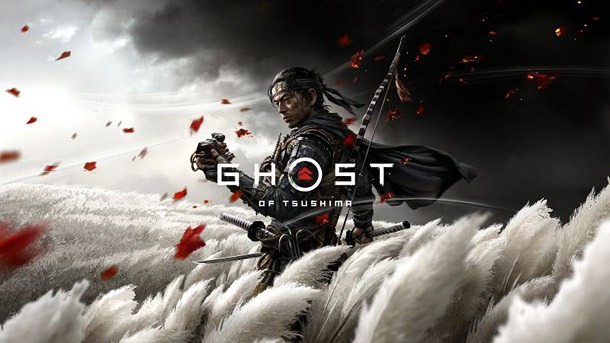
📅 Game released: 2021
Ghost of Tsushima Director’s Cut follows Jin Sakai through a Mongol invasion of feudal Japan, combining precise katana combat, stealth, and open-world exploration. This PC guide explains official Steam and Epic purchase, download and installation options, the Iki Island expansion, Legends access, PlayStation sign-in, Steam Deck support, system requirements, and troubleshooting.
 By Editor Zero — independently researched, edited, and maintained.
Last updated: 13 November 2026
Last reviewed: 13 November 2026
Table of Contents
- Quick Facts
- Official PC Stores, Download & Installation
- Ghost of Tsushima Review
- Pros & Cons
- PC System Requirements
- Frequently Asked Questions
- Similar Games
Ghost of Tsushima Quick Facts
- Game: Ghost of Tsushima Director’s Cut (PC edition)
- Developer: Sucker Punch Productions | PC version by Nixxes Software
- Publisher: PlayStation Publishing LLC / Sony Interactive Entertainment
- Genre: Action-Adventure, Open World, Stealth Action, Samurai, Historical Action
- Release: Director’s Cut: August 20, 2021 (PS4/PS5); Windows PC: May 16, 2024 (original game: July 17, 2020)
- Setting: Tsushima Island during the first Mongol invasion of Japan in 1274
- Platforms: PS4, PS5, Windows PC
- PC edition: Director’s Cut campaign, Iki Island expansion, Legends co-op, New Game Plus, and bonus content
- Modes: Single-player campaign, New Game Plus, and online Legends co-op
- PlayStation account: Not needed for single-player; required for Legends online play and the PlayStation overlay
- Steam Deck: Single-player and Iki Island Verified; Legends multiplayer unavailable on Steam Deck
- PC features: Unlocked frame rates, 21:9 / 32:9 / 48:9 displays, DLSS 3, FSR 3, XeSS, Reflex, DLAA, frame generation
- Engine: Sucker Punch in-house engine
- Community: Steam Discussions, Reddit
- PC modding: Nexus Mods (unofficial)
- Metacritic score: 89/100 (PC Director’s Cut)
- IGN score: N/A / Not scored for the complete PC edition; 8/10 for Iki Island expansion (PS5)
- OpenCritic average: 87/100 (Director’s Cut, combined critic reviews)
- Steam user reception: Very Positive overall
Official PC Stores, Download & Installation
👇 Compare official PC stores below to purchase, download, and install Ghost of Tsushima.
- Director’s Cut: Steam and Epic sell the PC edition with the main campaign, Iki Island expansion, New Game Plus, Photo Mode, Kurosawa Mode, and expanded-release bonuses. Legends is included in the ownership entitlement, with a separate no-extra-cost unlock on Steam for new players.
- Steam: The official Steam release supports achievements, cloud saves, controller support, HDR, and Family Sharing. Players newly accessing Legends must activate the Legends (Unlock) add-on at no additional cost; existing players do not need to repeat activation. PlayStation sign-in is optional for the campaign but required for Legends.
- Epic Games Store: The official Epic release supports achievements, cloud saves, single-player, co-op, and multiplayer. Epic lists PlayStation Network sign-in only for online multiplayer and the PlayStation overlay.
- Installation: Allow at least 75 GB, update Windows and graphics drivers, and use an SSD for the recommended, High, and Very High performance tiers.
- PlayStation account: Sign-in is not required for the complete single-player campaign, Iki Island, or Steam/Epic achievements. It is required for Legends multiplayer and the PlayStation overlay.
- Legends and cross-play: Online multiplayer supports PC, PS4, and PS5 cross-play, with PlayStation-friends invitations supported. Nixxes has also enabled cross-platform matchmaking, while PlayStation’s support documentation continues to describe cross-play as a beta feature. An internet connection and PlayStation sign-in are required.
- Save transfer: PlayStation and Nixxes documentation does not provide cross-save between PS4/PS5 and PC. PlayStation Trophy support through the overlay does not transfer campaign progress.
- PC features: Supported options include unlocked frame rates, 21:9 and 32:9 ultrawide, 48:9 triple-monitor layouts, DLSS 3, FSR 3, XeSS, Reflex, DLAA, and frame generation on compatible hardware.
- Controls and Steam Deck: Mouse and keyboard controls are customizable, while a wired DualSense enables the full haptic-feedback and adaptive-trigger feature set. Single-player is Steam Deck Verified, but Legends multiplayer is unavailable on Steam Deck.

 Buy This Game on Epic Games Store

Ghost of Tsushima Review
A samurai journey where the freedom to fight clashes with a fixed code of honor.
Ghost of Tsushima understands that atmosphere can change the meaning of an action. A sword fight feels different when it begins in a field of swaying grass rather than a crowded fortress, and a quiet ride through the countryside gains urgency when smoke appears beyond the trees. Sucker Punch builds its open-world adventure around that contrast: an island worth protecting and a war that keeps interrupting its beauty.
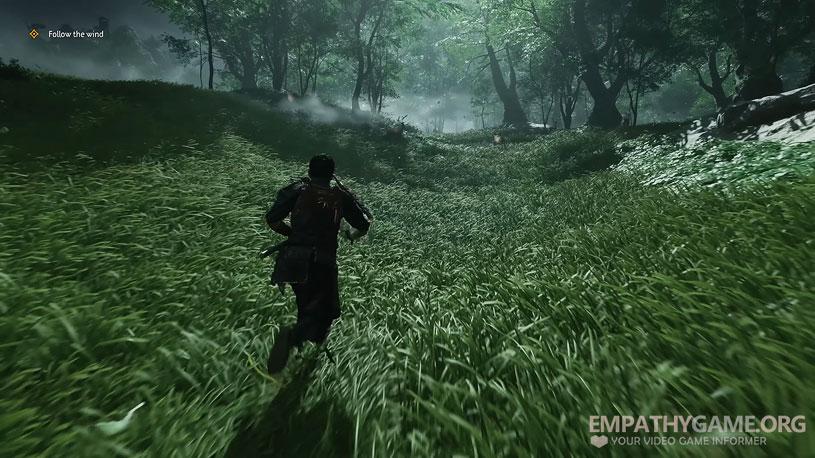
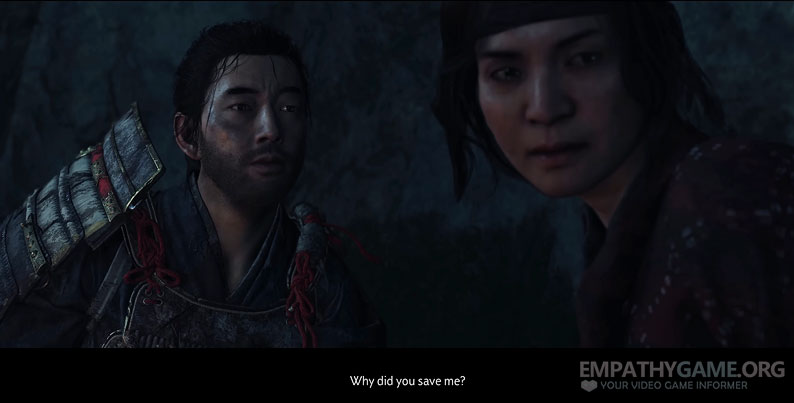
Jin Sakai survives a disastrous first confrontation with the Mongol army and must reconsider the samurai principles that shaped him. He believes in confronting enemies openly, but occupied villages, endangered civilians and an enemy willing to exploit his predictability make that ideal harder to sustain. The game gives the player two compelling ways to respond: stand before an opponent with a drawn katana or reach them unseen. Its best moments make both choices appealing, even as Jin’s story insists they cannot remain equally acceptable.
Jin’s Moral Conflict Has a Fixed Destination
The central relationship is between Jin and Lord Shimura, the uncle who raised him. Shimura sees discipline and honorable combat as inseparable from being a samurai. Jin increasingly sees those rules as a liability when people need saving. The conflict works because neither man is simply indifferent to Tsushima’s suffering. They disagree about what protecting it should cost.
Yuna, whose survival instincts challenge Jin’s upbringing, brings another perspective. Masako’s tale explores grief that has hardened into revenge, while Ishikawa’s troubles with a former student reveal how pride and responsibility can coexist. Their stories make the occupation feel personal rather than limiting it to a sequence of captured outposts. A village with hostages on the ground and lookouts above can reinforce the same tension through play: the impressive frontal challenge may be less responsible than removing the guards quietly.
Yet there is a limit worth recognizing. Even a player who avoids assassination and consistently chooses direct sword fights cannot steer Jin toward an alternative honorable storyline. His transformation into the Ghost is written into the campaign. The contrast between mechanical freedom and predetermined character development is sometimes awkward, particularly when dialogue condemns tactics the player has deliberately avoided. The story remains effective, but it is a character drama, not a morality-driven role-playing system.
For a different kind of fractured homeland, Crimson Desert follows Kliff through a larger fantasy world of competing factions and unpredictable detours. Jin’s journey is narrower and more personal. Both draw strength from showing what war does to ordinary settlements, but Ghost of Tsushima keeps returning to the cost of one man’s choices.
Sword Combat Rewards Timing, but Difficulty Changes Its Rhythm
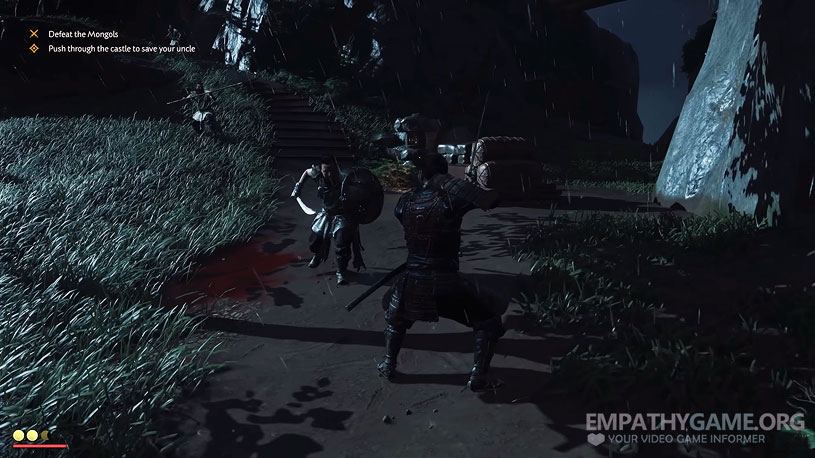
The sword fighting succeeds through readable decisions rather than elaborate button combinations. A shield carrier demands a different response from a spearman, while a poorly timed parry can leave Jin exposed to a second attacker. Stone, Water, Wind and Moon stances are built around swordsmen, shields, spears and brutes respectively. Changing stance while several enemy types converge makes a fight feel like a series of fast judgments. Resolve adds another calculation: spend it to recover health or use it offensively.
Duels remove the surrounding chaos and ask for patience. Without a group to manage, attention shifts to an opponent’s shoulders, feints and attack rhythm. A duel in a quiet field can carry more tension than a large camp because there is nowhere to redirect a mistake. Standoffs produce a different pleasure. Jin invites an enemy to strike first, waits for the real commitment and answers with one decisive cut. Sakai Clan Armor can extend that opening into a chain, but later opponents feint more convincingly and make these cinematic victories less automatic. The technique grows riskier just as it looks more spectacular, and choosing it announces Jin’s arrival to the whole camp.
Difficulty also changes what the combat asks of the player. Lethal makes mistakes dangerous, yet the faster kills it allows can shorten ordinary encounters so much that some upgraded techniques see less use. Hard can produce a richer exchange for someone who wants enemies to survive long enough to demand stance changes, counters and recovery. That does not make Hard universally tougher. It shows why the most punishing setting and the most interesting sword-fighting rhythm are not necessarily the same thing. Ghost Stance adds another powerful reward for keeping control of a fight, though its ability to end encounters decisively can further reduce the need to experiment once Jin is heavily upgraded.
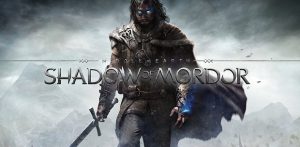
For players who prefer a more aggressive fantasy interpretation of melee combat, Middle-earth: Shadow of Mordor is a useful contrast. Its supernatural powers and Nemesis captains invite improvisational brutality; Tsushima’s satisfaction comes from restraint, spacing and the instant when a carefully read attack turns the fight.
Stealth and Ghost Tools Offer Freedom With Limits
Combat does not have to begin with a challenge. A Mongol camp can be approached through grass, along rooftops or directly through the gate. Scouting a leader may contribute to stance progression; removing an archer can make an escape safer; a chain assassination can clear several guards before anyone raises an alarm. When stealth fails, the same layout still supports an open fight. That continuity is a major strength: detection changes the situation instead of making every plan feel wasted.
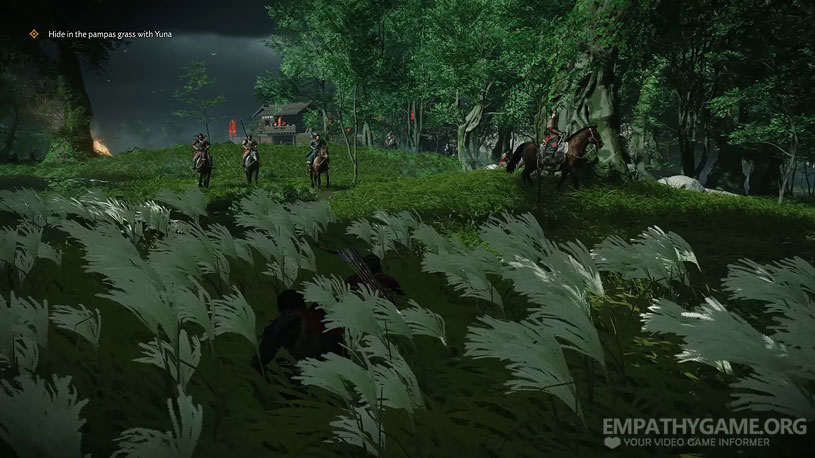
The Ghost arsenal gives that flexibility a practical shape. Wind chimes redirect patrols, kunai interrupt threats, smoke bombs buy space for rescue or escape, and bows remove distant lookouts. Tools also interact with the environment: firecrackers can draw enemies into tall grass that a flaming arrow can ignite. A small decision about where to lure a patrol becomes more interesting than simply selecting the strongest explosive. The game is most satisfying when those systems are treated as possibilities rather than a fixed stealth routine.
Its freedom is not limitless. Objectives and scripted encounters sometimes pull the player back toward a prescribed sequence. An unrelated skirmish near a fort, for instance, can put guards on alert and interrupt an attempt to observe their leader until the area settles. That is a situational frustration rather than a defining fault, but it exposes the friction between a world that appears to operate independently and missions that expect particular conditions.
The Guiding Wind Makes Exploration Feel Less Mechanical
The Guiding Wind is one of the smartest interface decisions here. Rather than demanding constant attention to a minimap, it pushes leaves and grass toward the selected destination. Navigation becomes part of the scenery, encouraging the player to look at the landscape instead of a corner of the screen. It cannot remove the familiar open-world structure underneath, but it changes how that structure is experienced.
Fox dens lead to Inari Shrines and charm-related benefits. Bamboo strikes increase Resolve, hot springs improve health, and shrines turn climbing into small exercises in observation. Haiku provide moments of quiet that would feel out of place in a more relentlessly urgent action game. Golden forests, stormy coasts and burned farms give these diversions context. An encounter with a golden bird may be followed moments later by the aftermath of an attack. Tsushima’s beauty matters because the island’s suffering is visible within it. Music and ambient sound support the same rhythm: calm stretches leave room for wind, birds and footsteps, while a confrontation gives the score permission to grow. The quieter journey is not wasted time between objectives. It is part of why those objectives matter.
Exploration creates a less obvious equipment trade-off. Traveler’s Attire helps reveal the map and locate artifacts, making it useful enough to remain equipped through long stretches of travel. More combat-oriented armor may offer stronger bonuses, yet changing out of the exploration outfit can feel like giving up information. This is both a smart reason to care about clothing outside battle and a small inconvenience for anyone who wants to enjoy a favorite armor build without missing discoveries.
Progression, Side Tales and the Limits of Repetition
Technique points expand stances, defensive options, Ghost abilities and exploration skills. Charms can favor archery, Resolve, stealth, healing or direct melee damage, while armor makes those preferences more pronounced. The changes matter because a new ability can alter how a familiar camp is approached. There is no need to commit permanently to being only a swordsman or only an assassin.
Mythic Tales show the open world at its strongest. A legend may lead through a carefully staged landscape toward a distinctive duel, an armor set or a special technique. They feel designed around an idea rather than built from interchangeable objectives. Ordinary tales are less consistent. Some introduce an intriguing local mystery only to resolve it with another group of bandits or Mongols. The apparent kappa investigation is a telling example: its strange premise raises expectations that the eventual human explanation cannot quite satisfy. Repetition is therefore not only about clearing another camp. It is also about learning how often a promising story will end in a familiar fight.

New Game Plus, different difficulties, completion goals and alternative equipment combinations offer reasons to return. Yet the underlying mission arcs and Jin’s story remain fixed, so replayability comes more from mastering encounters than discovering different outcomes. The distinction matters for players comparing it with Assassin’s Creed Odyssey. Odyssey emphasizes loot, dialogue decisions and sprawling RPG progression; Tsushima is tighter, with less narrative choice but a clearer sense of place and sword-fighting identity.
Iki Island Deepens the Samurai Story
Iki Island is not merely another map to clear. Its story examines Jin’s memories of his father and the Sakai clan’s past, especially the uncomfortable possibility that the family legacy he values looks very different to the people who suffered under it. The Eagle’s poison and visions turn that history into a personal threat, while the islanders’ hostility gives Jin a reason to question assumptions that the main campaign sometimes leaves intact.
The smaller region feels denser, with rocky coastlines, caves, animal sanctuaries, archery challenges and new Mythic Tales. Shamans strengthen nearby enemies, making target priority more urgent, while mixed groups force quicker switches between stance and Ghost tools. Horse charge, equipment and charms broaden the options further. Iki becomes available during Act 2, but its emotional references and demanding fights generally carry more weight once Jin’s main journey is well established.
Legends Gives Teamwork a Different Purpose
Legends trades Jin’s historical drama for supernatural folklore, loot and cooperative combat. Samurai, Hunter, Ronin and Assassin classes bring distinct responsibilities to story missions, Survival, Rivals and raid-style encounters. It is not a replacement for exploring Tsushima, but it gives familiar weapons and abilities a new test: how well they work when someone else’s actions determine the next opening.
Good team composition is more subtle than stacking damage. An Assassin’s smoke can create cover for a Healing Ronin to use Spirit Kunai, keeping bombs available for tougher Oni, while a Hunter helps thin out advancing groups. There is a trade-off, though: an especially efficient ranged attacker may eliminate enemies before a stealth-oriented teammate can make use of an assassination opportunity. That overlap makes coordination more interesting than a simple division into four fixed roles, particularly during demanding Survival waves.
Final Verdict
Ghost of Tsushima earns its atmosphere through the way movement, combat and scenery reinforce one another. The Guiding Wind makes travel inviting, duels reward concentration, and stealth tools provide enough flexibility for an enemy camp to become more than a repeated checklist task. Jin’s conflict with Shimura gives those systems an emotional direction, even if honorable play cannot change where the story leads.
Its weaknesses are familiar but meaningful: side tales can resolve predictably, upgrades sometimes reduce combat variety, and the freedom of its encounters does not extend to the narrative. Players seeking branching choices or endlessly surprising quests may find the structure restrictive. Those drawn to thoughtful sword fighting, a carefully directed world and a personal samurai story will find a game whose quieter moments matter as much as its battles.
Ghost of Tsushima Pros & Cons
- Pro: Beautiful open world with strong art direction, Guiding Wind navigation, cinematic landscapes, and a powerful samurai atmosphere
- Pro: Excellent katana combat, stances, duels, stealth tools, Ghost weapons, armor builds, Mythic Tales, and meaningful side stories
- Pro: Director’s Cut includes Iki Island, Legends co-op, New Game Plus, Photo Mode, Kurosawa Mode, and strong PC features
- Pro: Strong PC feature set with unlocked frame rates, ultrawide displays, DLSS 3, FSR 3, XeSS, Reflex, DLAA, frame generation, and DualSense support
- Con: Open-world activities such as camps, fox dens, collectibles, and side objectives can become repetitive after many hours
- Con: Legends online multiplayer and PlayStation overlay features require PlayStation Network sign-in
- Con: Legends is not compatible with Steam Deck even though the complete single-player experience is Verified
Ghost of Tsushima PC System Requirements
MINIMUM – 720p / 30 FPS / Very Low:
OS: Windows 10 64-bit
CPU: Intel Core i3-7100 / AMD Ryzen 3 1200
RAM: 8 GB
GPU: NVIDIA GeForce GTX 960 4GB / AMD Radeon RX 5500 XT
Storage: 75 GB HDD space available, SSD recommended
RECOMMENDED – 1080p / 60 FPS / Medium:
OS: Windows 10 64-bit
CPU: Intel Core i5-8600 / AMD Ryzen 5 3600
RAM: 16 GB
GPU: NVIDIA GeForce RTX 2060 / AMD Radeon RX 5600 XT
Storage: 75 GB SSD space available
HIGH – 1440p / 60 FPS or 4K / 30 FPS / High:
OS: Windows 10 64-bit
CPU: Intel Core i5-11400 / AMD Ryzen 5 5600
RAM: 16 GB
GPU: NVIDIA GeForce RTX 3070 / AMD Radeon RX 6800
Storage: 75 GB SSD space available
VERY HIGH – 4K / 60 FPS / Very High:
OS: Windows 10 64-bit
CPU: Intel Core i5-11400 / AMD Ryzen 5 5600
RAM: 16 GB
GPU: NVIDIA GeForce RTX 4080 / AMD Radeon RX 7900 XT
Storage: 75 GB SSD space available
Additional PC notes:
- Performance targets: These tiers are official targets, not guarantees; background software, cooling, drivers, display resolution, and image-quality settings affect results.
- CPU instructions: Nixxes states that the processor must support AVX and F16C instructions; most CPUs released from 2012 onward support them.
- Storage: The minimum tier allows an HDD with an SSD recommended, while every higher tier specifies a 75 GB SSD.
- Steam Deck: The single-player campaign and Iki Island are Verified and include a suitable handheld preset. Legends online multiplayer remains unavailable on Steam Deck.
- PlayStation PC SDK: The SDK is required only for Legends and the PlayStation overlay. Antivirus blocking or a damaged SDK installation can cause initialization errors.
- Troubleshooting: Verify files, update Windows and stable GPU drivers, remove unstable overclocks, disable conflicting overlays, and test without frame generation when diagnosing crashes or stutter.
Ghost of Tsushima Director’s Cut PC Features Trailer
Watch the official PC features trailer for a concise look at the complete Director’s Cut, ultrawide display support, performance technologies, controls, and the journey of Jin Sakai.
Frequently Asked Questions
What is included in Ghost of Tsushima Director’s Cut on PC?
The PC edition includes Jin Sakai’s full campaign, Iki Island expansion, New Game Plus, Photo Mode, Kurosawa Mode, and Legends online multiplayer. Steam owners obtain Legends through a separate no-extra-cost add-on; it is not a separate paid game purchase.
How do you unlock Ghost of Tsushima Legends on Steam?
New Steam players should open the official Legends (Unlock) Steam page and add it to their owned copy of Director’s Cut. Existing owners who already had Legends do not need to claim it again. Legends requires an internet connection and PlayStation sign-in.
Do you need a PlayStation account for Ghost of Tsushima on PC?
No for the entire single-player campaign, Iki Island, and Steam or Epic achievements. A PlayStation account is required for online Legends and PlayStation overlay features; it is not required just to play the story.
Can you play Ghost of Tsushima offline?
The campaign and Iki Island can be played offline after installation and any required store activation. Legends multiplayer, cloud synchronization, and online PlayStation features require a connection.
Can you play Legends alone, and is there split-screen co-op?
Legends Story missions can be attempted solo, but Legends always requires an online connection and PlayStation sign-in. Survival, Rivals, and raids are multiplayer activities; the PC version has no local split-screen or couch co-op.
Does Legends support cross-play between PC and PlayStation?
Yes. The mode supports cross-play between PC, PS4, and PS5, including inviting friends through PlayStation accounts. Cross-platform matchmaking has received support, although PlayStation’s support page still labels the feature a beta; the available match options can depend on the mode.
Does Ghost of Tsushima work on Steam Deck?
Yes for the campaign and Iki Island: the Steam version is Verified for the single-player experience, including a handheld graphics preset. Legends online multiplayer does not work on Steam Deck because its PlayStation-integrated features require Windows.
Can you transfer Ghost of Tsushima saves between PS4, PS5, and PC?
No. Single-player saves and Legends progress do not transfer between the console versions and the PC release. A linked PlayStation account and overlay trophies do not provide cross-save.
Is Ghost of Tsushima included with Xbox Game Pass?
No. The PC Director’s Cut is a PlayStation-published game sold through Steam and Epic Games Store, not an Xbox Game Pass title.
How long does Ghost of Tsushima take to finish?
A main-story-focused playthrough often takes roughly 25–30 hours, while completing ally tales, shrines, exploration, and Iki Island can extend the experience substantially. New Game Plus and Legends add further play time beyond the main campaign.
When should you start Iki Island?
Iki Island becomes available from Act 2, but its tougher enemies and personal story references often fit better after substantial progress through Jin’s campaign. It adds a separate region, quests, challenges, and upgrades.
Does Ghost of Tsushima have multiple endings or New Game Plus?
The main story has one important final choice, but it does not branch into several separate campaigns. New Game Plus supports a replay with carried-over techniques and equipment, additional rewards, and tougher encounters.
Which difficulty should beginners choose?
Medium is a sensible starting point, with Easy available if you prefer the story and exploration. Hard and Lethal demand better parrying, dodging, stance switching, and Resolve management; Lethal also allows some enemies to die faster.
How do the four sword stances work?
Stone targets swordsmen, Water is strong against shield users, Wind handles spearmen, and Moon is effective against brutes. Unlocking and switching stances to match enemy types is more reliable than sticking with just one.
What are useful early armor and charm choices?
Samurai Clan Armor makes early encounters more forgiving, while Traveler’s Attire helps discover hidden locations and collectibles. Later, Sakai Clan, Tadayori’s, Ronin, and Ghost gear support different melee, archery, and stealth priorities. Choose charms to reinforce the playstyle you use most.
Can Ghost of Tsushima be modded on PC?
Unofficial PC mods include visual adjustments, reshades, interface tweaks, and gameplay alterations, but the game does not offer a broad official modding toolkit. Back up files and saves, check mod compatibility, and avoid unsupported modifications in Legends multiplayer.
Why does Ghost of Tsushima crash or fail to launch on PC?
Possible causes include unsupported CPU instructions (AVX or F16C), damaged files, graphics-driver problems, unstable overclocks, conflicting overlays, or PlayStation PC SDK issues affecting online features. Confirm CPU support, verify game files through the official launcher, and consult Nixxes support for errors that persist.
How can you improve performance on a lower-end PC?
Start from an appropriate graphics preset, lower demanding settings and output resolution as necessary, and use supported DLSS, FSR, or XeSS upscaling on compatible hardware. An SSD is strongly recommended even though the official minimum specification also permits an HDD.
Should you use a controller or keyboard and mouse?
Both input methods are supported, with customizable keyboard and mouse controls. A controller suits melee combat and traversal, while mouse aim can help with bows; wired DualSense is required for the full haptic and adaptive-trigger features.
Still have questions? Check the official PlayStation PC support page, Nixxes PC help center, or the Ghost of Tsushima Reddit community.
Sources & References
Key factual, technical, and review-score information in this guide was checked against relevant sources, including:
- PlayStation: Ghost of Tsushima Director’s Cut for PC — official PC availability, PlayStation account requirement, graphics features, ultrawide support, and DualSense functions
- PlayStation PC Support: Ghost of Tsushima — release date, four official performance tiers, Legends requirements, Steam Deck multiplayer limitation, cross-play, and accessibility
- Steam: Ghost of Tsushima Director’s Cut — Windows availability, store features, PlayStation account notice, controller support, cloud saves, and PC requirements
- Epic Games Store: Ghost of Tsushima Director’s Cut — Epic achievements, cloud saves, account requirements, PC features, and official minimum and recommended specifications
- Steam: Ghost of Tsushima Legends (Unlock) — separate no-extra-cost Legends access for Director’s Cut owners
- Nixxes: Director’s Cut PC project — PC port development and Sucker Punch in-house engine technology
- Metacritic: Director’s Cut PC critic reviews — version-specific PC Metascore and reception context
Similar Games Like Ghost of Tsushima
- Assassin’s Creed Shadows
- Sekiro: Shadows Die Twice
- Assassin’s Creed Odyssey
- Middle-Earth: Shadow of Mordor
- Assassin’s Creed IV: Black Flag
- Red Dead Redemption 2


Found something worth playing through DecideGame?
DecideGame.com is an independent gaming project run by Editor Zero. If this guide helped you discover a game, solve a problem, or find useful information, you can support DecideGame.com and help keep new and updated game guides coming.
DecideGame — PC Game Guides, Reviews & Setup Help