
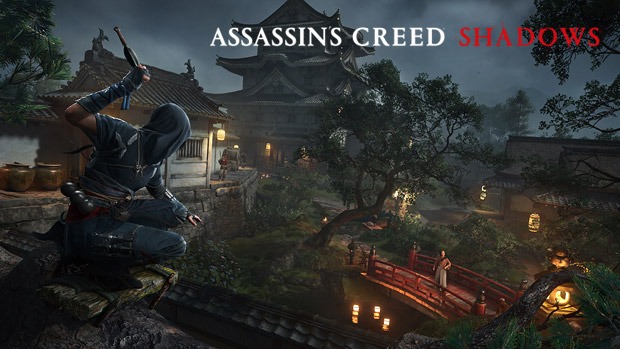
📅 Game released: 2025
Assassin’s Creed Shadows is an open-world action RPG in feudal Japan, pairing Naoe’s light-and-shadow shinobi stealth with Yasuke’s powerful samurai combat. This PC guide compares official purchase and download options, Standard, Digital Deluxe and Premium editions, Claws of Awaji, Ubisoft Connect, Steam Deck support, system requirements and practical performance setup.
 By Editor Zero — independently researched, edited, and maintained.
Last updated: 15 November 2026
Last reviewed: 15 November 2026
Table of Contents
- Quick Facts
- Official PC Stores, Download & Installation
- Assassin’s Creed Shadows Review
- Pros & Cons
- PC System Requirements
- Frequently Asked Questions
- Similar Games
Assassin’s Creed Shadows Quick Facts
- Game: Assassin’s Creed Shadows / Digital Deluxe Edition / Premium Edition
- Developer: Ubisoft Quebec, with support from multiple Ubisoft studios
- Publisher: Ubisoft
- Genre: Action-Adventure, Open World, Action RPG, Stealth Action
- Release: March 20, 2025 (Ubisoft’s worldwide launch date; Steam may show March 19 by region)
- Platforms: Windows PC, macOS (Apple silicon), PS5, Xbox Series X|S, Nintendo Switch 2
- Expansion: Claws of Awaji — new island, story chapter, enemies, gear, skills and 10+ hours of content
- Steam Deck: Verified; first-time setup requires internet and a linked Ubisoft account
- Engine: Ubisoft Anvil
- Modes: Single-player only; no co-op, PvP, or local split-screen
- PC DRM: Ubisoft account and Denuvo Anti-Tamper; Steam lists a five-machine daily activation limit
- Cross-Save: Cross-platform progression through linked Ubisoft Connect accounts on supported versions
- Community: Reddit Shadows, Steam Discussions, Ubisoft game hub
- PC modding: Nexus Mods hosts unofficial visual, camera, outfit and quality-of-life projects; no official public mod tools
- Metacritic score: 79/100 (PC)
- IGN score: 8/10 (same multiplatform release)
- OpenCritic average: 81/100
- Steam user reception: Mostly Positive overall
Official PC Stores, Download & Installation
👇 Compare the official Windows PC stores and edition entitlements below before purchasing, downloading, installing, or adding Claws of Awaji to Assassin’s Creed Shadows.
- Official PC availability: Purchase and install the Windows version through Ubisoft Store, Steam, Epic Games Store, or Microsoft/Xbox PC; all are legitimate options, but ownership is tied to the original storefront.
- Standard Edition: Includes the full base campaign without Claws of Awaji or the Sekiryu edition bonus packs.
- Digital Deluxe Edition: Includes the base game, Sekiryu Dual Pack (Naoe and Yasuke gear, weapons, mount, and trinket), the Sekiryu Hideout Pack (four ornaments), and five Mastery Points. It does not include Claws of Awaji.
- Premium Edition: Includes the base game, the Digital Deluxe bonus content (Sekiryu Dual Pack, Hideout Pack and five Mastery Points), and the Claws of Awaji expansion.
- Expansion ownership: Claws of Awaji is also sold separately for base-game owners and was granted to eligible preorders. Check your owned edition, Ubisoft Connect entitlements, and the original store before paying for it again.
- Expansion access: Complete the main story arcs for Naoe, Yasuke and Junjiro, then finish “Out of the Shadows.” Speak with Konatsu during “News from Hattori Hanzo” at the Settsu hideout to begin the journey to Awaji.
- Expansion gameplay: Awaji introduces the Sanzoku Ippa faction, new ambushes and traps, bosses, gear, skills and more than ten hours of content. Naoe gains access to Bō weapons.
- Bō availability: A separate training quest unlocks non-legendary Bō use in the base game. Owning the expansion additionally enables Awaji rewards and its broader Bō loot opportunities, including legendary variants.
- Permanent additions: New Game+, Black Tides, Domains, Animus Rifts, crossover Projects and other free integrated story, progression and endgame features are available without purchasing the expansion.
- Ubisoft account and Steam: PC ownership requires Ubisoft account linking. The Steam download installs a lightweight Ubisoft Connect component automatically; it does not require a separate full launcher download.
- DRM and activation: Steam lists Denuvo Anti-Tamper, five machine activations per day, a third-party EULA, achievements and in-game purchases. Initial account setup requires internet.
- Cross-save: Supported platform versions can synchronize progression through a correctly linked Ubisoft Connect account; purchasing on one storefront does not grant an additional license on another platform.
- Microsoft/Xbox PC: Microsoft lists a Windows PC version requiring Ubisoft Connect PC. Do not assume Xbox console ownership includes the Windows edition unless the store explicitly confirms that entitlement.
- Subscriptions and cloud: Ubisoft+ and Amazon Luna are additional Ubisoft-listed access routes where supported; check region, plan and included edition before subscribing for the expansion.
- Steam Deck: Valve rates the Steam version Verified. The first run still needs internet for Ubisoft account setup and linking; performance and battery life will vary with settings.
 Buy Assassin’s Creed Shadows on Ubisoft Store
 Buy Assassin’s Creed Shadows on Steam
 Buy Assassin’s Creed Shadows on Epic Games Store
 Buy Assassin’s Creed Shadows on Microsoft / Xbox Store
Assassin’s Creed Shadows Review
Two contrasting heroes make feudal Japan rewarding to explore, even when the familiar open-world routine starts to show.
Assassin’s Creed Shadows brings the series to feudal Japan, but the setting alone is not what makes it interesting. The real distinction is between two heroes who approach danger differently. Naoe studies patrols, light, rooftops, and narrow entrances before committing to an infiltration. Yasuke can face a guarded entrance directly, relying on armor, heavy weapons, and the ability to control a fight.
This changes much more than their animations. Recent Assassin’s Creed heroes could often become good at almost everything. Here, a route that feels natural for Naoe may be impractical for Yasuke, while a confrontation that overwhelms her can suit his strengths. Choosing between them matters.
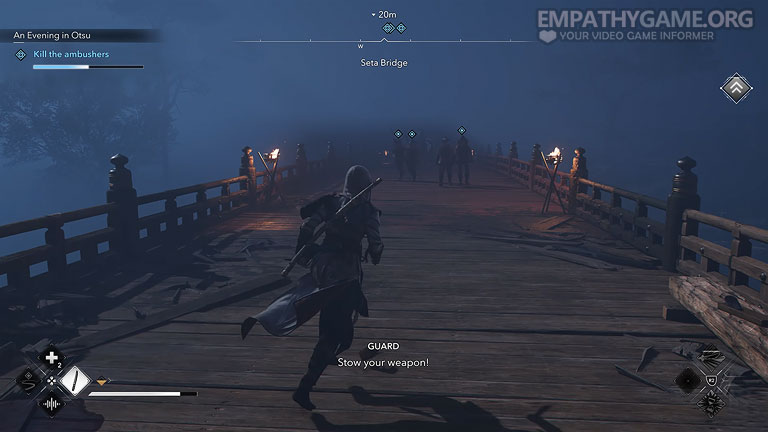
Naoe comes closest to the traditional Assassin fantasy. She can go prone, use a grappling hook, extinguish lights, and use a compound’s architecture for cover. Yasuke moves with a different purpose, using stronger posture damage, parries, and heavy attacks to overcome enemies rather than disappear from them.
Neither approach removes the series’ familiar baggage. The enormous world and constant rewards can turn objectives into a routine of travel, scouting, and clearing enemies. Yet giving each hero genuine limitations makes those familiar activities more interesting than they would be with one character who can solve every problem equally well.
Naoe Makes Darkness Feel Like a Real Tool
Stealth is where Shadows finds its clearest identity. A brightly lit room is not merely a different-looking version of a dark one. It presents a different risk. Naoe can put out lanterns, destroy light sources, crawl beneath obstacles, hang from ledges, and exploit bad weather or nighttime to stay out of sight.
The pleasure comes from planning a route. Scouts and observation narrow down where to look. A rooftop offers a view of guard movements. A side entrance avoids the obvious approach, while a dark room provides a place to wait for a patrol to pass. The environment becomes something to use, not just admire.
The result is a satisfying change in how a compound is read. A lantern becomes a threat that can be removed. A paper wall might conceal another entrance. Water offers a hiding place until winter freezes it. Together, these details reward caution.
Higher stealth difficulty also changes what counts as a safe route. Running along rooftops is less dependable when guards pay more attention to elevated movement. A roof ridge still provides cover, but a ground-level approach or smoke bomb may be safer. The important change is that vertical freedom requires judgment.
Enemy reactions are not always convincing. Detection and discovered bodies can still produce inconsistent behavior, and upgrades gradually soften the risk of some assassinations. Shadows is not a complete stealth simulation. Its darkness and movement still give Naoe a stronger identity than the adaptable warrior builds of Odyssey or Valhalla.
The appeal overlaps with Hitman World of Assassination, although Hitman takes disguises and environmental manipulation further. Both reward the moment when a location stops looking like an obstacle and starts looking like a plan.
Yasuke Changes the Question From “Can I Stay Hidden?” to “Can I Control This Fight?”
Yasuke is not a slower version of Naoe. He loses many of her quiet routes, but can stand his ground, break defenses, and pressure armored opponents. He excels when a fight becomes dangerous for Naoe.
A well-managed encounter has its own rhythm. A bow can remove an archer before the melee begins. A katana rewards timing, a kanabo delivers heavier blows, and a naginata changes the space an enemy must cross to reach him. Breaking an opponent’s posture feels physical because attacks have weight. Charging blindly into a group, on the other hand, can still end badly.
The difficulty settings deserve attention here. On Nightmare, a perfectly timed dodge or parry no longer makes an enemy Vulnerable by itself. Abilities become necessary to create that opening, so simply waiting to counter an attack is less reliable than on easier settings. This changes tactics, not just enemy durability. Resource use and positioning matter more when defensive timing alone cannot set up the next strike.
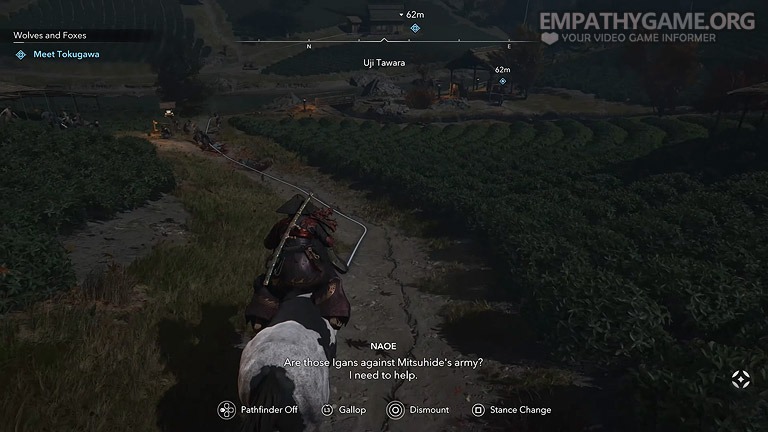
Yasuke still offers less freedom to a dedicated stealth player. Someone drawn primarily to methodical infiltration may resent sequences that favor open confrontation. Someone who prefers combat may experience the reverse with Naoe. The split works best when the game trusts the player to choose, rather than pretending the two heroes are interchangeable.
For players drawn to precise blade encounters, Sekiro: Shadows Die Twice offers a more concentrated and demanding experience. Shadows is broader and less severe, but its best duels share that satisfaction of learning when to commit and when to hold back.
Japan Is More Than a Backdrop
Shadows makes a strong case for exploring without chasing the next objective. Castle towns, farms, shrines, mountain forests, villages, and fortified estates have distinct character without feeling like unrelated biomes. Indoors, wood, paper screens, narrow passages, and elevated walkways also serve the stealth design. The architecture affects play as much as appearance.
The seasons are especially effective at changing familiar places. Snow alters their appearance and atmosphere, rain can conceal sound, vegetation changes, and frozen water can close a hiding route that worked before. Their importance varies, but familiar places rarely look identical.
It is easy to enjoy a quiet ride through a wet forest or the approach to a castle after dark. There is a downside, though, to the invitation to roam freely. Some hillsides are too steep to climb, and thick terrain can make an apparent shortcut take longer than following the road. Horses also feel better suited to established paths. The terrain feels physical, but sometimes frustrates spontaneous exploration.
The exploration systems help when the terrain becomes confusing. Scouts narrow search areas, elevated observation reveals details, and clues encourage the player to consider geography rather than follow a permanent exact marker. Optional route guidance helps when crossing a mountain would be slower.
Those drawn to spectacular Asian-inspired fantasy and dramatic encounters might also enjoy Black Myth: Wukong. It favors bosses over exploration, but both offer a memorable sense of place.
Progression Gives Both Heroes Identity, but Loot Can Blur It
Naoe and Yasuke develop through separate mastery paths, weapons, skills, and equipment. Their differences persist beyond the opening hours. Naoe can strengthen her assassination tools and mobility; Yasuke can build around defense, posture damage, ranged openings, or heavier weapon abilities.
Equipment perks and engravings make those specialties more flexible. A stealth-oriented Naoe build might prioritize staying concealed and recovering quickly from close combat. Yasuke can instead concentrate on breaking armor or controlling groups. Choosing which strengths to sharpen matters more than collecting higher numbers.
There is often too much loot for that decision to remain enjoyable. Frequent drops and marginal stat differences interrupt a game that is most engaging when attention stays on the surroundings. The forge feels more useful when supporting a favorite weapon than when chasing replacements.
The customizable hideout gives progression a physical home. Buildings, allies, scouts, and upgrades can provide useful benefits, and watching the space develop is satisfying. Yet residents can remain strangers even in an elaborate base. It feels like a useful headquarters more often than a close-knit community.
Players who prefer a broader RPG structure may still favor Assassin’s Creed Odyssey, with its naval travel and extensive build experimentation. Shadows trades some of that all-purpose freedom for a clearer distinction between shinobi and samurai play.
Mission Design Works Best When a Location Supports Both Heroes
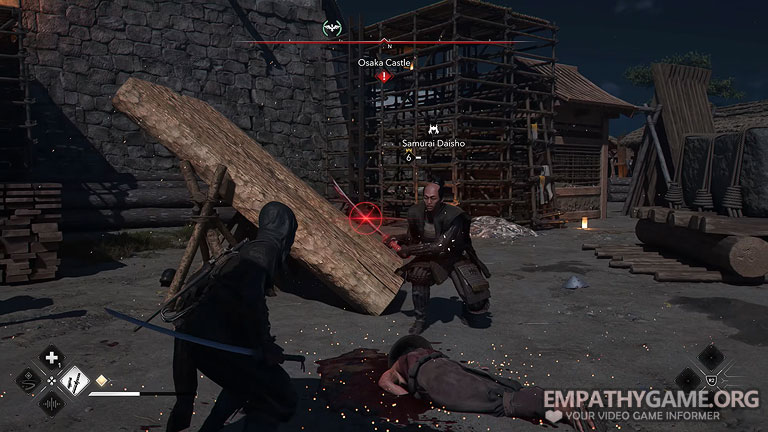
Shadows excels when missions offer spaces rather than prescribed solutions. A guarded estate can contain rooftops, dark interiors, archers, alarm points, breakable barriers, and open courtyards. With Naoe, the challenge is finding a sequence of movements that leaves as little evidence as possible. With Yasuke, the same defenses become a question of positioning and which enemies to eliminate first.
Consider a courtyard watched by a patrol and a guard standing beneath a lantern. Naoe can disable the light, slip along a wall, and use an alternate entrance to reach the target. If a body is discovered, the plan may have to change immediately. Escaping across a roof and deciding whether to return is often more engaging than simply completing an uninterrupted series of assassinations.
Yasuke changes that scene without needing a new map. Removing a distant threat with his bow, breaking through the entrance, then forcing enemies into a narrower approach can turn the same estate into a controlled melee encounter. That is the split at its best.
Using both within one location is not always so seamless. Some collectibles favor a particular hero, requiring an exit to switch. If a seasonal transition also resets its guards, a previously cleared castle may need attention again. It does not happen every time, but it makes swapping between the heroes less seamless.
Less ambitious missions lean on long journeys and familiar target-board tasks. Optional forts, vaults, and challenges also outnumber substantial non-combat character stories. Exploration has variety in setting; its objectives do not always match that variety.
The Story Benefits From Two Perspectives but Loses Momentum
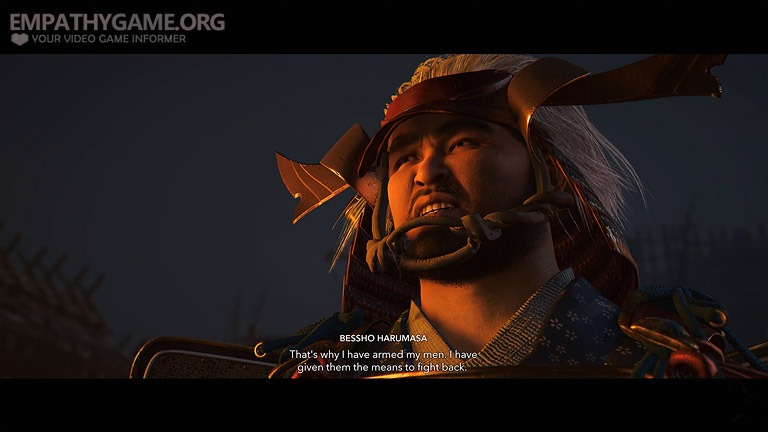
Naoe’s story begins with loss, family duty, and the conflict surrounding Iga. Yasuke enters through Oda Nobunaga’s world, where questions of loyalty, identity, and belonging carry a different weight. Their perspectives help the historical setting feel complicated without relying on a single explanation of who holds power and why.
The quieter interactions matter. A conversation at the hideout or a disagreement about how to approach an enemy can reveal more about the heroes than another target being crossed off the objective board. Their contrast is convincing because it extends beyond fighting style.
The wider plot is less disciplined. Regional arcs introduce political loyalties and antagonists unevenly, and some targets feel more like names on a list than fully developed characters. The in-game Codex helps here. Reading about Nobunaga, Iga, foreign traders, missionaries, and the arrival of firearms gives the conflicts context that the campaign cannot always fit naturally into its dialogue. This can make the political story more engaging.
The central story remains understandable without extensive franchise knowledge. The Assassin–Templar backdrop adds another layer, especially in the Black Tides story chapter, but Shadows is most affecting when it concentrates on how Naoe and Yasuke respond differently to authority and responsibility.
Claws of Awaji and New Game+ Improve the Complete Package
Claws of Awaji takes both heroes across Osaka Bay after the required main-story progression. Its island adds ambushes, pursuit, a hostile faction, bosses, and additional equipment, creating a more concentrated sense of threat. The expansion works best as an epilogue because it assumes familiarity with the protagonists and Junjiro rather than revisiting their introductions.
For a developed character, the new equipment provides a reason to rethink established habits. Naoe’s Bō offers longer melee reach and a different approach to crowd control than her quicker weapons. The basic weapon type is not confined entirely to the expansion, but Awaji’s legendary versions and their special engravings provide an additional incentive to explore it.
New Game+ is valuable for a different reason. Carrying skills, gear, allies, and hideout progress into a restarted campaign lets early encounters be approached with the options gained much later. Returning to an earlier castle with an established build can reveal how much the original challenge depended on limited tools rather than layout alone.
Domains offer a more specialized test of that progress. Changing modifiers challenge comfortable strategies and make ability choices matter. They do not replace handcrafted missions or deeper character stories, but they give players invested in builds a clearer reason to keep experimenting after the campaign.
Imperfections That Prevent a Complete Reinvention
Shadows never fully escapes the familiar Ubisoft rhythm. Large regions, target lists, abundant loot, and repeated side objectives can make completionist play feel like maintenance. The campaign is more rewarding when a compelling castle or story lead determines the next destination, rather than an obligation to clear every icon.
Its two heroes also create an unusual limitation. Their differences are exactly what makes the game distinctive, yet a player who loves only one style may regard part of the campaign as a detour. Uneven pacing and awkward terrain reinforce those limitations.
This is a substantial refinement of the action-RPG formula, not a complete reinvention of it. Better stealth and contrasting combat styles make it worthwhile.
Final Verdict
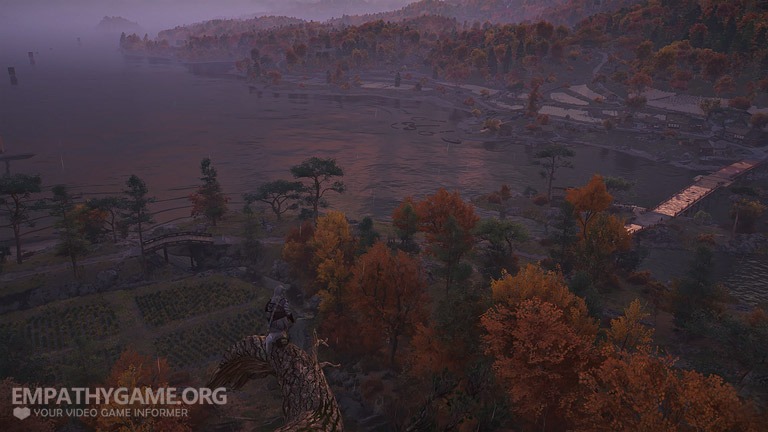
Assassin’s Creed Shadows is at its best when the player is paying attention to a place. For Naoe, darkness, patrol patterns, and a well-chosen entrance make infiltration satisfying before the kill. For Yasuke, weapon timing and control of a crowded fight provide an equally distinct challenge.
Japan’s seasons, architecture, and quiet stretches of travel make the journey appealing beyond its objectives. Repetitive tasks, inventory management, and uneven character storytelling sometimes pull attention away from those strengths.
Players who want careful stealth alongside substantial samurai combat will find one of the more interesting modern Assassin’s Creed adventures. Those looking for consistently rich side stories or a tightly paced campaign may find the world more impressive than the activities filling it.
Assassin’s Creed Shadows Pros & Cons
- Pro: Naoe and Yasuke create genuinely different stealth, traversal, combat and mission rhythms
- Pro: Light, darkness, prone movement, grappling and stealth tools offer strong infiltration choices
- Pro: Feudal Japan feels varied through seasons, weather, castles, shrines and open countryside
- Pro: Separate skill paths, hideout building, New Game+, Domains and Claws of Awaji support longer play
- Con: Repeated targets, travel and excess loot can make completionist play feel mechanical
- Con: Story pacing loses urgency across some regional arcs
- Con: Mandatory character-specific missions can frustrate players committed to just one playstyle
- Con: Ubisoft account linking, Denuvo and high-end ray tracing add PC friction
Assassin’s Creed Shadows PC System Requirements
Official specification basis: Ubisoft publishes eight target configurations across Selective, Standard and Extended Ray Tracing. Their resolution and FPS targets assume dynamic resolution and upscaling, not native-resolution rendering. Steam separately shows a lower basic minimum GPU tier (GTX 1650 4 GB / RX 5500 XT 8 GB / Arc A380 6 GB with ReBAR) without the same detailed ray-tracing target.
Shared PC Requirements
OS: Windows 10 or Windows 11, 64-bit
RAM: 16 GB dual-channel
DirectX: Version 12
Storage: Ubisoft lists 106 GB of SSD space; Steam lists 115 GB of available SSD space
Installation: SSD required; allow extra free space for updates and expansion content
SELECTIVE RAY TRACING — MINIMUM — 1080p / 30 FPS / Low
CPU: Intel Core i7-8700K / AMD Ryzen 5 3600
GPU: NVIDIA GeForce GTX 1070 8 GB / AMD Radeon RX 5700 8 GB / Intel Arc A580 8 GB (ReBAR on)
Resolution / target: 1080p / 30 FPS with dynamic resolution and upscaling
Preset: Low
SELECTIVE RAY TRACING — RECOMMENDED — 1080p / 60 FPS / High
CPU: Intel Core i5-11600K / AMD Ryzen 5 5600X
GPU: NVIDIA GeForce RTX 3060 Ti 8 GB / AMD Radeon RX 6700 XT 12 GB / Intel Arc B580 12 GB (ReBAR on)
Resolution / target: 1080p / 60 FPS with dynamic resolution and upscaling
Preset: High
SELECTIVE RAY TRACING — ENTHUSIAST — 1440p / 60 FPS / High
CPU: Intel Core i5-11600K / AMD Ryzen 5 5600X
GPU: NVIDIA GeForce RTX 3080 10 GB / AMD Radeon RX 6800 XT 16 GB / Intel Arc B580 12 GB (ReBAR on)
Resolution / target: 1440p / 60 FPS with dynamic resolution and upscaling
Preset: High
SELECTIVE RAY TRACING — ENTHUSIAST — 4K / 60 FPS / High
CPU: Intel Core i7-12700K / AMD Ryzen 7 5800X3D
GPU: NVIDIA GeForce RTX 4070 Ti Super 16 GB / AMD Radeon RX 7900 XT 20 GB
Resolution / target: 4K / 60 FPS with dynamic resolution and upscaling
Preset: High
STANDARD RAY TRACING — MINIMUM — 1080p / 30 FPS / High
CPU: Intel Core i7-8700K / AMD Ryzen 5 3600
GPU: NVIDIA GeForce RTX 2070 8 GB / AMD Radeon RX 6700 XT 12 GB / Intel Arc B580 12 GB (ReBAR on)
Resolution / target: 1080p / 30 FPS with dynamic resolution and upscaling
Preset: High
STANDARD RAY TRACING — RECOMMENDED — 1440p / 60 FPS / High
CPU: Intel Core i5-11600K / AMD Ryzen 5 5600X
GPU: NVIDIA GeForce RTX 4070 Super 12 GB / AMD Radeon RX 7800 XT 16 GB
Resolution / target: 1440p / 60 FPS with dynamic resolution and upscaling
Preset: High
EXTENDED RAY TRACING — ENTHUSIAST — 1440p / 60 FPS / Ultra
CPU: Intel Core i7-13700K / AMD Ryzen 7 7800X3D
GPU: NVIDIA GeForce RTX 4080 16 GB
Resolution / target: 1440p / 60 FPS with dynamic resolution and upscaling
Preset: Ultra
EXTENDED RAY TRACING — EXTREME — 4K / 60 FPS / Ultra
CPU: Intel Core i7-13700K / AMD Ryzen 7 7800X3D
GPU: NVIDIA GeForce RTX 4090 24 GB
Resolution / target: 4K / 60 FPS with dynamic resolution and upscaling
Preset: Ultra
Additional PC Performance and Setup Notes
- Ray-tracing differences: Selective runs ray tracing mainly in the customizable hideout; Standard adds hardware ray-traced global illumination in the world; Extended adds ray-traced reflections.
- Upscaling and frame generation: Ubisoft specifies DLSS 3.7, FSR 3.1 and XeSS 2. Feature availability and frame-generation options depend on the GPU and mode.
- Measure your PC: Use the in-game benchmark after changing settings; consider minimum frame rates and smoothness as well as the average, and test demanding regions in actual play.
- Adjust demanding settings: Reduce ray-tracing mode, lighting/reflections, volumetrics, shadow quality and crowd density before making drastic resolution changes. Adjust textures to available VRAM.
- Storage: Steam states 115 GB on an SSD; Ubisoft’s separate detailed specifications state 106 GB. Check the platform used for installation and keep additional free space.
- Display and controls: Ultrawide, HDR, uncapped frame rate, keyboard-and-mouse customization, controller remapping, AMD Eyefinity and NVIDIA Surround are documented PC features.
- Startup problems: Check the original storefront and Ubisoft account link, verify game files, update GPU drivers and retry without conflicting overlays or unofficial mods.
- Stutter or crashes: Test without frame generation or demanding ray-tracing modes, undo unstable overclocks, use the SSD and try a stable frame-rate cap.
Official Trailer
Note: Ubisoft’s official launch trailer introduces Naoe, Yasuke, feudal Japan, stealth, combat, historical characters, castles, and the central conflict, while the written guide adds PC editions, Claws of Awaji, official stores, requirements, Steam Deck support, mods, and troubleshooting.
Frequently Asked Questions
Can I switch between Naoe and Yasuke at any time?
You can change protagonists through much of the open world and many activities, but certain story missions lock you to a particular character. Naoe specializes in concealed approaches, while Yasuke is designed for direct fights.
Which character is better for stealth and which for combat?
Naoe has prone movement, light manipulation, a grappling hook and assassination tools. Yasuke has stronger frontal pressure, heavy attacks and posture damage, although his ranged options can still support careful approaches.
Which edition includes Claws of Awaji?
Premium Edition includes the expansion and the Digital Deluxe bonuses. Digital Deluxe adds Sekiryu gear, the Hideout Pack and five Mastery Points but does not include Claws of Awaji; the expansion is also sold separately.
How do I start Claws of Awaji?
Own and install the expansion, complete the Naoe, Yasuke and Junjiro story arcs and finish “Out of the Shadows.” Then speak to Konatsu at the Settsu hideout during “News from Hattori Hanzo.”
Can I use a Bō staff without buying Claws of Awaji?
Yes. A free training quest introduces non-legendary Bō weapons for Naoe. The expansion provides additional Awaji loot and legendary variants.
What carries over into New Game+?
New Game+ lets you replay the main story while retaining key character progression, equipment, mastery abilities, allies and hideout upgrades. Quest and world-story progression reset for the new run.
How do Domains work?
Domains are endgame-oriented challenge simulations that unlock from level 30. They use five distinct maps and escalating modifiers, rewarding players who change builds and tackle harder objectives.
What is Black Tides, and is Claws of Awaji required?
Black Tides is a free narrative conclusion to Naoe and Yasuke’s additional storyline. It requires the main campaign and earlier linked story quests, but Ubisoft says Claws of Awaji ownership is not necessary.
Does Assassin’s Creed Shadows have co-op, multiplayer or split-screen?
No. The campaign is single-player; there is no co-op mode, competitive multiplayer or local split-screen.
Do Steam players need the full Ubisoft Connect launcher?
Steam installs a lightweight Ubisoft Connect component along with the game. A Ubisoft account and first-run linking are still required, but a separate full launcher installation is not normally necessary.
Can I play the PC campaign offline?
Steam’s compatibility information says single-player does not need a continuous internet connection after the first setup. Initial activation, account linking and online synchronization still require access to Ubisoft services.
Does cross-save work between Steam and other platforms?
Cross-platform progression is supported through linked Ubisoft Connect accounts for compatible versions. You still need the game on each destination platform; cross-save does not grant a second license.
Is Assassin’s Creed Shadows Verified on Steam Deck?
Yes. Valve lists the Steam version as Verified, although first-time activation and Ubisoft account linking need internet. Being Verified does not guarantee fixed frame rates at every graphics setting.
Why does Steam list lower minimum GPUs than Ubisoft’s detailed PC chart?
Steam shows a basic minimum GPU lineup, while Ubisoft’s more detailed chart ties specific GPUs to ray-tracing modes, resolution, presets and frame-rate targets. Use the chart for a more realistic performance comparison rather than assuming the Steam minimum ensures a particular 1080p target.
Does Assassin’s Creed Shadows support official mods?
There are no announced public official mod tools or Steam Workshop integration. Unofficial changes exist on Nexus Mods, but compatibility can change and modifications may affect stability.
Still have questions?
Check the Assassin’s Creed Shadows Reddit community, Steam Discussions, or Ubisoft support for additional help.
Sources & References
Game editions, PC compatibility, technical requirements and post-launch features were checked against these publisher and platform references:
- Ubisoft Help — Edition contents — the Digital Deluxe and Premium package entitlements.
- Ubisoft — Claws of Awaji — expansion features, ownership and story prerequisites.
- Ubisoft — Permanent content additions — Black Tides, Domains and progression challenges.
- Ubisoft — PC technical Q&A — Steam’s embedded Ubisoft Connect, cross-save and rendering features.
- Ubisoft — Detailed PC specifications — hardware tiers, ray tracing, storage and performance targets.
- Steam — Assassin’s Creed Shadows — PC purchase editions, minimum hardware, Steam Deck, DRM, storage and user review reception.
- Metacritic — PC critic reviews and OpenCritic — Critic aggregate — reception benchmarks.
Similar Games Like Assassin’s Creed Shadows
- Ghost of Tsushima
- Assassin’s Creed Odyssey
- Assassin’s Creed IV: Black Flag
- Middle-Earth: Shadow of Mordor
- Sekiro: Shadows Die Twice
- Shadow of the Tomb Raider
Found something worth playing through DecideGame?
DecideGame.com is an independent gaming project run by Editor Zero. If this guide helped you discover a game, solve a problem, or find useful information, you can support DecideGame.com and help keep new and updated game guides coming.
DecideGame — PC Game Guides, Reviews & Setup Help