
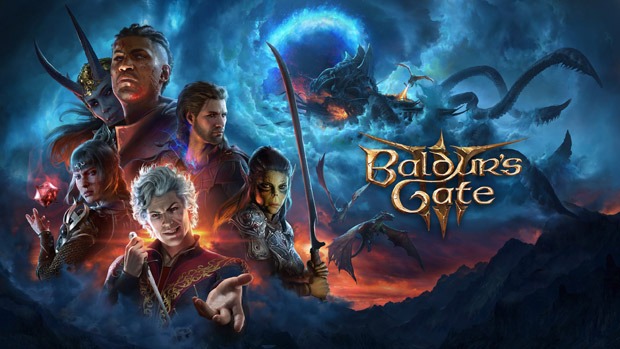
📅 Game released: 2023
Baldur’s Gate 3 is a story-rich fantasy CRPG where a party of companions faces tactical D&D combat, difficult choices, and quests that react to unexpected decisions. This PC guide compares Steam, DRM-free GOG, and Xbox Play Anywhere, with official download and installation options, Digital Deluxe content, system requirements, co-op, cross-play, Steam Deck support, mods, and performance advice.
 By Editor Zero — independently researched, edited, and maintained.
Last updated: 12 November 2026
Last reviewed: 12 November 2026
Table of Contents
- Quick Facts
- Official PC Stores, Download & Installation
- Baldur’s Gate 3 Review
- Pros & Cons
- PC System Requirements
- Frequently Asked Questions
- Similar Games
Baldur’s Gate 3 Quick Facts
- Game: Baldur’s Gate 3 / Standard Edition / Digital Deluxe Edition and upgrade
- Developer: Larian Studios
- Publisher: Larian Studios
- Genre: CRPG, Turn-Based RPG, Fantasy, RPG
- Release: August 3, 2023
- Platforms: Windows PC, macOS, PS5, Xbox Series X|S
- Xbox Play Anywhere: Supported by the Microsoft/Xbox digital version for Xbox Series X|S, Windows PC, and supported Windows handhelds
- Engine: Divinity 4.0 Engine
- Modes: Single-player; up to four-player online or LAN co-op; two-player local split-screen on PC
- Cross-Play & Cross-Save: Cross-platform multiplayer and Larian cross-saves across Windows PC, macOS, PS5, and Xbox Series X|S; Xbox Play Anywhere also shares Xbox-ecosystem progress
- Steam Deck: Verified; a native Steam Deck build is available, with Proton remaining an optional compatibility route
- Cloud Access: GeForce NOW (with a supported Steam or GOG purchase) and Xbox Cloud Gaming (owned Microsoft/Xbox copy and an eligible Game Pass plan)
- Community: Larian Baldur’s Gate III Forums, Steam Discussions, Reddit BG3
- PC Modding: Official mod.io / in-game Mod Manager, Nexus Mods for Baldur’s Gate 3, and the Baldur’s Gate 3 Toolkit
- Metacritic score: 96/100 on PC
- IGN score: 10/10
- OpenCritic average: 96/100
- Steam user reception: Overwhelmingly Positive overall
Official PC Stores, Download & Installation
👇 Compare the official Steam, GOG, and Microsoft/Xbox PC options below before purchasing, downloading, installing, or choosing Baldur’s Gate 3 Digital Deluxe content.
- PC availability: Baldur’s Gate 3 is sold for Windows PC through Steam, GOG, and Microsoft/Xbox Store. Steam and GOG also sell the macOS version. The Microsoft digital edition supports Xbox Play Anywhere on compatible Windows PCs.
- Standard Edition: The base purchase includes all three campaign acts, playable classes, companions, solo and co-op campaigns, Photo Mode, cross-play, official mod support, and the game’s permanent gameplay additions.
- Digital Deluxe content: The optional bonus content includes the Divinity Item Pack, Bard Song Pack, exclusive dice skin, Paintings from Rivellon, Adventurer’s Pouch, digital soundtrack, artbook, and character sheets. It does not add a story campaign or expansion.
- Digital Deluxe purchase: Steam and GOG offer separate Deluxe upgrades for owners of their respective base games. Microsoft/Xbox offers a Digital Deluxe Edition bundle and a separate Deluxe DLC add-on; compare your owned edition before paying for extras again.
- Steam: Steam supports achievements, Steam Cloud, Family Sharing, controller input, online/LAN co-op, PC split-screen, and the most direct installation of the native Steam Deck build.
- GOG: The GOG version is DRM-free and offers offline installers. GOG Galaxy is optional for offline single-player, but provides convenient updates, cloud saves, achievements, and online features.
- Microsoft / Xbox Play Anywhere: A digital Xbox/Microsoft Store purchase lets the same Microsoft account install the game on Xbox Series X|S, compatible Windows PCs, and supported Windows gaming handhelds without buying the Xbox-ecosystem copy twice. Its Xbox saves, achievements, and eligible add-ons travel within that ecosystem.
- Separate store ownership: Xbox Play Anywhere does not grant Steam or GOG ownership, and a Steam or GOG purchase does not unlock the Microsoft/Xbox version. Buy Deluxe add-ons in the same store ecosystem as the corresponding base game.
- Larian account and offline play: Cross-play and Larian cross-saves require linked Larian and platform accounts. GOG’s DRM-free single-player installation can run offline; online services and cross-platform synchronization require a connection.
- Cross-play and mods: Windows PC, macOS, PS5, and Xbox Series X|S players can share cross-platform multiplayer lobbies. Modded participants must use matching versions of supported mods, and console/Mac players cannot install unsupported PC-only mods.
- Cross-save: Larian’s service can synchronize recent saves between linked platforms. Xbox Play Anywhere separately synchronizes progress inside the Xbox ecosystem; keep local manual saves before extensive mod changes or switching Steam Deck installation types.
- Cloud streaming: GeForce NOW supports Baldur’s Gate 3 through eligible owned Steam and GOG copies where the service is available. Xbox Cloud Gaming also lists the game, but requires owning the Microsoft/Xbox version and an eligible Game Pass cloud plan; a subscription alone does not grant the game.
- Steam Deck: Valve rates Baldur’s Gate 3 Verified. Larian provides a native Steam Deck build, while Proton remains an optional route for Windows-oriented mods or tools that need it.
 Buy the Baldur’s Gate 3 Digital Deluxe upgrade on Steam
 Buy the Baldur’s Gate 3 Digital Deluxe upgrade on GOG
 Buy Baldur’s Gate 3 on Microsoft / Xbox Store (Xbox Play Anywhere)
Buy Baldur’s Gate 3 Digital Deluxe Edition on Xbox
Baldur’s Gate 3 Review
A reactive fantasy RPG where clever plans and imperfect choices both matter.
Baldur’s Gate 3 succeeds at something many role-playing games promise but rarely deliver: it makes decisions feel consequential even when they are small, accidental, or inconvenient. An argument can become a fight, a failed roll can expose a secret, and an apparently disposable character may have a part to play much later. Instead of directing everyone toward one ideal solution, Larian lets the adventure absorb a surprising amount of disorder.
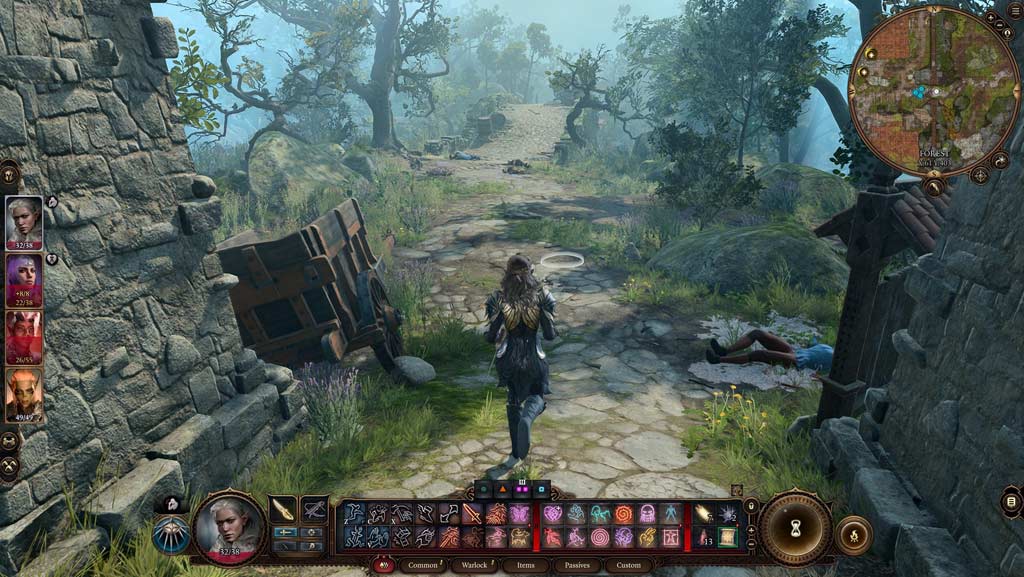
Building on the studio’s Divinity: Original Sin 2, it turns Dungeons & Dragons rules into a cinematic adventure shaped by dialogue, companion loyalties, tactical combat, and the occasional spectacular mistake. Its strongest appeal is not simply that there are many choices, but that they interact. The same character build that changes a battle can open a conversation or reveal a path through the world.
The Story Actually Reacts to You
The adventure begins with a mind flayer parasite lodged in your character’s head. It offers disturbing powers while threatening to transform its host, giving the journey a personal urgency that complicates nearly every alliance. Other infected characters have their own explanations and fears. Resisting the parasite, using its abilities, and deciding whom to believe all become part of the wider struggle rather than a single morality test.
The writing is most convincing when consequences emerge from ordinary decisions. Persuading a hostile group to stand down can preserve characters who have something to say later. Killing someone, stealing from the wrong place, or siding with a faction may close one route and open another. The campaign is prepared to move forward after an unexpected loss, which makes its world feel less dependent on the player following an invisible script.
The conflict at the Emerald Grove demonstrates this clearly. Tiefling refugees, druids, and goblins have competing interests, and intervening can involve protection, manipulation, betrayal, or outright violence. There is no clean way to satisfy everyone. Just as importantly, the game does not guarantee an equally rich replacement for every path you destroy. Cruel decisions can remove future allies and quests, making the freedom credible but occasionally leaving a less populated adventure.
For a more tightly directed fantasy story built around an established hero, The Witcher 3: Wild Hunt offers a different balance between authored drama and player choice.
Companions With Actual Personality
The companions give these decisions their emotional weight. Shadowheart’s guarded faith, Astarion’s self-preserving charm, Gale’s dangerous magical predicament, Lae’zel’s uncompromising upbringing, Karlach’s warmth, and Wyll’s sense of duty create competing ideas about what the party should do. Approval is not just a number to increase. A merciful act may reassure one companion while making another question your judgement, and some relationships change significantly through their personal quests.
The strongest conversations often happen away from the main road, at camp. Yet the connection between resting and character development has an awkward side. The parasite storyline encourages urgency, while spell slots and limited resources encourage efficient adventuring. A party that stretches each day as far as possible can miss opportunities for camp scenes, some of which wait behind other nighttime events. Playing tactically well does not necessarily mean seeing more of the story.
There is also a difference between convincing individual characters and a convincing group. Brief travel banter shows that companions notice one another, but their most substantial relationships usually run through the protagonist. Their personal arcs can be engrossing while the wider party sometimes feels less closely bonded than its members deserve. That limitation stands out precisely because the one-to-one writing is so strong.
Combat That Feels Like Real D&D

Unlike the original Baldur’s Gate games, combat is fully turn-based, and that deliberate pace gives every action a purpose. Exploration leads to dangerous encounters, but preparation often matters as much as damage. A party that scouts a room, spreads out, and understands the terrain can approach the same enemies very differently from one that rushes straight in.
Height, sightlines, chokepoints, and surfaces constantly change the calculation. Grease can turn a passage into a hazard, Thunderwave can send an enemy over a ledge, and Misty Step can rescue a vulnerable caster or reach an advantageous position. A well-placed Hold Person may decide an encounter, while an archer taking the high ground can expose a poorly arranged party. The environment is part of the toolkit, not merely scenery.
Every fight rewards creativity:
- Push enemies from cliffs, rooftops, or ledges when the lost loot is worth the tactical advantage.
- Ignite oil, grease, or explosive barrels to create chain reactions.
- Sneak into position before combat and begin with surprise or a better formation.
- Use spells such as Misty Step, Thunderwave, Grease, Hold Person, or Fireball to reshape the battlefield.
- Talk through some encounters before a weapon is ever drawn.
What makes the combat interesting is how quickly a sound plan can fall apart. One missed attack leaves a wizard exposed; an enemy moves around the front line; the party suddenly needs to survive rather than win elegantly. Throwing a healing potion can save nearby allies together, but it uses an action, unlike drinking one with a bonus action. A bottle aimed directly at a wounded companion may even hurt them before the healing takes effect. Improvisation has its own rules and risks.
Concentration makes positioning even more important. A spell such as Hunger of Hadar can control a corridor for several rounds, but repeated enemy attacks or an explosive arrow may break the caster’s concentration before the plan pays off. Protecting the character sustaining a powerful spell becomes a second tactical objective. This is where the systems feel most like tabletop play: success depends on keeping several fragile ideas working together, not just picking the strongest ability.
Dice remain capable of spoiling a careful strategy, or rescuing a desperate one. A persuasive bard can fail an ordinary check; an unlikely attack can connect when the party needs it most. That uncertainty produces distinctive outcomes, although anyone who prefers complete control over hit chances and dialogue results may find it exhausting.
Freedom to Play Your Way
Character creation gives players races, backgrounds, classes, subclasses, and abilities that affect more than combat statistics. A paladin may try to resolve conflict through conviction, a bard can lean on persuasion and performance, a rogue can sneak through guarded areas, and a druid can find unusual uses for animal forms. Origin characters provide another perspective by placing an existing companion’s history at the centre of the campaign.
The same flexibility extends to objectives. A locked door might be picked, broken, bypassed through another entrance, or made irrelevant by a conversation. A dangerous opponent may be weakened through preparation, confronted openly, or avoided altogether. These are not always equivalent solutions. Some give better rewards, some preserve relationships, and others produce consequences that only become obvious later. The ability to choose matters because the outcomes are allowed to differ.
Compared with this detailed narrative reactivity, Skyrim provides a freer roaming sandbox but generally simpler dialogue consequences. Both encourage curiosity, though they place the weight of freedom in different parts of the experience.

A World Full of Secrets
Exploration works because so many locations hide a second purpose. A village may lead to a suspicious cellar, a concealed passage, and a story far removed from the problem that first brought the party there. Books, letters, corpses, buried objects, and overheard conversations offer clues rather than just decoration. Speak with Animals can turn an unremarkable creature into a source of warnings or comedy; Speak with Dead may reveal something the living would rather conceal.
Party composition gives those discoveries different textures. A rogue notices traps and opens locks, a cleric may recognise religious details, and a magically inclined character can interpret clues another party might overlook. That makes a return visit interesting for reasons beyond collecting missed treasure. The world can be understood differently depending on who is present and what they know.
The abundance becomes harder to manage in Baldur’s Gate itself. After the more concentrated momentum of Act 2, Act 3 introduces overlapping quests, urgent-sounding requests, and new people to investigate on almost every street. The city feels inhabited, but the crowded journal can make choosing the next destination more tiring than exciting. Its greatest density is also a pacing problem.
Progression, Builds, and Role-Playing Depth
Level-ups change what the party can attempt, not simply how hard it hits. Fighters gain extra attacks and combat options, wizards access increasingly influential spells, clerics can specialise in protection or offence, and rogues use mobility and Sneak Attack to pick their moments. Feats and subclasses create different strengths, while multiclassing rewards planning around which abilities arrive at particular levels.
Equipment is equally important. A cloak that aids survival, boots that improve movement, or a ring that supports a spell combination can change a character’s function without replacing their identity. Experimenting with these items becomes a small design exercise: which party member benefits, and what must the others do to support that choice? The reward is a team that solves problems in a way its earlier version could not.
For thorough explorers, the level-12 cap brings an unusual trade-off. It is possible to reach maximum level with substantial Act 3 content still unfinished. Remaining quests continue to offer stories, equipment, and chances to use a completed build, but experience points no longer provide another milestone. That may disappoint players driven by constant character growth; others will appreciate having time to enjoy the full toolkit before the finale.
For another fantasy RPG centred on character building, factions, and unexpected side quests, The Elder Scrolls IV: Oblivion Remastered is a meaningful comparison. It lacks BG3’s tactical party combat and companion reactivity, but shares the pleasure of following curiosity away from the main objective.
Replayability Comes From Missed Possibilities
The strongest reason to return is not simply to see another ending. A different class can change how a fight unfolds; a different companion can change the meaning of an encounter; an Origin or Dark Urge character can alter the perspective through which events are understood. Romances, faction outcomes, and ordinary dialogue choices also make familiar locations feel less predictable.
Still, a second campaign does not automatically contain more content. Ruthless decisions can erase allies and questlines instead of unlocking alternatives of equal size. That can be dramatically appropriate, but it makes an evil route a different commitment from a heroic one. Replayability here comes from accepting that some doors stay shut, not from a promise that every decision leads to a complete parallel story.
Imperfections That May Not Work for Everyone
Baldur’s Gate 3 asks for patience. Armour Class, saving throws, advantage, concentration, reactions, spell slots, and action economy create a steep learning curve for newcomers. Battles can take a long time, inventories grow cumbersome, and a dialogue-heavy session may accomplish surprisingly little in terms of visible progress. Much of that slowness is deliberate, but it is not equally enjoyable for everyone.
Co-op creates another interesting compromise. Sharing battles and improvising solutions with friends can be wonderfully unpredictable, yet dialogue is not always treated as though every companion belongs to one united group. A companion assigned to one human player may not offer an expected reaction when another player initiates a conversation. Coordinating who speaks to an NPC can therefore matter to the story, a less intuitive division than the shared tactical experience suggests.
Choices and dice rolls also deserve a more cautious description than simply calling them liberating. Failing a check can redirect a scene in a satisfying way, but sometimes it closes an outcome a player cared about. Combined with Act 3’s crowded structure and the possibility of missing camp interactions, the game rewards attention while occasionally making that attention feel like work.
Final Verdict
Baldur’s Gate 3 is remarkable not because every choice produces a better story, but because its world is willing to live with the player’s decisions. Combat encourages experimentation, companions make arguments personal, and exploration repeatedly finds ways to reward curiosity. Its most memorable moments often emerge when a carefully prepared plan encounters a character, a rule, or a dice roll that refuses to cooperate.
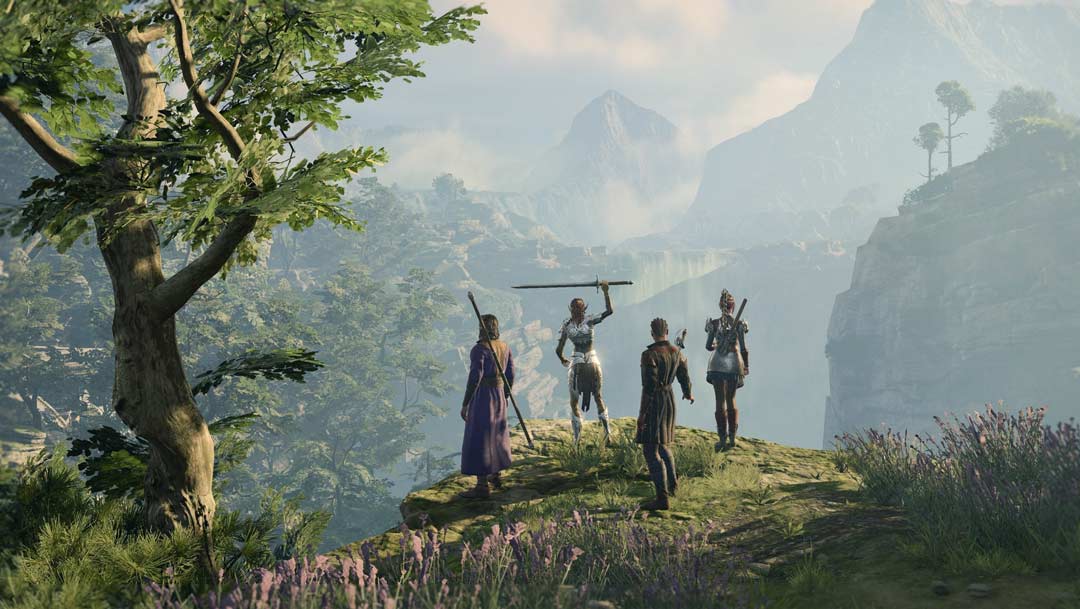
The experience is not frictionless. Dense rules, crowded late-game quests, occasionally awkward co-op dialogue, and consequences that remove content can make it demanding in ways that go beyond combat difficulty. Yet those compromises sit beside unusually flexible quest design and a party of characters worth knowing. For players who enjoy deliberate tactics, complicated relationships, and exploring the results of their own imperfect decisions, this is an exceptional RPG. Those looking for fast action or an uncomplicated journey are likely to find its pace less inviting.
Baldur’s Gate 3 Pros & Cons
- Pro: Branching quests, meaningful dialogue, companion reactions, Origin paths, romances, and Dark Urge choices create unusually strong narrative reactivity
- Pro: Turn-based combat rewards positioning, action economy, party synergy, terrain, spells, stealth, preparation, and improvised solutions
- Pro: Memorable companions, dense exploration, flexible builds, distinctive equipment, and multiple difficulty modes support long campaigns and replays
- Pro: Four-player online co-op, local split-screen, cross-play, cross-save, and full controller support make the campaign flexible across different setups
- Pro: Official mod support, a large PC mod scene, Steam Deck Verified status, a native Steam Deck build, and DRM-free GOG ownership give PC players useful options
- Con: D&D terminology, spell management, inventory rules, reactions, party composition, and build planning can overwhelm beginners
- Con: Combat, conversations, and exploration move more slowly than action-focused RPG players may prefer
- Con: Inventory management and companion equipment can become cumbersome during a long campaign
- Con: Act 3 remains demanding on weaker CPUs and handheld hardware, while old or conflicting mods can cause loading, UI, save, or multiplayer problems
Baldur’s Gate 3 PC System Requirements
Important: The current official requirements list 150 GB of available space and an SSD for both Windows tiers. Actual performance varies with the selected API, drivers, graphics settings, crowd density, background software, mods, and the CPU-heavy areas of Act 3.
WINDOWS — MINIMUM
OS: Windows 10 64-bit
CPU: Intel Core i5-4690 / AMD FX 8350 / Snapdragon X Elite
RAM: 8 GB
GPU: NVIDIA GeForce GTX 970 / AMD Radeon RX 480 / Intel Arc A380 / Qualcomm Adreno X1 with 4 GB or more VRAM
DirectX: Version 11
Storage: 150 GB available space
Drive: SSD required
WINDOWS — RECOMMENDED
OS: Windows 10 64-bit
CPU: Intel Core i7-8700K / AMD Ryzen 5 3600
RAM: 16 GB
GPU: NVIDIA GeForce RTX 2060 Super / AMD Radeon RX 5700 XT / Intel Arc A580 with 8 GB or more VRAM
DirectX: Version 11
Storage: 150 GB available space
Drive: SSD required
macOS — MINIMUM
OS: macOS 14.7.1 or newer
CPU: Apple M1
RAM: 8 GB
GPU: Apple M1 integrated graphics
Storage: 150 GB available space
Drive: SSD required
Additional: Official notes say low-to-medium settings are expected and split-screen does not run at an acceptable level on the minimum Mac specification
macOS — RECOMMENDED
OS: Latest macOS version supported by the game
CPU: Apple M1 Pro or better
RAM: 16 GB
GPU: Apple M1 Pro or better
Storage: 150 GB available space
Drive: SSD required
Additional: Official notes target high or ultra settings on the recommended Mac specification
Additional PC Performance and Setup Notes
- DirectX 11 is the current default Windows route and the safest first choice when troubleshooting. Vulkan remains available and may perform differently depending on the GPU, driver, overlays, and mod setup.
- A native Steam Deck build is available and reduces the compatibility-layer overhead used by Proton. Steam Deck users can still select Proton 8 or newer when a particular Windows-oriented mod or tool requires that layout.
- The native Steam Deck version stores saves and mods in different folders from the older Proton installation. Steam Cloud can move recent saves automatically, but manual backups are sensible before changing versions.
- Act 3 is the most CPU-intensive portion of the campaign. Lowering crowd density and demanding visual settings can help weaker systems, but it cannot remove every city-area frame-rate drop.
- When crashes begin after an update, test without third-party mods first, update required frameworks or Script Extender files, verify the official installation, and restore mods only after confirming version compatibility.
Official Trailer
Official Baldur’s Gate 3 PC launch trailer published by Larian Studios.
Frequently Asked Questions
Which Baldur’s Gate 3 PC store should I choose?
Steam is convenient for Steam Deck, Steam Cloud, and Steam features; GOG provides DRM-free offline installers. Microsoft/Xbox Store is the choice if you want Xbox Play Anywhere for both Windows PC and Xbox Series X|S with one qualifying digital purchase. The three store libraries remain separate.
Does Baldur’s Gate 3 support Xbox Play Anywhere or Game Pass?
Yes to Xbox Play Anywhere: the Microsoft digital edition supports Windows PC, Xbox Series X|S, and eligible Windows handhelds with shared Xbox-ecosystem saves and entitlements. Xbox Cloud Gaming requires an owned copy and an eligible Game Pass cloud plan; the subscription does not itself include a Baldur’s Gate 3 game license.
What does the Baldur’s Gate 3 Digital Deluxe upgrade include?
The optional upgrade contains the Divinity Item Pack, Bard Song Pack, exclusive dice skin, Paintings from Rivellon, Adventurer’s Pouch, soundtrack, artbook, and character sheets. It is bonus content rather than a story DLC. Existing owners should match the add-on to their base game’s storefront.
Is Baldur’s Gate 3 open world?
Not as one continuous map. Its three acts contain large, interconnected areas with hidden routes, side quests, alternate approaches, and decisions that influence what becomes available later.
How long does Baldur’s Gate 3 take to finish?
A focused campaign usually takes many dozens of hours; exploring companion stories and side content can push a playthrough beyond 100 hours. Combat pace, choices, co-op, difficulty, and reload habits can change the total substantially.
What is a good beginner class and party setup?
Fighter is an accessible class for learning movement, actions, equipment, and positioning. In a four-character party, aim for frontline durability, reliable damage, healing or support, and tools for dialogue, traps, locks, and utility magic; complementary roles matter more than one prescribed class combination.
Is multiclassing worthwhile?
It can be powerful when two classes support a clear plan, but multiclassing delays class milestones such as feats, extra attacks, and higher-level spells. Learning a full single-class progression first is a sensible starting point; you can respec later.
Can I respec characters and companions?
Yes. Withers can change character class and ability allocations for gold once available in camp. The Magic Mirror handles most appearance adjustments separately, but some identity options remain limited.
Should I pick a custom character, an Origin character, or Dark Urge?
A custom character provides the most open first-playthrough identity. An Origin character lets you experience one companion’s existing history as the protagonist, while Dark Urge adds a darker personal storyline involving violent impulses and difficult choices.
How many players can join co-op?
Online and LAN co-op support up to four players. Friends can begin a campaign together or join an existing one and control a suitable party character.
Does Baldur’s Gate 3 support local split-screen?
Yes. The Windows PC version supports two-player local split-screen with controllers. Split-screen is demanding on hardware; the minimum macOS specification specifically warns that it does not run at an acceptable level, and Xbox Series S does not support local split-screen.
Can PC, Mac, PlayStation, and Xbox players use cross-play?
Yes. Enable cross-play in the Gameplay options, link each platform account to a Larian account, and use the cross-play lobby and friends system. Compatible game and mod versions are important for joining the same session.
How do cross-saves work?
Larian cross-save lets recent saves follow linked supported platforms through its online service. Xbox Play Anywhere additionally carries progress within the Xbox/Microsoft ecosystem. Keep manual local backups before mod-list changes or switching Steam Deck installation types.
Does Baldur’s Gate 3 have official mod support?
Yes. Supported mods can be installed through the in-game Mod Manager, and the PC modding Toolkit is available for creators. Unofficial Nexus Mods or Script Extender setups may require separate compatibility checks.
Can I use PC mods during cross-play?
Only when every participant uses compatible versions of the same mods. A PC host playing with console or Mac players must select mods supported on those platforms; unsupported third-party PC-only mods cannot be transferred to consoles.
Should I use keyboard and mouse or a controller?
Keyboard and mouse offer precise selection, fast inventory handling, and easy access to tooltips. Controllers provide direct movement and a radial menu suited to couch play or handhelds; the PC version supports both.
Should I run Baldur’s Gate 3 with DirectX 11 or Vulkan?
DirectX 11 is a practical Windows troubleshooting baseline and is named in the official requirements. Vulkan is another supported graphics API; stability and performance can differ by graphics hardware, drivers, and mod setup.
What should I do if the game crashes or stops loading?
Verify the installation in your official launcher, update graphics drivers, and test with overlays and third-party mods disabled. If a modded save fails, check Script Extender, mod dependencies, and matching versions before re-enabling them.
Why can Act 3 feel heavier on PC?
The Lower City combines dense crowds, interiors, quest activity, and many active characters, making parts of Act 3 more CPU-demanding than earlier wilderness areas. Lowering crowd density and other demanding visual settings can help weaker systems.
Which difficulty should beginners choose, and what is Honour Mode?
Explorer favors story and forgiving combat; Balanced is a conventional starting point for learning tactics. Honour Mode adds a single-save structure, tougher encounters, legendary boss actions, and severe consequences for a full-party defeat.
What is the level cap, and can I play after the ending?
Characters can reach level 12. The campaign ends after its conclusion rather than opening an unlimited post-game world, so keep a manual save before final decisions if you want to revisit alternate outcomes.
Does Baldur’s Gate 3 include mature content?
Yes. The game includes strong violence, disturbing themes, sexual content, nudity, romance, and mature language. Settings are available for some nudity and explicit cinematic presentation choices.
Still have questions? Check the official Larian support site, Baldur’s Gate III forums, Baldur’s Gate 3 Steam Discussions, and Baldur’s Gate 3 community on Reddit.
Sources & References
Official storefronts, developer support documentation, and independent review aggregates used to verify the information in this guide.
- Steam — Baldur’s Gate 3 — PC specifications, Steam features, release details, and user reception.
- GOG — Baldur’s Gate 3 — DRM-free PC ownership, offline installers, and supported platforms.
- Xbox / Microsoft Store — Baldur’s Gate 3 — Windows PC access, Xbox Play Anywhere, Deluxe options, and owned-game cloud streaming.
- Larian Support — Cross-play: Hosting or Joining a Game — linked accounts, cross-platform lobbies, and multiplayer setup.
- Larian Support — Steam Deck Native Version — native Deck support, Proton option, and installation/save differences.
- Metacritic — Baldur’s Gate 3 PC Critic Reviews — PC Metascore.
- OpenCritic — Baldur’s Gate 3 — Top Critic Average.
Similar Games Like Baldur’s Gate 3
- Clair Obscur Expedition 33
- The Witcher 3: Wild Hunt
- Dragon’s Dogma 2
- The Outer Worlds
- The Elder Scrolls IV: Oblivion Remastered
- The Elder Scrolls V: Skyrim

Found something worth playing through DecideGame?
DecideGame.com is an independent gaming project run by Editor Zero. If this guide helped you discover a game, solve a problem, or find useful information, you can support DecideGame.com and help keep new and updated game guides coming.
DecideGame — PC Game Guides, Reviews & Setup Help