
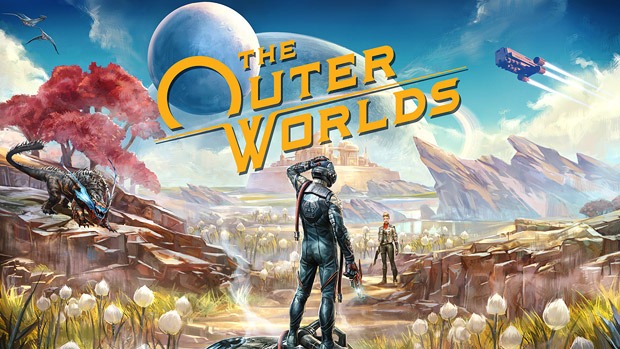
Use this updated 2026 The Outer Worlds PC guide to compare official Steam, Epic Games Store, GOG, Microsoft/Xbox, and Game Pass purchase, download, and installation options, understand Spacer’s Choice Edition and its DLC, check ownership and save-transfer guidance, system requirements, Steam Deck support, mods, and performance before exploring Halcyon.
 By Editor Zero — independently researched, edited, and maintained.
Last updated: 28 September 2026
Last reviewed: 28 September 2026
Table of Contents
- Quick Summary
- Quick Facts
- Official PC Stores, Download & Installation
- The Outer Worlds Review
- Pros & Cons
- PC System Requirements
- Frequently Asked Questions
- Similar Games
The Outer Worlds Quick Summary
✔ First-person sci-fi RPG set in Halcyon, a corporate-controlled colony where the player wakes from cryosleep and becomes the unpredictable variable in a system ruled by boards, brands, and competing factions
✔ Similar to Fallout: New Vegas through Obsidian-style dialogue choices, faction conflicts, dark humor, companion quests, player builds, skill checks, and multiple quest outcomes
✔ Combat, stealth, persuasion, lying, intimidation, science weapons, Tactical Time Dilation, flaws, perks, and companion abilities let players solve many situations in different ways
✔ Spacer’s Choice Edition is the main current PC package, combining the base game, Peril on Gorgon, Murder on Eridanos, remastered presentation, a higher level cap, grenades, and other permanent gameplay improvements
✔ The game is single-player only, with no campaign co-op, PvP, online multiplayer, or live-service progression
✔ PC players should compare Steam, Epic Games Store, GOG, Microsoft/Xbox, Game Pass, and original-version ownership before purchasing or reinstalling because store entitlements and edition compatibility differ
✔ Steam Deck is Playable rather than Verified, with small-text, manual-keyboard, and manual-graphics-configuration caveats
The Outer Worlds Quick Facts
Official PC Stores, Download & Installation
👇 Compare the official PC options below before purchasing, downloading, installing, or restoring The Outer Worlds: Spacer’s Choice Edition.
- Current PC edition: Spacer’s Choice Edition is the main version sold for Windows PC and includes the base game plus all add-on content.
- Steam: The Steam edition includes achievements, Steam Cloud, Family Sharing, full controller support, and normal Steam file-verification tools.
- Epic Games Store: Epic sells Spacer’s Choice Edition with cloud saves, controller support, and single-player support through the Epic Games ecosystem.
- GOG: The GOG edition is DRM-free, does not require GOG Galaxy to play, and supports a fully offline installer; Galaxy remains optional for features such as cloud saves and achievements.
- Microsoft / Xbox: The Windows PC listing supports Xbox achievements and Xbox cloud saves and is sold separately from Steam, Epic, and GOG ownership.
- PC Game Pass: Spacer’s Choice Edition is included through supported Microsoft Game Pass PC access; subscription catalogues and plan names can change, so check the Xbox app before subscribing only for this game.
- Original PC listings: The original 2019 base game and standalone DLCs were removed from Steam, Epic Games Store, GOG, Xbox PC App, and Windows Store for new purchase on May 27, 2026. Existing owners retain library access.
- Ownership upgrade: Obsidian states that PC digital owners with the original base game in their Xbox App, Windows Store, Steam, Epic Games Store, or GOG library are eligible for Spacer’s Choice Edition at no additional cost; eligible owners must find and install the upgrade from their library rather than expecting an automatic install.
- Save migration: Original-version saves can move forward into Spacer’s Choice Edition. Saves created after using Spacer’s Choice-only features such as grenades should not be moved backward to the original version.
- DLC and features: Spacer’s Choice Edition includes Peril on Gorgon and Murder on Eridanos together with the remastered presentation, higher level cap, grenades, and the edition’s other permanent improvements.
- Steam Deck: Valve rates Spacer’s Choice Edition as Playable; expect small text, manual keyboard invocation for some text entry, and manual graphics configuration for better performance.
- Mod compatibility: Original-version and Spacer’s Choice Edition mods are not automatically interchangeable, so confirm the intended game build and back up saves before installing unofficial modifications.
 Buy The Outer Worlds: Spacer’s Choice Edition on Steam
 Buy The Outer Worlds: Spacer’s Choice Edition on Epic Games Store
 Buy The Outer Worlds: Spacer’s Choice Edition on GOG
 Buy or Play The Outer Worlds: Spacer’s Choice Edition on Microsoft / Xbox Store
 Visit the Official The Outer Worlds Website

The Outer Worlds Review
Sharp dialogue, memorable companions, and compact choice-driven quests carry a witty sci-fi RPG with limited exploration and shallow combat progression
The Outer Worlds works best when it lets the player talk their way through a failing corporate colony. Halcyon is not a vast space frontier built for endless wandering; it is a collection of towns, company settlements, stations, laboratories, wilderness pockets, and faction-controlled hubs where almost every person sounds like they have internalized a brand slogan. Obsidian’s strength is not scale. It is conversation, consequence, tone, and the pleasure of finding a third option inside a system that insists only two bad choices are available.
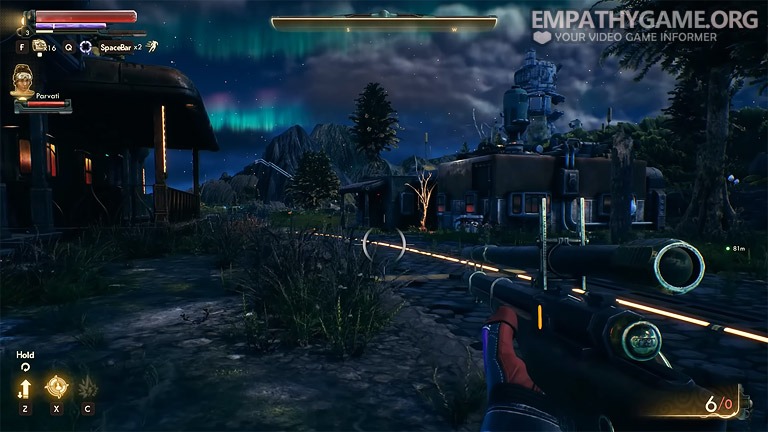
The setup is immediately clear. The Stranger wakes from cryosleep aboard the lost colony ship Hope and becomes the unstable variable in a colony ruled by the Board, Spacer’s Choice, competing corporations, desperate workers, stranded scientists, and people who have learned to treat absurd exploitation as normal customer service. The writing is funny, but not weightless. Its jokes usually point toward something uglier: hunger hidden behind productivity language, medicine restricted by company policy, and entire towns trained to confuse obedience with survival.
As an RPG, The Outer Worlds is at its strongest in dialogue, companion quests, skill checks, and faction decisions. As a shooter, explorer, and progression game, it is more uneven. Combat is serviceable but rarely demanding, perks are less imaginative than the best Obsidian systems, and the hub-based worlds can feel restrictive for players expecting to pick a direction and discover something strange over the next ridge. The result is a focused, replayable, character-driven sci-fi RPG that succeeds through writing and role-playing flexibility more than mechanical depth.
Halcyon Is a Satirical Setting Before It Is a Playground
The Outer Worlds builds its identity around corporate absurdity. Edgewater is the perfect opening statement: a company town where graves are leased, illness is treated as lost productivity, and workers speak in slogans because the slogans are easier to survive than the truth. The Botanical Lab nearby complicates the situation by giving the deserters a more humane alternative, but not a consequence-free one. Redirecting power is not simply a switch between “good” and “evil”; it determines who has a future, who loses shelter, and which leader’s flaws the player is willing to tolerate.
The satire can be blunt, especially when the main conflict frames the Board as cartoonishly cruel and workers as visibly crushed by the system. This is not a subtle game about capitalism. It is closer to a brightly colored corporate nightmare where every vending machine, poster, jingle, and employee handbook has been weaponized against common sense. That broadness is often funny, but it can also make some major decisions feel less morally tangled than the best Fallout: New Vegas-style dilemmas.
The smaller stories are where the writing gains nuance. A personal favor aboard the Groundbreaker can reveal more about class, loneliness, and duty than a large faction briefing. A companion’s private problem can make the colony feel more human than another speech about the Board. The best quests are not always the largest ones; they are the ones where dialogue checks, reputation, and prior choices let the player reshape the tone of an encounter.
This makes The Outer Worlds different from larger RPGs such as Starfield. Starfield sells the fantasy of scale, ship travel, and many planets to survey; The Outer Worlds is more like a sequence of theatrical sci-fi stages, each built around a few factions, jokes, locked doors, hidden terminals, and conversational payoffs. The trade-off is clear: Halcyon is smaller, but its best spaces have sharper personality.
Dialogue and Skill Checks Are the Real Combat System
The most satisfying victories often happen before anyone fires a gun. Persuade, Lie, Intimidate, Hack, Lockpick, Science, Medical, Engineering, and companion-supported skill bonuses can alter how quests unfold. A locked terminal may expose a corporate lie. A lie can bypass a fight. A high Medical check can identify what an NPC is hiding. A strong Science skill can turn an absurd weapon into a serious build choice.

Conversation rarely feels decorative. NPCs react to faction reputation, companion presence, skill values, and sometimes the Stranger’s attributes. This is why character creation matters more than the early hours suggest. Starting attributes are permanent, and they can gate certain dialogue options later. A player who begins with average or low Perception, Intelligence, or Charm may discover that a promising line during a companion moment is unavailable, even after investing heavily in other skills. Respec options can adjust skills and perks, but they do not rebuild the original personality foundation.
That permanence is both rewarding and harsh. It strengthens role-playing because the Stranger is not a blank machine who can eventually become perfect at everything. At the same time, the game does not clearly warn new players how often attributes can affect character moments. Someone focused on combat efficiency may unintentionally lock themselves out of softer or more perceptive dialogue during companion scenes.
The writing also supports unusual builds. Low Intelligence unlocks special dumb dialogue, which can turn entire conversations into comic failures that still move the story forward. A corporate loyalist, a suspicious liar, a polite diplomat, a greedy mercenary, and a chaotic science-weapon enthusiast can all feel distinct enough to justify different routes. The game’s quest structure is not endlessly branching, but it is flexible enough that the same situation can carry a different flavor depending on who the Stranger is supposed to be.
The Hub Worlds Are Focused, But Not Especially Free
The Outer Worlds is often compared to Fallout, but its exploration should be understood differently. This is not a seamless wasteland where a player can walk toward a distant landmark for twenty minutes and stumble into a vault, settlement, or hidden faction story. Halcyon is divided into contained zones connected by the Unreliable, the player’s ship. Emerald Vale, Groundbreaker, Monarch, Roseway, Byzantium, Scylla, Gorgon, and Eridanos each have their own routes and discoveries, but they are still designed as bounded spaces.
That structure has advantages. Quest pacing is tighter, objectives are easier to read, and the game rarely wastes the player’s time with empty distance. Reaching a new destination usually means there are NPCs to meet, terminals to read, locks to open, enemies to clear, and choices to make. The ship also gives the campaign a satisfying rhythm: recruit companions, take off, listen to ADA, travel to a new problem, then return with more crew dialogue and unresolved personal business.
The drawback is that exploration often feels managed. Invisible walls, cliffs, locked routes, and narrow transitions limit the pleasure of wandering. Monarch comes closest to providing a dangerous open-ended journey, especially when wildlife and marauders make long trips feel hostile, but even there the game is more corridor-like than it first appears. Players who loved the feeling of choosing a random direction in the Mojave may find Halcyon too curated.
This is why comparing it directly with Fallout 4 can be misleading. Fallout 4 is weaker in some role-playing conversations, but its ruined Boston supports scavenging, settlement discovery, environmental storytelling, and accidental exploration in a way The Outer Worlds rarely attempts. Obsidian’s game is better treated as a compact quest RPG than a wandering simulator.
Companions Give the Unreliable Its Heart
The Unreliable is one of the game’s smartest structural choices because it turns party recruitment into a touring spaceship fantasy. Parvati, Vicar Max, Ellie, Felix, Nyoka, and SAM do not simply add combat abilities; they give Halcyon a more personal voice. Returning to the ship after a major quest can trigger new remarks, arguments, small jokes, or private concerns that make the crew feel like people trying to survive the same broken colony from different angles.
Parvati is the standout because her warmth cuts through the game’s cynicism. Her companion quest is gentle, awkward, and sincere in a world where sincerity is often treated as a liability. It also demonstrates why The Outer Worlds is more effective in character writing than in broad political plotting. Helping Parvati prepare for a personal step in her life can feel more memorable than deciding the future of an entire corporation because the stakes are emotionally specific.
Vicar Max brings philosophical frustration, Felix brings class resentment and impulsive loyalty, Ellie challenges idealism with mercenary self-protection, Nyoka carries grief beneath her confidence, and SAM turns corporate cleaning equipment into deadpan comedy. None of them are as extensively developed as companions in a much larger RPG, but they are efficient. Their quests usually reveal one strong internal conflict and then let the player push, comfort, challenge, or disappoint them.
Companions also matter mechanically. Their skill bonuses can unlock checks, their special attacks can stagger or finish enemies, and their opinions can influence how certain decisions land. On normal difficulties, they are forgiving enough to use for personality rather than pure optimization. On Supernova, where companion death can become permanent, their placement and survivability demand more attention.
Combat Is Functional, But It Cannot Match the Writing
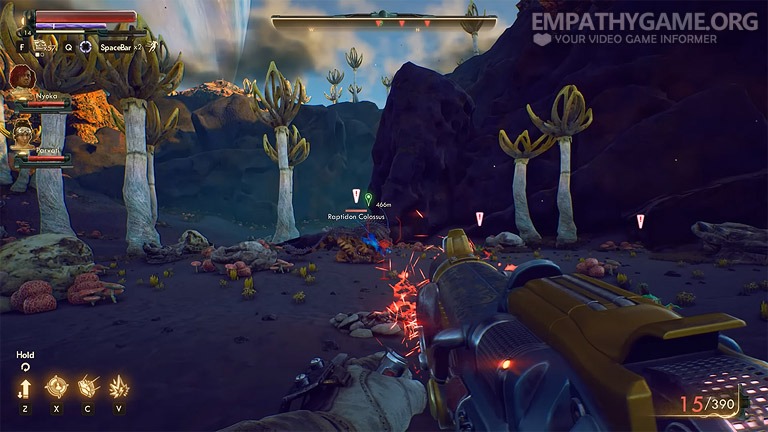
The shooting is clean enough to carry the campaign, but it is not the reason The Outer Worlds remains memorable. Long guns, pistols, melee weapons, heavy weapons, science weapons, and companion abilities provide options, while Tactical Time Dilation slows combat long enough to target weak points, inspect enemy data, or recover from a chaotic opening. Matching damage types to enemies gives the system a basic tactical layer: plasma works well against flesh, shock is useful against automechanicals, corrosion helps against armor, and N-ray damage has group-spread potential.
The problem is balance. Ammunition is often so plentiful that conserving shots becomes less important than the game implies. Vendors, containers, enemy drops, and lootable spaces supply enough resources that even inefficient weapons rarely create long-term scarcity on normal play. Consumables have a similar issue. The game contains many drinks, inhaler additives, buffs, and situational items, but most encounters do not require careful use of them. The inventory can become visually busy without becoming strategically necessary.
Tactical Time Dilation is useful, but it rarely feels as essential as V.A.T.S. did to some Fallout builds. Weapon sway and stabilization are not punishing enough for accuracy bonuses to become exciting, and many firefights can be solved by retreating, letting companions draw attention, and firing from a comfortable distance. Grenades in the current Spacer’s Choice Edition add another tool for groups and cover, but they do not fundamentally transform combat into a deep tactical system.
Science weapons are the exception because they are conceptually distinctive. Shrinking enemies, manipulating gravity, or using absurd experimental tools fits the setting’s tone far better than another ordinary rifle. With high Science investment, they can become a proper build identity rather than novelty items. The issue is that most ordinary combat encounters do not push hard enough for the player to need that creativity.
Harder difficulties expose the system more than they fix it. Supernova adds survival restrictions, stricter fast travel, and companion danger, which can make the campaign more tense. Yet the core shooting still lacks the enemy variety, encounter complexity, and resource pressure needed to make every fight interesting. By the final area, it is easy to understand the temptation to sprint past enemies simply to reach the next decision or ending slide.
Progression Has Strong Skills and Weak Perks
The skill system is one of the game’s better RPG foundations. Investing in Dialogue, Tech, Stealth, Leadership, Ranged, Melee, Defense, and Science changes how the Stranger handles problems. Raising broad categories early and then specializing later keeps the first hours approachable, while companion bonuses and armor modifiers let players temporarily reach important thresholds. A lock, terminal, medical diagnosis, or negotiation can become possible because the whole party is built around it.
Perks are less exciting. Many provide useful but plain statistical bonuses: more carrying capacity, faster movement, better vendor prices, shorter cooldowns, increased health, or improved Tactical Time Dilation behavior. These are practical upgrades, but they rarely change how the game is played. Compared with the most memorable New Vegas perks, they can feel conservative, as if the game is rewarding efficiency rather than encouraging strange role-playing identities.
Flaws are more interesting in concept. After repeated exposure to certain dangers, the game may offer a permanent weakness in exchange for an extra perk point. Fear of robots, damage vulnerabilities, addiction, or other penalties can make the Stranger feel shaped by experience. The best flaws create a real decision: is the downside annoying enough to reject, or mild enough to justify another perk?
In practice, the perk pool weakens the temptation. If the reward were more transformative, accepting flaws would feel like a defining role-playing moment. Because many perks are modest, the safest choice is often to refuse severe flaws and keep the character clean. The idea is excellent; the surrounding upgrade economy does not always support it.
Tinkering, mods, and equipment levels add another layer. Keeping a favorite weapon upgraded can be satisfying, especially if it supports a role-playing concept, but costs rise quickly. Spacer’s Choice Edition uses revised economy and tinkering behavior, yet the basic decision remains: upgrade a trusted item for continuity, or replace it with a newer piece of gear and save the Bits for dialogue-friendly armor, science weapons, or companion equipment.
Choices Matter, But Not Always as Deeply as They First Appear
The Outer Worlds gives the player enough agency to feel responsible for Halcyon’s direction. Major choices alter faction control, companion futures, settlement outcomes, and the ending montage. The player can support the Board, work with Phineas Welles, side with workers, protect corporate order, betray allies, kill important NPCs, or talk through situations that would become combat in a less flexible RPG.
The limitation is that some of the largest decisions are morally obvious. The Board is often written with such open cruelty that opposing it feels less like a difficult ideological choice and more like basic human decency. Supporting corporations can still be entertaining as a role-playing path, especially for a cynical or self-serving Stranger, but the game does not always make that path emotionally persuasive.
Better nuance appears in regional disputes. Edgewater versus the Botanical Lab is not purely simple because both sides carry consequences. Monarch’s conflicts between MSI, the Iconoclasts, and local survival politics create more interesting friction. Groundbreaker’s independence from the Board gives Junlei and her crew a practical reason to resist corporate control beyond abstract rebellion. These smaller tensions give the game its best choice-driven texture.
Compared with Cyberpunk 2077, which uses Night City to build a denser mood of personal compromise and urban desperation, The Outer Worlds is lighter, sharper, and more openly comic. Cyberpunk leans into atmosphere and identity; The Outer Worlds leans into dialogue checks and satirical consequences. Both are sci-fi RPGs, but their strengths sit in different places.
Pacing Benefits From Its Size, Until Combat Repetition Catches Up
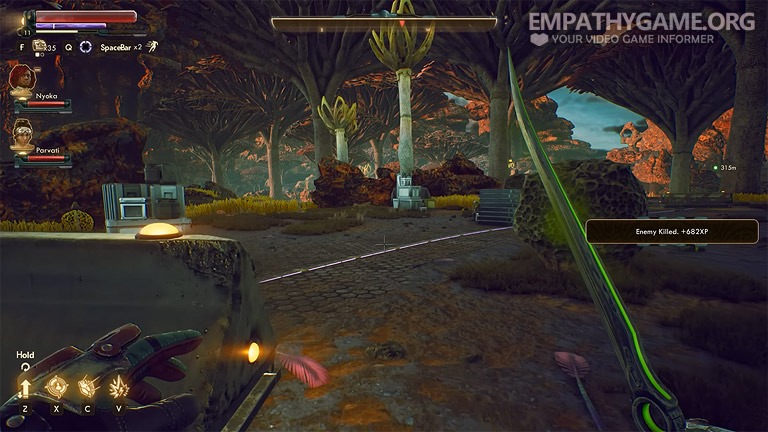
The Outer Worlds is shorter than many modern RPGs, and that is mostly a strength. The base campaign can be completed without demanding dozens of filler hours, while companion quests, faction missions, exploration, and the two major expansions provide enough extra material for players who want more Halcyon. A larger version of this game might have stretched its combat and hub structure too far.
Even at its current size, fatigue can appear. The early and middle portions benefit from constant novelty: Edgewater, Groundbreaker, Monarch, Roseway, companion recruitment, ship travel, and first contact with major factions all arrive at a steady pace. Later, once the player understands the satire, owns strong gear, and has settled into a preferred dialogue style, the remaining combat encounters can feel less important than the conversations surrounding them.
This is why the final stretch can lose momentum. If a build is already strong enough and the player is mainly invested in resolving the story, fighting through another cluster of enemies may feel like a delay rather than a challenge. The game’s best content is usually the decision after the fight, not the fight itself.
The DLCs help by changing genre flavor. Peril on Gorgon leans into corporate mystery and failed research, while Murder on Eridanos adopts a detective structure with a lighter murder-mystery tone. Both fit the setting while providing new spaces and stories, and Spacer’s Choice Edition folding them into the main package gives the overall journey more variety. They do not fix the fundamental combat limitations, but they expand the game where it is strongest: voice, setting, and quest framing.
Replayability Comes From Role-Playing, Not Mechanical Mastery
The Outer Worlds is easy to replay because it is compact and build-driven. A second run can shift from benevolent negotiator to Board loyalist, from smooth liar to low-Intelligence disaster, from companion-led diplomat to solo killer, or from ranged specialist to melee brute. The core route is recognizable, but the tone of scenes can change enough to make another playthrough feel worthwhile.
Dialogue builds are especially rewarding because they reveal different solutions and character reactions. A player who missed attribute-gated or skill-gated lines on the first run may immediately see the value of planning the Stranger’s personality more carefully. That makes replaying more appealing than simply returning for loot. The reward is not only a stronger weapon; it is a different kind of protagonist.
Combat-focused replay is less durable. Melee, science weapons, companion abilities, and heavy weapons can create variation, but the encounter design does not demand mastery in the way a deeper action RPG might. After several runs, the player is more likely to remember Parvati’s quest, a dumb dialogue option, or a faction decision than a particular firefight.
There is also no full post-game free roam after the final mission, so manual saves before the point of no return remain important. The structure reinforces the idea that The Outer Worlds is meant to be replayed as a campaign, not treated as an endless sandbox.
Final Verdict
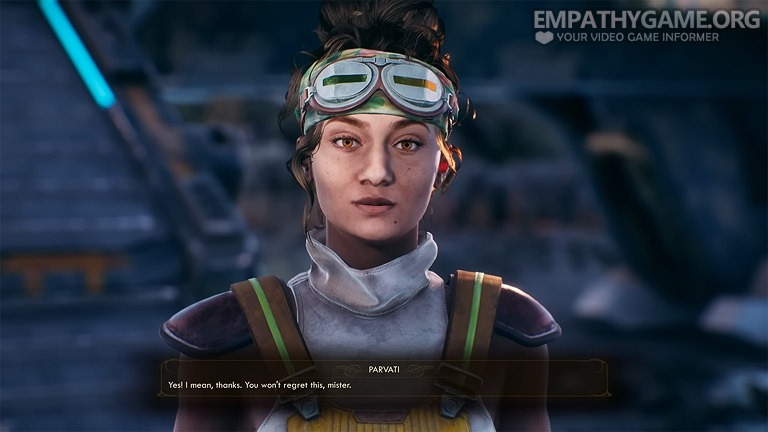
The Outer Worlds remains a strong RPG because it knows what it is best at. Its dialogue is sharp, its companions are memorable, and its compact hubs give the player repeated opportunities to persuade, lie, intimidate, hack, steal, betray, negotiate, or side with whichever version of Halcyon seems least broken. The corporate satire is broad, but it gives the game a distinct voice, and the best smaller quests add enough emotional texture to keep the world from becoming only a joke.
Its weaknesses are just as clear. Exploration is more restricted than players may expect from a Fallout-adjacent Obsidian RPG, combat rarely matches the quality of the writing, perks lean too heavily on mild statistical bonuses, and abundance makes ammo and consumables less meaningful than the survival systems imply. Spacer’s Choice Edition improves the package and adds current support, but its heavier performance profile means PC players should treat settings and version differences seriously.
This is not the deepest shooter, the largest sci-fi world, or the most morally complex RPG in Obsidian’s history. It is a focused, funny, replayable space RPG about building a character and watching a broken colony react. Players who want endless wandering may come away disappointed, but those who value companions, dialogue checks, faction outcomes, and compact quest design will find The Outer Worlds still worth boarding.
The Outer Worlds Pros & Cons
The Outer Worlds PC System Requirements
OFFICIAL WINDOWS PC REQUIREMENTS FOR SPACER’S CHOICE EDITION:
MINIMUM:
OS: Windows 10, 64-bit
CPU: Intel Core i7-6700 / AMD Ryzen 5 1600
RAM: 12 GB
GPU: NVIDIA GeForce GTX 1060 6 GB / AMD Radeon RX 590
Storage: 62 GB available space
RECOMMENDED:
OS: Windows 10, 64-bit
CPU: Intel Core i7-8700 / AMD Ryzen 5 3600
RAM: 16 GB
GPU: NVIDIA GeForce GTX 1080 Ti / NVIDIA GeForce RTX 2070 / AMD Radeon RX 6700 XT
Storage: 62 GB available space
Additional PC Performance and Setup Notes
- Spacer’s Choice Edition is more demanding than the original release. If performance is uneven, reduce shadows, foliage, view distance, effects, and post-processing before sacrificing texture quality unnecessarily.
- A stable frame-rate cap can feel better than chasing higher averages that fall sharply during combat or dense scenes, especially on older CPUs, handhelds, or systems close to the minimum specification.
- Steam Deck users should manually tune graphics settings rather than relying on higher desktop presets; Valve’s Playable metadata also notes small text and manual on-screen-keyboard use for some text entry.
- Install the latest graphics drivers, verify files through the original storefront, and test without overlays, reshades, or mods when investigating crashes or stutter.
- Players with access to both the original version and Spacer’s Choice Edition should treat saves, configuration files, and unofficial mods as edition-specific unless the mod author or tool documentation explicitly says otherwise.
- Back up saves before migrating from the original edition, using save editors, or installing large gameplay and visual mods.
Official Trailer
Note: This official trailer introduces Halcyon, the corporate colony, companions, combat, dialogue choices, factions, and the game’s satirical sci-fi tone, while the written guide adds Spacer’s Choice Edition, storefront, Game Pass, GOG, Steam Deck, requirements, ownership-upgrade, modding, and setup guidance.
Frequently Asked Questions
Is The Outer Worlds worth playing in 2026?
Yes. The Outer Worlds remains a strong choice for players who enjoy choice-driven sci-fi RPGs, sarcastic corporate satire, companion quests, flexible builds, and Fallout: New Vegas-style dialogue decisions. Its worlds are smaller than many open-world RPGs, but that tighter structure also makes the campaign easier to replay.
What is The Outer Worlds: Spacer’s Choice Edition?
Spacer’s Choice Edition is the remastered complete edition for Windows PC, PS5, and Xbox Series X|S. It includes the base game, Peril on Gorgon, Murder on Eridanos, remastered visuals and environments, a higher level cap, grenades, and other edition-specific improvements.
Where can I officially buy The Outer Worlds on PC?
Spacer’s Choice Edition is sold for Windows PC through Steam, Epic Games Store, GOG, and Microsoft/Xbox Store. It is also available through supported PC Game Pass access.
Is the original version of The Outer Worlds still available to buy on PC?
No through the major PC storefronts covered here. The original base game and its standalone DLCs were removed from Steam, Epic Games Store, GOG, Xbox PC App, and Windows Store for new purchase on May 27, 2026, while existing owners retain library access.
Do original PC owners get Spacer’s Choice Edition at no additional cost?
Obsidian says digital PC owners with the original base game in their Xbox App, Windows Store, Steam, Epic Games Store, or GOG library are eligible for the Spacer’s Choice Edition upgrade at no additional cost. The upgrade does not install automatically, so eligible owners should check their existing library before buying another copy.
Can original saves transfer to Spacer’s Choice Edition?
Yes. Obsidian states that base-game saves can move forward into Spacer’s Choice Edition. Saves created after using Spacer’s Choice-only features such as grenades should not be expected to move backward into the original version.
Is The Outer Worlds on PC Game Pass?
Yes. Microsoft’s Windows PC listing includes Spacer’s Choice Edition through supported Game Pass access. Subscription catalogues and plan names can change, so confirm the Xbox app listing before subscribing specifically for this game.
Is The Outer Worlds on GOG and is it DRM-free?
Yes. GOG sells Spacer’s Choice Edition as a DRM-free Windows release. GOG Galaxy is optional, and GOG provides a fully offline installer for players who prefer not to use the Galaxy client.
What DLC is included with Spacer’s Choice Edition?
Spacer’s Choice Edition includes both major story expansions: Peril on Gorgon and Murder on Eridanos. New PC buyers therefore do not need to purchase those expansions separately for this edition.
When should I start Peril on Gorgon and Murder on Eridanos?
Peril on Gorgon fits well after reaching the mid-game and becoming comfortable with your build, while Murder on Eridanos is generally better later when your character has more skills and equipment. Keep a manual save before the final point of no return if you want to finish both expansions naturally during the campaign.
Can you keep playing after finishing The Outer Worlds?
No. The Outer Worlds does not provide full post-game free roam after the final mission. Keep a manual save before the game warns you about the point of no return if you still want to complete DLC, companion quests, faction missions, or exploration.
Does The Outer Worlds have multiple endings?
Yes. Major faction decisions, companion outcomes, colony choices, and what you do with the Hope affect the ending montage and the future described for different people and settlements.
Is The Outer Worlds connected to The Outer Worlds 2?
The Outer Worlds 2 is a standalone sequel set in a different colony. You do not need to finish the first game to understand it, although the original helps establish Obsidian’s corporate satire, role-playing style, and choice-driven structure.
Is The Outer Worlds an open-world game?
Not in the seamless Bethesda-style sense. Halcyon is divided into explorable planets, stations, towns, laboratories, wilderness zones, and quest hubs connected through the Unreliable spaceship.
How long does The Outer Worlds take to finish?
A focused main-story run is much shorter than many large RPGs, while companion quests, faction missions, exploration, both expansions, and alternate choices can extend the campaign considerably. The compact structure is one reason repeat playthroughs remain practical.
Does The Outer Worlds have multiplayer or co-op?
No. The Outer Worlds is a single-player RPG with no campaign co-op, online multiplayer, or PvP. Companions are AI-controlled party members.
Can you create and respec your own character?
Yes. You create the Stranger by choosing attributes, appearance, aptitude, skills, and later perks. Skills and perks can be respecced on the Unreliable, but starting attributes and aptitude remain permanent.
What are good beginner attributes and skills?
Intelligence, Charm, and Perception are useful foundations for dialogue, companion strength, and ranged combat. Persuade, Lockpick, Hack, Long Guns, Science, and Inspiration are flexible early skills because they open dialogue, exploration, equipment, and companion options.
Which companions are most useful?
Parvati is especially useful early because she contributes in combat, supports useful skills, and has one of the game’s strongest personal questlines. Vicar Max, Ellie, Felix, Nyoka, and SAM all offer different bonuses, abilities, and personalities, so the best pair depends on your build and current quest.
What is Tactical Time Dilation?
Tactical Time Dilation, or TTD, slows time and lets you target enemy weak points, inspect enemy information, and control fights more deliberately. Upgrades can improve its value for crippling limbs, blinding enemies, or opening stronger targets to follow-up attacks.
How do flaws work?
Flaws are optional permanent weaknesses that may be offered after repeated exposure to certain dangers. Accepting one grants an extra perk point, but the penalty lasts for the rest of that playthrough, so beginners should accept them selectively.
What are Science Weapons?
Science Weapons are unusual experimental weapons with effects such as shrinking enemies, manipulating gravity, or causing other strange results. They become more practical when supported by high Science investment and the right perks.
What do grenades add to Spacer’s Choice Edition?
Grenades give Spacer’s Choice Edition another combat option for damaging groups, pressuring enemies behind cover, and creating space when several targets close in. They are part of the edition’s present feature set rather than a separate DLC purchase.
What difficulty should beginners choose?
Normal is the best starting point for most first-time players, while Story suits players who mainly want dialogue and exploration. Hard and Supernova are better for players who already understand damage types, companions, consumables, positioning, and the game’s economy.
What is Supernova difficulty?
Supernova is the hardest mode and adds survival-style restrictions such as hunger, thirst, sleep, limited fast travel, companion permadeath, and more punishing combat. It is usually better suited to a later playthrough.
Does The Outer Worlds work on Windows 11?
Compatible Windows 11 systems can run the game even though the official Spacer’s Choice Edition requirements list Windows 10 64-bit. If you encounter crashes or stutter, update graphics drivers, verify the installation, disable unnecessary overlays, and test without mods before reinstalling.
Does The Outer Worlds support controllers on PC?
Yes. The PC version supports controllers as well as keyboard and mouse. Steam metadata lists full controller support for Spacer’s Choice Edition.
Is The Outer Worlds Steam Deck Verified?
No. Valve rates Spacer’s Choice Edition as Playable. Steam metadata notes small text, manual on-screen-keyboard use for some text entry, and the need to configure graphics settings manually for acceptable handheld performance.
Does The Outer Worlds support ultrawide monitors?
The PC version can use modern widescreen resolutions, but ultrawide behavior can vary in menus, conversations, field of view, and cutscenes. Players using 21:9 or 32:9 displays should test the installed edition before applying unofficial configuration changes.
Does The Outer Worlds support mods?
Yes, there is an unofficial PC modding scene for visuals, reshades, interface changes, save tools, difficulty adjustments, and quality-of-life tweaks. There are no major official mod tools or Steam Workshop integration, so back up saves and verify whether each mod targets the original release or Spacer’s Choice Edition.
What are the biggest player frustrations with The Outer Worlds?
Common criticisms include the smaller hub worlds, comparatively simple combat, uneven Spacer’s Choice Edition performance on some hardware, limited post-game freedom, and perks that are less transformative than the dialogue and quest systems. Its strongest counterweights are the writing, companions, role-playing choices, humor, and replayable quest routes.
Still have questions? Check the The Outer Worlds community on Reddit, the Spacer’s Choice Edition Steam Discussions, or the official Obsidian support website.
Sources & References
Key factual and technical information in this guide was checked against relevant official and community sources, including:
- Obsidian — Spacer’s Choice Upgrade FAQ — original-version store removal, PC upgrade eligibility, save migration, and library installation behavior
- Steam — The Outer Worlds: Spacer’s Choice Edition — current Windows availability, edition contents, developer/publisher listing, system requirements, and Steam reception
- Microsoft / Xbox Store — Spacer’s Choice Edition for PC — Windows PC availability, Game Pass access, achievements, and Xbox cloud saves
- GOG — The Outer Worlds: Spacer’s Choice Edition — DRM-free status, offline installer support, optional GOG Galaxy use, and official requirements
- SteamDB — Spacer’s Choice Edition app metadata — Valve Steam Deck compatibility details and Steam metadata
- PCGamingWiki — The Outer Worlds: Spacer’s Choice Edition — Unreal Engine 4 verification and version-specific PC technical context
- Metacritic — The Outer Worlds: Spacer’s Choice Edition — review-score platform coverage used to avoid assigning the console Metascore to the PC edition
Similar Games Like The Outer Worlds





Found something worth playing through DecideGame?
DecideGame.com is an independent gaming project run by Editor Zero. If this guide helped you discover a game, solve a problem, or find useful information, you can support DecideGame.com and help keep new and updated game guides coming.
DecideGame — PC Game Guides, Reviews & Setup Help