
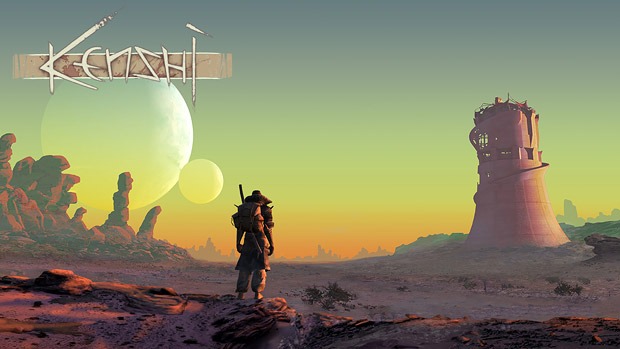
📅 Game released: 2018
Use this updated 2026 Kenshi PC guide to compare official Steam, GOG, and Epic Games Store purchase and download options, understand Steam Workshop mods and the Forgotten Construction Set, check system requirements and Steam Deck compatibility, and find practical installation and performance advice before surviving the wasteland.
 By Editor Zero — independently researched, edited, and maintained.
Last updated: 28 October 2026
Last reviewed: 28 October 2026
Table of Contents
- Quick Summary
- Quick Facts
- Official PC Stores, Download & Installation
- Kenshi Review
- Pros & Cons
- PC System Requirements
- Frequently Asked Questions
- Similar Games
Kenshi Quick Summary
✔ Brutal open-world sandbox RPG set in a post-apocalyptic sword-punk wasteland, where players create their own goals instead of following a traditional main campaign, starting as vulnerable wanderers and potentially becoming traders, mercenaries, rebels, settlement leaders, or powerful faction enemies.
✔ Squad-based RPG and real-time strategy systems combine recruitable characters, automated combat, skill training, injuries, prosthetic limbs, hunger, exploration, trading, stealth, base building, farming, research, and crafting.
✔ Similar to Mount & Blade II: Bannerlord through its open-ended career progression, squad management, trading, faction relationships, recruitment, and opportunities to grow from an insignificant outsider into a powerful force.
✔ The complete base game is sold through Steam, GOG, and Epic Games Store. GOG provides a DRM-free version, while Steam includes Workshop integration and access to the game’s modding tools.
✔ Kenshi is strictly single-player, with no official multiplayer or co-op. Its separately sold Original Soundtrack does not add missions, areas, playable characters, or other gameplay content.
✔ PC players should expect a demanding learning curve, potentially lengthy world-loading interruptions, an SSD recommendation, and Steam Deck Playable compatibility rather than a fully controller-focused interface.
Kenshi Quick Facts
Official PC Stores, Download & Installation
👇 Compare Kenshi’s official Steam, GOG, and Epic Games Store options below before purchasing, downloading, installing, or configuring mods for the Windows PC version.
- Steam: Kenshi is officially sold on Steam as a native Windows PC game. Steam provides library-based installation, updates, Steam Workshop access, and the included level/mod editor. It is the most convenient storefront choice for players who expect to experiment heavily with Workshop modifications.
- GOG: GOG sells a DRM-free Windows version of Kenshi. Buyers can use GOG Galaxy or download backup installers from their GOG library. Once installed, the DRM-free game does not require an online activation or an active internet connection to play.
- Epic Games Store: Kenshi is also available through Epic Games Store for Windows. The Epic Games Launcher manages the purchase and installation. Its ownership is separate from Steam and GOG, and it does not automatically provide Steam Workshop subscriptions.
- Base game and extras: The normal Kenshi purchase contains the complete playable sandbox. The separately sold Kenshi Original Soundtrack contains music and additional making-of material, not a new campaign or gameplay expansion. The soundtrack is optional.
- Store ownership: Buying Kenshi on one PC storefront does not grant ownership on the others. Before purchasing again, check the existing Steam, GOG, or Epic library associated with the account used for the original purchase.
- Mod compatibility: Steam supports subscribing to mods through Workshop, while players using other storefronts can use compatible manually installed mods when the mod author provides them. The Forgotten Construction Set is the game’s official editor, but third-party modifications can conflict, depend on specific versions, or alter saved games. Check mod instructions and load order before installing several together.
- Offline play: Kenshi has no online multiplayer service or always-online gameplay requirement. The GOG edition explicitly supports offline play without activation. Steam and Epic installations still follow their respective client and account procedures for downloading and managing owned games.
- Save backups: Steam does not advertise Steam Cloud synchronization for Kenshi. Keep independent backups of important local saves, particularly before reinstalling Windows, moving the game to another computer, or making substantial changes to the installed mod list.
- Steam Deck: Valve rates Kenshi as Playable rather than Verified. Its default configuration is reported to function on Deck, but some text entry requires manually invoking the virtual keyboard. The game was designed around mouse-and-keyboard squad management, so trackpad-based navigation and control adjustments may be more comfortable than relying on traditional gamepad inputs alone.
- Installation and storage: Purchase Kenshi through the preferred official storefront, install it using that store’s supported download method, and launch the unmodified base game before adding community content. Lo-Fi Games recommends an SSD for optimum performance, making SSD installation preferable to an older mechanical hard drive even though the published storage requirement is relatively modest.


 Buy Kenshi on Epic Games Store
 Visit the Official Kenshi Website

Kenshi Review
A ruthless sandbox where hard-won freedom collides with awkward systems and uneven balance.
Most role-playing games eventually reveal why their protagonist matters. Kenshi is more interested in what happens when nobody cares whether that protagonist survives. A wanderer starting at The Hub has little money, almost no fighting ability, and no special protection from the people and creatures roaming outside town. A passing band of Starving Bandits can turn an ordinary supply run into a struggle to recover a wounded companion. A patrol might intervene, only to introduce another danger.
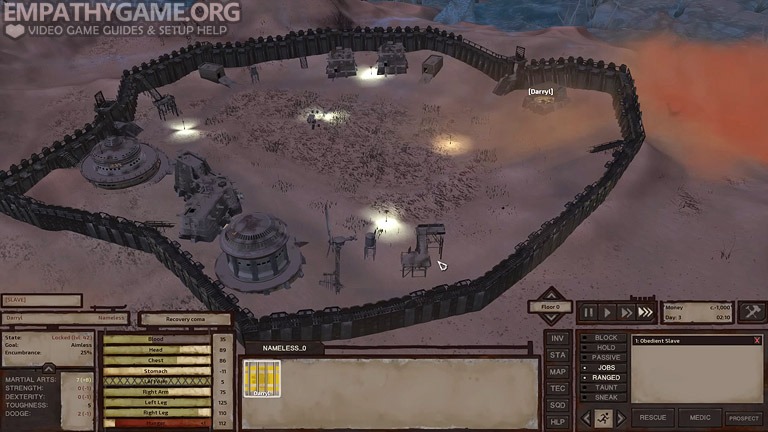
Lo-Fi Games builds its post-apocalyptic world around that indifference. It combines real-time squad tactics, survival, trading, character development, faction politics, and settlement management without supplying a main quest to hold them together. These systems create goals naturally: earn enough to eat, recruit a medic, reach a distant city, then decide whether a home is worth defending. The less appealing part is the amount of repetition and interface management between those moments. Kenshi rewards curiosity and patience, but its freedom is not equally satisfying in every direction.
Exploration Matters Because the World Refuses to Protect You
Movement across Kenshi’s enormous map is a calculation involving speed, supplies, wounds, nearby factions, and escape routes. Outrunning trouble is often more valuable than winning a fight. Early on, even a short trip from The Hub can become dangerous if a hungry recruit is encumbered with scavenged equipment or a companion’s injured leg slows the entire party.
Enemies don’t scale to match your experience. Starving Bandits may eventually become manageable, but Beak Things and other formidable wildlife remain threats well before the squad is ready to confront them. Encounters aren’t necessarily meant to be won. Following a neutral caravan, waiting for guards to engage attackers, or collecting equipment after two hostile groups clash can turn a seemingly unwinnable day into profitable scavenging. The same opportunism can backfire if the victors decide the scavengers look like easier prey.
Regional variety supports that uncertainty. The Swamp’s tangled routes and settlements demand a different kind of navigation from the open wasteland surrounding The Hub. The Fog Islands make visibility and isolated movement especially unsettling; the Deadlands and remote ruins suggest still greater danger and reward. Exploring one more ridge may uncover valuable ruins or a threat the party cannot outrun.
Repeated supply trips can nevertheless become tedious. Without conventional fast travel, geography matters, but long journeys aren’t always filled with meaningful decisions.
Combat Rewards Preparation More Than Quick Reactions
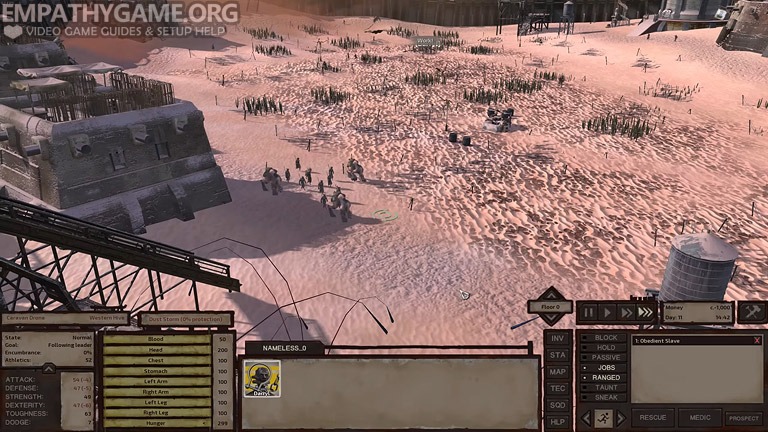
Fights unfold in real time, with combatants largely handling individual attacks, blocks, and dodges while the player manages targets, positioning, equipment, and squad behavior. Pausing to issue orders offers strategic control, but there is no action-game shortcut around a poor matchup. A trained swordsman in suitable armor can hold a line that an inexperienced recruit would lose immediately. A bad target choice can leave a medic exposed.
The differences between fighting styles are particularly interesting when a tactic fails for reasons that aren’t obvious from raw statistics. Unarmed martial artists rely on dodging rather than conventional weapon blocks. Against several attackers, a poorly trained fighter can spend so much time evading and stepping out of range that opportunities to strike almost disappear. Evading isn’t the same as controlling a fight. A novice with a katana may contribute more consistently in that situation, while a developed martial artist can become formidable under better conditions. Position and attack opportunities matter as much as theoretical damage.
Crossbows reveal the opposite imbalance. A mobile ranged squad can keep retreating while firing bolts into enemies that would overwhelm it at close range, sometimes reducing a terrifying melee threat to a long exercise in pursuit. Speed, terrain, and ammunition become strategic resources, while a ranged fighter caught by pursuers or a stray bolt striking an ally can undo the plan. Ranged dominance is powerful, but maintaining it often means trading direct combat danger for kiting and repeated repositioning.
Planning a retreat toward guards or keeping shooters beyond melee range can matter more than another point of damage. Yet combat balance is inconsistent. Some styles are painfully weak before sufficient training, and others become unusually effective when their movement advantages are exploited. Players looking for responsive, hands-on swordplay may find the mostly automated exchanges less exciting than the decisions surrounding them.
Injuries and Equipment Make Progress Feel Earned
Kenshi has no conventional classes or pool of level-up points. Athletics improves through movement, Strength through physical exertion, medical skills through treatment, and weapon abilities through use. Even taking punishment can help develop Toughness, provided the character survives. Growth is tangible: a wanderer who once fled from bandits can eventually protect new recruits through skills earned over many dangerous journeys.
The medical system prevents that progress from becoming simple numerical superiority. Damage is distributed across body parts, and a badly injured leg can take away the speed that made escape possible. Blood loss can make reaching a medic more urgent than victory. Losing a limb creates further consequences, although robotic replacements can eventually change a character’s capabilities in unexpected ways. Survival doesn’t guarantee a safe journey home.
Weapons add another easily overlooked complication. Heavy weapons require enough effective Strength to avoid attack-speed penalties. That requirement can rise with weapon quality, and injuries can temporarily reduce the Strength available to meet it. A stronger Fragment Axe may be a downgrade for a fighter who lacks the Strength to swing it, especially after being wounded. More Strength beyond the requirement is not a universal attack-speed bonus; Dexterity and combat skills remain important. Equipment choices have to account for the fighter’s condition, not just the highest numbers in the inventory.
The scars and hard-won skills of individual recruits can make them more valuable than their statistics suggest. The limitation is the time demanded by that attachment. Training combat skills, carrying heavy loads, and waiting for recovery can settle into repetitive routines, particularly when players begin optimizing progress instead of taking meaningful risks.
Faction Politics Provide Consequences Instead of a Campaign
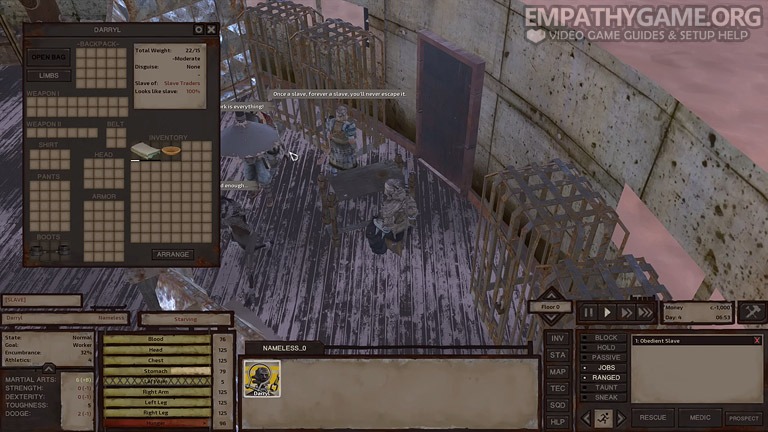
There’s no central hero, cinematic main storyline, or scripted finale. Kenshi’s narrative takes shape through the organizations already ruling its territory. The Holy Nation’s religious restrictions, the United Cities’ wealth-driven hierarchy and reliance on slavery, and the Shek Kingdom’s martial culture all affect who is welcome and who is vulnerable. A route that seems ordinary for one party can be dangerous for another because of its species, composition, or relationship with the local authorities.
Those differences make faction choice more substantial than picking a side from a dialogue menu. Trade with a power may provide protection or income while exposing the squad to practices it finds objectionable. Opposing that power can mean raids, bounty hunters, or difficult travel through its territory. Major leaders also connect to Kenshi’s World States system: killing or imprisoning certain figures can change the condition or control of settlements and the distribution of patrols. This isn’t a fully simulated revolution, but it gives faction conflict lasting weight.
The absence of a directed questline can produce stranger, more personal stories. In the Fog Islands, captives tied to fogmen prisoner poles can turn an exploration trip into an improvised rescue operation. Establishing a secure foothold nearby, extracting survivors, and escorting them toward safety is a possible self-imposed purpose rather than a mission handed out by a quest giver. Some rescued people may even become recruits. The game may not recognize that humanitarian intent, but the campaign can grow around it.
The Wasteland’s History Is More Interesting Than Its Exposition
Kenshi’s ruins, damaged machines, abandoned structures, and Skeleton inhabitants suggest several layers of history without explaining everything through a neat sequence of revelations. The factions seem to inhabit the remains of a much older civilization. Exploring the Floodlands or finding strange technology can be compelling even when there is no quest reward for understanding what happened.
Skeleton companions such as Burn and Sadneil can contribute contextual dialogue during travel, offering details another squad might miss. Not every Skeleton recruit offers equally distinctive dialogue, and these scraps rarely resolve the wider mysteries. Party composition can therefore affect how much history the journey reveals.
That restrained storytelling fits the atmosphere, but it has a clear cost. Most recruits are more recognizable through skills, equipment, and the history of your own expeditions than through authored personalities. Dialogue is sparse, and anyone seeking deep companion relationships or a carefully paced plot must supply much of the emotional meaning themselves. Kenshi supplies an evocative setting and the conditions for stories, not a conventional narrative that guarantees one.
Building a Settlement Can Become Its Own Full-Time Occupation
Recruiting companions gradually transforms survival into organization. A small traveling group must manage food, medical supplies, bed access, and who can carry the injured. Later, characters can work mines, farms, storage facilities, and crafting benches through assigned jobs while others explore or defend the settlement. Research connects production to the equipment needed for more dangerous expeditions.
It’s tempting to establish an independent base as soon as resources permit, but doing so changes the nature of the game. Raids and territorial demands can make a promising location expensive to hold. Buying a building in an existing town offers a more sheltered alternative, particularly while the squad is too weak to defend a wilderness settlement.
Even seemingly passive production has hidden dependencies. An armorsmith working in darkness can produce poorer results than their nominal skill suggests, while injuries and poor physical condition may further compromise work. Lighting a workshop and protecting its specialists can matter as much as investing in new research. These dependencies are compelling but poorly communicated.
The economy is less convincing when a settlement tries to become a retail business. A shop counter may technically allow visitors to buy goods, but NPCs follow limited shopping preferences and budgets. Filling a storefront with medical supplies doesn’t guarantee steady customers or meaningful income. Crafting for the squad and selling directly to merchants are more reliable than expecting an autonomous marketplace. The base-building fantasy is deep in production and logistics, thinner in its simulation of consumers.
Eventually, the burden shifts from survival decisions to supervision. Job priorities, inaccessible resources, inventory shuffling, and characters taking unhelpful routes can force the player to babysit activities that seemed automated. A sprawling faction can turn an exploration-focused RPG into a daily exercise in correcting work schedules.
Atmosphere Outlasts the Presentation, but the Interface Remains a Barrier
Visually, Kenshi makes a stronger impression through geography and mood than technical detail. Empty roads, ruined settlements, hostile silhouettes on the horizon, and occasional stretches of music can make the world feel deeply isolated. Weathered samurai equipment and industrial ruins give the landscape its identity. The Swamp’s claustrophobic clutter and the exposed, dusty regions around The Hub are memorable for very different reasons.
Character animation, environmental detail, and the interface are much less graceful. Melee exchanges can look awkward, and squad selection or inventory transfers require constant attention once several characters carry different equipment. Pathfinding can struggle with terrain, buildings, and long routes, sometimes turning a sensible order into another round of manual corrections. Such interruptions undermine the deliberate rhythm that makes exploration appealing.
Freedom Creates Replayability, but Not Always Momentum
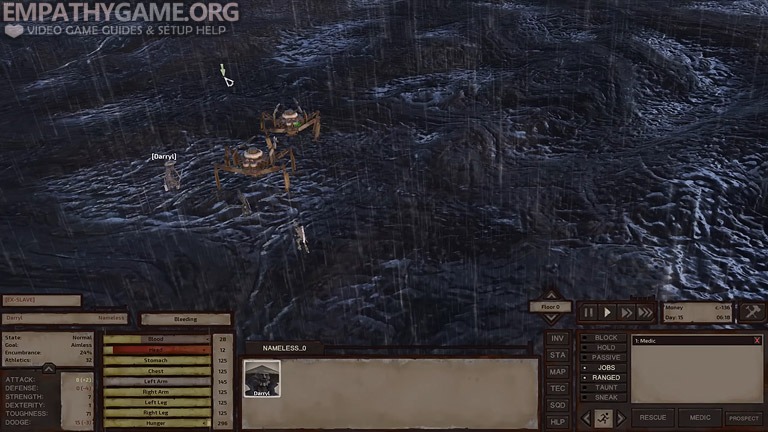
A second Kenshi campaign can feel remarkably different without changing the map. A lone drifter who steals and avoids fights faces different problems from a bounty-hunting squad, a merchant caravan, or a community attempting to become self-sufficient. Starting conditions, recruits, enemies, and the decision to settle all redefine success. There is no required ending to rush toward, so even abandoning one ambition in favor of another can feel like progress.
That freedom isn’t perfectly balanced. Stealth and assassination can become powerful enough to circumvent much of the military buildup that faction conflict appears to demand. A specialist capable of infiltrating a stronghold and removing important leaders may produce political changes without fighting the battles that would otherwise make the achievement feel hard-earned. It’s a valid role-playing path, but one that exposes uneven skill balance. An efficient strategy can shorten the struggle that gives the sandbox much of its appeal.
There’s a similar issue at the other end of the power curve. Once the squad can reliably defeat common threats, productive workshops and established trade routes may reduce survival to maintenance. Research expeditions, faction wars, or mods can renew interest, but there is no final objective when personal motivation fades. The most satisfying playthroughs are often those with a chosen ambition strong enough to guide the journey, yet flexible enough to survive an unexpected defeat.
Final Verdict
Kenshi’s greatest strength is not the sheer number of things it allows. It’s the way a seemingly small decision can acquire consequences far outside its original purpose. Recruiting one extra medic changes how much risk an expedition can take. A lost leg makes an escape impossible until the squad finds another solution. A base meant to supply a traveling party may eventually become the center of its identity. In those moments, character growth, world design, and strategy reinforce one another without needing a scripted reward.
Repetitive training, unreliable pathfinding, dense menus, limited retail simulation, and uneven combat balance make that freedom hard to enjoy consistently. Its lack of a directed campaign is a genuine limitation for anyone who wants memorable authored characters, clear objectives, or a definite conclusion. Those players may find the early hardship and later administration equally frustrating.
For someone who enjoys creating goals, accepting setbacks, and finding stories in the interaction between rules, however, Kenshi has an unusual ability to make survival feel personal. It doesn’t always respect the player’s time, and it often makes its most interesting possibilities difficult to reach. But when an unlikely group of survivors finally gains the means to choose its own future, that freedom feels earned rather than granted.
Kenshi Pros & Cons
Kenshi PC System Requirements
The following specifications are based on the official Windows PC requirements published through Steam and Epic Games Store. Kenshi’s recommended installation uses an SSD, and 16 GB RAM is recommended for a more comfortable experience with its extensive world simulation.
OFFICIAL WINDOWS PC REQUIREMENTS:
MINIMUM:
OS: 64-bit Windows
CPU: Dual-core 64-bit processor
RAM: 6 GB
GPU: Graphics card capable of Pixel Shader 5.0
DirectX: Version 11
Storage: 14 GB available space
RECOMMENDED:
OS: Windows 7 64-bit (legacy published requirement; modern Steam client support requires Windows 10 or later)
CPU: Quad-core 64-bit processor
RAM: 16 GB
GPU: Graphics card capable of Pixel Shader 5.0
DirectX: Version 11
Storage: 14 GB available space
Storage Type: SSD strongly recommended
Additional PC Performance and Setup Notes
SSD and world loading: Kenshi continuously handles a large, populated world with many independent characters, squads, settlements, and simulation systems. Moving across distant regions can trigger loading interruptions even when the game is running at an acceptable frame rate. An SSD is the developer’s recommended storage option and is especially worthwhile for players who travel frequently or manage squads operating in different regions.
RAM and CPU limitations: The published 6 GB minimum should not be interpreted as a guarantee of consistently smooth gameplay. Kenshi’s world simulation, pathfinding, AI activity, and large settlements create demands beyond rendering simple graphics. Systems closer to the recommended 16 GB RAM and a capable quad-core processor are better starting points, although the official specifications do not promise a particular frame-rate target.
Graphics and stability: If performance becomes inconsistent, begin with the unmodified game and reduce demanding graphics settings before adding visual improvements. Because Kenshi uses an older game engine and complex world simulation, lowering image quality alone will not necessarily eliminate loading pauses, AI-related slowdowns, or pathfinding problems.
Installing mods safely: Confirm that the base game launches and saves correctly before introducing mods. Steam owners can browse the official Kenshi Steam Workshop, while manually distributed modifications should be obtained from reputable original author pages and installed according to their specific instructions. Check dependencies, maintain a manageable load order, and back up saves before making major gameplay changes. Avoid assuming that every mod works identically across Steam, GOG, and Epic installations.
Controls and Steam Deck: Kenshi’s interface is primarily intended for mouse-and-keyboard navigation, with camera movement, character selection, squad management, and contextual orders forming much of the experience. Valve lists the game as Playable on Steam Deck, but entering some text requires manually opening the virtual keyboard. Players who prefer traditional controller-focused RPGs should expect a different interaction style.
Windows compatibility: The official requirements retain older Windows versions because they describe the game’s original PC release. Steam’s client requires Windows 10 or later, so do not treat the historical Windows 7 recommendation as confirmation that an older Windows installation remains supported through Steam. Check the requirements of the storefront and operating system actually being used.
Official Trailer
Note: The official Kenshi trailer from Lo-Fi Games introduces its harsh sword-punk world, freeform survival, squad management, and base-building possibilities. This written guide adds verified PC purchasing, modding, Steam Deck, installation, and system-requirements information.
Frequently Asked Questions
Is Kenshi worth playing in 2026?
Yes. Kenshi remains a strong choice for players who enjoy unrestricted sandbox RPGs, difficult survival, faction politics, and building their own stories rather than following scripted missions. Its dated presentation, demanding learning curve, and occasionally frustrating interface are easier to accept if you value freedom and simulation depth over polish.
Does Kenshi have a main story or traditional quests?
Kenshi has extensive lore, named characters, faction conflicts, and important world-changing events, but no conventional main campaign or quest chain that directs your progress. Instead, players decide whether to explore ruins, hunt bounties, build settlements, trade, challenge major factions, or pursue entirely different goals.
Can you finish Kenshi, and does it have an ending?
Kenshi has no official final mission, ending sequence, or victory screen. Defeating powerful enemies such as Cat-Lon, overthrowing faction leaders, or establishing a thriving settlement can serve as personal end goals, but the sandbox continues afterward. There is consequently no fixed completion time.
Which Kenshi starting scenario is best for beginners?
The Wanderer is a good first choice because it introduces Kenshi’s standard experience with one character, a small amount of money, and a starting position in The Hub. It is still dangerous, but less complicated than scenarios such as Rock Bottom or The Slaves, which introduce additional survival problems immediately.
What should beginners do first in Kenshi?
Stay relatively close to a settlement, obtain food and a first aid kit, learn how to move safely, and avoid attacking unfamiliar enemies until you understand their strength. The Hub and nearby settlements provide opportunities to trade, recruit companions, and learn the mechanics without immediately committing to a dangerous wilderness expedition.
How can you make money early in Kenshi?
Mining copper or iron near a relatively safe settlement and selling it to traders is a straightforward early income method. Trading goods between towns, collecting equipment from defeated enemies, and eventually pursuing manageable bounties provide alternatives. The local currency is called Cats, and building an early cash reserve is often more useful than immediately buying expensive weapons.
How do characters level up and improve their skills in Kenshi?
Kenshi does not use conventional character levels, experience-point allocation, or fixed RPG classes. Skills improve through relevant activities: running develops Athletics, carrying heavy loads can train Strength, fighting improves combat abilities, and using medical supplies trains Field Medic. Progress becomes slower at higher skill levels, so experienced characters need increasingly demanding activities to keep improving.
How does combat work, and can you pause battles?
Combat uses real-time squad control rather than direct button-by-button sword fighting. Characters automatically perform attacks and defensive actions according to their skills, equipment, positioning, and orders, while players manage targets, movement, formations, and tactics. Pressing Space pauses the simulation, allowing you to issue commands before resuming the battle.
What happens when your character loses a fight in Kenshi?
Defeat does not automatically mean death. A badly injured character may become unconscious, recover later, be robbed, captured by slavers, or suffer fatal injuries if nobody intervenes. Death is permanent for that character, and losing every member of your faction leaves no surviving squad to continue controlling.
How do healing, bleeding, and recovery work?
Organic characters need first aid kits to bandage cutting wounds and stop dangerous bleeding, while rest helps recover remaining injuries. A conscious character can treat themselves or another squad member, and assigning the Medic job allows automatic treatment when supplies are available. Skeletons and robotic body parts instead require robotic repair supplies and have additional repair-bed mechanics.
Can characters lose limbs and use prosthetics?
Yes. Severe damage can permanently sever an arm or leg, leaving a character with reduced mobility or combat effectiveness until a compatible robotic replacement is installed. Prosthetic limbs come in different qualities and can modify character abilities, making limb loss a serious setback but not necessarily the end of a character’s usefulness.
What is the difference between Humans, Shek, Hivers, and Skeletons?
Each playable race has different physical characteristics, skill modifiers, equipment restrictions, and survival considerations. Shek are naturally suited to demanding combat roles, Hivers have specialized subtypes, and Skeletons do not require food but need robotic maintenance. Race also affects how some factions treat your characters, particularly in Holy Nation territory.
How do you recruit companions in Kenshi?
Many recruits can be found in bars and other settlements, where they may join after a conversation and payment in Cats. Some unique characters can join for free or under special circumstances, while rescued prisoners or slaves may occasionally become recruitable. Once recruited, companions can be controlled individually, placed into squads, equipped, and trained.
How many characters can you recruit in Kenshi?
The unmodified game normally supports up to 30 player-controlled characters across your faction, including recruited animals, with a maximum of 20 characters in an individual squad. Mods can increase these limits, although larger groups place additional demands on management, pathfinding, and game performance.
Can you recruit captured enemies or prisoners?
Not through a general prisoner-recruitment system in the unmodified game. Imprisoning an ordinary enemy does not automatically provide a dialogue option to recruit them, although certain rescue events can lead to recruitment. Community modifications such as Recruitable Prisoners introduce broader recruitment possibilities, but those mechanics are not part of standard Kenshi.
Can you play Kenshi with just one character?
Yes. A solo playthrough is possible, and the game does not require recruiting an army or establishing a settlement. However, traveling alone makes injuries, unconsciousness, imprisonment, and unexpected encounters more dangerous because there may be nobody available to rescue or heal your character.
When should you build your first base in Kenshi?
There is no required point, but beginners are usually better off waiting until they have reliable income, several capable characters, supplies, and enough knowledge to defend an outpost. Building in the wilderness can attract bandit raids, faction demands, and dangerous wildlife, so establishing a base too early may create more problems than it solves.
Can you buy a house in an existing town instead of building a base?
Yes. Some settlements sell buildings that you can purchase, repair when necessary, and use for storage, research, crafting, or accommodation. This provides a useful early alternative to an independent outpost because the town’s existing guards and infrastructure offer protection without requiring you to maintain your own walls and defenses.
Why do bandits and factions keep attacking my Kenshi base?
Player-built outposts can attract raids, extortion demands, territorial visits, and other faction events depending on their location and relationships. Research the surrounding territory before settling, strengthen defenses gradually, and consider hiring mercenaries when your own squad cannot handle the threat. Abandoning an unsafe base temporarily is also a legitimate survival decision.
How do you automate farming, mining, and other jobs?
Hold Shift while assigning an appropriate task with the right mouse button to add it to a character’s permanent job list. Jobs generally run in priority order from top to bottom, provided the Jobs toggle is enabled and the character can access the required resources and facilities. If a worker stops unexpectedly, check missing materials, full storage, inaccessible workstations, and higher-priority assignments.
Do your decisions change cities and factions in Kenshi?
Yes. Kenshi uses World States that react to major events, including the death or imprisonment of important faction leaders. These changes can alter settlement ownership, patrols, faction strength, and the balance of power between groups such as the Holy Nation, Shek Kingdom, and United Cities. However, defeating a city’s ruler does not automatically make that city your personal property.
Does Kenshi have fast travel?
No. The standard game does not provide a conventional fast-travel or teleportation system for moving between discovered settlements. Characters travel physically across the world, although players can increase the simulation speed to shorten uneventful journeys. Long-distance travel remains risky because squads can encounter hostile creatures, patrols, and environmental hazards along the way.
Can you become enslaved and escape in Kenshi?
Yes. Hostile factions can capture characters and force them into slavery, creating situations where escape becomes a survival objective rather than a scripted mission. Characters may attempt to pick locks, sneak away, or receive help from companions. Enslavement does not automatically end a playthrough, but recapture, starvation, and injuries can make escape difficult.
Can you recruit animals and use them for travel or combat?
Yes. Animal traders sell creatures such as Bonedogs, Bulls, and Garru, which can become members of your faction. Some provide valuable carrying capacity for trading and exploration, while others are useful in combat or settlement defense. Animals require appropriate care and food, and young animals generally become more capable as they mature.
How does food sharing work between Kenshi squad members?
Most organic characters must eat regularly or suffer malnutrition, weakened abilities, and eventually starvation. Food carried in a character’s backpack can be shared automatically with nearby squad members, reducing the need to manage every inventory separately. Skeleton characters are an exception because they do not need food.
Can you change Kenshi’s difficulty without installing mods?
Yes, to a degree. Kenshi offers advanced game-start settings affecting factors such as hunger, damage, the chance of death, and world population or encounter conditions. These parameters change the severity of survival and combat without introducing traditional enemy level scaling or a simple Easy/Normal/Hard campaign difficulty system.
What does Import Game do, and when should you use it?
Import Game creates a refreshed game world while carrying selected information from an existing save, making it useful after major mod changes or when persistent world problems develop. Depending on the selected options, it can preserve your squad, research, buildings, faction relations, and important dead NPC states, but ordinary world activity, loot, and prisoners may be reset. Back up the original save and examine every import option before proceeding.
What should you do if Kenshi crashes or stops working after installing mods?
First, back up your saves, check game-file integrity through your storefront, and test whether the problem also occurs without the newly added modifications. Incompatible mods, incorrect dependencies, or problematic load orders can cause instability. If the issue persists in the unmodified game, consult Kenshi’s pinned Steam troubleshooting and bug-report discussions rather than installing unverified replacement files.
Does Kenshi support multiplayer, co-op, or split-screen?
No. Kenshi is exclusively single-player and does not officially support online multiplayer, cooperative campaigns, split-screen, LAN play, or cross-play. Its multiple controllable characters are all managed by one player within the same simulation.
Can you play Kenshi with a controller on PC?
Kenshi is primarily designed for mouse-and-keyboard controls, especially for managing squads, inventories, camera movement, and contextual orders. Steam Deck is rated Playable, but its trackpads and customized input layouts are more suitable for the interface than expecting a fully console-style controller experience. Some text entry also requires manually opening the Deck’s virtual keyboard.
Still have questions? Check the Kenshi Reddit community, Kenshi Steam Discussions, or official Lo-Fi Games FAQ for additional help, gameplay advice, and community discussion.
Sources & References
Key factual and technical information in this guide was checked against relevant official and established sources, including:
- Lo-Fi Games — Official Kenshi Page — verified the game’s core sandbox design, squad progression, survival mechanics, and base-building features.
- Steam — Kenshi — verified the full release date, Windows system requirements, Steam Workshop and editor features, available soundtrack content, and overall user reception.
- GOG — Kenshi — verified the official DRM-free PC purchase option, offline ownership characteristics, and published technical requirements.
- Epic Games Store — Kenshi — verified the official Epic Windows release, product features, system requirements, and OpenCritic review aggregation.
- Lo-Fi Games — Kenshi FAQ — verified the game’s single-player structure, strategy-RPG classification, character progression, and official support guidance.
- Lo-Fi Games — Development News — helped distinguish the original Kenshi engine and technology from the separate Kenshi 2 project.
Similar Games Like Kenshi
- Project Zomboid
- Mount & Blade II: Bannerlord
- Dune: Awakening
- Fallout 4
- Medieval Dynasty
- Fallout: New Vegas






Found something worth playing through DecideGame?
DecideGame.com is an independent gaming project run by Editor Zero. If this guide helped you discover a game, solve a problem, or find useful information, you can support DecideGame.com and help keep new and updated game guides coming.
DecideGame — PC Game Guides, Reviews & Setup Help