
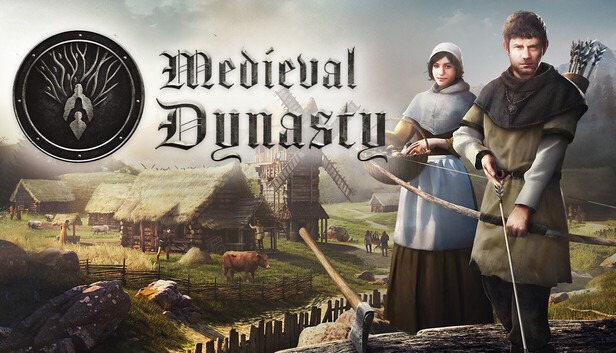
Use this updated 2026 Medieval Dynasty PC guide to compare official download and installation options on Steam, Epic Games Store, GOG, and Xbox, understand The Valley and The Oxbow, cross-platform co-op, editions and DLC, and check system requirements, Steam Deck support, mods, saves, and practical setup guidance.
 By Editor Zero — independently researched, edited, and maintained.
Last updated: 29 September 2026
Last reviewed: 29 September 2026
Table of Contents
- Quick Summary
- Quick Facts
- Official PC Stores, Download & Installation
- Medieval Dynasty Review
- Pros & Cons
- PC System Requirements
- Frequently Asked Questions
- Similar Games
Medieval Dynasty Quick Summary
✔ Open-world medieval survival, crafting, farming, role-playing, and village management where manual gathering gradually gives way to worker assignments, production chains, and long-term settlement planning
✔ Similar to Mount & Blade II: Bannerlord through its medieval sandbox setting, character progression, trading, settlement growth, family systems, and open-ended long-term goals, although Medieval Dynasty focuses far more on survival and village life than warfare
✔ The Valley is the original solo-only Racimir campaign, while The Oxbow supports a custom character in solo play or online co-op for up to four players
✔ Supported Windows PC, PlayStation 5, and Xbox Series X|S versions can join cross-platform Oxbow sessions; the host retains the shared world save
✔ The base game includes both maps, seasons, farming, hunting, building, villager management, relationships, heirs, legendary animals, and normal co-op access without requiring paid DLC
✔ Paid DLC and bundles mainly add cosmetics, decorations, supporter materials, music, guides, or hunting-themed equipment rather than a required story campaign
Medieval Dynasty Quick Facts
Official PC Stores, Download & Installation
👇 Compare the official Steam, Epic Games Store, GOG, and Microsoft/Xbox PC options below before purchasing, downloading, or installing Medieval Dynasty.
- Base game: The standard purchase contains both The Valley and The Oxbow, solo play, Oxbow co-op, cross-play on supported versions, farming, hunting, building, village management, relationships, heirs, and the free gameplay content integrated into the base game.
- Steam: Steam sells the base game and several bundles, supports achievements, trading cards, Steam Cloud, Family Sharing, online co-op, and offers an Anniversary Edition alongside other bundle combinations.
- Anniversary Edition: Steam’s Anniversary Edition bundles the base game with the Digital Supporter Pack, Official Guide, Official Cookbook, Original Soundtrack Vol. 2, Echoes of Nature, and Exquisite Pack. Hunting Set is not listed among those seven included items.
- Epic Games Store: Epic sells the base game and Digital Supporter Edition and lists cloud saves, co-op, controller support, cross-platform play, online multiplayer, and single-player support.
- GOG: GOG sells the Windows version with DRM-free offline installers. GOG Galaxy is optional for ordinary offline solo play and can be used for connected features such as cloud saves and achievements.
- Microsoft / Xbox: The Microsoft edition supports Xbox Play Anywhere across compatible Xbox Series X|S and Windows PC devices, with Xbox achievements and cloud-synchronized saves inside that ecosystem.
- Game Pass: Xbox lists Medieval Dynasty in Game Pass subscription options, including a PC-only tier, and provides cloud access on eligible Game Pass tiers. Subscription catalogues can change.
- Xbox editions: Echoes Edition includes the base game plus Echoes of Nature, while Xbox Complete Edition includes the base game, Echoes of Nature, and Exquisite Pack. These packages should not be confused with Steam’s Anniversary Edition or Complete the Set bundle.
- Decorative DLC: Echoes of Nature adds outdoor decoration pieces, while Exquisite Pack adds cosmetic character and settlement items. Neither is required for The Valley, The Oxbow, normal co-op, farming, or dynasty progression.
- Hunting Set: The paid Hunting Set adds two hunting outfits plus an adorned bow, spear, knife, and crossbow crafted from trophies obtained by hunting legendary animals.
- Cross-play ownership: Cross-platform co-op does not create universal ownership or automatic cross-progression. Steam, Epic, GOG, Microsoft/Xbox, and console licences remain separate, so buying one version does not add the game to another storefront account.
- Before buying: Check the exact item list in a bundle before checkout because the Digital Supporter Pack, Echoes of Nature, Exquisite Pack, soundtrack, guide, cookbook, and Hunting Set can be sold separately or overlap with broader packages.

 Buy Medieval Dynasty on Epic Games Store

 Buy or Play Medieval Dynasty through Xbox Play Anywhere
 Visit the Official Medieval Dynasty Page

Medieval Dynasty Review
A patient settlement sandbox where escaping manual labour becomes the real progression—and managing what replaces it becomes the lasting challenge.
Medieval Dynasty begins with work so ordinary that it can initially seem almost aggressively uneventful. Trees must be cut one by one. Logs are carried to a building site. Sticks, stones, reeds, berries, herbs, and food are collected by hand. Each wall section requires materials and repeated hammer strikes before one small house finally stands where an empty clearing used to be.
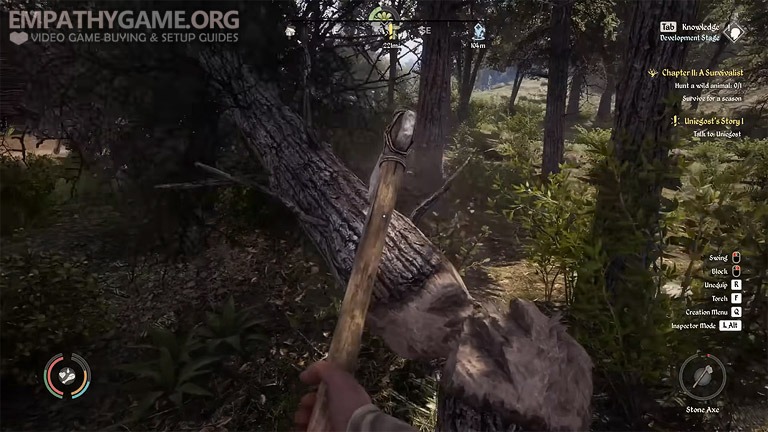
There is no approaching army, supernatural threat, or urgent heroic destiny driving that labour. The attraction comes from ownership. The first roof matters because the player supplied every log and length of straw. The first field matters because the soil was prepared personally. The first recruited villager matters because another person can finally perform work that previously consumed an entire day.
That transformation from labourer to organiser is the game’s defining achievement. A settlement develops homes, workshops, storage, crops, livestock, families, and routines that continue without constant direct input. The player stops worrying about finding one axe and starts worrying about whether an entire production chain can supply enough axes for everyone who needs them.
The change is satisfying but not always liberating. Medieval Dynasty frequently replaces physical repetition with administrative repetition. A missing tool can halt a workplace, which interrupts another production chain and creates a shortage elsewhere. It is deeply comfortable when its routines align and surprisingly fiddly when they do not.
The First Years Make Every Building Feel Earned
The opening is deliberately slow because construction is physical before it becomes managerial. A house is not purchased from a menu and placed fully formed. Trees must be felled, logs carried, foundations positioned, and individual sections completed with the correct resources. That gives the first few structures unusual weight: a home represents shelter and permanence, while a woodshed or hunting lodge is memorable because the player performed that work manually before anyone could be assigned to it.
The weakness appears through repetition. Constructing one home establishes the settlement fantasy; constructing several nearly identical homes through the same sequence can feel like unpaid manual work. Early carrying capacity is limited, tools wear down, and expansion consumes resources faster than the village can initially replace them. The game asks for patience before automation begins paying back the effort invested in it.
The Village Becomes Interesting When It Stops Depending Entirely on You
Recruiting settlers changes the game more substantially than acquiring a stronger weapon. A lumberjack can gather logs and produce firewood. A hunter can supply meat and leather. Extraction workers provide stone or clay. Farmers can take over the seasonal cycle that once required the player to prepare every field personally.
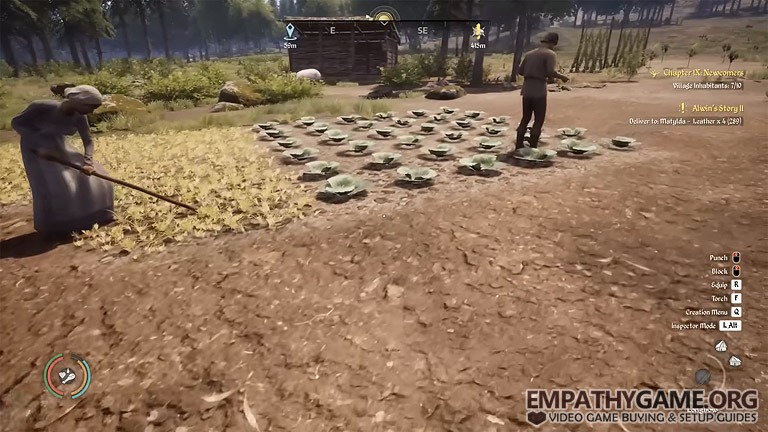
The first successful automation feels like freedom, but workers never become independent machinery. They require tools, inputs, storage, housing, and suitable assignments. If axes run out, log production stops; without enough logs, firewood falls behind; another workshop may then lose the materials it needs. Solving these failures means checking output rates, adjusting assignments, replacing tools, and waiting to see whether the new balance survives another season.
This is where Medieval Dynasty moves from survival game into logistical management. Shortages usually have understandable causes, which makes fixing them rewarding. The downside is that a larger settlement can turn into a chain of warning icons and menu checks. Automation becomes a negotiation rather than a destination.
Extraction Matters More Than an Impressive Workshop District
A common early mistake is expanding production faster than the village can supply basic materials. Workshops are exciting because they promise clothing, tools, processed food, building components, and market goods, but every additional workplace also creates another demand for inputs, tools, storage, and workers.
A stable settlement therefore begins with extraction. Reliable wood, stone, food, straw, clay, and other foundational materials support almost everything built afterward. A second smith is not useful if ore or bars arrive too slowly, and a kitchen can appear productive while its output remains below the village’s actual consumption.
The game is strongest when the player recognizes these relationships and rebuilds the economy around them. A tool shortage may require more extraction rather than more crafting. A firewood problem may come from logs being consumed elsewhere. Population growth may require improving food production before adding another profession. Those feedback loops make settlement management more interesting than simply unlocking the next building.
Farming Gives the Settlement Its Strongest Rhythm
Farming is repetitive in isolation but valuable as a seasonal structure. Fields must be prepared, fertilised, ploughed, planted, and harvested according to crop calendars. Doing every stage alone across large fields becomes exhausting; watching villagers spread through those same fields makes the settlement feel organised in a way that repeated dialogue rarely does.
The seasons create natural chapters. Planting, selected harvests, construction, hunting, trade, and production priorities shift as the year changes. Buildings appear between harvests, children grow, workers improve, and snow eventually covers roads that looked completely different months earlier. Progress is measured not only by technology points or money but by remembering what the settlement looked like several winters earlier.
Season changes can expose poor planning immediately. A missed crop window can delay production for another year, while insufficient food or firewood becomes more noticeable when temperatures change. These pressures rarely destroy an established village, but they keep its routines from becoming entirely static.
The Open World Is Peaceful but Travel Can Become Punishingly Empty
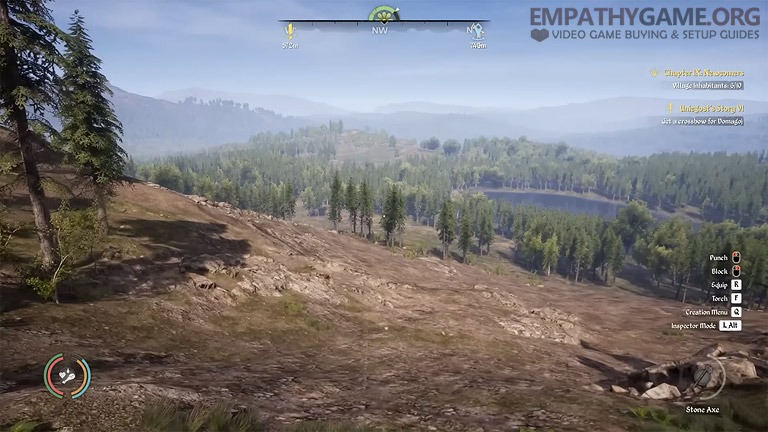
Medieval Dynasty’s landscape is often beautiful in an understated way. Forest paths, rivers, lakes, villages, fields, mountain routes, wildlife, and changing weather create a convincing rural environment. Walking home while the light fades and smoke becomes visible above the settlement can be genuinely relaxing.
The problem is how often quests turn that distance into padding. An objective may require travelling a long way to speak with one person, returning to the original character, and then being sent elsewhere. Early travel is especially slow because stamina and carrying capacity are limited, while money is still needed for taxes, schemes, seeds, animals, and equipment.
The world contains wildlife, bandits, gathering locations, mines, and attractive building sites, but it is not dense with authored discoveries. Repeated journeys rarely create the uncertainty of a more dangerous medieval RPG such as Kingdom Come: Deliverance II. Mounts and familiarity reduce the burden later, but they do not make the underlying quest structure more eventful.
Hunting and Combat Support the Village Rather Than Define the Game
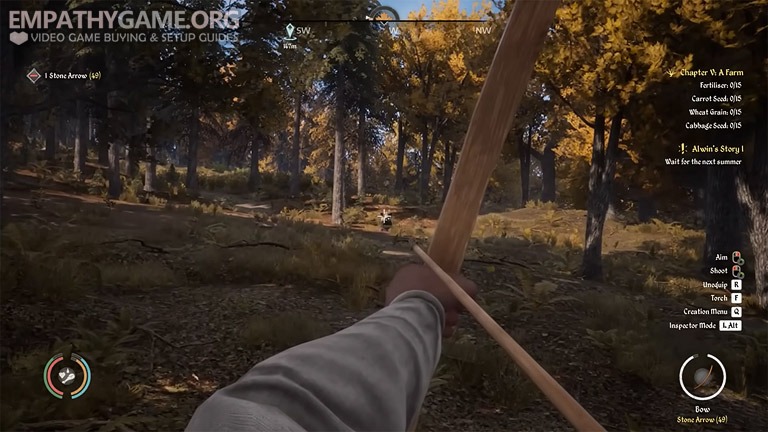
Hunting fits the wider progression because it produces food, leather, fur, trophies, and other useful materials while making the wilderness slightly dangerous. Legendary animals add distinct hunting targets and decorative rewards, but the core mechanics remain straightforward: bows, crossbows, spears, traps, tracking, distance, and preparation matter more than elaborate combat systems.
Players who enjoy gathering, hunting, crafting, and slowly mastering a hostile wilderness may also appreciate Far Cry Primal. Its world is much more combat-driven, while Medieval Dynasty uses hunting mainly as one component of settlement survival and production.
Bandit combat is even less central. Fighting supplies occasional danger and loot, but weapon handling and enemy behaviour are too simple to carry the experience. The game becomes more distinctive when violence remains infrequent and fields, tools, food, buildings, and families matter more than warfare.
The Valley’s Story Is Gentle Rather Than Dramatic
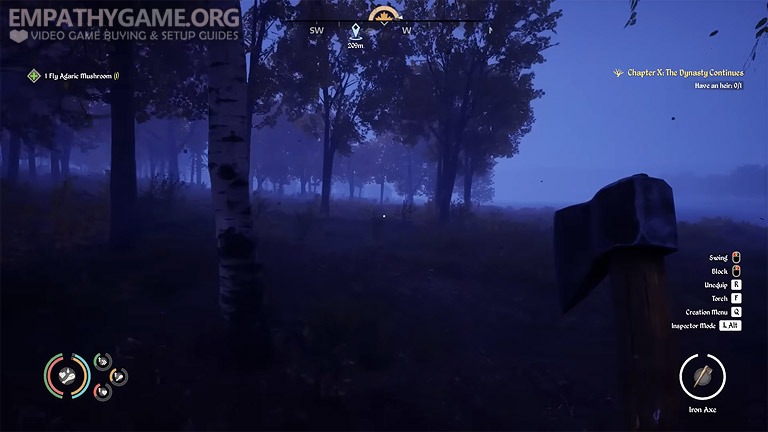
The Valley gives Racimir a defined reason to arrive and enough direction to introduce the settlement systems gradually. His search for people connected to his uncle provides a personal thread through chapter objectives, village relationships, and the early stages of building a new life. The writing is not powerful historical drama, but its modest tone suits a game about surviving violence and finding somewhere to belong.
The Oxbow trades that established identity for a custom protagonist and a structure that works alone or with friends. It offers more freedom to define who occupies the centre of the settlement story, although that openness can feel less personally anchored than Racimir’s campaign.
NPCs remain one of the weaker elements in both structures. Villagers have ages, skills, moods, homes, jobs, partners, children, and schedules, yet their personalities rarely deepen through extended interaction. The village often feels more alive through behaviour—workers walking to buildings, farmers spreading across fields, smoke rising from homes—than through conversation.
Technology Progression Can Outlast the Fun of Unlocking It
The larger progression arc moves from personal action toward planning. Early milestones arrive quickly because almost every building changes what the settlement can do. Later technologies demand much more repeated activity before another important structure becomes available, creating periods where the village is stable but the next meaningful unlock remains far away.
Custom settings help because players can accelerate technology gain, experience, crafting, carrying capacity, season length, and other systems without removing the basic management challenge. That flexibility is one of the game’s most useful design choices: it lets a slow-life simulation remain slow for players who enjoy the routine without forcing everyone to accept the same amount of grind.
The Dynasty Is More Often an Idea Than an Ending
Marriage, children, ageing, apprenticeships, and succession give the settlement a generational frame. In practice, reaching a playable heir takes many in-game years, and a village may become wealthy, automated, decorated, and functionally complete long before the family timeline produces another protagonist.
This is why many campaigns end through personal satisfaction rather than a formal victory. One player may stop after automating every production chain; another may continue until every road, orchard, fence, house, and storage building fits a carefully designed plan. The story can conclude while the settlement continues, and the game rarely insists that one milestone should be treated as the final destination.
Final Verdict
Medieval Dynasty succeeds because ordinary work produces visible ownership. The player remembers the empty ground where the first house now stands, the field that once had to be prepared alone, and the winter when firewood nearly ran out. A settlement becomes meaningful through accumulated routine rather than a scripted declaration that it has become important.
The transition from gathering every resource personally to coordinating villagers is deeply satisfying, but automation never eliminates responsibility. Tool shortages, slow output, storage limits, seasonal crops, worker assignments, long-distance quests, and shallow NPC writing can turn a peaceful village into repeated maintenance.
Players seeking warfare, complex combat, dramatic quests, or emotionally rich relationships may find the experience uneventful. Players who enjoy slow construction, seasonal planning, production chains, settlement decoration, and defining their own finish line can remain absorbed for a very long time. Medieval Dynasty is not about conquering the medieval world. It is about choosing one small part of it, building something there, and gradually making that place feel like it belongs to you.
Medieval Dynasty Pros & Cons
Medieval Dynasty PC System Requirements
Official Windows PC requirements:
MINIMUM:
OS: Windows 10 or Windows 11, 64-bit
CPU: Intel Core i5 at 3.3 GHz / AMD processor at 3.5 GHz
RAM: 8 GB
GPU: DirectX 11-compatible GPU with 6 GB dedicated VRAM; Intel Arc A580 / NVIDIA GeForce GTX 1060 / AMD Radeon RX 580
DirectX: Version 11
Network: Broadband internet connection
Storage: 20 GB available space
Drive: SSD recommended; 16 GB RAM is also recommended even at the minimum graphics tier
RECOMMENDED:
OS: Windows 11, 64-bit
CPU: Intel Core i5 or i7 at approximately 4 GHz / AMD Ryzen 5 at approximately 4 GHz
RAM: 16 GB
GPU: DirectX 12-compatible GPU with 8 GB dedicated VRAM; Intel Arc A750 / NVIDIA GeForce GTX 1660 / AMD Radeon RX 590
DirectX: Version 12
Network: Broadband internet connection
Storage: 20 GB available space
Drive: SSD recommended
Additional PC Performance and Setup Notes
- Install on an SSD when possible and keep extra free space beyond the listed 20 GB for updates, temporary files, saves, screenshots, shader data, and unofficial modifications.
- Use the storefront’s verify or repair function before reinstalling if an update leaves missing files, crashes, or loading problems.
- Keep every co-op participant on a compatible game build before troubleshooting cross-platform connection problems, and maintain named backups of the host’s Oxbow save.
- Large settlements can become CPU- and memory-heavy because villagers, livestock, fields, production calculations, decorations, visible storage items, lights, and long view distances must be processed together.
- If performance falls in a mature village, reduce view distance, foliage, shadows, effects, and decoration density before lowering texture quality unnecessarily.
- The PC version includes Intel XeSS 3 options on compatible hardware. Upscaling or frame-generation features should be tested against a stable base frame rate rather than treated as a substitute for reducing settings when the game is CPU-limited.
- Steam Deck is rated Playable: default controls and graphics perform well, but some text is small, some prompts may show non-Deck glyphs, and text entry can require manually opening the virtual keyboard.
- Medieval Dynasty has no official Steam Workshop or developer mod kit. Back up saves and restore clean files before diagnosing crashes or co-op issues caused by unofficial mods, loaders, configuration tools, or ReShade presets.
Official Trailer
Note: This launch trailer presents Medieval Dynasty’s countryside, construction, hunting, farming, village life, seasonal environments, relationships, family development, and long-term progression, while the written guide adds official PC stores, Oxbow co-op, cross-play, editions, DLC, Steam Deck status, requirements, mods, and setup guidance.
Frequently Asked Questions
Is Medieval Dynasty worth playing in 2026?
Yes, if you enjoy slow settlement growth, farming, crafting, survival, automation, and long-term village management. The strongest appeal is watching manual work gradually turn into a functioning community; players seeking deep combat or dramatic questing may find it too quiet.
What kind of game is Medieval Dynasty?
It combines open-world survival, crafting, farming, role-playing, life simulation, and village management. The early game focuses on gathering and building personally, while later play revolves more around workers, production chains, trade, families, and settlement planning.
What is included with the base game?
The base game includes The Valley, The Oxbow, solo play, Oxbow co-op, supported cross-play, farming, hunting, construction, village management, relationships, heirs, seasons, and permanent free gameplay additions such as legendary animals. Paid DLC is not required for either map or normal co-op.
Where can I officially buy Medieval Dynasty on PC?
The Windows version is sold through Steam, Epic Games Store, GOG, and Microsoft/Xbox Store. Each storefront keeps its own licence and connected-service ecosystem.
What is the difference between Steam’s Anniversary Edition and the Xbox Complete Edition?
Steam’s Anniversary Edition includes the base game, Digital Supporter Pack, Official Guide, Official Cookbook, Original Soundtrack Vol. 2, Echoes of Nature, and Exquisite Pack. Xbox Complete Edition includes the base game, Echoes of Nature, and Exquisite Pack, so the packages are not equivalent.
What do Echoes of Nature, Exquisite Pack, and Hunting Set add?
Echoes of Nature focuses on outdoor decorations. Exquisite Pack adds character and settlement cosmetics. Hunting Set adds two outfits and four adorned weapons crafted from legendary-animal trophies; none of these packs is required for The Valley, The Oxbow, or normal co-op access.
Is Medieval Dynasty DRM-free and playable offline?
The GOG edition provides DRM-free offline installers and does not require GOG Galaxy for ordinary solo play. Connected features such as online co-op, cloud synchronization, store services, and updates require internet access as applicable.
Is Medieval Dynasty included with Game Pass, and what does Xbox Play Anywhere mean?
Xbox lists Medieval Dynasty in Game Pass options, including a PC-only tier. The Microsoft digital version also supports Xbox Play Anywhere across compatible Xbox Series X|S and Windows PC devices under the same account, with Xbox achievements and cloud-synchronized saves inside that ecosystem.
Can progress transfer automatically between Steam, Epic, GOG, and Xbox?
No universal cross-progression system connects all storefronts. Cross-play lets compatible versions join the same hosted Oxbow session, but licences, ordinary local saves, achievements, and cloud services remain tied to their ecosystems.
What is the difference between The Valley and The Oxbow?
The Valley is the original solo-only campaign following Racimir. The Oxbow uses a custom-created character, has different settlements and quests, and can be played alone or in online co-op.
Can The Valley be played in co-op or converted into an Oxbow save?
No. The Valley remains a solo campaign and cannot simply be converted into an Oxbow cooperative world. Groups must use a separate Oxbow save.
How many players does co-op support, and is cross-play available?
The Oxbow supports online sessions for up to four players. Compatible Windows PC, PlayStation 5, and Xbox Series X|S versions can use cross-platform co-op; PlayStation 4 and Xbox One versions are separate last-generation releases without Oxbow co-op.
Does Medieval Dynasty have split-screen or dedicated servers?
No. Co-op is online and host-based rather than local split-screen or a persistent official dedicated-server world.
Who owns the co-op world save?
The host owns and loads the shared Oxbow world save. If the host is unavailable, the original hosted session is unavailable unless the save is transferred manually, so named backups are useful for long-running groups.
Can The Oxbow be played completely solo?
Yes. The Oxbow works as a full solo map with a custom character, quests, settlement building, relationships, family progression, and dynasty systems even if nobody joins the world.
How do farming and seasons work?
Fields must be prepared, fertilised, ploughed, planted, and harvested according to crop calendars. Season changes affect weather, temperatures, available crops, quests, taxes, planning, and the visual state of the world; season length can be customized.
What do villagers need to keep working?
Villagers need housing plus reliable food, water, and firewood, while many jobs also require specific tools or input materials. Workplace output depends on worker skill, assignments, production intensity, available inputs, and storage capacity.
Can villagers farm automatically?
Yes. Assigned farmers can prepare fields, fertilise, plough, sow, and harvest when the correct field plan, tools, seeds, fertilizer, workplace assignments, and seasonal conditions are available.
Can the player marry, have children, and continue as an heir?
Yes. Marriage, children, ageing, apprenticeships, and eventual succession support long campaigns, although raising an heir to adulthood takes many in-game years.
Can difficulty and survival settings be customized?
Yes. Settings include season length, taxes, building limits, carrying capacity, stamina, hunger, thirst, damage, technology gain, experience gain, and other rules. This allows the game to range from a demanding survival routine to a more relaxed settlement sandbox.
What beginner choices make the first years easier?
Build near water, trees, reeds, and usable farmland; keep spare tools in storage; avoid recruiting villagers faster than food, housing, and firewood can support them; use named saves; and establish reliable extraction before expanding too many workshops.
Does Medieval Dynasty support first person, third person, and controllers?
Yes. The player can switch between first- and third-person perspectives, and the Windows version supports controllers as well as keyboard and mouse.
Does Medieval Dynasty have official mod support?
No official Steam Workshop or developer mod kit is provided. Unofficial community mods are available, but loaders and gameplay changes can break after game updates or interfere with co-op, so back up saves before modding.
Is Medieval Dynasty good on Steam Deck?
Valve rates it Playable. Default controls and graphics are functional, but some interface text is small, some glyphs can show another input type, text fields may require manually opening the virtual keyboard, and an external controller can require manual controller-order adjustment.
Why can performance fall in a large settlement?
A mature village can combine many workers, animals, fields, decorations, lights, storage objects, production calculations, and long view distances. Reducing view distance, foliage, shadows, effects, and decorative density can help when the simulation becomes CPU- or memory-limited.
Can the game continue after the story ends?
Yes. Both maps can continue as settlement sandboxes after major quest lines are complete, allowing further automation, decoration, wealth building, family progression, and self-defined goals. There is no conventional New Game Plus that transfers a completed settlement into a fresh world.
What are the biggest common frustrations?
Frequent complaints include repetitive early gathering, long travel, slow technology progression, worker micromanagement, host-dependent co-op saves, shallow combat and dialogue, late-game performance pressure, and unofficial-mod compatibility after updates.
Still have questions? Check the Medieval Dynasty community on Reddit, Steam Discussions, and the official Medieval Dynasty Discord.
Sources & References
Key factual and technical information in this guide was checked against relevant official and established sources, including:
- Medieval Dynasty on Steam — release dates, bundles and DLC listings, Steam features, system requirements, Metacritic display, and overall Steam reception
- Official Medieval Dynasty Steam Announcements — permanent legendary-animal content, hunting trophies, Hunting Set details, and official support announcements
- Medieval Dynasty on Xbox — Xbox Play Anywhere, Game Pass access, co-op capability, cloud saves, and Xbox edition contents
- Medieval Dynasty on GOG — DRM-free ownership, offline installers, GOG features, supporter-edition contents, and PC review-score context
- Toplitz Productions: Co-Op and Cross-Platform Release — Oxbow co-op and supported cross-platform console/PC play
- PCGamingWiki: Medieval Dynasty — Unreal Engine 4 identification and PC-specific technical reference
Similar Games Like Medieval Dynasty
- Mount & Blade II: Bannerlord
- Kenshi
- Kingdom Come: Deliverance
- Kingdom Come: Deliverance II
- Rust
- Dune: Awakening




Found something worth playing through DecideGame?
DecideGame.com is an independent gaming project run by Editor Zero. If this guide helped you discover a game, solve a problem, or find useful information, you can support DecideGame.com and help keep new and updated game guides coming.
DecideGame — PC Game Guides, Reviews & Setup Help