
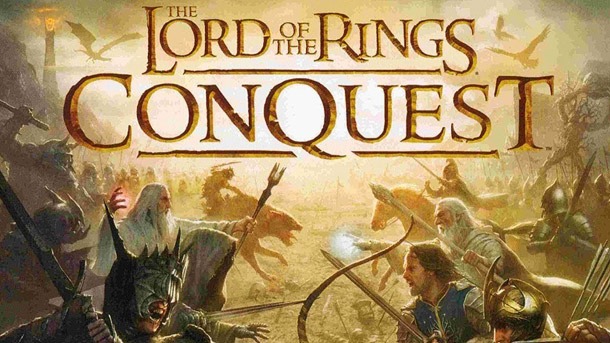
📅 Game released: 2009
The Lord of the Rings: Conquest turns Middle-earth’s famous battles into class-based fantasy action with four soldier roles, playable heroes and monsters, and opposing campaigns. This PC guide explains official download availability, lawful DVD ownership and installation, SecuROM activation, retired EA online services, LAN options, original system requirements, and modern-Windows setup.
 By Editor Zero — independently researched, edited, and maintained.
Last updated: 9 November 2026
Last reviewed: 9 November 2026
Table of Contents
- Quick Facts
- Official PC Stores, Download & Installation
- The Lord of the Rings: Conquest Review
- Pros & Cons
- PC System Requirements
- Frequently Asked Questions
- Similar Games
The Lord of the Rings: Conquest Quick Facts
- Game: The Lord of the Rings: Conquest
- Developer: Pandemic Studios (Windows PC, PS3, Xbox 360); Artificial Mind & Movement (Nintendo DS)
- Publisher: Electronic Arts
- Genre: Action-Adventure, Brawler / Beat ’em Up, Fantasy, Multiplayer
- Release: January 13, 2009 (North America, including Windows PC); January 16, 2009 (Europe)
- Platforms: Windows PC, PS3, Xbox 360, Nintendo DS
- DLC: Hero Arena Bonus and Heroes & Maps Pack were console-only; neither was officially released for Windows PC
- Multiplayer: EA-hosted online services retired; native PC LAN for up to 16 players; unofficial community online restoration exists
- Steam Deck: Not available on Steam; no official Valve compatibility rating
- Engine: Zero Engine (Windows PC / home-console versions)
- Community: MordorWide, Nexus Mods, ModDB
- PC modding: Unofficial mods on Nexus Mods and ModDB; no Steam Workshop
- Metacritic score: 57/100 (Windows PC)
- IGN score: 7/10 (2009 console review; not a separately verified PC score)
- Steam user reception: Not available on Steam
Official PC Store Status, Download & Installation
👇 Check the official PC availability, retail installation, and legacy activation restrictions below before looking for a copy of The Lord of the Rings: Conquest.
- Official PC availability: The original Windows PC release is not available through a verified, normal new-purchase listing on Steam, GOG, Epic Games Store, Microsoft Store, or the EA app. GOG hosts a Dreamlist request, not a game sale page.
- Retail ownership: The Windows edition was sold on DVD-ROM. Owners can attempt installation using their original media and valid key; a second-hand copy may have a missing key, unreadable disc, or activation history that makes successful installation uncertain.
- Legacy product activation: EA’s published PC-game disclosure lists online authentication and SecuROM for Conquest. EA’s legacy authorization list also includes the game. A legitimate product key does not guarantee that the original activation service will accept a fresh installation.
- Previously owned downloads: If an older lawful digital purchase appears in an account library, use that account’s official download or support options. Do not assume a modern EA app entitlement is available or that a retail serial can be added to a new store library.
- Subscription access: No current official EA Play, PC Game Pass, or other normal PC-subscription listing was verified. Check an official catalogue before subscribing specifically for this game.
- Official online services: EA lists the PC, PS3, and Xbox 360 versions among its retired online services. Original EA Nation matchmaking and online accounts should not be expected to function.
- Native LAN multiplayer: The Windows PC release supports local-network multiplayer for up to 16 players. LAN is distinct from restored internet matchmaking and cannot by itself guarantee that every campaign co-op configuration works on a modern installation.
- Unofficial online restoration: MordorWide is a community-run EA Nation backend reimplementation with a public server browser and dedicated-server support. It is not an official EA service, and setup and security remain the owner’s responsibility.
- Console-only DLC: The Hero Arena Bonus and Heroes & Maps Pack were released for PS3 and Xbox 360 rather than Windows PC. Community modifications are not official PC DLC.
- Steam Deck: The game has no Steam listing or Valve Verified/Playable/Unsupported rating. Running a legitimately owned Windows copy through SteamOS is an unsupported manual configuration.
- Mods and file safety: ModDB and Nexus Mods provide unofficial modifications. Back up the original installation, saves, and configuration before adding mods, and use only reputable project pages rather than third-party executables or game downloads.

The Lord of the Rings: Conquest Review
Middle-earth’s great battles make a memorable playground, even when the melee combat underneath them is rough and repetitive.
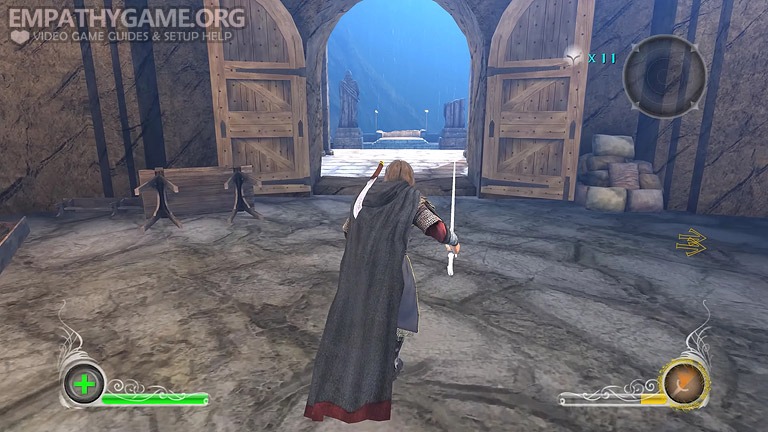
The Lord of the Rings: Conquest is at its best when it lets an ordinary soldier disappear into the chaos of a famous battle. Pandemic Studios adapts the class-based structure it used for Star Wars: Battlefront to Middle-earth, replacing blasters and vehicles with swords, bows, magic, siege engines, mounts, trolls, Ents, and film heroes. The result is less a traditional Lord of the Rings adventure than a battlefield sandbox built around capturing ground, breaking enemy positions, and occasionally becoming one of the figures who normally dominate the story.
That concept remains the game’s strongest asset. Switching from a fragile Archer to a heavily armoured Warrior, slipping behind a line as a cloaked Scout, or supporting a push as a Mage gives familiar locations a different rhythm from mission to mission. The weakness is that the combat never has the precision needed to support the spectacle consistently. Knockdowns, sudden kills, unreliable ally behaviour, and repetitive objectives can turn a dramatic siege into a messy brawl. Fans who value the fantasy of fighting inside Middle-earth’s wars are likely to forgive more of that friction than players looking for a refined melee action game.
Four Classes Create Clear Roles, but Not Perfect Balance
The regular army is divided into Warrior, Archer, Mage, and Scout, and the game is much better when those roles are treated as tools rather than four cosmetic skins. Warriors absorb punishment and dominate close range with broad sword attacks and fire-enhanced specials. Archers pressure exposed enemies from distance with ordinary, poison, and fire arrows. Scouts trade durability for mobility, explosives, cloaking, and lethal backstabs. Mages sit between offence and support, using lightning, a defensive shield, healing, shockwaves, and fire attacks to influence a fight without standing at the centre of it.
The most useful decisions come from recognising what the battlefield needs. A Warrior charging an Archer can use the throwing axe to knock the target down and close distance instead of eating arrows on the approach. A Scout is often more valuable circling around a crowded control point or sabotaging a vulnerable target than joining a frontal melee. A Mage’s shield and healing can keep several allies alive during a contested push, giving the class strategic value beyond its direct damage. These small interactions are where Conquest comes closest to the tactical clarity of its Battlefront inspiration.
Balance is less convincing once those roles collide in close quarters. Warriors can survive long enough to bulldoze weaker classes, while Mages have an unusually broad toolkit and can answer several situations without giving up much utility. Scouts are deadly when they approach unseen but far less comfortable once caught in open combat. The issue is not that every matchup has a predetermined winner; it is that some classes have more forgiving answers than others. Human opponents can make those strengths and weaknesses interesting; against the AI they often feel more like quirks to exploit.
Melee itself is the larger problem. Attacks commit the character to broad animations, crowded fights are hard to read, and being knocked to the ground can lead to several enemies piling on before control is fully regained. Landing the first clean hit therefore matters disproportionately. A chaotic system can suit a mass battle, but Conquest too often confuses disorder with intensity: when a fire arrow, backstab, giant creature, or unseen attack ends a life abruptly, the loss may feel arbitrary rather than earned.
The Battlefields Sell the Fantasy Better Than the Objectives
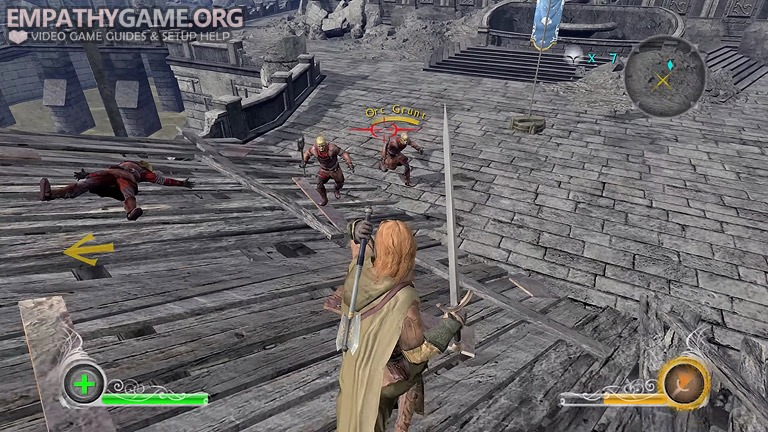
The campaigns move through locations such as Helm’s Deep, Isengard, Moria, Osgiliath, Minas Tirith, the Pelennor Fields, and the Shire. Missions usually revolve around capturing control points, defending positions, destroying targets, escorting a push, or eliminating important enemies. Mechanically, those jobs are simple. Their value comes from the setting layered over them.
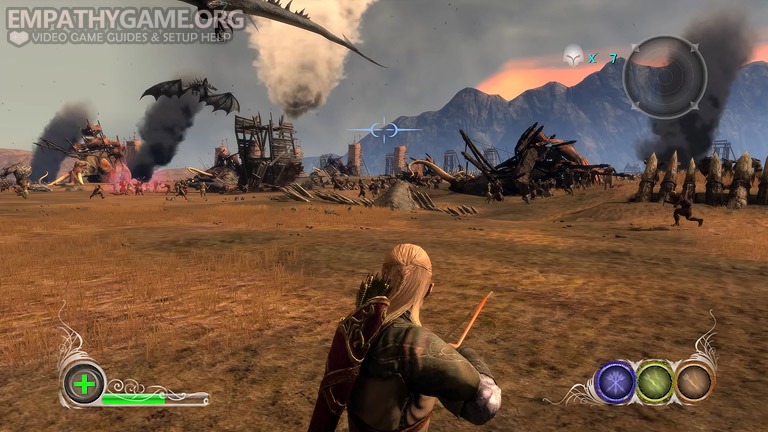
Pelennor Fields demonstrates the formula well. The open battlefield creates room for siege weapons, mounted movement, massed infantry, and oliphaunts, so even a straightforward objective feels different from fighting through a fortress interior. Isengard changes the tone again when Ents turn the assault into a collision between ordinary troops and giant units. The scale, location, and available tools do most of the work.
The weakness becomes obvious over a full campaign. Objectives recycle quickly, and there is little long-term character development to change how the same tasks are approached. Some campaign battles also feel denser and more theatrical than the standalone Instant Action versions, where the smaller flow of combat can expose how basic the underlying capture-and-kill structure really is. Replaying a favourite campaign mission can therefore be more satisfying than loading a skirmish simply because scripted troops and set pieces make the battlefield feel busier.
Heroes, Monsters, and Siege Weapons Provide the Best Power Spikes
Conquest understands that playing a rank-and-file soldier only works if the game occasionally breaks its own rules. Heroes such as Aragorn, Gandalf, the Witch-king, and Sauron arrive as temporary rewards or scenario-specific power shifts, while trolls, Ents, mounts, catapults, ballistae, and oliphaunts widen the scale of combat. These moments are not subtle, but subtlety would work against the premise.
Controlling a troll or Ent changes the immediate problem from surviving a crowd to scattering it. A catapult lets a player influence a fight from outside ordinary melee range. A hero can carve through soldiers who would overwhelm a normal class. Because these units are not the default state, they create a useful contrast: ordinary troops make the battlefield feel dangerous, then a hero or monster briefly lets the player become the danger.
The trade-off is that large characters and heroes inherit the game’s loose camera and animation problems. Power does not always equal control, particularly in cluttered spaces. They are memorable because they fulfil the fantasy of Middle-earth warfare, not because the underlying combat suddenly becomes more precise.
Rise of Sauron Is the Campaign’s Best Idea
The War of the Ring campaign uses the film trilogy as a framework for moving between major battles. It is effective as a guided tour of recognisable places, but character development is secondary to objectives and spectacle. The player is usually participating in the conflict rather than inhabiting one protagonist’s personal story, which fits the battlefield structure but limits emotional depth.
Rise of Sauron gives the same systems a stronger narrative hook. Its alternate premise allows the forces of Mordor to win, turning familiar heroes and locations into targets instead of allies and destinations to save. That inversion is enough to make the second campaign feel less like another sequence of control points. Playing as Nazgûl, the Witch-king, and eventually Sauron reinforces the sense that the rules of the familiar story have been deliberately overturned.
Minas Morgul is especially well suited to this side of the game: the architecture, colour, enemy composition, and villain-focused perspective give the mission a stronger identity than a generic battlefield could provide. The campaign does not explore the alternate history with much narrative complexity, but it does something more valuable for this type of action game—it gives repeated mechanics a fresh context.
Solo Play Exposes the AI and Difficulty Problems
The game is noticeably harsher when friendly soldiers fail to support an objective properly. Allies often behave as bodies filling the battlefield rather than dependable partners, while enemy attention can concentrate on the player at awkward moments. That makes some solo encounters feel less like commanding or participating in an army and more like carrying one.
Limited lives increase the frustration. A good run can collapse because a catapult shot lands unexpectedly, a giant creature catches the character in a lethal attack, or a knockdown leaves no practical escape before several enemies connect. Skilled play still matters—class choice, positioning, target priority, and knowledge of a map all reduce risk—but there is enough volatility that surviving a mission cleanly can depend partly on whether the surrounding chaos behaves in your favour.
This is also why co-operative or competitive play suits the design so naturally. Human teammates can deliberately cover lanes, combine class abilities, and protect an objective instead of merely drifting toward it. Human opponents, meanwhile, make stealth, ranged pressure, healing, and class counters more meaningful because they react to tactics rather than following predictable AI routines. The same simple rules produce more tension when both sides understand them.
Atmosphere Carries More Weight Than Technical Polish
The presentation relies heavily on recognisable Middle-earth imagery: fortress walls, ruined cities, dark strongholds, massed armies, familiar heroes, giant creatures, and music associated with the films. That foundation gives the game a sense of place even when textures, animation, and environmental detail show their age. The strongest scenes work because the battlefield is immediately legible as somewhere fans already know.
Animation is less graceful. Characters can slide or lunge farther than expected during attacks, large units feel cumbersome, and the camera struggles when too many bodies occupy the same space. Those problems directly affect combat readability. Still, the audio-visual identity preserves the fantasy. Few games let a player move from an ordinary soldier to a siege weapon, then to a famous hero or monster within the same broad interpretation of Middle-earth warfare.
Replayability Depends on Variety of Roles, Not Progression
There are no persistent class levels, skill trees, or equipment builds carrying from battle to battle. Improvement comes from learning maps, matchups, abilities, hero opportunities, and objective timing. That keeps the game approachable, but it also means the combat has fewer reasons to evolve after its four regular classes are understood.
The two campaigns, alternate allegiance, Instant Action modes, class switching, hero play, and multiplayer rules give the game several ways to revisit its maps. The strongest replay value comes from changing roles or creating different battlefield situations rather than chasing unlocks. Because the objective set is narrow, repetition eventually becomes difficult to ignore; the game is more durable as a collection of favourite battles than as a progression-driven action game.
Final Verdict
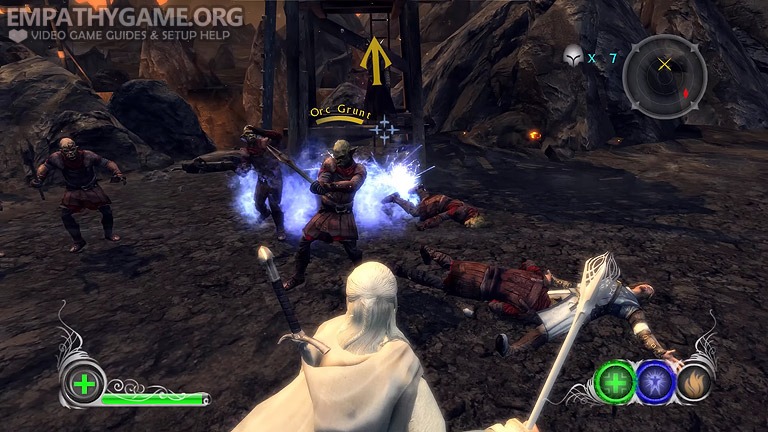
The Lord of the Rings: Conquest succeeds most convincingly as a fantasy battlefield toy box. Its four classes create readable roles, famous locations give simple objectives immediate context, and the interruptions provided by heroes, trolls, Ents, mounts, siege weapons, and other large units keep the campaigns from feeling like one continuous infantry skirmish. Rise of Sauron is the standout idea because it uses the same mechanics to deliver a gleefully inverted version of Middle-earth rather than merely repeating the familiar war from another camera angle.
The weaknesses are just as fundamental. Melee lacks precision, knockdowns and sudden deaths can feel unfair, friendly AI makes solo missions more burdensome than they should be, and repeated capture-and-destroy objectives expose how little the core loop develops. Without persistent progression, replayability depends almost entirely on whether switching classes, revisiting favourite maps, and experimenting with heroes or multiplayer scenarios remains entertaining.
That makes Conquest easy to recommend to a particular kind of Lord of the Rings fan: someone who wants to inhabit the battles rather than follow another hero-led adventure, and who can accept rough combat in exchange for spectacle and variety. It is not a polished melee game, but its central fantasy is unusually specific—and when a battlefield fills with soldiers, siege fire, monsters, and a newly spawned hero, that fantasy still works.
The Lord of the Rings: Conquest Pros & Cons
- Pro: Distinctive Battlefront-style interpretation of Middle-earth, with large objective-based battles instead of a conventional one-hero adventure
- Pro: Two contrasting campaigns let players defend Middle-earth as the Free Peoples or experience the alternate Rise of Sauron storyline
- Pro: Warrior, Archer, Mage, and Scout have distinct battlefield roles, while heroes, trolls, Ents, wargs, oliphaunts, and siege engines add spectacle
- Pro: Instant Action and native PC LAN retain useful solo and local-network replay options after the original online shutdown
- Pro: Unofficial PC modifications offer balance, battle-size, character, and visual experiments
- Con: Normal official digital PC sales are unavailable, and legacy SecuROM activation complicates legitimate installation
- Con: EA-hosted online multiplayer is retired, so the original matchmaking no longer works
- Con: The Windows release did not officially receive the console Hero Arena or Heroes & Maps DLC
- Con: Loose melee combat, uneven AI support, disruptive knockdowns, and repeated objectives reduce consistency
The Lord of the Rings: Conquest PC System Requirements
ARCHIVED WINDOWS PC MINIMUM: These figures reflect the minimum specifications reported from Pandemic Studios’ original pre-release forum announcement, not a new Windows 10/11 compatibility guarantee. Surviving community requirement tables differ in some details.
MINIMUM:
OS: Windows XP SP2 or Windows Vista
CPU: 2.4 GHz Core Duo processor or equivalent
RAM: 1 GB
GPU: 256 MB DirectX 9 video card with Pixel Shader 3.0; NVIDIA GeForce 7800 or equivalent
DirectX: DirectX 9.0c
Storage: At least 6 GB of free disk space
Sound Card: DirectX 9.0c-compatible sound card
Internet: Connection required for original SecuROM product activation
RECOMMENDED:
Status: A complete publisher-issued recommended tier could not be independently confirmed. PCGamingWiki preserves additional CPU/GPU examples, but they should not be mistaken for a fully verified official recommended configuration.
Additional PC Performance and Setup Notes
- Windows 10 and 11: The game was designed for Windows XP/Vista. Modern hardware power does not establish compatibility with old installers, copy protection, DirectX components, or display behaviour.
- Legacy DirectX runtime: The game uses Direct3D 9.0c. If legacy DirectX components are missing, use Microsoft’s DirectX End-User Runtimes (June 2010), not individual DLL downloads from unknown websites.
- Cutscene black screen: PCGamingWiki reports a black screen or black box after cinematics on some configurations. Its suggested workaround is to limit the game to 60 FPS using the graphics driver’s frame-rate limiter; this is a community-documented fix, not a guarantee for all PCs.
- Native widescreen: The Windows PC game supports 16:9 widescreen natively. WSGF notes that changing aspect ratio may require restarting the game to display pre-rendered cinematics correctly; no third-party 16:9 patch is required.
- 32-bit executable: PCGamingWiki identifies the game as a 32-bit Direct3D 9 title. Its address-space limitations can matter on some systems; avoid unverified executable replacements.
- Controllers: Keyboard and mouse and XInput-compatible controllers are documented for the original PC version. Test input recognition before assuming modern gamepads will behave identically.
- Disc installer: If installation hangs while reading a legitimately owned disc, PCGamingWiki suggests copying the disc’s installation files to a local folder and starting setup from the copy. This does not bypass product activation.
Official Trailer
Note: This EA promotional trailer presents the game’s large-scale Middle-earth battles, good-versus-evil premise, heroes, monsters, and Battlefront-style combat, while the written guide adds current delisting, DRM, server-status, LAN, compatibility, and PC setup context.
Frequently Asked Questions
Is The Lord of the Rings: Conquest an open-world game?
No. It uses separate campaign battlefields and Instant Action maps, including Helm’s Deep, Moria, Isengard, Minas Tirith, Pelennor Fields, and the Shire rather than a continuous world.
How do War of the Ring and Rise of Sauron differ?
War of the Ring follows the Free Peoples through familiar battles. Completing that campaign unlocks Rise of Sauron, an alternate-history campaign in which Sauron’s armies conquer Middle-earth after the One Ring survives.
Can you control Sauron, Gandalf, Aragorn, and the Balrog?
Yes, where a mission or applicable mode grants access. These heroes and major creatures are scenario-specific choices or temporary rewards, not permanent classes selectable on every battlefield.
What does Instant Action include?
Instant Action lets you replay standalone matches with AI participants, including Conquest, Team Deathmatch, Capture the Ring, and Hero Team Deathmatch on compatible maps. It is separate from campaign progression.
Can you play the campaign cooperatively on Windows PC?
EA originally promoted co-operative campaigns online, but the original EA online service is retired. The PC release has no native split-screen; do not assume that a LAN or unofficial networking setup guarantees functioning campaign co-op without checking the specific configuration.
Does the PC version support split-screen?
No native Windows split-screen mode is documented. The PS3 and Xbox 360 versions had console split-screen features, but those should not be attributed to the PC version.
Does the PC version have LAN multiplayer?
Yes. The Windows release includes native LAN multiplayer for up to 16 players on a local network. This is a separate feature from EA Nation’s retired internet matchmaking.
Are the official Conquest online servers still running?
No. EA lists the PC, PS3, and Xbox 360 online services as retired, so the original EA Nation matchmaking cannot be treated as an available service.
Can community servers restore online play?
The unofficial MordorWide project provides an alternative backend and server browser for PC owners. It is community-operated, may require extra configuration, and is not endorsed or supported by EA.
Can the game be played offline?
The campaigns and Instant Action against AI do not rely on EA’s old matchmaking after a legitimate installation has been successfully activated. Legacy product activation is a separate obstacle and should not be confused with offline gameplay features.
Can I buy or officially download The Lord of the Rings: Conquest on PC?
No normal official new-purchase Windows download was verified on Steam, GOG, Epic, or the EA app. An original lawful DVD or an existing valid digital entitlement is the relevant ownership route; avoid unauthorized game archives and unfamiliar key resellers.
What if my SecuROM license or activation limit is rejected?
Check EA’s legacy authorization information and contact EA Help with evidence of legitimate ownership. A valid key does not guarantee that the old activation infrastructure remains usable, and unknown replacement executables carry additional security risks.
Was the Heroes & Maps DLC released for PC?
No. The Hero Arena Bonus and Heroes & Maps Pack were console add-ons for PS3 and Xbox 360 rather than official Windows expansions. Community mods are not equivalent to an official PC release.
Will it work on Windows 10 or Windows 11?
Some installations can run on newer Windows versions, but compatibility is not guaranteed. Legacy SecuROM activation, DirectX 9 components, and display behaviour are more important obstacles than the game’s low historical hardware requirements.
Why does the game show a black screen after cutscenes?
PCGamingWiki documents a cutscene-related black-screen issue and suggests limiting the frame rate to 60 FPS in the GPU control panel. Test that reversible setting before attempting more invasive changes.
Can the PC version be modded?
Yes. Nexus Mods and ModDB host unofficial projects for characters, battles, balance, and visuals. Back up files and confirm each mod’s required game version.
Still have questions? Check the MordorWide community, Conquest modding community on Nexus Mods, or EA Community Forums for community discussion and official-account help.
Sources & References
The key release, ownership, technical, and multiplayer details in this guide were checked against the following sources:
- Electronic Arts — original Conquest release announcement — release dates, platforms, campaigns and advertised multiplayer features
- Electronic Arts — PC game EULA and disclosures — SecuROM and online product-activation requirements
- Electronic Arts — Online Services Shutdown — retirement of original Conquest online services
- PCGamingWiki — The Lord of the Rings: Conquest — LAN, engine, retail DRM, PC DLC, input and compatibility research
- VideoGamer — original PC minimum-requirements announcement — contemporary reporting of Pandemic’s archived minimum specifications
- GOG Dreamlist — The Lord of the Rings: Conquest — GOG’s preservation request rather than a sales listing
- MordorWide — community online-restoration project — unofficial server browser and EA Nation backend reimplementation
- Metacritic — PC critic reviews — Windows PC Metascore
Similar Games Like The Lord of the Rings: Conquest
- The Lord of the Rings: The Return of the King
- Middle-earth: Shadow of Mordor
- Mount & Blade II: Bannerlord
- The Lord of the Rings: The Battle for Middle-earth II
- Dragon’s Dogma: Dark Arisen
- Crimson Desert
Found something worth playing through DecideGame?
DecideGame.com is an independent gaming project run by Editor Zero. If this guide helped you discover a game, solve a problem, or find useful information, you can support DecideGame.com and help keep new and updated game guides coming.
DecideGame — PC Game Guides, Reviews & Setup Help