
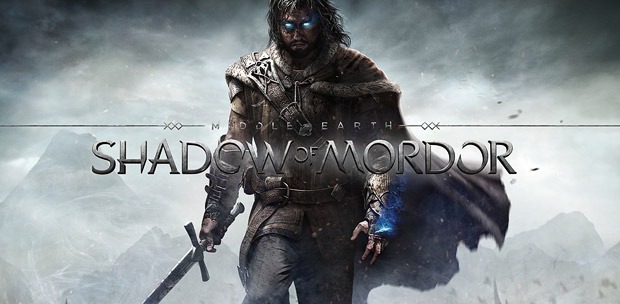
📅 Game released: 2014
Middle-earth: Shadow of Mordor is a single-player action adventure in which ranger Talion and the wraith Celebrimbor hunt Uruk captains whose rivalries, scars, and promotions evolve through the Nemesis System. This PC guide compares official Steam and DRM-free GOG purchase and download options, explains Game of the Year Edition content and retired online features, and covers system requirements, Steam Deck support, controllers, performance, and installation.
 By Editor Zero — independently researched, edited, and maintained.
Last updated: 4 November 2026
Last reviewed: 4 November 2026
Table of Contents
- Quick Facts
- Official PC Stores, Download & Installation
- Middle-earth: Shadow of Mordor Review
- Pros & Cons
- PC System Requirements
- Frequently Asked Questions
- Similar Games
Middle-earth: Shadow of Mordor Quick Facts
Official PC Stores, Download & Installation
👇 Compare the official Steam and GOG packages, Game of the Year content, offline access, and retired features below before purchasing, downloading, or installing.
- PC availability: Middle-earth: Shadow of Mordor remains officially available through Steam and GOG.
- Steam package: Steam’s main purchase is the Game of the Year Edition, which Steam identifies as the same product as the previously sold Premium Edition. Compatible base-game owners can instead buy the GOTY Edition Upgrade, which Steam identifies as the former Season Pass.
- Steam features: The Steam release provides achievements, Steam Cloud, trading cards, Family Sharing, and native Windows, macOS, and Linux builds.
- GOG package: GOG sells the Game of the Year Edition as a Windows-only DRM-free release. GOG Galaxy is optional; the game can be installed with official offline installers and played without online activation or a continuous internet connection.
- GOG Preservation: GOG maintains its release through the Preservation Program, with validated stability, Windows 10 and Windows 11 verification, verified cloud saves, support, and continued maintenance.
- GOTY content: Game of the Year Edition includes the base game and former Season Pass content, including The Bright Lord, Lord of the Hunt, Guardians of the Flaming Eye, additional Warband missions, Trials of War challenge content, skins, and weapon runes.
- Free add-ons: The Power of Shadow pack and HD Content remain listed on Steam. HD Content is optional and intended for systems exceeding the recommended specification.
- Retired online features: WB Games retired Nemesis Forge, Vendetta missions, WBPlay, and connected leaderboards on December 31, 2020. Local leaderboard scores remain visible, relevant achievements can still be earned, and the Orc Hunter and Gravewalker runes are granted automatically.
- Steam Deck: Valve rates the game Verified and does not require internet for setup or single-player. External controllers may require selecting the correct controller order manually.
- Separate ownership: Steam and GOG are separate purchases. Their cloud-save and achievement services are separate, so cross-store synchronization should not be assumed.
 Buy Middle-earth: Shadow of Mordor GOTY Edition on Steam
 Buy Middle-earth: Shadow of Mordor GOTY Edition on GOG
 Read the Official WB Games Feature Status Update

Middle-earth: Shadow of Mordor Review
A familiar open-world revenge game transformed by enemies who remember the moments when the player failed.
Middle-earth: Shadow of Mordor could have survived as a competent licensed action game. Talion climbs towers, clears enemy camps, collects artifacts, frees prisoners, unlocks abilities, and follows a revenge story through Mordor. Many of its individual systems were recognizable even in 2014.
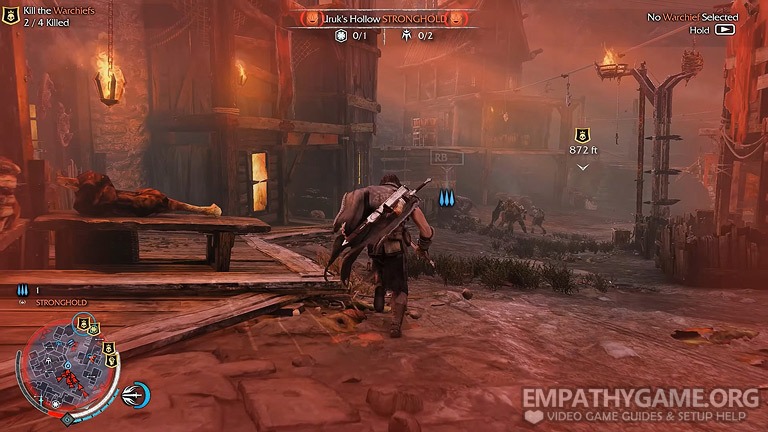
The reason it remains memorable is that the Uruks are not disposable. A nameless soldier who lands a killing blow can receive a title, promotion, new confidence, and a place in Sauron’s hierarchy. When Talion returns, that same enemy may recognize him, describe the earlier defeat, and arrive with strengths that punish the tactic used last time.
The Nemesis System turns failure into material for the next story. A lost fight does not merely reset progress. It creates a rival.
Talion and Celebrimbor Give Revenge a Supernatural Shape
Talion is a ranger of Gondor stationed at the Black Gate when Sauron’s servants kill him and his family. Death becomes complicated when he is bound to Celebrimbor, an amnesiac wraith whose past is connected to the Rings of Power.
The partnership gives Talion supernatural movement, archery, interrogation, draining, and domination abilities. It also creates a tension between two forms of revenge. Talion’s anger is intimate and immediate; Celebrimbor’s grievance reaches into an older struggle involving power and control.
The main plot provides enough direction to move between regions and abilities, but it is rarely the most interesting story being generated. Supporting characters appear briefly, emotional developments move quickly, and the game takes substantial liberties with Tolkien’s history.
Some named boss encounters expose that gap. They lean on cinematics and quick-time prompts instead of the tactical decisions that make ordinary captain fights so engaging. An unscripted Uruk ambush can offer more player agency than a story climax.
That looseness will bother players seeking a careful extension of the books. The game uses Mordor, Sauron, Gollum, Celebrimbor, and familiar imagery as material for an original action fantasy rather than strict canon. Its strongest identity comes from what the player experiences inside the Uruk hierarchy, not its answer to a lore question.
Players seeking a deeper fantasy RPG with towns, dialogue choices, monster contracts, and character-driven side stories may prefer The Witcher 3: Wild Hunt. Shadow of Mordor is narrower and more system-driven, using its Uruk army rather than quest writing to create the most personal stories.
Mordor Is Compact, Hostile, and Designed for Infiltration
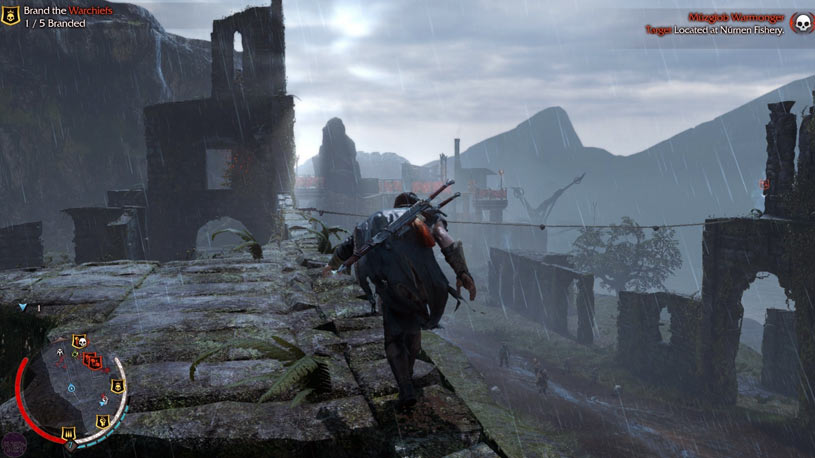
The game uses two main open regions rather than an enormous seamless world. Udûn is scarred by industry, ash, ruined structures, slave camps, and military activity. The Sea of Núrnen introduces more vegetation and visual relief without making the land safe.
Neither region contains the social depth of a large RPG. Settlements exist mainly as Uruk strongholds, mission spaces, or places where enslaved people can be rescued. The world feels like enemy territory because nearly every road belongs to Sauron’s forces.
That limitation supports the core loop. Towers, walls, ropes, ledges, bushes, cages, fires, grog barrels, bait, and archers create routes through a camp. Talion is always looking for height, isolation, environmental hazards, and a way to stop the alarm before the entire stronghold joins the fight.
Traversal is fast and forgiving. Talion climbs most surfaces, crosses rooftops easily, and later uses wraith abilities to close distance instantly. The movement lacks the beauty and deliberate observation of Ghost of Tsushima, but both games are strongest when a player studies a camp and turns its layout into an assassination plan.
Shadow Strike makes that mobility tactically interesting. Targeting a distant rooftop archer can pull Talion out of a crowded melee, turning an attack ability into an escape route.
The map eventually becomes repetitive because the same activities and stronghold structures recur. Its modest scale is still preferable to a larger Mordor filled with unrelated errands. Nearly every location can become part of a captain hunt.
Stealth Lets the Player Shape a Fight Before It Begins
Early Talion is dangerous but not invincible. A camp containing several captains, shield bearers, berserkers, archers, and an alarm can overwhelm direct combat quickly. Stealth creates the advantage that raw statistics do not yet provide.
Archers can be removed from rooftops. Grog barrels can be poisoned or detonated. Caragor cages can be opened. Morgai fly nests can cause panic. Isolated Uruks can be interrogated for information or eliminated without raising an alarm.
A captain’s weaknesses determine which preparation matters. One may be terrified of fire, vulnerable to a stealth finisher, damaged heavily by ranged attacks, or frightened by Caragors. Another may be immune to the player’s favourite approach and become enraged when a nearby Uruk dies.
Tracking abilities combined with summoned reinforcements can also turn a failed assassination into a prolonged pursuit. Hiding in bushes is not always enough to reset the encounter.
A memorable hunt begins before Talion enters the camp. The player identifies the target, marks nearby captains, checks the bodyguards, finds bait and explosives, and chooses an escape route. When the execution works, the result feels less like following a waypoint and more like arranging a collapse.
Intel can be as valuable as an upgrade. Interrogating a worm may prevent Talion from starting a fight with a tactic that the captain can simply ignore.
Combat Creates Controlled Chaos Until Control Disappears
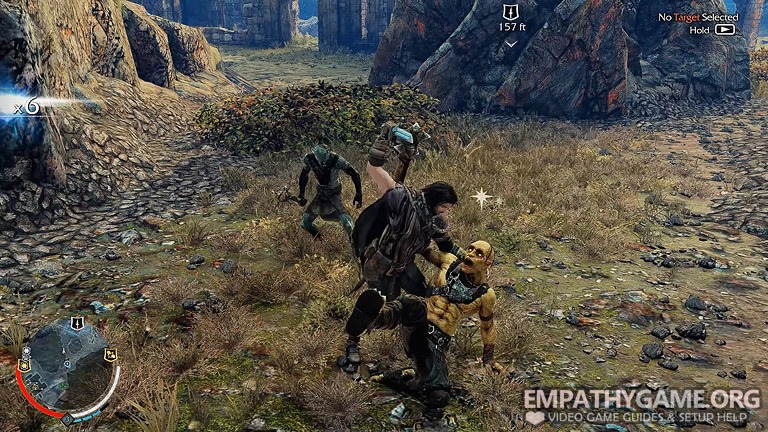
Sword combat uses light attacks, counters, dodges, stuns, executions, ground finishers, bow shots, and wraith powers. The rhythm is immediately readable, particularly with a controller, and large groups can become visually spectacular.
Uruk roles prevent every crowd from behaving alike. Shield carriers require positioning or vaults. Berserkers punish careless frontal attacks. Archers apply pressure from outside the melee. Captains add immunities, fears, enrages, and special attacks that can interrupt an otherwise clean combo.
The system is generous enough that ordinary enemies eventually become easy. Talion’s growing health, executions, drain abilities, runes, focus, and crowd control can turn him into a nearly unstoppable force. Difficulty returns when several captains enter the same fight and their traits conflict with one another.
PC mouse aiming can push that balance further: rapid bow headshots may exhaust Elf-shot before Focus runs out. Archery can feel disproportionately strong alongside the more controller-friendly melee combat.
One captain may block ranged attacks, another may be immune to finishers, and a third may become enraged by injury. The player who expected a quick assassination can suddenly be trapped inside a stronghold while reinforcements arrive.
The combat does not have the precision, build depth, or danger of Elden Ring. Shadow of Mordor is closer to a power fantasy built around maintaining flow and improvising when that flow breaks. Its best fights are messy systems colliding, not carefully authored duels.
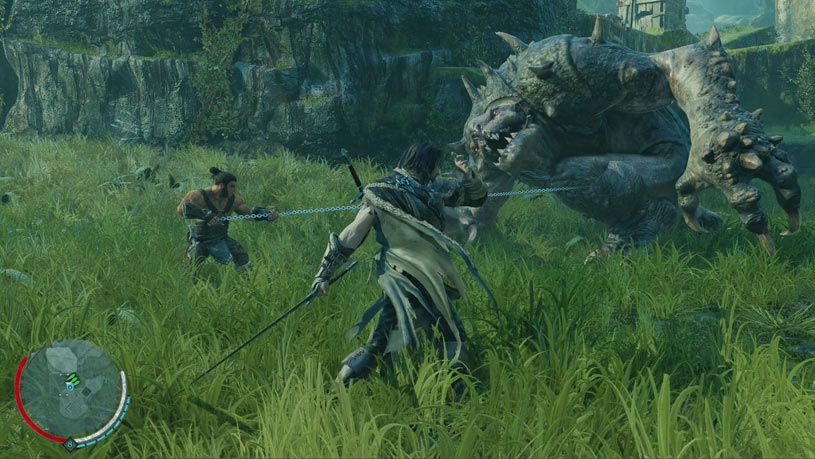
The Nemesis System Makes Defeat More Interesting Than Victory
Every army screen contains captains and Warchiefs with ranks, visual traits, voice lines, relationships, strengths, vulnerabilities, and unknown information. Power struggles allow Uruks to duel, feast, hunt beasts, execute prisoners, or attempt promotions.
Time advances when Talion dies or deliberately moves the hierarchy forward. Captains can succeed, fail, replace fallen leaders, gain bodyguards, and become stronger. The army therefore changes even when Talion is not directly attacking it.
Power struggles also behave differently from conventional side missions. A failed duel or execution event can disappear as the hierarchy changes instead of offering a clean retry. This makes the conflict feel ongoing, but can frustrate players who want to complete every map marker.
The most memorable captains are created through repeated contact. An Uruk survives being burned and returns scarred. Another escapes a fight and later ambushes Talion. A weak soldier gets the final blow, gains a title, and becomes unusually powerful after several promotions.
The system has an uneven relationship with player skill. Talion may kill captains so efficiently that no rivalry survives long enough to develop. At the other extreme, repeated defeats can strengthen pursuers and make recovery harder. Without a difficulty setting, the same system can feel underdeveloped to skilled players and oppressive to struggling ones.
The game sometimes repeats voices, titles, or encounter structures, and the first version of the Nemesis System is simpler than the one in Shadow of War. Its central achievement remains powerful: it converts procedural information into an enemy the player genuinely dislikes.
Victory can end a rivalry abruptly, while defeat adds another chapter. Few action games make the player curious about the person who just caused a failure screen.
Branding Changes Talion From Hunter to Manipulator
Later abilities allow Talion to brand Uruks and bring them under wraith control. Ordinary soldiers can fight nearby enemies, while dominated captains become tools inside the hierarchy.
A bodyguard can be turned against a Warchief. A captain can be helped through a power struggle. Several branded followers can transform a public confrontation into an internal betrayal. The player begins dismantling Sauron’s army through its own structure rather than attacking every position personally.
This is the point where progression feels most meaningful. Talion has not merely gained more damage; he has learned to use the social system that previously produced his enemies.
Army building remains limited compared with Shadow of War. There are no fort assaults, large regions to conquer, or detailed follower-management systems. Shadow of Mordor’s smaller scope keeps the idea focused on infiltration and the main campaign.
Beasts and the Environment Create Unplanned Stories
Caragors, Graugs, and Ghûls introduce another layer of danger. Releasing a caged Caragor can distract a camp, but the creature does not distinguish between Uruks and Talion. A captain who fears beasts may flee, while another may kill the animal and gain confidence.
Riding a Caragor provides speed and predatory attacks. A controlled Graug turns the player into a siege weapon capable of scattering groups and destroying captains who would be difficult in ordinary combat.
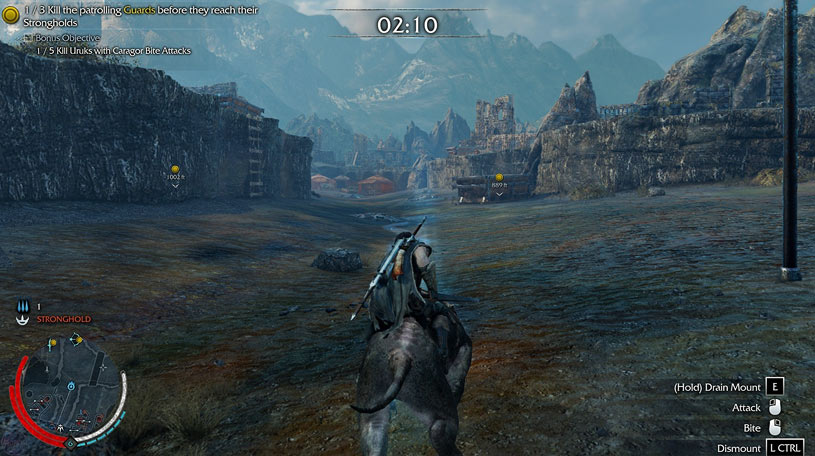
The Lord of the Hunt expansion develops this side of the game with new beast-focused challenges and captain encounters. It is less narratively important than The Bright Lord, but it makes the ecosystem a larger part of the combat puzzle.
Environmental manipulation gives Shadow of Mordor some of its best unscripted sequences. A poisoned grog barrel starts a fight, a frightened captain runs toward a released beast, and another captain enters because the alarm was not disabled. The plan fails in an entertaining way rather than simply becoming invalid.
Progression Is Fast, Clear, and Eventually Overpowered
Experience unlocks abilities, while power earned from the Uruk hierarchy opens higher skill tiers. Mirian increases health, focus, ammunition, and weapon rune slots. Captains and Warchiefs drop runes that add combat effects to the sword, bow, or dagger.
The progression feeds every style. Stealth gains chained kills and better mobility. Archery gains focus and stronger wraith shots. Combat gains executions and crowd control. Branding creates strategic options that did not exist in the opening hours.
Runes encourage hunting stronger captains, although random drops can make rewards less exciting than the rivalries that produced them. A dangerous enemy may provide a minor upgrade, while a forgettable target drops something better.
By the late game, Talion can eliminate ordinary groups with little risk. This supports the revenge fantasy but weakens the fear established early on. The Nemesis System must generate unusually strong combinations to challenge a fully upgraded player.
The power comes partly from self-sustaining resource loops. With suitable runes, executions, combat branding, draining, and Elf-shot recovery can replenish what the next attack needs. Even prolonged stronghold fights may stop testing endurance.
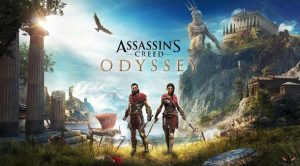
Players who enjoy a much larger historical action RPG with climbing, assassination, equipment, abilities, and extensive exploration may appreciate Assassin’s Creed Odyssey. Odyssey provides broader role-playing and world variety; Shadow of Mordor is smaller, faster, and more focused on enemies who remember the player.
The DLC Adds Perspective More Than a New Foundation
The Bright Lord places the player in control of Celebrimbor during an earlier campaign against Sauron. The One Ring changes the power curve, and the expansion provides useful context for the wraith’s ambition and methods.
Lord of the Hunt returns to Talion and Torvin with an emphasis on beasts, new variants, and specialised hunting. Its mechanical experimentation is more important than its story.
Trials of War and other challenge content test speed, efficiency, hierarchy manipulation, and survival under fixed conditions. Warband missions, skins, and runes provide smaller additions.
None of the DLC replaces the main campaign’s gradual relationship with the Nemesis System. The base game remains the essential experience.
Replayability Depends on the Uruks, Not the Map
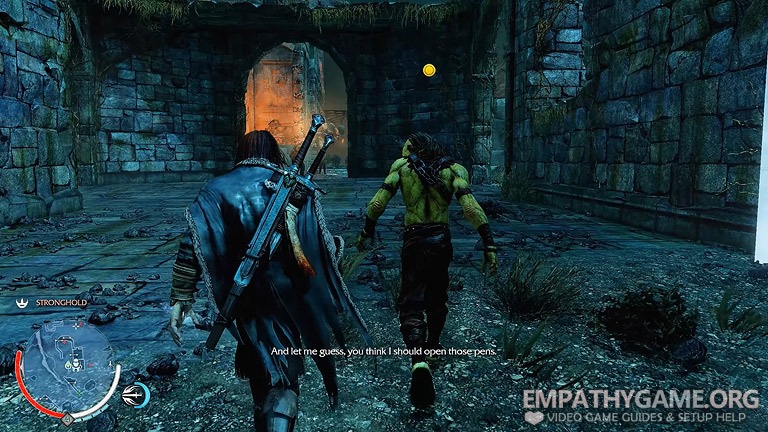
A second playthrough uses the same story missions, regions, towers, and progression path. What changes is the Uruk army. Different captains receive promotions, survive injuries, develop traits, and become the focus of new grudges.
That procedural variation is strong enough to support another run, especially for players who deliberately allow the hierarchy to develop instead of instantly eliminating every captain.
Completion goals include outcast rescues, hunting and survival challenges, artifacts, Ithildin, weapon legends, Warchiefs, upgrades, achievements, and DLC trials. Some become repetitive because they reuse the same spaces and combat.
The game ends before its central system is exhausted. Shadow of War expands the idea dramatically, but the first game remains easier to appreciate as a concentrated action adventure.
Final Verdict
Middle-earth: Shadow of Mordor is remembered for the correct reason. Its combat, traversal, stealth, towers, and open-world activities are polished but familiar. The Nemesis System changes how those familiar pieces feel by giving failure a face and a memory.
A captain who returns scarred, mocks Talion, gains a bodyguard, and ruins another carefully planned hunt becomes more important than many scripted villains. That rivalry belongs partly to the game and partly to the player.
The story is straightforward, its scripted bosses rarely match the dynamic captains, the world lacks civilian depth, and mission structures repeat. Late-game Talion also becomes too powerful for ordinary enemies. Its interpretation of Tolkien works better as dark action fantasy than faithful canon.
Those weaknesses do not erase the excitement of opening the army screen and recognizing the Uruk responsible for the last defeat. For players who enjoy stealth, rhythmic sword combat, environmental manipulation, supernatural powers, and enemies capable of becoming personal, Shadow of Mordor remains distinctive and easy to recommend.
Middle-earth: Shadow of Mordor Pros & Cons
Middle-earth: Shadow of Mordor PC System Requirements
Important: Steam preserves the original Windows Vista, Windows 7, and Windows 8.1 requirement text, but the current Steam client requires Windows 10 or newer. GOG’s maintained Windows version officially lists Windows 10 and has been verified by GOG on Windows 10 and Windows 11.
MINIMUM
OS: Original listing: 64-bit Windows Vista SP2 / Windows 7 SP1 / Windows 8.1; Windows 10 or newer required by the current Steam client
CPU: Intel Core i5-750 at 2.67 GHz / AMD Phenom II X4 965 at 3.4 GHz
RAM: 3 GB
GPU: NVIDIA GeForce GTX 460 / AMD Radeon HD 5850
DirectX: Version 11
Network: Broadband internet connection listed in the original specification; the core campaign can be played offline after installation
Storage: 44 GB available space
RECOMMENDED
OS: Original listing: 64-bit Windows 7 SP1 / Windows 8.1; use Windows 10 or Windows 11 for a modern supported setup
CPU: Intel Core i7-3770 at 3.4 GHz / AMD FX-8350 at 4.0 GHz
RAM: 8 GB
GPU: NVIDIA GeForce GTX 660 / AMD Radeon HD 7950
DirectX: Version 11
Network: Broadband internet connection listed in the original specification
Storage: 57 GB available space
OPTIONAL HD CONTENT
OS: Steam’s original note lists 64-bit Windows 7 or Windows 8; the current Steam client requires Windows 10 or newer
RAM: At least 8 GB system memory
GPU: DirectX 11-compatible NVIDIA or AMD graphics card
VRAM: At least 6 GB
Driver: Current graphics driver recommended
Additional: The system should exceed the normal recommended specification before installing the optional HD texture package
Additional PC Performance and Setup Notes
- Use the standard textures when VRAM is below the HD Content requirement or when the game stutters during traversal. High-resolution textures affect memory use more than combat complexity.
- Lower texture quality, shadows, ambient occlusion, anti-aliasing, tessellation, vegetation range, motion blur, and resolution before assuming the installation is defective.
- Update the GPU driver, verify game files, disable conflicting overlays, remove unstable overclocks, and test a clean configuration when the game crashes or fails to launch.
- Restore original files before troubleshooting ReShade, FOV tools, community saves, configuration edits, or other unofficial changes. Shadow of Mordor does not provide official mod tools.
- Back up local saves before changing storefronts, importing community saves, reinstalling Windows, or experimenting with modification tools. Steam Cloud and GOG cloud saves are separate services.
- Controller is the most natural default for melee rhythm, traversal, counters, and executions. Keyboard and mouse provide more direct bow aiming but may require personal key rebinding.
- When a controller produces double inputs, disable duplicate mapping layers and test either Steam Input or the controller’s native support rather than using both simultaneously.
- Steam Deck is Verified. Valve reports no launcher, keyboard, small-text, setup-internet, or single-player-internet restrictions; external controllers may require manual controller-order selection.
- The GOG package has been validated for stability and Windows 10/11 compatibility through the Preservation Program, but unusually old overlays, drivers, and injected tools can still create conflicts.
Official Trailer
Note: This official Warner Bros. launch trailer introduces Talion, Celebrimbor, Mordor, wraith abilities, Uruk captains, revenge, and the enemy hierarchy at the centre of Shadow of Mordor.
Frequently Asked Questions
Does the Nemesis System still work after the online feature shutdown?
Yes. The offline captain hierarchy still supports promotions, scars, memories, rivalries, ambushes, fears, and branding. Only connected features such as Nemesis Forge transfers, Vendetta missions, WBPlay, and shared leaderboards were retired; related challenge achievements remain obtainable.
Does Shadow of Mordor have co-op or multiplayer?
No. The campaign and Game of the Year Edition expansions are single-player experiences. The former Vendetta feature was online-connected, but it was not a cooperative or competitive multiplayer mode.
Where can I officially buy and download Shadow of Mordor for PC?
Steam and GOG both offer official PC purchases. Steam supports achievements and Steam Cloud, while GOG offers a DRM-free Windows version with standalone offline installers.
Which edition should I buy, and what is the GOTY Edition Upgrade?
New buyers should generally choose Game of the Year Edition for the base campaign and DLC together. Steam’s GOTY Edition Upgrade is the former Season Pass content for owners of a compatible Steam base-game copy; it does not replace the base game.
What do The Bright Lord and Lord of the Hunt add, and when should I play them?
The Bright Lord tells a separate story centred on Celebrimbor, while Lord of the Hunt expands beast-focused gameplay with Torvin. Both are included in GOTY Edition and are best approached after the main campaign to avoid story and progression confusion.
Can I install and play Shadow of Mordor offline?
Yes. GOG supplies offline installers with no online activation requirement, and the core Steam single-player game works offline once installed and set up. Cloud synchronization and other storefront-connected services need their respective clients and an internet connection.
Is Shadow of Mordor Steam Deck Verified?
Yes. Valve lists it as Verified, with functional default controls, legible text, and suitable default graphics. An external controller may need to be selected manually through the Steam Deck controller-order settings.
Does Shadow of Mordor run on Windows 10 or Windows 11?
Yes. GOG has verified its maintained Windows edition on both systems. Steam still displays older original Windows requirements, but its modern client requires Windows 10 or newer.
Should I install the optional HD Content pack?
Only on a PC that exceeds the normal recommended requirements. Steam specifies at least 8 GB system RAM and a DirectX 11 graphics card with 6 GB VRAM for the high-resolution texture pack; standard textures are a better starting point for smaller GPUs.
What should I try if Shadow of Mordor crashes or stutters?
Start by using standard textures, lowering demanding graphics settings, and testing without overlays or unofficial modifications. Update the graphics driver and use your store client’s file-verification feature if the problem persists; no single fix is guaranteed for every configuration.
Does the PC version support controllers and keyboard and mouse?
Yes. Controllers suit counters, executions, and traversal, while keyboard and mouse can make bow aiming feel more direct. Rebind controls as needed, and check for duplicate input mapping if a gamepad produces double inputs.
Are there official mods or Steam Workshop support?
No official mod editor or Steam Workshop integration is provided. Community-made ReShade presets, saves, visual tweaks, and configuration or FOV tools exist, but their compatibility depends on the specific files and version used.
How long does it take to finish Shadow of Mordor?
A main-story playthrough is commonly estimated at about 15–20 hours. Exploring both regions, hunting captains, completing challenges and collectibles, and playing the DLC can bring a fuller run closer to 30–40 hours, depending on playstyle.
Can an ordinary Uruk become a captain, and do captains remember Talion?
Yes. A soldier who kills Talion can be promoted into the hierarchy, and returning captains may recognize earlier encounters, taunt him, or gain new traits. That persistent personal history is central to the Nemesis System.
Can a defeated captain return with scars?
Yes. Some captains survive an apparently final encounter and return with scars, altered appearances, and new dialogue. Not every enemy returns, so these surprises are a possibility rather than a guaranteed outcome.
When can Talion brand Uruks and turn them into allies?
Branding unlocks through the main story rather than at the beginning. It lets Talion dominate ordinary Uruks and captains, plant allies among Warchief bodyguards, and influence the hierarchy from within.
How should beginners defeat a difficult captain or Warchief?
Interrogate a worm for intelligence, check the target’s immunities and fears, remove nearby archers or bodyguards, and look for beasts or environmental hazards. Warchiefs often need to be drawn out through their missions, so weakening their support before the confrontation helps.
Should I play Shadow of Mordor before Shadow of War?
Yes. Shadow of Mordor introduces Talion, Celebrimbor, and the first version of the Nemesis System, and its story continues in Shadow of War. Playing the first game also makes the sequel’s expanded army-management features easier to appreciate.
Is Shadow of Mordor part of strict Tolkien canon?
No. It uses Middle-earth characters, locations, and lore as the basis for an original game story that takes major liberties with Tolkien’s chronology and mythology.
Still have questions? Check the official WB Games status page, Shadow of Mordor Steam Discussions, or Shadow of Mordor community on Reddit.
Sources & References
Key factual and technical information in this guide was checked against relevant official and community sources, including:
- Steam — Middle-earth: Shadow of Mordor — PC availability, release date, GOTY package wording, Steam features, system requirements, review scores, and overall user reception
- Steam — Shadow of Mordor DLC — GOTY Edition Upgrade, The Bright Lord, Lord of the Hunt, Warband content, runes, skins, and HD Content
- GOG — Middle-earth: Shadow of Mordor Game of the Year Edition — DRM-free ownership, offline play, Preservation Program maintenance, Windows 10/11 verification, cloud saves, and critical reception
- WB Games Support — Shadow of Mordor Status Update — retirement of Nemesis Forge, Vendetta missions, WBPlay, and connected leaderboards, plus related achievement and rune behavior
- SteamDB — Shadow of Mordor app metadata — supported desktop operating systems, Steam Deck verification details, Steam review metadata, and LithTech engine detection
- PCGamingWiki — Middle-earth: Shadow of Mordor — LithTech engine identification, PC release/platform information, and established PC-specific technical context
Similar Games Like Middle-earth: Shadow of Mordor
- Ghost of Tsushima
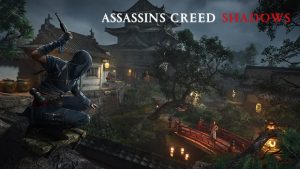
- Assassin’s Creed Shadows
- Assassin’s Creed Odyssey
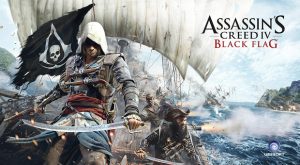
- Assassin’s Creed IV: Black Flag
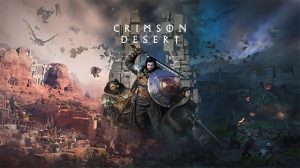
- Crimson Desert
- The Witcher 3: Wild Hunt
Found something worth playing through DecideGame?
DecideGame.com is an independent gaming project run by Editor Zero. If this guide helped you discover a game, solve a problem, or find useful information, you can support DecideGame.com and help keep new and updated game guides coming.
DecideGame — PC Game Guides, Reviews & Setup Help