
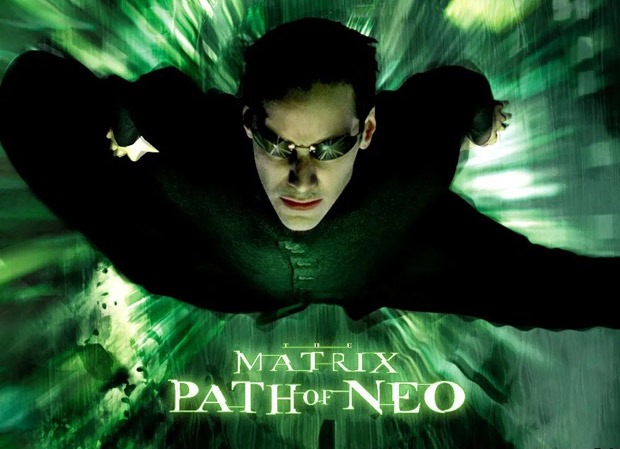
📅 Game released: 2005
Use this updated 2026 PC guide for The Matrix: Path of Neo to check official download status, install an original Windows DVD copy you own, review system requirements, and understand legacy DRM, modern Windows compatibility, widescreen fixes, controls, and mods.
 By Editor Zero — independently researched, edited, and maintained.
Last updated: 7 October 2026
Last reviewed: 7 October 2026
Table of Contents
- Quick Summary
- Quick Facts
- Official PC Stores, Download & Installation
- The Matrix: Path of Neo Review
- Pros & Cons
- PC System Requirements
- Frequently Asked Questions
- Similar Games
The Matrix: Path of Neo Quick Summary
✔ Single-player third-person action game that retells major events from The Matrix trilogy with Neo as the playable protagonist instead of the supporting-character focus used by Enter the Matrix
✔ Combat combines martial arts, melee weapons, firearms, Focus-powered bullet-time abilities, wall-running, acrobatics, bullet dodging, Code Vision, and increasingly powerful One abilities
✔ Similar to X-Men Origins: Wolverine through its licensed-film power fantasy, fast third-person melee combat, cinematic set pieces, and emphasis on letting the player control an unusually powerful protagonist
✔ A native Windows version exists, but no normal modern digital PC storefront purchase is verified; the original release was distributed on DVD-ROM and carries legacy copy-protection and compatibility considerations
✔ The Path of the One progression system unlocks new moves and powers across the campaign, while the Wachowskis helped reshape film events into more game-oriented scenarios and a deliberately different finale
✔ Best suited to Matrix fans who value Neo’s expanding combat toolkit and recreated movie moments more than polished modern controls, camera behavior, or contemporary PC conveniences
The Matrix: Path of Neo Quick Facts
Official PC Store Status, Download & Installation
👇 Use the notes below to understand The Matrix: Path of Neo’s official PC availability, original-disc installation, and modern Windows compatibility without relying on unofficial game-file sources.
- Native PC version: The Matrix: Path of Neo received a native Windows DVD-ROM release alongside its PS2 and Xbox versions. PC players do not need an emulator when using the original Windows edition.
- Digital-store status: No normal official Steam, Epic Games Store, Microsoft Store, or purchasable GOG PC edition is verified. GOG maintains a Dreamlist entry where users can vote for the game to be brought to its catalog, but that page is not a purchase or download listing.
- Legitimate PC ownership: The established Windows route is an original retail DVD copy that you already own. This guide does not provide, host, or link to third-party copies of the copyrighted game files.
- Original installation: Atari’s PC manual instructs users to insert the DVD-ROM, run Setup when AutoPlay does not start automatically, complete the installation, and launch the game through the Atari program group. The original release also expects the play disc to remain in the DVD drive when starting the game.
- Legacy DRM: PCGamingWiki documents SecuROM 7.12 on the English retail release and StarForce 4.70 on the Russian release. This distinction matters because copy-protection behavior and modern Windows compatibility can vary between regional retail editions.
- Modern Windows: The original software was designed for Windows 2000 and XP rather than Windows 10 or Windows 11. PCGamingWiki specifically warns that the documented StarForce 4.70 release needs an appropriate driver update on Windows 8.1, Windows 10, and Windows 11; other old retail configurations can also require additional compatibility work.
- Controls: The Windows version supports keyboard and mouse controls and DirectInput controllers. The original PC release received criticism for awkward keyboard behavior and weaker gamepad implementation than the console editions, so controller behavior may not feel like a modern XInput game.
- Display and frame rate: The unmodified PC game is capped at 30 FPS and lacks modern widescreen behavior. Community fixes can add widescreen, ultrawide, higher-resolution, and 60-FPS functionality, but higher frame rates can interfere with some scripted sequences, so modifications should be introduced carefully.
- Legacy patches and backups: Two historical PC updates address graphics, control-setting, translation, and related issues. Back up saves and configuration files before applying old patches or community fixes, particularly on an installation that is already working correctly.

The Matrix: Path of Neo Review
A wildly uneven brawler whose expanding combat system sells Neo’s power fantasy better than its movie retelling.
The Matrix: Path of Neo works because it understands the fantasy at the center of its license. Rather than placing Neo beside the action, as Enter the Matrix did with Niobe and Ghost, Shiny Entertainment lets the player grow from a nervous Thomas Anderson into someone who can dismantle a room full of enemies with martial arts, firearms, wall-runs, bullet manipulation, improvised weapons, and increasingly impossible movement. The campaign is messy: cameras lose the fight in crowded rooms, objectives are not always communicated cleanly, and some missions stretch brief film moments into clumsy detours. Yet the underlying escalation is unusually well matched to the character.
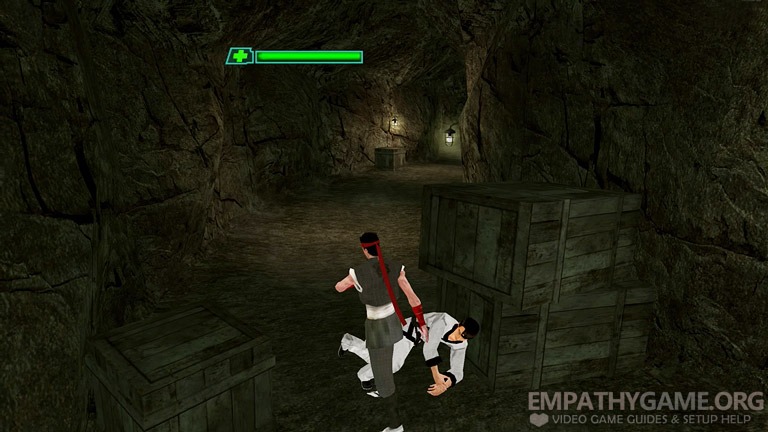
That makes Path of Neo less interesting as a faithful adaptation than as a playable remix of Matrix mythology. It is at its best when several systems overlap—Focus slows a firefight, an evade becomes a launcher, a wall becomes an attack route, a weapon is stripped from one enemy and turned on another, and Neo’s next upgrade changes how the same kind of crowd can be handled. Players willing to accept rough mid-2000s action design will find a surprisingly expressive brawler underneath the spectacle.
Combat Is Best When Neo Never Stops Moving
The basic combat looks simpler than it is. A strike button can be mashed into ordinary strings, special attacks provide stuns, throws and heavier moves, and Evade gets Neo out of immediate danger. Focus is the connective tissue. Spending it strengthens attacks, extends jumps, enables more acrobatic evasions and turns ordinary movement into the exaggerated physical language of the films. A fight becomes much more satisfying once the player stops treating melee, guns and traversal as separate systems.
That flexibility is what produces the strongest Matrix moments. Neo can stun a guard, launch him into the air, continue the sequence with gunfire, vault over another opponent, strip a weapon, throw a sword or staff, then use Focus to attack from a wall or reposition through a group. Firearms are useful, but rarely feel like the star. They work best as punctuation—softening a target, exploiting an Agent’s reaction to bullets, or extending a sequence that began in hand-to-hand combat—rather than replacing the martial-arts system.
The environment also matters more than the game initially suggests. Throws can send enemies into scenery or over ledges, destructible objects give some arenas a welcome sense of impact, and certain fights encourage Neo to turn hazards into finishers. When the camera cooperates, the result has a loose improvisational quality: the player is not simply executing a fixed combo list, but deciding whether the next opening should become a throw, a Link-Up attack, a weapon steal, an aerial move or a Focus-powered escape.
When the camera does not cooperate, the same freedom becomes hard to read. Large groups can collapse into overlapping bodies, long animations and attacks arriving from outside the frame. There is no consistently clean hand-to-hand targeting solution that makes every crowded encounter legible. The Burly Brawl captures both sides of the design: filling the arena with Smiths creates exactly the overwhelming spectacle the scene demands, but the visual scale is greater than the tactical complexity. Path of Neo can look like a many-versus-one martial-arts simulation even when only a smaller part of the crowd is meaningfully pressuring Neo.
Group Fighting Has More Depth Than Button-Mashing Suggests
The combat system becomes more interesting once directional attacks enter the picture. Off-Line attacks let Neo redirect strikes and defensive actions toward enemies to his side or behind him, while Link-Up attacks can pull more than one opponent into the same sequence. Later special combos push that idea further, so progression is not only about increasing damage; it gradually teaches Neo to function as a crowd fighter.
This matters because the easiest inputs can hide the system’s better decisions. Mashing through basic strings works against weak enemies, but tougher encounters reward awareness of where the next target is standing and which move will leave Neo surrounded. A stun is not only a chance for extra damage; it can become the setup for a throw into another enemy or the beginning of a multi-target attack. The difference between merely surviving a room and controlling it comes from linking these small decisions together.
Agents make that relationship between systems clearer. Gunfire alone is unreliable because they can dodge bullets, but shooting still has tactical value when it provokes a defensive reaction or creates a moment to close distance. Repeated attacks are less effective than varied pressure, and the strongest encounters push the player to cycle between evasions, guns, melee and environmental opportunities. The game is not a precise technical fighter, yet it has more situational logic than its button-mashing reputation suggests.
Progression Makes Neo’s Transformation Mechanical
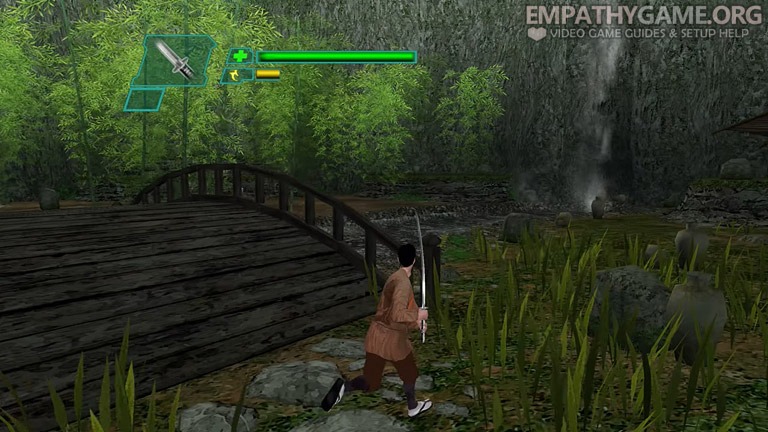
Path of Neo’s smartest structural decision is refusing to hand over the complete power fantasy immediately. Early Neo is capable but constrained. The campaign then layers in stronger Focus techniques, advanced aerial and off-wall attacks, bullet stopping and reflection, Code Vision, Antigravity Jump, more elaborate multi-enemy moves and eventually short bursts of flight. Because these abilities arrive across the story, the controls themselves track Neo’s transformation from talented fighter to rule-breaking anomaly.
The opening dream establishes that idea immediately by making difficulty selection part of play rather than a detached menu. The player fights through escalating waves, with stronger performance opening harder settings and the final Agent Smith challenge unlocking The One. It is a small touch, but an effective one: the game frames difficulty as a demonstration of readiness before the campaign has properly begun.
Between missions, the Path of the One system adds another layer by allowing choices among stronger abilities and Atman Principles rather than presenting one flat upgrade list. Not every option carries equal weight, and the constant arrival of new techniques creates its own pacing problem. Even after the formal training sequence, the campaign keeps interrupting the action to introduce another move, ability or rule. Instead of learning the entire toolkit organically through uninterrupted combat, the player can feel as if the tutorial is being delivered in instalments.
Still, many late-game abilities are more than visual rewards. Code Vision is a good example. Its green-code effect fits the fiction, but it also has practical value: enemies, useful objects and routes can be read through walls, turning a flashy Matrix reference into a navigation and awareness tool. The best upgrades work this way, changing what information the player has or what choices are possible rather than simply making the same attacks stronger.
The Best Missions Turn Movie Rules Into Gameplay Rules
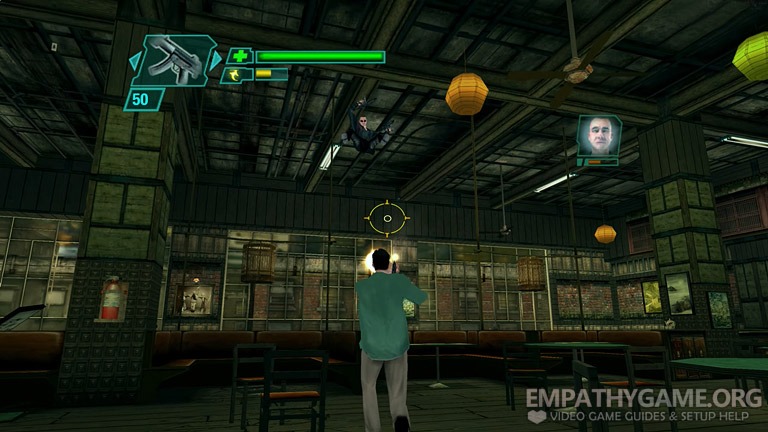
Path of Neo is strongest when a familiar Matrix idea becomes the logic of an encounter. The Security Guard Red Pill rescue is a particularly good example. An Agent can move into another surviving SWAT body, so defeating the Agent first does not actually solve the problem. The player has to recognize the ordinary guards as potential hosts, clear them while protecting the rescue target, and remain aware of destructible pillars and hanging hazards that can make the arena itself dangerous. It is a much better use of Agent mythology than simply giving an enemy a larger health bar.
Other set pieces translate cinematic moments more directly. The lobby rescue leans into guns and destruction, the subway confrontation with Smith compresses a famous duel into a boss encounter, Seraph tests close-range fighting, and the Merovingian material gives the designers room for stranger enemies and supernatural tricks. At their best, these sequences feel like playable reinterpretations rather than scenes waiting to be reenacted.
The problem is consistency. Some missions are designed around one clear combat idea; others bury the action beneath navigation, puzzle steps or extended sequences that never become mechanically interesting. The Witch encounter illustrates the problem. Its intended rhythm—stop incoming debris, throw it back, then close distance when an opening appears—fits Neo’s expanding powers. In practice, the timing and feedback can be difficult to read, so a conceptually clever boss risks feeling arbitrary when the player understands the rule but cannot reliably tell why an attempt failed.
The early MetaCortex escape has a similar identity problem from the opposite direction. It introduces avoidance and stealth-like movement, but those ideas never become a major pillar. Path of Neo is comfortable trying almost anything once, which keeps the campaign unpredictable, but it also means some mechanics feel like temporary experiments rather than parts of a coherent action game.
The Trilogy Becomes a Playable Remix
The story follows Neo across the major events of all three original films, but “follows” is more accurate than “recreates.” Movie footage and material from The Animatrix are cut together with in-engine scenes, while brief cinematic moments are expanded into full missions and new scenarios are inserted wherever the designers need more action. The later films are compressed more aggressively, and the finale deliberately chooses a more playful game-specific solution instead of preserving the exact conclusion of The Matrix Revolutions.
That looseness gives the campaign personality, but not always clarity. Familiarity with the films does a lot of work because the editing can jump rapidly between footage, newly staged scenes and invented missions. The result sometimes resembles an energetic fan remix more than a smooth retelling. Players already invested in Neo, Morpheus, Trinity and Smith can fill in the gaps; newcomers may wonder why important relationships or ideas appear, disappear and return with little breathing room.
The tone is similarly unstable. Serious prophecy and machine mythology sit beside martial-arts jokes, videogame logic and deliberate absurdity. That could have made the adaptation feel disrespectful, yet the Wachowskis’ involvement gives its stranger turns a kind of authorship: Path of Neo is knowingly reshaping its source for a medium where the player expects to defeat things, unlock powers and reach a climactic boss. The game is not elegant about that transformation, but it is rarely timid.
Presentation Sells Impact More Reliably Than Precision
Visually, the game understands what should feel impressive even when the technology and animation struggle to keep up. Coats trail through exaggerated acrobatics, debris bursts from arenas, bodies crash through props and Focus stretches gunfire into slow-motion choreography. The spectacle is strongest in motion, where a messy room can briefly resemble one of the films’ impossible action sequences.
The limitations become obvious whenever the player needs precision. Camera placement can lose important attackers, animation commitments make some responses feel slower than intended, and similar-looking enemies are difficult to parse in a dense crowd. Shooting suffers most because it depends on clear targeting and sightlines; melee can survive some chaos because Neo’s attacks naturally pull him toward nearby threats. This is why the game can feel exhilarating and clumsy within the same ten seconds.
Audio and editing reinforce the same contrast. Familiar musical cues, effects and film imagery provide immediate Matrix identity, while transitions into newly created material can expose differences in performance and presentation. The game rarely achieves the films’ visual polish, but it usually captures their velocity—the sense that a fight should escalate faster than the room can survive it.
Replayability Comes From Mastery, Secrets and Difficulty
There is no build-driven New Game+ structure in the modern sense, so replay value depends on how much the combat system itself invites experimentation. Level Select makes favorite encounters easy to revisit, while harder difficulty settings, hidden briefcases, bonus objectives, special combos, unlockable extras and completion rewards provide additional goals. A second run can also feel different simply because the player now understands how much more is possible than the obvious strike-and-dodge rhythm taught at the beginning.
That is where the delayed combat depth pays off. Knowing when to use directional attacks, how to link multiple enemies, which moves preserve momentum and how to exploit Agent behavior makes earlier encounters look simpler in retrospect. The downside is that mission design does not change around that mastery. Navigation detours, weaker puzzles and one-off gimmicks remain the same, so replaying the campaign is more appealing to someone interested in refining combat than someone looking for branching choices or substantially different content.
Final Verdict
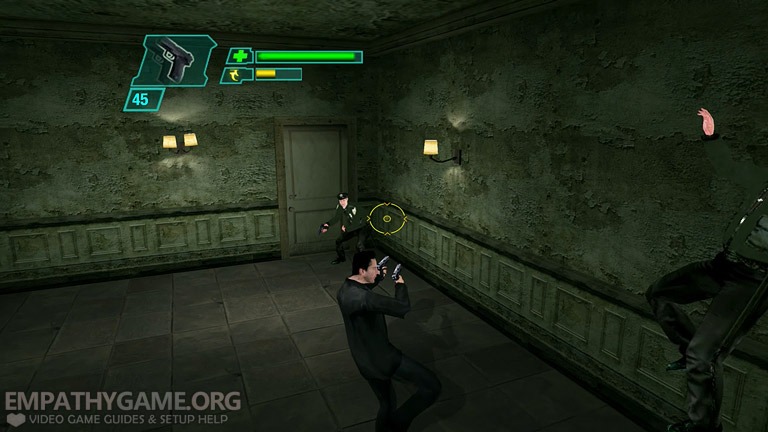
The Matrix: Path of Neo is a better realization of Neo than it is a polished action game. Its camera, uneven missions, awkward encounter feedback and stop-start teaching regularly interfere with a combat system that wants the player to improvise. Yet that system has genuine character. Directional attacks, Link-Ups, weapon stripping, Focus, environmental throws, bullet manipulation, Code Vision and escalating movement powers steadily turn Neo from a competent martial artist into someone who appears to be breaking the game’s own rules.
That mechanical transformation is the reason the rough edges remain worth tolerating. The campaign does not simply show Neo becoming the One; it keeps expanding what the player can do until earlier fights seem almost restrained. Matrix fans who value expressive combat, recreated set pieces and strange reinterpretations of familiar scenes are the audience most likely to forgive its lack of refinement. Players who need clean cameras, tightly signposted bosses and consistently polished mission design will feel the friction constantly. Path of Neo is messy, ambitious and occasionally ridiculous, but those same qualities make it far more distinctive than a safer film adaptation would have been.
The Matrix: Path of Neo Pros & Cons
The Matrix: Path of Neo PC System Requirements
The specifications below describe the original Windows release, not a modern remaster. Atari’s printed manual lists only 1 GB of free disk space, but later PC requirement records use 6 GB and that figure better reflects the practical installation size. Allow at least 6 GB rather than relying on the older printed value.
MINIMUM:
OS: Windows 2000 / XP
CPU: Intel Pentium 4 1.8 GHz or AMD Athlon 1.8 GHz or higher
RAM: 512 MB
GPU: Nvidia GeForce FX 5200 or ATI Radeon 8500 or greater
DirectX: DirectX 9.0c or higher
Storage: 6 GB free space recommended for installation
Optical Drive: 6X DVD-ROM or faster
Sound Card: DirectX 9.0c-compatible sound card
Additional Notes: Hardware T&L graphics cards without shader support, including the GeForce 4 MX and Intel Extreme Graphics families cited in Atari’s manual, are not supported
RECOMMENDED:
OS: Windows 2000 / XP
CPU: Intel Pentium 4 2.8 GHz or AMD Athlon 2.8 GHz or higher
RAM: 1 GB
GPU: Nvidia GeForce 6800 or ATI Radeon X800 or greater
DirectX: DirectX 9.0c or higher
Storage: 6 GB free space
Optical Drive: 6X DVD-ROM or faster
Sound Card: DirectX 9.0c-compatible sound card
Additional PC Performance & Setup Notes
The hardware requirements are extremely light by modern standards, but raw CPU and GPU performance is not the main difficulty on a newer PC. The bigger concerns are the game’s 32-bit Windows-era design, old disc copy protection, display behavior, controller handling, and assumptions inherited from Windows 2000/XP.
The original rendering path uses Direct3D 9.0c and the game normally operates at 30 FPS. Community widescreen fixes can improve aspect-ratio handling and support modern resolutions, while frame-rate modifications can target 60 FPS. However, some scripted sequences depend on the original timing, so raising the frame rate is not equivalent to native modern 60-FPS support.
Before applying compatibility fixes, preserve the game’s save and configuration folders. This is particularly useful because old installations, administrator permissions, VirtualStore redirection, patches, and community modifications can otherwise make it difficult to determine which files the game is actually reading.
Official Trailer
Note: This IGN-hosted official trailer uses PlayStation 2 footage from the same Path of Neo release and demonstrates the game’s Neo-focused combat and cinematic action; the written guide above focuses specifically on the native Windows version and its PC setup considerations.
Frequently Asked Questions
Is The Matrix: Path of Neo worth playing in 2026?
Yes, especially for Matrix fans who want to control Neo directly and experiment with martial arts, firearms, Focus abilities, wall-running, bullet manipulation, and increasingly powerful moves. Its camera, PC controls, presentation, and legacy compatibility show their age, so it suits players who can tolerate some mid-2000s action-game roughness.
Should I watch The Matrix movies before playing Path of Neo?
Ideally, yes. The game uses heavily edited footage and assumes familiarity with characters and major events, so its story is easier to follow if you already know the original Matrix trilogy.
Does The Matrix: Path of Neo cover all three Matrix movies?
Yes, the campaign draws from The Matrix, The Matrix Reloaded, and The Matrix Revolutions. It is not a scene-for-scene adaptation, however: familiar events are expanded, rearranged, shortened, or replaced with original gameplay scenarios, and much of the third film is heavily condensed.
Does Path of Neo have the same ending as The Matrix Revolutions?
No. The game deliberately changes the final confrontation and gives Neo a more video-game-oriented conclusion rather than reproducing the film ending exactly. It is best experienced without having the altered finale spoiled beforehand.
What happens if you choose the blue pill in Path of Neo?
Choosing the blue pill ends Neo’s journey almost immediately rather than opening an alternate full campaign. Taking the red pill is the choice that continues into the main game.
How does the opening difficulty test work in Path of Neo?
The opening combat sequence tests how well you survive increasingly difficult enemies and uses that performance to determine the difficulty options available to you. Performing well enough to survive the complete test and overcome its final challenge unlocks the hardest setting, The One.
How do upgrades work in The Matrix: Path of Neo?
Neo gains some abilities automatically as the story progresses, while more powerful Master Abilities can be selected between missions. Atman Principles are special situational upgrades that generally apply only to the level in which they are selected, with the Spoon principle being a notable exception tied to a permanent secret unlock.
What does Focus do in Path of Neo?
Focus lets Neo bend normal movement and combat rules: it supports wall-running, extended jumps, stronger attacks, evasive moves, and bullet-time-style actions. Later abilities expand this into feats such as stopping or reflecting bullets and using more extreme movement powers.
Is Path of Neo mainly a martial-arts game or a shooter?
Martial-arts combat is the core of the experience, but firearms and melee weapons are important secondary tools. Much of the appeal comes from flowing between punches, throws, special attacks, wall moves, Focus abilities, guns, swords, staffs, and environmental attacks rather than committing to one combat style.
Does The Matrix: Path of Neo have stealth?
Yes, but only in a limited role. Early sequences such as Neo’s escape from MetaCortex use avoidance and stealth-like navigation, while most of the campaign becomes an increasingly combat-heavy brawler and third-person action game.
Is The Matrix: Path of Neo open world?
No. It is a level-based action game built around individual missions, training programs, fights, set pieces, and story sequences rather than an explorable open world. Previously completed areas can later be revisited through Level Select.
Does Path of Neo have New Game Plus?
There is no conventional New Game+ mode that carries a complete build into a fresh campaign in the modern sense. Replay value instead comes from Level Select, harder difficulties, hidden briefcases, bonus objectives, unlockable special combos, Extras content, and completion-based cheat options.
What are the Zion Archives in Path of Neo?
The Zion Archives are a secret bonus area containing character and development material rather than a normal combat level. They can be unlocked through the Spoon Atman Principle and then accessed from Level Select.
How long does The Matrix: Path of Neo take to finish?
A normal first playthrough is roughly 10–12 hours, although difficulty, retries, exploration for secrets, and optional objectives can change that considerably. Replaying stages for unlockables or tackling The One difficulty adds further time.
Does The Matrix: Path of Neo have multiplayer or co-op?
No. Path of Neo is a single-player game with no online multiplayer, campaign co-op, local co-op, or split-screen mode.
Do I need to play Enter the Matrix before Path of Neo?
No. Both games were developed by Shiny Entertainment, but Enter the Matrix follows Niobe and Ghost alongside events surrounding The Matrix Reloaded, while Path of Neo retells Neo’s journey across the trilogy. Playing the earlier game can add franchise context, but it is not required to understand Path of Neo.
Does Path of Neo use footage and voices from the Matrix movies?
Yes. The game combines live-action footage from the Matrix films and The Animatrix with in-engine cinematics and gameplay. The film clips retain the original movie performances, but most newly recorded game dialogue uses soundalike actors; Laurence Fishburne was the main film actor who returned to record new dialogue.
Can you buy The Matrix: Path of Neo on Steam or GOG?
No verified official Steam release exists, and GOG lists Path of Neo on its Dreamlist rather than as a purchasable game. The native Windows version was originally distributed as a retail DVD-ROM release, so existing legitimate PC ownership is centered on that physical edition.
Does The Matrix: Path of Neo work on Windows 10 and Windows 11?
It can run on some modern Windows PCs, but it was designed for Windows 2000/XP and does not have official modern-Windows support. Compatibility also depends on the retail edition: PCGamingWiki documents SecuROM on English copies and StarForce on some Russian copies, with the latter presenting additional problems on newer Windows versions.
Should I use a controller for Path of Neo on PC?
A controller can make Neo’s analog movement feel more natural, and the original PC game supports configurable joypads. However, the port predates modern XInput standards, and contemporary testing found limited dual-analog camera mapping, so controller behavior should not be expected to match a modern PC action game.
Does The Matrix: Path of Neo support widescreen and 60 FPS on PC?
The original PC release is capped at 30 FPS, and modern widescreen behavior is imperfect without additional configuration. Established community fixes can improve widescreen, ultrawide, higher-resolution, and 60-FPS support, but higher frame rates can cause timing problems in some cutscenes or scripted sequences, so back up configuration files and follow the fix documentation carefully.
Still have questions? Check the Matrix Reddit community, Path of Neo PC board on GameFAQs, or GOG Dreamlist community page for additional discussion, preservation interest, and player help.
Sources & References
Key factual and technical information in this guide was checked against relevant official, archival, and established PC-gaming sources, including:
- Atari The Matrix: Path of Neo PC Manual — archived copy of Atari’s original Windows manual used to verify installation, controls, disc requirements, and original minimum specifications
- PCGamingWiki — The Matrix: Path of Neo — current technical reference for retail DRM, modern Windows caveats, system requirements, widescreen, frame-rate behavior, controllers, patches, saves, and configuration
- GOG Dreamlist — The Matrix: Path of Neo — used to verify that GOG presents the game as a preservation/release request rather than a normal purchasable catalog entry
- Metacritic — The Matrix: Path of Neo — used to verify the PC critic aggregate and distinguish it from the PS2 and Xbox scores
- GameSpot PC Review — used for the PC-specific 6.8/10 score and contemporary assessment of controls, visuals, performance, and gamepad support
- Nexus Mods — The Matrix: Path of Neo — used to verify the presence of a dedicated unofficial PC modding section
Similar Games Like The Matrix: Path of Neo
- Metal Gear Rising: Revengeance
- Prototype
- Stellar Blade
- Metal Gear Solid 4: Guns of the Patriots
- X-Men Origins: Wolverine
- Spider-Man: Shattered Dimensions






Found something worth playing through DecideGame?
DecideGame.com is an independent gaming project run by Editor Zero. If this guide helped you discover a game, solve a problem, or find useful information, you can support DecideGame.com and help keep new and updated game guides coming.
DecideGame — PC Game Guides, Reviews & Setup Help