
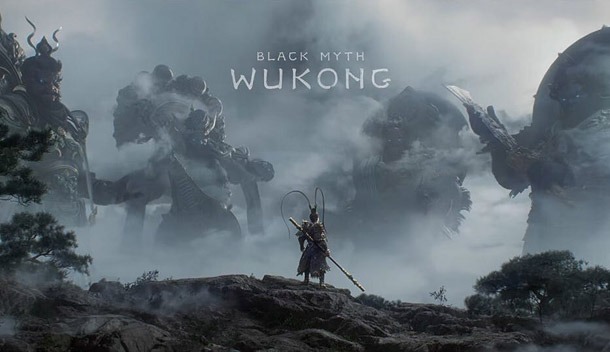
📅 Game released: 2024
Black Myth: Wukong is a single-player action RPG inspired by Journey to the West, with staff-based combat, spells, transformations, and boss encounters across mythological Chinese landscapes. This PC guide covers official Steam and Epic Games Store purchase and download options, Standard and Digital Deluxe editions, system requirements, the benchmark tool, performance settings, Steam Deck limitations, and the game’s additional boss challenges.
 By Editor Zero — independently researched, edited, and maintained.
Last updated: 13 November 2026
Last reviewed: 13 November 2026
Table of Contents
- Quick Facts
- Official PC Stores, Download & Installation
- Black Myth: Wukong Review
- Pros & Cons
- PC System Requirements
- Frequently Asked Questions
- Similar Games
Black Myth: Wukong Quick Facts
- Game: Black Myth: Wukong
- Developer: Game Science
- Publisher: Game Science
- Genre: Action RPG, Action-Adventure, Fantasy, Soulslike
- Release: August 20, 2024 (Windows PC and PS5); Xbox Series X|S — August 20, 2025
- Platforms: Windows PC, PS5, Xbox Series X|S
- Modes: Single-player only
- PC editions: Standard Edition, Digital Deluxe Edition, and Deluxe Edition Upgrade
- Post-launch content: Journeyer’s Charts plus Return of Rivals and Gauntlet of Legends Challenge modes
- Cloud Access: GeForce NOW (owned Steam or Epic PC copy); Xbox Cloud Gaming (owned Xbox digital copy plus an eligible Game Pass plan). Service availability varies by region.
- Steam Deck: Unsupported; Valve states that the graphics settings cannot be configured to run well on Steam Deck, although SteamOS itself runs the game successfully
- Engine: Unreal Engine 5
- Community: Reddit BlackMythWukong, Steam Discussions, official Black Myth: Wukong website
- PC modding: Nexus Mods, visual tweaks, reshades, character swaps, save tools, difficulty changes, performance tweaks, and other unofficial modifications
- Metacritic score: 81/100 (PC)
- IGN score: 8/10 (PC review)
- OpenCritic average: 82/100
- Steam user reception: Overwhelmingly Positive overall
Official PC Stores, Download & Installation
👇 Compare the official Steam and Epic Games Store editions before purchasing, downloading, or installing Black Myth: Wukong on Windows PC.
- Steam: The Windows game is sold through Steam with achievements, Steam Cloud, trading cards, Family Sharing, and full controller support.
- Epic Games Store: Epic sells the Standard and Digital Deluxe editions with achievements, cloud saves, controller support, and single-player play. Steam and Epic are separate purchases.
- Standard Edition: Includes the complete base game and all permanent gameplay features added through normal updates; Deluxe bonus items are optional.
- Digital Deluxe Edition: Includes the Bronzecloud Staff, Folk Opera Mask, Folk Opera Almsgiving Armor, Folk Opera Leather Bracers, Folk Opera Buskins, Wind Chimes curio, and selected digital soundtrack content.
- Deluxe Edition Upgrade: Standard Edition owners can purchase the extra Deluxe content separately without buying the complete game again. Do not purchase it again if you already own Digital Deluxe.
- Cloud streaming: GeForce NOW supports owned Steam or Epic PC copies on compatible plans and devices. Xbox Cloud Gaming supports streaming a separately purchased Xbox digital copy with an eligible Game Pass plan. Xbox cloud access is not a native Microsoft Store Windows PC edition or an Xbox Play Anywhere entitlement.
- Steam DRM: Steam lists third-party Denuvo DRM and a third-party EULA. Do not assume the Steam version is DRM-free.
- Steam Deck: Valve rates the game Unsupported: SteamOS can run it, but Valve says its graphics settings cannot be configured to run well. First-time setup requires an internet connection.
 Buy Black Myth: Wukong on Steam
 Buy Black Myth: Wukong on Epic Games Store
Black Myth: Wukong Review
A mythic action RPG whose finest battles reward patience, precision, and a willingness to adapt.
Black Myth: Wukong looks remarkable in screenshots, but its personality becomes clearer when a boss has almost emptied your healing gourd and you are studying a tiny movement before risking another staff strike. Behind the elaborate creatures and cinematic presentation is a focused action RPG that repeatedly asks a practical question: how much of an opening can you safely use? Its chapter-based journey through Chinese mythology makes room for quiet forests, unsettling temples, hidden enemies, and spectacular confrontations without trying to become a vast open-world RPG. The combat is the main attraction, although the atmosphere and fragments of an older story give those fights a reason to matter beyond winning them.
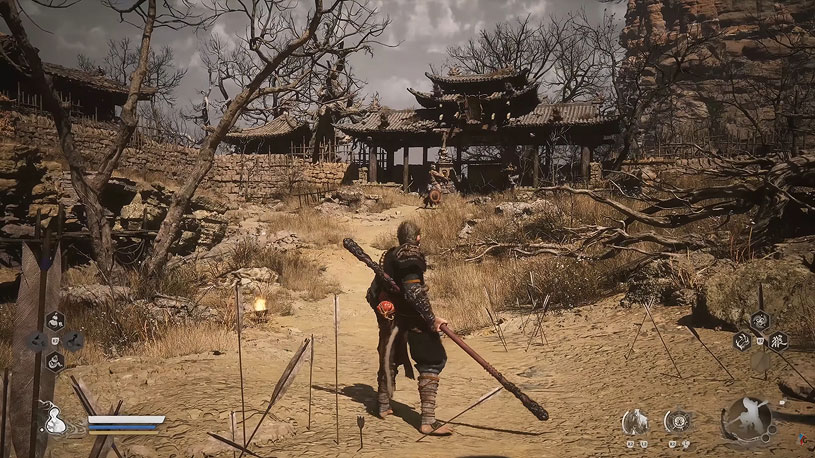
Inspired by Journey to the West, the story follows the Destined One, a monkey warrior whose connection to Sun Wukong gives the adventure its central mystery. Many characters seem to have endured entire lifetimes of conflict before he arrives. Understanding them means paying attention to their designs, dialogue, chapter endings, and sometimes the information hidden away in the Journal.
Story and Mythological Tone
The mythology is most effective when it feels like something being uncovered rather than explained. A ruined shrine, a sorrowful spirit, or a seemingly monstrous enemy can suggest a history larger than the immediate mission. The architecture, music, religious imagery, and creature designs belong together; this is not generic fantasy dressed in unfamiliar costumes. Even an ordinary forest path can feel connected to an old argument between gods, monks, and yaoguai.
There is a cost to telling the story this way. The Journal provides substantial histories and motives for enemies, yet the action between chapters does not always make clear why the next particular opponent matters. Rich background lore is not the same as a well-connected narrative. Readers familiar with Journey to the West may recognise implications that others miss, while players who prefer relationships to develop through scenes rather than optional reading may find themselves admiring the world more than following its plot.
The journey is also considerably more directed than Elden Ring. Instead of a seamless world inviting travel in almost any direction, Black Myth: Wukong uses separate chapters with branching routes, secret areas, and boss arenas. Its resemblance to that game lies less in map freedom than in the pleasure of turning an initially bewildering enemy into a readable one. Some impressive-looking scenery is blocked by invisible boundaries, so exploration does not always follow the freedom suggested by the visuals.
There is an interesting parallel with Stellar Blade, despite the very different settings. Both place a warrior in a world whose enemies and surroundings gradually complicate the apparent purpose of the mission. Stellar Blade uses a ruined science-fiction Earth and its Naytiba; Wukong uses spirits, temples, and mythological grudges. Neither relies solely on conventional exposition, although Wukong asks considerably more of the player to connect its scattered stories.
A World Filled with Atmosphere
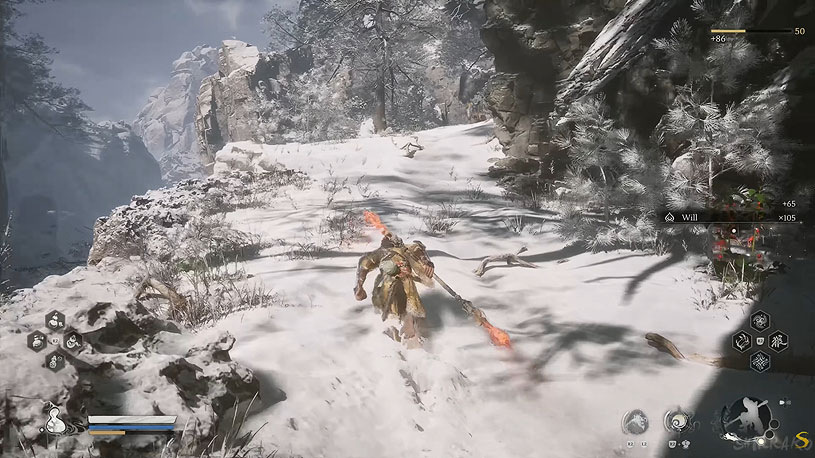
The early forests establish the mood through mist, moving leaves, worn stone steps, and the sounds of creatures somewhere beyond the visible path. Quiet exploration can become dangerous without the environment ever losing its beauty. Soft music and wind give way to a staff impact or an abrupt roar, making the transition into combat feel like a natural part of the place rather than an isolated arena event.
Side routes are especially worthwhile because they can teach as well as reward. The Wandering Wight, encountered early away from the main path, looks manageable until its heavy swings expose careless dodging. Meeting a threat like that before being fully prepared is frustrating in the moment, but it makes the world feel less arranged around the player’s current level. A later return can reveal how much better its attacks have become understood.
Not every hostile area balances discomfort so well. The Pagoda Realm uses narrow walkways, archers, treacherous ambushes, and periodic health pressure to make its prison setting genuinely oppressive. That serves the atmosphere, but repeatedly navigating the same hazards can become more irritating than frightening. Cloud Step may prove useful simply for getting past an awkward stretch, a telling example of a combat ability becoming a response to level design.
Chapter Six introduces a different problem. Flying on a cloud opens up a much larger space, yet the distance between important encounters can make that freedom feel strangely empty. Earlier chapters reward inspecting turns and listening for danger; broad aerial searching weakens that intimate rhythm. More room to travel does not necessarily mean more to discover.
Gameplay and Combat
The basic rhythm is to explore, rest at Keeper’s Shrines, fight smaller enemies, collect resources, develop abilities, and confront a boss that exposes whatever your build cannot yet handle. Light attacks maintain pressure and generate Focus, heavier strikes spend openings more decisively, and dodging keeps the Destined One close enough to respond. What makes the combat engaging is not constant aggression. It is the need to judge whether the next hit is worth the risk of being caught in an animation.
Guangzhi illustrates that balance early. His fiery attacks demand spacing, but retreating from every swing only prolongs the duel. The better rhythm is to move around an attack, recognise its recovery, and commit just long enough to do meaningful damage. Healing has a similar tension: taking a moment to drink without understanding the boss’s next movement can be more dangerous than staying engaged.
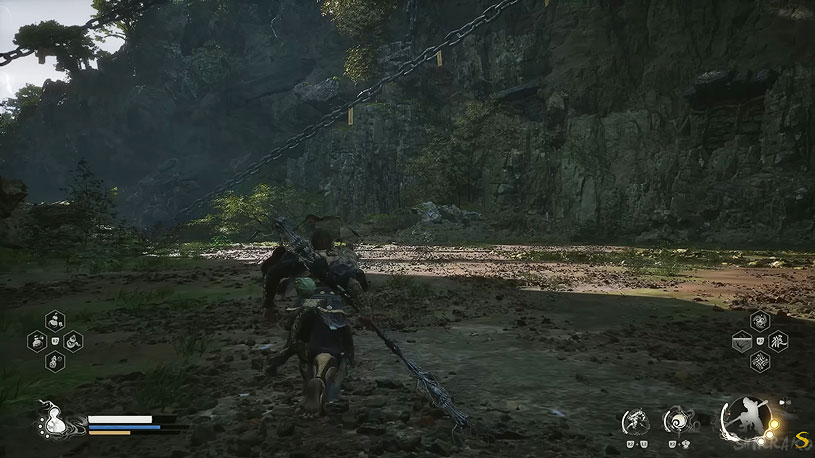
The timing gets subtler with counters such as Resolute Strike’s See Through. It is tempting to treat this as a parry that can be triggered whenever danger approaches. In practice, the Destined One must be at a suitable point in his own light-attack sequence before the counter will work. An incoming strike can be read correctly and still connect because the staff animation has not left room to respond. Practising against an opponent such as Yin Tiger makes the distinction clear: learning an enemy’s rhythm is only half the task; learning the commitments of your own moves matters too.
That emphasis on observation recalls Dark Souls 3, but Wukong is not simply a faster Soulslike. Spells, spirits, transformations, and stance changes offer more ways to interrupt or reshape a difficult exchange. Immobilize can preserve an opening, Cloud Step can buy time to recover position, and a transformation can shift the pressure altogether. Spending every ability as soon as it becomes available is tempting, though the final portion of a demanding fight often reveals why keeping one option in reserve was the better decision.
Gameplay Systems and Progression
Leveling grants Sparks that can be invested in combat techniques, survival, stamina, stances, and spells. The ability to redistribute them encourages experimentation rather than punishing an early choice. It is an important distinction from RPGs where a build can become a long-term commitment: if a boss keeps defeating the same approach, the game gives you reasons to reconsider that approach instead of merely repeating it.
The three staff stances change what an opening means. Smash Stance favours direct punishment, Pillar Stance offers elevated attacks and different spacing, while Thrust Stance creates opportunities to strike from farther away. One staff still defines the fighting style, but these variations prevent every encounter from becoming the same sequence of dodges followed by light attacks. Focus management connects them, making an earned heavy strike feel like the end of a small plan rather than a button pressed on cooldown.
Spirits and transformations give defeated enemies another purpose. An early fire-wielding transformation can supply a different kind of pressure, while a useful spirit may change how a difficult opening is exploited. Armor bonuses, curios, vessels, drinks, and soaks add further adjustments without turning the adventure into endless inventory sorting. The system is broad enough for meaningful changes in approach, though players seeking a large arsenal of fundamentally different weapons will find its variety concentrated in abilities and timing instead.
Boss Fights and Specific Moments
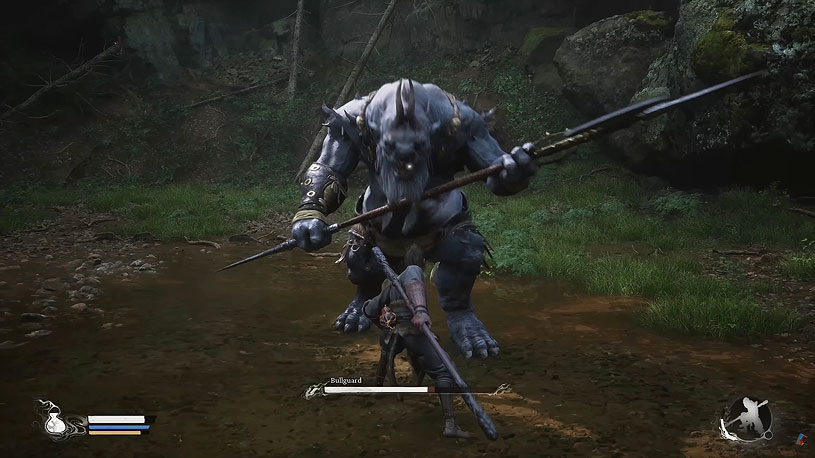
Bosses are where these systems come together. Whiteclad Noble tests spacing through flowing spear movements and a change in the fight’s rhythm. Tiger Vanguard is more confrontational, lunging across a blood-filled arena and making premature heavy attacks especially costly. Neither fight is memorable merely because it hits hard. Both demand a change in how the player reads movement, controls distance, and resists the impulse to rush a punish.
Yellowbrow takes that lesson further by challenging habits that other encounters encourage. His golden defence interferes with Immobilize, and A Pluck of Many can become a liability when summoned duplicates turn hostile. A spell-heavy strategy that felt dependable elsewhere may suddenly become the wrong answer. This is one of the game’s most revealing design choices: having more abilities does not mean using all of them is wise. Sometimes a simpler staff-focused approach, including Spell Binder, makes more sense.
The spectacle is not always matched by equally clean attack connections. Against the Hundred-Eyed Daoist Master, the boss’s size and target geometry can make Smash Stance attacks feel unreliable even when the apparent opening is correctly judged. Pillar Stance offers a different way to reach him. This is a more interesting criticism than saying the fight is simply difficult, because it highlights the occasional gap between understanding an enemy and getting the expected response from the combat system.
The hidden Purple Cloud Mountain encounters also make exploration less predictable than a straightforward checklist. Reaching the Duskveil before resolving Scorpionlord’s separate confrontation can change what happens in the larger fight and leave that individual duel unavailable in the same cycle. There is a pleasing sense that these characters inhabit a connected world, but the limited warning can punish completion-focused curiosity.
For a different expression of boss mastery, Sekiro: Shadows Die Twice is a useful comparison. Its deflections and posture system are more tightly centred on swordplay, while Wukong distributes its tactical choices across spells, staff stances, and transformations. Both can make a previously intimidating opponent feel manageable once the player understands what the animation is actually communicating.
Replayability and Long-Term Value
New Game Plus offers the chance to revisit missed encounters and try abilities that received little attention the first time. Yet the first new cycle can be much easier than the original journey because late-game weapons, armor, and developed skills carry over before enemy pressure rises enough to match them. For some, that makes it a satisfying demonstration of progress. For others, it removes the tension that made the bosses compelling. Greater resistance can return in subsequent cycles, although the immediate replay is not necessarily the ultimate skill test.
The Challenge modes offer a more direct answer for players who want demanding fights without repeating the entire campaign. Return of Rivals allows rematches with previously defeated bosses at selectable difficulties; Gauntlet of Legends groups opponents into sequences with additional conditions and altered challenges. Journeyer’s Charts also make navigating chapter regions easier when searching for places previously overlooked.
Completionists have reasons to revisit side areas, spirits, materials, and optional bosses, especially when an encounter order may have closed off a reward. The appeal differs from Monster Hunter World, whose repeated hunts focus on preparation, tracking, and equipment development. Wukong is a more directed story journey, but both reward recognising a creature’s patterns well enough to replace survival by guesswork with deliberate control.
Final Verdict
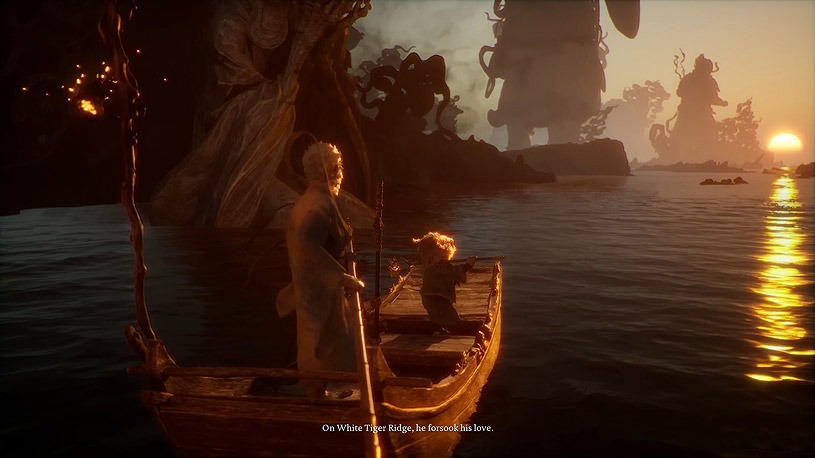
Black Myth: Wukong is strongest when its combat, mythology, and environments reinforce one another. An unfamiliar creature is not just a visual attraction; understanding its movement can become the whole purpose of an evening’s progress. The staff stances and spells provide real choices, while the world gives those fights a distinctive sense of place.
Its weaknesses are easier to notice once the spectacle settles: uneven narrative connections, restrictive boundaries, occasionally frustrating encounter geometry, and stretches of exploration that lack the density of the early chapters. Players wanting a freely explorable world or a consistently explained story may prefer something else. Those who enjoy focused action, strange mythology, and learning difficult opponents through repeated, thoughtful attempts have a stronger reason to stay. The best victory is not the flashiest one, but the moment an enemy that once seemed chaotic finally makes sense.
Black Myth: Wukong Pros & Cons
- Pro: Responsive staff combat with stances, spells, spirits, transformations, vessels, and enough build flexibility to change how difficult encounters are approached
- Pro: Exceptional boss variety and mythological art direction rooted in Journey to the West and Chinese folklore
- Pro: Focused chapter structure rewards side-path exploration without burying the player under a huge open-world checklist
- Pro: Permanent Challenge modes and Journeyer’s Charts improve replayability and navigation after launch
- Pro: Strong PC feature set with an official benchmark tool, DLSS / FSR / XeSS support, full ray tracing, controller support, Steam Cloud, and an active unofficial modding community
- Con: Performance can be demanding, especially with full ray tracing, high visual settings, or weaker CPUs and GPUs
- Con: Valve rates Steam Deck support Unsupported because the graphics settings cannot be configured to run well on the handheld
- Con: Invisible boundaries and some deceptively narrow routes can make exploration feel more restrictive than the scenery suggests
- Con: Storytelling can be cryptic for players unfamiliar with Journey to the West, Chinese folklore, and the relationships behind several bosses and characters
- Con: The Deluxe bonus gear is optional rather than essential, so its value depends heavily on whether you want the cosmetics, early equipment, and soundtrack access
Black Myth: Wukong PC System Requirements
MINIMUM:
OS: Windows 10 64-bit
CPU: Intel Core i5-8400 / AMD Ryzen 5 1600
RAM: 16 GB
GPU: NVIDIA GeForce GTX 1060 6 GB / AMD Radeon RX 580 8 GB
DirectX: Version 11
Storage: 130 GB available space
Sound Card: Windows Compatible Audio Device
Additional notes: HDD supported; SSD recommended. The official specifications were tested with DLSS / FSR / XeSS enabled.
RECOMMENDED:
OS: Windows 10 64-bit
CPU: Intel Core i7-9700 / AMD Ryzen 5 5500
RAM: 16 GB
GPU: NVIDIA GeForce RTX 2060 / AMD Radeon RX 5700 XT / Intel Arc A750
DirectX: Version 12
Storage: 130 GB available space
Sound Card: Windows Compatible Audio Device
Additional notes: SSD required. The official specifications were tested with DLSS / FSR / XeSS enabled.
Additional PC Performance and Setup Notes
- The minimum tier does not officially require an SSD: Steam says HDD is supported and an SSD is recommended. The recommended tier does require an SSD.
- The minimum tier lists DirectX 11, while the recommended tier lists DirectX 12. Do not rewrite the minimum specification as DirectX 12.
- The separate official benchmark tool can test a real-time rendered sequence with adjustable graphics settings, but Game Science notes that benchmark results cannot represent every gameplay scenario perfectly.
- NVIDIA documents full ray tracing, also described as path tracing, for higher-end GeForce RTX systems. It improves lighting, reflections, shadows, and caustics but is substantially more demanding than standard rendering.
- Steam’s requirement notes explicitly say the published hardware tiers were tested with DLSS / FSR / XeSS enabled, so native-resolution performance can be significantly heavier than the specification table alone suggests.
- If performance is unstable, test without full ray tracing first, reduce the heaviest visual settings, use a sensible upscaling mode, update GPU drivers, and let shader compilation finish before changing several settings at once.
- Game Science warns that mods can become incompatible after game updates. If the game fails to launch or load correctly, remove modified files and verify the installation before assuming the save or base game is damaged.
Official Trailer
Note: Game Science’s official final trailer shows PC-captured combat, story scenes, environments, bosses, and characters, while the written guide adds current storefronts, editions, system requirements, benchmark information, Steam Deck status, mods, and performance guidance.
Frequently Asked Questions
Does Black Myth: Wukong have difficulty settings?
The main campaign has no traditional Easy, Normal, or Hard selector. You can adjust your approach through equipment, spells, transformations, and reassigned Sparks; the separate Return of Rivals boss challenges offer three difficulty levels.
Is Black Myth: Wukong an open-world game?
No. It uses chapter-based regions with branching paths, hidden areas, Keeper’s Shrines, and optional encounters rather than one seamless open world. Some scenic routes are blocked by invisible boundaries.
Is Black Myth: Wukong based on Journey to the West, and are you Sun Wukong?
The story draws from Journey to the West and Chinese mythology. You play as the Destined One, a monkey warrior whose connection to Sun Wukong is an important part of the narrative mystery.
Is Black Myth: Wukong a Soulslike?
It shares challenging bosses, stamina management, checkpoints, and attack-pattern learning with Soulslikes. Its emphasis on spells, transformations, staff stances, and comparatively forgiving death penalties makes it a more action-oriented variation on those ideas.
What happens when you die in Black Myth: Wukong?
You return to a Keeper’s Shrine without dropping Will, experience, or Sparks. You lose progress since the last checkpoint, but do not have to recover a currency pile from where you died.
Can you reset Sparks and change builds?
Yes. Keeper’s Shrines let you reclaim and reassign Sparks, allowing you to experiment with different stances, spells, and talents without committing permanently to an early build.
What should beginners focus on first?
Explore side paths, activate Keeper’s Shrines, and try the spirits and transformations you acquire. During difficult boss fights, keep some mana available for a well-timed Immobilize or Cloud Step rather than spending every spell at the beginning.
Does Black Myth: Wukong have an in-game map?
Yes. Journeyer’s Charts show individual regions. The first becomes available after meeting the Keeper in Black Wind Mountain, and further regional charts can be obtained at Keeper’s Shrines as the journey progresses.
How do Return of Rivals and Gauntlet of Legends work?
After completing the story once, Challenge becomes available at Keeper’s Shrines. Return of Rivals provides one-on-one rematches with bosses you have defeated; Gauntlet of Legends strings opponents together with adjustable curses and special rewards. Encounters involving bosses not defeated in the campaign remain locked.
Does Black Myth: Wukong have New Game Plus?
Yes. Enter a New Cycle restarts the journey while retaining much of your character’s progression, abilities, and equipment. Story-specific access and key items reset, so finish important side activities before starting another cycle.
Can Black Myth: Wukong be played in co-op or multiplayer?
No. The campaign and boss challenges are single-player. There is no official online co-op, split-screen, PvP, or multiplayer mode.
Does Black Myth: Wukong have a paid story expansion?
The verified PC editions and add-ons do not include a separate paid story expansion. The Journeyer’s Charts and boss Challenge modes are part of the base game’s permanent gameplay features, not Digital Deluxe exclusives.
Can you stream Black Myth: Wukong without installing it on a PC?
Yes, through supported cloud services. GeForce NOW supports an owned Steam or Epic copy, while Xbox Cloud Gaming requires a separately owned Xbox digital version and an eligible Game Pass plan. These are different ownership systems; a Steam or Epic purchase does not grant the Xbox copy.
Do Steam and Epic saves sync with each other or with consoles?
Steam Cloud and Epic cloud saves work within their respective storefront ecosystems. They should not be mistaken for a universal cross-save system between Steam, Epic, PS5, and Xbox; back up saves before changing stores or modifying game files.
Is there a free official PC benchmark?
Yes. The separate Black Myth: Wukong Benchmark Tool on Steam evaluates graphics configurations in a rendered sequence. Results are a guide, not a guarantee that every boss fight or area will perform identically.
Why might Black Myth: Wukong stutter or run poorly on PC?
Full ray tracing and demanding graphics settings can strain hardware, while shader compilation and incompatible mods can also create problems. Start with the unmodified game, reduce the most demanding settings, and use the benchmark tool to compare configurations; consult the official support notes if problems persist.
Does Black Myth: Wukong run well on Steam Deck?
Valve marks it Unsupported because the game’s graphics settings cannot be configured to run well enough on Steam Deck. SteamOS can launch it, but that does not amount to an official smooth-performance recommendation; first-time setup needs an internet connection.
Can Black Myth: Wukong be modded on PC?
Unofficial Nexus Mods projects include visual and gameplay changes. Back up important saves, follow each mod’s compatibility instructions, and remove modified files when troubleshooting launch or loading failures.
Should I use a controller or keyboard and mouse?
Both are supported. A controller suits analog movement and dodging, while keyboard and mouse can be adjusted with custom bindings; the choice depends on which input feels more comfortable for timing staff combos and spells.
Still have questions? Check the Steam Discussions, Black Myth: Wukong Reddit community, or the official Game Science website.
Sources & References
Key game, ownership, gameplay-update, and PC technical details in this guide were checked against:
- Black Myth: Wukong on Steam — official editions, DRM, Steam features, system requirements, and user reception.
- Black Myth: Wukong on Epic Games Store — PC editions, Deluxe upgrade, cloud saves, and release information.
- Game Science’s Steam announcements — Journeyer’s Charts, Challenge modes, and mod/installation precautions.
- Black Myth: Wukong on Xbox — Xbox-only ownership, platform availability, and owned-game cloud-streaming requirements.
- Official PC Benchmark Tool — free hardware and graphics-performance assessment.
- NVIDIA’s Black Myth: Wukong PC graphics guide — Unreal Engine 5, ray tracing, DLSS, and rendering features.
- Metacritic PC critic reviews — the PC review aggregate.
Similar Games Like Black Myth: Wukong
- Sekiro: Shadows Die Twice
- God of War II
- Elden Ring
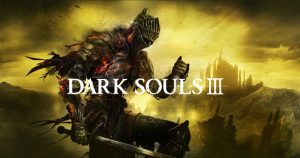
- Dark Souls III
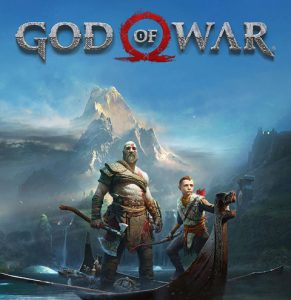
- God of War (2022)
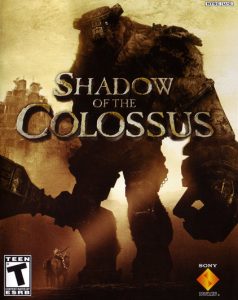
- Shadow of the Colossus

Found something worth playing through DecideGame?
DecideGame.com is an independent gaming project run by Editor Zero. If this guide helped you discover a game, solve a problem, or find useful information, you can support DecideGame.com and help keep new and updated game guides coming.
DecideGame — PC Game Guides, Reviews & Setup Help