
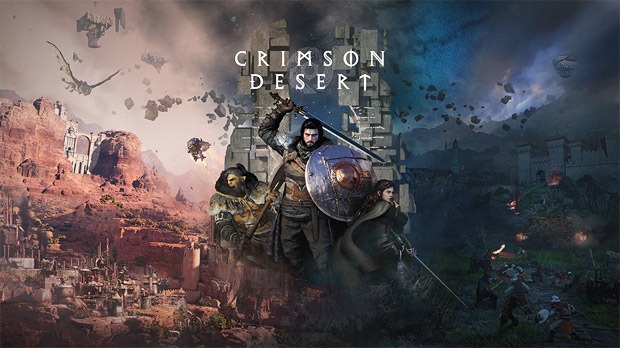
📅 Game released: 2026
Crimson Desert is a single-player open-world fantasy adventure following Kliff as he rebuilds the Greymanes and explores Pywel through combat, climbing, puzzles, and unexpected side activities. This PC guide covers official Steam, Epic Games Store, and Xbox purchase and download options, the free Enhanced upgrade, the separate Charting the Unknown DLC, cross-save restrictions, system requirements, Steam Deck support, and practical installation advice.
 By Editor Zero — independently researched, edited, and maintained.
Last updated: 13 November 2026
Last reviewed: 13 November 2026
Table of Contents
- Quick Facts
- Official PC Stores, Download & Installation
- Crimson Desert Review
- Pros & Cons
- PC System Requirements
- Frequently Asked Questions
- Similar Games
Crimson Desert Quick Facts
- Game: Crimson Desert Enhanced / Standard Edition / Enhanced Deluxe Edition / Deluxe Pack / Charting the Unknown DLC
- Developer: Pearl Abyss
- Publisher: Pearl Abyss
- Genre: Action-Adventure, Open World, Fantasy, Action RPG
- Release: March 19, 2026
- Enhanced Edition: Free upgrade for existing owners with additional story moments, new skills, expanded voice-over and language support, and integrated permanent additions
- DLC / Expansions: Charting the Unknown is a separately purchased expansion adding ocean exploration, storylines, housing, business management, and Garden of Trials; the Deluxe Pack contains bonus equipment
- Platforms: Windows PC, macOS, PS5, Xbox Series X|S
- Cloud Access: Xbox Cloud Gaming supports an owned Microsoft / Xbox copy with an eligible Game Pass plan; GeForce NOW is also supported with game ownership through a compatible storefront, supported region, and applicable membership
- Cross-Save: Manual shared slot through linked PlayStation, Xbox, Steam, Epic Games Store, and supported Mac builds; saves created with Charting the Unknown installed cannot load into a game installation without that DLC
- Xbox Play Anywhere: Supported by the Microsoft digital version across Xbox Series X|S and Windows PC
- Steam Deck: Unsupported; Valve says the game can launch on SteamOS but its graphics settings cannot be configured to run well enough for Deck support
- Engine: Pearl Abyss BlackSpace Engine
- Modes: Single-player campaign; no official co-op, PvP, or MMO multiplayer
- Community: Official Crimson Desert News, Steam Discussions, Reddit Crimson Desert, Official Crimson Desert Discord
- PC modding: Nexus Mods for Crimson Desert hosts camera, interface, inventory, visual, gameplay, map, and quality-of-life modifications; official mod tools and Steam Workshop support are not listed
- Metacritic score: 77/100 on PC
- IGN score: 6/10
- Steam user reception: Very Positive overall
Official PC Stores, Download & Installation
👇 Compare the official Steam, Epic Games Store, and Microsoft/Xbox PC options below for base-game purchases, separate Charting the Unknown DLC, downloads, installation, and cross-save.
- PC availability: The Windows PC version is officially sold through Steam, Epic Games Store, and Microsoft/Xbox Store. Apple silicon Mac versions are available through Steam and the Mac App Store; Mac DLC rollout and entitlement should be checked on the relevant store.
- Enhanced upgrade: Crimson Desert Enhanced is the free upgraded base game for existing owners, adding story refinements, new skills, expanded voice-over and language support, and previously integrated base-game improvements. The separately sold Charting the Unknown expansion is not part of this free upgrade.
- Base edition: The standard/base purchase includes the complete original main campaign but not the optional Deluxe Pack or the paid Charting the Unknown expansion.
- Deluxe Edition: The digital Enhanced Deluxe Edition includes the base game and Deluxe Pack (Kairos Plate Set, Balgran Shield, and Exclaire Horse Tack Set), but does not include Charting the Unknown. Base-game owners can also buy the Deluxe Pack separately; avoid purchasing it twice.
- Charting the Unknown DLC: This is a separately purchased expansion that requires the base game on the relevant platform. It adds new Kliff, Oongka, and Damiane stories, an ocean quest, sailing and diving, extra equipment and enemies, broader housing and business systems, and the Garden of Trials boss challenge. It is not included in the Standard or Enhanced Deluxe editions.
- Collector’s Edition: The limited physical package includes the Deluxe Pack, physical collectibles, and the Ultimate Pack with three weapons, the Shroud Lantern, and Hyperion Horse Tack Set. Physical stock and regional contents can vary by retailer.
- Expired preorder bonus: The Khaled Shield was a base-game preorder benefit; the Charter’s diving outfits were Charting the Unknown preorder bonuses. Do not assume these items are part of a new standard purchase unless your storefront explicitly includes them.
- Cross-save: Link supported PlayStation, Xbox, Steam, Epic Games Store, and Mac builds through a Pearl Abyss ID and manually upload the save to a shared slot. Each platform requires separate ownership, and paid DLC does not automatically transfer with the save. Importantly, a save created with Charting the Unknown installed cannot be loaded or used for cross-save in a game installation without that DLC.
- Offline campaign: Steam compatibility metadata says first-time setup requires an active internet connection, while the single-player game itself can run offline afterward. Cross-save, cloud synchronization, and online store services still require internet access.
- Xbox Play Anywhere: The Microsoft digital base game supports Xbox Play Anywhere across Xbox Series X|S and Windows PC; Microsoft also lists Xbox Play Anywhere for Charting the Unknown. Xbox Cloud Gaming requires a purchased game copy and an eligible Game Pass plan, not merely a Game Pass catalogue subscription.
- GeForce NOW: Cloud streaming is supported where available and still requires game ownership through a compatible storefront, a supported region and plan, and a stable connection.
- Steam features & DRM: Steam supports Steam Cloud, achievements, HDR, Family Sharing, and full controller support. It also lists Denuvo Anti-Tamper with a limit of five different PC activations within one day.
- SSD space: Steam now lists 180 GB of available SSD space, while Pearl Abyss’s published five-tier PC performance chart and support documentation still state 150 GB. For a Steam installation, plan for at least 180 GB free plus extra room for updates. The Steam expansion listing also specifies the base game as a prerequisite.
- Steam Deck: Valve rates the game as Unsupported. SteamOS can launch it, but Valve says the graphics settings cannot be configured to run well enough on Steam Deck; Pearl Abyss separately publishes performance targets for ROG Xbox Ally devices.
 View Charting the Unknown DLC on Steam
 Buy Crimson Desert on Epic Games Store
View Charting the Unknown DLC on Epic Games Store
 Buy or Play Crimson Desert on Microsoft / Xbox Store
View Charting the Unknown DLC on Microsoft / Xbox Store
 View Crimson Desert on the Official Website
Crimson Desert Review
A vast fantasy sandbox whose strongest discoveries often come with unnecessary friction.
Crimson Desert rarely allows a simple journey to stay simple. A ride toward the next story objective can become a roadside fight, a climb toward an unfamiliar ruin, or an underground puzzle that takes longer than the errand originally planned. Pywel makes those diversions difficult to resist, and that pull away from the marked path is both its greatest strength and a source of friction.

Pearl Abyss ties exploration to physical combat, environmental puzzles, faction disputes, camp development, and an unusual number of everyday activities. These systems do not always fit together neatly, but the continent has more personality than an open world built around clearing predictable markers. Crimson Desert Enhanced strengthens parts of the narrative and skill progression without changing that basic identity. It remains a sprawling, sometimes awkward adventure that rewards curiosity more consistently than obedience to a checklist.
Story and the Greymanes
The Greymanes are scattered after a devastating attack by the Black Bears. Kliff survives and sets out to find his comrades, rebuild the faction, and recover what was lost. That personal objective gives the opening a clear purpose, but the campaign soon branches into political conflicts, rival groups, ancient mysteries, and the Abyss. Its ideas grow faster than the storytelling can always explain them.
Kliff provides a steady centre, though new names and factions sometimes arrive before earlier ones become memorable. The smaller regional stories often work better. Helping a settlement recover from an occupation or learning why a fortress changed hands makes Pywel’s struggles understandable without another long explanation of its politics.
Hernand is particularly good at this. Some local quest chains develop relationships over several jobs, beginning with the removal of bandits and continuing as Kliff helps the same people rebuild. Other regions can feel more fragmented, with shorter encounters and fewer immediately visible follow-ups. This is partly a matter of progression: reputation and prerequisite quests can keep later regional stories hidden until the player has advanced further. Still, the contrast can make the early region feel more carefully woven together.
That attention to local consequences invites a comparison with The Witcher 3: Wild Hunt. Both games place a personal mission at the centre of a larger conflict, yet an unplanned visit to a troubled village can become more absorbing than the objective on the map. Crimson Desert is less disciplined in its writing and far more mechanically chaotic, but its best side stories make the wider world worth caring about.
Core Gameplay Loop
Kliff travels across Pywel, accepts quests, clears hostile locations, investigates ruins, gathers materials, discovers Abyss Artifacts, improves equipment, and returns to the Greymane Camp. The main campaign supplies direction; much of the satisfying progress happens along the way. A distant structure might require a climb around broken masonry and a short puzzle before revealing something useful. The reward matters, but discovering the route independently matters just as much.
Travel itself asks for attention. Forests, plains, deserts, caves, and mountain passes are shaped by elevation rather than simply connected by roads. Horses handle the long distances, while climbing and later traversal skills make previously intimidating terrain approachable. Planning a route from the map only gives part of the answer. The rest becomes clear once Kliff reaches the cliff face, ravine, or ruined wall in front of him.
Exploration Rewards Curiosity, but Timing Matters
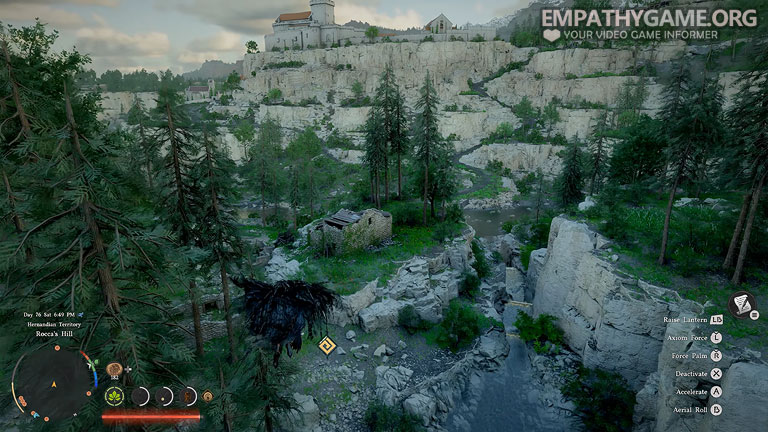
Pywel works best when a strange landmark, creature, or half-hidden entrance interrupts the planned journey. Kliff can climb, carry objects, manipulate the environment, and combine movement abilities in ways that sometimes sidestep an apparently intended puzzle solution. There is pleasure in noticing that a higher ledge or unexpected approach is possible, then discovering that the game allows it.
Yet the world is not entirely independent of its quests. Some quest-linked locations can appear empty until their associated faction objectives become active, bringing enemies, characters, or bosses into the area. Reaching them early can make promising discoveries feel oddly empty, while completing every region’s exploration before its quests may lead to less interesting return visits. Alternating free wandering with faction and story progress generally makes the world feel more responsive than treating exploration as a separate checklist.
The map can also become crowded with resources, activities, and overlapping systems. Not every diversion offers the same reward, and the opening hours provide little help in distinguishing a meaningful discovery from a minor errand. The better locations justify curiosity through their layout and surprises, not merely by granting another item.
Combat Is Deep, Physical, and Initially Overwhelming
Combat takes time to understand because Kliff’s options extend well beyond sword strikes. Shields, ranged attacks, unarmed techniques, grapples, throws, counters, aerial moves, and Abyss abilities can be linked into elaborate combinations. Early fights may feel unresponsive when the player is still learning which actions connect. With more follow-up skills and familiarity, the same controls become unexpectedly expressive.
Consider a fight against several soldiers. Kliff can stop one attack with his shield, counter the next, seize an opponent, throw him into the group, and follow with a kick or sword strike. Positioning, stamina, timing, and the opponent’s weight determine whether that sequence opens space or leaves Kliff vulnerable. The spectacle comes from making several decisions work together, not from pressing one button for a long animation.
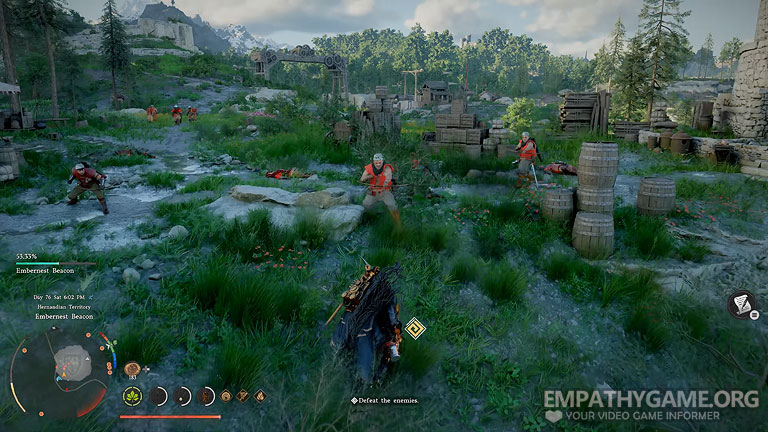
Fortress assaults test that freedom less gracefully. Archers pressure from above, melee fighters close in, and heavier enemies interrupt extended combos. When several threats converge, the camera and lock-on can become harder to manage than the attackers themselves. Pulling enemies apart and resisting a flashy follow-up is often wiser than charging into the centre. The combat’s depth is real, but it demands restraint from a system that constantly encourages showing off.
Stealth Is Useful but Not the Main Attraction
Some camps and quests support observation, quiet routes, eavesdropping, and occasional disguises. Circling behind a guarded wall or separating an outer patrol can reduce the pressure when fighting begins. Stealth therefore serves a practical purpose, but its detection and infiltration tools are not developed enough to make avoiding combat the game’s defining challenge. It works best as preparation for a confrontation rather than a complete alternative to one.
Boss Battles Test Skill, Until Progression Changes the Rules
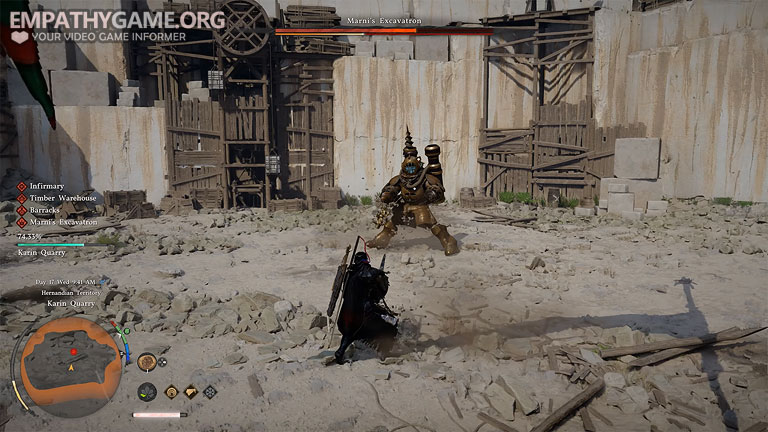
The stronger bosses force Kliff to read patterns, guard deliberately, manage stamina, and wait for safe openings. Wide attacks can make the first few attempts confusing, particularly when effects obscure the arena. Once the sequence becomes familiar, a fight that looked chaotic begins to have a clear rhythm. A successful counter feels earned because it follows an understood threat.
That process recalls Elden Ring, although the games approach it differently. Elden Ring concentrates on spacing, dodging, and tightly chosen attacks; Crimson Desert offers more grapples, aerial continuations, and destructive combinations. The shared appeal lies in recognizing an opening rather than trying to overpower every move.
There is a significant qualification to the difficulty, however. With enough healing food, blocking and repeatedly recovering health can sometimes carry a fight without consistent parry or dodge mastery, provided the boss cannot defeat Kliff outright with one attack. Extensive optional exploration creates another imbalance: highly refined weapons and stacked bonuses can leave later story bosses far less threatening than difficult enemies encountered earlier. The game offers deep combat, but its resources do not always require that depth to succeed.
Boss quality varies too. Some fights reward patience and adaptation; others lean on inflated health, awkward views, or sudden damage spikes. Rematches are valuable because they let combat-focused players experiment with different characters and approaches without repeating the entire campaign.
Progression Through Skills, Gear, and Abyss Artifacts
Growth is not based on conventional experience levels alone. Abyss Artifacts unlock skills and improve attributes such as health, stamina, and Spirit. Refining equipment and installing Abyss Gear provide another layer of investment. Early on, stamina and a few dependable combat follow-ups can transform Kliff more noticeably than another incremental weapon improvement, which makes deciding where to spend resources part of learning the game.
Skills become more interesting when basic attacks open into launchers, aerial continuations, counters, and movement options. Some techniques can be learned by observing capable characters, connecting progress to the people Kliff encounters. Damiane and Oongka later provide distinct fighting styles rather than simple visual alternatives. The Enhanced skill system’s Abyss Links also help other playable characters develop as Abyss Artifacts are invested, reducing the sense that experimenting beyond Kliff must mean abandoning his progress.
Equipment offers flexibility but not always a compelling reason to change weapons. Once ordinary weapons are heavily refined, their differences in speed, critical potential, or appearance may feel too small to alter a preferred approach. A hard-won boss reward can consequently be more interesting for its Abyss Gear than for the weapon attached to it. That is the downside of a system that allows familiar equipment to remain useful: new finds do not always feel distinctive.
The Greymane Camp and Life in Pywel
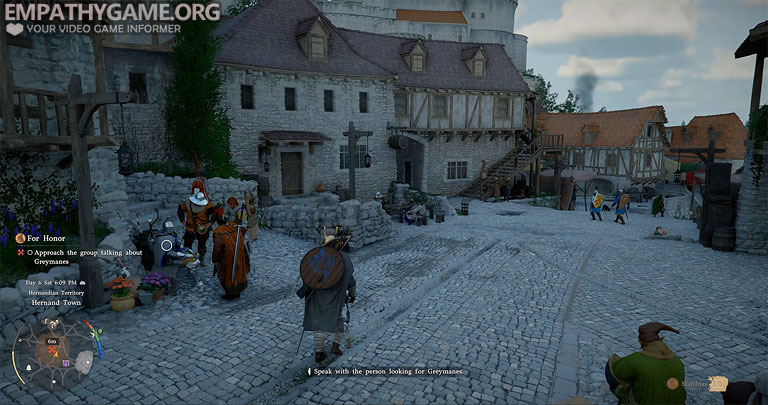
Rebuilding the Greymanes gives Kliff a place to return to and a reason to care about more than his own equipment. Recruiting comrades, dispatching members, gathering supplies, and improving the camp turn the story’s promise of restoration into visible work. It is not a particularly deep management game, but coming home after a dangerous expedition gives the adventure a welcome change of pace.
Cooking, gathering, animals, mounts, crafting, housing, and small diversions make the settlements feel occupied rather than decorative. Conversation can have a more practical role than it first appears. Around places such as Rustfield Scrapyard and Port Delesyia, some townspeople offer additional knowledge through repeated dialogue, including information about fish, recipes, and wildlife. That creates a pleasing alternative to learning everything through gathering or fishing, although the game does little to advertise the distinction between useful conversations and ordinary greetings.
The interface struggles to organise this abundance. Inventory categories, upgrade costs, map information, and less obvious controls can take too long to decipher. Several rewarding systems are easy to overlook precisely because the game explains them poorly. Pywel benefits from complexity; its menus do not always help players appreciate it.
Visuals and World Presentation
Pywel’s strongest visual achievement is its sense of continuous geography. Dense forests become grasslands, dry country, crowded towns, ruins, and snowy heights without feeling like unrelated environments. Changes in weather and light can make a familiar route worth looking at again, while distant mountains or structures invite travel for reasons beyond a quest reward.
Large battles have considerable physical impact. Soldiers collide, debris fills the air, and a well-timed counter carries real weight. Yet visual effects sometimes conceal the information needed to survive, especially when the camera is squeezed into a chaotic fight. Detailed animation and environments give the world presence, while occasional awkward transitions expose the strain of keeping so many systems moving together.
Replayability and Long-Term Appeal
Optional bosses, ruins, puzzles, undiscovered skills, alternate characters, camp development, and boss rematches provide reasons to keep exploring after the main story. Re-blockades can also return conflict to liberated areas, with options for adjusting how often those struggles recur. A familiar fight may feel different with another character or a better grasp of counters, not merely with higher damage numbers.
The separate Charting the Unknown expansion adds another layer to that long-term appeal. Sailing and underwater exploration extend the game’s habit of rewarding detours, while its individual character quests give Kliff, Oongka, and Damiane more room beyond the original finale. Garden of Trials is a more concentrated test of combat knowledge: a sequence of bosses with no food-based healing, where swapping between the three characters can matter as much as a refined weapon. Housing, relationships, and business management broaden the quieter side of Pywel too. None of this makes the underlying interface simpler, and the extra systems may be more appealing to committed explorers than to players seeking a tighter campaign.
A new journey appeals to those who want to reconsider their routes and build choices, while progress-carryover options offer another way to revisit the campaign. For others, staying in the original world makes more sense. Much of Crimson Desert‘s appeal is discovering what was missed, although the sheer quantity of content and uneven quest pacing can eventually make completion feel more dutiful than adventurous.
Final Verdict
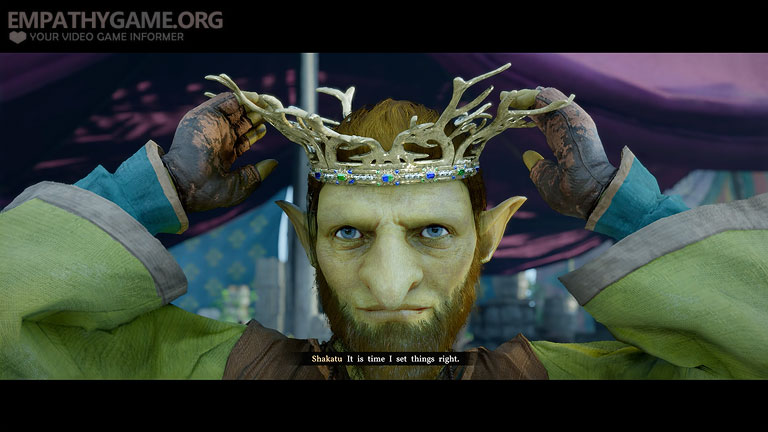
Crimson Desert is at its most convincing when an unplanned detour reveals something the main route could never have prepared you for. Its terrain invites exploration, its combat eventually becomes expressive, and even a quiet settlement can hide another system worth understanding. The same ambition creates genuine problems: uneven regional storytelling, quest-gated discoveries, crowded controls, and progression that can make challenging bosses surprisingly easy.
Players who enjoy experimenting, learning complicated mechanics, and finding their own path through a large fantasy world have plenty to appreciate. Those who prefer a tightly paced story, carefully balanced encounters, or an interface that explains itself may find Pywel exhausting. It is not an orderly adventure, but its most memorable moments come from what happens when the plan falls apart.
Crimson Desert Pros & Cons
- Pro: Enormous and visually varied fantasy world filled with settlements, ruins, hidden locations, puzzles, strongholds, wildlife, and the supernatural Abyss
- Pro: Deep physical combat with weapons, counters, wrestling-style grapples, kicks, environmental attacks, multiple characters, and demanding bosses
- Pro: Unusually broad sandbox variety through mounts, flying creatures, machines, gathering, cooking, farming, trading, housing, pets, camp upgrades, and minigames
- Pro: Exploration, Abyss Artifacts, equipment, camp development, rematches, Re-Blockades, and alternate characters support long-term progression
- Pro: Crimson Desert Enhanced adds story moments, new skills, broader voice-over and language support, and integrated improvements at no extra cost to existing owners
- Con: The main story and character development can still feel less focused than the world’s strongest discoveries and side activities
- Con: Dense menus, unusual controls, inventory rules, puzzles, and overlapping systems can overwhelm new players
- Con: Crowded fights and some bosses expose camera, lock-on, visibility, and difficulty-balancing weaknesses
- Con: Steam Deck remains Unsupported, Steam lists 180 GB of SSD space, and higher settings demand powerful hardware
Crimson Desert PC System Requirements
Important: Pearl Abyss’s published five PC performance tiers specify Windows 10 64-bit version 22H2 or newer, 16 GB RAM, 150 GB of SSD space, and the latest DirectX 12. However, the live Steam store listing now requires 180 GB of available SSD space. If installing through Steam, use the higher 180 GB figure and leave extra room for updates; the tier-by-tier figures below retain the publisher’s published specifications. These performance targets are based on internal testing and can vary with hardware, drivers, upscaling, frame generation, ray tracing, and graphics settings.
MINIMUM — Upscaled 1080p from 900p / 30 FPS
Graphics Preset: Minimum
OS: Windows 10 64-bit version 22H2 or newer
CPU: AMD Ryzen 5 2600X / Intel Core i5-8500
RAM: 16 GB
GPU: AMD Radeon RX 5500 XT / NVIDIA GeForce GTX 1060
DirectX: Latest DirectX 12
Storage: 150 GB available space
Drive: SSD required
Sound Card: Windows-compatible audio device
LOW — Native 1080p / 30 FPS
Graphics Preset: Low
OS: Windows 10 64-bit version 22H2 or newer
CPU: AMD Ryzen 5 2600X / Intel Core i5-8500
RAM: 16 GB
GPU: AMD Radeon RX 6500 XT / NVIDIA GeForce GTX 1660
DirectX: Latest DirectX 12
Storage: 150 GB available space
Drive: SSD required
Sound Card: Windows-compatible audio device
RECOMMENDED — 1080p / 60 FPS or 4K / 30 FPS
Graphics Preset: Medium
OS: Windows 10 64-bit version 22H2 or newer
CPU: AMD Ryzen 5 5600 / Intel Core i5-11600K
RAM: 16 GB
GPU: AMD Radeon RX 6700 XT / NVIDIA GeForce RTX 2080
DirectX: Latest DirectX 12
Storage: 150 GB available space
Drive: SSD required
Sound Card: Windows-compatible audio device
HIGH — 1440p / 60 FPS
Graphics Preset: High
OS: Windows 10 64-bit version 22H2 or newer
CPU: AMD Ryzen 5 7600X / Intel Core i5-12600K
RAM: 16 GB
GPU: AMD Radeon RX 7700 XT / NVIDIA GeForce RTX 4070
DirectX: Latest DirectX 12
Storage: 150 GB available space
Drive: SSD required
Sound Card: Windows-compatible audio device
ULTRA — 4K / 60 FPS
Graphics Preset: Ultra
OS: Windows 10 64-bit version 22H2 or newer
CPU: AMD Ryzen 7 7700X / Intel Core i5-13600K
RAM: 16 GB
GPU: AMD Radeon RX 9070 XT / NVIDIA GeForce RTX 5070 Ti
DirectX: Latest DirectX 12
Storage: 150 GB available space
Drive: SSD required
Sound Card: Windows-compatible audio device
Additional PC Performance and Setup Notes
- The PC version supports ray tracing plus DLSS, FSR, Intel XeSS, frame-generation options, and ray-reconstruction features on compatible hardware.
- Frame generation works best when the underlying rendered frame rate is already stable. Enabling multi-frame generation from a very low base rate can reduce responsiveness and image stability.
- If performance drops in cities, large battles, or dense landscapes, lower ray tracing, lighting, shadows, reflections, volumetric effects, and crowd-related settings before reducing texture quality.
- If crashes, missing assets, quest problems, or loading errors appear, verify installation files through the official storefront before reinstalling; Pearl Abyss also recommends keeping the game updated and checking support notices for known issues.
- Save regularly and maintain several manual saves. The default PC backup location is
C:\Users\[Username]\AppData\Local\Pearl Abyss\CD\save.
Official Trailer
Note: Pearl Abyss’s official launch trailer presents Kliff, Oongka, Damiane, Pywel’s open world, large bosses, dragon combat, machines, traversal, and the game’s mixture of grounded and supernatural action.
Frequently Asked Questions
What is Crimson Desert Enhanced, and do existing owners need to buy it again?
Crimson Desert Enhanced is the free upgraded version of the original single-player game. Existing owners receive its additional story moments, skills, voice-over languages, and integrated improvements through the game update without purchasing the base game again.
Which Crimson Desert edition should I buy?
The base edition contains the complete original main campaign. The Enhanced Deluxe Edition adds the Kairos Plate Set, Balgran Shield, and Exclaire Horse Tack Set through its Deluxe Pack; base-game owners can also purchase that pack separately. The paid Charting the Unknown expansion is not included with either edition, so buy it separately if you want its content.
What does Charting the Unknown add, and when can I access it?
The paid expansion adds ocean voyages, diving, new islands and underwater treasures, extra storylines for Kliff, Oongka, and Damiane, expanded housing, relationships, business management, and the Garden of Trials boss challenge. Its ocean storyline opens after the relevant Howling Hill story progress and Greymane Camp development. The three character stories and Garden of Trials require completing the main story. You need the expansion installed and the correct content prerequisites completed.
Is Crimson Desert included with Game Pass, or can I play it through cloud gaming?
It is not a Game Pass catalogue entitlement. Xbox Cloud Gaming supports an owned Microsoft/Xbox copy with an eligible Game Pass membership; Xbox Play Anywhere also covers Windows PC and Xbox Series X|S under an eligible Microsoft digital purchase. GeForce NOW is another supported cloud route with ownership through a compatible storefront, supported region, and suitable plan.
Is Crimson Desert connected to Black Desert Online or an MMO?
Pearl Abyss made both games, but Crimson Desert is a standalone single-player open-world action-adventure. It is not an MMO or a sequel to Black Desert Online, and it has no official online PvP, campaign co-op, or split-screen multiplayer.
Who are the playable characters, and how open is Pywel?
Kliff is the main protagonist, while Oongka and Damiane become playable later. Pywel offers cities, wilderness, ruins, strongholds, puzzles, side activities, and the supernatural Abyss, with freedom to leave the main quest for exploration.
Can I change Crimson Desert’s difficulty?
Yes. Easy, Normal, and Hard settings are available under Settings > Play. Easy reduces incoming damage, lowers enemy pressure, and widens parry and dodge timing windows; Hard makes combat more demanding. New players can learn the control combinations at a lower difficulty before increasing the challenge.
How do Abyss Artifacts and combat progression work?
Combat combines weapon attacks, parries, dodges, grapples, throws, aerial moves, and character-specific skills. Abyss Artifacts unlock or improve abilities and core attributes, while equipment refinement, Abyss Gear, and techniques learned through exploration provide additional progression paths.
What are Greymane Camp, boss Rematches, and Re-Blockades?
Greymane Camp supports storage, resource management, companions, and faction development. Boss Rematches let you revisit defeated opponents and experiment with different tactics. Re-Blockades can bring hostile forces back to liberated strongholds, with a setting to control how often those conflicts recur.
How does Crimson Desert cross-save work?
Link supported PlayStation, Xbox, Steam, Epic Games Store, and Mac accounts through a Pearl Abyss ID, then manually upload progress to the shared cross-save slot before changing platforms. Each platform requires its own game ownership, and paid content does not transfer as a purchase. A save created with Charting the Unknown installed cannot be loaded or transferred to a game installation that lacks the DLC.
Can Crimson Desert be played offline?
Steam compatibility information indicates that an internet connection is required for first-time setup, but the single-player campaign can be played offline afterward. Cross-save, cloud synchronization, storefront services, and updates require a connection.
Are keyboard and mouse and controllers supported on PC?
Yes. Crimson Desert supports keyboard-and-mouse and controller input, with control presets and remapping options. Exact prompts and platform-specific features can differ by controller and storefront.
Does Crimson Desert run well on Steam Deck or Windows handhelds?
Valve rates Crimson Desert as Unsupported: SteamOS can launch it, but the available graphics settings do not meet Valve’s performance target for Steam Deck. Pearl Abyss separately publishes performance guidance for ROG Xbox Ally handhelds.
How much SSD space and PC hardware does Crimson Desert need?
The published minimum CPU and GPU are a Ryzen 5 2600X or Core i5-8500 and RX 5500 XT or GTX 1060, with 16 GB RAM and DirectX 12. Pearl Abyss’s published tier chart lists 150 GB of SSD space, but the live Steam listing specifies 180 GB; Steam buyers should plan for at least 180 GB plus update headroom. See the full tier breakdown above before choosing graphics settings.
Does Crimson Desert support ray tracing, DLSS, FSR, and XeSS?
Yes. The PC version offers ray tracing and compatible DLSS, AMD FSR, and Intel XeSS technologies, with supported frame-generation and ray-reconstruction options varying by graphics hardware.
Why does Crimson Desert crash, stutter, or display graphical errors?
Verify game files through your official storefront, update the game and graphics driver, and test without conflicting overlays or unstable overclocks. For persistent issues, check Pearl Abyss support and back up saves before a clean reinstall.
Are Crimson Desert mods available, and where are saves stored on Windows?
Nexus Mods for Crimson Desert hosts unofficial camera, interface, map, visual, and gameplay modifications; no official mod tools or Steam Workshop support are listed. Back up the default Windows save directory, C:\Users\[Username]\AppData\Local\Pearl Abyss\CD\save, before experimenting with mods.
What are the main frustrations with Crimson Desert?
Common criticisms concern dense menus, a crowded inventory and progression interface, unusual controls, uneven storytelling, and awkward camera behavior in large encounters. Its large sandbox is most appealing to players who tolerate a learning curve and enjoy discovering systems independently.
Still have questions? Check the Crimson Desert community on Reddit, Steam Discussions, and official Pearl Abyss Crimson Desert support.
Sources & References
Key factual and technical information in this guide was checked against official developer, storefront, and reception sources, including:
- Pearl Abyss — Crimson Desert Enhanced Update — the free upgrade, new story moments, language support, and included base-game improvements.
- Pearl Abyss — Charting the Unknown DLC Details and Mac DLC support notice — expansion content, prerequisites, DLC-save compatibility, and Mac availability.
- Steam — Crimson Desert Enhanced and Charting the Unknown DLC — release, game and DLC ownership, edition contents, hardware requirements, Steam reception, DRM, and Deck status.
- Xbox — Crimson Desert Enhanced and Charting the Unknown — Microsoft PC access, Xbox Play Anywhere, cloud ownership rules, and separate DLC purchase.
- Pearl Abyss — PC and Handheld Performance Specifications — the publisher’s five PC graphics tiers and handheld performance guidance, compared with Steam’s 180 GB storage listing.
- Pearl Abyss — Cross-Save Account Linking and Mac cross-save notice — manual cross-save, platform linking, and supported Mac builds.
- Metacritic — Crimson Desert PC Critic Reviews — the platform-specific PC Metascore.
Similar Games Like Crimson Desert
- Dragon’s Dogma 2
- The Witcher 3: Wild Hunt
- Elden Ring
- God of War (2022)
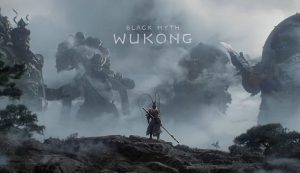
- Black Myth: Wukong
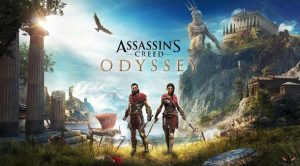
- Assassin’s Creed Odyssey


Found something worth playing through DecideGame?
DecideGame.com is an independent gaming project run by Editor Zero. If this guide helped you discover a game, solve a problem, or find useful information, you can support DecideGame.com and help keep new and updated game guides coming.
DecideGame — PC Game Guides, Reviews & Setup Help