
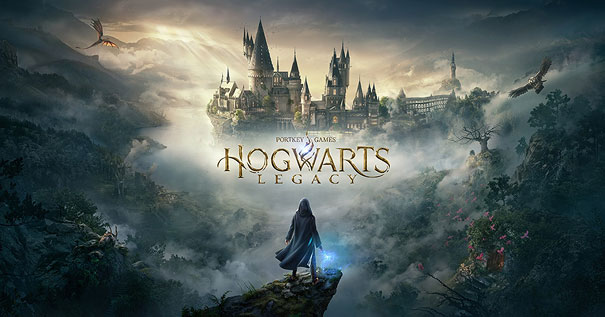
📅 Game released: 2023
Hogwarts Legacy is a single-player open-world action RPG that invites a new fifth-year student to explore Hogwarts, master spell combat, and uncover an ancient-magic mystery. This PC guide explains official Steam, Epic Games Store, and Microsoft/Xbox purchase and download options, Game Pass access, Dark Arts editions, supported mods and the Creator Kit, system requirements, Steam Deck compatibility, and practical setup advice.
 By Editor Zero — independently researched, edited, and maintained.
Last updated: 12 November 2026
Last reviewed: 12 November 2026
Table of Contents
- Quick Facts
- Official PC Stores, Download & Installation
- Hogwarts Legacy Review
- Pros & Cons
- PC System Requirements
- Frequently Asked Questions
- Similar Games
Hogwarts Legacy Quick Facts
- Game: Hogwarts Legacy / Hogwarts Legacy: Digital Deluxe Edition
- Developer: Avalanche Software
- Publisher: Warner Bros. Games
- Genre: Action RPG, Open World, RPG, Fantasy
- Release: February 10, 2023
- Platforms: Windows PC, PS5, PS4, Xbox Series X|S, Xbox One, Nintendo Switch, Nintendo Switch 2
- Modes: Single-player; no official co-op or PvP
- Editions: Standard and Digital Deluxe; Dark Arts Pack also available separately
- Cloud access: Xbox Cloud Gaming through eligible Game Pass access or qualifying owned-game streaming, depending on plan and region
- Steam Deck: Verified; first-time setup requires internet access
- Engine: Unreal Engine 4
- Community: Steam Discussions, Hogwarts Legacy Reddit community
- PC modding: CurseForge official-mod catalog and Nexus Mods; the supported in-game mod browser is for Steam and Epic Games Store
- Metacritic score: 83/100 on PC
- IGN score: 9/10 for the original multiplatform release
- OpenCritic average: 84/100
- Steam user reception: Very Positive overall
Official PC Stores, Download & Installation
👇 Compare the official PC ownership, subscription, and installation options before choosing where to play Hogwarts Legacy.
- Steam: The Windows version supports Steam achievements, Steam Cloud, controller support, and Steam Family Sharing. Steam lists Denuvo Anti-Tamper.
- Epic Games Store: Epic sells the Windows version with achievements and cloud saves; its free Hogwarts Legacy Creator Kit is a separate tool, not a second copy of the game.
- Microsoft / Xbox PC: The Microsoft digital edition supports Windows PC, Xbox achievements and cloud saves, and Xbox Play Anywhere across compatible Xbox consoles and PCs.
- Game Pass: Hogwarts Legacy is listed in PC Game Pass and applicable Xbox Game Pass plans. Availability and benefits depend on the subscribed plan and region; subscription access does not grant permanent ownership.
- Xbox Cloud Gaming: The Xbox listing supports streaming through eligible Game Pass plans and, for qualifying plans, owned-game streaming. A stable internet connection, supported region, and compatible device are required.
- Separate libraries: Steam, Epic, and Microsoft/Xbox purchases are separate entitlements. Xbox Play Anywhere does not turn a Steam or Epic purchase into an Xbox license, and saves do not automatically cross between these store ecosystems.
- Standard Edition: Includes the full story and permanently added free features, including the Haunted Hogsmeade Shop quest, Photo Mode, Talent Resets, mounts, brooms, and cosmetics.
- Digital Deluxe: Includes the base game, the Dark Arts Pack, and the Dark Arts Garrison Hat. The Dark Arts Pack adds a Thestral Mount, Dark Arts Cosmetic Set, and Dark Arts Battle Arena; Standard owners can buy that pack separately.
- Official mods: The supported in-game Play Mods menu works with the Steam and Epic Games Store PC versions, not the Microsoft/Xbox PC edition or console versions. It requires a linked Warner Bros. Games Account.
- Mod saves: Enable mods through the game’s mod browser and keep an untouched save when possible. Achievements are disabled in Mod Enabled saves; downloading and enabling official mods requires online access.
- Creator Kit: The free, separate tool is distributed via Epic Games Store and creates supported content such as quests, dungeons, and cosmetic changes. Publishing mods requires the appropriate Epic, Warner Bros. Games, and CurseForge accounts.
- Steam Deck and offline play: Valve rates the Steam version Verified and notes that first-time setup needs an internet connection. The base single-player campaign does not require a constant online connection after setup; online features and cloud synchronization do.

 Buy Hogwarts Legacy on Epic Games Store
 Buy or Play Hogwarts Legacy on Microsoft / Xbox Store
Get the Hogwarts Legacy Creator Kit on Epic Games Store
Hogwarts Legacy Review
A richly imagined Hogwarts makes familiar open-world systems feel magical, until routine takes over.
Hogwarts Legacy is at its best when there is no urgent reason to leave the castle. A corridor leads to a classroom, a portrait interrupts the silence, and a staircase or half-hidden doorway invites another detour. The place feels worth exploring before the game offers a reward for doing so. That is an important distinction: this is not merely an action RPG decorated with familiar Wizarding World imagery. At its strongest, the setting changes how an ordinary walk between objectives feels.
Set in the 1800s, the adventure follows a new fifth-year student whose unusual connection to ancient magic draws them into a larger conflict. Beyond the main mystery lie spell duels, classes, broom travel, creature care, crafting, and a broad stretch of Scottish Highlands. Some of those systems support the school fantasy beautifully. Others reveal how conventional the open-world structure beneath it can be.
Game World and Immersion
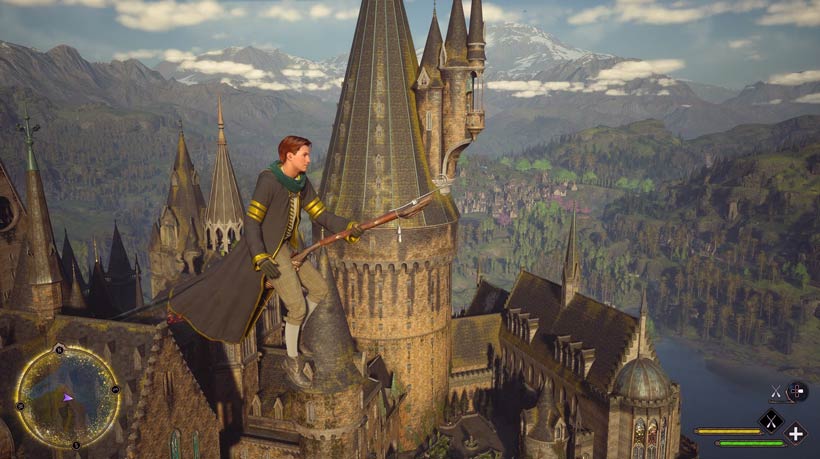
Hogwarts is the game’s finest achievement. Common rooms, moving portraits, classroom displays, suits of armor, puzzle doors, and hidden passages give the castle an identity beyond its role as a quest hub. Following a marker is often less interesting than noticing something off the route. A locked door suggests a place to revisit; an unfamiliar statue or floating Field Guide page turns a corridor into a question. Getting lost here feels less like wasted time and more like an appropriate part of being a new student.
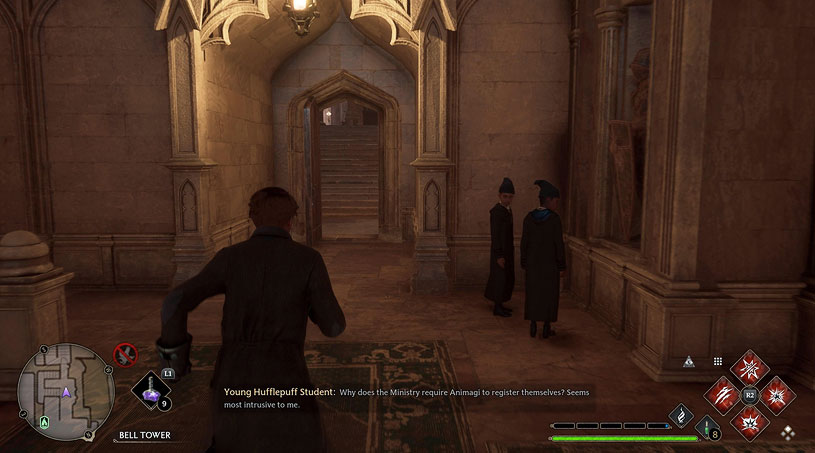
Yet the detail is stronger than the simulation. Students fill the hallways during the day, but the illusion becomes thinner when visiting dormitories at night and finding empty beds rather than classmates following believable routines. Classes also serve primarily to introduce characters and spells, not to sustain a school timetable. Hogwarts convincingly resembles a living institution without consistently behaving like one. For someone hoping to role-play everyday student life, that difference matters.
Hogsmeade offers a pleasant change of scale. Its shops and narrow streets feel like a natural place to gather supplies before returning to the Highlands. The first broom journeys over the castle make the surrounding landscape feel connected, although there is a gap between enjoyable free flight and precise racing. Timed courses demand small altitude and directional corrections that can feel awkward with keyboard inputs, particularly when several controls must be coordinated at once. Travel is more liberating when there is room to take a wide turn.
Discovering secrets has its own contradiction. Revelio encourages curiosity by exposing otherwise easy-to-miss objects, but its bell-like indication of a nearby Field Guide page does not always make the page easy to locate. A search can become repeated spellcasting and backtracking instead of careful observation. The castle is interesting enough to reward wandering without constant scanning, which makes this friction especially noticeable.
For a fantasy world that allows more unscripted role-playing, The Elder Scrolls IV: Oblivion offers a looser kind of freedom. Hogwarts Legacy is more directed and cinematic. Its appeal lies less in deciding who to become within a simulated society than in seeing a distinctive fictional place realized at this scale.
Mechanics and Gameplay Loop
The daily rhythm gradually expands from lessons and story assignments into exploration, combat, resource gathering, and personal preparation. Learning Accio, Levioso, Incendio, Reparo, or Disillusionment is satisfying partly because those spells have uses beyond the classroom. A newly learned ability may solve an environmental puzzle or open another approach to an encounter. Progression works best when an apparent school exercise becomes a practical tool.
The Room of Requirement gives these activities a useful center. Players can identify gear, improve equipment, brew potions, cultivate plants, decorate rooms, and eventually care for rescued beasts inside vivariums. Preparing supplies before a demanding quest adds a deliberate pause to an otherwise action-oriented adventure. The room also develops visually, so its growth reflects more than a row of upgrades on a menu.
Not every activity receives the same attention. A class may unlock an important spell yet offer little ongoing classroom life, while a small environmental puzzle can feel more integrated into the fiction than another task placed on the world map. The game has plenty to do; the more interesting question is how often those activities make sense as part of a student’s journey.
Combat, Spells, and Enemy Encounters
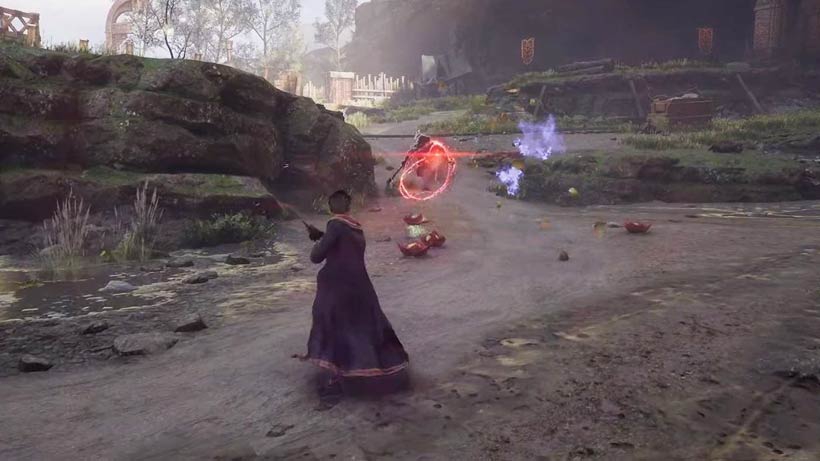
Combat is more energetic and deliberate than the setting might initially suggest. Basic casts provide constant pressure, while color-coded shields encourage switching between Control, Force, and Damage spells. Protego and Stupefy reward reading incoming attacks, and dodging becomes essential when a troll, spider, goblin, or dark wizard threatens from another angle. The pleasure comes from making several decisions quickly rather than relying on one powerful spell.
A useful sequence might pull one opponent closer with Accio, suspend another with Levioso, counter a distant attack, and finish a dangerous target with ancient magic. Mixed encounters become more interesting because the correct response keeps changing. A poacher camp can begin with stealth and end in a noisy duel; a troll among smaller enemies demands attention to positioning rather than simply hitting the largest health bar.
There is more depth in enemy behavior than shield colors alone suggest. Timing Flipendo around a troll’s club attack can turn its own weapon against it. Catching a dugbog at the moment its tongue is exposed, then following with Diffindo, rewards recognizing a particular vulnerability. Discoveries like these make spells feel like tools with situational uses, not just interchangeable damage effects. They also give experienced players a reason to look closely at attack animations instead of repeating a familiar combo.
The limits appear once effective routines become established. Enemy varieties recur, and it can be easier to repeat the same reliable chain than to explore everything in the spellbook. Swapping between combat loadouts and utility spells also interrupts the flow, particularly when a puzzle requires an ability left off the active set. The strongest encounters are the ones that demand adaptation rather than allowing the entire fight to run on habit.
For players who value morally complicated quests more than the immediate spectacle of spell dueling, The Witcher 3: Wild Hunt offers a useful contrast. Its strengths lie in consequences and character writing. Hogwarts Legacy is more interested in making the act of casting magic entertaining from one encounter to the next.
Story and Characters
The ancient magic mystery gives the protagonist an unusual place at Hogwarts, while the goblin rebellion supplies the larger conflict. The premise is intriguing, but the main storyline does not always make its stakes feel as personal as the setting does. Its central character is intentionally adaptable, which leaves room for choosing a house, appearance, and dialogue responses but can also make their personality feel unusually settled for a student entering a strange world.
The relationship quests provide sharper character motivations. Sebastian Sallow’s story explores desperation, loyalty, and the temptation to use forbidden magic for apparently compassionate ends. Poppy Sweeting’s concern for magical creatures gives beast rescue a human reason beyond collecting animals for a vivarium. These smaller threads are more convincing when they give familiar activities emotional context.
There is a revealing disconnect, though, between Sebastian’s moral struggle and the wider combat systems. The Unforgivable Curses carry considerable narrative weight, yet using them around other characters generally has limited lasting social consequences. Companions may react in the moment without changing how the wider world treats the protagonist. The story asks difficult questions about dark magic; the RPG systems are less willing to hold players to their answers.
Not every notable side quest relies on conversation. The Haunted Hogsmeade Shop adventure changes the tone through shifting interior spaces, unsettling mannequins, and a sense that the room itself cannot be trusted. Without needing to reveal its surprises, it shows how imaginative staging can make an optional quest memorable. It also makes the surrounding routine of clearing camps and opening treasure chests look much less inventive by comparison.
Progression, Gear, and Customization
Talents improve spell effects, stealth, core combat abilities, and the usefulness of plants and potions. The choices are approachable rather than intricate, but they can meaningfully change the rhythm of a fight. Disillusionment and Petrificus Totalus encourage quieter routes; curse-focused abilities reward chaining effects; combat plants can relieve pressure when several enemies close in. The system supports different habits without requiring elaborate build planning.
Consumables are particularly easy to overlook. Wiggenweld Potions provide recovery, Edurus improves survival, and Chinese Chomping Cabbages or Venomous Tentacula can change a crowded battle. Preparing them in the Room of Requirement gives gardening and potion brewing a tangible purpose, although ordinary difficulty and familiar encounters do not always make that preparation necessary.
Equipment is less satisfying. Appearance customization is generous because gear can retain a preferred look while stronger items are equipped. The underlying loot economy, however, relies heavily on statistical replacements. Chest rewards generally track character progression, so an exciting-looking discovery may soon be surpassed by an ordinary item found later. Treasure hunting can start to feel like sorting temporary numbers rather than finding something with a lasting identity. Traits and upgrades offer some ownership over equipment, but they do not entirely solve that problem.
Dragon’s Dogma 2 provides a different kind of fantasy-combat appeal, with dangerous travel and a stronger emphasis on vocation-based fighting styles. Hogwarts is gentler about letting the player experiment. The trade-off is a progression system that rarely asks for the same degree of commitment to a particular approach.
Repetitiveness and Open-World Bloat
The contrast between Hogwarts and the wider Highlands grows clearer with time. Within the castle, a hidden room can feel like a discovery. Across the landscape, another Merlin Trial, treasure vault, camp, or beast den may feel like a familiar icon asking to be cleared. The locations remain attractive, but their activities do not always develop alongside the player’s growing collection of spells.
Alohomora illustrates the issue in miniature. Unlocking higher levels of the spell does not remove the repeated manual lockpicking sequence from easier doors. When several locks sit close together, exploration keeps stopping for the same small interaction. A magical unlocking ability ought to make a student feel more capable; here, greater mastery does surprisingly little to reduce the busywork.
Merlin Trials also lose some appeal through repetition, while routine loot and familiar enemy camps offer diminishing rewards. This does not mean the world should be smaller simply for the sake of it. The stronger criticism is that its best spaces invite curiosity, but its checklist activities often reward persistence more than discovery. Alternating major quests, meaningful side stories, and occasional wandering produces a better pace than trying to clear every marker.
Replayability and Long-Term Appeal
A different Hogwarts house brings another common room, some dialogue variations, and a notable house-specific quest variation, but the larger story remains substantially the same. Similarly, adopting stealth, combat plants, direct spell damage, or a curse-heavy build can change how encounters are approached without creating an entirely new campaign. Replayability comes more from enjoying the setting and experimenting with its systems than from radically different narrative outcomes.
Completionists have plenty to pursue: Field Guide pages, broom challenges, beast collections, gear appearances, side quests, Merlin Trials, and treasure vaults. Whether those pursuits remain enjoyable depends on how much satisfaction comes from filling in the map. The most rewarding reason to return may be simpler: wandering through Hogwarts again, noticing what was missed, and taking a different route through a place whose atmosphere remains stronger than its checklists.
Final Verdict
Hogwarts Legacy understands the attraction of its setting unusually well. The castle rewards unhurried exploration, spell combat combines spectacle with satisfying tactical details, and the Room of Requirement connects character growth to a place that feels personally yours. Sebastian’s story and the more inventive side quests also suggest how much stronger the adventure becomes when its mechanics and fiction reinforce each other.
Its weaknesses are not trivial. The school rarely behaves like a fully simulated school, forbidden magic has limited wider consequences, loot loses meaning quickly, and the Highlands repeat activities long after the sense of discovery has faded. Players looking for deep role-playing choices or consistently original quests may feel those limits keenly. For those drawn to the particular pleasure of studying spells, exploring secret corridors, tending magical creatures, and flying beyond the castle walls, however, the world remains compelling even when the open-world formula is plain to see.
Hogwarts Legacy Pros & Cons
- Pro: Hogwarts, Hogsmeade, the Forbidden Forest, and small environmental details convincingly recreate the Wizarding World
- Pro: Spell combinations, Protego/Stupefy timing, shields, plants, potions, and Ancient Magic make combat engaging
- Pro: Room of Requirement, broom flight, beasts, talents, and gear customization give progression variety
- Pro: Memorable relationship quests and several distinct ways to approach combat or exploration
- Con: Main-story writing is less compelling than the castle and strongest character questlines
- Con: Merlin Trials, treasure vaults, camps, and collectible activities can become repetitive
- Con: Some spell-loadout and utility-spell switching creates friction during exploration
- Con: PC performance can vary in dense areas, especially with demanding ray-tracing settings
Hogwarts Legacy PC System Requirements
MINIMUM / LOW — 720p / 30 FPS, LOW SETTINGS:
OS: 64-bit Windows 10
CPU: Intel Core i5-6600 (3.3 GHz) / AMD Ryzen 5 1400 (3.2 GHz)
RAM: 16 GB
GPU: NVIDIA GeForce GTX 960 4 GB / AMD Radeon RX 470 4 GB
DirectX: Version 12
Storage: 85 GB HDD
Notes: SSD preferred; HDD supported
RECOMMENDED / HIGH — 1080p / 60 FPS, HIGH SETTINGS:
OS: 64-bit Windows 10
CPU: Intel Core i7-8700 (3.2 GHz) / AMD Ryzen 5 3600 (3.6 GHz)
RAM: 16 GB
GPU: NVIDIA GeForce GTX 1080 Ti / AMD Radeon RX 5700 XT / Intel Arc A770
DirectX: Version 12
Storage: 85 GB SSD
Notes: SSD, 1080p / 60 FPS, High Quality Settings
ULTRA — 1440p / 60 FPS, ULTRA SETTINGS:
OS: 64-bit Windows 10
CPU: Intel Core i7-10700K (3.80 GHz) / AMD Ryzen 7 5800X (3.80 GHz)
RAM: 32 GB
GPU: NVIDIA GeForce RTX 2080 Ti / AMD Radeon RX 6800 XT
DirectX: Version 12
Storage: 85 GB SSD
Notes: SSD, 1440p / 60 FPS, Ultra Quality Settings
ULTRA 4K — 2160p / 60 FPS, ULTRA SETTINGS:
OS: 64-bit Windows 10
CPU: Intel Core i7-10700K (3.80 GHz) / AMD Ryzen 7 5800X (3.80 GHz)
RAM: 32 GB
GPU: NVIDIA GeForce RTX 3090 Ti / AMD Radeon RX 7900 XT
DirectX: Version 12
Storage: 85 GB SSD
Notes: SSD, 2160p / 60 FPS, Ultra Quality Settings
Hogwarts Legacy Creator Kit PC Requirements
CREATOR KIT MINIMUM:
OS: 64-bit Windows 10
CPU: Intel Core i7-10700K (3.80 GHz) / AMD Ryzen 7 5800X (3.80 GHz)
RAM: 32 GB
GPU: NVIDIA GeForce RTX 2080 Ti / AMD Radeon RX 6800 XT
DirectX: Version 12
Storage: 450 GB SSD
Notes: Epic login required; English-only support; Warner Bros. Games / CurseForge account required for upload
CREATOR KIT RECOMMENDED:
OS: 64-bit Windows 10
CPU: Intel Core i7-10700K (3.80 GHz) / AMD Ryzen 7 5800X (3.80 GHz)
RAM: 64 GB
GPU: NVIDIA GeForce RTX 3090 Ti / AMD Radeon RX 7900 XT
DirectX: Version 12
Storage: 600 GB SSD
Notes: Epic login required; English-only support; Warner Bros. Games / CurseForge account required for upload
Additional PC Performance and Setup Notes
- Graphics setup: Use the built-in benchmark as a starting point, then adjust individual settings and a frame-rate limit to fit your hardware.
- DirectX: The PC version requires DirectX 12; forcing DirectX 11 is not an officially supported solution for startup or performance problems.
- Ray tracing and upscaling: The game supports ray-traced effects, NVIDIA DLSS, AMD FSR, Intel XeSS, and compatible frame-generation options. NVIDIA DLSS 5 Neural Rendering is available on supported GeForce RTX 50-series hardware; Intel XeSS Multi-Frame Generation is also supported on compatible hardware. Check the GPU vendor’s requirements before enabling advanced options.
- Performance troubleshooting: If you see frame-time spikes, first test without ray tracing, lower texture quality or view distance when VRAM or CPU-limited, and avoid stacking unverified config changes.
- Store requirement differences: Steam’s published minimum targets 720p at 30 FPS on Low settings; Epic’s minimum PC listing describes a higher 1080p upscaled target. Compare the target settings rather than assuming those two minimum GPU lists are identical.
- Save safety: Keep a separate backup of important saves before experimenting with manual mods or configuration-file edits. If the game crashes after mod changes, disable the mods and verify the clean game files through the appropriate launcher.
Official Trailer
Note: Warner Bros. Games’ official launch trailer presents Hogwarts, spell combat, magical creatures, broom flight, the open world, and the central ancient-magic mystery, while the written guide adds current PC storefronts, official mods, Creator Kit requirements, Steam Deck support, system requirements, and setup guidance.
Frequently Asked Questions
Is Hogwarts Legacy connected to the Harry Potter story?
It takes place in the same Wizarding World during the 1800s, well before Harry’s adventures. Hogwarts, its houses, creatures, and magical traditions are familiar, but the main storyline follows a different student and cast.
Is Hogwarts Legacy included with Game Pass?
The Microsoft/Xbox listing includes PC Game Pass and applicable Xbox Game Pass access, subject to your plan and country. A subscription lets you play while the game remains available under that plan; it is not a permanent purchase.
Does buying Hogwarts Legacy on Xbox also give me the PC version?
An eligible Microsoft digital purchase supports Xbox Play Anywhere, including compatible Xbox consoles and Windows PCs under the same account. A Steam or Epic Games Store purchase does not confer that Microsoft license.
Can I move my save between Steam, Epic, and Xbox?
Xbox Play Anywhere synchronizes supported saves within the Microsoft/Xbox ecosystem. Steam Cloud and Epic cloud saves use their own store systems; the game does not advertise automatic cross-store save syncing among all three PC editions. Back up local saves before attempting any manual migration.
Is the Standard Edition enough, or should I buy Digital Deluxe?
Standard includes the complete base adventure and permanent free additions. Digital Deluxe mainly adds the Dark Arts Pack and Dark Arts Garrison Hat, so choose it if those themed extras matter to you. Standard owners can purchase the Dark Arts Pack separately.
Is the Haunted Hogsmeade Shop quest available without Deluxe?
Yes. The Haunted Hogsmeade Shop quest is included in updated base-game editions. It adds a distinctive quest and dungeon, the Shopkeeper’s Cosmetic Set, and access to an in-game shop.
Can I use official mods with the Microsoft Store version?
The supported in-game mod system is for the Steam and Epic Games Store PC editions. Warner Bros. Games does not list the Microsoft/Xbox PC version or consoles as supported for this system.
How do I install official Hogwarts Legacy mods?
Link your Steam or Epic account to a Warner Bros. Games Account, then choose Play Mods from the main menu. Browse, install, and enable supported mods for a selected save. The official browser requires online access; you do not need the separate Creator Kit just to play mods.
Do Hogwarts Legacy mods disable achievements?
Achievements are disabled while a Mod Enabled save is being played. Keep a separate unmodded save if you want to earn achievements without mod-related restrictions.
Does choosing a Hogwarts house change the story?
Your common room, some conversations, and a house-specific quest route change. The main adventure and central story remain largely shared among Gryffindor, Slytherin, Ravenclaw, and Hufflepuff. You cannot switch houses after confirming your choice on that character; start a new character to try another house.
Can you visit Azkaban?
Yes, but the visit belongs to a short Hufflepuff-specific quest route rather than being a freely explorable prison for every house.
Can you learn all three Unforgivable Curses?
Crucio, Imperio, and Avada Kedavra are associated with Sebastian Sallow’s relationship quests. Learning them is optional, and some dialogue decisions affect whether you receive the chance to learn each spell during the relevant quest.
Can Hogwarts Legacy talents be reset?
Yes. Talent Resets let you reassign invested talent points, making it easier to experiment with combat, stealth, and Room of Requirement-focused builds.
Is Quidditch playable in Hogwarts Legacy?
No. Broom flight, broom upgrades, and flying challenges are available, but the game does not feature playable Quidditch matches.
Does Hogwarts Legacy support multiplayer or co-op?
No. The campaign is single-player, without official online co-op, local split-screen, PvP, or shared-world multiplayer.
Does Hogwarts Legacy have romance options?
No formal dating or romance system is part of the game. Relationships develop through friendships, dialogue, and character questlines rather than romantic routes.
Does Hogwarts Legacy have New Game Plus?
There is no built-in New Game Plus mode that carries a completed character’s level and equipment into another full campaign. A fresh character starts progression again, although you can explore remaining content with a completed save.
Why does Hogwarts Legacy sometimes stutter on PC?
Frame-time spikes can be linked to shader loading, asset streaming, demanding ray tracing, high VRAM use, CPU pressure, or mod conflicts. Begin with the built-in benchmark, try disabling ray tracing, reduce expensive settings, and test without mods before making deeper changes.
Is Hogwarts Legacy Steam Deck Verified?
Yes. Valve marks it Verified and says its default controls, button prompts, text, and graphics configuration meet Deck criteria. An internet connection is needed for first-time setup, and a Verified badge does not guarantee a particular frame rate in every location.
Can I play Hogwarts Legacy offline?
The base single-player campaign does not require a constant internet connection after initial setup and activation. Downloading official mods, syncing cloud saves, using Game Pass/cloud access, and certain account services require internet access.
Does Hogwarts Legacy support controllers on PC?
Yes. It supports a controller as well as mouse and keyboard. A gamepad may feel more natural for broom flight and general movement, while mouse aiming can be useful for combat and camera control.
Still have questions? Check the official Portkey Games Support hub, Steam Discussions, and the Hogwarts Legacy community on Reddit.
Sources & References
Key platform, ownership, modding, and PC requirements information in this guide was checked against:
- Hogwarts Legacy on Steam — official Windows requirements, Steam features, reception, and permanent included additions
- Hogwarts Legacy on Microsoft/Xbox — Xbox Play Anywhere, Windows support, cloud capabilities, Game Pass availability, and editions
- Portkey Games: Official Mods FAQ — supported storefronts, linked accounts, modded saves, and achievement restrictions
- Portkey Games: Creator Kit Requirements — creator-tool hardware, SSD space, and account requirements
- Warner Bros. Games: Nintendo Switch 2 Release — verification of the additional native platform
- Hogwarts Legacy: Official PC Specifications — minimum, recommended, Ultra and 4K hardware specifications
- Metacritic: Hogwarts Legacy PC Reviews — PC Metascore and version-correct critical reception
- Portkey Games: PC Display Feature Support — confirmation of DLSS 5 Neural Rendering, Intel XeSS Multi-Frame Generation, and additional handheld-device support
Similar Games Like Hogwarts Legacy
- Harry Potter and the Prisoner of Azkaban
- Harry Potter and the Chamber of Secrets
- Harry Potter and the Philosopher’s Stone
- The Elder Scrolls V: Skyrim
- The Witcher 3: Wild Hunt
- The Legend of Zelda: Breath of the Wild




Found something worth playing through DecideGame?
DecideGame.com is an independent gaming project run by Editor Zero. If this guide helped you discover a game, solve a problem, or find useful information, you can support DecideGame.com and help keep new and updated game guides coming.
DecideGame — PC Game Guides, Reviews & Setup Help