
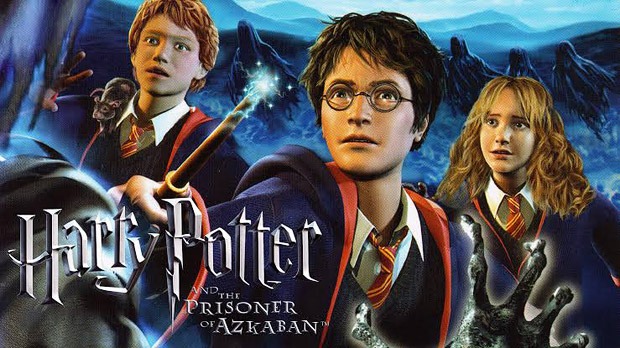
📅 Game released: 2004
Use this updated 2026 Harry Potter and the Prisoner of Azkaban PC guide to check official download availability, understand original retail ownership, review Windows 10/11 compatibility and setup considerations, compare the different 2004 game versions, and check historical system requirements before returning to Hogwarts.
 By Editor Zero — independently researched, edited, and maintained.
Last updated: 8 October 2026
Last reviewed: 8 October 2026
Table of Contents
- Quick Summary
- Quick Facts
- Official PC Stores, Download & Installation
- Harry Potter and the Prisoner of Azkaban Review
- Pros & Cons
- PC System Requirements
- Frequently Asked Questions
- Similar Games
Harry Potter and the Prisoner of Azkaban Quick Summary
✔ Fantasy action-adventure set during Harry’s third year at Hogwarts, where Harry, Ron, and Hermione explore the castle, learn spells, solve environmental puzzles, confront magical creatures, and investigate the apparent threat posed by escaped prisoner Sirius Black.
✔ The Windows version is a distinct KnowWonder-developed adventure rather than a port of the PS2, Xbox, or GameCube game. Its classroom challenges, level layouts, puzzles, progression, and exploration differ substantially from the console adaptations.
✔ Similar to Harry Potter and the Chamber of Secrets through its third-person spellcasting, Hogwarts exploration, hidden passages, collectibles, platforming challenges, and progression through magical lessons.
✔ Character-specific spells give the trio different roles: Harry uses Glacius to freeze water and create sliding routes, Ron uses Carpe Retractum to interact with distant objects and cross gaps, while Hermione uses Lapifors and Draconifors to transform statues into controllable creatures.
✔ The original Windows PC release has no verified official digital purchase listing on major PC stores. Existing owners must also consider SafeDisc 3 copy protection, which is incompatible with standard Windows 10/11 installations.
✔ Hogwarts exploration, challenge shields, wizard cards, portrait passwords, hidden rooms, and Buckbeak flying activities provide optional objectives, although the campaign is comparatively short and designed around accessible puzzles and combat.
Harry Potter and the Prisoner of Azkaban Quick Facts
Official PC Store Status, Download & Installation
👇 Harry Potter and the Prisoner of Azkaban has an original Windows PC edition, but no verified official modern digital purchase or download listing. The guidance below explains legitimate retail ownership, the different game versions, and important setup limitations.
- Official PC availability: Electronic Arts originally distributed the Windows game on physical CD-ROM. No verified purchase listing for this original release was found on Steam, GOG, Epic Games Store, Microsoft Store, or the EA app. A new buyer should not assume that ownership of another Harry Potter title grants access to this game.
- Original retail ownership: A legitimate second-hand copy of the original Windows CD-ROM remains a possible ownership route. Check that the package contains the correct PC edition, readable original media, and any required retail documentation or serial information. This guide does not direct readers to unofficial copies of the game.
- EA app and subscriptions: The original Prisoner of Azkaban PC edition has no verified EA app catalogue listing or EA Play entitlement. Owning the physical game does not establish that it can be redeemed or re-downloaded through an EA account. The modern EA app should not be treated as a replacement installer for this legacy release.
- PC versus console versions: The KnowWonder Windows adventure is not the same build as EA UK’s PS2, Xbox, and GameCube adaptations. Those games have different levels, layouts, and activities. The Game Boy Advance version is a separate role-playing game. Check the platform before buying a used copy or following a walkthrough.
- Original disc installation: Owners of the Windows release can use their original CD-ROM with a compatible optical drive and run its retail installer on a supported legacy Windows environment. The installer was designed for older operating systems, so successful installation on Windows 10/11 is not guaranteed. Retain the original media and any accompanying documentation.
- SafeDisc compatibility: The retail Windows release uses SafeDisc 3 copy protection. Microsoft’s security changes prevent the legacy SafeDisc driver from functioning normally on Windows 10/11. Consequently, the game may fail to launch even when the original files install successfully. Windows compatibility mode alone does not resolve this driver incompatibility. Avoid re-enabling insecure legacy copy-protection drivers or downloading unknown replacement executables.
- Legacy Windows environment: An appropriately licensed older Windows installation on compatible hardware may provide a more faithful environment for original retail media. Virtual machines can help with some legacy software, but 3D acceleration, optical-media handling, and copy-protection restrictions mean they are not guaranteed solutions.
- Widescreen and controller setup: The original Windows game primarily supports keyboard and mouse controls. PCGamingWiki documents custom resolution settings and community-created controller improvements, including XInput-related functionality. These modifications are unofficial, should be obtained only from trustworthy project sources, and may behave differently across retail releases.
- Save files and backups: The Windows edition stores configuration and saved-game data inside a Harry Potter and the Prisoner of Azkaban folder under the user’s Documents directory. Back up its Save folder before reinstalling the game, migrating to another computer, or experimenting with configuration changes.

Harry Potter and the Prisoner of Azkaban Review
Inventive trio-based magic brings Hogwarts to life, though guided puzzles and uneven challenges limit its potential.
Harry Potter and the Prisoner of Azkaban finds much of its charm in the small things Hogwarts lets you discover. An ordinary corridor might conceal a passage behind a portrait, a seemingly decorative suit of armor could surrender a handful of magical treats, and a classroom doorway might lead into an elaborate obstacle course. The castle is not especially large or unrestricted, but it rewards the instinct to investigate places that the main story barely acknowledges.
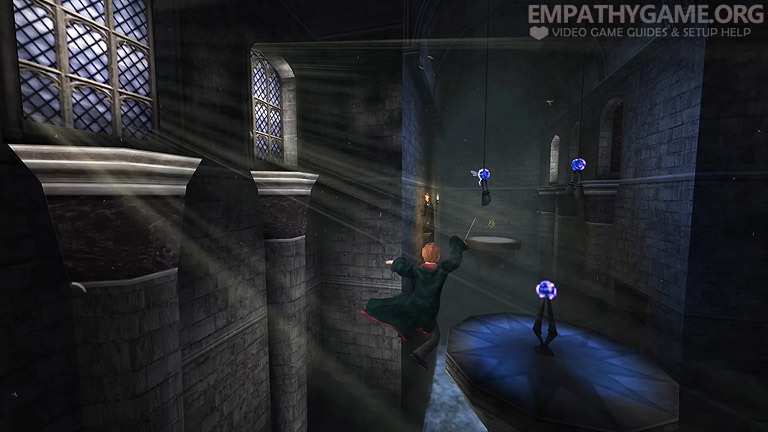
KnowWonder’s Windows adaptation builds on the third-person spellcasting and exploration of the earlier Harry Potter PC adventures while introducing three playable protagonists with distinct magical abilities. Harry, Ron, and Hermione each bring a different approach to puzzles, making certain rooms more inventive than anything the familiar combat system can offer. Unfortunately, the game rarely allows those abilities to develop beyond their scripted applications. Its easy encounters, restricted character control, and hurried storytelling leave a pleasant adventure that sometimes seems reluctant to challenge its own ideas.
For fans who enjoy searching Hogwarts for secrets and experimenting with playful magical interactions, that simplicity is often forgivable. Those expecting demanding puzzles, flexible spellcasting, or a thorough adaptation of the third book will find a much more modest experience.
Hogwarts Rewards the Habit of Looking Twice
The strongest part of Prisoner of Azkaban is the relationship between its central Hogwarts hub and the smaller adventures branching away from it. Classes introduce new spells through dedicated challenges, while quieter intervals allow Harry and his friends to explore corridors, courtyards, staircases, and hidden chambers. The main objectives are clearly directed, but searching beyond their immediate routes reveals much of the castle’s personality.
Exploration rewards attention rather than complicated navigation. A suspicious tapestry might hide another room, a portrait could conceal an entrance, and an ordinary piece of furniture may respond to repeated spellcasting. Some interactions yield little more than Bertie Bott’s Every Flavour Beans, Pumpkin Pasties, or Cauldron Cakes, but their frequency makes the surroundings feel unusually responsive for such a straightforward adventure. Even when a route leads to a modest reward, finding it provides a satisfying interruption to the main objective.
The downside is that Hogwarts is more a network of connected exploration spaces than a living school simulation. Students and familiar surroundings create atmosphere, but there is relatively little freedom to shape the school day. Much of the most elaborate level design also sits inside isolated spell challenges rather than emerging naturally from the castle itself. As a result, its best moments of discovery often feel carefully placed rather than spontaneous.
Classrooms Make the Trio’s Spells Shine
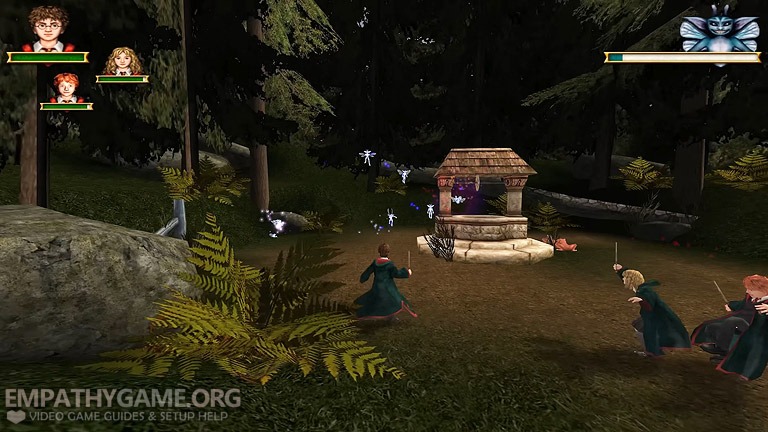
Giving Harry, Ron, and Hermione individual abilities is the game’s most effective mechanical improvement. The three characters do not simply repeat the same spellcasting animations; each introduces a different way of navigating an environment. Their classroom challenges become miniature platforming adventures built around demonstrating what a particular spell can accomplish.
Ron’s Carpe Retractum is especially well suited to this structure. A distant magical anchor can pull him over a gap, while other targets allow him to drag objects into position. Rooms containing suspended platforms and moving mechanisms consequently become exercises in recognizing which surfaces can be reached and when to release a spell. There is little room for improvisation, but these sequences give ordinary traversal an entertaining magical twist.
Harry’s Glacius brings a more physical change of pace. Freezing flowing water creates slides that demand steering rather than the careful jumping found elsewhere. The spell also has a combat application against fire-breathing Salamanders, connecting environmental magic with enemy encounters. These sequences are memorable because they briefly transform the game’s movement rules rather than merely supplying another object to target.
Hermione’s Lapifors and Draconifors are arguably the most imaginative additions. Transforming a rabbit statue opens the possibility of squeezing through narrow passages and digging through obstacles that a human character cannot reach. Dragon statues create an entirely different problem: guiding a small flying creature, collecting magical fire, and lighting distant torches. A single chamber can therefore contain two distinct puzzle perspectives without introducing a complicated interface.
Yet the cleverness is mostly confined to the rooms designed to teach it. After completing the initial challenges, the new spells have comparatively few opportunities to reshape ordinary castle exploration. Each ability is introduced, demonstrated, and occasionally revisited, but the adventure rarely asks the player to combine its ideas independently. The potential for a richer magical puzzle system is easy to recognize precisely because the individual challenges are so enjoyable.
Convenient Spellcasting Limits Player Agency
Prisoner of Azkaban makes spellcasting unusually approachable. Holding the wand control reveals interactable targets, and the game selects the appropriate spell automatically. There is no need to memorize a large collection of shortcuts or repeatedly open a spell menu. A locked chest, movable object, or magical creature generally makes its intended interaction clear once the wand is pointed toward it.
That convenience has a noticeable cost. Directing the wand’s targeting cursor interrupts ordinary character movement, so examining several objects can involve stopping, aiming, casting, and then moving again. It is a small restriction, but one that makes exploration less fluid than the straightforward controls initially suggest. The problem becomes particularly apparent when a room contains numerous interactive decorations or targets placed at different heights.
Character control is similarly restrictive. Unlike the separate console adaptations, the Windows version determines when Harry, Ron, or Hermione takes the lead. This guarantees that the required ability is available, but eliminates an interesting decision: examining an obstacle and choosing which friend might solve it. The game introduces three different magical toolsets without giving players much responsibility for selecting between them.
Combined casting provides a partial counterbalance. Certain doors, mechanisms, and enemies require two or three characters to coordinate their spells, with companions joining the cast once the player holds the target long enough. These moments create the impression of teamwork, although the computer-controlled friends contribute automatically rather than through tactical commands. The trio feels important to the presentation of the adventure, but less important to its decision-making.
Combat Is Gentle Until the Dementors Appear
Ordinary combat follows the same accessible philosophy. Rictusempra deals with many basic threats, while other encounters ask for a particular response to a recognizable enemy behavior. Imps throwing wizard crackers and the animated Monster Book of Monsters provide more character than serious danger. Most fights are brief interruptions between puzzles, and success generally depends on selecting targets and timing straightforward casts.
The Dementor encounters are more distinctive. Expecto Patronum requires a deliberate release during its casting animation, rather than the immediate button presses sufficient for ordinary offensive magic. Against a group of Dementors, Harry remains stationary while the enemies surround him. Each must be stunned before an earlier target recovers, forcing the player to rotate, manage the sequence, and maintain a steady casting rhythm.
That design produces genuine pressure without relying on complicated attacks. Turning too slowly allows a previously stunned Dementor to recover; rushing the spell can waste a precious opportunity. The encounters are consequently closer to tests of timing and target management than conventional wizard duels. They also reveal how much more interesting combat becomes when a spell has a distinctive rule instead of simply dealing damage.
Unfortunately, such encounters are exceptions. Most enemies provide limited resistance once their required response is understood. The game is well suited to younger players or newcomers who want recognizable magical confrontations without punishing combat, but experienced action-adventure players will rarely need to adjust their approach beyond the intended solution.
The Story Moves Faster Than Its Atmosphere
The escape of Sirius Black and the arrival of the Dementors establish a darker premise than Hogwarts’ welcoming environments initially suggest. The Hogwarts Express opening introduces the threat effectively, while Professor Lupin, Buckbeak, Draco Malfoy, and the central trio bring familiar characters into the adventure. The material offers opportunities for mystery, tension, and friendship, although the adaptation is more interested in reaching its next playable sequence than developing those themes.
Important story events move past quickly, and character relationships receive limited attention between lessons and challenges. The central mystery lacks much of the buildup needed to make its later developments fully satisfying on their own. Anyone unfamiliar with the original book or film may struggle to appreciate the significance of certain events. The campaign works better as an interactive companion to a familiar story than as a complete substitute for it.
Fortunately, the presentation often supplies the personality missing from the narrative. Stone corridors, enchanted objects, colorful magical effects, and warmly lit interiors create a version of Hogwarts that feels inviting despite its modest visual complexity. Character models and facial animations have aged considerably, but the environment’s exaggerated details retain their storybook quality.
Jeremy Soule’s orchestral soundtrack is particularly important. Its playful melodies make otherwise uneventful exploration feel curious and full of possibility, while darker passages provide atmosphere during encounters that the simple combat cannot always make frightening. The music gives the castle an emotional continuity that the hurried narrative sometimes lacks.
Final Exams and Buckbeak Expose Uneven Difficulty
The adventure’s forgiving reputation becomes less accurate toward its later challenges. The final examinations revisit familiar spells through longer obstacle courses, with Harry’s and Hermione’s sequences demanding more sustained attention than many earlier classroom exercises. Moving platforms, transformation puzzles, and Challenge Shields require greater care once several obstacles appear in succession.
Collectibles make these sections more demanding than simply reaching the exit. Missing a Challenge Shield can mean revisiting a lengthy sequence whose mechanics are already understood. The resulting frustration comes less from difficult reasoning than from having to repeat familiar actions to recover one overlooked reward. It is an awkward contrast with a game that otherwise works hard to prevent players from getting stuck.
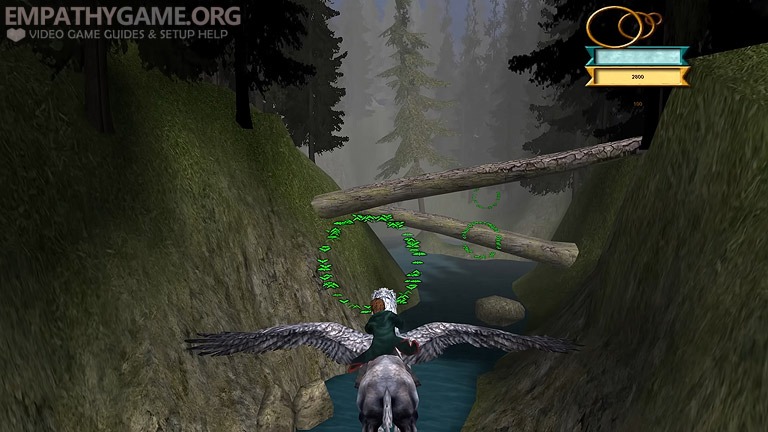
Buckbeak’s flying courses create a different challenge. Guiding the Hippogriff through airborne rings provides a welcome break from corridor exploration, and controlling his height and momentum has a pleasant physical quality. There is no strict course timer, so careful gliding and reducing speed can be more useful than rushing. Nevertheless, later courses demand enough directional precision that missing a small number of rings can force another attempt.
The frustration matters because completing the five Hippogriff flying courses is among the school-year requirements, not simply an optional distraction. Someone who enjoys the main campaign’s relaxed puzzles but dislikes precision flying cannot necessarily ignore the activity and finish the adventure. The combination of generally low combat difficulty and unexpectedly demanding completion tasks creates a somewhat uneven challenge curve.
Collecting Gives the School Year Its Second Act
Progression does not involve character levels, equipment builds, or skill trees. Instead, the game tracks completed challenges, earned shields, portrait passwords, minigame achievements, and Collector’s Cards. This suits an adventure built around exploration, although it also means that acquiring more rewards rarely changes what Harry and his friends can actually do.
The school-year checklist creates a distinction between finishing the central story events and satisfying the remaining requirements. Players must complete the three spell challenges’ shield collections, the designated Pixie and Monster Book encounters, Hippogriff courses, and portrait-password purchases. These activities give Hogwarts a purpose beyond the main plot, but can also make the final stretch feel like administrative cleanup rather than another exciting chapter.
The 80 Collector’s Cards provide a more satisfying optional pursuit. Finding them encourages closer inspection of secret rooms, side passages, and previously overlooked corners of Hogwarts. The collection also has a specific reward: obtaining 74 cards makes the 75th available through Fred and George, leading to a special untimed visit to the Bean Bonus Room where the final five can be collected. That gives completionists a distinct destination rather than merely another completed counter.
The castle’s treat economy adds a smaller layer of interest. Some password-protected portrait areas can replenish their magical sweets on later visits, making repeated exploration useful when gathering resources for purchases. Once the shop’s important rewards have been obtained, however, collecting additional currency loses much of its purpose.
Replayability ultimately depends more on affection for Hogwarts than on mechanical variety. Revisiting challenges can recover missed rewards, but character assignments, puzzle solutions, and story outcomes remain largely fixed. A second journey offers familiar magical spaces and collectibles rather than substantially different ways to experience the adventure.
Final Verdict
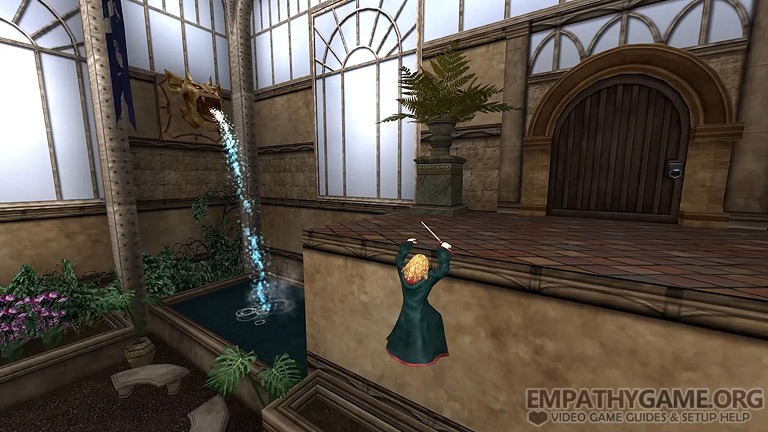
Harry Potter and the Prisoner of Azkaban succeeds most convincingly when it lets the player engage with Hogwarts as a place filled with small magical discoveries. Hidden passages, interactive decorations, portrait secrets, and collectible rewards make exploration enjoyable even when the next story objective is obvious. The distinct abilities of Harry, Ron, and Hermione add welcome variety, with Carpe Retractum traversal, Glacius slides, and Hermione’s creature transformations demonstrating how entertaining a more developed spell-based puzzle system could have been.
The limitations become clearer as those ideas repeat. Automatic targeting removes much of the deduction from spellcasting, restricted movement makes aiming less fluid, and scripted character selection limits the freedom that three protagonists might otherwise provide. Combat is generally shallow outside the more distinctive Dementor encounters, while final exams and required Buckbeak activities occasionally demand precision that the earlier adventure barely prepares players for. The abbreviated story also struggles to give its central mystery the attention it deserves.
Still, the game has a personality that survives its rougher design choices. Its colorful interpretation of Hogwarts, inventive classroom challenges, and evocative orchestral music make even ordinary exploration appealing. Younger players, fans of the early Harry Potter PC adventures, and anyone who enjoys gentle puzzle-platforming are its natural audience. Those expecting challenging magical combat, interconnected puzzle systems, or meaningful character freedom will find its ambitions limited.
Prisoner of Azkaban is not the most demanding trip through Hogwarts, but it understands an important part of the setting’s appeal: sometimes discovering what lies behind an ordinary-looking portrait is reward enough.
Harry Potter and the Prisoner of Azkaban Pros & Cons
Harry Potter and the Prisoner of Azkaban PC System Requirements
Historical Windows PC requirements: The specifications below are documented in PCGamingWiki’s historical technical reference for the original Windows release. A surviving official EA requirements page was not independently verified, so these figures should not be interpreted as newly published or officially supported Windows 10/11 requirements.
MINIMUM — HISTORICAL REFERENCE:
OS: Windows 98, Windows ME, Windows 2000, or Windows XP
CPU: Intel Pentium III 600 MHz
RAM: 256 MB
GPU: NVIDIA GeForce 2, ATI Radeon, or comparable supported graphics hardware
Video Memory: 32 MB
DirectX: DirectX 9.0-compatible graphics hardware; game rendering uses Direct3D 8
Storage: Approximately 820 MB
Additional Notes: Original CD-ROM media and a compatible optical drive for the retail installation
RECOMMENDED — HISTORICAL TECHNICAL REFERENCE:
OS: Windows XP SP3, as listed by PCGamingWiki; this is a later service-pack environment rather than an original 2004 launch requirement
CPU: Intel Pentium 4 1.5 GHz
RAM: 512 MB
GPU: Graphics hardware with at least 64 MB of video memory
Storage: Approximately 820 MB or more available space
Additional Notes: These are historical hardware references, not guarantees of compatibility with current Windows systems
Additional PC Performance and Setup Notes
Windows 10 and Windows 11: This game is not computationally demanding by modern standards. However, modern compatibility is determined more by its 32-bit legacy software, Direct3D rendering, original installer, and SafeDisc protection than by CPU or GPU power. A powerful current PC does not automatically make the original retail disc playable.
Widescreen resolution: PCGamingWiki documents a manual method for changing resolution through hppoa.ini, normally located inside the game’s configuration folder under Documents. In the [WinDrv.WindowsClient] section, FullscreenViewportX controls horizontal resolution and FullscreenViewportY controls vertical resolution. Back up the file before editing it. Wider aspect ratios can reduce the visible vertical field of view, and some cinematics do not adapt properly.
Frame-rate limitations: The game can run at higher frame rates under certain configurations, but unusually high frame rates may disrupt scripted sequences. Community tools documented by PCGamingWiki include options for 60 FPS and 120 FPS limits. For stability, avoid assuming that an uncapped frame rate is preferable in a game designed around older hardware.
Controller support: Keyboard and mouse remain the original PC input baseline. Modern XInput controller support is available through unofficial community projects rather than an official game update. Consult the project documentation carefully and avoid replacing original game files without keeping backups.
Save-data location: PCGamingWiki documents saved games in the user’s Documents\Harry Potter and the Prisoner of Azkaban\Save directory, with slight folder-name differences possible between installations. Backing up the entire game-specific Documents folder preserves configuration information alongside progress.
Steam Deck: The original Windows edition has no Steam release and therefore no official Steam Deck Verified, Playable, or Unsupported rating. Running legacy retail software on SteamOS requires separate compatibility research and does not eliminate original DRM or installation limitations.
Official Trailer
Frequently Asked Questions
Is Harry Potter and the Prisoner of Azkaban worth playing in 2026?
Yes, especially for fans of the early Harry Potter PC games who enjoy exploring Hogwarts, discovering secrets, and solving spell-based puzzles. Its short campaign and simple combat feel dated, while legitimate retail ownership and modern Windows compatibility require extra consideration.
How different is the PC version from the PS2, Xbox, and GameCube versions?
The PC edition is a separate KnowWonder-developed game, not a port of the console adventure. It features different level designs, puzzles, character controls, and progression, with more scripted character changes rather than the manual switching available in the console versions. Walkthroughs for the PS2, Xbox, or GameCube versions may therefore lead PC players to locations or objectives that do not exist in their game.
Can you switch freely between Harry, Ron, and Hermione on PC?
No. Although all three characters are playable, the PC game automatically determines which character you control during particular sections. Each has unique spells, and the story places the appropriate character in control when those abilities are needed.
How does spell targeting work in the PC version?
Hold the Use Wand button, normally the left mouse button or Alt, and move the pointer over an interactive object. A spell symbol appears when the object can be affected, allowing the game to select the appropriate spell automatically. Some secrets have no obvious marker until you aim at their location, so examining suspicious objects can reveal hidden interactions.
How do you cast spells with two or three characters at once?
Aim at an object requiring a combined spell, then hold the casting button until the additional spell indicators appear as your companions join in. Release the button once everyone is ready to cast simultaneously. These combined spells are needed for certain locked doors, movable objects, and enemy encounters.
How do you get the Marauder’s Map in Prisoner of Azkaban?
Fred Weasley gives Harry the Marauder’s Map after the Carpe Retractum Challenge. It becomes available through the in-game menu and helps navigate Hogwarts, although it does not provide detailed maps for the separate spell-challenge courses.
Can you explore Hogwarts freely after completing the story?
Yes. After the main story events and final exams, the PC game provides an opportunity to explore Hogwarts, finish remaining school-year objectives, discover secrets, and collect missing cards before formally ending the adventure. Hogwarts functions as an explorable hub rather than a completely unrestricted open world.
Can you replay levels to collect missed Challenge Shields and wizard cards?
Yes. Completed story sections can be revisited through the Bookmarks option associated with a saved game, while spell challenges have replay access. This is particularly useful because many levels prevent backtracking after certain points, so missing a collectible does not necessarily require restarting the entire adventure.
How does saving work in Harry Potter and the Prisoner of Azkaban?
Progress is saved at designated Save Books rather than through an unrestricted quick-save system. Each game slot maintains its own progress, so saving after passing a collectible can make an earlier Bookmarks replay necessary. Use Save Books regularly, especially before challenging encounters or lengthy puzzle sections.
What must you complete to finish the Hogwarts school year?
The PC game requires all 10 Challenge Shields in each of the Carpe Retractum, Draconifors-Lapifors, and Glacius challenges. You must also complete five stages each of the Pixie Encounter, Monster Book of Monsters Encounter, and Hippogriff Flying Courses, and purchase all eight portrait passwords. Collecting all 80 wizard cards is optional.
How do you unlock the secret portrait passages in Hogwarts?
Purchase portrait passwords from Fred and George Weasley’s shop, then use them at the corresponding portraits around the castle. All eight passwords require a combined total of 139 Cauldron Cakes, so collect cakes from challenge rewards, hidden containers, and bonus activities rather than spending them carelessly. These passages contain additional exploration areas and collectibles.
How many Collector’s Cards are there, and how do you unlock the final five?
There are 80 Collector’s Cards in the PC version, obtained through exploration, challenges, and purchases from students or Fred and George. After obtaining 74 cards, return to Fred and George to receive the 75th and gain access to a special Bean Bonus Room containing the final five. Completing the collection is optional and does not provide a major additional gameplay ability.
How can you make Buckbeak’s flying challenges easier?
Focus on lining up with each ring rather than flying as quickly as possible. Hold S or the Down Arrow to slow Buckbeak, glide between rings, and flap his wings when additional height is needed. The five flying courses do not impose a strict completion timer, so careful steering is more useful than rushing.
Can you play Quidditch in Harry Potter and the Prisoner of Azkaban on PC?
No. The PC adventure does not include playable Quidditch matches or a Quidditch tournament mode. Its principal flying activity involves guiding Buckbeak through ring courses, which are separate from the broomstick-based gameplay in some earlier Harry Potter titles.
How do you defeat Dementors with Expecto Patronum?
Hold the casting button until the ring of light travels beyond the halfway point along Harry’s wand, then release before it reaches the tip. During encounters with several Dementors, each must be stunned before the previously affected enemies recover. Keep turning in one direction and time successive casts carefully rather than releasing every spell immediately.
How do you permanently defeat fire Salamanders?
Use Harry’s Glacius spell to freeze a Salamander and extinguish its nearby fire, then strike the frozen creature with Rictusempra. Destroying the creature without dealing with its fire can allow it to regenerate. When several Salamanders are present, deal with each creature and its fire together while moving to avoid incoming attacks.
How do Hermione’s Lapifors and Draconifors transformations work?
Lapifors transforms designated rabbit statues into controllable rabbits that can enter small passages, jump, and dig through suitable obstacles. Draconifors transforms dragon statues into flying creatures capable of collecting magical fire and lighting specific targets. Press Enter to end either transformation when you need to return to controlling Hermione.
How do you recover health, and what are the different magical treats used for?
Chocolate Frogs restore lost health, while Bertie Bott’s Every Flavour Beans, Pumpkin Pasties, and Cauldron Cakes primarily function as collectible currencies for items and unlocks. Different shop purchases require different treats, making it useful to explore optional rooms and open containers even when your characters are already healthy.
How long does it take to beat Harry Potter and the Prisoner of Azkaban on PC?
A straightforward story playthrough typically takes around 4–6 hours, depending on familiarity with the puzzles and controls. Completing the spell challenges, portrait passages, mini-games, secrets, and all 80 Collector’s Cards can extend the experience substantially.
Does Harry Potter and the Prisoner of Azkaban support multiplayer or co-op on PC?
No. The Windows PC edition is strictly single-player, without online multiplayer, local co-op, split-screen, or LAN modes. Harry, Ron, and Hermione sometimes work together during gameplay, but the additional characters are controlled by the game rather than other human players.
Does Harry Potter and the Prisoner of Azkaban work on Windows 10 and Windows 11?
The original retail edition is not natively supported on modern Windows installations. Its SafeDisc 3 copy protection prevents normal launching on Windows 10/11, while older graphics interfaces can introduce additional compatibility problems. Installing the game successfully does not guarantee that its original retail executable will run.
Why does the game show a Direct3D error or fail to display graphics?
The original PC game uses Direct3D 8, and modern Windows systems can encounter rendering errors such as “LockRect failed: D3DERR_DEVICELOST.” This issue is distinct from the original disc’s SafeDisc incompatibility. PCGamingWiki documents community-tested graphics compatibility approaches, but these are unofficial and cannot guarantee successful operation on every computer.
Why does an Imp freeze during Ron’s Carpe Retractum Challenge?
A known timing problem can cause the Imp introduced during the challenge to remain frozen after its cutscene, preventing the encounter from progressing. Running the game at a 60 FPS cap can help avoid this behavior, according to community technical documentation. Similar timing problems can also affect certain portrait interactions when frame rates exceed 60 FPS.
Still have questions? Check the Harry Potter Games Reddit community, Prisoner of Azkaban GameFAQs discussion board, or PCGamingWiki technical guide for walkthrough help, gameplay questions, and PC compatibility information.
Sources & References
Key factual and technical information in this guide was checked against relevant historical publication records, established technical documentation, and independent contemporary coverage, including:
- PCGamingWiki — Harry Potter and the Prisoner of Azkaban — original Windows technical details, historical hardware requirements, SafeDisc 3 compatibility, widescreen settings, game engine, configuration, saved games, and community fixes.
- MobyGames — Prisoner of Azkaban (Windows) — KnowWonder development credits, Windows release history, platform-specific game identity, and historical PC gameplay information.
- Metacritic — Harry Potter and the Prisoner of Azkaban — platform-specific critic aggregates and historical reception of the different original game editions.
- GameSpot — Prisoner of Azkaban PC Review — contemporary independent analysis of the distinct PC adaptation, spell mechanics, puzzle structure, campaign accessibility, and game length.
- GameSpot — Electronic Arts Release Announcement — contemporary reporting on EA’s original multi-platform launch and the three playable characters.
Similar Games Like Harry Potter and the Prisoner of Azkaban
- Harry Potter and the Chamber of Secrets
- Harry Potter and the Philosopher’s Stone
- Hogwarts Legacy
- The Simpsons Game
- Kingdom Hearts 3
- Tomb Raider I-III Remastered

Found something worth playing through DecideGame?
DecideGame.com is an independent gaming project run by Editor Zero. If this guide helped you discover a game, solve a problem, or find useful information, you can support DecideGame.com and help keep new and updated game guides coming.
DecideGame — PC Game Guides, Reviews & Setup Help