
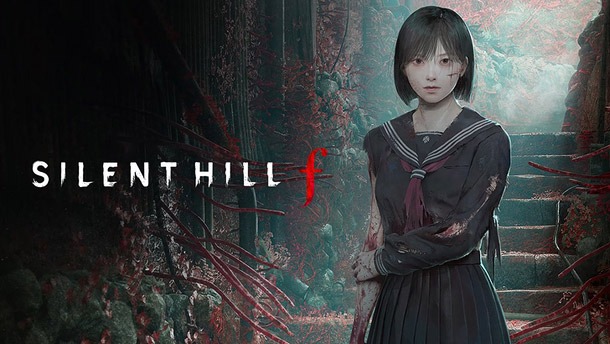
📅 Game released: 2025
Silent Hill f is a self-contained psychological survival-horror story set in 1960s Japan, where Hinako Shimizu faces grotesque creatures, unsettling puzzles, and a nightmare shaped by personal fears. This PC guide compares official Steam, Epic Games Store, GOG, and Microsoft/Xbox purchase and download options, Standard and Digital Deluxe content, system requirements, Steam Deck compatibility, and practical setup advice.
 By Editor Zero — independently researched, edited, and maintained.
Last updated: 13 November 2026
Last reviewed: 13 November 2026
Table of Contents
- Quick Facts
- Official PC Stores, Download & Installation
- Silent Hill f Review
- Pros & Cons
- PC System Requirements
- Frequently Asked Questions
- Similar Games
Silent Hill f Quick Facts
- Game: Silent Hill f / Standard Edition / Digital Deluxe Edition / Deluxe Upgrade
- Developer: NeoBards Entertainment
- Publisher: Konami Digital Entertainment
- Genre: Survival Horror, Horror, Action-Adventure, Puzzle-Solving
- Release: September 25, 2025
- PC Editions: Standard Edition and Digital Deluxe Edition; the Deluxe Upgrade is sold separately, while Standard and Deluxe Dual Pack bundles pair Silent Hill f with Silent Hill 2 on supported storefronts
- Platforms: Windows PC, PS5, Xbox Series X|S
- Xbox Play Anywhere: Supported by the Microsoft digital version across compatible Xbox and Windows devices
- Cloud Access: Xbox Cloud Gaming supports an owned Microsoft/Xbox copy with an eligible Game Pass membership; the game purchase is required
- Steam Deck: Playable; manual graphics adjustments are required, some in-game text may be small, and external controllers may need manual selection
- Engine: Unreal Engine 5
- Modes: Single-player; no campaign co-op, local co-op, competitive multiplayer, or PvP
- Community: Steam Discussions, Reddit Silent Hill f Community
- PC modding: Nexus Mods for Silent Hill f hosts unofficial visual tweaks, outfit replacements, ultrawide and cutscene fixes, interface changes, durability adjustments, combat modifications, save files, and community tools; no official mod tools or Steam Workshop support are listed
- Metacritic score: 85/100 on PC
- IGN score: 7/10 (PS5 review)
- OpenCritic average: 86/100
- Steam user reception: Very Positive overall
Official PC Stores, Download & Installation
👇 Compare the official Steam, Epic Games Store, GOG, and Microsoft/Xbox PC options below before purchasing, downloading, or installing Silent Hill f.
- PC storefronts: Silent Hill f is officially sold for Windows PC through Steam, Epic Games Store, GOG, and Microsoft/Xbox, with the same base single-player game available across those storefronts.
- Standard Edition: The Standard Edition contains the complete base game, including New Game+, five endings, difficulty options, and the game’s permanent gameplay improvements.
- Digital Deluxe Edition: The Digital Deluxe Edition contains the base game, Hinako’s Pink Rabbit Costume, the Digital Artbook, and the Digital Soundtrack; it does not add another campaign or story ending.
- Deluxe Upgrade: Standard Edition owners can add the same Deluxe bonus content separately. The base game is not included in the upgrade, and Deluxe Edition owners should avoid buying the overlapping package again.
- Dual Pack bundles: Supported storefronts sell Standard and Deluxe Dual Pack bundles pairing Silent Hill 2 with Silent Hill f, so check existing ownership before buying a bundle that contains a game you already own.
- Expired launch benefits: The former 48-hour advanced-access period has ended. Hinako’s White Sailor School Uniform, Omamori: Peony, and a consumable item pack were early-purchase bonuses and should not be assumed to accompany every new Standard Edition purchase.
- Free cosmetic: The Crimson Butterfly costume inspired by Fatal Frame II: Crimson Butterfly Remake is available to Silent Hill f owners after updating the game; it changes Hinako’s appearance without adding new scenarios, stages, or modes.
- Steam: Steam supports achievements, Steam Cloud, Family Sharing, full controller support, community guides, and discussions. The Steam Deluxe soundtrack can also be downloaded in MP3 or WAV format through the Steam launcher.
- Epic Games Store: Epic offers the Standard Edition, Digital Deluxe Edition, and Deluxe Upgrade with achievements and controller support. An Epic ID is required for the Epic version, and the Deluxe Upgrade requires the base game and overlaps with content already included in the Deluxe Edition.
- GOG: The GOG release is DRM-free, requires no activation or ongoing online connection to play after installation, and can be used without GOG Galaxy. Deluxe and upgrade bonus content are also available through GOG.
- Microsoft / Xbox: The Microsoft digital version supports Xbox Play Anywhere, Xbox achievements, and Xbox cloud saves across compatible Xbox and Windows devices. Xbox Cloud Gaming supports an owned copy with an eligible membership; a game purchase is required.
- Save ecosystems: Xbox Play Anywhere synchronization applies within the Microsoft ecosystem, while Steam and GOG provide their own cloud-save features. No universal cross-platform save transfer is advertised between all storefronts.
- Steam Deck: Valve rates the game Playable rather than Verified. It requires manual graphics configuration; Valve also warns that some in-game text may be small and that external Bluetooth or USB controllers may need to be selected manually.

 Buy Silent Hill f on Epic Games Store

 Buy or Play Silent Hill f on Microsoft / Xbox Store
 View Silent Hill f on the Official PlayStation Page
 View Silent Hill f on the Official Website
Silent Hill f Review
A beautiful, suffocating nightmare where every flower hides something rotten.
Silent Hill f moves the series from small-town America to 1960s rural Japan, but its most important change is not geographical. Ebisugaoka has no rusted hospitals or abandoned American motels. Instead, the fog settles over narrow alleys, shuttered homes and mountain paths where ordinary village life feels disturbingly close to the supernatural.
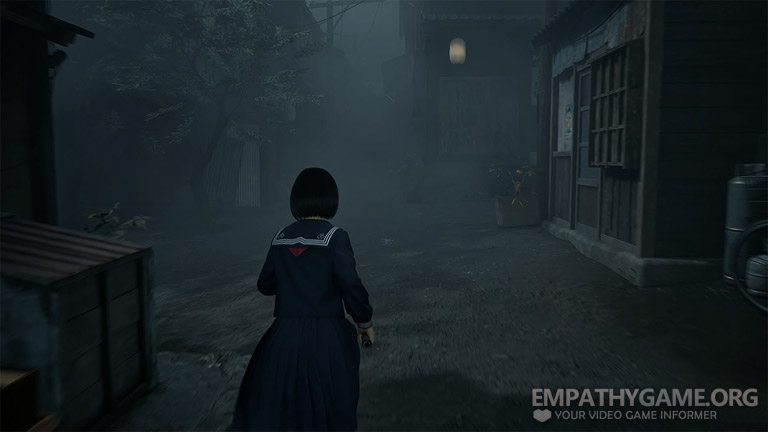
Red spider lilies spread across streets like an infection. Flowers emerge from flesh, while dolls, masks and shrines create images that can look delicate from a distance and revolting up close. The beauty matters because it makes the horror difficult to dismiss as simply another collection of grotesque monsters.
More importantly, these images belong to Hinako’s story. Family duty, friendship, resentment, expectations of womanhood and fear of a future chosen by others shape both the places she explores and what attacks her. The melee combat sometimes gets in the way, but the atmosphere and unusually personal writing give the nightmare an identity that survives its clumsier moments.
Hinako’s Story and the Horror of Expectation
Shimizu Hinako is a teenager whose relationships with her parents, older sister and friends are strained long before Ebisugaoka changes. She is caring one moment and bitter or stubborn the next. That inconsistency is important. Hinako does not behave like an empty character designed to receive the player’s decisions; she has a history, and her reactions often reveal it before the story explains why.
The deeper fear is not just being hunted. Hinako is being pushed toward adulthood under rules she has little power to negotiate. Ideas about marriage, obedience, family reputation and what a daughter should become are given physical form through the game’s rituals and transformations. Her loss of control feels frightening precisely because so much of it begins in recognizable human relationships.
Shu, Rinko and Sakuko complicate those relationships. Their early conversations move between teasing, jealousy, concern and unspoken hostility. Later notes, school materials and scenes can change how an earlier remark is understood. Rather than explaining everyone’s motivations in one speech, the story trusts small details to accumulate. It asks the player to reconsider people, not merely solve the mystery of the fog.
Some supernatural questions remain deliberately unresolved. That can be frustrating for anyone who wants every symbol decoded, yet the emotional connections generally remain understandable even when the literal rules of the nightmare do not.
Exploration and Puzzles Carry the Story
Exploration is built around blocked alleys, landslides, locked gates, houses, fields, forest paths and shrines. Hinako searches for clues and supplies while deciding which creatures are worth confronting. The map gives enough direction to prevent aimless wandering without reducing Ebisugaoka to a sequence of collectible markers. The pleasure comes from understanding a place gradually, then noticing how its ordinary details have turned threatening.
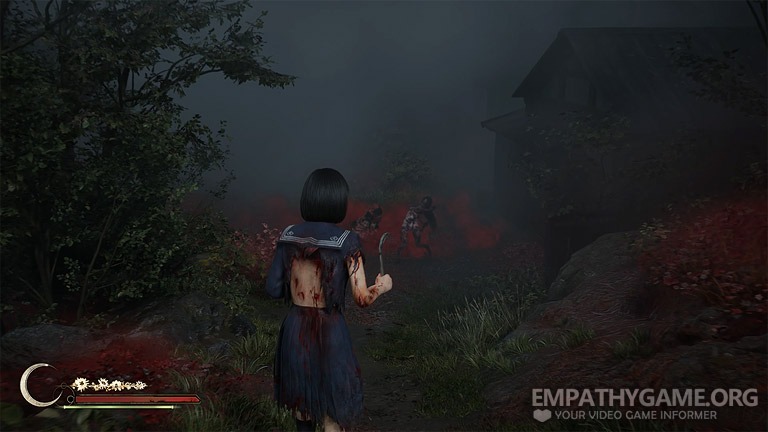
The school is especially effective. Searching classrooms, lockers, desks and students’ notes connects the puzzles to gossip and uneasy friendships. The clues are not just codes placed in a convenient room. They say something about the people who occupied it, which makes solving them feel like discovering another layer of Hinako’s life.
Other detours offer shrines, documents and imagery that may matter much later. A secluded family shrine can initially seem like an optional place to gather resources, then gain a different meaning as the story supplies more context. This gives exploration a quiet reward beyond inventory items.
The scarecrow sequence shows how effectively the game can mix puzzles with survival, and where that combination becomes unpleasant. Choosing the wrong figure can awaken hostile scarecrows. Fighting them unnecessarily may consume weapons and healing supplies before the riddle is solved, even though avoiding the creatures can be possible. It makes a wrong interpretation feel dangerous rather than merely incorrect, but the pressure can also make the clues harder to think through.
Puzzle difficulty is separate from action difficulty, and tougher settings change how clues are expressed. That is a welcome choice, though difficulty is not always the same as clarity. A scarecrow clue involving a smiling exterior and concealed expression might be intuitive to one player, while apparently simpler wording can suggest several interpretations. The distinction matters when a failed guess has a physical cost.
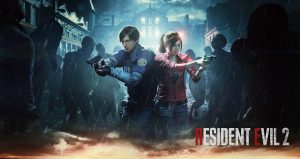
Players who enjoy reading spaces, conserving supplies and choosing when to engage may also appreciate Resident Evil 2 Remake. Its police station is more mechanical and firearm-focused, but both games make knowing the environment more valuable than defeating everything in it.
Melee Combat Is Ambitious but Uneven
Silent Hill f removes firearms in favour of pipes, knives, hammers, spears and other close-range weapons. Attacks consume stamina, weapons deteriorate, dodges and counters demand timing, and Focus helps Hinako recognize opportunities at the cost of Sanity. The intention is understandable: every decision to fight should carry some risk beyond losing health.
Against a single enemy, that idea works. Light attacks leave room to react; heavy attacks offer greater force but commit Hinako to longer movements. A well-timed dodge can restore stamina, while recognizing an enemy’s tell and countering it provides a satisfying moment of control. It is a combat system that rewards attention, although it sometimes asks for more precision than its movement comfortably provides.
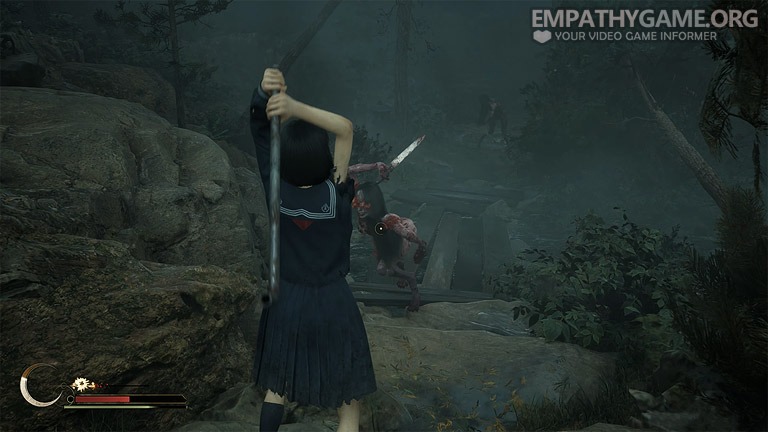
Several enemies in a narrow space expose the weakness. Camera movement, aggressive tracking, recovery animations and psychological attacks can overlap until the immediate problem feels less like fear and more like negotiating the controls. Yet crowded fights are not always without tactical answers. An experienced approach is to keep enemies grouped and counter one readable attack with a sufficiently wide swing to stagger more than one opponent. Positioning can briefly turn a disadvantage into an opening, even if that does not make every crowded encounter fair.
Weapon reach has a less obvious drawback. A long naginata may be powerful in an open room but strike the walls in a cramped shrine passage, encouraging a change of position rather than simply another attack. Details like that make the environment part of combat. They can also feel irritating when the camera and enemy pressure are already demanding attention.
The pacing is more troublesome than any single mechanic. Long rooms of repeated dodges and counters gradually drain the uncertainty from encounters, while some later abilities give Hinako more offensive control without making every fight more interesting. Casual action difficulty and more forgiving stamina behaviour help players who would rather concentrate on the story, but they do not erase the underlying repetition.
Often the most satisfying decision is not to fight at all. Ordinary enemies provide no traditional experience points, and crossing a street without wasting a good weapon can matter more than clearing it. That fits survival horror better than the extended battles do: the point is to decide whether a victory is worth paying for.
Shrines, Faith, Ema, and Omamori Add Useful Decisions
Hokora shrines are both save points and places to develop Hinako’s abilities. Offerings become Faith, Ema allow permanent improvements to Health, Stamina, Sanity and Omamori capacity, and Omamori provide passive bonuses that can support healing, stealth, counters or more aggressive combat.
These choices are interesting because an item can have two different values. Food might keep Hinako alive in the next encounter, or it might be better offered at a shrine when supplies are plentiful. There is no large RPG skill tree, but increased capacity and carefully chosen charms can meaningfully change how much risk a player can tolerate.
The frustration comes from managing those choices in the field. Limited stacking and restrictions on using certain items directly when found can send Hinako back to a shrine simply to exchange surplus supplies for Faith. What should be a curious detour through an abandoned building can become a calculation about empty inventory space. Capacity upgrades and selective hoarding reduce the problem, but the interruptions are real enough to weaken the mood.
The Dark Shrine Turns Ritual into Horror
Hinako’s visits to the Dark Shrine offer a very different kind of unease. Where Ebisugaoka feels like a community being overtaken, the ceremonial realm seems designed around the nightmare from the beginning. Lanterns, ropes, masks, altars and floral growths are arranged with unsettling purpose. The spaces can be beautiful, but there is little comfort in their beauty.
The distinction also changes how danger should be approached. In one shrine section, a blind pursuer responds to noise and proximity. Remaining still and observing its route can be safer than trying to overpower it. Some enemies here can rise again after being knocked down, making an apparent victory temporary. This is the shrine at its best: learning a creature’s behaviour becomes more frightening and useful than memorizing another attack combination.
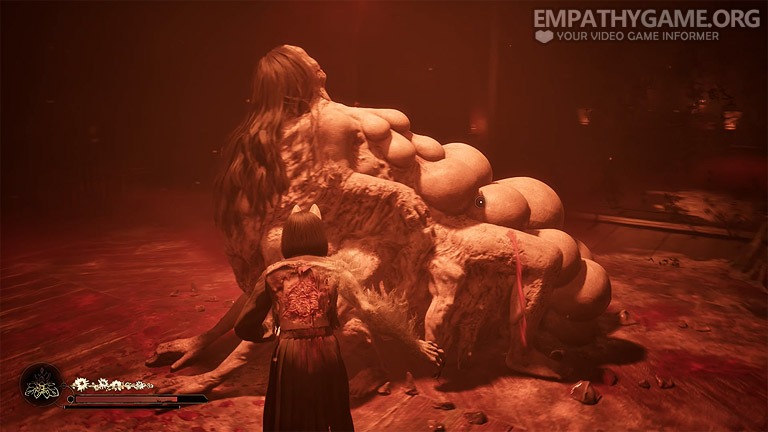
Otherworld weapons also change the balance by removing the ordinary durability pressure found in the town. That gives these sections a more forceful rhythm, especially as Hinako gains stronger capabilities. It creates useful contrast, although repeated battles can feel increasingly like action-game obligations rather than survival decisions.
Monster design remains the stronger element. Dolls, flowers, distorted human forms and ritual imagery make danger feel connected to Hinako’s social fears rather than randomly assembled. The best bosses work first as disturbing confrontations and only second as tests of timing. Players drawn to folklore-inspired settings may find a different but related appeal in Resident Evil Village, where local tradition and body horror also occupy the same space, albeit with much more gunplay.
Atmosphere and Sound Do More Than the Combat
Ebisugaoka is quiet enough to make ordinary sounds suspicious. Wind crosses the fields, floorboards shift in empty homes, and noises beyond the fog suggest something the camera refuses to confirm. Changing footsteps on wood, dirt, stone and wet ground make the streets feel physical, not merely like a background for encounters.
Akira Yamaoka’s contributions preserve an industrial unease in the Fog World, while Kensuke Inage’s music gives the Dark Shrine a more ceremonial Japanese identity. Just as important is when the soundtrack withdraws. Silence lets the player listen to the environment and imagine threats before a composition makes the danger explicit.
Quiet dialogue is equally important. Pauses, guarded answers and small changes in tone hint at the history between Hinako and her friends. The performances understand that not every injury is announced in an argument. Much of the dread comes from sensing what a character will not say.
New Game+ Makes Replay Part of the Narrative
The first playthrough leads to a fixed conclusion, but it does not provide a complete reading of Hinako’s story. New Game+ introduces documents, scenes, changed interactions and new conditions that open routes to the remaining endings. There are five endings in total, including a humorous series tradition. Reaching them involves more than choosing a different answer at the end.
The most interesting change is interpretive. A remark that once sounded cruel or trivial can gain another meaning after later discoveries. Repeating familiar spaces becomes worthwhile because the game asks the player to revise an earlier judgment, not simply collect another ending screen.
There is a catch. Knowing combinations and routes from the first run can let returning players bypass large portions of familiar areas, including parts of the shrine and school. That saves time, but those spaces may also hold new notes. Efficient progression and careful investigation can pull in opposite directions, so rushing toward another ending risks missing some of the material that justifies revisiting the story.
An optional skip for part of New Game+ eases some repetition, yet much of the journey remains recognizable. Familiar enemies and puzzles may be less intimidating after their patterns are understood, and the fighting does not reinvent itself between runs. Replay is most rewarding for players who want to piece together Hinako’s life from several perspectives, not those hoping for a radically different second campaign.
Final Verdict
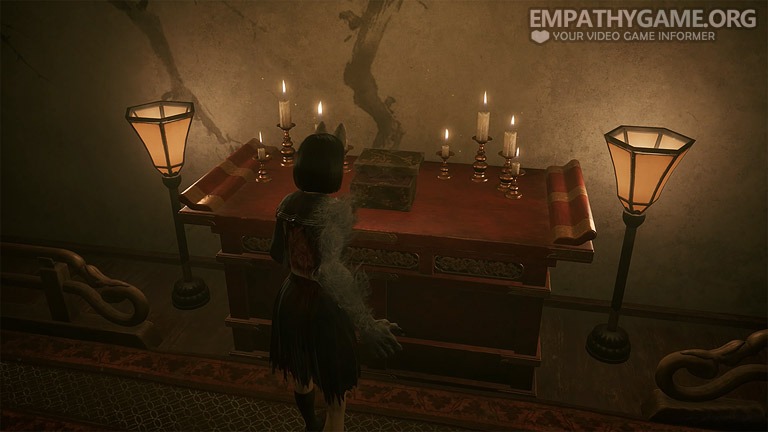
Silent Hill f succeeds because its move to 1960s Japan gives familiar psychological horror a different set of pressures to explore. The fog, symbolic monsters and unstable reality remain, but the most unsettling ideas grow out of Hinako’s friendships, family expectations and fear of losing control over her own life.
The combat does not always serve those ideas. It can be tactical and occasionally clever, yet crowded encounters and repeated mandatory fights too often replace uncertainty with frustration. Inventory interruptions and some ambiguous puzzle clues add friction of their own. Those weaknesses are worth recognizing rather than excusing because the presentation is so distinctive.
Still, the school, shrine imagery, environmental storytelling, restrained performances and sound design repeatedly bring the experience back to what matters. Its multiple endings also give the earlier scenes more meaning for anyone willing to revisit them carefully. Players seeking psychological horror with patient exploration and a story open to interpretation will find much to examine here. Those who want streamlined combat or a complete narrative in one playthrough may be less convinced. The game is most memorable when it makes Hinako’s ordinary world feel like the source of the nightmare.
Silent Hill f Pros & Cons
- Pro: Memorable 1960s Japanese setting gives Silent Hill a fresh identity while preserving psychological horror, fog, symbolism, isolation, and distorted realities
- Pro: Strong writing builds Hinako’s story around family pressure, social expectations, friendship, identity, trauma, doubt, and difficult personal choices
- Pro: Exceptional art direction combines red spider lilies, traditional architecture, rural landscapes, unsettling creature design, and grotesque environmental transformations
- Pro: Challenging puzzles, collectible notes, hidden details, five endings, New Game+, and altered scenes reward attentive exploration and repeated playthroughs
- Pro: Casual action difficulty, faster stamina recovery, fewer forced encounters, and an optional New Game+ skip make the heavier combat and repeat runs more approachable
- Con: Melee combat can become awkward and repetitive when groups, camera pressure, weapon durability, stamina, and Sanity mechanics collide
- Con: Important narrative context is deliberately spread across multiple endings, so one playthrough does not reveal the complete picture
- Con: Later combat-heavy sequences can weaken the fear by turning distinctive monsters into repeated mechanical obstacles
- Con: The official PC requirements are Windows 11-only, the recommended tier is demanding, and Steam Deck is Playable rather than fully Verified
Silent Hill f PC System Requirements
OFFICIAL WINDOWS PC REQUIREMENTS:
MINIMUM — Approximately 720p / 30 FPS / Performance Settings:
OS: Windows 11 x64
CPU: Intel Core i5-8400 / AMD Ryzen 5 2600
RAM: 16 GB
GPU: NVIDIA GeForce GTX 1070 Ti / AMD Radeon RX 5700
DirectX: Version 12
Storage: 50 GB available space
Drive: SSD recommended
Sound Card: Windows-compatible audio device
Performance Note: The minimum specification is intended for approximately 720p at 30 FPS using Performance settings; frame rate may decrease during demanding scenes.
RECOMMENDED — Approximately 1080p / 60 FPS Performance or 30 FPS Quality:
OS: Windows 11 x64
CPU: Intel Core i7-9700 / AMD Ryzen 5 5500
RAM: 16 GB
GPU: NVIDIA GeForce RTX 2080 / AMD Radeon RX 6800 XT
DirectX: Version 12
Storage: 50 GB available space
Drive: SSD required
Sound Card: Windows-compatible audio device
Performance Note: The recommended specification is intended for approximately 1080p at 60 FPS using Performance settings or 30 FPS using Quality settings; 4K output may be possible with DLSS or similar technology.
Additional PC Performance and Setup Notes
- Windows 11 x64 is the only operating system listed in the official PC requirements, so Windows 10 should not be presented as guaranteed or officially supported.
- An SSD is recommended for the minimum configuration and required for the recommended target. Keep additional free space beyond the listed 50 GB for installation overhead, shader caches, updates, and save backups.
- The official recommended target allows a choice between a higher-frame-rate Performance setting and a more image-focused Quality setting at 1080p, while DLSS or similar upscaling can help with higher output resolutions.
- If GPU memory is limited, lower texture-related settings before assuming the entire graphics preset must be reduced. Lighting, shadows, reflections, and volumetric effects can also have a substantial performance cost.
- If crashes, missing assets, or unusual loading problems appear, update the graphics driver, verify the official installation through the storefront, disable outdated mods, and test without overlays or unstable overclocks before reinstalling.
- Valve rates Steam Deck compatibility as Playable. Manual graphics configuration is required, some in-game text may be small, and external controllers may require manual selection through the Quick Access Menu.
- Unofficial ultrawide fixes, visual presets, interface changes, durability adjustments, and other community mods can conflict with game files after updates, so back up saves and restore clean files when troubleshooting.
Official Trailer
Note: Konami’s official launch trailer presents Hinako, Ebisugaoka, its fog-covered streets, grotesque creatures, puzzles, melee combat, and the game’s mixture of beauty and psychological horror.
Frequently Asked Questions
Do I need to play previous Silent Hill games first?
No. Silent Hill f tells a self-contained story with its own protagonist, setting, and mystery. Familiarity with the series may add context to recurring themes, but it is not required.
Is Silent Hill f on Xbox Game Pass or Xbox Play Anywhere?
The Microsoft digital edition supports Xbox Play Anywhere across compatible Xbox and Windows devices. Xbox also lists cloud play through an eligible Game Pass Essential, Premium, or Ultimate membership, but the game must be purchased separately; a membership alone does not grant the base game.
Is the GOG version of Silent Hill f DRM-free?
Yes. The GOG base game is DRM-free and can be installed and played offline without GOG Galaxy. Optional Galaxy features such as cloud saves require an online connection.
Which Silent Hill f edition should I buy?
The Standard Edition includes the complete story and all five endings. Digital Deluxe adds the Pink Rabbit Costume, Digital Artbook, and Digital Soundtrack; Standard owners can buy the Deluxe Upgrade separately. All owners can also use the free Crimson Butterfly costume after updating the game, without purchasing another campaign.
Is Silent Hill f an open-world game?
No. It is a mostly linear survival-horror adventure with interconnected streets, buildings, shrine areas, and optional paths, not a large open-world sandbox.
How long does Silent Hill f take to finish?
A first run often takes around 10–12 hours, depending on puzzle difficulty and exploration. Seeing the extra endings and uncovering additional New Game+ material takes considerably longer.
How many endings does Silent Hill f have, and how does New Game+ work?
There are five endings. The first run reaches a fixed conclusion; New Game+ adds scenes, documents, and conditions for the remaining outcomes. An optional skip shortens certain repeated segments, but items and some achievements from the skipped sections cannot be earned on that run.
Does Silent Hill f have multiplayer or co-op?
No. It is single-player only, with no campaign co-op, local split-screen, or competitive multiplayer.
What difficulty settings are available?
Action and puzzle difficulty can be chosen separately. Action includes Casual, Story, and Hard, with Lost in the Fog available for more demanding later runs; puzzles have Story, Hard, and Lost in the Fog settings. Casual offers a less punishing route through combat without removing the story or puzzles.
What are the best beginner tips?
Avoid unnecessary fights, carry a spare usable weapon, explore side paths for resources, and learn enemy attack patterns before committing to a long counterattack. Use Hokora shrines to save and consider whether an item is worth consuming now or offering for Faith.
Is Silent Hill f a Soulslike game?
Not in the usual RPG sense. Its melee combat uses stamina, dodging, timed responses, and some demanding bosses, but it does not have Souls-style classes, corpse-run currency recovery, or a comparable levelling system.
How does weapon durability work?
Most ordinary melee weapons wear down and eventually break. Repair items and selected Omamori bonuses help, but bypassing low-value encounters often saves more resources than fighting everything.
How do Focus and Sanity work?
Focus supports carefully timed offensive responses but consumes Sanity, creating a trade-off between a stronger counter and future safety. Ordinary dodging does not carry the same Sanity cost, so it remains important even after mastering Focus.
What are Faith, Ema, Omamori, and Hokora shrines used for?
Hokora provide saving and progression functions. Offerings generate Faith, Ema provide permanent increases to important attributes or Omamori capacity, and Omamori grant passive benefits that can support combat, healing, or resource management.
What accessibility options and content warnings should I know about?
The official listings describe subtitles, color alternatives, separate audio controls, and play without rapid button presses. The game contains graphic violence and body horror, with themes involving gender discrimination, child abuse, bullying, drug-induced hallucinations, and torture.
Why can Silent Hill f stutter or crash on PC?
The cause varies by system; graphics settings, drivers, damaged installation files, third-party overlays, or incompatible mods can contribute. Start with updated drivers, the storefront’s file-verification tool, and a clean run without unofficial modifications before changing several settings at once.
Does Silent Hill f support controllers on PC?
Yes. Steam lists full controller support, including Xbox and PlayStation controller options. Controller recognition can still depend on the storefront, cable, wireless connection, and input configuration.
Is Silent Hill f Steam Deck Verified?
No. Valve rates it Playable. It requires manual graphics configuration, some text may be difficult to read because of its size, and external controllers may need to be selected manually.
Does Silent Hill f support mods?
Unofficially, yes. Community modifications include visual changes, costumes, and interface adjustments, but they are not an official Steam Workshop feature. Back up saves and check version compatibility before installing a mod.
Still have questions? Check the Silent Hill f community on Reddit, the Steam Discussions, or the official Silent Hill f news and support pages.
Sources & References
The following official listings, developer notices, and review sources support the guide’s PC availability, edition, features, and requirements information.
- Official Silent Hill f Website; Konami’s gameplay-improvements notice and Crimson Butterfly costume notice were used to verify permanent post-launch features.
- Silent Hill f on Steam and SteamDB compatibility metadata were used for editions, PC requirements, Steam features, user reception, and Steam Deck status.
- Silent Hill f on Epic Games Store was used to verify Epic availability, account requirements, PC specifications, and OpenCritic reception data.
- Silent Hill f on GOG was used to verify DRM-free ownership, offline installation, Deluxe content, and PC requirements.
- Silent Hill f on Microsoft / Xbox Store was used to verify Xbox Play Anywhere, cloud access, editions, and supported devices.
- Metacritic PC critic reviews and IGN’s Silent Hill f review were used to verify the listed critic scores.
Similar Games Like Silent Hill f
- Silent Hill 2 (2001)
- Silent Hill
- Haunting Ground
- Resident Evil 2 Remake
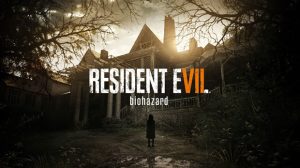
- Resident Evil 7: Biohazard
- Resident Evil 9: Requiem


Found something worth playing through DecideGame?
DecideGame.com is an independent gaming project run by Editor Zero. If this guide helped you discover a game, solve a problem, or find useful information, you can support DecideGame.com and help keep new and updated game guides coming.
DecideGame — PC Game Guides, Reviews & Setup Help