
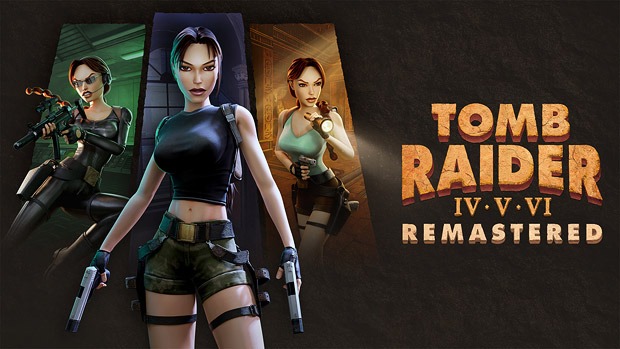
Use this updated 2026 Tomb Raider IV-VI Remastered PC guide to compare official Steam, Epic Games Store, and GOG purchase, download, and installation options, understand the Tomb Raider I-VI bundle, Steam Deck Verified support, system requirements, controls, mods, and setup guidance for The Last Revelation, Chronicles, and The Angel of Darkness.
 By Editor Zero — independently researched, edited, and maintained.
Last updated: 29 September 2026
Last reviewed: 29 September 2026
Table of Contents
- Quick Summary
- Quick Facts
- Official PC Stores, Download & Installation
- Tomb Raider IV-VI Remastered Review
- Pros & Cons
- PC System Requirements
- Frequently Asked Questions
- Similar Games
Tomb Raider IV-VI Remastered Quick Summary
✔ Remastered collection of Lara Croft’s darker late-Core Design adventures: The Last Revelation, Chronicles, and The Angel of Darkness
✔ Similar to Tomb Raider I-III Remastered through classic Lara Croft exploration, precision platforming, puzzle solving, traps, secrets, and instant visual switching
✔ More story-heavy and uneven than the first remastered trilogy, especially because The Angel of Darkness preserves ambitious systems and design problems from its troubled original release
✔ Official Windows PC versions are sold through Steam, Epic Games Store, and GOG, with GOG providing DRM-free ownership and the storefronts offering different library features
✔ Tomb Raider I-VI Remastered bundle or edition options combine this collection with Tomb Raider I-III Remastered, so existing owners should check what they already have before buying
✔ Steam Deck Verified support makes the collection convenient for handheld play, although its old-school movement, camera logic, and level design still require patience
Tomb Raider IV-VI Remastered Quick Facts
Official PC Stores, Download & Installation
👇 Compare the official Steam, Epic Games Store, and GOG PC options below before purchasing, downloading, or installing Tomb Raider IV-VI Remastered.
- PC availability: The Windows PC version is officially sold through Steam, Epic Games Store, and GOG.
- Included games: Every standard PC purchase includes Tomb Raider: The Last Revelation, Tomb Raider: Chronicles, and Tomb Raider: The Angel of Darkness.
- Tomb Raider I-VI options: Steam, Epic Games Store, and GOG each provide an official way to obtain IV-VI together with Tomb Raider I-III Remastered. If you already own I-III, compare the standalone IV-VI purchase with the relevant bundle or edition before paying again for content you already have.
- Steam features: Steam lists 168 achievements and Family Sharing, while Steam compatibility data confirms full controller support and Steam Cloud configuration.
- Epic Games Store features: Epic lists cloud saves, controller support, single-player access, 168 achievements, and an Epic ID requirement.
- GOG features: GOG sells the Windows version DRM-free with no activation or online connection required to play. GOG Galaxy is optional; the store also lists achievements, cloud saves, and controller support.
- Store ownership: Treat Steam, Epic, and GOG as separate PC store licenses. No official cross-store entitlement or cross-save system is advertised, so buy on the storefront whose ownership and library features you prefer.
- Steam Deck: Valve rates the Steam version Verified, with functional default controls, matching Deck controller icons, legible text, and acceptable default graphics behavior on SteamOS.
 Buy Tomb Raider IV-VI Remastered on Steam
 Buy Tomb Raider IV-VI Remastered on Epic Games Store
 Buy Tomb Raider IV-VI Remastered on GOG

Tomb Raider IV-VI Remastered Review
A darker and more uneven classic Lara collection where The Last Revelation shines, Chronicles benefits from restoration, and Angel of Darkness remains fascinating but flawed
Tomb Raider IV-VI Remastered is not as easy to recommend as the first remastered trilogy, but it may be even more interesting historically. This collection captures the second half of Core Design’s original Lara Croft era: the point where the formula became more ambitious, more story-heavy, more atmospheric, and eventually more unstable. It includes Tomb Raider: The Last Revelation, Tomb Raider: Chronicles, and Tomb Raider: The Angel of Darkness, with remastered visuals, classic graphics switching, modern and tank-style controls, photo mode, achievements, boss health bars, New Game Plus, unlockable extras, and accumulated stability and presentation fixes.
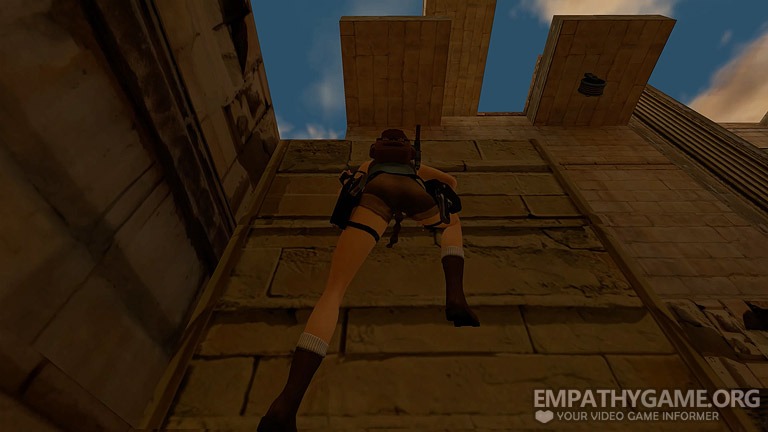
The result is valuable, but not evenly polished. The Last Revelation is the clear highlight, and in some ways it is classic Tomb Raider at its most developed. Chronicles is shorter, stranger, and less inspired as a full adventure, but the remaster helps it more than expected by improving presentation and fixing old pain points. The Angel of Darkness is the most fascinating inclusion because it remains one of the series’ great “what happened?” games: ambitious, stylish, unfinished, clumsy, and still capable of pulling the player into its gothic conspiracy mood.
This is not the smoothest entry point into Tomb Raider. Newcomers who want modern movement, cinematic pacing, generous signposting, and clean combat may struggle. Players who already appreciate old-school level design, deliberate movement, cryptic switches, dangerous traversal, and Lara’s darker period will find a package that preserves the flaws instead of pretending they never existed.
The Last Revelation Is the Collection’s Strongest Game
Tomb Raider: The Last Revelation is the reason this collection matters most as a game, not only as preservation. After the globe-trotting structure of the first three titles, The Last Revelation focuses almost entirely on Egypt, and that unity gives it a stronger identity. Temples, tombs, ruins, desert spaces, sacred chambers, flooded routes, catacombs, and mythic set pieces all feed into one long archaeological descent.
The game expands the original Tomb Raider level-design philosophy instead of abandoning it. Large spaces connect through puzzles, keys, levers, ropes, crawlspaces, water routes, timed doors, traps, and return paths. The best areas feel sculpted around observation. A room may not immediately announce its purpose, but it usually contains enough clues for a patient player to slowly understand what it wants.
The Last Revelation is also more personal than the first three games. It begins with young Lara and Werner Von Croy in Cambodia, establishing a mentor relationship based on curiosity, arrogance, danger, and shared obsession with discovery. That opening gives the later conflict more weight without removing Lara’s agency. She is not being pushed through the plot by family trauma or someone else’s emotional motivation. She is still Lara: bold, reckless, capable, and responsible for the consequences of her choices.
That distinction matters when comparing classic Lara with the later survivor-era games such as Tomb Raider 2013. The 2013 reboot builds Lara through vulnerability, survival, and emotional transformation. The Last Revelation makes her more vulnerable than before, but still presents her as an adventurer whose own ambition drives the story. It gives her more humanity without fully reshaping her into a modern character arc.
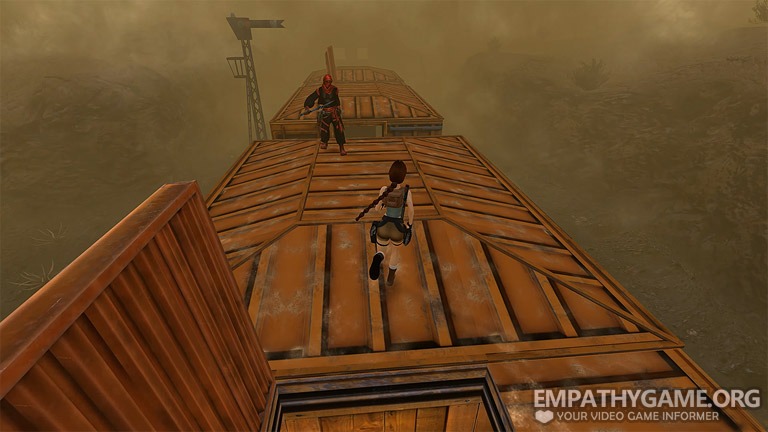
The main weakness is pacing. The Last Revelation is long, and its Egyptian focus can eventually feel exhausting. The same unity that gives the game power can also make it feel like it overstays its welcome. After many hours of tombs, ruins, sand, stone, switches, and return routes, even good level design can become heavy. Still, this is the most coherent game in the package and arguably one of the strongest examples of classic Tomb Raider as puzzle-platforming architecture.
Classic Movement Still Defines the Experience
Movement remains the foundation of all three games. Lara does not move like a modern action hero. She walks to ledges, lines up jumps, grabs edges, shimmies, crawls, climbs, swims, rolls, monkey swings, pushes blocks, and commits to animations. Every jump is a small test of spacing, timing, and confidence.
The remaster’s modern controls make camera handling and general navigation more comfortable, especially for players who struggle with tank controls. They help the games feel less intimidating at first. But they do not fully solve the old platforming friction because the levels were not built for modern fluidity. Jumps, ledges, slopes, ladders, crawlspaces, and tight platforms still belong to a design language based on measured movement.
Classic controls remain the most reliable way to understand many spaces. They can feel stiff until the player learns their logic, but once they click, they become precise. A standing jump, running jump, backstep setup, edge walk, or grab input behaves predictably. These games were built around that predictability, so forcing them into smoother movement can sometimes make them feel less precise rather than easier.
The best quality-of-life changes are often small. The improved crawlspace exit, which lets Lara somersault out more smoothly in places where older movement felt painfully slow, matters more than it may sound. In a game like The Last Revelation, where backtracking and repeated traversal are common, saving a few seconds on the same crawlspace interaction can reduce irritation across an entire campaign.
That is the remaster at its best: not replacing classic Tomb Raider, but sanding down small moments that used to make repetition more tiring.
Chronicles Is Weaker, But the Remaster Helps It More Than Expected
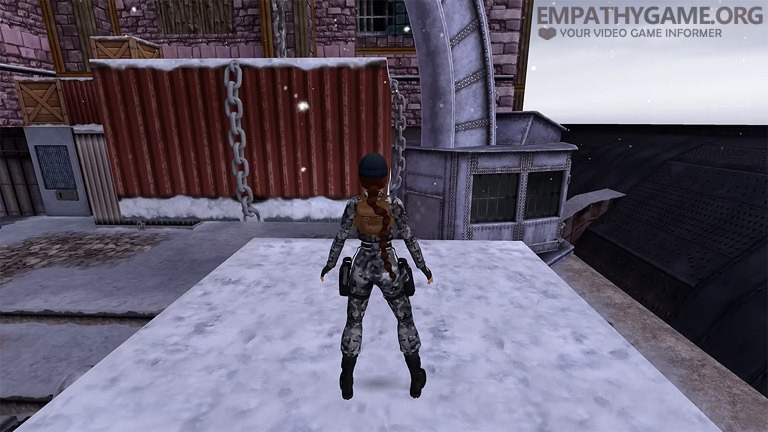
Tomb Raider: Chronicles has always felt like an odd entry. Its memorial framing, where Lara’s friends recall past adventures after the events of The Last Revelation, gives it an anthology structure. Rome, the Russian submarine, Black Isle, and the VCI tower all have distinct identities, but they do not create one strong central journey. It feels like a collection of episodes rather than a major chapter.
That structure has charm. Rome has a lighter classic-adventure feel, the submarine levels offer a more confined military setting, Black Isle gives young Lara a horror-flavored detour, and VCI pushes into gadgets, stealth, and high-tech spaces with Zip on comms. The variety keeps the game moving, and some individual sections are memorable.
The problem is that Chronicles often feels smaller and less inspired than The Last Revelation. It can resemble a watered-down version of the classic formula, with shorter ideas and less powerful exploration. The sense of grand discovery is weaker, and the game occasionally feels like a series reaching for leftover concepts rather than building a bold new adventure.
The remaster, however, gives Chronicles a meaningful lift. Fixes to late-game bugs, improved skyboxes, lighting changes, better presentation, and smoother compatibility make it easier to appreciate what the game does well. For some players, Chronicles may benefit from the remaster more than The Last Revelation because its original flaws were more technical and presentation-related. When the roughest edges are reduced, its anthology charm becomes easier to enjoy.
It is still not the best game in the set. But it is no longer just “the one between Last Revelation and Angel of Darkness.” In remastered form, Chronicles is a flawed but worthwhile collection of Lara stories that works best when treated as a bridge, not a full-scale epic.
Angel of Darkness Is Still the Troubled One
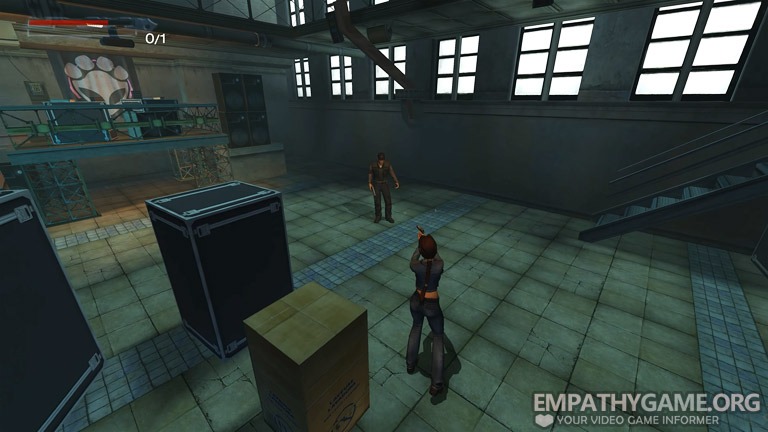
Tomb Raider: The Angel of Darkness is the most complicated part of this collection. It is the game most in need of rescue, and also the one hardest to rescue fully. The remaster improves it with cleaner visuals, restored or refined elements, dual pistols, better presentation, Kurtis Trent updates, dynamic hair, classic control options, and bug fixes. It is more playable now than the original release for many players, and it no longer requires the same level of fan-patch effort just to approach it comfortably.
But the underlying game is still Angel of Darkness. Its ideas are bigger than its execution. Lara is accused of murder, Paris and Prague create a noir-horror tone, the Obscura paintings suggest a larger occult conspiracy, the Cabal and Lux Veritatis expand the mythology, and Kurtis Trent introduces the idea of another playable character with his own history. There are dialogue choices, money, stealth sections, strength upgrades, hand-to-hand combat, urban exploration, and RPG-like gestures toward a different kind of Tomb Raider.
Those ideas are interesting. They also never become a fully satisfying system. Stealth is stiff, combat is awkward, the strength-upgrade mechanic feels artificial, and some dialogue choices are more cosmetic than meaningful. Kurtis is a nice addition conceptually, but his sections remain divisive because he moves and fights in a way that can feel even heavier than Lara.
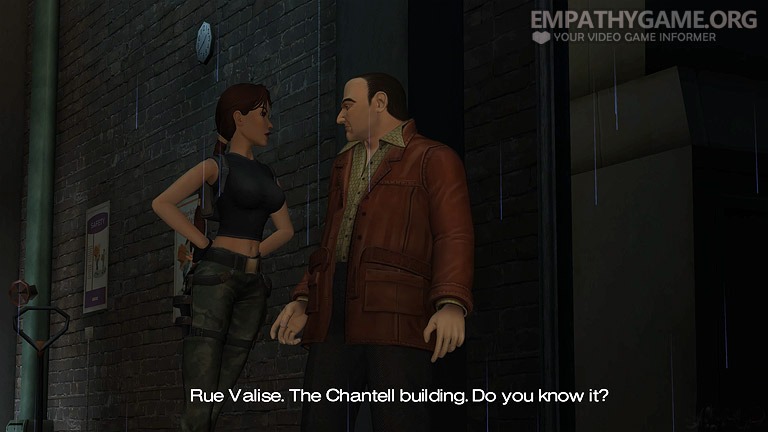
What Angel of Darkness does have is atmosphere. Parisian back streets, apartments, nightclubs, the Louvre, Von Croy’s apartment, Prague, laboratories, old orders, alchemical experiments, and occult science give it a mood unlike any previous Tomb Raider. Players who love gothic city mystery may find it strangely compelling even while recognizing its mechanical problems.
The French setting also gives it a grounded identity. Paris is not just a backdrop; its architecture, accents, streets, interiors, and noir tone make the game feel like a very specific turn for Lara. It is easy to see why some players remain attached to it. It feels like the start of a larger, darker Tomb Raider trilogy that never had the chance to become what it wanted to be.
The remaster makes Angel of Darkness easier to study and sometimes easier to enjoy. It does not make it fully polished. That honesty is important. This is still the weakest game here as a complete action-adventure, but it may be the most interesting failure.
The Remaster Improves the Package Without Hiding the History
The restoration work is stronger than a simple texture pass. The remastered visuals clarify environments, improve lighting, clean up textures, adjust skyboxes, refine models, add photo mode options, and let players switch back to classic graphics whenever they want. That instant comparison is valuable because these games have strong atmosphere in both forms. Sometimes the modern visuals improve readability; sometimes the classic look better preserves the mood.
The remaster also benefits from accumulated stability and presentation work. Crash and softlock corrections, Z-fighting improvements, inventory and animation corrections, control refinements, camera fixes, lighting adjustments, and visual-consistency changes all matter in a trilogy where the original games already had enough design friction. Chronicles in particular gains from late-game bug fixes, while Angel of Darkness benefits from any improvement that reduces technical distraction.
Not every issue is gone. Some setups can still show texture flicker, Z-fighting, or other visual problems, and a Steam Deck Verified rating does not guarantee that every scene will be flawless. Angel of Darkness can still look and feel less thoroughly transformed than the other two, which is disappointing because it was the game that needed the most help.
Still, the collection succeeds as a preservation project because it does not pretend these games are cleaner than they are. The Last Revelation remains long and demanding. Chronicles remains episodic and uneven. Angel of Darkness remains unfinished-feeling. The remaster’s value comes from making them easier to experience, not rewriting them into different games.
Storytelling Is Darker, But Not Always Better
This trilogy is more story-driven than the first three Tomb Raider games. The Last Revelation gives Lara’s relationship with Von Croy more importance, frames the Egyptian adventure around the accidental release of Set, and builds toward apocalyptic consequences. It feels more mythic and personal than the earlier artifact hunts.
Chronicles has a more unusual structure. Lara is presumed dead, and her friends remember past adventures. That framing is interesting because it turns the game into a memorial album, showing different sides of Lara across disconnected episodes. But because the stories are separate, the game lacks one strong emotional drive.
Angel of Darkness takes the biggest narrative swing. It wants murder mystery, occult conspiracy, secret orders, alchemy, betrayal, urban paranoia, and a more morally ambiguous Lara. The premise is strong. The execution is uneven. The story often feels like the first act of something larger, which makes its unresolved qualities more painful. It is not hard to see the potential, but potential is not the same as payoff.
This makes the collection a useful contrast with modern entries like Rise of the Tomb Raider. Rise uses modern cinematic structure, emotional motivation, and more accessible action-adventure pacing. Tomb Raider IV-VI is rougher and less polished, but it often feels more mysterious because it leaves more weight on spaces, rituals, artifacts, and atmosphere.
Combat and Stealth Remain the Weak Links
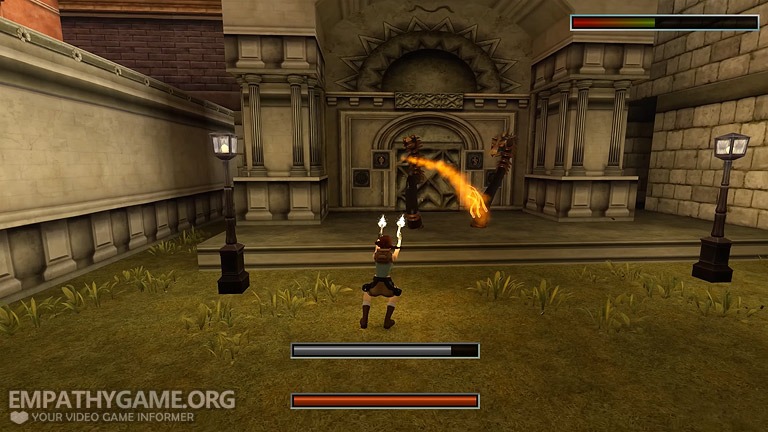
Classic Tomb Raider combat has always been functional rather than elegant, and that remains true here. Lara’s weapons are useful, enemies create pressure, and boss health bars improve readability, but combat is rarely the best part of these games. The Last Revelation uses enemies mostly as danger inside larger puzzle spaces, which works well enough. Chronicles and Angel of Darkness expose the limitations more often.
Angel of Darkness suffers most because it tries to expand combat and stealth without fully solving either. Hand-to-hand attacks, stealth takedowns, cover-like behavior, weapon scarcity, and slower movement suggest a more modern action-adventure direction, but the systems are too clumsy to support that ambition consistently. The game wants Lara to feel more grounded and vulnerable, yet often makes her feel awkward instead.
Stealth sections can work atmospherically, especially in urban or high-security settings, but they lack the precision needed to be truly satisfying. When a game with already-heavy movement asks for careful stealth, the margin for frustration grows quickly.
This is where the remaster has limits. It can improve controls, restore content, fix bugs, and clean presentation. It cannot fully rebuild enemy AI, level scripting, combat feedback, and stealth rules without becoming a remake. Players should expect improvement, not transformation.
New Game Plus, Golden Pistols, Outfits, and Achievements Add Replay Value
Replayability in Tomb Raider IV-VI Remastered comes from mastery rather than branching choices. These games are about learning routes, finding secrets, remembering puzzles, improving execution, and understanding spaces that were confusing the first time. A second run is often smoother because the player no longer sees each level as a maze of unknowns.
New Game Plus adds a sharper reason to return. Tougher conditions and changed expectations can turn familiar routes into more demanding tests. This is especially valuable for experienced players who know the layouts and want something beyond a simple replay. The old Tomb Raider formula works well with challenge runs because the levels are already based on precision and memory.
Golden Pistols for The Last Revelation and Chronicles, outfit unlocks, photo mode filters, achievements, and visual toggles add extra motivation. They do not turn the collection into a modern progression game, but they give dedicated players more reasons to revisit levels and experiment with presentation.
The biggest long-term hook remains completion. Secrets in classic Tomb Raider are easy to miss, and some are hidden with almost cruel confidence. Players who enjoy full completion can spend a long time with this package, especially if they want to compare classic and remastered graphics, test modern controls against tank controls, and revisit levels under New Game Plus conditions.
How It Fits Beside the Survivor Trilogy
Tomb Raider IV-VI Remastered shows a version of Lara very different from the survivor-era games. Modern entries place more emphasis on cinematic performance, skill trees, crafting, third-person shooting, stealth arenas, emotional trauma, and guided exploration. The Core Design games place more weight on movement, puzzle structure, atmosphere, and the player’s ability to decode old level logic.
That difference is not automatically better or worse. It depends on what the player wants from Tomb Raider. Fans of Shadow of the Tomb Raider may appreciate The Last Revelation because both games put more emphasis on tombs, ancient spaces, and puzzle atmosphere than pure gunplay. But Shadow is still a modern action-adventure. The Last Revelation is much colder, slower, and less forgiving.
The Angel of Darkness is the strange bridge that never fully became one. It tries to move Lara toward darker storytelling, urban mystery, dialogue options, and modernized mechanics, but it lacks the polish that Crystal Dynamics would later bring to the series. That makes it historically important, even when it is frustrating to play.
For players curious about how Tomb Raider changed across decades, this collection is valuable because it shows the old formula reaching its limit. The Last Revelation perfects much of it. Chronicles fragments it. Angel of Darkness tries to escape it and collapses under the weight of that ambition.
Final Verdict
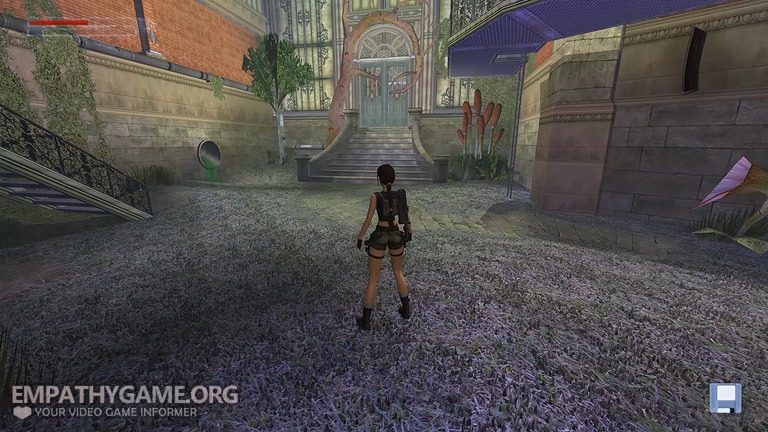
Tomb Raider IV-VI Remastered is a strong preservation package for an uneven trilogy. The Last Revelation is the highlight: a long, atmospheric, highly developed classic Tomb Raider adventure that makes Egypt feel like one enormous puzzle box. Chronicles is weaker and more episodic, but the remaster helps it significantly through visual improvements, bug fixes, and smoother presentation. The Angel of Darkness remains the troubled outlier, improved enough to be more playable, but still clunky, unfinished-feeling, and mechanically compromised.
The collection’s value depends heavily on expectations. Players looking for smooth modern action, responsive combat, generous signposting, and polished cinematic storytelling may struggle. Players who enjoy deliberate movement, old-school puzzle design, difficult traversal, darker Lara Croft history, and restoration work will find a lot to appreciate. The remaster does not erase the flaws, and that is partly why it matters.
As a set, these three games show Core Design’s Tomb Raider formula at its peak, its exhaustion point, and its attempted reinvention. The Last Revelation proves how powerful classic Lara could still be. Chronicles reveals how thin the formula could become when split into fragments. Angel of Darkness shows the ambition and damage of trying to drag Tomb Raider into a new era before the technology, schedule, and systems were ready. Tomb Raider IV-VI Remastered is not the cleanest Lara collection, but it is one of the most important for understanding how the classic era ended.
Tomb Raider IV-VI Remastered Pros & Cons
Tomb Raider IV-VI Remastered PC System Requirements
OFFICIAL WINDOWS PC REQUIREMENTS:
MINIMUM:
OS: Windows 10+
CPU: Intel i3 / AMD FX-4100
RAM: 4 GB
GPU: GeForce GT 620 1 GB / Radeon HD 8670D
Additional Notes: Requires a 64-bit processor and operating system
RECOMMENDED:
OS: Windows 10+
CPU: Intel i7 / AMD Ryzen 7 5800
RAM: 16 GB
GPU: NVIDIA RTX 2080 / Radeon RX 6750
Additional Notes: Requires a 64-bit processor and operating system
Additional PC Performance and Setup Notes
- The minimum CPU and GPU requirements are light, but the recommended GPU tier is much higher, so older PCs should prioritize stable frame rate and comfortable display settings rather than assuming every remastered option will behave identically.
- The current Steam and Epic Games Store requirements pages do not state a storage figure, so keep reasonable free space available for the installation, saves, temporary files, and store-client overhead rather than relying on an old size estimate.
- Steam Deck users can begin with Valve’s Verified default configuration before experimenting with external controllers, custom layouts, or higher display resolutions.
- Use classic controls for more predictable grid-based jumps and modern controls for easier camera movement and general exploration, then choose whichever scheme fits each game and situation best.
- The Angel of Darkness may need more patience than The Last Revelation and Chronicles because its original design was built around different movement, stealth, strength, combat, and camera systems.
- If visual readability feels unclear, switch between classic and remastered graphics to compare lighting, ledges, pickups, traps, and route clues.
- For crashes or odd behavior, verify or repair the installation through the relevant store client where supported, update GPU drivers, remove recent mods, and retest with clean files.
- Back up saves before installing outfit, texture, camera, save, or quality-of-life mods.
Official Trailer
Note: The official trailer presents the darker remastered collection, classic/remastered visual switching, Lara’s later Core Design-era adventures, Egypt, Rome, Paris, Prague, platforming, combat, and puzzle exploration, while the written guide adds Steam, Epic Games Store, GOG, I-VI package, Steam Deck, system-requirement, modding, and setup guidance.
Frequently Asked Questions
Is Tomb Raider IV-VI Remastered worth playing in 2026?
Yes, especially if you enjoy classic Tomb Raider movement, puzzle-heavy levels, secrets, traps, and Lara Croft’s darker Core Design-era stories. The Last Revelation is the strongest game in the set, Chronicles is a shorter anthology-style adventure, and The Angel of Darkness remains uneven but is easier to approach in remastered form.
What kind of game is Tomb Raider IV-VI Remastered?
It is a single-player action-adventure and puzzle-platforming collection built around exploration, deliberate traversal, combat, secrets, traps, and level-based progression. It preserves the structure of three older Tomb Raider games rather than rebuilding them as modern open-world adventures.
Is Tomb Raider IV-VI Remastered a remake or a remaster?
It is a remastered collection rather than a full remake. The original level layouts, stories, and core design remain intact, while the package adds remastered graphics, a classic-visual toggle, modern control options, Photo Mode, achievements, quality-of-life changes, restored material, and other presentation and gameplay improvements.
Which games are included in Tomb Raider IV-VI Remastered?
The collection includes Tomb Raider: The Last Revelation, Tomb Raider: Chronicles, and Tomb Raider: The Angel of Darkness.
Where can I officially buy Tomb Raider IV-VI Remastered on PC?
The Windows PC version is officially sold through Steam, Epic Games Store, and GOG. Choose between them based on your preferred library, achievements, cloud features, controller setup, and whether DRM-free ownership matters to you.
What is the difference between Steam, Epic Games Store, and GOG?
Steam provides Steam achievements, Family Sharing, Steam Cloud configuration, full controller support, and Steam Deck integration. Epic lists cloud saves, controller support, achievements, and requires an Epic ID. GOG provides a DRM-free build that can be installed and played without online activation, with GOG Galaxy remaining optional.
Is Tomb Raider IV-VI Remastered DRM-free on PC?
The GOG version is DRM-free and does not require online activation or a continuous internet connection to play. Steam and Epic use their own store ecosystems, so choose the version that best matches your ownership preferences.
Can Tomb Raider IV-VI Remastered be played offline?
Yes. The collection is single-player, Steam compatibility data does not require internet for single-player after setup, and GOG explicitly supports offline installation and play. Online access is still useful or required for store downloads, cloud features, achievements, account services, and updates depending on the storefront.
What is Tomb Raider I-VI Remastered?
It is an official package that combines Tomb Raider I-III Remastered with Tomb Raider IV-VI Remastered, covering Lara Croft’s first six main Core Design adventures. Steam, Epic Games Store, and GOG each provide an official I-VI purchase option or edition.
Should I buy Tomb Raider IV-VI Remastered separately or the I-VI package?
If you already own Tomb Raider I-III Remastered, compare the standalone IV-VI option with your storefront’s bundle or edition before buying. If you own neither collection and want all six classic games, an I-VI package can be the simpler route.
Do I need to play Tomb Raider I-III Remastered first?
No, but playing the first trilogy provides useful context for Lara’s earlier adventures and makes the progression of Core Design’s level and movement ideas easier to appreciate. The Last Revelation can still be enjoyed without finishing the first three games.
Can I switch between classic and remastered graphics?
Yes. The collection allows instant switching between the original-style polygonal presentation and the remastered visuals, which can also help when lighting or level geometry is easier to read in one mode than the other.
Should I use modern controls or classic tank controls?
Modern controls are easier for camera movement and general navigation, while classic controls often fit the grid-based platforming logic more predictably. New players can start with modern controls and switch when precise jumps or older level layouts feel easier with the original movement style.
Is The Angel of Darkness completely fixed in the remaster?
No. The remaster restores and improves many elements, adds control and presentation options, and reduces several technical problems, but it does not rebuild the underlying game from scratch. Its combat, stealth, movement, progression ideas, and level flow can still feel more awkward than the other two games.
Does Tomb Raider IV-VI Remastered have Photo Mode?
Yes. Photo Mode is available as part of the remastered package and includes options for framing Lara and experimenting with presentation across the three games.
Does Tomb Raider IV-VI Remastered have New Game Plus?
Yes. New Game Plus provides additional replay challenge after completing the games and is aimed at players who already understand the routes, puzzles, and movement systems.
Does Tomb Raider IV-VI Remastered have multiplayer or co-op?
No. The collection is single-player only and does not include online multiplayer, campaign co-op, split-screen, LAN play, cross-play, or cross-progression.
Does Tomb Raider IV-VI Remastered support controllers on PC?
Yes. Steam, Epic Games Store, and GOG all list controller support, and Steam compatibility data reports full controller support. Keyboard controls remain available for players who prefer the classic PC approach.
Is Tomb Raider IV-VI Remastered Steam Deck Verified?
Yes. Valve rates the Steam version Verified and lists functional default controls, matching Deck controller icons, legible text, good default graphics behavior, and successful SteamOS operation.
Does Tomb Raider IV-VI Remastered have mods?
Yes, unofficial community mods exist, including visual edits, outfits, textures, save files, and quality-of-life changes. There are no official public modding tools or Steam Workshop support listed, so back up saves and modified files before experimenting.
What are the official PC system requirements?
The minimum requirements list Windows 10+, an Intel i3 or AMD FX-4100, 4 GB RAM, and a GeForce GT 620 1 GB or Radeon HD 8670D. The recommended tier lists an Intel i7 or AMD Ryzen 7 5800, 16 GB RAM, and an NVIDIA RTX 2080 or Radeon RX 6750.
How much storage does Tomb Raider IV-VI Remastered require?
The current Steam and Epic Games Store requirements pages do not state a storage figure. Keep additional free space available for the installation, saves, temporary files, and store-client overhead rather than relying on an older size figure from an outdated requirements listing.
What should I try if Tomb Raider IV-VI Remastered crashes or behaves strangely?
Start by verifying or repairing the installed files through the relevant store client where supported, updating GPU drivers, disabling recent mods, and retesting with clean configuration or save backups. If the issue persists, check Aspyr’s support hub and current community discussions for game-specific reports.
Which game in Tomb Raider IV-VI Remastered is the strongest starting point?
The Last Revelation is the most natural starting point because it is the first game in this collection and the strongest expression of the classic puzzle-platforming formula here. Chronicles works best afterward, while The Angel of Darkness is easier to appreciate when you already understand how different it is from the earlier Core Design games.
Still have questions? Check the Tomb Raider subreddit, Steam Discussions, and the Aspyr support hub.
Sources & References
- Aspyr Support — Tomb Raider IV-VI Remastered availability and platform information
- Steam — Tomb Raider IV-VI Remastered store page, bundle, features, requirements, and user reception
- Epic Games Store — Windows listing, features, achievements, requirements, and OpenCritic summary
- GOG — DRM-free Windows version, offline ownership, features, and I-VI edition
- SteamDB — Steam Deck compatibility and Steam metadata
- Metacritic — Tomb Raider IV-VI Remastered critic score
Similar Games Like Tomb Raider IV-VI Remastered
- Tomb Raider I-III Remastered
- Shadow of the Tomb Raider
- Rise of the Tomb Raider
- Resident Evil 1 HD Remaster
- The Legend of Zelda: Breath of the Wild
- Assassin’s Creed Odyssey





Found something worth playing through DecideGame?
DecideGame.com is an independent gaming project run by Editor Zero. If this guide helped you discover a game, solve a problem, or find useful information, you can support DecideGame.com and help keep new and updated game guides coming.
DecideGame — PC Game Guides, Reviews & Setup Help