
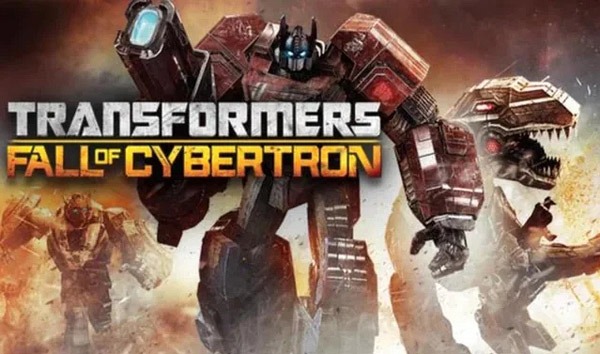
📅 Game released: 2012
Transformers: Fall of Cybertron follows the Autobots and Decepticons through a story-driven third-person shooter on their collapsing homeworld, with chapters built around each Transformer’s abilities. This PC guide explains official download availability for existing owners, installation and ownership limitations, PC system requirements, Steam Deck support, discontinued online services, and practical compatibility and save-backup advice.
 By Editor Zero — independently researched, edited, and maintained.
Last updated: 14 November 2026
Last reviewed: 14 November 2026
Table of Contents
- Quick Facts
- Official PC Stores, Download & Installation
- Transformers: Fall of Cybertron Review
- Pros & Cons
- PC System Requirements
- Frequently Asked Questions
- Similar Games
Transformers: Fall of Cybertron Quick Facts
- Game: Transformers: Fall of Cybertron
- Developer: High Moon Studios; Windows PC conversion by Mercenary Technology
- Publisher: Activision
- Genre: Third-Person Shooter, Sci-Fi, Action-Adventure
- Release: August 21, 2012 (original release on Windows PC, PS3, and Xbox 360)
- Platforms: Windows PC, PS3, Xbox 360; later PS4 and Xbox One editions
- DLC / Expansions: G1 Retro Pack, G2 Bruticus content, Multiplayer Havoc Pack, Dinobot Destructor Pack, and Massive Fury Pack; original PC DLC no longer sold
- Steam Deck: Playable (Valve’s retained rating); some functions may need touchscreen, virtual keyboard, or a community layout
- Engine: Unreal Engine 3
- Modes: Single-player campaign; original online competitive multiplayer and four-player Escalation co-op are discontinued as official services
- Community: Activision Support, Steam Discussions, Transformers Reddit
- PC modding: Unofficial Nexus Mods community; no official Steam Workshop or mod tools
- Metacritic score: 78/100 (Windows PC)
- IGN score: 8.5/10 (original release review)
- Steam user reception: Very Positive overall (retained reviews; game no longer sold to new Steam buyers)
Official PC Store Status, Download & Installation
👇 Check the original Windows PC version’s official ownership, download and installation status before seeking another copy or making changes to an existing installation.
- Windows PC store status: The original Steam version has been removed from sale, and no verified authorized PC storefront offers a normal new digital purchase. The historical Steam app and community pages remain visible for existing owners.
- Existing Steam owners: If the game is already attached to your Steam account, locate it in Library, select Install, and allow Steam to download and verify the files. Delisting does not by itself remove an existing library entitlement.
- Boxed and unused-key copies: A secondhand PC box or code is not a guarantee of a usable activation. Original retail editions and regions could have different activation arrangements; check the exact edition, any activation key’s redemption status, and regional restrictions before relying on an old copy.
- Xbox listing is console-only: The Microsoft/Xbox product listing specifies Xbox One and Xbox Series X|S, not Windows PC or Xbox Play Anywhere. Console ownership should not be mistaken for a Windows license.
- Legacy PC DLC: The original add-ons are also unavailable for new standard Steam purchases. Most added multiplayer customization, while Massive Fury also included G1 Optimus Prime, a G2 Bruticus appearance, the Retro Blaster, and the Shock Cannon for campaign use. Access to old DLC depends on what the owner’s account or edition already includes.
- PS4 / Xbox One editions: These later console releases bundled the available legacy DLC, according to Activision’s DLC explanation. That packaging does not upgrade or replace a Windows PC entitlement.
- Single-player campaign: The story does not need the retired original multiplayer master server. Existing Steam ownership and the Steam client may still be relevant for installation and account-based activation; first complete setup with your legitimate copy.
- Original official multiplayer: Activision lists Fall of Cybertron among its legacy games, and the original online multiplayer and Escalation service is no longer a supported way to play. A visible console storefront feature label is not proof that the old servers have returned.
- Unofficial multiplayer restoration: Fan-maintained projects may provide connectivity for compatible owned installations, but they are separate from Activision, with changing requirements and no official guarantees. Inspect their provenance and security implications before adding community clients or modifying your game.
- Steam Deck: Valve’s retained compatibility data marks the original Steam app Playable, with good default-graphics performance reported for that tested build. Some UI operations may need touch, keyboard, or Steam Input adjustments; a Steam entitlement is still required.
- Safe modding and backups: The game’s Nexus Mods page hosts community modifications. Back up saves and any files you plan to edit first, and avoid combining mods that replace the same assets or configuration.
 Visit Official Transformers: Fall of Cybertron Support

Transformers: Fall of Cybertron Review
Constantly changing characters keep the campaign exciting, even when spectacle outruns mechanical depth.
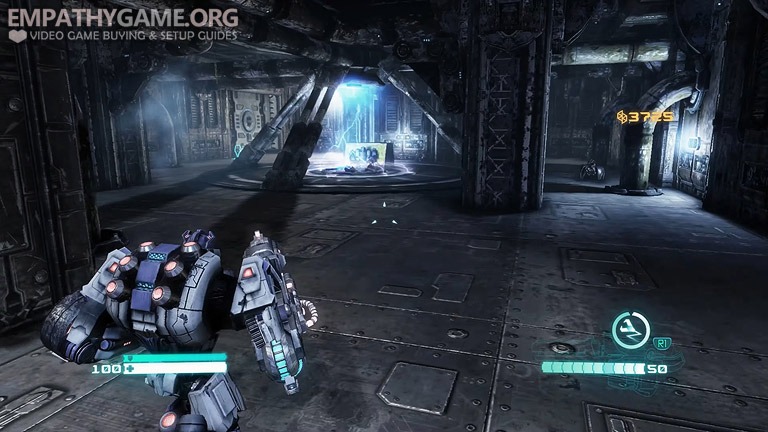
Transformers: Fall of Cybertron has a useful way of avoiding the fatigue that can settle into a long shooter campaign: just as one style of play becomes familiar, it hands control to someone else. High Moon Studios does not rely on a single Autobot or Decepticon to carry the action. Cliffjumper can disappear from sight, Jazz swings between positions with a grappling hook, Vortex fights from the air, and Grimlock eventually swaps guns for a sword and the power to become a Tyrannosaurus. They belong to the same war, but they do not approach it in the same way.
The change of characters gives a fairly linear third-person shooter far more personality than its basic combat systems might suggest. There is a compromise, though. Many of the best abilities are confined to individual chapters, leaving little opportunity to explore their deeper possibilities. Some enormous battles also offer more spectacle than meaningful control. The game works best for players who enjoy a tightly directed action story, recognizable Transformers personalities, and a steady change of pace rather than a sandbox that lets them master one elaborate set of mechanics.
A Campaign Built Around the Transformer You Control
The shift from War for Cybertron explains much of the sequel’s design. The earlier game offered selectable squads and campaign co-op. Fall of Cybertron takes that freedom away and builds each chapter around a particular Transformer instead. Levels now assume a particular ability, vehicle form, and set of limitations, tying encounters more closely to the Transformer involved.
Cliffjumper’s cloak is a good example. Slipping behind sentries and approaching defenses unseen encourages patience instead of another immediate exchange of gunfire. Jazz creates almost the opposite feeling. His grappling hook invites movement, letting him cross gaps and escape dangerous positions without following the same routes as everyone else. Vortex takes the idea further: switching into helicopter form, gaining altitude, attacking defenses, and returning to robot form is central to how his missions work. Here, transforming is not just an extra feature available on the controller. It shapes the mission itself.
Chapters are easy to distinguish even when objectives are familiar, but the limitation becomes clearer afterward. Cliffjumper’s stealth never grows into a particularly deep infiltration system, and Jazz’s hook does not open up a broad traversal playground. Each mechanic receives enough attention to establish its appeal, then the story moves on. That keeps repetition under control, but it also means the campaign often leaves an interesting idea behind just when it feels ready to do more with it.
Shooting Works Best When Transformation Has a Purpose
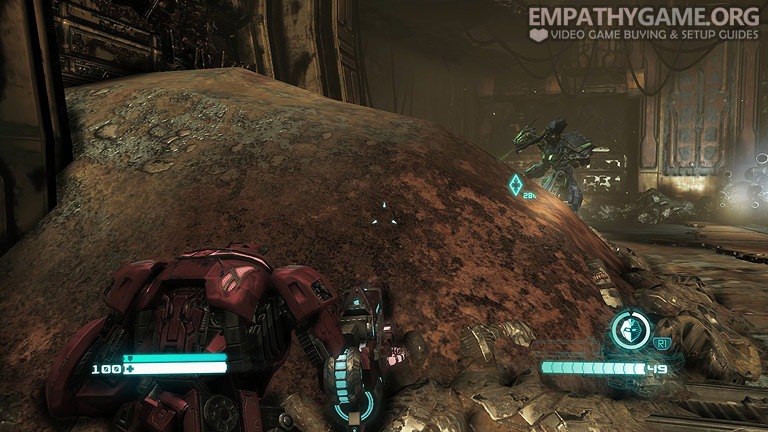
Strip away the special abilities and the underlying action is a straightforward third-person shooter. Shields regenerate, health pickups provide a safety net, and explosives and heavy weapons help break up ordinary exchanges of fire. The Path Blaster, Scrapmaker, and Thermo Rocket Cannon give the arsenal recognizable roles, from more controlled shooting to sustained fire and heavy damage. Weapons have enough character to make choosing one worthwhile, although they do not turn combat into a complicated tactical system. Clear visual feedback keeps crowded battles readable.
The arenas are less convincing. Ground encounters frequently provide barriers, pillars, and waist-high scenery that look as if they belong in a cover shooter. Yet there is no conventional snap-to-cover mechanic. Once a shield breaks, withdrawing behind a wall and waiting for recovery can be more reliable than using the speed and mobility implied by the characters. Strangely, some firefights reward cautious peeking more than transforming.
The contrast becomes obvious in the larger spaces. A flying Transformer can reposition above defenses, attack from a different angle, then land when the situation changes. Vehicle speed is useful when there is room to close a gap or get away from concentrated fire. In narrower ground encounters, remaining in robot form often works just as well. That exposes a central combat trade-off. Transforming feels rewarding when the environment gives the new form a practical advantage; without that opportunity, it risks becoming a visually impressive option that the level never really asks the player to use.
Grimlock and Bruticus Deliver the Right Kind of Power Fantasy
Grimlock and Bruticus are the campaign’s clearest departures from normal gunplay. Both sections are built around overwhelming strength, but they reach it in different ways. Grimlock fights with a sword and shield, building a rage meter before he can unleash his Tyrannosaurus form. The restriction is important to the rhythm of his chapter. Close-range combat establishes some resistance first, so becoming a dinosaur feels like a release of built-up power rather than the default way of clearing every room.
Bruticus needs far less preparation. As the combined Combaticon, he towers over ordinary enemies and turns an assault into a demonstration of scale. It demands neither Jazz’s precision nor Cliffjumper’s caution. Its appeal is simpler: for a short time, the balance of power changes so dramatically that the battlefield seems built around the character rather than the other way around. It works because the sequence is brief.
Not every large set piece finds the same balance. Metroplex, collapsing installations, enormous machinery, and scripted destruction make Cybertron’s war look immense, but some of those moments give the player little more to do than activate an obvious interaction or shoot a designated target. Grimlock and Bruticus are more convincing because their scale also changes how the game is controlled. The spectacle is still deliberately excessive, but it belongs to the character’s actions instead of unfolding almost entirely around them.
Cybertron Feels Like a Civilization at the End
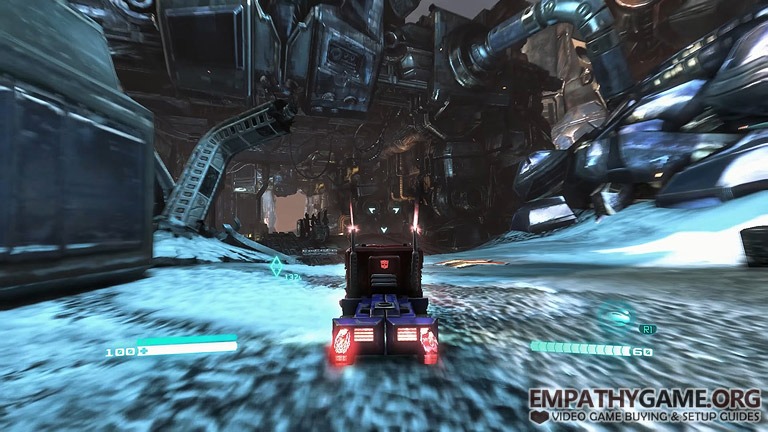
The central story is relatively direct. Cybertron is running out of Energon, the Autobots are preparing the Ark for escape, and Megatron is determined to stop them. What makes that premise effective is how consistently the environments support it. Damaged facilities, burning battlefields, machinery still struggling to function, and structures collapsing under the pressure of war make the planet feel used up. These places are more than futuristic shooting galleries. They suggest a civilization losing the ability to sustain itself, which gives even fairly ordinary objectives a stronger sense of purpose.
The shifting viewpoints help the conflict feel larger than a single hero’s mission. Optimus Prime is carrying the responsibility of evacuation, Megatron is still consumed by conquest, and Starscream’s ambition creates tension within the Decepticons. The Dinobots introduce a rougher, more physical energy later in the campaign. None of this is especially subtle character writing, but subtlety is not necessarily what these encounters need. Peter Cullen gives Optimus a convincing sense of responsibility, while Gregg Berger makes Grimlock’s aggression immediately recognizable. The performances reinforce identities already established through play.
Bumblebee is one decision that feels less natural within this particular continuity. His damaged vocal processor leaves him mute, despite his ability to speak in War for Cybertron. It is familiar from other versions of Transformers, but it removes a little of the character’s established personality here. It stands out because the rest of the campaign treats character identity so carefully.
Upgrades Give the Linear Campaign Just Enough Progression
Teletraan-1 terminals add a useful progression system without making the campaign revolve around menus. Energon earned during play can be spent on weapons, upgrades, perks, and T.E.C.H. equipment, while hidden blueprints expand the available purchases. Since the campaign keeps moving between Transformers, the shared nature of these upgrades matters. Resources spent improving equipment do not become irrelevant simply because the next chapter follows someone from the other faction.
The decisions are meaningful but deliberately limited. Investing in a favored weapon can make later firefights more comfortable, although the chapter’s assigned character and special mechanics still determine much of the experience. This is a sensible balance for a game with such a controlled structure. Progression offers something to plan and work toward without competing with the character-specific design. Returning to chapters for missing blueprints, audio logs, and equipment upgrades provides an additional goal, but those rewards do not fundamentally change the missions on another playthrough.
Small Secrets Reward Attention More Than Exploration
There is a difference between giving players a reason to look around and giving them a world to explore. Fall of Cybertron mostly does the former. Its levels follow fixed paths, with occasional side routes holding audio logs, useful blueprints, or small character details. The audio logs add context to the war, while the best secrets offer a reminder that High Moon Studios understands the stranger, more playful side of Transformers history.
Starscream’s crown is a particularly good example. An optional detour in his chapter reveals the crown and triggers a brief flourish, after which he can wear it for the rest of the section. It is not mechanically important, and that is why it works as a secret. It rewards curiosity with a joke that suits the character rather than another item on a checklist. Such details make the linear spaces feel more deliberately crafted, although anyone hoping for substantial exploration or alternate mission routes will still find the boundaries quite restrictive.
Losing Campaign Co-op Changes the Value of a Replay
The removal of campaign co-op is arguably the sequel’s biggest structural sacrifice. Building missions around one particular Transformer allows stronger individual chapters, but War for Cybertron also benefited from letting friends experience its campaign together. Fall of Cybertron cannot replace that with better scripting alone. Replaying the story is mostly about tackling a harder difficulty, finding missed secrets, chasing achievements, or experimenting with upgraded weapons. The characters and encounters remain fixed, so another run offers more familiarity than surprise.
Escalation provides a separate kind of cooperation. Four players survive increasingly difficult waves, earn resources, buy weapons and upgrades, and choose when to open additional areas. That economy poses a team decision: is one player’s preferred weapon more valuable than unlocking space for everyone? Competitive multiplayer uses classes distinguished by size, speed, alternate form, and battlefield role. Here, transforming can decide whether someone catches a target, escapes pressure, or reaches the right position for a teammate.
These modes also help explain why some single-player encounters feel more limited. Transformation is at its most interesting when it changes the decisions available, not simply the character’s appearance. Multiplayer can make that choice matter constantly through pursuit, positioning, and teamwork. The campaign offers stronger narrative direction but fewer chances to approach scenarios differently. For anyone whose favorite part of the first game was sharing its story with friends, the sequel’s stronger character focus comes at a genuine cost.
Final Verdict
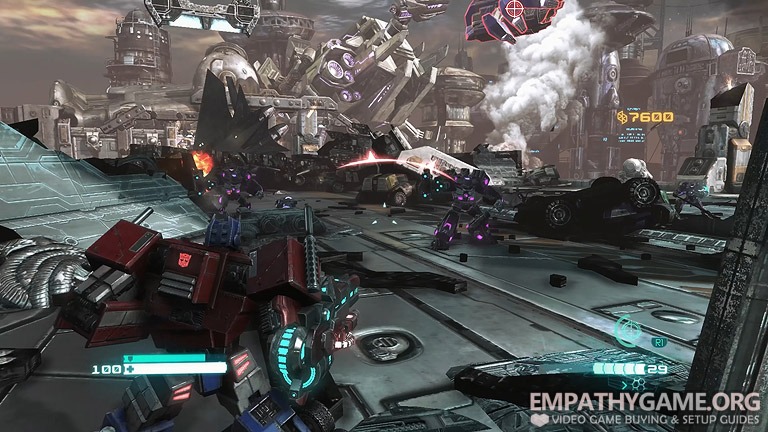
Transformers: Fall of Cybertron is more memorable as a collection of character-driven chapters than as a mechanically deep shooter. Its ordinary firefights are enjoyable but familiar, and the more restrictive arenas do not always make good use of transformation. Some of the largest spectacles are also less interactive than their presentation suggests. Still, Cliffjumper’s cloak, Jazz’s grappling hook, Vortex’s flight, Grimlock’s rage-fueled dinosaur form, and Bruticus’s destructive scale keep changing what the campaign asks of the player.
The cost of that variety is that few of those ideas develop very far. The absence of campaign co-op also takes away one of the predecessor’s most appealing reasons to return, while Bumblebee’s silence creates an unnecessary break in character continuity. Yet the pacing is unusually disciplined. Powerful sequences arrive, deliver their particular fantasy, and end before their simplicity becomes too obvious. The steady deterioration of Cybertron gives those changing chapters a convincing common purpose.
Anyone seeking long-term build experimentation, wide-open levels, or a shooter with unusually demanding combat systems may find it too directed. For Transformers fans and players who prefer a focused action campaign with distinct personalities, it remains compelling for a more specific reason: these characters do not merely look different. At its best, playing as each one feels different too.
Transformers: Fall of Cybertron Pros & Cons
- Pro: Varied campaign chapters give different Autobots and Decepticons distinct weapons, transformations, movement styles, and character-specific abilities
- Pro: Grimlock, Bruticus, large-scale battles, transforming environments, and Cybertron’s final evacuation create memorable franchise-specific set pieces
- Pro: The changing characters and strong visual atmosphere keep a focused, linear story moving
- Pro: The original PC hardware requirements are modest, and the game supports 60 FPS without the 30 FPS workaround associated with its predecessor
- Pro: Valve’s retained Steam Deck rating is Playable, with good performance noted for the tested default graphics settings
- Pro: Unofficial mods can expand visual, character, interface, and quality-of-life options for existing owners
- Con: Several character-specific abilities end before they develop into deeper mechanics, and some set pieces offer limited interaction
- Con: Campaign co-op from War for Cybertron was removed, reducing opportunities to replay the story with friends
- Con: The PC edition is no longer sold normally through Steam or another verified authorized Windows storefront
- Con: Original Activision multiplayer and Escalation services are discontinued; fan restoration is unofficial
- Con: Ultrawide display support, 4K texture behavior, higher-than-60-FPS changes, and shared save folders may require extra care on modern PCs
Transformers: Fall of Cybertron PC System Requirements
Important: These are the original Windows PC specifications from the game’s 2012 documentation, not a guarantee of compatibility with Windows 10 or Windows 11. No full second recommended system tier was published in the cited PC readme.
ORIGINAL OFFICIAL MINIMUM:
OS: Windows XP / Windows Vista / Windows 7
CPU: Intel Core 2 Duo E6750 2.66 GHz or AMD Phenom X3 8750
RAM: 2 GB
GPU: NVIDIA GeForce 8800 GTS 512 MB / ATI Radeon HD 4850 512 MB or equivalent
DirectX: DirectX 9.0c
Storage: 8.1 GB of uncompressed hard disk space (original readme)
Sound Card: DirectX 9.0c-compatible 16-bit sound device
Optical Drive: Compatible DVD-ROM drive for original physical media only
Internet: Connection needed for original activation; original online multiplayer service is discontinued
Additional: Motherboard-integrated graphics chipsets were not officially supported
ORIGINAL RECOMMENDED GRAPHICS ONLY:
GPU: ATI Radeon HD 5850 1 GB / NVIDIA GeForce 9800 GT 512 MB
The original documentation did not provide separately specified recommended CPU, RAM, OS, and storage values. Disk-space listings on later community databases may differ slightly; allow additional room for installation and file operations.
Additional PC Performance and Setup Notes
- Modern Windows: Windows XP, Vista, and 7 are the historical supported systems. Windows 10 and 11 were never part of those published specifications, so an owned installation should be tested rather than treated as officially guaranteed.
- Frame rate: The PC game supports 60 FPS. Raising it substantially through community configuration changes can disrupt physics or cutscene speed; 60 FPS is the safer default.
- 4K texture streaming: At 4K, some assets can appear unusually blurry. PCGamingWiki documents an unofficial texture-pool adjustment using decoded and re-encoded
Coalesced.ini. Back up the file before editing; results above 4K are not reliably corrected by the same method. - Widescreen and ultrawide: Standard 16:9 resolutions are supported. Ultrawide or multi-monitor users may need community tools such as Flawless Widescreen; compatibility and field of view can vary. This is not a missing-native-16:9 issue.
- Steam Deck: Valve retains a Playable classification, reporting that the tested default graphics configuration runs well. Some controls still need the touchscreen, virtual keyboard, or a community controller layout.
- Shared save folders: Fall of Cybertron and Transformers: War for Cybertron may write to
Documents\My Games\Transformers\TransGame\SaveData. Back up this directory before switching games, because one title’s files can overwrite or corrupt the other’s. PCGamingWiki also documents an optional-nohomedirlaunch argument to place Fall of Cybertron saves in its installation folder, but that location may require appropriate write permissions. - Steam Cloud: Do not assume native Steam Cloud backs up this game’s campaign saves; make your own copies before reinstalling, switching PCs, or applying mods.
- Input and mods: The Steam version has Partial Controller Support; Teletraan-1 upgrade navigation can need mouse input. If an owned copy behaves incorrectly, first verify Steam files and test without custom configuration or mods.
Official Trailer
Note: The official launch trailer highlights the Autobot and Decepticon campaign, Cybertron’s final battles, transformations, Grimlock, Bruticus, and the game’s cinematic scale, while the written guide adds the delisted PC status, ownership guidance, requirements, Steam Deck compatibility, multiplayer-service status, and modding information.
Frequently Asked Questions
Is Transformers: Fall of Cybertron a sequel to War for Cybertron?
Yes. It directly continues the conflict on Cybertron, but its story campaign assigns a specific playable Transformer to each chapter rather than offering the earlier game’s selectable co-op squad.
Is Transformers: Fall of Cybertron open world or linear?
It is a linear, chapter-based third-person shooter. The campaign contains 13 chapters with limited detours for audio logs, blueprints, and other secrets rather than free-roaming exploration.
How long does the Fall of Cybertron campaign take?
A story-focused run typically takes around 8–10 hours, with extra time for higher difficulties, missed blueprints, audio logs, and achievement hunting. Actual completion time varies by play style.
How do Teletraan-1 upgrades and blueprints work?
Energon shards are spent at Teletraan-1 stores on weapons, weapon upgrades, perks, and T.E.C.H. equipment. Finding hidden blueprints unlocks further store options, and campaign upgrades can carry across playable characters.
Can you manually save in Transformers: Fall of Cybertron?
No. The campaign uses automatic checkpoints rather than a standard manual-save system. Reach a checkpoint before exiting to avoid replaying an unfinished section.
Does Transformers: Fall of Cybertron have New Game Plus?
There is no formally named New Game Plus mode. Completed chapters can be replayed, with previously purchased campaign upgrades remaining relevant for revisits.
Does Fall of Cybertron have campaign co-op?
No. The story campaign is single-player only. Unlike Transformers: War for Cybertron, its missions are constructed around predetermined individual characters.
What is Escalation mode, and can it be played offline?
Escalation is a four-player wave-survival co-op mode in which teams earn resources, buy weapons and unlock areas. The original game does not provide a normal offline Escalation option; its official online infrastructure has been shut down.
Does the PC edition support split-screen, local co-op, or LAN?
No. There is no native same-PC split-screen, local co-op, or LAN multiplayer mode; the original competitive and Escalation modes used online connectivity.
Are the official multiplayer servers available, or can community projects restore play?
The original official multiplayer and Escalation service is discontinued. Unofficial fan projects can provide online access for some compatible owned PC installations, but those services are separate from Activision, can change, and require independent security checks.
Can every Steam achievement still be earned?
The original Steam edition has 50 achievements, with some linked to multiplayer or Escalation. The discontinued official service prevents completing those by normal official online play alone; community restoration should not be described as official achievement support.
Can existing owners still download Transformers: Fall of Cybertron on Steam?
Yes, an existing legitimate Steam entitlement normally remains in the owner’s Library for reinstallation even though the title is no longer offered as a standard new purchase. Old physical codes and third-party listings are not equivalent to guaranteed new digital stock.
Does the PC version work on Windows 10 or Windows 11?
It can run on modern Windows PCs, but its published system requirements cover only Windows XP, Vista, and 7. If an owned installation has problems, test the clean game files and original settings before using community fixes.
Does Transformers: Fall of Cybertron work on Steam Deck?
Valve’s retained Steam compatibility rating is Playable, with good performance reported at the tested default graphics settings. Touchscreen, virtual-keyboard input, or a community Steam Input layout may still be needed for some functions.
Does the PC version support controllers?
Yes. Steam records Partial Controller Support; XInput-style controllers are the straightforward option, but some Teletraan-1 upgrade screens can still require mouse input.
Why should I back up saves when switching between Fall of Cybertron and War for Cybertron?
Both PC games can use the same save directory, so one game can overwrite or corrupt the other’s data. Back up Documents\My Games\Transformers\TransGame\SaveData before switching, reinstalling, or experimenting with mods.
Do the later PS4 and Xbox One releases include the old DLC?
Activision says those later console editions include the available DLC from the original releases. That does not make the DLC available for new Windows PC purchase or grant the PC version to a console owner.
Still have questions? Check the Transformers community on Reddit, Transformers: Fall of Cybertron Steam Discussions, or official Activision support for additional help and discussion.
Sources & References
The following sources were used to check release and ownership status, platform differences, gameplay support, Steam metadata, and PC compatibility. Unofficial modifications and compatibility notes are identified as such.
- Activision — Transformers: Fall of Cybertron Support: official gameplay, multiplayer, technical, and console-DLC documentation.
- SteamDB — Fall of Cybertron App 213120: retained Steam app metadata, launch date, user reception, and Valve Steam Deck compatibility details.
- Xbox / Microsoft — Fall of Cybertron: console platform listing and supported product capabilities, not a Windows PC entitlement.
- Steam — Massive Fury Pack release notice: original DLC components and campaign additions.
- PCGamingWiki — Transformers: Fall of Cybertron: community-documented save-data conflict, display limitations, technical requirements, and configuration notes.
Similar Games Like Transformers: Fall of Cybertron
- Transformers: War for Cybertron
- Transformers: Devastation
- PRAGMATA
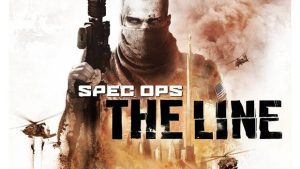
- Spec Ops: The Line
- Deadpool
- Helldivers 2


Found something worth playing through DecideGame?
DecideGame.com is an independent gaming project run by Editor Zero. If this guide helped you discover a game, solve a problem, or find useful information, you can support DecideGame.com and help keep new and updated game guides coming.
DecideGame — PC Game Guides, Reviews & Setup Help