
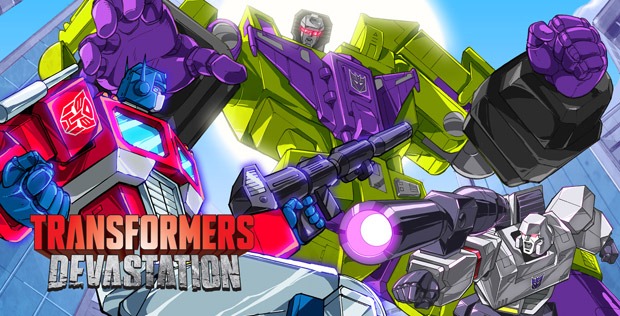
📅 Game released: 2015
Use this updated 2026 Transformers: Devastation PC guide to check official download and re-download status, understand the retired Steam release and DLC Bundle, review system requirements, controller support, mods, and practical setup notes for existing owners.
 By Editor Zero — independently researched, edited, and maintained.
Last updated: 30 September 2026
Last reviewed: 30 September 2026
Table of Contents
- Quick Summary
- Quick Facts
- Official PC Stores, Download & Installation
- Transformers: Devastation Review
- Pros & Cons
- PC System Requirements
- Frequently Asked Questions
- Similar Games
Transformers: Devastation Quick Summary
✔ Fast single-player character-action brawler from PlatinumGames built around Optimus Prime and the Autobots stopping Megatron from using Plasma Energy to cyberform Earth
✔ Combat flows between melee combinations, ranged weapons, dodges, counterattacks and instant robot-to-vehicle attacks across five playable Autobots: Optimus Prime, Bumblebee, Sideswipe, Wheeljack and Grimlock
✔ Similar to Spider-Man: Shattered Dimensions through its colorful licensed-comic presentation, third-person action, character-specific combat and boss-driven campaign structure
✔ The native Windows version was released through Steam but is no longer sold there; an existing Steam license remains the legitimate PC route for downloading and reinstalling the game
✔ Weapon synthesis, character upgrades, Challenge Mode and five difficulty levels give the short story campaign considerably more replay value
✔ The former DLC Bundle adds three character skins and matching weapons, while PC mods remain unofficial and there are no official mod tools or Steam Workshop support
Transformers: Devastation Quick Facts
Official PC Store Status, Download & Installation
👇 Use the notes below to understand Transformers: Devastation’s official PC availability, Steam re-download options for existing owners, and the status of its former DLC without relying on unofficial acquisition sources.
- New PC purchases: Transformers: Devastation is no longer sold through Steam, and no current official Windows release was verified on Epic Games Store, GOG, Microsoft Store or another authorized PC storefront.
- Existing Steam owners: If Transformers: Devastation is already licensed to your Steam account, use the normal Steam Library entry to download or reinstall your owned copy. Removal from sale does not turn the game into freeware.
- Steam installation: The Windows version is tied to Steam. Install it through the account that owns the game rather than downloading game files from unofficial archives or third-party file hosts.
- Activation and DRM: The original Steam requirements specify an internet connection for activation, and PCGamingWiki identifies the released PC version as using Steam DRM.
- DLC Bundle: The former bundle contains Optimus Prime’s Nemesis Prime skin with the Dark Star Saber, Sideswipe’s Red Alert skin with the Photon Disruptor, and Bumblebee’s Goldfire skin with the Golden Hunter. The DLC is no longer offered for new Steam purchases.
- Third-party keys: Old Steam keys may be advertised by resale marketplaces, but those are not treated here as an official storefront or recommended acquisition method. Availability, validity, region restrictions and seller reliability cannot be guaranteed.
- Subscriptions: No official PC subscription or cloud-gaming entitlement is listed for this retired release, so Game Pass, EA Play and similar services should not be treated as ownership routes.
- Steam features: The surviving Steam metadata lists single-player, Steam Achievements, Steam Trading Cards, Family Sharing and full controller support. Steam Cloud is not listed, so back up local save data separately when moving PCs.

Transformers: Devastation Review
Platinum turns transformation into a combat language deeper than the campaign built around it.
Transformers: Devastation succeeds for a reason that has little to do with the usual strengths of licensed games. The Generation 1 styling, returning voices and bright cel-shaded character models immediately make it look like a playable Transformers cartoon, but the real identity is mechanical. PlatinumGames treats changing form as part of attacking, defending and repositioning, so Optimus Prime turning into a truck in the middle of a combo is not just fan service; it is part of the fighting system’s grammar.
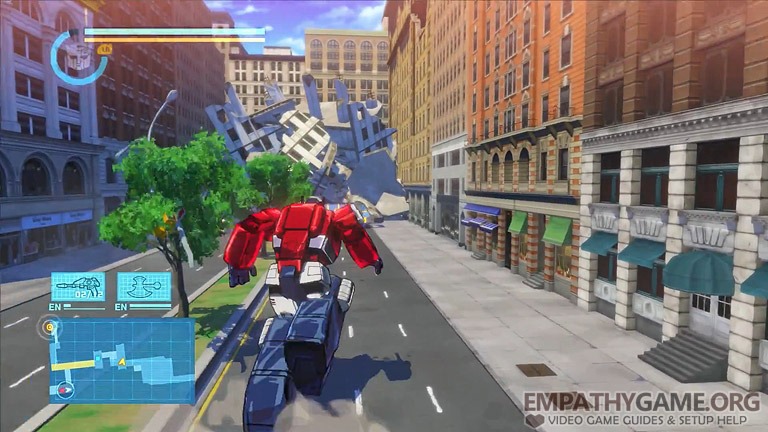
That combat carries almost everything around it. The campaign is compact, the environments recycle quickly, objectives rarely become as inventive as the moves available to the Autobots, and weapon management sometimes slows a game that otherwise thrives on momentum. Yet the deeper the difficulty rises, the more Devastation reveals itself as a score-driven character-action game rather than a simple licensed brawler. Players willing to learn its timing, movement and transformation systems will find far more substance than the short story mode initially suggests.
Transformation Is the Heart of the Combat System
At the basic level, Devastation is easy to read. Light and heavy attacks form melee strings, ranged weapons answer airborne enemies or create openings at distance, and completing certain combinations produces a brief prompt for a powerful Vehicle Attack. Reaching full speed in alternate mode also enables rush attacks, letting the Autobots enter a fight with momentum instead of treating vehicle form as a separate driving minigame.
The important detail is how many systems overlap once the basics become familiar. A last-second dodge activates Focus and slows the action, creating time to counter. Dodge offset can preserve the progress of a combo through evasive movement, so avoiding an incoming hit does not necessarily mean surrendering the entire offensive sequence. Instant weapon switching adds another layer: a player can move between melee options without reducing every encounter to one preferred sword, hammer or pair of fists.
Vehicle Attacks are more interesting than their finisher animation suggests. Their movement and brief invulnerability can carry an Autobot through danger while maintaining pressure, turning transformation into a defensive bridge as well as extra damage. This is especially useful when a large enemy occupies most of the screen and another attack is already arriving from outside the camera’s clean view. At its best, combat becomes a loop of strike, dodge, transform, reposition and counter in which offense and defense stop feeling like separate phases.
The game does not explain all of this particularly well. Basic prompts are clear enough, but techniques such as offsetting, reversals, parries, Overdrive interactions and the defensive value of vehicle attacks are easier to appreciate through experimentation than through the tutorial flow. That makes the first playthrough accessible, but it also means much of Devastation’s best design can remain hidden from anyone who finishes the campaign by relying on a small set of reliable strings.
Five Autobots Share Controls Without Feeling Identical
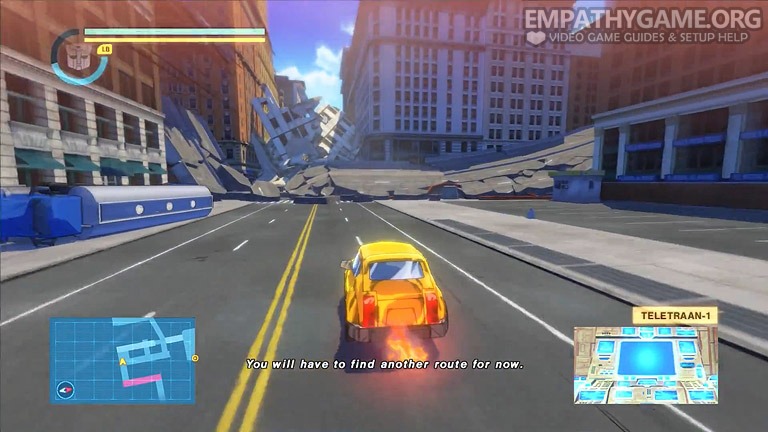
Optimus Prime, Bumblebee, Sideswipe, Wheeljack and Grimlock use the same broad combat language, which makes changing characters approachable. The differences emerge through speed, reach, power, weapon compatibility and unique techniques rather than completely separate control schemes. Optimus is the natural all-rounder, Bumblebee and Sideswipe favor faster movement and aggression, while Wheeljack’s tools push him toward a somewhat different rhythm.
Grimlock is the most obvious exception, but even he is more nuanced than the simple label of “slow powerhouse” suggests. His heavy attacks and grapples suit that description, yet experienced use of dinosaur form can turn him into an aggressive rush specialist. Repeated dino charges, transformation attacks and armored or invulnerable windows let him stay close to enemies and force pressure rather than merely waiting for a chance to land one enormous hit. That is a good example of how Devastation rewards players who look beyond the first impression of a character.
The roster is small, but five characters are enough because the campaign itself is short. The bigger problem appears later, when progression begins working against experimentation. Character statistics are not simply shared across the full roster, so investing heavily in one Autobot can make a switch on harder difficulties feel like taking a step backward. Mechanical familiarity transfers, but accumulated power does not transfer as cleanly. The result is a mild contradiction: the combat encourages trying everybody, while the RPG layer can make long-term commitment to one favorite more efficient.
Bosses Show the Combat at Its Best—and the Camera at Its Worst
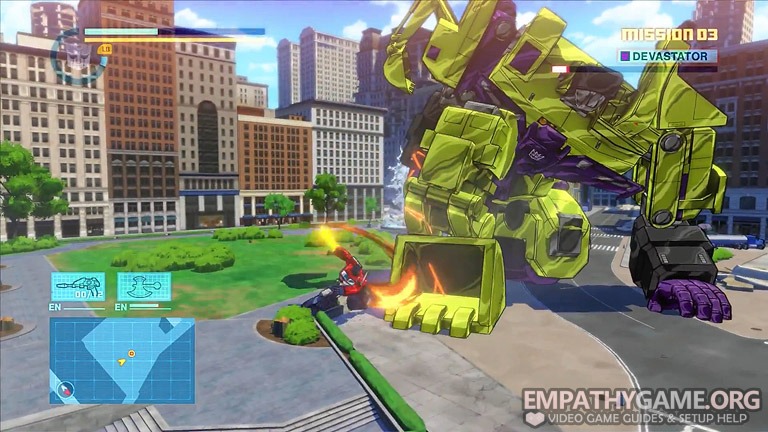
Devastator, Menasor, Starscream, Soundwave and Megatron give the combat system opponents large and distinctive enough to justify its speed. Their attacks reward Focus timing, movement and observation more than careless button mashing, and several encounters are memorable because a familiar Transformer becomes a mechanical problem rather than just a cutscene reward. The game is particularly good at making scale readable when one enormous opponent is the center of attention.
That readability breaks down when too many large bodies share the same confined arena. The Devastator and Menasor encounter is the clearest example: one combiner can fill much of the screen while the other attacks from an awkward angle, making audio cues almost as important as visual ones. The combat system has tools to survive that chaos—late dodges, Focus, vehicle movement and the defensive properties of transformation attacks—but the camera does not always keep pace with what the encounter demands.
This tension runs through the smaller battles too. Devastation feels responsive when the player can see threats, choose a target and deliberately extend a sequence. When multiple large enemies, effects and walls compress the view, targeting and camera behavior become the weakest parts of an otherwise precise system. The difficulty can still be mastered, but some failures feel caused by lost information rather than a cleanly missed input.
The Campaign Gives Great Mechanics Too Few Problems to Solve
The central story is simple enough to keep the action moving. Megatron’s plan involves the ancient Cybertronian ship Proudstar and a source of plasma energy that could be used to cyberform Earth, sending Optimus and the Autobots into a sequence of clashes with the Decepticons. The plot draws on several strands of Transformers history without becoming dependent on encyclopedic lore, and it understands that the main attraction is seeing recognizable characters collide.
The weakness is not the premise but the structure around it. City streets, tunnels, Cybertronian spaces and combat arenas begin repeating long before the fighting system runs out of ideas. Objectives frequently reduce to reaching the next encounter, defeating another group, chasing a target or completing a straightforward set piece. Occasional escapes, vehicle sequences and energon-related objectives interrupt the rhythm, but not often enough to disguise how frequently the campaign funnels its expressive combat into familiar situations.
That repetition is frustrating precisely because the mechanics invite experimentation. A system with dodge offset, Focus counters, rush attacks, ranged weapons, grapples, character differences and transformation-based offense deserves enemy arrangements and level spaces that constantly ask for different answers. Devastation sometimes does this through shields, airborne threats and boss-specific patterns, but its environments and mission goals rarely evolve at the same pace as the player’s understanding of combat.
Weapon Synthesis Adds Decisions, Then Buries Them in Inventory Work
Weapons drop frequently and can be combined through synthesis, with one item serving as the base while another is consumed to raise experience or transfer useful abilities when slots allow. T.E.C.H. chips and character statistics add further progression, giving harder runs a genuine preparation layer rather than relying only on reflexes. There is satisfaction in turning a promising weapon into a specialized tool that fits a preferred Autobot and combat style.
The system becomes less elegant once the inventory fills. Letter rank matters, but it does not tell the whole story. Two high-rank weapons can have meaningfully different starting power, damage properties, ability slots and long-term potential, so evaluating loot requires more attention than simply keeping every S or SS item and discarding the rest. That creates real build decisions, but it also means a fast action game repeatedly asks the player to stop and compare a growing pile of near-duplicates.
This progression is most convincing when it supports a difficult encounter rather than replacing mastery. Stronger weapons and better statistics make later tiers more manageable, yet high-level play still expects the player to avoid damage, recognize attack cues and use the system properly. Devastation is at its best when equipment gives room for expression; it is less satisfying when grinding, synthesis and character-specific growth make advancement feel like administrative preparation for the combat the player actually wants to return to.
Higher Difficulties Reveal a Better Game Than the First Clear Suggests
Replayability is where the short campaign earns back some of its limited scope. Commander, Magnus and Prime are not merely the same encounters with larger health bars. Higher settings alter enemy compositions, introduce additional enemy behavior and reduce some of the assistance given to the player. Focus Attack prompts can disappear, forcing timing to be read through the rhythm of a string, sound cues and visual feedback rather than waiting for an explicit signal.
That changes the relationship with familiar fights. Encounters that were comfortable on an earlier run can become much more demanding when faster or more complicated enemy combinations deny the player room to rely on one rehearsed tactic. The repeated environments remain repeated, but the combat inside them becomes less static. For anyone interested in learning the system rather than simply seeing the story, this is where Devastation’s design has the most longevity.
The grading system reinforces that mindset. Strong ranks are not only about reaching the end quickly; the scoring logic rewards a wider combat vocabulary, including actions such as Focus activations, reversals, headshots, grapples, vehicle attacks, rush attacks, status effects and stuns. Chasing high grades therefore pushes the player toward techniques that an efficient first playthrough may barely require. Challenge Mode extends that idea with separate combat scenarios, including encounters that combine bosses or emphasize survival and scoring.
There is still a limit. Replaying for higher ranks, better drops and stronger character stats means returning to the same compact pool of locations and mission layouts. Devastation works best for players who enjoy repetition when the purpose is refinement—cleaner dodges, longer strings, smarter weapon use, better grades—not for those expecting a second playthrough to reveal large amounts of new content.
Its G1 Style Gives a Thin Story an Identity
Visually, Devastation solves the licensed-game problem with confidence. The character designs combine the strong silhouettes and color blocking associated with Generation 1 with influences from IDW comics and Generations toys, then animate them with the speed and impact expected from PlatinumGames. Robots transform mid-attack without losing readability, melee blows have exaggerated force, and major Decepticons retain enough visual personality to make repeated appearances enjoyable even when the arenas around them are plain.
Familiar voice performances do much of the narrative work. Optimus, Megatron, Grimlock and the rest of the cast arrive with established personalities that the short script can rely on without lengthy setup. The guitar-heavy score pushes fights toward the tone of an outsized Saturday-morning showdown, which fits a game that is more interested in momentum and spectacle than complicated characterization.
The tradeoff is that the environments never achieve the same personality as the robots occupying them. Reused city blocks and interiors function well enough as combat spaces, but they rarely become memorable places. Devastation looks most distinctive in motion—an Autobot transforming through a combo, a boss filling the screen, a Focus dodge freezing an incoming strike—not when the camera pauses to admire the world.
Final Verdict
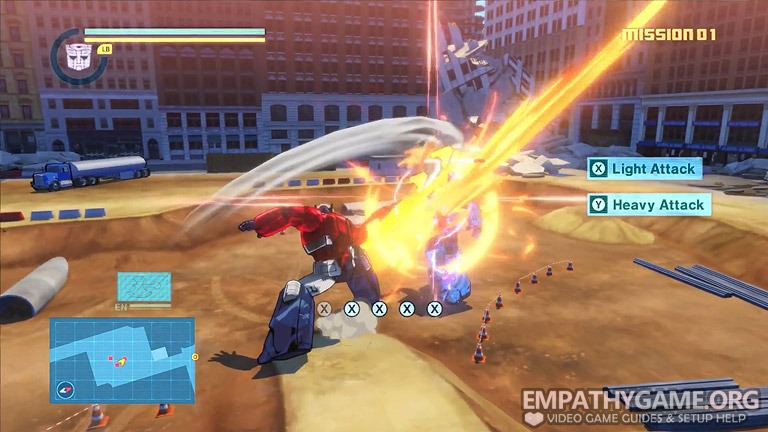
Transformers: Devastation is a focused character-action game trapped inside a campaign that never gives its combat enough variety of places or objectives. Its best idea is also its simplest: transformation should not interrupt fighting, it should complete it. Vehicle Attacks, rushes, Focus dodges, dodge offset and character-specific techniques create a combat system that becomes more expressive as the player learns how offense, defense and movement overlap.
The surrounding structure is less accomplished. Repeated environments, straightforward missions, awkward camera moments and inventory-heavy weapon synthesis make the game feel smaller and rougher than its fighting deserves. Character-specific progression can also discourage the roster experimentation that the shared controls otherwise invite. Yet those limitations matter less to players who treat the first clear as an introduction rather than the endpoint. Higher difficulties change encounters, strip away some assistance and make grades, Challenge Mode and weapon building more meaningful.
For Transformers fans who also enjoy score-driven action games, that combination is unusually strong: the license has not merely been wrapped around a brawler, but translated into the mechanics themselves. Players looking for a long campaign, broad exploration or constant environmental variety will find the package thin. Players who enjoy mastering timing, refining combos and discovering how a familiar move can serve several purposes will find a compact game whose combat is considerably bigger than its campaign.
Transformers: Devastation Pros & Cons
Transformers: Devastation PC System Requirements
The surviving official Steam information publishes a minimum PC configuration but does not provide a separate recommended hardware tier.
OFFICIAL MINIMUM:
OS: Windows Vista, Windows 7, or Windows 8
CPU: Intel Core 2 Duo E4400 / AMD Athlon 64 X2 5600+
RAM: 2 GB
GPU: NVIDIA GeForce 8800 GT with 512 MB VRAM / ATI Radeon HD 3870 with 512 MB VRAM or better
DirectX: Version 9.0c
Storage: 9 GB available space
Sound Card: DirectX-compatible sound card
Additional Notes: Internet connection required for activation
RECOMMENDED:
No separate official recommended specification is published in the surviving Steam system-requirements data.
Additional PC Performance & Setup Notes
The original operating-system requirements reflect the game’s 2015 release. The modern Steam client itself requires Windows 10 or later, so Windows Vista, 7 and 8 should be treated as historical game requirements rather than a recommendation for a present Steam installation.
Transformers: Devastation is a 32-bit Direct3D 9 game. PCGamingWiki documents standard widescreen resolutions including 1920×1080 and 3840×2160, but no native 21:9 ultrawide support. Gameplay is designed around an approximately 60 FPS ceiling, and variable-refresh/high-refresh displays can exhibit synchronization behavior that may require configuration.
Steam metadata lists full controller support, which is generally the most natural input method for its combo-heavy brawler combat. Mouse and keyboard input is also available, but the design originated around gamepad-style character action.
Save data is stored locally under the user’s Documents folder in TRANSFORMERS_Devastation. Steam Cloud is not listed for the game, so manually backing up the local save before reinstalling Windows, changing PCs or experimenting with mods is advisable.
Official Trailer
Note: Activision’s official launch trailer shows the five playable Autobots, robot-to-vehicle attacks, Decepticon bosses and Generation 1-inspired presentation; the written guide above adds the PC ownership, DLC, requirements and setup context that the trailer does not cover.
Frequently Asked Questions
Is Transformers: Devastation worth playing in 2026?
Yes, especially for Transformers fans or players who enjoy fast PlatinumGames-style character action. Its short, repetitive campaign is the main limitation, but the responsive combat, transformation attacks, boss fights, five Autobots and higher-difficulty replay loop give it much more depth than a simple licensed brawler.
Is Transformers: Devastation based on the Generation 1 Transformers cartoon?
It uses a strong Generation 1 identity rather than directly adapting an episode of the original cartoon. The character designs draw from the classic animation, IDW comics and Generations toys, while the story about the Proudstar and Ferrotaxis is original to the game.
How long is Transformers: Devastation?
A first story playthrough typically takes roughly five to seven hours, depending on difficulty, exploration and optional missions. The campaign contains seven chapters, but Challenge Mode, harder difficulties, character progression and repeated runs are designed to extend the game substantially.
Is Transformers: Devastation an open-world game?
No. The campaign is divided into chapters and missions with relatively open combat spaces, alternate routes, collectibles and optional encounters, but it is not a continuous open world.
Which characters can you play as in Transformers: Devastation?
The five playable Autobots are Optimus Prime, Bumblebee, Sideswipe, Wheeljack and Grimlock. Optimus, Bumblebee and Sideswipe become available early, Wheeljack unlocks after Chapter 1, and Grimlock unlocks after Chapter 2.
Can you play as Megatron or other Decepticons?
No. Megatron, Starscream, Soundwave, Shockwave, the Constructicons and other Decepticons appear as enemies and bosses rather than playable campaign characters.
Do the five Autobots actually play differently?
Yes. Optimus is a powerful all-rounder, Bumblebee emphasizes speed and mobility, Sideswipe favors fast close-range combat, Wheeljack leans more heavily toward ranged tools and gadgets, and Grimlock is a slower heavyweight built around powerful melee attacks, grabs and his dinosaur transformation.
How does Focus work in Transformers: Devastation?
Focus activates when you dodge immediately before an incoming attack connects. Time briefly slows, creating an opportunity to counterattack, and mastering that timing becomes increasingly important against bosses and on the harder difficulties.
How do Vehicle Attacks and Grimlock’s Dino Attacks work?
Many completed melee combinations create a brief transformation-attack prompt. Activating it lets most Autobots finish the sequence with a powerful vehicle strike, while Grimlock uses comparable dinosaur attacks; rush attacks from full-speed alternate mode can also break certain defenses and start offensive sequences.
How does weapon synthesis work?
Weapon synthesis combines two weapons, keeping the selected base weapon while destroying the second weapon to improve the base weapon’s experience or abilities. The base weapon’s rank cannot be increased through synthesis, and credits are consumed each time you perform the process.
Why did an ability fail to transfer during weapon synthesis?
The base weapon needs an empty ability slot for an ability from the sacrificed weapon to transfer. If no slot is available, the second weapon can still be consumed without adding that ability.
Why can’t one of my Autobots equip a particular weapon?
Weapons are character-restricted. The weapon information screen shows which Autobots are compatible with each item, so a powerful weapon found while playing one character may need to be equipped by somebody else.
How do character stats and T.E.C.H. chips work?
Autobots gain experience and improve technical attributes that influence values such as health, melee power, ranged damage, defense and alternate-mode attacks. The RNK stat also affects how many T.E.C.H. chips a character can equip, although characters do not benefit from RNK at identical rates.
Why did my character’s stats stop increasing?
Some stat growth is limited by the highest difficulty you have unlocked. Experience earned beyond the present cap is banked rather than wasted and is applied when later difficulty levels raise that character’s progression limit.
How do you unlock Magnus and Prime difficulty?
Complete every campaign chapter on Commander difficulty to unlock Magnus. Completing all chapters on Magnus then unlocks Prime, the highest difficulty level.
Does Transformers: Devastation have New Game Plus?
It effectively does. Your character development, equipment and weapons can carry into repeated story runs and higher difficulties, allowing subsequent playthroughs to continue the same progression rather than starting from an undeveloped roster.
Can you replay individual chapters after finishing them?
Yes. Chapter replay is an important part of the progression loop, letting you revisit earlier content with different Autobots, stronger equipment or a higher difficulty while hunting better rankings and missed collectibles.
What is Challenge Mode in Transformers: Devastation?
Challenge Mode contains separate combat, racing and remixed encounter scenarios outside the main campaign. Challenges unlock through different conditions and are useful for testing advanced combat skills, earning equipment and pursuing higher mission ratings.
How do you get an SS rank on missions?
Chapter rankings consider individual mission scores along with bonuses such as completing optional missions, finding treasures, exploring thoroughly and avoiding deaths. On harder Challenge missions, simply taking no damage may not be enough; speed and other performance factors can also matter.
Why isn’t my elemental weapon causing Burn, Shock or another status effect?
An elemental weapon also needs the appropriate status ability, such as a Burn bonus, and the attack must overcome the enemy’s elemental resistance. Even then, applying the status can involve a chance check, so an elemental weapon does not guarantee an effect on every hit.
Does Transformers: Devastation have multiplayer or online co-op?
No. Transformers: Devastation is a single-player game and does not include online multiplayer, campaign co-op or competitive PvP.
Does Transformers: Devastation support split-screen or local co-op?
No. There is no couch co-op or split-screen mode; the campaign and Challenge Mode are designed for one player.
Can you still buy Transformers: Devastation on Steam?
No. The Windows Steam release has been retired and is no longer offered to new buyers through the Steam store. Players who already own the Steam version can continue using their existing license and reinstall the game through their library.
Does Transformers: Devastation work on Windows 11?
It can, but Windows 11 was never part of the game’s original officially supported operating-system list, and results vary between PCs. Recent Steam discussions include successful Windows 11 installations as well as reports of startup problems, so existing owners encountering trouble should begin with ordinary Steam file verification, overlay checks and confirming that the game is using the intended graphics processor.
Does Transformers: Devastation work on Steam Deck?
Valve does not publish a normal Steam Deck compatibility rating for the retired store release. Community reports show that existing owners have been able to run the game through SteamOS/Proton, but this should be treated as unofficial compatibility rather than guaranteed Steam Deck support.
Still have questions? Check the Transformers: Devastation Steam Discussions, Transformers Reddit community, or Activision’s Transformers: Devastation gameplay FAQ for additional help and community discussion.
Sources & References
Key factual and technical information in this guide was checked against relevant official and community sources, including:
- PlatinumGames — Transformers: Devastation — official developer page used to verify the game’s story premise, development background, trailers and core gameplay identity
- Steam Support — Transformers: Devastation — used to verify the Windows release date, Steam features, languages and original official minimum system requirements
- SteamDB — Transformers: Devastation — used to verify the retired Steam app, Windows platform metadata, controller support and surviving Steam review information
- PCGamingWiki — Transformers: Devastation — used for PC availability, DRM, engine identification, save location, display support, frame-rate behavior and other technical limitations
- Xbox — Transformers: Devastation DLC Bundle — official listing used to verify the three character skins and three weapons included with the DLC Bundle
- Metacritic — Transformers: Devastation PC Reviews — used to verify the PC Metascore and version-specific critical reception
Similar Games Like Transformers: Devastation
- Metal Gear Rising: Revengeance
- Transformers: War for Cybertron
- Transformers: Fall of Cybertron
- X-Men Origins: Wolverine
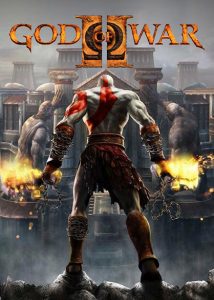
- God of War II
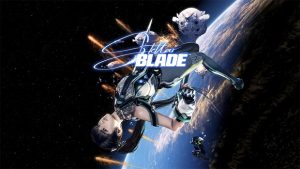
- Stellar Blade

Found something worth playing through DecideGame?
DecideGame.com is an independent gaming project run by Editor Zero. If this guide helped you discover a game, solve a problem, or find useful information, you can support DecideGame.com and help keep new and updated game guides coming.
DecideGame — PC Game Guides, Reviews & Setup Help