
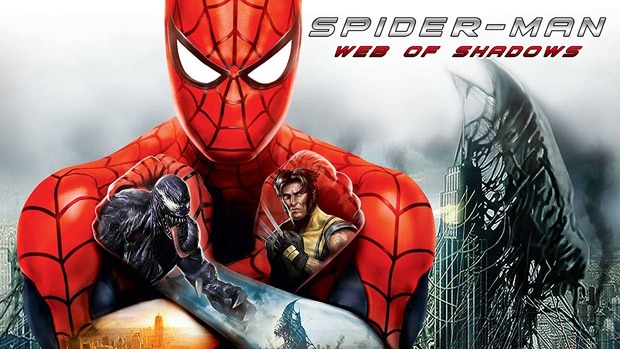
📅 Game released: 2008
Spider-Man: Web of Shadows is a single-player open-world adventure where Spider-Man swings through Manhattan, switches between Red and Black Suits, and fights an escalating symbiote invasion across streets, rooftops and walls. This PC guide explains the official download and ownership status of the original Windows release, its historical system requirements, controller setup, modern compatibility limitations, and community fixes.
 By Editor Zero — independently researched, edited, and maintained.
Last updated: 14 November 2026
Last reviewed: 14 November 2026
Table of Contents
- Quick Facts
- Official PC Stores, Download & Installation
- Spider-Man: Web of Shadows Review
- Pros & Cons
- PC System Requirements
- Frequently Asked Questions
- Similar Games
Spider-Man: Web of Shadows Quick Facts
- Game: Spider-Man: Web of Shadows (main open-world Windows edition; distinct from the PS2/PSP Amazing Allies Edition)
- Developer: Shaba Games, Treyarch; Windows port by Aspyr Media
- Publisher: Activision
- Genre: Superhero, Action-Adventure, Open World, Brawler / Beat ’em Up
- Release: October 21, 2008 (including Windows PC in North America)
- Platforms: Main 3D game — Windows PC, PS3, Xbox 360, Wii; separate versions — PS2, PSP, Nintendo DS
- Modes: Single-player; no online multiplayer or co-op
- Steam Deck: No official Steam app or Valve compatibility rating for this PC release
- Engine: Treyarch NGL (identified in PCGamingWiki technical records)
- Community: Web of Shadows Reddit, PCGamingWiki compatibility-fix discussion
- PC modding: Unofficial Nexus Mods community for suits, visual restoration, gameplay and compatibility changes
- Metacritic score: 52/100 (PC)
- IGN score: 5.3/10 (PC)
- GameSpot score: 6/10 (PC)
Official PC Store Status, Download & Installation
👇 Use the notes below to understand the official PC availability status for Spider-Man: Web of Shadows and avoid unsafe or unofficial acquisition options.
- Official store status: Spider-Man: Web of Shadows is no longer sold through a verified official Windows PC storefront. No active Steam, Epic Games Store, GOG, Microsoft/Xbox PC, EA App, or Activision purchase page is available for a new digital PC purchase.
- Delisting: Activision’s Marvel publishing agreement ended and Web of Shadows was among the licensed Marvel games removed from digital distribution. Its absence from modern stores is therefore a licensing issue rather than evidence that the game became freeware.
- Original PC release: The Windows version was commercially released on DVD-ROM. Authentic second-hand PC discs may be available, but check that the listing is for Windows (not PS2 or PSP), and confirm disc condition, region and included documentation.
- Existing ownership: Owners of a legitimate Windows copy should use their original DVD-ROM, associated product documentation, or any verifiable existing download entitlement they already possess. The game is not freeware and this guide does not provide the game files.
- Modern Windows: The original Windows installer and launcher were designed for the Windows XP/Vista era, not Windows 10 or Windows 11. Check the edition and disc-based copy protection before purchase; successful installation or launch is not guaranteed on a modern PC, even with much faster hardware.
- Frame-rate behavior: Several gameplay systems are tied to frame timing. Very high frame rates can affect Web Strike timing, mission meters, camera behavior, and other mechanics, so a controlled frame rate may provide more reliable gameplay than simply running the game as fast as possible.
- Controller setup: XInput-compatible controllers are supported and suit the console-derived combat particularly well. The original launcher can still require mouse interaction, while keyboard-and-mouse camera movement has known acceleration and responsiveness limitations.
- Mods and fixes: Community fixes can provide FOV adjustment, windowed or borderless presentation, frame-rate controls, and restored visual effects. Check each fix’s game-version prerequisites and back up original files and saves; use established destinations such as PCGamingWiki and Nexus Mods.

Spider-Man: Web of Shadows Review
Fluid swinging and inventive combat make Manhattan exciting, even when the missions struggle to keep up.
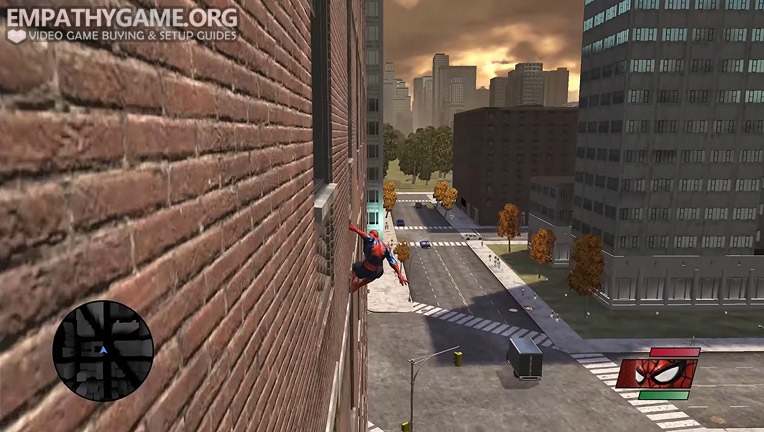
Spider-Man: Web of Shadows understands something important about playing as Spider-Man: getting across Manhattan should be as enjoyable as whatever waits at the destination. A street, rooftop, skyscraper wall or stretch of open air is not a separate type of playground. The same abilities carry Spider-Man through all of them, and combat can begin or continue almost anywhere along the way. That freedom remains distinctive.
The trouble is that the campaign rarely makes equally imaginative use of it. Spider-Man can improvise extraordinary fights, but he is often sent to clear another group of enemies, escort someone or rescue civilians in familiar ways. The Red/Black morality system also suggests a more reactive story than it ultimately provides. There is comic-book personality here, especially once the symbiote crisis overtakes the city, yet movement and fighting outshine the missions around them.
That makes Web of Shadows easier to recommend to someone who enjoys experimenting with movement and combos than to someone looking for a richly populated open world or substantial narrative choices. Its most rewarding moments often happen between the objectives, or when a routine fight is approached with a little imagination.
Movement Makes Manhattan More Than a Backdrop
Web-swinging works because momentum matters. Spider-Man can dive between buildings, catch a web line, release into a leap, run along a wall and spring back into the air without every transition becoming a rigid animation. The controls allow fast, forgiving travel, but there is still a noticeable difference between simply reaching a marker and finding a satisfying line through the skyline. A well-timed release or sharp change in height can make an ordinary journey enjoyable in its own right.
Manhattan is not especially convincing as a city full of independent civilian activity. Its value lies elsewhere, in how naturally its vertical layout accommodates Spider-Man’s abilities. A rooftop destination and a street-level target are parts of the same navigable space, rather than separate areas that require prescribed climbing routes. The city may be thin as a traditional open-world sandbox, but as terrain for acrobatics it has a clear purpose.
The distinction becomes more obvious when an encounter refuses to stay on the pavement. Spider-Man can launch an enemy upward, pursue him, knock him toward a building and continue attacking while attached to the wall. That sequence does not require leaving combat to enter a traversal mode. Web of Shadows treats a fight as something that can occupy an entire three-dimensional space, not just a circle of ground around a group of opponents. It is an unusually good match between what Spider-Man can do and how the environment is constructed.
Combat Is at Its Best When Ground, Air and Walls Blur Together
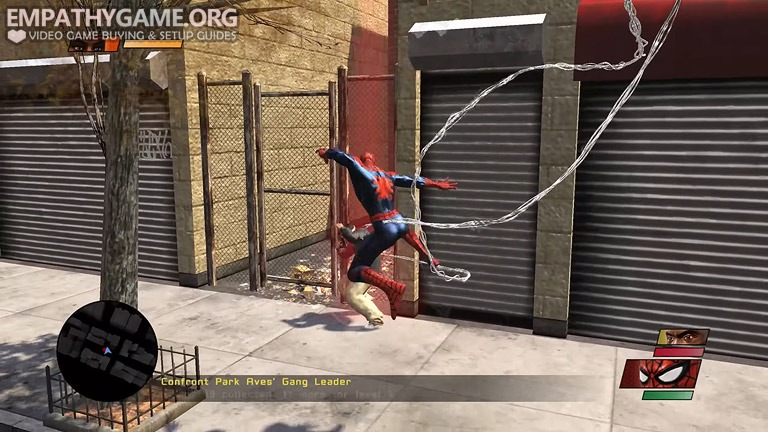
At first, combat resembles a familiar superhero brawler. Its more interesting possibilities emerge from linking different kinds of attack. Ground combos can launch opponents, aerial strings keep the pressure going, and wall attacks extend an exchange after someone hits a building. Web Strike connects those layers. By pulling Spider-Man rapidly toward a target, then allowing another strike or redirection, it turns enemy selection into part of the movement system.
The rooftop sniper encounters illustrate the benefit. Instead of climbing to one position, finishing a fight and travelling to the next, Spider-Man can use Web Strikes to cross between threats. The Vulture battle expands the idea into an airborne pursuit, where staying on the move is inseparable from attacking. These sequences are memorable not simply because they look dramatic, but because the controls support the kind of continuous action that a Spider-Man fight ought to have.
There is a less flattering side to that freedom. Web Strike is effective enough against many ordinary opponents that repeating it can become the easiest answer, and basic strings are sufficient for much of the campaign. The system offers more depth than the enemy encounters demand. A player who sticks to the safest moves can finish plenty of fights without discovering why the combat has such a devoted following.
The better approach is also the more playful one: launch an enemy, follow into the air, rebound toward another target, then carry the exchange onto a wall. Counters, changes of elevation and suit transitions make a battle feel less like clearing a quota and more like controlling the space around Spider-Man. Those elaborate sequences are not always the quickest way to win. They are often the most satisfying. Web of Shadows rewards curiosity more than it enforces mastery, which is both a strength and a limitation.
The camera, unfortunately, is not as adaptable as Spider-Man. Rapid changes of height and wall-based fights can leave threats outside the frame, particularly when several symbiotes attack from different surfaces. Lock-on improves focused encounters but cannot entirely solve the confusion of larger crowds. It is a revealing mismatch: the combat can move freely in three dimensions, while the viewpoint sometimes struggles to communicate where the danger is coming from.
Red and Black Suits Change the Rhythm, Not the Character
Switching between the Red Suit and Black Suit adds another reason to vary combat. The Red Suit favours speed, agility and web-based control. The Black Suit supplies heavier hits, tendril attacks and stronger ways to handle groups. Both share the same basic movement language, so switching does not feel like taking control of a different character. Instead, it changes which attacks make sense as the situation develops.
Against enemies spread across rooftops or suspended in the air, the Red Suit suits fast repositioning and Web Strike chains. When several opponents close in together, the Black Suit can answer with more force and wider attacks. The interesting decision is not which colour is objectively better. It is whether to stay mobile, create room or exploit a moment of vulnerability. Changing suits in the middle of a combo lets those decisions happen without bringing the fight to a halt.
Experience points deepen both move sets through additional ground, aerial, wall and special attacks. This is more satisfying than progression based mainly on higher damage numbers, because new abilities create new connections between existing moves. There is a practical catch, though. Unlocking an attack does not make the campaign require it. A growing moveset only improves the experience if the player remembers to use it instead of relying on techniques that already work. Progression gives Spider-Man more possibilities, but the responsibility for making fights varied remains largely with the player.
The Missions Rarely Match the Quality of the Moveset
The campaign’s central weakness is not a shortage of things to fight. It is a shortage of different reasons to fight them. Objectives frequently involve travelling to a marker, defeating a number of enemies, protecting an ally, rescuing civilians or clearing another concentration of threats. The optional activities rarely develop into distinctive stories or systems of their own. Manhattan allows tremendous freedom of movement, yet offers surprisingly little discovery outside that movement.
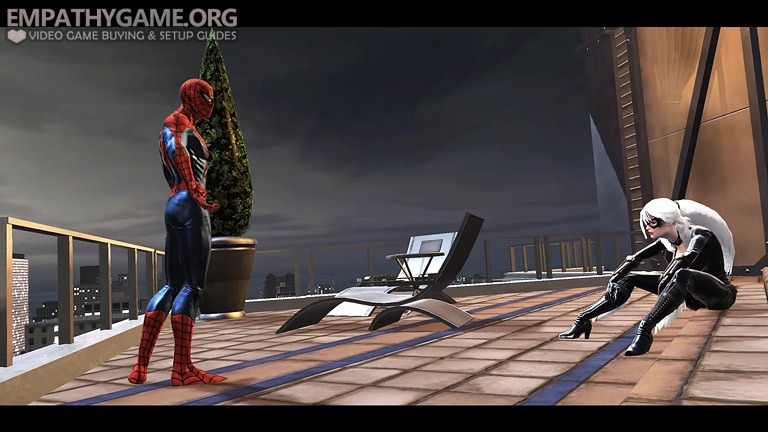
That imbalance makes the repetition more noticeable than the campaign’s length might suggest. One encounter may travel spectacularly from the street to a skyscraper, but the task behind it remains another enemy-clearing assignment. Early missions involving Luke Cage, Black Cat and Kingpin introduce recognizable Marvel personalities, though they too often feel like ways to arrange the next fight rather than situations with interesting objectives of their own. The mechanics are improvisational; the mission design usually is not.
The later symbiote invasion gives this familiar structure much stronger context. Civilians stranded on rooftops and S.H.I.E.L.D. forces struggling against creatures across the city make rescue and combat objectives feel more urgent. Red skies, dark growth spreading over buildings and constant fighting turn familiar routes into something far more threatening. Manhattan does not become a different map, but its atmosphere changes how those same streets and rooftops are perceived.
It is a convincing transformation, and also a glimpse of what the wider campaign lacks. The city’s deteriorating condition gives ordinary tasks a sense of consequence, yet the optional activities do not evolve with comparable imagination. There is nearly always somewhere entertaining to swing and something to attack. Finding a genuinely new way to engage with Manhattan is harder once the novelty wears off.
The Symbiote Crisis Gives the Story Scale, but Choice Stays Shallow
The story opens with Manhattan already in disaster, then moves backward to explain how Venom’s symbiote outbreak reached that point. Knowing where the city is headed adds tension to the earlier gang conflicts, even when the individual missions are routine. As the infection spreads and familiar heroes and villains become involved, the story gradually takes on the scale of a Marvel crossover rather than a conventional Spider-Man adventure centred on a single enemy.
Luke Cage, Black Cat, Wolverine, Moon Knight, Vulture and Rhino give that crossover its personality. The writing is uneven, moving from earnest conflict to deliberately broad comic-book humour. Wolverine’s confrontation captures the strange appeal particularly well. In the middle of a serious fight, he stops to ask trivia questions about Spider-Man’s history to establish whether this really is Peter Parker. It is silly, but the willingness to include something so specific and odd makes the encounter more memorable than another straightforward boss battle.
The morality system cannot support the same degree of variety. Red/Black choices affect relationships, available allies and the ending, with four broad conclusions possible. Those consequences are real, but much of the campaign still moves through similar objectives regardless of alignment. The choices tend to change who stands beside Spider-Man and where his story ends, rather than substantially altering what he spends his time doing along the way.
There is an interesting tension between the story and the suits themselves. The Black Suit represents Peter’s temptation toward greater aggression, but it is also a practical combat tool that can be switched on whenever its attacks are useful. The game does not demand that every mechanical choice express a moral position. As a result, the more convincing character decisions occur at explicit narrative turning points, while everyday suit switching is mostly about fighting efficiently. It is an enjoyable comic-book alignment system, not the deeply reactive role-playing structure its presentation might initially suggest.
Allies Add Comic-Book Spectacle More Than Strategy
Alignment also influences which heroes or villains can assist Spider-Man, and calling an ally into a street fight adds a welcome sense of team-up spectacle. The system makes relationships visible outside cutscenes, which helps the choices feel less abstract. Still, support characters rarely change how an encounter must be approached. Spider-Man’s own movement and attacks are versatile enough to remain the main attraction. Allies are enjoyable reinforcements and a little breathing room in a crowded battle, not the foundation of a deeper squad-based system.
Replayability Comes From Expression More Than Content
Alternate decisions, four endings, different allies, collectible Spider Tokens and a less obvious New Game+ route offer incentives to return. They do not, however, reshape enough missions to make another run feel like a substantially different campaign. The stronger reason to replay is the combat itself. With a more complete moveset and a better understanding of how Web Strike, aerial pursuits, wall attacks and suit changes fit together, familiar encounters can be approached more creatively. The new possibilities mostly come from what the player chooses to do, not from a large reserve of undiscovered content.
Final Verdict
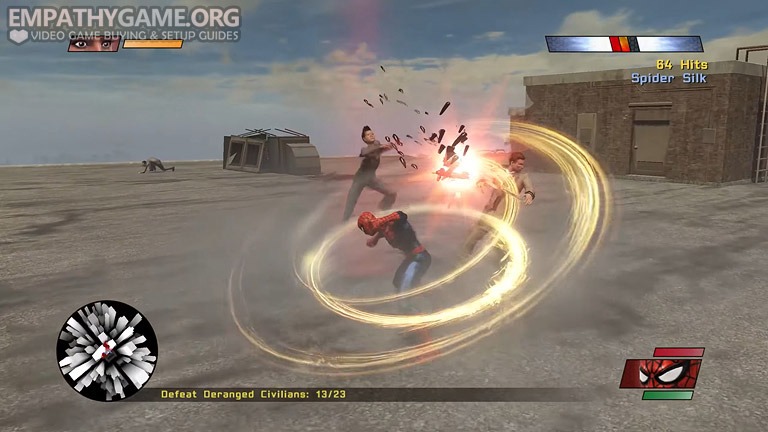
Spider-Man: Web of Shadows is a game whose best mechanics are more imaginative than most of the tasks built around them. Repeated combat objectives, thin side activities, inconsistent camera behaviour and modest consequences for moral choices all limit the larger adventure. The symbiote crisis gives the later campaign considerable atmosphere, and its Marvel cast supplies memorable moments, but neither fully solves those structural weaknesses.
Yet few of those problems diminish the pleasure of moving through Manhattan. Swinging, diving, launching enemies, pursuing them through the air and continuing the fight on a building can feel like one uninterrupted activity. Web Strike holds that freedom together, while the Red and Black Suits give combat enough variety to reward experimentation. The game does not always push players to use its best ideas. When they do, the difference is substantial.
Anyone expecting polished mission design, varied side stories or complex moral consequences will have good reasons to be disappointed. For players who enjoy expressive traversal and a brawler that allows them to invent their own sequences, Web of Shadows offers something far less replaceable. It is not a consistently refined Spider-Man adventure, but it understands how exciting the character can be when the city itself becomes part of the fight.
Spider-Man: Web of Shadows Pros & Cons
- Pro: Fast web-swinging makes crossing Manhattan enjoyable even when no mission objective is nearby
- Pro: Acrobatic combat works on streets, in mid-air, and directly on building walls, giving fights a strong Spider-Man identity
- Pro: Instant Red Suit and Black Suit switching creates two noticeably different combat styles with separate upgrade paths
- Pro: The city-wide symbiote takeover progressively changes Manhattan’s atmosphere and supports some memorable large-scale encounters
- Pro: Multiple moral decisions, alliances, endings, combat upgrades, collectibles, and an active PC modding community give the campaign reasons to revisit
- Con: The Windows release is delisted, leaving no straightforward official digital purchase option for new PC buyers
- Con: The PC port has persistent technical weaknesses including stuttering, awkward mouse behavior, frame-rate-dependent mechanics, and dated configuration handling
- Con: Repeated street objectives and enemy-clearing tasks can make portions of the campaign feel padded
- Con: Story delivery, voice work, camera behavior, and general polish are noticeably less consistent than the traversal and combat systems
Spider-Man: Web of Shadows PC System Requirements
Historical Windows PC minimum specifications: Retail-era reporting from 2008 lists the following requirements. They describe the original Windows XP/Vista release, not verified Windows 10/11 support. Surviving databases disagree on the exact original minimum and recommended specifications, so these figures should be treated as historical references rather than a modern compatibility guarantee.
OS: Windows XP / Windows Vista
CPU: Intel Pentium 4 2.8 GHz / AMD Athlon XP 2800+
RAM: 1 GB (Windows XP) / 1.5 GB (Windows Vista)
GPU: NVIDIA GeForce 7300 GT-class graphics with 256 MB VRAM
DirectX: DirectX 9.0c
Storage: Approximately 6.6 GB free disk space (retail-era listing)
Media: DVD-ROM for the original physical PC edition
Recommended: A consistent, publisher-hosted recommended PC specification could not be verified. PCGamingWiki also lists alternative historical requirements, including lower minimum figures, so consult the packaging for your exact edition where possible.
Additional PC Performance and Setup Notes
- The Windows version is a 32-bit Direct3D 9.0c-era application. A modern processor or graphics card does not automatically eliminate compatibility problems inherited from the original PC port.
- Configuration data is normally stored under
%LOCALAPPDATA%\Activision\Spider-Man Web of Shadows\Config.xml. - Save data is normally stored under
%USERPROFILE%\Documents\Activision\Spider-Man Web of Shadows\. Back up this folder before experimenting with mods, fixes, or major configuration changes. - Keyboard and mouse are supported, but the mouse implementation has strong negative acceleration and behaves more like emulated analog-camera movement than a modern raw-mouse system.
- XInput-compatible controllers are supported, although the separate launcher may still require mouse input before the game starts.
- If mission timers, Web Strikes, camera movement, or other mechanics behave unusually, test a 30 FPS cap before assuming the save or installation is damaged. Some game logic becomes less reliable at higher frame rates.
- Community compatibility fixes can provide FOV controls, borderless or windowed presentation, frame-rate toggles, and other improvements that the original PC release does not expose cleanly.
- Install one modification or compatibility fix at a time, keep original files backed up, and restore a clean installation when troubleshooting crashes or conflicting visual/gameplay mods.
Official Trailer
Note: Activision’s official launch trailer highlights Spider-Man’s Red and Black suits, aerial and wall-based combat, Marvel allies and villains, and Manhattan’s expanding symbiote invasion, while the written guide adds the PC delisting status, system requirements, modern compatibility, controller notes, and modding guidance.
Frequently Asked Questions
Can you still officially buy Spider-Man: Web of Shadows on PC?
No verified official digital PC storefront is selling new Windows copies. The original PC version was released commercially on DVD-ROM, so legitimate ownership is mainly through a previously owned copy or an authentic second-hand Windows disc. Check the edition and its compatibility before purchasing.
Did Spider-Man: Web of Shadows become freeware after it left digital stores?
No. Removal from digital sale did not change its copyright or make game-file downloads from unauthorized distributors legitimate. The game remains a commercial title.
Is the Windows game identical to the PS2 and PSP versions?
No. The Windows release follows the open-world 3D version also released on PS3 and Xbox 360. The PS2 and PSP Amazing Allies Edition is a substantially different game adaptation, and the Nintendo DS version differs as well.
What is the difference between the Red Suit and Black Suit?
The Red Suit emphasizes agility, web-based attacks and faster chains. The Black Suit uses heavier attacks and symbiote tendrils, often helping against groups. Both have their own upgrades and can be switched during combat.
Does wearing the Black Suit automatically give Spider-Man a bad ending?
No. The ending depends on Spider-Man’s alignment and important Red or Black story choices, not merely the act of equipping the Black Suit for a fight. Combat actions can contribute to alignment, so pay attention to the choices and alignment meter.
How many endings does Spider-Man: Web of Shadows have?
The main 3D version has four endings, reflecting the broader moral alignment and a significant relationship decision later in the campaign. Multiple outcomes can require replaying or managing saves around late-story choices.
What do Spider Tokens unlock?
Collecting Spider Tokens raises Spider-Man’s health, special meter and swinging speed. Once 1,000 tokens have been gathered, the remaining tokens appear on the minimap, making collection easier.
Does Spider-Man: Web of Shadows have difficulty settings?
No standard Easy, Normal or Hard selection is provided in the main game. Shaba Games described the design as using dynamic difficulty that can react to player performance.
What is the most useful combat mechanic for beginners?
Learn the timing of Web Strike. It closes distance quickly, links ground, airborne and wall encounters, and can open longer combo opportunities. Attacking too early allows an enemy to brace against the strike.
Can you replay the story with upgrades after finishing?
The original release has an unusual New Game+ carryover that can be triggered by continuing from a completed save after the credits, rather than selecting an ordinary new game. Save behavior can differ between versions, so keep a backup before experimenting.
Does Spider-Man: Web of Shadows have multiplayer or co-op?
No. The main Windows game has a single-player campaign only, without campaign co-op, split-screen, LAN or online multiplayer.
Is a controller better than keyboard and mouse on PC?
An XInput-style gamepad is often the more natural option for swinging, lock-on and rapid combat transitions. Keyboard and mouse do work, but the mouse camera has documented negative acceleration and does not behave like modern raw mouse input. The launcher may still need a mouse.
Does Spider-Man: Web of Shadows work on Windows 10 and Windows 11?
Some legitimately owned Windows copies run with additional configuration, but compatibility is not guaranteed. The old installer, launcher, disc protection, stuttering and frame-tied mechanics may need version-specific troubleshooting; consult reputable technical documentation rather than unsafe game-file downloads.
Can the PC version run at 60 FPS?
It can render at 60 FPS or higher, but faster frame rates can change Web Strike timing, certain mission meters and camera behavior. If a mission or input feels wrong, compare it with a controlled 30 FPS cap; community fixes offer frame-rate switching for supported game builds.
Why can swinging stutter on a powerful PC?
The old Windows port can hitch during traversal independently of its modest historical hardware requirements. Some of the behavior is associated with the game’s updated executable, so raising hardware performance or lowering graphics settings does not necessarily remove it completely.
Can Spider-Man: Web of Shadows be modded?
Yes, through unofficial PC community projects. Suit replacements, graphics restoration, field-of-view changes and compatibility tools exist, but there is no official Steam Workshop or developer-supported PC mod kit. Back up saves and installation files before modifying them.
Does Spider-Man: Web of Shadows have a Steam Deck rating?
No. The game has no official Steam app listing with a Valve Verified, Playable or Unsupported classification. Unofficial handheld setups do not establish guaranteed Steam Deck compatibility.
Can you play as Venom or unlock a large costume roster?
The main PC campaign controls Spider-Man with his Red and Black Suits. Venom and the other Marvel characters are not alternative campaign protagonists, and the extensive extra costume unlocks seen in some other Spider-Man versions are absent here. Fan mods may replace suit models.
Still have questions? Check the Spider-Man: Web of Shadows Reddit community or Nexus Mods community for further player discussion and unofficial modding help.
Sources & References
The guide’s release history, Windows ownership status, gameplay, requirements and technical notes were checked against these historical and maintained references:
- Activision 2008 launch announcement — confirms the original release date, publisher and Windows/console launch platforms.
- GameSpot’s licensing and delisting report — documents the Marvel licensing-related digital store removal.
- PCGamingWiki: Spider-Man: Web of Shadows — documents the Windows port, engine, controller/mouse behavior, frame timing, configuration and community fixes.
- GameVortex’s original PC-era coverage — preserves the historically published minimum PC requirements.
- Metacritic: Web of Shadows — provides platform-specific critic reception for the original game.
- GameFAQs PC review index — cross-checks the PC edition’s contemporary IGN and GameSpot scores.
Similar Games Like Spider-Man: Web of Shadows
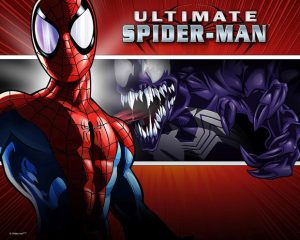
- Ultimate Spider-Man
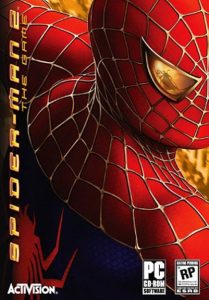
- Spider-Man 2
- The Incredible Hulk: Ultimate Destruction
- Batman: Arkham City
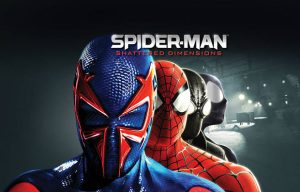
- Spider-Man: Shattered Dimensions
- X-Men Origins: Wolverine



Found something worth playing through DecideGame?
DecideGame.com is an independent gaming project run by Editor Zero. If this guide helped you discover a game, solve a problem, or find useful information, you can support DecideGame.com and help keep new and updated game guides coming.
DecideGame — PC Game Guides, Reviews & Setup Help