
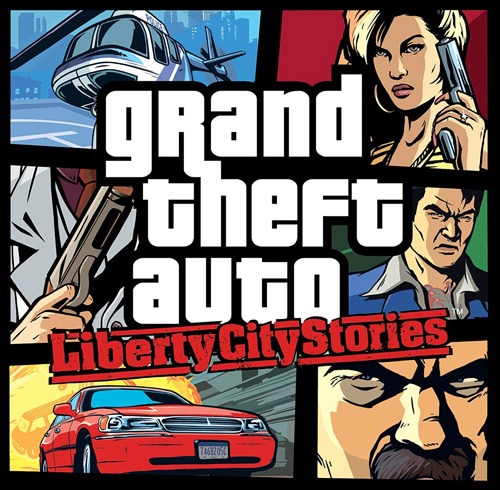
📅 Game released: 2005
Grand Theft Auto: Liberty City Stories brings Toni Cipriani back to the Leone crime family in a 1998 Liberty City filled with gang rivalries, driving, shootouts, and open-world side activities. This PC guide explains why there is no official Windows game download, how owners of the PSP or PS2 editions can use PPSSPP or PCSX2, and which emulator system requirements, controls, and compatibility limitations matter.
 By Editor Zero — independently researched, edited, and maintained.
Last updated: 28 October 2026
Last reviewed: 28 October 2026
Table of Contents
- Quick Facts
- Official PC Stores, Download & Installation
- GTA Liberty City Stories Review
- Pros & Cons
- PC System Requirements
- Frequently Asked Questions
- Similar Games
GTA Liberty City Stories Quick Facts
Official PC Store Status, Download & Installation
👇 Use the notes below to understand GTA Liberty City Stories’ official PC status and set up an emulator using a game copy you own rather than an unofficial game-file source.
- Windows status: Rockstar has not released GTA Liberty City Stories as a native Windows PC game, so there is no official Steam, Epic Games Store, GOG, Microsoft Store, or Rockstar Launcher edition to purchase and install on Windows.
- Recommended emulator: For most PC users, the original PSP version through PPSSPP’s official website is the best starting point. PPSSPP’s compatibility database rates multiple retail revisions of Liberty City Stories as Perfect, and the emulator is considerably lighter to configure than a PlayStation 2 setup.
- Why PSP first: PPSSPP does not require a PlayStation firmware BIOS, supports ordinary Windows controllers, allows higher internal rendering resolutions, and offers Vulkan and Direct3D 11 rendering on Windows. It also emulates the version for which Liberty City Stories was originally designed.
- PS2 alternative: Owners of the PlayStation 2 release can use PCSX2 from its official website. The PS2 version is suited to a conventional television-style controller layout, but the PCSX2 game wiki documents heavy gameplay and cutscene lag as an active severe issue. Its published test records are older, so treat that as a compatibility warning rather than a guarantee that every PC or emulator build will reproduce it.
- Owned PSP copy: PPSSPP’s documentation explains how a PSP UMD can be copied into an ISO file using your own PSP and UMD. Follow the official PPSSPP UMD-dumping guide; digitally owned PSP games stored on a real PSP can also be copied according to PPSSPP’s documentation.
- Owned PS2 copy: PCSX2 can load a backup created from your own physical PlayStation 2 disc. Its official disc-dumping documentation explains the supported process. This page intentionally does not link to third-party game images, ROM archives, or unofficial copies.
- PS2 BIOS: PCSX2 additionally requires proprietary PlayStation 2 BIOS files. PCSX2 states that these must be dumped from your own PlayStation 2 console; the emulator does not include a Sony BIOS or an open-source replacement.
- PPSSPP setup: After installing PPSSPP, load your owned PSP game backup through the Games browser or File > Load, configure the controller, start with default game-specific settings, and use Vulkan where supported. Rendering resolution can be raised gradually when the PC has enough GPU performance.
- PCSX2 setup: Install PCSX2, add the BIOS dumped from your own PS2, scan or select the backup made from your own game disc, and test the game with current default settings before applying game-specific workarounds. Check the PCSX2 Liberty City Stories wiki if performance problems appear.
- Official mobile editions: Rockstar provides separate Android and iOS releases, with availability depending on device and region. These mobile products are not Windows editions and do not provide a native PC license.
 Visit the Official GTA Liberty City Stories Page

Grand Theft Auto: Liberty City Stories Review
A lean, surprisingly complete return to Liberty City whose driving and side activities outshine its simpler missions and thinner Mafia story.
Grand Theft Auto: Liberty City Stories works best as a focused extension of the GTA III era rather than an attempt to reproduce everything San Andreas added to the formula. Set in 1998, it returns to the familiar three-island Liberty City with Toni Cipriani rebuilding his standing in the Leone family. The scale is smaller, missions are generally simpler and combat never escapes the stiffness of early 3D-era GTA, yet the essential rhythm survives: take a job, steal a vehicle, improvise when something goes wrong, then get distracted by trouble on the next block.
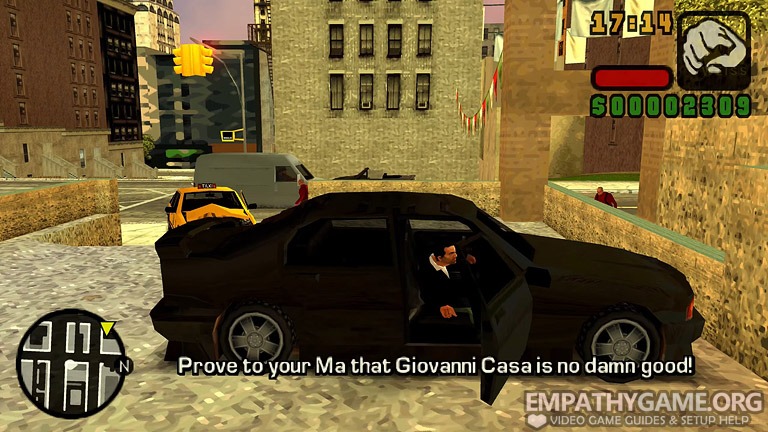
That reduced scope is surprisingly coherent. Motorcycles make the old street layout more agile to navigate, while a broad set of side jobs gives each island more purpose than the main story suggests. The campaign rarely reaches the elaborate set pieces or character arcs of the stronger console entries, but players who enjoy GTA III‘s density, mood and rough-edged freedom will find much more than a portable novelty.
Liberty City Feels Familiar Without Feeling Frozen in Time
Reusing Liberty City could easily have made the game feel like an expansion pack, but the 1998 setting gives the map a useful sense of history. The basic geography is recognizable, yet infrastructure and neighborhoods are shown at an earlier stage, so familiarity becomes part of the appeal rather than a substitute for discovery. Returning players know the broad shape of Portland, Staunton Island and Shoreside Vale, but not every route or landmark behaves exactly as remembered.
That matters because Liberty City remains one of the series’ best maps for short, eventful journeys. Streets are tighter than the broad highways and countryside of San Andreas, and the city constantly pushes traffic, pedestrians, gang territory and police into the same space. A simple drive to a mission marker can turn into a damaged-car scramble after one bad collision attracts a patrol car, while a motorcycle can slip through congestion that would trap a heavier vehicle. The map’s compactness makes those small improvisations happen frequently.
Progress comes mainly through new contacts, access to later islands, better weapons and knowledge of the city rather than character statistics or property systems. It is less ambitious than San Andreas, but well suited to repeated movement through dense urban spaces.
Driving Carries a Leaner Mission Structure
Driving is the most consistently satisfying part of the game. Cars feel responsive for this period of GTA, with enough variation in acceleration, weight and grip to make vehicle choice matter without turning ordinary traffic into a punishment. Motorcycles are especially useful because they open up narrow lines through congestion and make stunt jumps and timed routes more expressive. The handling still belongs to the loose arcade style of the 3D-era games, but moving across Liberty City is enjoyable enough that even routine travel rarely feels like dead time.
The main missions are less consistent. Many are built from familiar verbs—drive to a location, chase a target, protect an ally, steal something, survive a shootout or escape a wanted level—and their smaller structure is obvious beside the increasingly theatrical missions of Vice City and San Andreas. At their best, that simplicity creates clean momentum. Karmageddon, for example, turns a fire truck into a weapon and scores Toni for causing pile-ups, flips and general traffic chaos. It is mechanically uncomplicated, but it succeeds because the objective fits GTA’s systemic comedy rather than feeling like a scripted corridor.
Other missions are more functional than memorable, and the campaign sometimes reaches the next plot point before the previous one has time to breathe. It delivers a steady sequence of chases, ambushes and criminal errands rather than a campaign full of landmark missions.
Combat Works, but Failure Can Be Needlessly Punishing
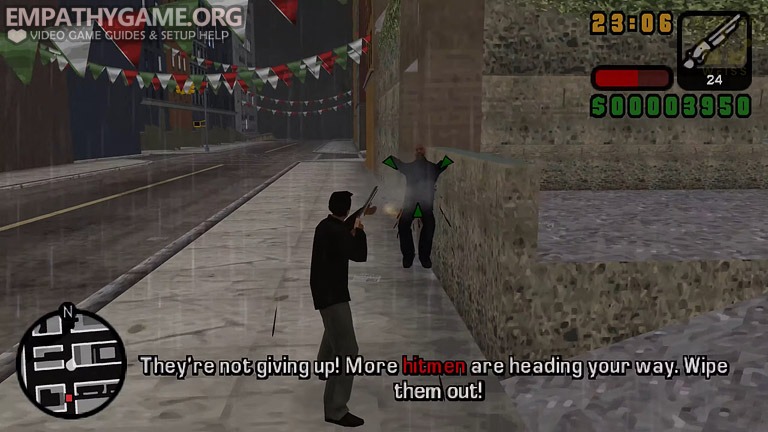
On foot, the age of the underlying design is much harder to ignore. Lock-on targeting keeps basic gunfights manageable, but movement, camera behavior and target selection can become awkward when several enemies crowd a small space. The problem is not a lack of weapons; it is that firefights ask more from a control scheme that was originally designed around the PSP’s single analog nub. Even with a more comfortable controller, the encounters themselves still reflect those restrictions.
This becomes most frustrating when missions combine driving, shooting and several stages without a forgiving restart point. Failure can mean repeating the trip to the objective and rebuilding the same setup rather than simply retrying the encounter that caused the problem. A difficult shootout is therefore not only a test of aiming; it can also threaten several minutes of already completed driving. That structure creates tension, but not always the good kind.
The useful habit is to play more conservatively than a modern GTA encourages. Entering a crowded firefight with armor and a suitable weapon matters, and blindly charging into the middle of several targets is often worse than letting lock-on and cover geometry do the work. Liberty City Stories is not a demanding tactical shooter, but its stiff movement makes preparation more valuable than stylish aggression.
The Side Activities Are More Inventive Than the Campaign Suggests
The breadth of optional content is where the game most successfully escapes the feeling of being a reduced handheld GTA. Taxi, vigilante, firefighter and paramedic work return, but they sit alongside more specific activities that make Liberty City feel like a place with its own odd jobs rather than a checklist copied directly from earlier games.
Car Salesman is a good example. Instead of simply racing a customer around the block, the job asks Toni to demonstrate different vehicles according to what each buyer wants. One customer may respond to speed, another to careful driving, while an off-road vehicle invites a rougher route. The task turns the handling model into a small reading exercise: the fastest approach is not always the correct one. It is a minor side mission, but it creates more meaningful vehicle variety than many story objectives.
Avenging Angels provides another twist on vigilante work by sending Toni out with street patrols against criminal targets across the three islands. Slash TV goes in the opposite direction, reducing the game to a deliberately absurd survival challenge against waves of chainsaw-wielding attackers inside a ship. Then there are pizza and noodle deliveries, trash collection, RC challenges, street races, vehicle sales, rampages, stunt jumps and hidden packages. Not every activity has enough depth to hold attention for long, but the variety gives completion-focused play a stronger identity than the campaign’s straightforward mission structure might imply.
That side content also improves the map itself. A district that initially exists as a route between story markers gains another purpose once it contains a race line, a hidden package, a sales job or an Avenging Angels encounter. Liberty City is not large by later open-world standards, but it is repeatedly reused in ways that encourage learning its corners rather than merely crossing them.
The Mafia Atmosphere Is Stronger Than the Character Arcs
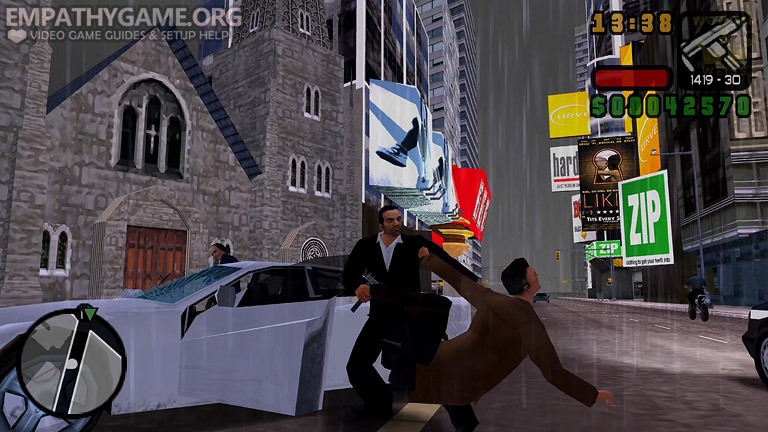
Toni Cipriani is a more defined protagonist than GTA III‘s silent Claude, and the premise gives him an immediately understandable motive: he returns after years away expecting loyalty to the Leone family to count for something, only to discover that other people have advanced while he was gone. Vincenzo Cilli’s position above him provides early friction, while Salvatore Leone, Ma Cipriani, Maria Latore and Donald Love connect the story to characters and institutions already associated with Liberty City.
The dialogue and cutscenes lean hard into mob-movie language, family obligation, wounded pride and petty hierarchy. That gives the campaign a recognizable Mafia flavor even when the actual plotting is broad satire rather than serious crime drama. Toni’s relationship with his mother, in particular, pushes the family theme into Rockstar’s familiar territory of cruelty and absurdity instead of treating organized crime with reverence.
What the story lacks is sustained development. Toni’s rise through the Leone organization supplies a clear spine, but many supporting characters function more effectively as eccentric mission givers than as relationships that evolve over time. Several arcs arrive, generate a handful of memorable situations and then move aside for the next contact. The result is entertaining scene by scene but less emotionally cohesive than the strongest stories in the series. Even the ending feels more like the campaign reaching its required destination than the payoff to a deeply developed character journey.
Radio and Urban Detail Do Much of the World-Building
Liberty City Stories is at its most atmospheric when nothing important is happening. The sound of traffic, gang chatter, talk radio and advertisements keeps the city from becoming a sterile mission map, while the soundtrack gives long drives their own identity. Flashback FM’s Giorgio Moroder-heavy Italo disco selection is a particularly distinctive fit, and stations such as Head Radio deliberately echo the musical texture associated with GTA III.
The radio selection is not as culturally dominant as Vice City‘s licensed soundtrack, but it serves a different purpose. This is a dirtier, less glamorous city, and the mix of pop, hip-hop, drum and bass, classical music, talk shows and satirical commercials matches that harsher tone. The audio is one of the reasons routine driving remains enjoyable even when the next mission is structurally simple.
Visually, the game’s portable origins are easy to see in its simpler geometry, character models and animation, yet the art direction does enough to preserve Liberty City’s gray industrial personality. The limitation is less about detail than about scale: some vehicles and spaces can feel oddly toy-like compared with the larger console entries. Still, the city remains readable, busy and recognizably GTA rather than a compromised imitation of it.
Completion Gives the Game a Longer Tail
The story alone does not show everything Liberty City Stories does well. Hidden packages, rampages, unique stunt jumps, races and the larger set of odd jobs reward players who keep exploring after the main contact missions stop pulling them forward. Several activities also demand a different kind of mastery from the campaign: knowing a fast route through traffic, controlling a bike precisely, or understanding how a specific vehicle behaves can matter more than carrying the strongest gun.
That gives 100% completion more texture than a repeated collectible hunt. Toni never becomes a fundamentally different protagonist; replayability comes from mastering the city and discovering how many systems Rockstar packed inside it.
The original PSP release also included competitive ad hoc multiplayer for up to six players, with modes built around fighting and racing. It was never the center of the package, but it reinforces the same design strength as the single-player side content: the map and vehicle systems are flexible enough to support more than the campaign’s linear objectives.
Final Verdict
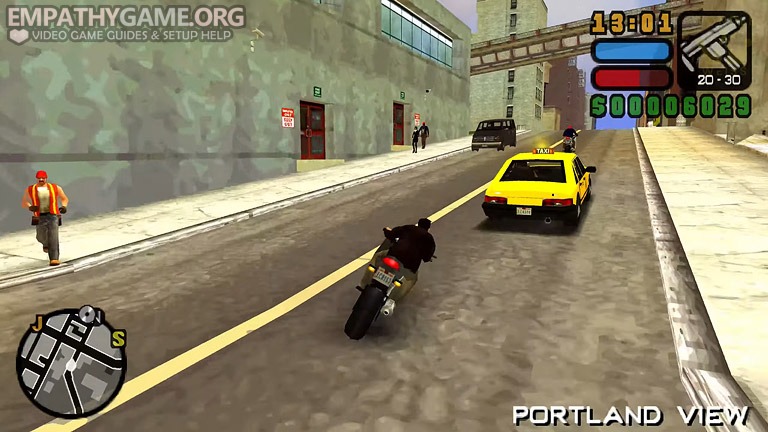
Grand Theft Auto: Liberty City Stories is most convincing when it stops trying to compete with the scale of the larger console games and simply lets Liberty City do the work. The driving is lively, motorcycles improve the flow of the old street network, and the optional activities are more varied than the straightforward campaign initially suggests. Jobs such as Car Salesman, Avenging Angels and Slash TV give the sandbox a personality of its own instead of merely recycling GTA III‘s checklist.
The compromises are equally clear. Gunplay and camera control are stiff, failed missions can demand too much repeated setup, and the story moves through its characters faster than its Mafia premise deserves. Toni is a solid lead, but his rise through the Leone family never develops the emotional weight or memorable relationships of the series’ strongest protagonists.
Even so, the game succeeds at something difficult: it compresses the classic 3D-era GTA rhythm without reducing it to a novelty. Players who value dense urban exploration, arcade driving, side activities and the darker Liberty City atmosphere will find far more substance here than the portable origins imply. Those expecting modern shooting, generous checkpoints or the systemic breadth of later GTA games will feel the age immediately. As a smaller Mafia-focused companion to GTA III, however, Liberty City Stories remains focused, distinctive and remarkably complete.
GTA Liberty City Stories Pros & Cons
GTA Liberty City Stories PC System Requirements
Rockstar has not published Windows PC system requirements for GTA Liberty City Stories because the game has never received a native Windows release.
The specifications and notes below therefore describe the emulator projects, not official Rockstar requirements for a PC port.
PPSSPP — Recommended PSP Emulation Route
Official game-specific tier: No GTA Liberty City Stories Windows requirement tier exists
Windows hardware guidance: PPSSPP states that nearly any reasonably modern PC should have little difficulty running the emulator, provided graphics drivers are kept up to date
Graphics backends: Vulkan is PPSSPP’s recommended backend where available; Direct3D 11 is a fast, high-compatibility Windows alternative
Controller: Most controllers recognized by Windows are supported, and XInput controllers can auto-configure
Rendering resolution: PPSSPP can render above the PSP’s native resolution; 4x is approximately 1080p, while higher multipliers require more GPU performance and can expose game-specific visual artifacts
PCSX2 — Alternative PS2 Emulation Route
Important: These are PCSX2’s general Windows requirements rather than Rockstar requirements for Liberty City Stories.
MINIMUM:
OS: Latest supported Windows 10 release
CPU: x86-64 with SSE4.1, PassMark single-thread rating of at least 1500, and two physical cores with SMT
RAM: 8 GB
GPU API: Vulkan 1.1, Direct3D 11, or OpenGL 3.3 compatible hardware
GPU Performance: PassMark G3D Mark rating of at least 600
MODERATE:
OS: Windows 11
CPU: x86-64 with AVX2, PassMark single-thread rating of at least 2000, and four physical cores with or without SMT
RAM: 16 GB
GPU API: Vulkan 1.3, Direct3D 12, or OpenGL 4.6 compatible hardware
GPU Performance: PassMark G3D Mark rating of at least 6000
VRAM: 4 GB
Additional: BIOS dumped from the user’s own PlayStation 2 console
Game-specific caveat: Meeting PCSX2’s general requirements does not guarantee ideal Liberty City Stories performance. The PCSX2 game wiki documents heavy gameplay and cutscene lag as an active severe issue, but its published test records are older. Treat the entry as a compatibility warning, begin with current default settings, and only apply game-specific workarounds if the problem is actually present.
Additional PC Performance and Setup Notes
- For the PSP version, begin with PPSSPP’s default settings rather than enabling multiple hacks before confirming that the game works normally.
- Use Vulkan first on a supported Windows PC. Direct3D 11 is a useful alternative when Vulkan causes a driver-specific or display problem.
- Raise PPSSPP’s rendering resolution gradually. A stronger GPU can produce a much cleaner image than the original PSP resolution without altering the underlying game assets.
- A modern Xbox, PlayStation, or other Windows-compatible controller is preferable to keyboard-only input because Liberty City Stories was designed around a console control scheme.
- For the PS2 version, keep a clean PCSX2 configuration before applying game-specific timing changes. If lag appears, consult the PCSX2 game wiki because emulator behavior and workarounds can change over time.
- Emulator save states are convenient, but normal in-game saves should still be maintained so progress is not dependent on one emulator build or save-state format.
Official Trailer
Note: This GameSpot-hosted official mobile trailer shows Toni Cipriani, Liberty City, vehicles, combat, missions, and the enhanced mobile presentation. The written guide above instead focuses on the game’s current Windows status and the PSP-versus-PS2 emulation choices available to owners of the original console editions.
Frequently Asked Questions
Is GTA Liberty City Stories officially available on PC?
No. Rockstar has never released an official Windows version, so there is no Liberty City Stories game download on Steam, Epic Games Store, GOG, Microsoft Store, or the Rockstar Games Launcher. PPSSPP and PCSX2 are separate emulator programs, not official Windows ports of the game.
What is the best way to play GTA Liberty City Stories on PC: PPSSPP or PCSX2?
For a copy you own, the PSP version through PPSSPP is the better starting point. PPSSPP reports multiple retail versions as Perfect and requires no PSP BIOS. PCSX2 can run a backup of the PS2 edition, but requires BIOS files dumped from your own PS2 and has a game-specific lag warning in its compatibility wiki.
How do I make a backup of my PSP or PS2 game?
Follow PPSSPP’s UMD-dumping instructions for a PSP copy you own, or PCSX2’s disc-backup instructions for your own PS2 disc. PCSX2 additionally requires a BIOS dumped from your own PS2 console. Neither emulator supplies the copyrighted game.
Can I use keyboard, mouse, or an Xbox or PlayStation controller with PPSSPP?
Yes. PPSSPP can map PSP buttons and analog controls to keyboard inputs and Windows-compatible gamepads, including common Xbox and PlayStation controllers. Mouse input can also be assigned, but it does not turn the PSP game’s original aiming into native PC mouse aiming; a controller usually fits the design better.
Can I control the PSP game’s camera with the right analog stick?
Not with a generic PPSSPP setting alone. The PSP had one analog stick, and PPSSPP cannot automatically add independent second-stick camera control to games. Some unofficial, game-specific patches may enable different camera mappings, but compatibility depends on the game version and patch.
Can PPSSPP render Liberty City Stories at 1080p or 4K?
Yes. PPSSPP can upscale the PSP image through a higher internal rendering resolution, approximately 4x for 1080p or 8x for 4K. This sharpens 3D rendering but does not replace the game’s original low-resolution assets, and demanding settings can expose visual issues or reduce performance.
What should I try if Liberty City Stories stutters in PPSSPP?
Start from default emulator settings, lower the rendering resolution, and compare Vulkan with Direct3D 11 on Windows. Avoid enabling several speed hacks at once before establishing whether the game runs normally at standard settings.
Can I transfer a PSP save to PPSSPP and use save states?
Yes. Compatible normal PSP save folders can be copied into PPSSPP’s PSP/SAVEDATA directory, provided the game and regional save identifiers match. Keep normal in-game saves as your main backup: emulator save states are convenient but can be less portable between versions.
Does GTA Liberty City Stories have multiplayer or co-op?
The original PSP release includes competitive Wi-Fi ad hoc multiplayer for up to six players. The PS2 and mobile editions omit that mode. The story campaign is single-player, with no campaign co-op or native split-screen.
Can PSP multiplayer work over the internet using PPSSPP?
Potentially. PPSSPP supports networking arrangements that can connect some PSP ad hoc games across LAN or internet connections. This is emulator networking, not an official Rockstar online PC service, and success depends on the game, configuration, and other participants.
Is Liberty City Stories a GTA III prequel, and is the city the same?
Yes. Toni Cipriani’s story takes place in 1998, before GTA III, in an earlier version of the same three-island Liberty City. You can follow the story without playing GTA III first, but familiar characters, neighborhoods, and changed landmarks have more significance if you know the later game.
Is Liberty City Stories included in GTA: The Trilogy – The Definitive Edition?
No. Rockstar’s Definitive Edition trilogy contains GTA III, GTA: Vice City, and GTA: San Andreas. Liberty City Stories is a separate game and is not included in that PC collection.
Can Toni Cipriani swim?
No. Toni cannot properly swim, and entering deep water is dangerous. That limitation remains part of the original game rather than an emulator problem.
Can I keep exploring after the story, and what counts toward 100% completion?
Yes. Free-roam play continues after the campaign, and completing everything involves side missions, vehicle jobs, races, challenges, hidden packages, rampages, and stunt jumps in addition to the main missions. Completion also unlocks in-game rewards.
Can GTA Liberty City Stories be modded on PC?
There is no official Windows modding framework because Rockstar never released a Windows edition. PPSSPP supports features such as texture replacement, and community modifications may offer other changes, but compatibility varies by game version. Back up normal saves before experimenting.
Still have questions? Check the Rockstar Games Liberty City Stories support page, PPSSPP Liberty City Stories compatibility thread, or official PCSX2 setup documentation for additional help.
Sources & References
Key factual and technical information in this guide was checked against relevant official and established sources, including:
- Rockstar Games — Grand Theft Auto: Liberty City Stories — official release date, developers, platform listing, and game description
- Rockstar Games Support — GTA Liberty City Stories — Rockstar support coverage and the continuing Android/iOS product context
- PPSSPP Reporting — GTA: Liberty City Stories — game-specific PSP emulation compatibility and related retail revisions
- PPSSPP — Dumping UMD Games — official instructions for creating a personal PSP game backup from an owned UMD
- PCSX2 — System Requirements — official Windows minimum and moderate emulator hardware requirements
- PCSX2 Wiki — Grand Theft Auto: Liberty City Stories — game-specific PS2 emulation compatibility, widescreen behavior, and documented lag issue
- Metacritic — Grand Theft Auto: Liberty City Stories — PSP release information and the 88/100 critic Metascore
- Grand Theft Wiki — Leeds Engine — technical community documentation of the PSP/PS2 engine and its RenderWare-derived architecture
Similar Games Like GTA Liberty City Stories

Found something worth playing through DecideGame?
DecideGame.com is an independent gaming project run by Editor Zero. If this guide helped you discover a game, solve a problem, or find useful information, you can support DecideGame.com and help keep new and updated game guides coming.
DecideGame — PC Game Guides, Reviews & Setup Help