
📅 Early Access started: 2011
Use this updated 2026 Project Zomboid PC guide to compare official Steam and GOG purchase and download options, understand co-op and mod compatibility, check system requirements and Steam Deck support, and prepare for long-term survival in Knox Country.
 By Editor Zero — independently researched, edited, and maintained.
Last updated: 27 October 2026
Last reviewed: 27 October 2026
Table of Contents
- Quick Summary
- Quick Facts
- Official PC Stores, Download & Installation
- Project Zomboid Review
- Pros & Cons
- PC System Requirements
- Frequently Asked Questions
- Similar Games
Project Zomboid Quick Summary
✔ Isometric, open-ended zombie survival sandbox set in Kentucky’s Knox Country, where looting, hiding, fighting, driving, fortifying shelters, and managing your survivor’s physical and mental condition determine how long each run lasts.
✔ No traditional campaign victory: one bite, a broken window, an alarm, or a badly judged supply trip can end a survivor whose carpentry, combat, cooking, and other skills took many in-game weeks to develop.
✔ Similar to The Forest through its unforgiving survival loop, dangerous exploration, food gathering, shelter construction, crafting, and optional cooperative play, although Zomboid emphasizes deeper everyday simulation and an isometric viewpoint.
✔ Build 42’s stable content expands Knox Country, lighting, crafting, agriculture, and animal husbandry; owners of older Build 41 saves or heavily modded servers should check branch and save compatibility before switching.
✔ Steam offers Workshop integration, multiplayer features, and Valve’s Steam Deck Verified rating; GOG offers a DRM-free PC copy, but the GOG listing explicitly limits online multiplayer to other GOG players.
✔ Solo play, online co-op/PvP, player-run servers, local split-screen, customizable sandbox settings, and Lua-based mods provide different ways to approach the same harsh survival world.
Project Zomboid Quick Facts
Official PC Stores, Download & Installation
👇 Compare the official Steam and GOG options below before purchasing, downloading, installing, or setting up Project Zomboid for solo survival, multiplayer, or mods.
- PC purchase options: The Indie Stone sells Project Zomboid through Steam and GOG. The developer also links to Humble Store for Steam-key purchases. There is no need to use an unofficial game-download source.
- Early Access ownership: Buying the game provides access to the playable in-development game and subsequent updates under The Indie Stone’s published Early Access terms. It is not a finished 1.0 release, and no separate upgrade purchase is required for the stable content already included.
- Steam edition: Purchase the base game through Steam, install it from your Library, and use Steam’s built-in updates. Steam supports Workshop subscriptions, Remote Play Together, shared/split-screen modes, and multiplayer. Steam also lists a four-copy pack for groups who want separate copies.
- GOG edition: GOG sells a DRM-free copy. After purchase, install it through GOG Galaxy or download the official offline backup installers from your GOG library. GOG Galaxy is optional for offline single-player play.
- Steam versus GOG multiplayer: GOG’s store listing says GOG owners can play multiplayer with other GOG owners, but not through Steam–GOG cross-play. Friends planning to join the same server should choose compatible store versions before buying, rather than assuming Steam’s general cross-platform feature label covers store-to-store play.
- Stable versus test builds: Steam and GOG provide stable versions; Steam also exposes an Unstable testing branch through its game-version/beta settings, while GOG Galaxy offers beta channels when the developer publishes them. Test builds may have more bugs and incompatible saves or mods, so the stable release is the safer default for a new player.
- Existing Build 41 worlds: Steam owners who need an older world or server can open Project Zomboid’s Properties, select Game Versions & Betas, and choose
legacy41. Make a backup of the save before switching branches. The newer world and content changes do not make old saves automatically compatible. - Co-op and servers: Steam supports online co-op, PvP, player-hosted and dedicated servers, and local split-screen. For reliable multiplayer, participants need compatible game builds, server settings, and mod selections; a saved world may also require its original branch.
- Mods and Workshop: Steam users can browse Steam Workshop and subscribe to game-compatible mods. The Indie Stone officially supports Lua modding, not third-party Java loaders that alter internal game code. Review each mod’s compatibility and security before enabling it, especially on shared servers.
- Offline access and accounts: The GOG edition is expressly DRM-free and playable offline; internet access remains necessary to download purchases and for online multiplayer. Steam purchases are managed by the Steam account and client, while Steam’s offline functionality depends on prior setup and its own rules.
- Steam Deck and controllers: Valve rates Project Zomboid as Verified on Steam Deck, and the Windows release supports controllers. The isometric interface has many contextual actions, so players may still prefer customized controls or a mouse for complex inventory and construction tasks.


 Visit the Official Project Zomboid Website

Project Zomboid Review
An absorbing survival simulation where careful decisions matter more than heroic zombie killing.
In Project Zomboid, a trip to the next street can be a major undertaking. An abandoned house might contain a backpack, a parked car might have fuel, and a garage might hold the tool needed to secure a shelter. But none of those discoveries matters if a broken window, an ill-timed shove or an exhausted retreat ends the survivor’s life. The Indie Stone’s isometric sandbox makes ordinary tasks consequential. Its Kentucky setting offers no final rescue, conventional campaign victory or heroic character who can absorb every mistake.
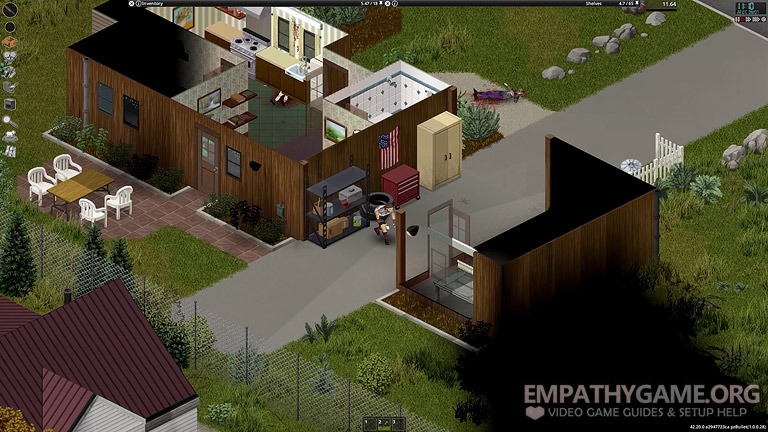
What makes Zomboid interesting is how its systems affect one another. A protective jacket can also make a survivor uncomfortably hot. An axe may deal with a threat quickly but leave an inexperienced character too tired for the next encounter. Even a street cleared of zombies may be an unhealthy place to remain. The game rewards preparation without promising that preparation will always work. That uncertainty creates convincing survival stories, though awkward interactions and slow training can test patience.
Exploration Is About What You Cannot See
Knox Country is a largely handcrafted landscape of neighbourhoods, farmland, woodland and busy commercial districts. Rosewood and Riverside offer relatively manageable places to learn the basics. West Point’s crowded streets demand more caution, while Louisville makes even an ordinary supply run a question of where a pursuing crowd might block the way home. Learning the geography helps, but it does not make buildings or routes completely predictable.
The isometric perspective makes that uncertainty work. A visible roof tells the player little about what waits behind a bedroom door. A quiet hallway is not necessarily safe, and opening a second entrance can change the situation immediately. Hearing movement helps, but sound cannot always reveal its precise source. Windows, curtains, fences and escape routes deserve attention before the first cupboard is searched. Often, the most important exploration decision is whether to enter at all or leave with the supplies already collected.
Basements and taller buildings complicate that judgement. An otherwise ordinary property can hide unfamiliar rooms underground, and threats on another floor may be harder to locate. Darkness becomes especially important after the electricity fails. A flashlight or lantern can reveal what is ahead, but carrying a light may interfere with having a weapon ready. That is where the atmosphere becomes effective: darkness changes the practical rules of an encounter rather than merely making the picture harder to see.
Combat Punishes Overconfidence, Not Just Weak Equipment
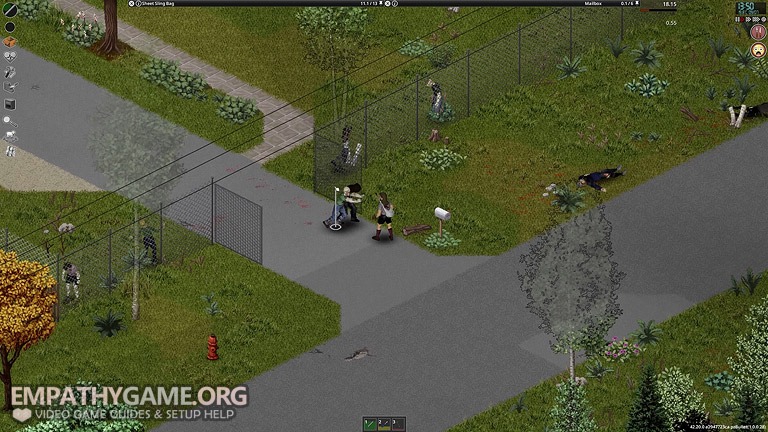
Melee combat looks straightforward when a single zombie approaches. Shove it, knock it down and finish the job before it gets up. Add two more enemies, and the same sequence becomes far less dependable. Panic, fatigue, muscle strain, weapon condition and positioning all affect the margin for error. Distance can also be difficult to judge from the isometric view. Death after a careless decision fits the game’s philosophy; death after a shove fails to connect as expected feels much less fair.
Weapon choice is more thoughtful than a comparison of damage numbers. Axes, spears and heavy blunt weapons offer reach or stopping power, but repeated attacks take their toll, particularly with low skill. Short blades sacrifice reach and are not ideal against groups, yet they can be an efficient choice against isolated zombies. A knife in capable hands may preserve more energy than a heavier weapon that wins the first fight and leaves its user struggling through the second. Combat becomes more satisfying when the player learns what a weapon costs to use, not just what it can kill.
Stealth follows the same logic. An unaware zombie can sometimes be dispatched quietly at close range, provided it really is alone. A second zombie nearby can turn that apparently controlled moment into a dangerous scramble. Separating enemies and watching their spacing matters more than simply approaching in a crouch.
Protection also involves compromise. Bite-resistant layers are reassuring when one grab can ruin a long run, but heavy insulation makes exertion and warm conditions harder to manage. Dressing lightly can be more comfortable while leaving less room for a mistake. Neither choice is automatically correct, which is why the equipment system feels connected to survival rather than detached from it.
Guns change the balance again. Their range is useful, but the noise can attract more zombies than the shots remove. Sometimes the better plan is to lure a crowd away and return by another street instead of trying to kill everything. Even success has consequences: lingering around large numbers of corpses can make a survivor ill. Victory does not remove the need to judge when to leave.
Scavenging Has No Guaranteed Payoff
Searching houses and shops is compelling because the value of an item depends on what the survivor needs. A cooking pot, backpack or vehicle part may suddenly solve a problem that has shaped several days of planning. Yet a dangerous building does not necessarily contain valuable loot. Reaching a bookshop or gun range might require repeatedly pulling zombies away, only for the shelves to offer little worth carrying. The disappointment is believable but still frustrating.
Carry weight adds another layer. Taking every item that might become useful later can leave a character overburdened when a quick escape is needed. Returning with one essential tool is sometimes wiser than gambling a life on a full bag. These decisions give scavenging more meaning than ordinary loot collection. They also explain why clearing a heavily populated area can become tiring when a long series of fights produces only a few metres of progress.
Cars make more ambitious journeys possible, but they are not uncomplicated rewards. Fuel, mechanical condition, noise, storage and a safe parking spot all matter. A working vehicle opens distant opportunities while making it tempting to take risks that would seem unreasonable on foot. Zomboid has a knack for making new freedom create new responsibilities.
A Safehouse Is a Project, Not a Finish Line
At first, a safehouse needs covered windows, an entrance that can be defended and somewhere to sleep. Once water and electricity shut off, the same building becomes a much more demanding project. Clean water, cooking, food storage and equipment maintenance need alternatives. Rain collectors, generators, barricades and supplies gradually turn a temporary refuge into a place that can support everyday life. These objectives feel natural because they emerge from practical problems rather than a mission list.
Farming, fishing, hunting, animal care and food preservation can eventually reduce dependence on abandoned shops. More elaborate crafting and construction allow a shelter to develop into a workshop or settlement. The weaker side is how much of that work involves menus, gathering ingredients and repeating actions to improve skills. A new capability feels worthwhile when it changes what the survivor can attempt; another production routine is less interesting if it only adds chores.
Success introduces an unusual pacing problem. A fortified home with reliable food and water is exactly what sensible planning should produce. It also removes some of the urgency that made the opening days memorable. The game does not always replace that tension with a new reason to venture outside.
Knox Country Tells a Story Through Absence
The 1993 Knox Event is understood through radio, television, newspapers, annotated maps and the condition of abandoned buildings. Early broadcasts suggest a world still struggling to understand the disaster. When those voices disappear, the silence communicates more than another dramatic revelation might. A barricaded house or room full of abandoned belongings hints at someone’s final decisions without supplying a tidy explanation.
Small environmental details make that approach convincing. Residential streets feel different from commercial areas, and an unexpected basement can give a familiar building a new sense of history. Footsteps near a window or impacts against a door provide information before they become frightening. Music is used without overwhelming quieter stretches. The restrained character models are not visually spectacular, but the artwork serves a world where noticing an opening or movement behind furniture matters.
Still, isolation has limits as storytelling. Without ordinary human survivor NPCs forming relationships, competing for resources or reacting to a settlement, many of the questions raised by the environment remain unanswered. The loneliness is convincing; the story is intentionally incomplete. For some, that leaves room to invent a personal narrative. Others may miss characters who give the world a stronger sense of change.
Progression Makes Character Creation Hard to Undo
Occupations and traits influence far more than a survivor’s backstory. A Burglar, Carpenter or Rancher begins with advantages that shape what feels manageable, while negative traits can create persistent problems in exchange for extra starting points. Fitness and Strength deserve particular attention. Beginning with severe weaknesses in both can make training painfully slow, especially when safe exercise starts taking time away from exploration. That is a harsh consequence for a choice made before entering the first house.
Most practical skills improve through use. Books make relevant learning more efficient, but reading alone does not replace repairing, cooking or building. Early educational television provides another useful choice: stay indoors for lessons or spend those hours gathering supplies before conditions worsen. Broadcast experience has limits under standard rules, so passive learning cannot carry a survivor indefinitely.
Permanent death is where progression becomes emotionally and mechanically significant. A replacement character may return to the same world and recover a stocked base, but the previous survivor’s expertise does not automatically come back. Losing a capable mechanic or builder can hurt more than losing their equipment. The settlement survives; the individual who learned how to maintain it does not. That is one of Zomboid’s strongest ideas, even if repeating many hours of training after a frustrating death can make starting again feel like punishment rather than possibility.
Co-op Changes the Meaning of a Good Plan
Cooperative survival gives the skill system a social purpose. One character might maintain vehicles while another tends crops or handles dangerous supply runs. The group can cover more approaches and carry more supplies, but everyone also inherits the consequences of a careless shot or retreat. A badly timed fight can endanger people who were nowhere near the original mistake.
That makes communication more important than simply having extra weapons. Deciding who takes the working car, or whether a journey is worth risking the group’s best builder, creates meaningful discussion without a scripted objective. Coordinated survivors can build a convincing little community. An uncoordinated group may spend nearly as much time dealing with one another’s mistakes as with the zombies.
Freedom Gives Every Run a Different Pace, but Not an Ending
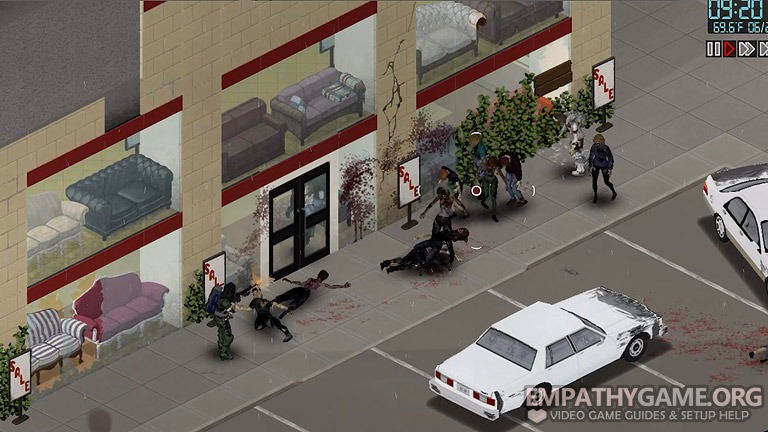
Different starting locations, occupations, traits and sandbox settings can make the same map feel surprisingly different. Harsher conditions emphasise scarcity and retreat; gentler ones leave more space for building, farming and exploration. Mods widen that freedom, although the basic sandbox already offers plenty of ways to define a survival challenge. The appeal of another run is not simply getting farther. It is approaching familiar places with different abilities and priorities.
The problem is that mastery can gradually remove the reasons to continue. Once water, food, transport and defences are dependable, staying alive may become a maintenance routine. There is no final enemy or built-in victory to give a successful settlement a natural ending. Self-directed players can explore dangerous regions or invent their own challenges, but others may feel they have seen the game’s most interesting side once ordinary survival stops being uncertain.
Dense crafting menus, inventory management and inconsistent object selection add friction throughout that process. Some complexity is necessary for a detailed simulation. Repeated clicks and unclear interaction feedback are harder to defend, particularly when a mistaken action can erase substantial progress. Zomboid is most convincing when it punishes poor judgement, not when it makes an otherwise sensible intention difficult to execute.
Final Verdict
Project Zomboid is at its best when a sensible choice in one system creates an unexpected problem in another. A warm jacket can be bad combat clothing, a powerful weapon can leave its owner exhausted, and a cleared street can still be unsafe. Its exploration, character progression and base-building all contribute to the same idea: surviving ordinary life is difficult enough without zombies.
Not every burden is equally worthwhile. Combat spacing and object interactions can be imprecise, repetitive crafting and skill training can wear down patience, and a secure settlement may eventually run out of meaningful goals. Permanent death gives decisions weight, but losing a long-lived character to awkward controls is more discouraging than learning from a genuine mistake.
For players who enjoy planning, improvisation and making their own objectives, those problems may be a reasonable price for a remarkably interconnected sandbox. Anyone looking for a directed story, immediate action or a clear conclusion may find it exhausting. Zomboid’s distinctive achievement is making a stocked cupboard, a dependable vehicle and one uneventful return home feel genuinely important. It is not a comfortable game, but it understands why surviving another day should mean something.
Project Zomboid Pros & Cons
Project Zomboid PC System Requirements
The specifications below are from the official Steam listing for the Windows PC edition. Steam publishes a minimum tier but does not provide a separate official recommended specification. GOG’s listing currently shows older, lower storage and graphics-memory figures, so Steam’s higher published figures are the more cautious planning reference.
OFFICIAL WINDOWS PC REQUIREMENTS (STEAM):
MINIMUM:
OS: Windows 10 or Windows 11, 64-bit
CPU: Intel 2.77 GHz quad-core processor
RAM: 8 GB
GPU: Dedicated graphics card with at least 4 GB VRAM; OpenGL 2.1 and GLSL 1.2 support (generally a 2012-or-newer graphics card)
Storage: 10 GB available space
Sound Card: FMOD-compatible sound card
RECOMMENDED:
The developer does not list a separate official recommended Windows specification on Steam.
Additional PC Performance and Setup Notes
- Large groups and busy streets: The listed minimum is a starting point, not a guarantee of smooth performance in densely populated areas, during large zombie migrations, or on heavily modded multiplayer servers. CPU load and memory use may be substantially higher in complex sessions.
- Branch and save backups: Before changing between stable, Unstable, and legacy versions, back up the relevant save and server files. Mods created for a different game generation may require updates or replacement.
- First troubleshooting step: Test the game without mods if crashes or unusual behavior begin after installing community content. The Indie Stone asks for issues to be reproducible without mods when filing bug reports.
- Handheld setup: Steam Deck Verified status confirms Valve’s compatibility assessment, but text-heavy inventory management, menus, and precise construction tasks may be easier after adjusting controller mappings.
Official Trailer
Note: The Indie Stone’s official Build 42 showcase demonstrates expanded locations, new survival systems, lighting, and animal-focused activities. The written guide above covers store choice, multiplayer restrictions, mods, system requirements, and setup decisions.
Frequently Asked Questions
Is Project Zomboid worth playing in 2026?
Yes, especially if you enjoy demanding survival games where preparation, resource management, and small mistakes have lasting consequences. Its detailed sandbox, expanded crafting, and multiplayer options offer substantial depth, although the steep learning curve, permanent character death, and ongoing Early Access development will not suit everyone.
Is Project Zomboid still in Early Access?
Yes. Project Zomboid remains an Early Access game rather than a completed 1.0 release, despite already offering extensive playable content. Buying it gives access to the available game and subsequent official builds through completion, but features and technical behavior can still change during development.
Does Project Zomboid have a story, ending, or final objective?
There is no conventional story campaign, final boss, or victory ending. The Knox Event provides the setting, while broadcasts, newspapers, locations, and environmental details reveal what happened. Survival itself is the central objective, and players decide whether to focus on exploration, building, fighting, or long-term self-sufficiency.
Which Project Zomboid game mode is best for beginners?
Rising is a more approachable starting point, while Apocalypse provides the game’s intended harsh survival experience. Outbreak emphasizes faster progression, and Extinction offers a considerably tougher challenge. Custom Sandbox is the most flexible choice if you want to adjust zombie numbers, loot, infection rules, and other survival conditions individually.
What should beginners do first in Project Zomboid?
Secure a reasonably quiet building, find a basic melee weapon, collect food and drinking water, and obtain a bag for supplies. Avoid attracting large groups, inspect nearby houses carefully, and learn how exhaustion and injuries affect combat before attempting dangerous trips across town.
What is the best starting town in Project Zomboid?
Rosewood and Riverside are reasonable choices for beginners because they offer residential areas and useful supplies without requiring an immediate trip into Louisville’s dense urban environment. Neither guarantees an easy start, since zombie distribution and available loot vary. Learning one town’s streets, escape routes, and useful buildings matters more than finding a supposedly perfect spawn.
How do occupations and traits affect your survivor?
Occupations establish starting advantages in particular skills or activities, while positive and negative traits change capabilities and limitations. A Burglar is useful for vehicle access, a Carpenter has a head start in construction, and a Rancher specializes in animal care. For early attempts, choose a few understandable advantages rather than stacking negative traits you have not learned to manage.
How do you level up skills faster in Project Zomboid?
Most skills improve through relevant actions, such as constructing objects, cooking, repairing vehicles, or using particular weapons. Reading the appropriate skill book increases experience gained from qualifying activities rather than awarding levels immediately. Educational television programs and VHS recordings can also provide experience for certain skills.
Can you disable zombies or make Project Zomboid easier?
Yes. Custom Sandbox lets you reduce zombie populations, disable them entirely, adjust their speed, prevent respawning, increase available supplies, and change infection rules. These options also make it possible to focus on construction, farming, exploration, or learning the controls without the usual level of danger.
Can you cure a zombie bite in Project Zomboid?
No. Under the default infection rules, a zombie bite transmits the incurable Knox Infection, and ordinary medical treatment cannot reverse it. Custom Sandbox settings can change transmission or infection mortality, but these are alternative gameplay rules rather than a cure discovered through normal survival.
Does every zombie scratch or laceration cause infection?
No. Under standard blood-and-saliva transmission rules, a zombie-inflicted scratch has approximately a 7% chance of transmitting the Knox Infection, while a laceration has approximately a 25% chance. Bites transmit it reliably under those rules. These risks change when infection transmission is customized.
Does an infected wound mean your character will become a zombie?
Not necessarily. The ordinary wound infection shown in the Health panel is separate from the Knox Infection responsible for zombification. A wound can develop a conventional infection without transmitting the zombie virus, while a Knox-infected character may initially show no definitive confirmation in the Health panel.
Why is my character Queasy or Nauseous in Project Zomboid?
Queasiness can result from several causes, including unsafe food, exposure to decaying corpses, or the Knox Infection. The moodle alone does not identify which problem is responsible. Consider recent zombie injuries, food consumption, and time spent near corpses before interpreting the symptoms.
What happens when you die in Project Zomboid?
Death permanently ends that survivor’s life, including their accumulated skills and progression. You can normally create another character in the same existing world, where buildings, stored supplies, and the previous survivor’s belongings may still be recoverable. Starting a completely new world is a separate choice, while multiplayer servers may enforce additional rules.
Can you manually save and reload Project Zomboid?
Project Zomboid saves your world during normal play and when you exit, but it does not provide a conventional quicksave-and-reload system for undoing mistakes. For a separate restore point, fully close the game and back up the relevant world folder from your user Zomboid/Saves directory. Server saves and backups are controlled by the host or administrator.
What happens when electricity and water shut off in Project Zomboid?
The utilities eventually fail under normal survival settings, leaving household taps without a continuing water supply and electrical appliances without grid power. Survivors must plan alternative water collection and purification, while generators can supply electricity to suitable nearby equipment. Custom Sandbox allows the shutdown timing to be changed or disabled.
What is the helicopter event in Project Zomboid?
It is an airborne event that can attract large numbers of zombies toward the helicopter’s location, potentially disrupting an otherwise secure neighborhood. Staying indoors and avoiding detection may reduce the danger, while remaining outside can draw unwanted attention. Its occurrence and frequency depend on the selected sandbox settings.
Is Project Zomboid’s map randomly generated?
The main towns, roads, and major landmarks of Knox Country are handcrafted rather than completely procedurally generated. However, zombie distribution, loot, certain basements, and wilderness areas can vary between worlds. World seeds help reproduce some of these generated elements without replacing the designed map.
Are there human NPC survivors in Project Zomboid?
Not in the unmodified game’s normal survival world. Animals are present, but recruitable human survivor NPCs and a complete NPC interaction system are not part of the standard playable experience. Some community mods attempt to introduce human survivors, although their features and compatibility depend on the specific modification.
Can you raise animals and produce your own food in Project Zomboid?
Yes. Players can care for livestock such as chickens, pigs, sheep, and cows, with suitable animals providing resources including eggs, milk, and meat. Agriculture, hunting, fishing, and food preservation offer additional ways to support a long-term settlement, though seasonal growing conditions and resource management still matter.
How do you hotwire a car in Project Zomboid?
Without a key, a character can normally hotwire a vehicle after reaching Electrical level 1 and Mechanics level 2, or by choosing the Burglar occupation. Enter the driver’s seat and use the vehicle interaction menu. Successful hotwiring removes the key requirement, but the car still needs fuel, a usable engine, and sufficient battery charge.
Can you play Project Zomboid online with friends without renting a server?
Yes. A player can host a cooperative game directly from their own PC and invite compatible friends without paying for separate server hosting. The host’s computer runs the shared world, so performance depends partly on its hardware, network connection, player count, and installed mods.
What is the difference between hosting a game and using a dedicated server?
A locally hosted cooperative game normally runs while its host is playing and hosting the session. A dedicated server is a separate server process that can remain available independently of any particular player’s game session. Dedicated hosting is more suitable for persistent communities, although someone must maintain the hardware or pay for hosting.
Does Project Zomboid support four-player split-screen co-op?
Yes. Project Zomboid supports local split-screen cooperative play for up to four players on one computer. A common arrangement uses mouse and keyboard for the first player and compatible controllers for additional players. Performance and interface comfort may depend on screen size, connected devices, and game configuration.
Can friends use Steam Remote Play Together with one copy of Project Zomboid?
Yes. Steam Remote Play Together lets the owner stream a local co-op session to invited friends over the internet. The game runs on the host’s computer, while remote participants provide their controls through Steam, typically using gamepads. This is streamed split-screen play, not the same as joining a normal dedicated multiplayer server.
Does Project Zomboid support LAN multiplayer?
Yes. Compatible PCs on the same local network can connect through a locally hosted or dedicated server when the network and server settings permit it. Every player needs a compatible game version, and the server’s mod configuration must match the clients where required.
Can Steam and GOG players play Project Zomboid together?
The official GOG listing states that its multiplayer users can play with other GOG users but that cross-play is not available. Steam separately lists online multiplayer and cross-platform functionality, but that does not override GOG’s store-specific restriction. For the simplest cooperative setup, friends should purchase through the same storefront and use matching game builds.
Still have questions? Check the Project Zomboid Reddit community, Steam Discussions, or official The Indie Stone Forums for additional gameplay advice, multiplayer help, and technical support.
Sources & References
Key factual and technical information in this guide was checked against relevant official sources, including:
- Project Zomboid on Steam — official Early Access status, Windows requirements, multiplayer and Workshop features, Steam Deck rating, and overall user reception.
- Project Zomboid on GOG — verified DRM-free ownership, offline installation, published system specifications, and stated multiplayer restrictions.
- The Indie Stone: Buy & Download — official purchase channels, Early Access ownership, stable versus test builds, and store update practices.
- The Indie Stone: Build 42 Features Overview — confirmed survival, world, lighting, animal, and crafting systems now present in the stable game.
- The Indie Stone: Stable Build Announcement — confirmation of the stable content transition and the supported Build 41 legacy-branch selection.
- The Indie Stone: Java Mods and Modding — official distinction between supported Lua mods and unsupported code-altering Java mods.
Similar Games Like Project Zomboid





Found something worth playing through DecideGame?
DecideGame.com is an independent gaming project run by Editor Zero. If this guide helped you discover a game, solve a problem, or find useful information, you can support DecideGame.com and help keep new and updated game guides coming.
DecideGame — PC Game Guides, Reviews & Setup Help